Jigsaw Puzzles Categories
Jigsaw puzzles are a popular form of entertainment and cognitive exercise enjoyed by people of all ages. They consist of interlocking pieces that together form a complete picture, challenging participants to assemble the pieces based on visual cues and patterns. Here's a detailed classification of jigsaw puzzles:
1.Based on Complexity
●Simple Puzzles: These typically have larger pieces and fewer overall pieces, making them suitable for young children or beginners.
●Complex Puzzles: Characterized by smaller pieces and intricate designs, these puzzles pose a greater challenge and are suitable for experienced puzzlers.
2.Based on Piece Count
●Mini Puzzles: Generally have fewer than 100 pieces, often portable and quicker to complete.
●Standard Puzzles: Range from 100 to 500 pieces, striking a balance between challenge and accessibility.
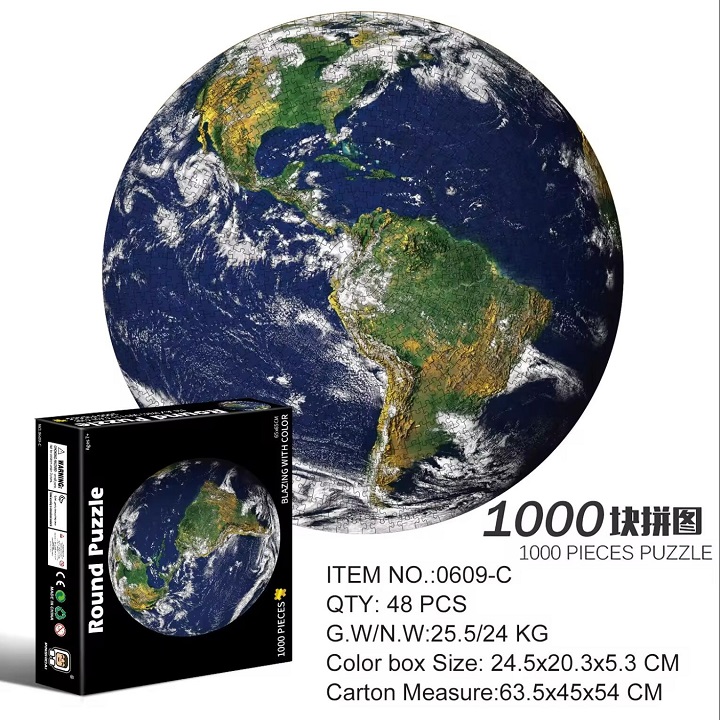
●Large Puzzles: Can have 1000 pieces or more, requiring significant time and space to complete.
3.Based on Age Group
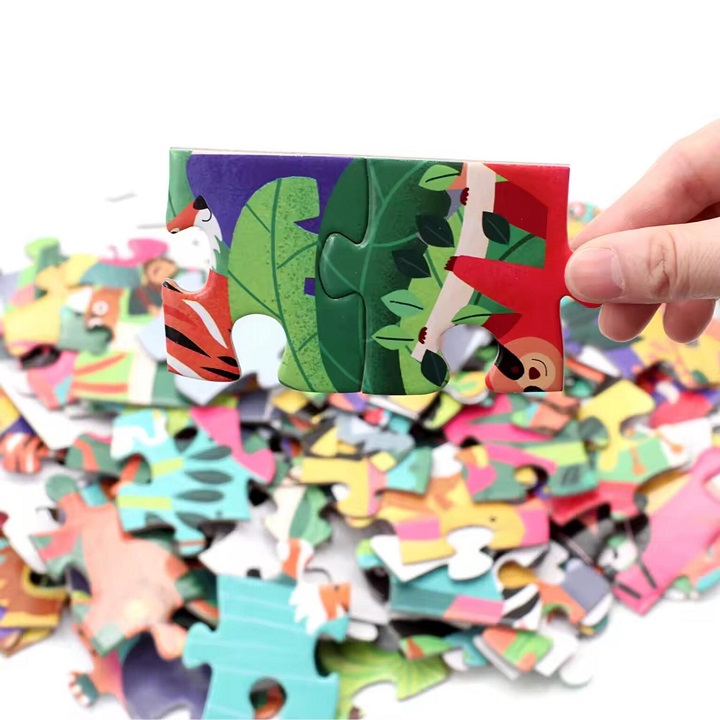
●Children's Puzzles: Feature vibrant colors, larger pieces, and simpler designs that appeal to young children.
●Adult Puzzles: Often depict complex scenes, artworks, or photographs, appealing to older audiences with varied themes and styles.
4.Based on Material
●Cardboard Puzzles: The most common type, made of cardboard pieces that interlock.
●Wooden Puzzles: Pieces are made of wood, offering durability and a premium feel.
●3D Puzzles: Assemble into three-dimensional structures, adding an extra layer of challenge and creativity.
5.Based on Design
●Artistic Puzzles: Feature famous artworks or illustrations, emphasizing visual appeal and aesthetics.
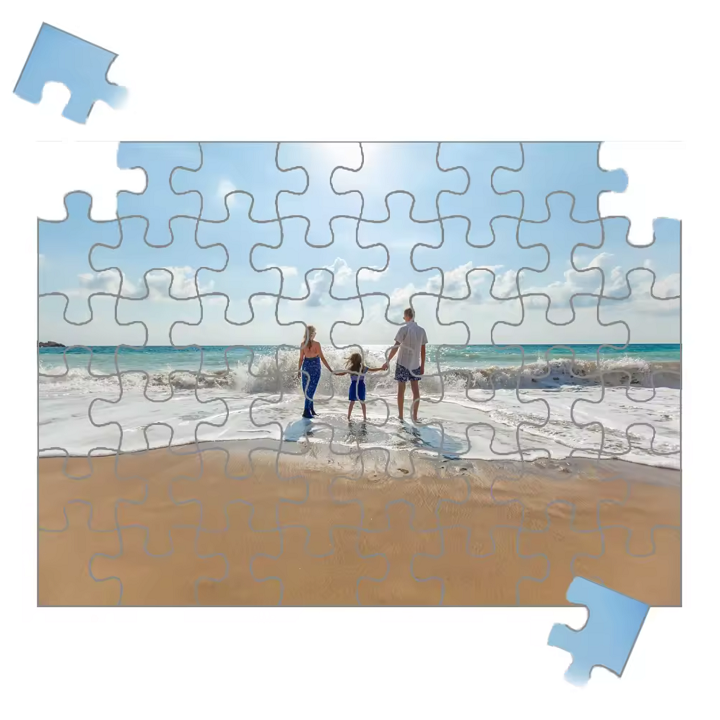
●Photographic Puzzles: Showcase realistic photographs, often of landscapes, animals, or landmarks.
●Custom Puzzles: Personalized puzzles created from custom images or designs, often used for gifts or special occasions.
6.Based on Theme
●Nature and Landscapes: Scenes depicting natural settings such as forests, mountains, or beaches.
●Pop Culture: Themes from movies, TV shows, music, or celebrities, catering to popular interests.
●Educational: Puzzles designed to teach specific topics or skills, often used in classrooms or for educational purposes.
7.Based on Functionality
●Traditional Puzzles: Assemble pieces to complete a flat picture.
●Interactive Puzzles: Include additional elements like sound effects or digital interfaces for a more immersive experience.
FAQs About Jigsaw Puzzles
1.What pieces counts and sizes do you offer?
We offer puzzles from 24-piece kids' puzzles up to 2,000+ pieces for collectors and hardcore puzzlers. For example:
· 24–54 pieces: best for 3–5 year olds; boxes are usually 15–20 cm square.
· 100–300 pieces: ideal for beginners or family activities; typical completion time ≈ 1–3 hours.
· 500–1,000 pieces: standard for adults; 1,000-piece puzzles usually take 3–8 hours to finish.
· 1,500–2,000+ pieces: designed for experienced puzzlers and display-oriented projects.
For custom photo puzzles, we recommend 500–1,000 pieces because it balances detail and manageable completion time.
2.What materials are your jigsaw puzzles made from?
High-quality puzzles use thick cardboard or precision-cut wood, not thin paperboard.
· Cardboard puzzles: usually 1.5–2.5 mm thick; 1,000-piece puzzles often weigh 400–600 g.
· Wood puzzles: often 3–4 mm thick, much more durable; one 1,000-piece wooden puzzle can last 3–5+ years with moderate use.
Thicker pieces reduce breakage and give a more satisfying “snap-fit” feel, which improves user experience and reduces replacement costs.
3.How many custom pieces can I get for a photo puzzle?
Typical custom photo puzzles range from 500 to 1,000 pieces per box.
· 500-piece photo puzzle: great for gifts or small groups; usually fits on a 30 × 40 cm table and can be completed in 2–4 hours.
· 1,000-piece photo puzzle: better for family or team projects; takes 4–10 hours depending on experience.
For very large group events, 1,500–2,000 pieces can create a collaborative display-style project over several days.
4.How long does a custom jigsaw puzzle order take?
Typical production timeline:
· Photo approval to cutting: 3–5 days for digital jigsaw runs.
· Small batch (100–500 puzzles): 5–10 days total.
· Large batch (500–1,000+ puzzles): 7–14 days; for 1,000 puzzles, this can translate to ≈1 week per 100 boxes.
Rush orders (e.g., for events or holidays) can be shortened to 5–8 days with 10–20% higher cost. This schedule is competitive with many online photo-puzzle providers.
5.Can you make puzzles specifically for children?
Yes. For kids, we recommend:
· 24–54 pieces for 3–5 year olds (thicker, snap-fit pieces).
· 48–100 pieces for 5–8 year olds.
· 100–300 pieces for 8–12 year olds.
Kids’ puzzles often use 1.8–2.2 mm thick cardboard and rounded edges for safety. These puzzles are 30–50% more durable than standard 1,000-piece puzzles in rough handling.
6.Can jigsaw puzzles really help improve cognitive skills?
Yes. Studies show that regular puzzle solving can improve:
· Problem-solving skills by about 15–25% over 6 months of regular practice.
· Spatial reasoning and visual attention, which are valuable for children’s learning and adults’ memory training.
A 500–1,000 piece puzzle typically keeps the brain actively engaged for 3–8 hours of focused work, which is equivalent to multiple short attention-training sessions.
7.How many puzzles should I order for a cost-efficient run?
For standard cardboard puzzles, ordering 500+ boxes usually reduces per-box cost by 25–40% vs small batches.
· 100–500 boxes: typical entry point for retailers and events.
· 500–1,000 boxes: optimal for frequent promotions or resellers.
· 1,000+ boxes: large campaigns often see 30–50% lower unit cost compared with 100-box runs.
This is especially true for custom photo puzzles, where the setup cost is high but the per-puzzle cost drops quickly with volume.
8.What printing quality can I expect for custom puzzles?
Custom photo puzzles are printed at high resolution (≈300 dpi) to avoid blurring and pixelation.
· Color accuracy: typically ∆E < 2.5, which means minimal visible color shift vs your original photo.
· Brightness and contrast: optimized for puzzle surfaces, which reflect less light than glossy paper.
· Piece alignment: precision cutting ensures 0.1–0.2 mm edge tolerance; misaligned pieces occur in less than 1–2% of puzzles under normal conditions.
9.Can I frame a completed puzzle?
Yes. Many customers glue and frame 500–1,000 piece puzzles.
· Gluing process: usually takes 10–30 minutes to apply puzzle glue over the entire surface.
· Drying time: 2–4 hours depending on room temperature and humidity.
· Framing: a 1,000-piece puzzle (typical 30 × 40 cm) fits well in a 40 × 50 cm frame with a 5–10 cm border.
Framing adds about $10–$30 per puzzle for standard glass and frame, but greatly increases its shelf-life as a decorative piece.
10.Do you offer bulk discounts for jigsaw puzzles
Yes. Typical bulk pricing:
· 100–500 boxes: standard retail pricing.
· 500–1,000 boxes: usually 20–35% lower per-box cost.
· 1,000+ boxes: can reduce cost by 30–50% depending on customization and material.
For events, schools, or corporate promotions, ordering in bulk not only saves money but also ensures consistent quality and availability across the campaign.
The Production Processes for Custom Puzzles
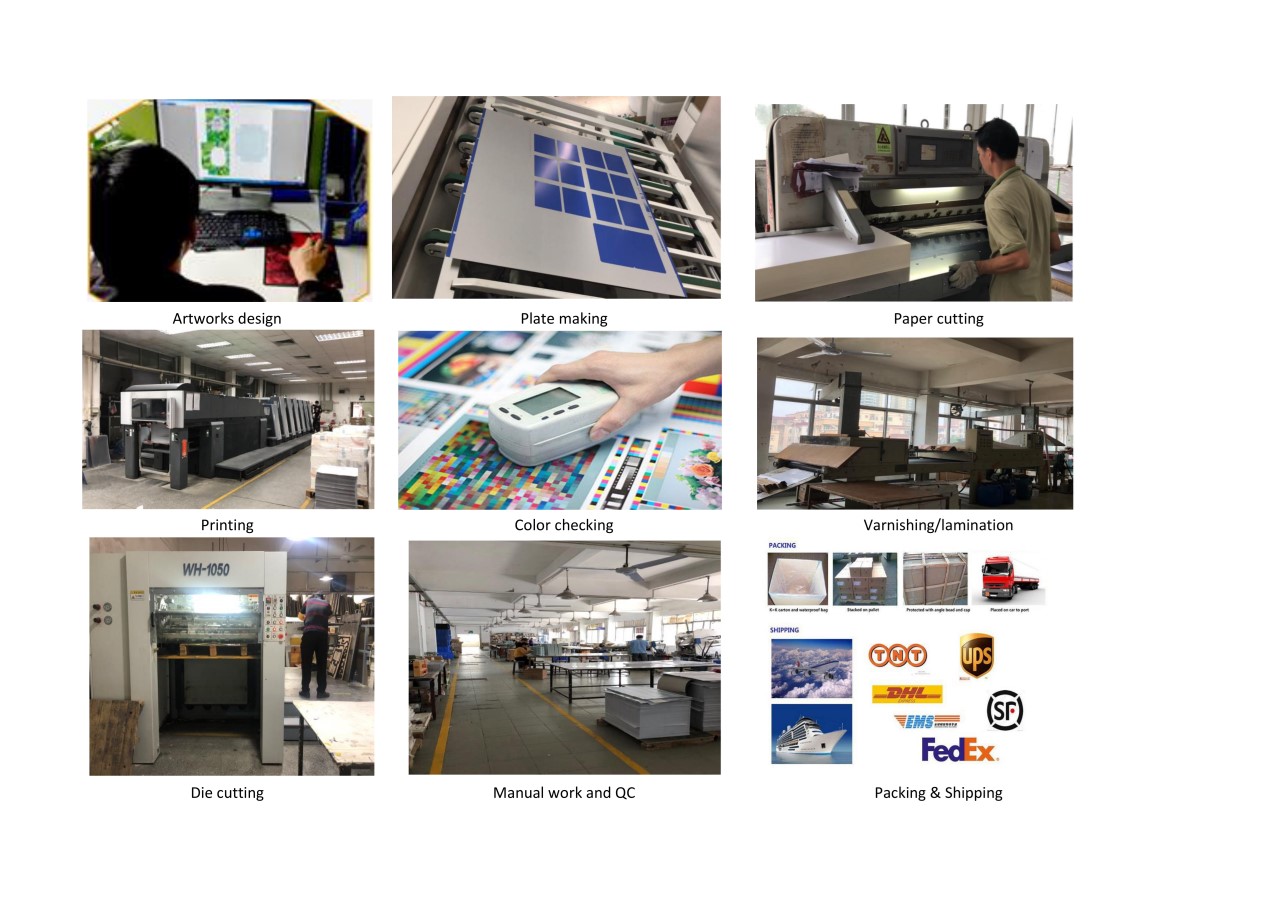
1. Image Selection and Optimization:
The process begins with selecting an image for the puzzle. For custom puzzles, this is usually provided by the customer.
The image undergoes digital optimization to ensure it translates well into a puzzle format, adjusting for color, contrast, and clarity.
2. Design and Layout:
The optimized image is then expertly laid out, specifically tailored to the desired custom puzzle size and piece count, ensuring a seamless integration of the design with the final product. Designers meticulously adjust the image to perfectly fit the custom puzzle dimensions, crafting an alluring layout that captivates the puzzler's attention.
3. Digital Proofing:
A comprehensive digital proof of the custom puzzle design is generated and routinely dispatched to the customer for thorough examination and approval, prior to initiating the production process. This step ensures that the custom puzzle's every detail meets the customer's vision and satisfaction.
4. Printing:
Once approved, the personalized design is immaculately printed onto premium-quality paper or directly onto the puzzle material, preserving its vibrancy and clarity. For paper-based custom puzzles, the meticulously printed sheet undergoes a process of lamination onto either cardboard or chipboard, significantly enhancing their durability and longevity.
5. Cutting:
The printed and expertly laminated sheet is precisely fed into a state-of-the-art cutting machine, where the magic of transforming it into a custom puzzle begins. For jigsaw puzzles, a sophisticated die-cutting technology is employed, enabling the creation of intricate, interlocking pieces tailored to the customer's preferences. The cutting pattern can be thoroughly customized, offering a myriad of unique piece shapes and varying difficulty levels, truly making each custom puzzle a one-of-a-kind experience.
6. Quality Control:
Rigorous quality control measures are implemented to ensure that each cut piece of the custom puzzles meets the highest standards. The pieces are meticulously inspected to verify that all are present and accurately cut. Any defective pieces detected during this process are promptly removed and replaced with flawless ones, guaranteeing a satisfying puzzle-solving experience.
7. Packaging:
With utmost care, the custom puzzle pieces are gathered and neatly arranged into a specially custom-designed box or packaging that complements the puzzle's theme. For wooden custom puzzles, the pieces might be artfully positioned in a captivating pattern within a personalized frame, enhancing the overall aesthetic appeal and preserving the puzzle's uniqueness.
8. Box Design and Production:
A custom box, often adorned with the puzzle's image and any personalized text provided by the customer, is expertly designed and produced. The boxes are typically crafted from recycled cardboard, reflecting a commitment to eco-friendliness and sustainability in the production of custom puzzles.
9. Final Assembly:
The carefully packaged puzzle pieces are placed within the custom box, ensuring they are secure and ready for enjoyment. Additionally, any supplementary materials such as a reference image are included, providing a helpful resource for puzzle enthusiasts as they embark on their unique challenge.
10. Shipping Preparation:
The completed custom puzzle undergoes a thorough packaging process to safeguard it during transit. Every precaution is taken to ensure that the puzzle arrives at the customer's doorstep in pristine condition, ready to unleash hours of fun and enjoyment.
What Custom Puzzles are Used For?
1. Personal Gifts and Keepsakes:
Custom photo puzzles are popular for preserving memories and creating unique gifts.
They're often used for special occasions like birthdays, anniversaries, or holidays.
2. Educational Tools:
Custom puzzles are used in schools and homes to teach various subjects.
They can be designed to teach geography, history, science, or language skills.
3. Marketing and Promotional Items:
Businesses use custom puzzles as promotional giveaways or merchandise.
They can feature company logos, products, or marketing messages.
4. Team Building Activities:
Large custom puzzles are used in corporate settings for team-building exercises.
They promote collaboration and problem-solving skills.
5. Therapy and Rehabilitation:
Custom puzzles are used in occupational therapy to improve fine motor skills and cognitive function.
They can be tailored to specific therapeutic needs.
6. Wedding and Event Mementos:
Custom puzzles featuring wedding photos or event themes serve as unique guest books or favors.
7. Fundraising:
Non-profit organizations create and sell custom puzzles to raise funds.
These often feature artwork related to their cause.
8. Art Reproduction:
Artists create limited edition puzzle versions of their artwork.
This allows art enthusiasts to interact with the artwork in a new way.
9. Home Decor:
Completed custom puzzles can be framed and used as unique wall art.
10. Product Packaging:
Some companies use puzzle-like packaging for their products to create an interactive unboxing experience.
11. Escape Room Props:
Custom puzzles are often used in escape rooms as part of the challenge.
12. Historical Preservation:
Museums and historical societies create puzzles featuring historical images or artifacts.
13. Environmental Awareness:
Puzzles featuring nature scenes or endangered species are used to raise environmental awareness.
14. Language Learning:
Custom puzzles are designed to help with vocabulary and language acquisition.
15. Stress Relief and Mindfulness:
Puzzles with calming images are used for stress relief and promoting mindfulness.
 |  |  |
| Children's Puzzles | Round Puzzles
| Picture Puzzles
|