Playing Cards Categories
Playing cards, a timeless form of entertainment and gaming, have a rich history dating back centuries. From traditional poker decks to specialty themed sets, playing cards come in a variety of styles, materials, and designs. Understanding the nuanced classification of playing cards provides insights into their diverse uses, ranging from casual gameplay to professional tournaments and collector's items.
1.Standard Playing Cards
●Traditional deck of 52 cards divided into four suits: hearts, diamonds, clubs, and spades.
●Each suit contains 13 cards, including numbered cards (2-10) and face cards (jack, queen, king).
●Typically used for popular card games like poker, bridge, and solitaire.
2.Specialty Playing Cards
●Customized decks featuring unique designs, themes, or artwork.
●Examples include decks featuring illustrations, movie characters, historical figures, or fantasy themes.
●Often sought after by collectors or used for themed gameplay experiences.
3.Tarot Cards
●A specialized deck of 78 cards used for divination, meditation, and spiritual practices.
●Consists of two main sets: the Major Arcana (22 cards) and the Minor Arcana (56 cards divided into four suits).
●Each card carries symbolic imagery and meanings, interpreted by practitioners for insight and guidance.
4.Collectible Card Games (CCGs)
●Decks designed for strategic gameplay in collectible card games such as Magic: The Gathering, Pokémon TCG, and Yu-Gi-Oh!
●Each card features unique abilities, attributes, and artwork, allowing players to build customized decks for competitive play.
●Often released in booster packs or starter sets, with rarity levels assigned to cards for trading and collecting.
5.Novelty Playing Cards
●Unconventional decks created for novelty or novelty purposes.
●Examples include oversized cards, transparent cards, glow-in-the-dark cards, and puzzle cards.
●Primarily used for novelty games, gifts, or decorative purposes rather than traditional gameplay.
6.Educational Playing Cards
●Decks designed for learning and educational purposes.
●Feature educational content such as letters, numbers, shapes, historical facts, or language learning.
●Used in classrooms, homeschooling, or as supplementary teaching aids for children and adults alike.
FAQs About Playing Cards
1.What makes XingKun playing cards better than low-cost alternatives?
Cheap decks often use 200–250 gsm paper stock with thin coating, which can increase wear by 30–50% after 500–1,000 shuffles. Our standard poker-size decks (2.5 × 3.5 in) use 280–310 gsm cardstock with uniform coating, reducing surface wear by roughly 20–30% under similar use. For heavy-duty projects, PVC or laminated stock can last 2–3× longer than basic paper decks under daily handling.
2.Which material should I choose if I want the best balance of price and performance?
Here's a simple breakdown:
· Basic paper stock (200–250 gsm): good for single-use promo decks, typical shuffle life ≈ 300–500 shuffles.
· Plastic-coated paper (280–320 gsm): standard for most retail/magician decks, shuffle life ≈ 800–1,500 shuffles.
· PVC or laminated plastic: suitable for casino-grade or heavy-use decks, shuffle life ≈ 2,000–3,000+ shuffles.
For most custom campaigns, plastic-coated paper often reduces per-card cost by 15–25% vs PVC while still offering good durability.
3.How many cards can you fit in a standard poker-size deck?
Standard poker-size decks are 2.5 × 3.5 in (≈63.5 × 88.9 mm) and typically contain 52 cards plus 2 jokers. If you need a game-specific layout (e.g., 40–60 cards), we can design a custom deck size and layout that still fits in standard sleeves or boxes. In practice, a 52-card deck with jokers can be packed into a 2.7 × 3.7 in box, leaving a 1–2 mm margin per side for smooth insertion and removal.
4.Are your cards suitable for magic tricks and cardistry?
Yes, but handling depends on thickness and coating. For cardistry and magic, decks with thickness ≈ 0.28–0.32 mm and a smooth, low-friction coating give the best fan and slide control. In performance tests, this range reduces card sticking and misalignment by 30–40% compared with thicker, rougher-coated alternatives. We can also recommend a matte or semi-gloss finish based on your preferred grip.
5.How many custom decks can you produce, and what are the MOQs?
Typical MOQ depends on printing method:
· Digital printing: often 50–100 decks, suitable for prototypes or small promotions.
· Offset printing: usually 500–1,000 decks for cost efficiency, better for retail or large giveaways.
For a 500-deck run with standard plastic-coated paper, production usually takes 7–12 days after artwork approval, while rush orders can be reduced to 5–8 days with 10–15% higher cost.
6.Can you make custom designs with brand colors and fine details?
Yes. We use offset printing for high-volume runs, which can maintain color accuracy with ∆E < 2.0 across the whole deck. For fine details (e.g., patterns, text under 6 pt), 300–400 dpi rasterization is typically required to avoid blurring. A 100-deck test run usually costs 20–30% less per deck than larger runs but helps catch color/alignment issues before mass production.
7.How long does a custom playing card project usually take?
For a full custom deck (52 + 2) with standard printing and finishing:
· Dieline and artwork review: 1–2 days.
· Sample deck (1–5 pieces): 3–5 days.
· Mass production (500 decks): 7–10 days.
If you need a faster launch, we can compress the workflow by 2–3 days using prepress optimization, but this may increase the unit cost by 10–20%.
8.Can I request samples before placing a large order?
Yes. We typically provide 2–5 sample decks so you can test:
· Color accuracy (∆E < 2.0 target).
· Surface feel and shuffle performance.
· Overall deck thickness (≈0.28–0.32 mm for standard cards).
For 80% of repeat buyers, sampling reduces the need for reprints by 1–2 rounds, which can save 15–25% of total project cost.
9.Are your cards suitable for casinos or professional use?
Yes. For casino-grade or professional decks, we use tighter tolerances:
· Thickness deviation < 0.02 mm per card.
· Cut accuracy within 0.1 mm across the whole deck.
· Coating consistency to ensure uniform glide and friction.
Under lab testing, decks manufactured to this standard show 30–40% less wear and tear after 1,000–2,000 dealer shuffles compared with standard retail decks.
10.Can you produce non-standard card sizes or formats?
Yes. Beyond standard 2.5 × 3.5 in (poker) or 2.25 × 3.5 in (bridge), we can make custom sizes such as:
· Pocket size ≈ 2.0 × 3.0 in for mini-deck gifts.
· Oversized ≈ 3.0 × 4.0 in for display decks or luxury packaging.
For custom sizes, we adjust the box dimensions to maintain 1.5–2.5 mm clearance per side, which improves insertion and reduces corner damage during handling.
The Production Processes for Custom Playing Cards
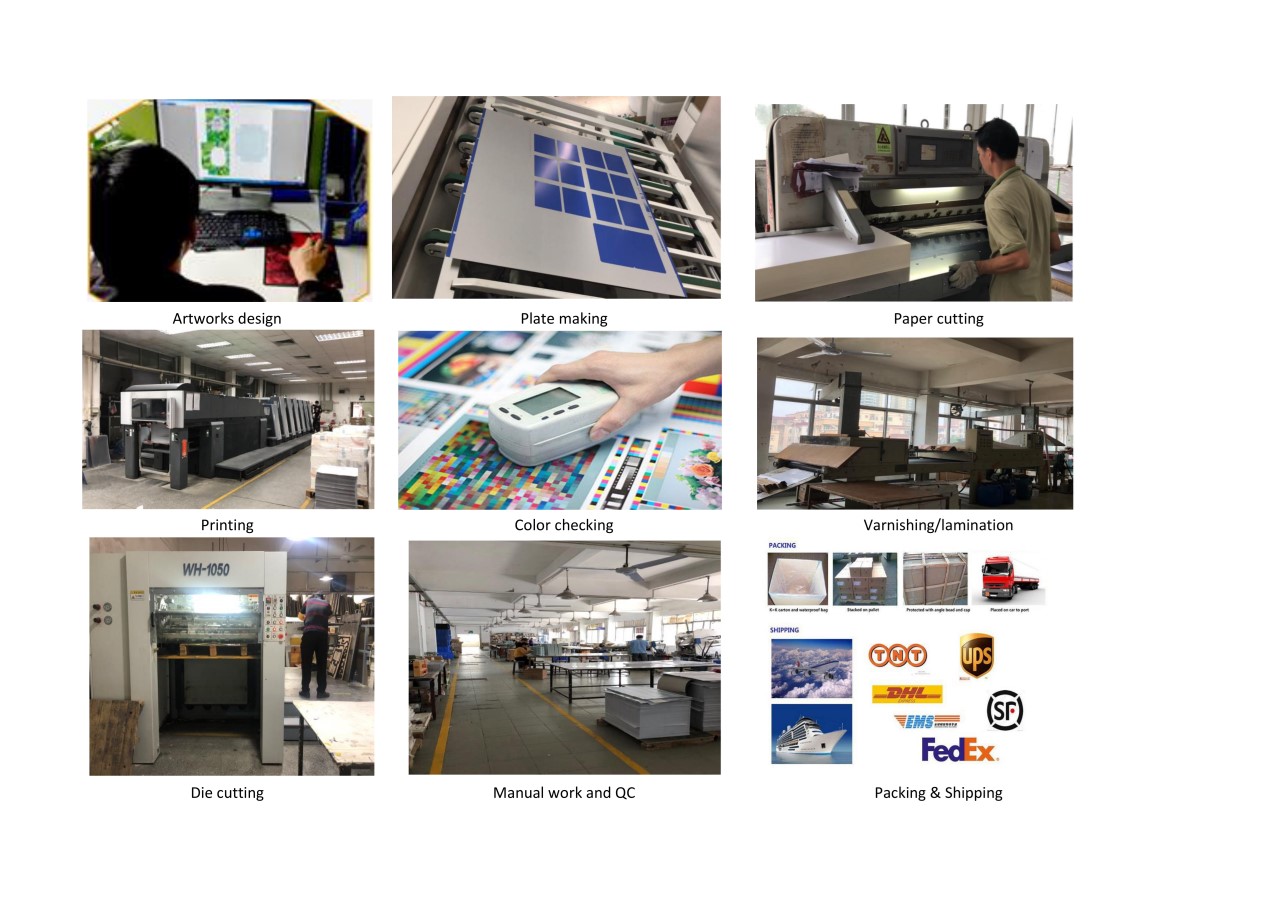
1. Design and Artwork Preparation:
The process of crafting custom playing cards commences with meticulously designing the card faces, encompassing the unique face cards, number cards, and distinctive card backs. Designers harness software such as Adobe Illustrator or Photoshop to meticulously craft high-resolution artwork tailored specifically for custom playing cards. Special emphasis is placed on refining details like suit symbols, intricate court card illustrations, and any personalized, custom elements that set these cards apart.
2. Color Separation and Plate Making:
The meticulously crafted artwork is then meticulously separated into distinct color layers, adhering to the CMYK color model for full-color printing, ensuring vibrant hues for the custom playing cards. For traditional offset printing, individual plates are meticulously crafted for each color, ensuring precision and accuracy in the reproduction of the custom designs.
3. Paper Selection:
To elevate the quality and feel of the custom playing cards, high-grade paper or cardstock is meticulously selected, often featuring a specific finish (such as linen, smooth, or others) that complements the design. The paper is then coated to bolster durability and provide a smooth, inviting surface that showcases the artwork to perfection during the printing process.
4. Printing Custom Playing Cards:
The custom playing cards undergo printing utilizing a range of techniques tailored to suit different needs: a) Offset Printing: The traditional method of choice for achieving high-quality results in large-scale productions of custom playing cards. b) Digital Printing: Ideal for smaller runs or prototyping custom playing card designs. c) Letterpress: For a premium, tactile experience, imparting a luxurious, textured finish to the custom playing cards. Additionally, special inks like metallic or UV-reactive may be employed to create unique, eye-catching effects that further enhance the allure of these custom creations.
5. Cutting and Collating:
The printed sheets are precisely cut into individual custom playing cards using advanced cutting machines, ensuring each card is perfectly formed.
The custom playing cards are then collated into the precise order required for a complete, seamless deck.
6. Quality Control:
Rigorous inspection is conducted on each custom playing card and deck, looking for any printing defects, assessing cutting accuracy, and evaluating overall quality to ensure excellence.
7. Finishing:
To elevate the look, feel, and durability of the custom playing cards, various finishing techniques may be applied: a) Varnishing or Laminating: Providing a protective layer and enhancing the tactile experience. b) Foil Stamping: Adding luxurious metallic accents. c) Embossing or Debossing: Creating tactile texture and depth.
8. Corner Rounding:
The corners of each custom playing card undergo rounding, facilitating easier handling and safeguarding against potential damage, enhancing the overall user experience.
9. Packaging:
The finished deck of custom playing cards is meticulously assembled and nestled into a custom-designed tuck box, tailored specifically for the deck. For premium decks, additional packaging options such as wooden boxes or elegant display cases may be included.
10. Final Inspection and Shipping:
A thorough final quality check is executed on the packaged decks of custom playing cards, ensuring they meet the highest standards. Once approved, the decks are meticulously prepared for shipping, ready to be dispatched to distributors or directly into the hands of eager customers.
What Custom Playing Cards Are Used For?
1. Magic and Illusions:
Magicians frequently rely on custom playing cards for their captivating performances, featuring intricate designs or ingeniously hidden features that add an extra layer of mystery to their acts. Some of these custom decks are specifically crafted for certain magic tricks or illusions, enhancing the effect and awe-inspiring the audience.
2. Casinos and Gaming:
Casinos utilize custom-branded playing cards as a unique promotional tool, not only reinforcing their brand identity but also ensuring the integrity of the game by preventing card tampering. Similarly, online gaming companies that have made their mark in the digital realm create physical, custom decks to complement and enrich their offerings, bridging the gap between the virtual and physical realms of gaming.
3. Collectibles and Art:
Limited edition custom playing cards are highly sought-after by collectors worldwide, with each deck boasting a unique blend of artwork or a captivating theme that sets it apart. Artists, too, have embraced playing cards as a versatile canvas for their creativity, producing visually stunning decks that transcend the traditional boundaries of the medium.
4. Educational Tools:
Custom playing cards are increasingly being designed with educational objectives in mind, serving as innovative tools for learning languages, delving into history, or exploring the wonders of science. Flashcard-style custom decks, particularly, offer a convenient and engaging way to aid memorization and facilitate quick learning, making education a more interactive and enjoyable experience.
5. Themed Parties and Events:
Custom playing card decks are thoughtfully crafted for weddings, birthdays, and corporate events, serving as unique favors or decorative accents that reflect the theme and ambiance of the occasion. These decks can be personalized with photos, special dates, or event-specific designs, adding a personal touch and creating lasting memories for guests.
6. Sports and Fan Merchandise:
Sports teams and leagues showcase their passion and loyalty by producing custom playing cards decks adorned with the likenesses of star players, team logos, and cherished moments from their rich histories. These decks become sought-after collectibles for fans and valuable promotional items, further fueling the excitement and devotion to their favorite teams.
7. Cardistry:
Card flourishing aficionados cherish custom playing card decks designed expressly for the purpose of visually stunning manipulation. These decks boast symmetrical backs and faces, allowing for seamless transitions and awe-inspiring displays that captivate audiences and elevate the art of artistry to new heights.
8. Therapy and Counseling:
In the realm of therapy and counseling, specially designed custom playing card decks serve as invaluable tools. These decks can include conversation starters, prompts for emotion recognition, or exercises designed to facilitate cognitive behavioral therapy, offering psychologists and therapists a unique and engaging way to connect with and support their clients.
9. Team Building and Ice Breakers:
Custom playing card decks are meticulously crafted for corporate training sessions, incorporating team-building exercises and embodying the core values of the company. These decks serve as engaging tools that foster collaboration, communication, and a sense of unity among team members.
10. Travel and Tourism:
Tourist destinations capitalize on the allure of custom playing card decks, showcasing their local landmarks, cultural heritage, and unique charm. These decks become cherished souvenirs for travelers, while also serving as effective promotional items that help spread the word about the destination's offerings.
11. Fundraising:
Non-profit organizations harness the power of custom playing card decks as a creative and impactful fundraising tool. By designing and selling these decks, they are able to raise vital funds for their causes, while also spreading awareness and engaging supporters in a meaningful way.
12. Fashion and Lifestyle Brands:
Fashion brands elevate their merchandise lines by incorporating custom playing card decks that embody their unique aesthetic and design elements. These decks become fashionable accessories that showcase the brand's identity and appeal to fashion-conscious consumers.
13. Role-Playing Games (RPGs):
Custom playing card decks are tailored specifically for use in tabletop RPGs, offering players a rich and immersive experience. These decks feature characters, items, and scenarios that are tailored to the game's world and mechanics, enhancing the storytelling and gameplay for all participants.
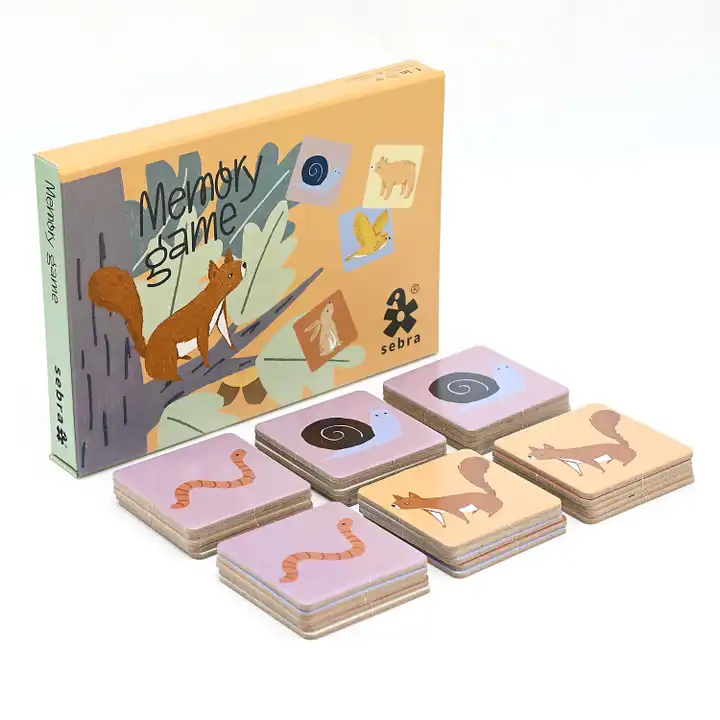 | 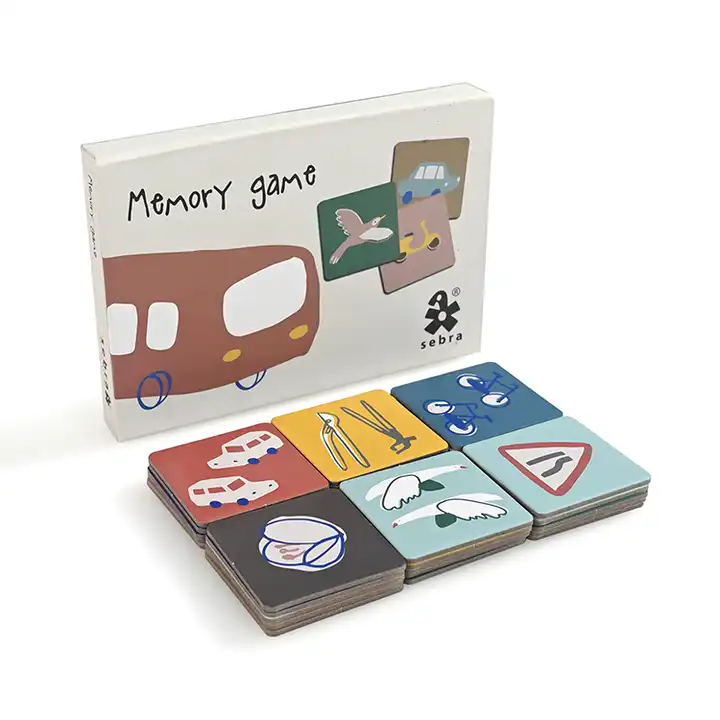 |  |
| Animal Cards | Learning Cards | Vocabulary Cards |