Content Menu
● Introduction
● Game Components
● Setting Up the Game
● Objective of the Game
● Gameplay
>> On Your Turn
>> Types of Cards
>>> Property Cards
>>> Money Cards
>>> Action Cards
>> Making Payments
● Strategies for Success
● Advanced Tactics
>> Bluffing
>> Forced Deals
>> Just Say No Chain
>> Wild Card Management
● Common Scenarios and Rulings
● Variations and House Rules
>> Extended Game
>> Team Play
>> No Stealing Full Sets
>> Limited Just Say No
>> Auction House
● Conclusion
● Frequently Asked Questions
>> 1. How many cards should each player have at the start of the game?
>> 2. Can you use a Just Say No card against another Just Say No card?
>> 3. How do Wild Property cards work?
>> 4. What happens if you can't pay the full amount of rent?
>> 5. Can you win the game on an opponent's turn?
● Citations:
Introduction
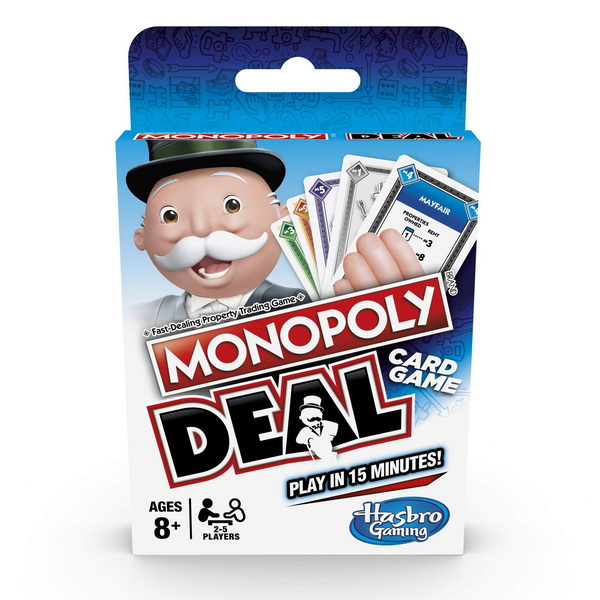
Monopoly Deal is an exciting card game that captures the essence of the classic Monopoly board game in a fast-paced, portable format. Designed for 2-5 players aged 8 and up, this game offers a thrilling experience of property trading, rent collection, and strategic decision-making. In this comprehensive guide, we'll explore the rules, strategies, and nuances of Monopoly Deal, helping you become a master of this addictive card game.
Game Components
Before diving into the gameplay, let's familiarize ourselves with the components of Monopoly Deal:
- 110 cards, including:
- Property cards
- Action cards
- Money cards
- Rent cards
- House and Hotel cards
- Wild Property cards
- 4 Quick Start Rules cards (for reference)
Setting Up the Game
To begin your Monopoly Deal adventure, follow these setup steps:
1. Remove the 4 Quick Start Rules cards from the deck and distribute them to players for reference.
2. Shuffle the remaining 106 cards thoroughly.
3. Deal 5 cards face-down to each player.
4. Place the remaining cards face-down in the center of the play area to form the draw pile.
5. Choose a starting player (typically the youngest) and proceed clockwise.
Objective of the Game
The primary goal in Monopoly Deal is to be the first player to collect 3 complete property sets of different colors. A property set consists of 2-4 properties of the same color, as indicated on the cards.
Gameplay
On Your Turn
Each turn in Monopoly Deal consists of three main phases:
1. Draw Cards: Begin by drawing 2 cards from the draw pile and adding them to your hand. If you start your turn with no cards, draw 5 instead.
2. Play Cards: You may play up to 3 cards from your hand. These can be any combination of the following actions:
- Place money cards into your personal bank
- Play property cards into your collection
- Use action cards by following their instructions
3. End Turn: If you have more than 7 cards in your hand at the end of your turn, discard extras to the bottom of the draw pile until you have 7.
Types of Cards
Property Cards
Property cards are the core of the game. They come in different colors, representing various Monopoly properties. To win, you need to collect full sets of these properties. Some key points about property cards:
- You can play them directly into your collection.
- Wild Property cards can be used as any color property.
- Properties can be rearranged in your collection during your turn.
Money Cards
Money cards serve two purposes:
1. They can be placed in your bank to pay rent or other charges.
2. They protect your properties from being stolen by other players.
Action Cards
Action cards add excitement and strategy to the game. Some common action cards include:
- Rent: Charge other players rent for properties you own.
- Deal Breaker: Steal a complete property set from another player.
- Sly Deal: Steal a single property card from an opponent.
- Forced Deal: Swap one of your properties with an opponent's.
- Just Say No: Cancel the effect of an action card played against you.
- Pass Go: Draw two additional cards.
- Double the Rent: Play with a rent card to double the rent amount.
Making Payments
When you need to make a payment to another player or the bank, keep these rules in mind:
- You can only pay with cards on the table (in your bank or property collection), not from your hand.
- If you don't have enough money to pay, give everything you have and consider the debt paid.
- Change is not given when overpaying.
- If you pay with property cards, they go into the other player's collection.
Strategies for Success
To excel at Monopoly Deal, consider these strategic tips:
1. Balance your play: Don't focus solely on collecting properties. Build up your bank to protect against rent charges and property theft.
2. Use action cards wisely: Timing is crucial when playing action cards. Save powerful cards like Deal Breaker for when they can have the most impact.
3. Pay attention to opponents' collections: Keep track of what properties other players are collecting to anticipate their moves and plan your strategy accordingly.
4. Diversify your property collection: While aiming for complete sets, try to collect properties of different colors to make it harder for opponents to steal a full set from you.
5. Manage your hand size: Try to keep your hand close to 7 cards to maximize your options each turn.
6. Be flexible: Don't get too attached to any particular strategy. Be ready to adapt based on the cards you draw and your opponents' actions.
Advanced Tactics
As you become more familiar with Monopoly Deal, you can incorporate these advanced tactics:
Bluffing
Create the illusion that you're close to winning by arranging your properties strategically or playing money cards face-down (which is allowed). This may cause opponents to target each other instead of you.
Forced Deals
Use Forced Deal cards not just to complete your own sets, but also to break up opponents' sets or protect your valuable properties.
Just Say No Chain
Remember that you can use a Just Say No card to cancel another Just Say No card. This can lead to exciting chains of cancellations if multiple players have these cards.
Wild Card Management
Be strategic with your Wild Property cards. They're valuable for completing sets, but also make tempting targets for opponents' Sly Deals or Forced Deals.
Common Scenarios and Rulings
To help clarify some potentially confusing situations, here are some common scenarios and their official rulings:
1. Can you use multiple Double the Rent cards?
Yes, you can play multiple Double the Rent cards with a single Rent card. Each one counts as a separate play.
2. What happens if the draw pile runs out?
Shuffle the discard pile to create a new draw pile.
3. Can you rearrange your properties at any time?
You can only rearrange your properties during your turn.
4. Do you have to announce when you have a complete set?
No, you don't have to announce it, but you must have 3 full sets of different colors at the start of your turn to win.
5. Can you play a Just Say No card on your own turn?
No, Just Say No cards are only played in response to action cards played against you.
Variations and House Rules
While the official rules provide a great gaming experience, many groups enjoy adding their own twists to Monopoly Deal. Here are some popular variations:
Extended Game
For a longer game, play until someone collects 4 or 5 property sets instead of 3.
Team Play
In a 4-player game, form two teams of two. Partners sit across from each other and can't steal from each other. The first team to collect 4 property sets wins.
No Stealing Full Sets
Some groups find the Deal Breaker card too powerful and choose to ban stealing of complete property sets.
Limited Just Say No
Limit the use of Just Say No cards to once per round to reduce defensive play.
Auction House
When a player can't pay rent, they must auction off one of their properties to the highest bidder.
Conclusion
Monopoly Deal offers a fast-paced, strategic alternative to the classic board game, perfect for quick gaming sessions or travel. With its blend of luck and skill, it provides endless entertainment for players of all ages. By mastering the rules, understanding card interactions, and developing clever strategies, you'll be well on your way to dominating the property market in this exciting card game.
Remember, the key to success in Monopoly Deal is adaptability. Each game will present unique challenges and opportunities based on the cards you draw and your opponents' actions. Stay flexible, think ahead, and most importantly, have fun!
Frequently Asked Questions
Here are some common questions and answers about Monopoly Deal:
1. How many cards should each player have at the start of the game?
Each player should start with 5 cards in their hand.
2. Can you use a Just Say No card against another Just Say No card?
Yes, you can use a Just Say No card to cancel the effect of another Just Say No card, potentially creating a chain of cancellations.
3. How do Wild Property cards work?
Wild Property cards can be used as any color property. They can be moved between your property sets during your turn but can only count towards one set at a time.
4. What happens if you can't pay the full amount of rent?
If you can't pay the full amount, you pay as much as you can with the cards in front of you (not from your hand), and the debt is considered paid in full.
5. Can you win the game on an opponent's turn?
No, you can only win at the start of your own turn. If you complete your third set during an opponent's turn, you must wait until your next turn begins to claim victory.
Citations:
[1] https://en.wikipedia.org/wiki/Monopoly:_The_Card_Game
[2] https://www.youtube.com/watch?v=bZT-U8fuPNc
[3] https://monopolydealrules.com/index.php?page=instructionbook
[4] https://www.thesprucecrafts.com/monopoly-frequently-asked-questions-411861
[5] https://www.reddit.com/r/boardgames/comments/1cqdmox/monopoly_deal_question/
[6] https://www.instructables.com/Monopoly-Deal-Tips/
[7] https://www.youtube.com/watch?v=Gc0XrTjmCV8
[8] https://64-ounce-games.myshopify.com/pages/monopoly-deal-rules
[9] https://monopolydealrules.com
[10] https://www.reddit.com/r/boardgames/comments/hx2j3h/monopoly_deal_question/
[11] https://www.youtube.com/watch?v=_ijViTY4oRo
[12] https://instructions.hasbro.com/en-au/instruction/monopoly-deal-card-game
[13] https://www.youtube.com/watch?v=ojMwEvWKhzA
[14] https://www.reddit.com/r/boardgames/comments/1eah3o9/monopoly_deal_rules_question/
[15] https://www.buffalolib.org/sites/default/files/gaming-unplugged/inst/Monopoly%20Deal%20Card%20Game%20Instructions.pdf
[16] https://instructions.hasbro.com/en-nz/instruction/monopoly-deal-card-game
[17] https://hasbro-new.custhelp.com/app/answers/list_na/kw/monopoly%20deal%20house/suggested/1/page/2
[18] https://boardgames.stackexchange.com/questions/59520/monopoly-deal-question


