Content Menu
● South Korea's gift bag market landscape
● Main types of gift bags offered in Korea
>> Paper gift bags
>> Fabric and reusable bags
>> Specialty and premium gift bags
● Representative Korean gift bag suppliers
● How to source Korean gift bags
>> Online B2B platforms
>> Trade shows and local agents
● Evaluating Korean gift bag suppliers
● Comparing Korean and Chinese suppliers
● Shenzhen XingKun Packing Products Co., Ltd. as a complementary partner
● Working process with OEM gift bag factories
● Strategic role of gift bags in branding
● Sustainability and regulatory considerations
● Conclusion
● FAQ
>> 1. What are the main products of South Korean gift bag suppliers?
>> 2. How can overseas buyers locate reliable Korean gift bag factories?
>> 3. What advantages do Korean gift bag suppliers offer compared with other countries?
>> 4. Why might buyers also work with Chinese packaging factories like Shenzhen XingKun?
>> 5. What information should be prepared before contacting a gift bag manufacturer?
● Citations
South Korea has a vibrant packaging industry with many Gift Bags Manufacturers and Suppliers serving cosmetics, fashion, food, and lifestyle brands at home and abroad. Gift bagproduction in the country is closely linked with the rise of K‑beauty, duty‑free retail, department stores, and e‑commerce, where brands demand attractive, well‑designed packaging that enhances the customer experience. For importers, wholesalers, and private‑label owners, understanding the South Korean market and how it compares with other sourcing hubs such as China is essential when planning a long‑term packaging strategy.[1][2][3][4]

South Korean Gift Bags Manufacturers and Suppliers typically position themselves as premium partners rather than purely low‑cost vendors. They emphasize high‑quality printing, creative structural design, and eco‑friendly materials that align with domestic regulations and global sustainability expectations. Many factories also provide OEM and ODM support, allowing brand owners to develop exclusive collections of gift bags tailored to their visual identity and marketing campaigns.[5][6][1]
South Korea's gift bag market landscape
The South Korean gift bag market is driven by three major demand sectors: beauty and personal care, fashion and accessories, and food and confectionery. Cosmetics and skincare brands in particular use branded paper bags to reinforce their high‑end image, especially in flagship stores and beauty specialty shops. Seasonal events such as Lunar New Year, Valentine's Day, Pepero Day, and Christmas further increase demand for decorative gift bags and limited‑edition packaging.[2][6][1]
In addition to brick‑and‑mortar retail, e‑commerce platforms and social‑commerce sellers also contribute to the growth of Gift Bags Manufacturers and Suppliers. Many online brands offer gift‑wrap services, subscription boxes, or influencer collaboration sets, all of which require visually appealing, customizable gift packaging. As a result, Korean suppliers are accustomed to handling short lead times, frequent design updates, and varied order sizes from both domestic and overseas buyers.[4][1][5]
Main types of gift bags offered in Korea
South Korean Gift Bags Manufacturers and Suppliers commonly divide their product portfolios into several core categories, each targeted at specific applications and price points. Understanding these categories helps buyers select the right specifications for their own markets.[1][2]
Paper gift bags
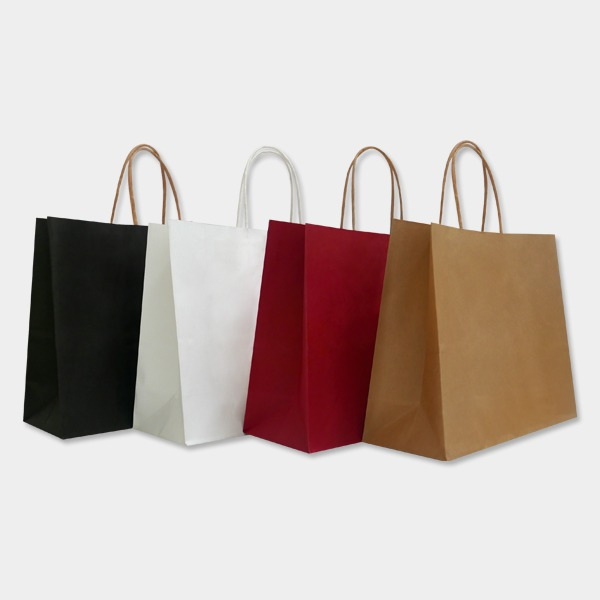
Paper gift bags are the most widely produced type in Korea and cover everything from simple kraft bags to luxury laminated bags with custom handles. Popular options include:[2][1]
- Coated paper bags with glossy or matte lamination for fashion and cosmetics boutiques
- White or brown kraft paper bags emphasizing a natural, eco‑friendly appearance
- Art paper bags with high‑resolution printing suitable for promotional campaigns and event packaging
These bags are frequently customized in terms of size, handle material (cotton rope, ribbon, paper twist), and finishing (spot UV, foil stamping, embossing), allowing Gift Bags Manufacturers and Suppliers to support a wide range of brand positions from value to luxury.[1][2]
Fabric and reusable bags
Alongside paper bags, Korean suppliers also produce fabric gift bags made from cotton, nonwoven, polyester, and other textiles. These are often used by lifestyle, apparel, and eco‑focused brands that encourage consumers to reuse bags multiple times. Drawstring pouches, tote‑style gift bags, and foldable bags are common formats, and they are frequently printed with simple, bold designs that match Korean minimalist aesthetics.[6][1]
Because many local governments and retailers in South Korea promote reduced plastic usage, reusable fabric gift bags offer both environmental and branding benefits. Gift Bags Manufacturers and Suppliers therefore pay attention to fabric weight, stitching quality, and washability to ensure that these items serve as long‑lasting advertising for the brand.[5][6]
Specialty and premium gift bags
Specialty gift bags in South Korea include structures and finishes that go beyond standard formats, often used for holiday promotions, limited‑edition product launches, or high‑value items. Examples include:[2][1]
- Windowed paper bags allowing a glimpse of the product
- Rigid or semi‑rigid gift bags with reinforced boards for luxury goods
- Bags with die‑cut shapes, special closures, or metal eyelets
Gift Bags Manufacturers and Suppliers in this segment typically invest in advanced printing presses and converting machinery, so they can offer complex finishing with consistent quality. These products appeal to premium beauty, jewelry, and designer brands that rely on distinctive packaging to differentiate themselves in a competitive market.[7][1][2]
Representative Korean gift bag suppliers
Within the broader packaging sector, a number of Korean companies actively promote themselves as Gift Bags Manufacturers and Suppliers on international platforms. These suppliers generally focus on paper bags, although many also offer other forms of printed packaging.[1][2]
Some manufacturers listed on trade portals specialize in retail shopping bags for cosmetics, fashion, and department store chains. They usually provide offset‑printed paper bags in multiple sizes, with options for lamination, hot stamping, and custom handles. Many of these companies handle both domestic distribution and export orders, making them familiar with shipping, packing, and documentation requirements for global buyers.[4][2][1]
On export‑oriented B2B platforms and national trade promotion websites, buyers can find Korean SMEs that supply paper bags, paper boxes, and related packaging for food and lifestyle products. These Gift Bags Manufacturers and Suppliers often highlight their certifications, production facilities, and ability to produce in accordance with customer‑supplied design files. Some factories also serve as OEM partners for foreign brands that want Korean‑style designs or specific materials sourced locally.[4][5][1]
How to source Korean gift bags
Foreign buyers typically use a combination of online research, trade fairs, and local agents to identify suitable South Korean Gift Bags Manufacturers and Suppliers. Several practical sourcing channels are commonly used.[4][1]
Online B2B platforms
International and regional B2B portals list numerous Korean suppliers of gift paper bags and fabric bags. These listings usually include product specifications, sample photos, and basic information about minimum order quantities and lead times. Buyers can filter by product type, material, and export region, then send inquiries directly through the platforms.[6][1]
National export platforms dedicated to Korean products provide another reliable channel. These sites highlight verified SMEs and larger enterprises, many of which produce paper bags and other packaging items. Using such platforms helps reduce the risk of dealing with non‑existent suppliers and gives buyers initial assurance regarding company legitimacy and export experience.[5][4]
Trade shows and local agents
Industry trade shows in Seoul and other major cities offer opportunities for buyers to meet Gift Bags Manufacturers and Suppliers face to face. Packaging, printing, and retail‑related exhibitions often include Korean paper bag and packaging producers showcasing their latest designs and technologies. Attending these events allows buyers to physically inspect products, evaluate printing quality, and discuss custom projects in detail.[7][1]
For buyers unable to travel frequently, working with sourcing agents or trading companies that specialize in Korean products can be an efficient alternative. These intermediaries maintain networks of Gift Bags Manufacturers and Suppliers and can coordinate quotations, sampling, and production follow‑up on the buyer's behalf.[1][4]
Evaluating Korean gift bag suppliers
Before placing orders, buyers should carefully assess potential Gift Bags Manufacturers and Suppliers using both technical and commercial criteria. A structured evaluation process helps avoid quality issues and unexpected costs.[2][1]
Key factors usually include:
- Printing capability: type of presses, color management systems, and ability to handle complex artwork
- Material options: range of paper and fabric grades, recycled content, and environmental certifications
- Finishing techniques: available lamination, varnish, foil, embossing, and special structural features
- Quality assurance: inspection procedures, in‑house testing, and previous experience with similar markets
Checking customer references and export track records can provide additional confidence in a supplier's reliability. Many experienced Gift Bags Manufacturers and Suppliers are accustomed to sharing photos or videos of their production lines, as well as offering pre‑production samples for approval.[2][1]
Comparing Korean and Chinese suppliers
When planning global procurement, many brands and wholesalers compare South Korean Gift Bags Manufacturers and Suppliers with Chinese packaging factories. Each sourcing destination has distinct strengths that can complement different parts of a brand's portfolio.[3][8]
Korean suppliers typically stand out for design‑driven, premium‑feeling packaging, especially for beauty and fashion categories closely tied to Korean cultural trends. Their proximity to major Korean retail and duty‑free channels allows them to stay ahead of local design directions and collaborate quickly on new concepts. However, unit costs are often higher than in other countries, particularly for labor‑intensive finishing and small order quantities.[5][1][2]
Chinese suppliers, on the other hand, are widely recognized for competitive pricing and large‑scale production capabilities. Many Chinese factories offer not only gift bags but also an extensive range of boxes, displays, notebooks, cards, stickers, and other printed items, which is attractive for buyers seeking one‑stop solutions. For large promotional campaigns or multi‑category packaging roll‑outs, this breadth can simplify sourcing and streamline logistics.[8][3]
Shenzhen XingKun Packing Products Co., Ltd. as a complementary partner
Shenzhen XingKun Packing Products Co., Ltd. is an example of a Chinese printing and packaging manufacturer that can complement South Korean Gift Bags Manufacturers and Suppliers. The company focuses on custom printing and OEM services for international clients, producing display stands, paper boxes, plastic boxes, notebooks, playing cards, flash cards, stickers, labels, booklets, and other paper products.[9][8]
With professional pre‑press, printing, and finishing equipment, XingKun is able to support both small customized projects and large‑volume export orders. The factory has experience cooperating with overseas brands, wholesalers, and manufacturers, providing support from artwork optimization through to final packing and shipment. This makes it suitable for buyers who may use Korean gift bag suppliers for key product lines, while relying on XingKun for broader promotional materials and cost‑effective packaging extensions.[3][8][9]
For buyers who value flexibility, a dual‑sourcing strategy can work well: use South Korean Gift Bags Manufacturers and Suppliers for image‑critical gift bags linked to Korean‑origin products, and use Chinese partners such as XingKun for high‑volume or diversified printed packaging needs. This combination balances branding impact with cost control and enables more resilient supply chains.[8][3]
Working process with OEM gift bag factories
Both Korean and Chinese OEM factories tend to follow similar steps when cooperating with international buyers. Understanding this process helps brands and distributors prepare the necessary information and avoid delays.[1][2]
The typical workflow includes:
1. Inquiry and specification
The buyer sends detailed information: bag size, material preference, handle type, printing colors, finishing requirements, and estimated order quantity. Including information about the end‑use (cosmetics, apparel, food, etc.) helps suppliers recommend suitable structures and materials.[2][1]
2. Quotation and suggestions
Gift Bags Manufacturers and Suppliers prepare a quotation based on the specification, often suggesting alternative paper weights, handle materials, or surface finishes to match budget and brand positioning. At this stage, lead time, payment terms, and packaging details are also discussed.[4][1][2]
3. Artwork preparation and sample
After the price and terms are agreed, the buyer provides final artwork files according to the supplier's template. The factory then produces a digital proof or physical sample so that the buyer can confirm colors, structure, and finishing.[1][2]
4. Mass production and quality control
Once the sample is approved, the supplier arranges mass production, followed by quality checks at various stages. Defective pieces are removed, and the finished gift bags are packed according to the agreed export standards.[4][1]
5. Shipping and after‑sales support
The supplier coordinates shipping arrangements, either under FOB, CIF, or another agreed term, and provides documentation for customs clearance. Good Gift Bags Manufacturers and Suppliers remain responsive after shipment, supporting claims, re‑orders, and any necessary adjustments for future production runs.[4][1]
Strategic role of gift bags in branding
Gift bags are more than simple carriers; they function as mobile advertisements and part of the overall brand storytelling. In South Korea, attractive paper bags for K‑beauty and fashion brands are often photographed, shared on social media, and reused, extending the brand's exposure beyond the initial purchase. This trend is similar in many export markets, where consumers associate high‑quality packaging with product reliability and perceived value.[7][1]
Because of this, selecting the right Gift Bags Manufacturers and Suppliers has a direct impact on marketing performance. Consistent color reproduction, precise logo placement, and carefully chosen materials all contribute to a coherent brand image. Whether buyers work with Korean suppliers for local style or combine them with Chinese OEM partners for scale, a clear packaging strategy ensures that gift bags support long‑term brand positioning instead of being treated as a purely functional cost.[3][8][7][1]
Sustainability and regulatory considerations
Sustainability has become a central theme in packaging decisions worldwide, and South Korea is no exception. Many cities and retailers encourage the reduction of single‑use plastics, which increases the attractiveness of paper and reusable fabric gift bags. Gift Bags Manufacturers and Suppliers therefore invest in recycled or certified paper, soy‑based inks, water‑based coatings, and eco‑friendly adhesives where feasible.[6][5]
International buyers should communicate their own regulatory requirements—such as specific recycling symbols, language on bags, or compliance with destination‑country packaging laws—when working with suppliers. Leading Gift Bags Manufacturers and Suppliers are familiar with documentation and labeling needed for markets such as the European Union and North America, and can help adapt designs accordingly.[5][1][4]
Conclusion
South Korea hosts a dynamic group of Gift Bags Manufacturers and Suppliers that specialize in paper, fabric, and specialty gift bags for beauty, fashion, food, and lifestyle brands. These suppliers emphasize high‑quality printing, innovative structure, and eco‑friendly materials, making them attractive partners for brands that value design and premium presentation. At the same time, Chinese packaging factories such as Shenzhen XingKun Packing Products Co., Ltd. offer complementary capabilities with broad product ranges and competitive pricing for boxes, displays, stationery, and promotional materials, enabling buyers to build flexible and cost‑effective packaging portfolios.[8][3][6][1]
For importers, wholesalers, and brand owners, the optimal strategy is often to treat gift bags as a strategic branding asset rather than a simple commodity. By carefully selecting Gift Bags Manufacturers and Suppliers in South Korea, and combining them where appropriate with experienced Chinese OEM partners, companies can deliver memorable unboxing experiences while maintaining efficient, resilient supply chains.[8][1]

FAQ
1. What are the main products of South Korean gift bag suppliers?
South Korean Gift Bags Manufacturers and Suppliers mainly produce paper gift bags for cosmetics, fashion, food, and lifestyle products, along with some reusable fabric and textile bags. Many focus on premium printing, stylish design, and special finishing effects to support brands that want visually appealing, high‑quality packaging.[6][2][1]
2. How can overseas buyers locate reliable Korean gift bag factories?
Overseas buyers can locate Gift Bags Manufacturers and Suppliers through international B2B platforms, national export websites, and industry trade shows in South Korea. These channels provide company profiles, product information, and contact details, enabling buyers to compare options and request samples before placing orders.[5][1][4]
3. What advantages do Korean gift bag suppliers offer compared with other countries?
Korean Gift Bags Manufacturers and Suppliers offer strong design capabilities, high print quality, and alignment with K‑beauty and fashion trends, which is valuable for brands seeking a premium or “Made in Korea” image. They are also experienced in handling short lead times and small to medium‑sized OEM runs, which suits boutique and niche brands.[2][5][1]
4. Why might buyers also work with Chinese packaging factories like Shenzhen XingKun?
Many buyers combine South Korean Gift Bags Manufacturers and Suppliers with Chinese packaging factories to balance branding and cost. Chinese companies such as Shenzhen XingKun Packing Products Co., Ltd. provide wide product ranges and competitive pricing for boxes, displays, cards, and other printed items, complementing Korean gift bags with additional packaging and marketing materials.[9][3][8]
5. What information should be prepared before contacting a gift bag manufacturer?
Before contacting Gift Bags Manufacturers and Suppliers, buyers should prepare bag dimensions, material preferences, handle type, printing colors, finishing requirements, order quantity, and target delivery dates. Supplying clear artwork files and brand guidelines helps suppliers offer accurate quotations and produce samples that match the desired visual effect and quality level.[1][2]
Citations
[1](https://korea.tradekey.com/gift-paper-bag.htm)
[2](https://www.tradekorea.com/product/detail/P313047/paper-bag.html)
[3](https://www.goodada.com/us/packaging-paper/gift-packaging/gift-bags)
[4](https://www.go4worldbusiness.com/suppliers/south-korea/paper-bags.html)
[5](https://fo.buykorea.org/ec/prd/selectGoodsDetail.do?goodsSn=3758291)
[6](https://korea.tradekey.com/fabric-gift-bag.htm)
[7](https://www.mainetti.com/structural-packaging/)
[8](https://www.xkdisplay.com)
[9](https://cn.linkedin.com/company/xingkun-printing-products)


