Content Menu
● Introduction
● Overview of Gin Rummy
>> Key Concepts
● Game Setup
>> Required Materials
>> Dealing Cards
● Basic Rules of Play
>> Objective
>> Gameplay Mechanics
>> Scoring Points
>> End of Round
● Scoring System
>> Points Calculation
● Advanced Strategies
>> Forming Melds Early
>> Managing Deadwood
>> Observing Opponent's Discards
>> Timing Your Knock
● Conclusion
● Related Questions
>> 1. What is the difference between knocking and going Gin?
>> 2. Can more than two players play Gin Rummy?
>> 3. What happens if both players reach 100 points in the same round?
>> 4. Are there any variations of Gin Rummy?
>> 5. How do I keep track of scores in Gin Rummy?
● Citations:
Introduction
Gin Rummy, often simply referred to as "Gin," is a classic card game that has captivated players for generations. It combines elements of skill, strategy, and a bit of luck, making it a favorite among card enthusiasts. This article will provide a comprehensive guide on how to play Gin Rummy, covering everything from the basic rules to advanced strategies. By the end, you will have a thorough understanding of the game and be ready to challenge your friends or family.
Overview of Gin Rummy
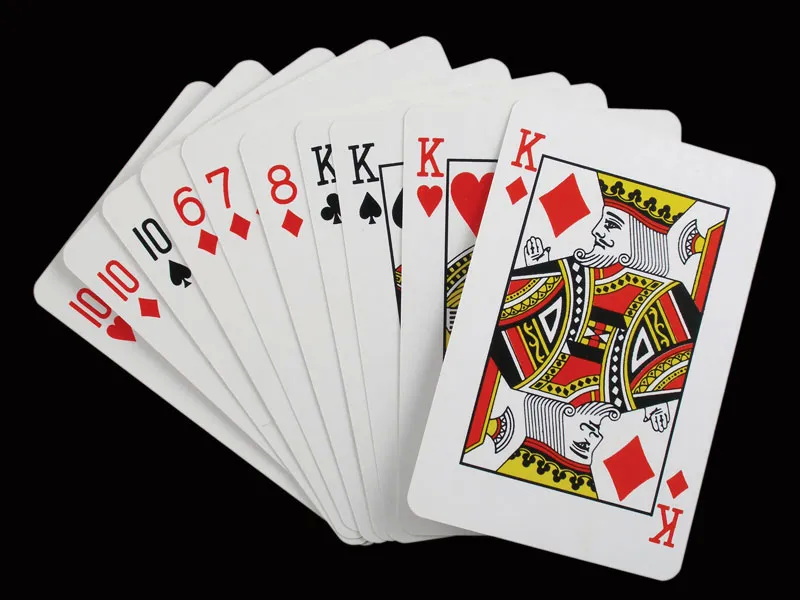
Gin Rummy is typically played by two players using a standard 52-card deck. The objective of the game is to score points by forming melds—combinations of cards that meet specific criteria. Players aim to minimize the value of their unmatched cards, known as "deadwood," while maximizing their melds.
Key Concepts
- Melds: These are combinations of cards that can either be sets (three or four cards of the same rank) or runs (three or more cards in sequence of the same suit).
- Deadwood: Cards that are not part of any meld. The goal is to reduce deadwood as much as possible.
- Knocking: A player can end a round by knocking when their deadwood total is 10 points or less.
- Going Gin: This occurs when a player forms melds with all their cards, resulting in no deadwood.
Game Setup
Required Materials
To play Gin Rummy, you need:
- A standard 52-card deck (no jokers).
- A score sheet and pen for keeping track of points.
- Two players.
Dealing Cards
1. Determine the Dealer: Each player draws one card from a shuffled deck. The player with the lowest card becomes the dealer.
2. Deal Cards: The dealer shuffles the deck and distributes 10 cards to each player, alternating between them.
3. Stock and Discard Pile: Place the remaining cards face down in the center to form the stock pile. Flip the top card face up to start the discard pile.
Basic Rules of Play
Objective
The primary goal is to reach an agreed-upon score, usually 100 points, before your opponent does.
Gameplay Mechanics
1. Starting Play: The non-dealer goes first. They can either draw from the discard pile or take the top card from the stock pile.
2. Discarding: After drawing, players must discard one card onto the discard pile.
3. Alternating Turns: Players take turns drawing and discarding until one player knocks or goes Gin.
Scoring Points
- Knocking: If a player knocks, they must reveal their hand and lay down their melds, discarding one card.
- Going Gin: If a player goes Gin, they reveal all their cards as melds without any deadwood.
End of Round
The round ends when:
- A player knocks or goes Gin.
- The stock pile runs out (only two cards remain), resulting in no points awarded for that round.
Scoring System
Points are calculated based on unmatched cards:
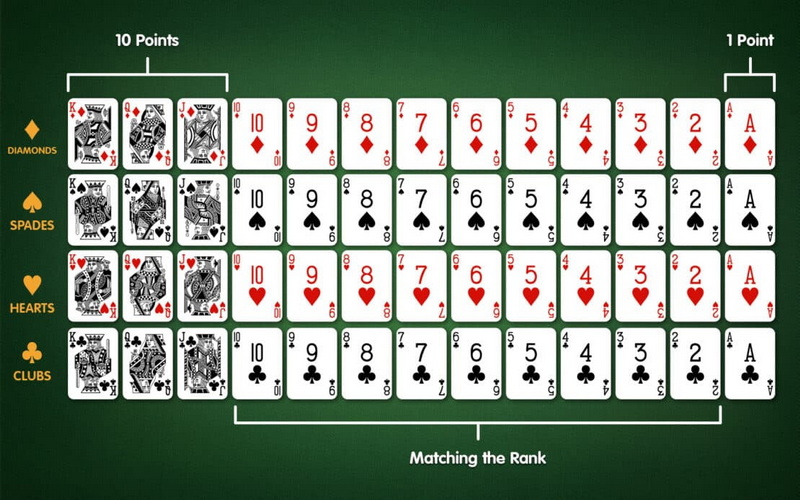
- Face cards (Kings, Queens, Jacks) are worth 10 points each.
- Number cards (2 through 10) are worth their face value.
- Aces are worth 1 point.
Points Calculation
1. Knocking Player's Score: Subtract the total value of unmatched cards from their opponent's total.
2. Undercut Rule: If the opponent's deadwood is equal to or less than that of the knocking player's after laying off any melds, they receive an undercut bonus (usually 25 points).
3. Going Gin Bonus: A player who goes Gin receives a bonus (typically 25 points) plus the total value of their opponent's deadwood.
Advanced Strategies
To excel at Gin Rummy, consider these strategies:
Forming Melds Early
Aim to form melds as quickly as possible while keeping track of what your opponent is collecting. This can help you anticipate their moves and adjust your strategy accordingly.
Managing Deadwood
Regularly assess your hand for high-value deadwood cards and try to replace them with potential melds. Discard high-value deadwood early if it does not fit into any melds.
Observing Opponent's Discards
Pay attention to what your opponent picks up and discards; this can give you insight into their strategy and help you block them from completing their melds.
Timing Your Knock
Consider waiting to knock until you have minimized your deadwood effectively. Sometimes it's better to hold out for Gin rather than risk giving your opponent an advantage by knocking too soon.
Conclusion
Gin Rummy is an engaging game that combines strategy and skill with an element of chance. By understanding its rules and employing effective strategies, players can enhance their chances of winning while enjoying this timeless card game. Whether you're playing casually or competitively, mastering Gin Rummy can lead to countless hours of fun with friends and family.
Related Questions
1. What is the difference between knocking and going Gin?
Knocking occurs when a player has 10 points or less in deadwood but still has unmatched cards; going Gin means all cards are part of melds with no deadwood.
2. Can more than two players play Gin Rummy?
While traditional Gin Rummy is designed for two players, variations exist for larger groups using multiple decks.
3. What happens if both players reach 100 points in the same round?
Typically, if both players reach 100 points in the same round, they continue playing until one player has a higher score at the end of a round.
4. Are there any variations of Gin Rummy?
Yes, variations include Straight Gin (no knocking allowed), Hollywood Gin (multiple rounds), and others that introduce different scoring methods or rules.
5. How do I keep track of scores in Gin Rummy?
Scores are usually tracked on paper by adding points from each round until one player reaches the target score agreed upon before starting the game.
Citations:
[1] https://card-games.wonderhowto.com/how-to/play-straight-gin-276668/
[2] https://huggingface.co/openbmb/VisCPM-Chat/raw/main/vocab.txt
[3] https://www.youtube.com/watch?v=Uy063oI9Gkk
[4] https://themahjongline.com/pages/how-to-play-gin-rummy
[5] https://luudoo.com/media/wysiwyg/downloads/instructions/Gin-rules_-Instructions-for-customised-Gin-card-_A4-print_.pdf
[6] https://bicyclecards.com/how-to-play/gin-rummy
[7] https://www.britannica.com/topic/gin-rummy
[8] https://en.wikipedia.org/wiki/Gin_rummy
[9] https://playingcarddecks.com/blogs/how-to-play/gin-rummy-game-rules


