Content Menu
● What Is Manufacturing Packaging?
● Core Types of Manufacturing Packaging
>> 1. Primary, secondary and tertiary packaging
>> 2. Materials used in manufacturing packaging
● Why Manufacturing Packaging Matters for Your Business
>> 1. Product protection and risk control
>> 2. Branding, CX, and differentiation
>> 3. Compliance, traceability, and information
>> 4. Sustainability and cost over product life cycle
● Pros and Cons of Manufacturing Packaging
>> Key advantages
>> Key challenges
● Latest Trends in Manufacturing Packaging (2024–2026)
>> 1. Shift to fiber‑based and sustainable solutions
>> 2. Data‑driven packaging decisions
>> 3. Branding, unboxing, and B2B experience
● Expert Perspective: Lessons from 20+ Years of Custom Box Manufacturing
● Practical Steps to Optimize Your Manufacturing Packaging
>> Step 1: Map your packaging levels and SKUs
>> Step 2: Clarify performance and compliance requirements
>> Step 3: Co‑design with your packaging supplier
>> Step 4: Test, collect feedback, and iterate
● How Shenzhen XingKun Supports Global Brands and Distributors
● When Should You Upgrade Your Manufacturing Packaging?
● Call to Action: Turn Your Packaging into a Competitive Advantage
● FAQs About Manufacturing Packaging
● References
Manufacturing packaging is more than a box around a product – it is a strategic system that protects goods, reduces total supply chain cost, and shapes how customers perceive your brand. As a manufacturer with over 20 years of custom packaging box experience serving 30+ countries, Shenzhen XingKun Packing Products Co., Ltd. understands how the right packaging turns "just another product" into a professional, export‑ready solution. [magetop]
What Is Manufacturing Packaging?
Manufacturing packaging is the planned combination of materials, structure, printing, and logistics used to protect and present products from the factory floor to the end user. It covers everything from primary retail boxes to bulk corrugated cartons and pallets, and is designed around product characteristics, transport conditions, regulatory requirements, and brand goals. [packhelp]
In practical B2B terms, manufacturing packaging answers four questions:
- How do we keep this product safe and compliant? [ar-racking]
- How do we move and store it efficiently? [packagingdigest]
- How do we communicate the right information to buyers and regulators? [epa]
- How do we showcase our brand and value in a crowded market? [linkedin]
Core Types of Manufacturing Packaging
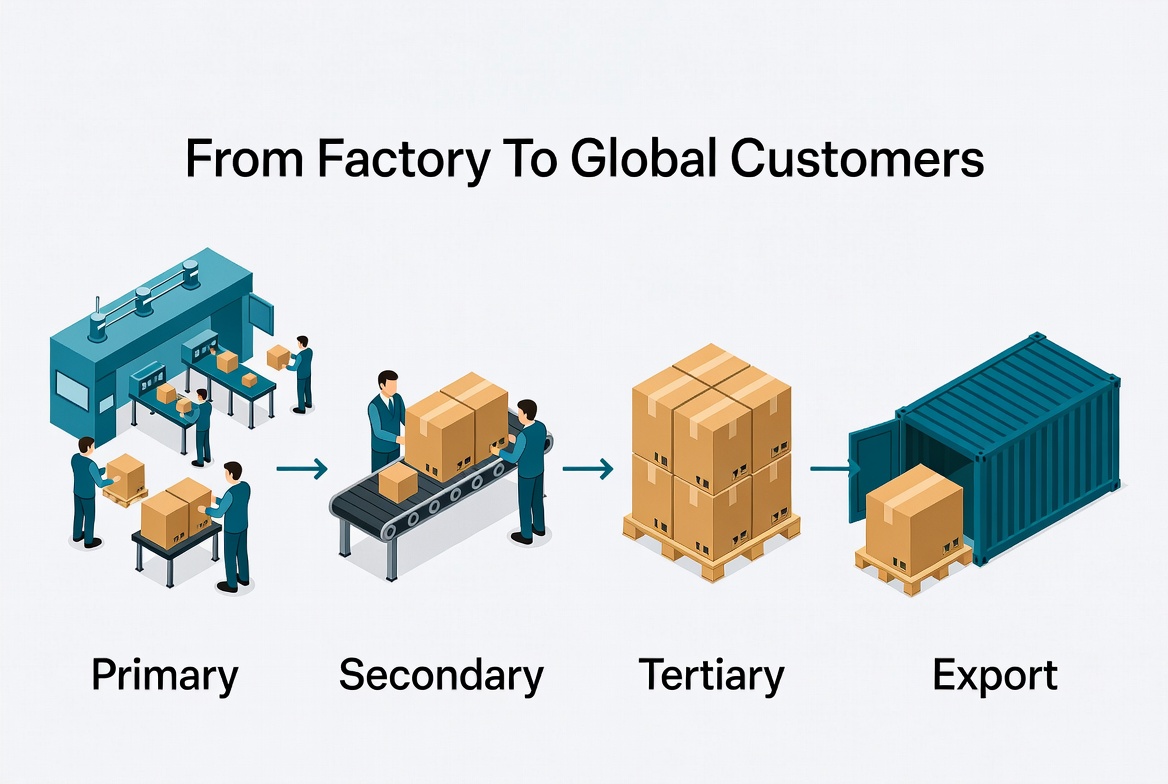
1. Primary, secondary and tertiary packaging
Most industrial and export projects use a layered system with three levels of packaging. Understanding these levels helps you design the right structure and cost at each stage of the supply chain. [youtube]
| Packaging level | Core role | Typical examples for packaging boxes |
| Primary packaging | Direct contact with the product; smallest sales unit; protects and informs consumers (packhelp) | Printed folding carton, rigid gift box, blister card |
| Secondary packaging | Groups multiple primary units for storage, handling, and display (packhelp) | Branded corrugated carton holding 12 inner boxes |
| Tertiary packaging | Bundles secondary packs into unit loads for transport and warehousing (ar-racking) | Palletized cartons with stretch wrap and corner protectors |
A well‑designed system optimizes the whole stack: if your primary box is too weak, your secondary and pallet packaging costs often rise to compensate. [packhelp]
2. Materials used in manufacturing packaging
The most common materials in manufacturing packaging include: [sustainablepackaging]
- Paperboard and corrugated board – widely used for custom boxes, displays, and export cartons due to their strength‑to‑weight ratio and recyclability. [sustainablepackaging]
- Plastic films and blisters – favored for moisture resistance and visibility, but increasingly scrutinized for environmental impact. [packagingdigest]
- Hybrid / multi‑material structures – combinations of paper, plastic, foils, or foam to balance barrier performance, cost, and sustainability. [sustainablepackaging]
Manufacturers like XingKun have shifted strongly toward paper‑based custom boxes and displays as more brands look for fiber‑based alternatives to plastic in e‑commerce and retail packaging. [xkdisplay]
Why Manufacturing Packaging Matters for Your Business
1. Product protection and risk control
The primary job of manufacturing packaging is to protect products across storage, handling, and transportation. Properly engineered packaging reduces breakage, moisture damage, contamination, and theft, which in turn lowers claims and returns. [magetop]
When you ship globally, small improvements in packaging strength or structure can prevent systematic damage across entire pallets or containers. For example, upgrading export cartons and palletization often costs less than one serious shipment complaint from an overseas distributor. [ar-racking]
2. Branding, CX, and differentiation
Packaging is the first physical touchpoint between your product and the buyer, and it heavily influences perceived quality. High‑quality printing, consistent color, and thoughtful structural design help your product stand out on the shelf or in the unboxing moment. [linkedin]
For B2B buyers, professional packaging boxes signal that your factory is reliable, compliant, and export‑ready, which reduces perceived risk when selecting new suppliers. Well‑designed packaging also supports marketing by integrating QR codes, usage icons, and clear branding across primary and secondary packs. [cn.linkedin]
3. Compliance, traceability, and information
Manufacturing packaging is a key channel for conveying mandatory information such as ingredients, safety warnings, barcodes, and country‑of‑origin details. This is particularly critical in industries like food, cosmetics, and electronics, where mis‑labeling can lead to fines or product recalls. [epa]
By standardizing how information appears on boxes, shippers can improve traceability, speed up customs clearance, and reduce human errors in warehouses and at retail. [ar-racking]
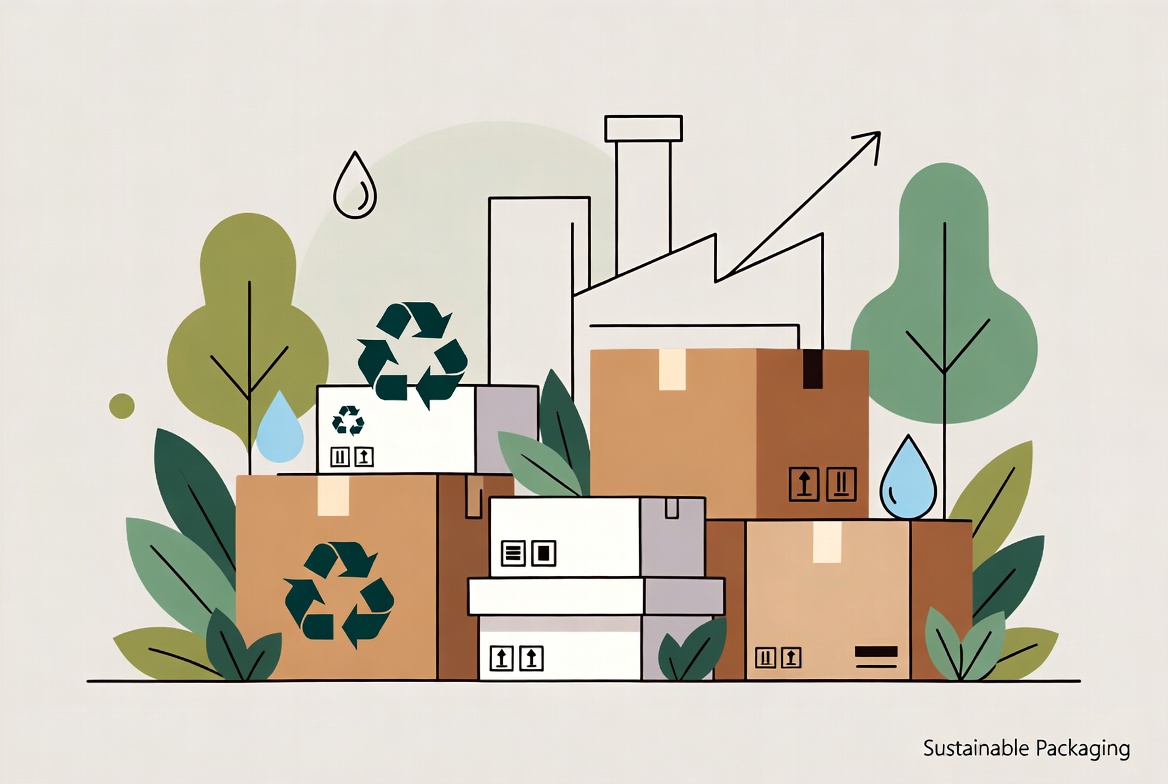
4. Sustainability and cost over product life cycle
Containers and packaging make up a significant portion of municipal solid waste, which is pushing regulators and brands to rethink materials and designs. The global sustainable packaging market is forecast to grow from about 276 billion USD in 2023 to around 558 billion USD by 2034, more than doubling in just over a decade. [stampedwithlovexoxo]
For manufacturers, this shift is both a challenge and an opportunity. Using recyclable paper‑based packaging, reducing unnecessary layers, and optimizing box sizes can lower material usage, shipping costs, and environmental impact at the same time. [jbmpackaging]
Pros and Cons of Manufacturing Packaging
Key advantages
Manufacturing packaging offers several important benefits for businesses. [magetop]
- Protection – Minimizes physical damage, contamination, and product loss in transit and storage. [youtube]
- Branding – Communicates brand values, positioning, and quality level at every touchpoint. [linkedin]
- Information – Provides essential product and safety details, supporting compliance and informed purchasing. [epa]
- Efficiency – Properly engineered cartons and palletization make warehousing, picking, and transport more efficient. [packagingdigest]
Key challenges
At the same time, manufacturing packaging involves trade‑offs that need careful management. [magetop]
- Cost pressure – Higher‑grade materials, custom printing, and complex structures can impact profit margins if not balanced against reduced damage and higher perceived value. [packagingdigest]
- Environmental impact – Traditional plastic‑heavy solutions and excessive packaging contribute to landfill and regulatory risk. [sustainablepackaging]
- Design complexity – Meeting functional, aesthetic, sustainability, and regulatory requirements across markets can be technically demanding. [ar-racking]
Working with an experienced partner that understands both printing craft and export logistics helps you turn these challenges into competitive advantages. [xkdisplay]
Latest Trends in Manufacturing Packaging (2024–2026)
1. Shift to fiber‑based and sustainable solutions
Industry reports show a strong push toward "paperization" – replacing plastics with fiber‑based options for food, e‑commerce, and secondary packaging. Converters have improved barrier coatings and finishes for paper, making it more suitable for applications that traditionally relied on plastic. [jbmpackaging]
As the sustainable packaging market grows at an estimated CAGR of around 7–8% toward 2030, brands increasingly expect vendors to offer recyclable, low‑impact custom boxes and clear sustainability claims. [stampedwithlovexoxo]
2. Data‑driven packaging decisions
Forward‑thinking CPG and industrial companies now use big data and testing to fine‑tune packaging designs. By analyzing damage rates, logistics routes, and customer feedback, they can optimize board grades, dimensions, and palletization patterns to reduce total landed cost. [incontextsolutions]
This data‑driven approach is especially valuable for high‑volume export programs, where even small reductions in corrugated weight or shipping damage translate into significant savings. [incontextsolutions]
3. Branding, unboxing, and B2B experience
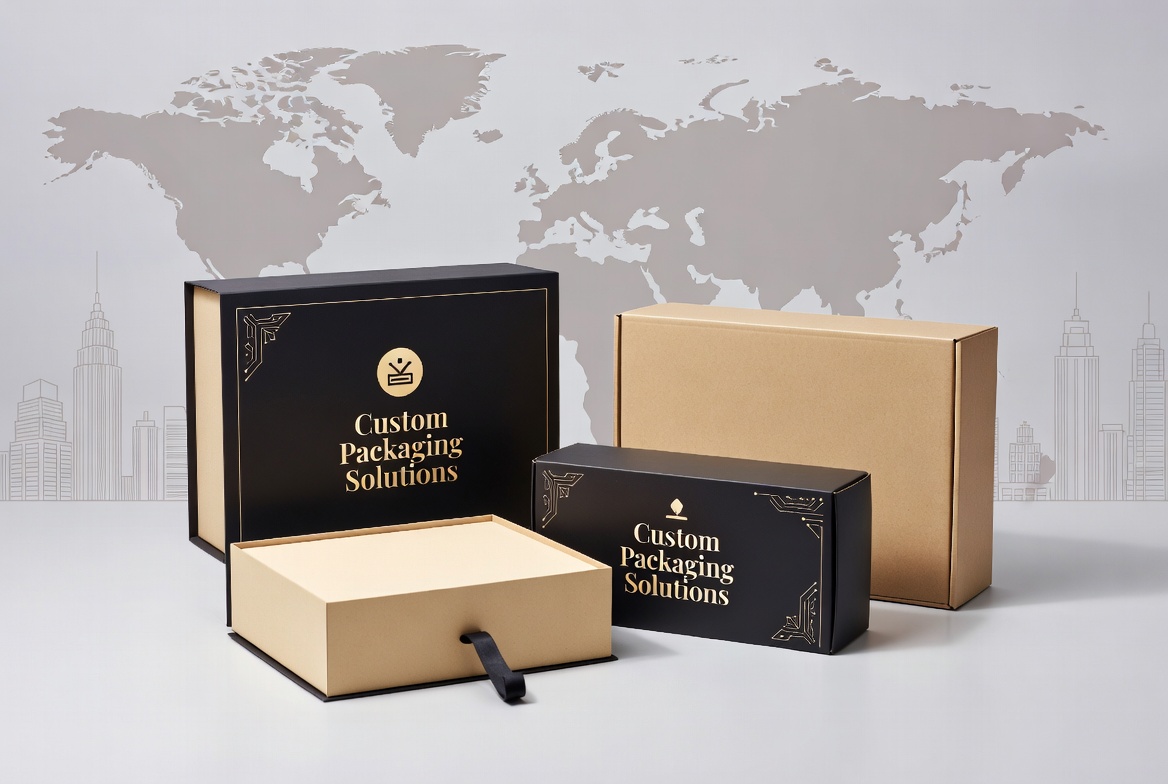
Even in industrial sectors, the unboxing experience is no longer just for consumer brands. Custom printed boxes, inserts, and display stands are used to create cohesive experiences from trade show samples to distributor deliveries. [altitudemarketing]
Manufacturing buyers increasingly value vendors who can integrate design, printing, and structural engineering into one service, streamlining sourcing and speeding up product launches. [altitudemarketing]
Expert Perspective: Lessons from 20+ Years of Custom Box Manufacturing
From the perspective of a packaging manufacturer like Shenzhen XingKun, three themes consistently determine successful long‑term partnerships with global brands and distributors. [made-in-china]
1. Start from the product and route, not from the box template – Good manufacturing packaging begins with product fragility, stacking height, climate, and route complexity, then moves backward to structure and printing. [ar-racking]
2. Align branding and logistics early – Structural design, printing layout, and pallet pattern should be developed together to avoid later compromises that waste cost or weaken presentation. [packhelp]
3. Standardize where possible – Once a solution works, standardize sizes, board grades, and print specs across SKUs to simplify reorders and reduce per‑unit cost. [altitudemarketing]
Over two decades, XingKun has evolved from a printing supplier into a solutions partner for custom packaging boxes, displays, playing cards, and other printed products, serving clients in more than 30 countries and regions. This experience allows the team to anticipate common export issues and propose packaging structures that work in real‑world conditions, not just on paper. [cn.linkedin]
Practical Steps to Optimize Your Manufacturing Packaging
Step 1: Map your packaging levels and SKUs
Begin by listing all primary, secondary, and tertiary packs currently in use, including dimensions, materials, and typical stacking heights. This gives you a baseline view of redundancies, overspecification, or weak points. [packhelp]
For many manufacturers, simple actions like harmonizing carton sizes or adjusting box strength in line with real stacking loads can reduce cost without sacrificing protection. [altitudemarketing]
Step 2: Clarify performance and compliance requirements
Define your minimum acceptable performance criteria: drop resistance, compression strength, moisture exposure, and regulatory labeling. Include export market differences, such as language, recycling marks, or safety symbols. [epa]
A clear requirement set allows your packaging partner to propose targeted box structures and materials rather than generic templates. [xkdisplay]
Step 3: Co‑design with your packaging supplier
Work closely with an experienced manufacturer to develop prototypes that balance structure, graphics, and sustainability goals. This typically includes: [cn.linkedin]
- Optimizing box style and board grade for stacking, shipping, and retail display. [packagingdigest]
- Aligning print method, color expectations, and finishing (e.g., matte, gloss, foil). [xkdisplay]
- Incorporating sustainable options where they make sense, without compromising performance. [stampedwithlovexoxo]
Partners like XingKun, who handle design, printing, and finishing in‑house, can shorten development cycles and keep color and quality consistent across reorders. [cn.linkedin]
Step 4: Test, collect feedback, and iterate
Once trial orders go into the market, gather feedback from logistics, sales, and end customers. Measure damage rates, pallet stability, and ease of handling, and monitor how distributors or retailers respond to the new packaging. [incontextsolutions]
Use this data to make iterative improvements—sometimes a small change in box size, handle position, or insert design dramatically improves user experience and cost. [incontextsolutions]
How Shenzhen XingKun Supports Global Brands and Distributors
As a professional printing and packaging manufacturer based in Shenzhen, XingKun focuses on custom packaging boxes, display stands, playing cards, and other printed products for international clients. Over 20 years of experience and long‑term cooperation with customers in more than 30 countries and regions have shaped a service model built around four pillars. [made-in-china]
- End‑to‑end custom solutions – From structural design and sample development to mass printing, finishing, and packing. [xkdisplay]
- Export‑ready quality control – Mature processes aligned with overseas client requirements for color consistency, material traceability, and packaging robustness. [made-in-china]
- Flexible order handling – Ability to support both pilot runs and high‑volume orders, which is critical for brands testing new markets or packaging formats. [cn.linkedin]
- Responsive communication – English‑speaking teams and multi‑channel contact options (phone, email, website) make it easier for overseas buyers to coordinate projects. [xkdisplay]
For buyers who want to consolidate printing and packaging sourcing in China, working with a factory like XingKun reduces complexity and shortens product launch timelines. [made-in-china]
When Should You Upgrade Your Manufacturing Packaging?
Based on industry best practices and real client projects, you should consider reviewing or upgrading your packaging when: [linkedin]
- You are entering new export markets with different regulations or logistics profiles. [sustainablepackaging]
- Damage rates, returns, or complaints about packaging appearance are rising. [incontextsolutions]
- Your brand is repositioning toward a higher‑end or eco‑friendly image. [jbmpackaging]
- Unit shipping costs are increasing and you suspect packaging size or weight is a factor. [altitudemarketing]
Early collaboration with a specialist allows you to treat packaging as a strategic investment, not just a cost line. [magetop]
Call to Action: Turn Your Packaging into a Competitive Advantage
If you are planning to upgrade your manufacturing packaging—whether for a new product line, an export expansion, or a sustainability initiative—consider partnering with an experienced custom box manufacturer in China. Shenzhen XingKun Packing Products Co., Ltd can support you from concept to finished packaging, combining structural engineering, high‑quality printing, and export‑grade quality control. [made-in-china]
You can reach XingKun via the contact details on the official website to discuss your custom packaging box requirements, request samples, or start a pilot project for your next launch. [cn.linkedin]
FAQs About Manufacturing Packaging
Q1: What is the difference between manufacturing packaging and retail packaging?
Manufacturing packaging covers the full system—from primary product packs to export cartons and pallets—designed around production, logistics, and compliance, while retail packaging focuses mainly on shelf appeal and consumer experience. [packhelp]
Q2: How can better packaging reduce my total cost?
By lowering product damage, optimizing pallet loads, and reducing excess material, well‑engineered packaging decreases claims, storage space, and freight cost per unit. [magetop]
Q3: What are the most common materials for manufacturing packaging boxes?
Paperboard and corrugated board are the most widely used due to their strength, printability, and recyclability, with plastic films, blisters, and hybrid structures used where extra barrier performance is required. [packhelp]
Q4: How is sustainability changing manufacturing packaging?
Fast‑growing demand for sustainable packaging and stricter regulations are driving a shift toward recyclable paper‑based solutions, material right‑sizing, and clearer environmental claims on packs. [stampedwithlovexoxo]
Q5: Why work with a specialized packaging manufacturer instead of a general printer?
Specialized manufacturers combine structural design, testing experience, and export‑oriented quality control with advanced printing, resulting in packaging that performs reliably across real‑world logistics and brand requirements. [altitudemarketing]
References
1. PackageIt. "What Is Manufacturing Packaging? Complete Guide." 2023. [Link] [magetop]
2. Packhelp. "Types of Packaging: Primary, Secondary and Tertiary." 2023. [Link] [packhelp]
3. AR Racking. "Primary, Secondary and Tertiary Packaging: Types and Differences." 2024. [Link] [ar-racking]
4. Packaging Digest. "5 Types of Packaging Materials and Their Best Uses." 2024. [Link] [packagingdigest]
5. U.S. EPA. "Containers and Packaging: Product-Specific Data." [Link] [epa]
6. Sustainable Packaging Coalition. "2025 Sustainable Packaging Trends Report." 2025. [PDF] [sustainablepackaging]
7. Stamped with Love. "Sustainable Packaging Statistics – 2025 Edition." 2025. [Link] [stampedwithlovexoxo]
8. InContext Solutions. "How Big Data Is Transforming Packaging Decision Strategies." 2023. [Link] [incontextsolutions]
9. Altitude Marketing. "SEO Strategies for Packaging Brands." 2025. [Link] [altitudemarketing]
10. Shenzhen XingKun Packing Products Co., Ltd Official Site. "Wholesale Packaging Boxes, Playing Cards, Display …" 2026. [Link] [xkdisplay]
11. LinkedIn. "XingKun Packing Products Co Ltd." [Link] [cn.linkedin]
12. Made‑in‑China. "Sinqueen (HK) Co., Ltd (Shenzhen XingKun Printing Products Co., Ltd)." [Link] [made-in-china]
13. JB Machinery / JBM Packaging and related industry blogs on sustainable and business‑case perspectives for packaging. [jbmpackaging]


