Content Menu
● Why the Right Shipping Supplies Matter More Than You Think
● Core Types of Shipping Supplies You Actually Need
>> Shipping Boxes and Cartons
>> Protective Cushioning (Bubble Wrap, Foam, Peanuts)
>> Tapes and Sealing Materials
>> Labels, Markings, and Documentation
● Key Factors to Consider When Choosing Shipping Supplies
>> Product Size, Weight, and Density
>> Fragility and Sensitivity
>> Shipping Distance, Mode, and Route
>> Budget and Total Cost of Ownership
● Step‑by‑Step Framework to Choose the Right Shipping Supplies
>> Step 1 – Define Your Real‑World Requirements
>> Step 2 – Shortlist Packaging Options and Request Samples
>> Step 3 – Test, Stress, and Document
>> Step 4 – Standardize, Train, and Monitor
● Pro Tips from a Global Packaging Manufacturer
>> Standardize Box Families to Cut Cost and Complexity
>> Use Branding Strategically on Shipping Boxes
>> Build Sustainability into Your Packaging Choices
● Common Mistakes Businesses Make with Shipping Supplies
>> Using One "Universal" Box for Everything
>> Underestimating Tape and Label Quality
>> Ignoring Carrier and Customs Requirements
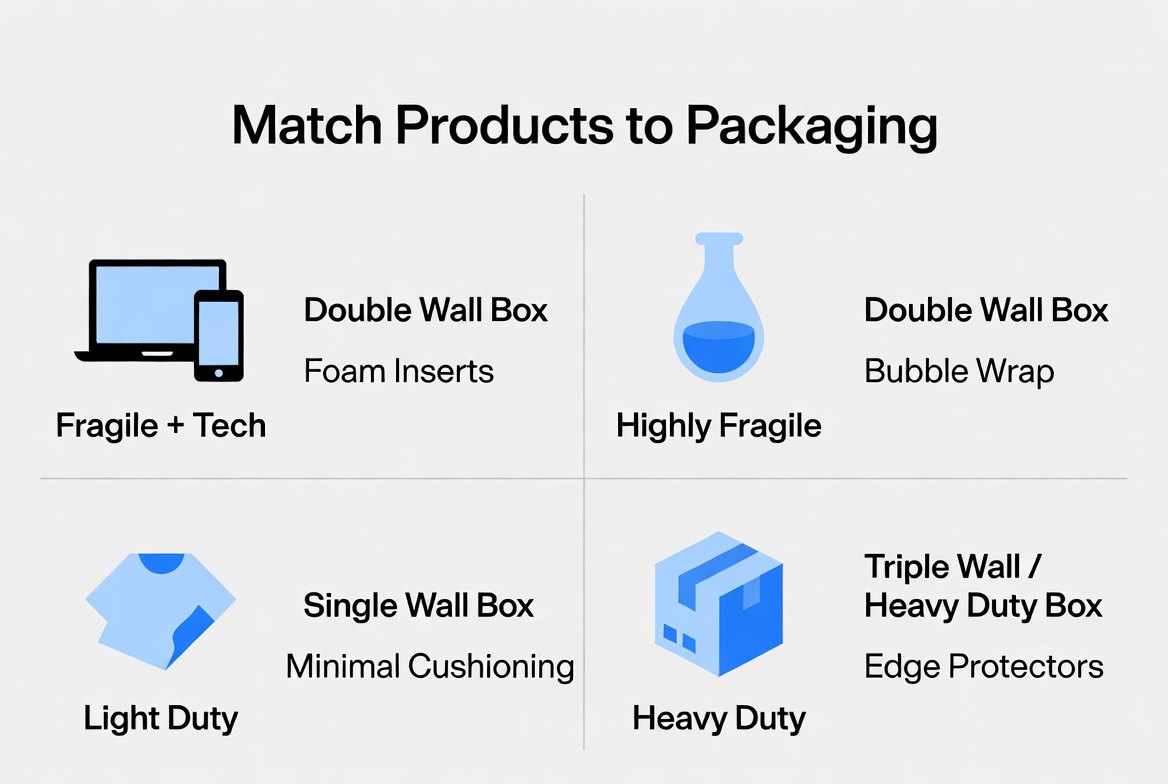
● Quick Reference Table – Matching Products to Shipping Supplies
● How an Experienced Packaging Partner Adds Value
● Call to Action – Upgrade Your Shipping Supplies Strategy
● Frequently Asked Questions (FAQ)
>> 1. How do I know if my current shipping boxes are strong enough?
>> 2. Is it worth paying more for water‑activated tape?
>> 3. How can I reduce my shipping damage rate quickly?
>> 4. What is the best way to balance sustainability and protection?
>> 5. When should I move from standard packaging to custom‑engineered solutions?
● References
As a packaging manufacturer with over 20 years of export experience, I've seen first‑hand how the "right" shipping supplies can quietly protect profits, brand reputation, and customer loyalty across more than 30 global markets. This guide combines practical lessons from real manufacturing floors and export operations with proven best practices to help you choose shipping supplies that actually work for your products and your budget. [uspsdelivers]
Why the Right Shipping Supplies Matter More Than You Think
For many brands, the unboxing moment is the first physical touchpoint with the customer, and poor packaging can destroy that experience in seconds. When a product arrives crushed, soaked, or poorly labeled, customers usually blame the brand, not the courier or the weather. [accel-inc]
Choosing the right shipping supplies drives five critical outcomes: [ups]
- Product protection during real‑world transit, not just lab conditions
- Brand perception, especially for premium and DTC products
- Customer satisfaction and reviews, which influence repeat orders
- Return and damage rate reduction, directly impacting your margin
- Total landed cost optimization, by balancing materials, freight, and labor
A simple example: upgrading from thin, recycled boxes to correctly‑rated corrugated cartons can reduce damage rates enough to offset slightly higher material costs, especially for fragile or high‑value items. [ups]

Core Types of Shipping Supplies You Actually Need
Instead of buying every packaging product you see in a catalog, build a lean, standardized set of supplies that covers 80–90% of your shipping scenarios. Below are the essentials most businesses should consider. [uspsdelivers]
Shipping Boxes and Cartons
Corrugated boxes are still the backbone of safe, efficient shipping. The key is matching the box type and strength to the product and shipping route. [accel-inc]
- Single‑wall corrugated boxes – suitable for light to medium‑weight goods shipping domestically
- Double‑wall or heavy‑duty cartons – ideal for heavier, dense, or fragile products and export shipments
- Custom‑sized boxes – reduce void fill, shipping cost, and damage risk for high‑volume SKUs
Always check the weight limit and edge crush test (ECT/BF rating) printed on the box flap to avoid overloading. For international shipping, it is safer to choose a slightly stronger grade than you think you need, especially for long, multi‑leg journeys. [freightamigo]
Protective Cushioning (Bubble Wrap, Foam, Peanuts)
Protective materials prevent shock, vibration, and compression damage:
- Bubble wrap – versatile cushioning and surface protection for electronics, glassware, and sensitive finishes
- Packing peanuts/loose fill – effective for irregularly shaped items but can be messy for end users
- Foam inserts or custom foam – the best option for precision parts, instruments, and high‑value goods requiring consistent protection [uspsdelivers]
The goal is to maintain at least 5 cm (2 inches) of cushioning between the product and the box wall on all sides in most scenarios. For sensitive items, consider a double‑boxing strategy recommended by major carriers: an inner box suspended inside a larger outer box with cushioning in between. [freightamigo]
Tapes and Sealing Materials
Using the wrong tape is one of the most common causes of carton failure. [ups]
- Pressure‑sensitive packing tape – standard choice for most boxes; choose industrial‑grade, 48–72 mm wide
- Water‑activated (gummed) tape – creates a stronger bond with corrugated fiber; often preferred for export and high‑value items [freightamigo]
- Reinforced filament tape – ideal for heavy boxes, strapping, and securing loose or awkward items
Seal boxes using the H‑taping method: one strip along the center seam and two across the edges, covering all flaps. Avoid masking tape, cellophane tape, and string, as they are not reliable for shipping loads. [freightamigo]
Labels, Markings, and Documentation
Labels do more than display addresses – they reduce mis‑sorting, customs delays, and handling errors. [ups]
- Shipping labels with clear, machine‑readable addresses and barcodes
- Handling labels such as "Fragile," "This Side Up," "Heavy," or "Keep Dry"
- Compliance labels and HS codes for cross‑border shipments, which customs authorities increasingly enforce [freightamigo]
Best practice is to place a duplicate address label or packing list inside the box, in case the outer label is damaged during transit. [goshippo]
Key Factors to Consider When Choosing Shipping Supplies
Instead of picking packaging based on price alone, evaluate these factors together to balance protection, cost, and sustainability. [containerandpackaging]
Product Size, Weight, and Density
Heavier and denser items exert more stress on the box and cushioning, even if they appear small. [accel-inc]
- Use boxes rated for the actual shipped weight, not just the product weight
- Avoid oversized cartons that require excessive void fill and increase dimensional weight charges
- Group small items in inner cartons or partitions to prevent internal collision [goshippo]
For long‑distance or multi‑hop shipping networks, assume your packages will be stacked, dropped, and compressed multiple times. [ups]
Fragility and Sensitivity
Fragile items (glass, ceramics, electronics, precision parts) require three layers of protection: [freightamigo]
1. Primary protection – wrap each unit in bubble wrap, foam, or paper
2. Stabilization – ensure items cannot move within the inner box
3. Impact absorption – provide external cushioning between the inner packaging and the outer carton
If you regularly ship fragile products, work with packaging engineers or experienced suppliers to develop custom foam or inserts tailored to your SKUs. [containerandpackaging]
Shipping Distance, Mode, and Route
Local delivery, express air freight, and long‑haul ocean shipments create very different risk profiles. [uspsdelivers]
- Domestic ground – more handling and stacking; focus on compression strength
- Express air – faster but may involve high vibration; secure all internal contents
- Ocean freight – exposure to humidity and temperature changes; consider moisture‑resistant materials and liners [freightamigo]
For cross‑border shipments, ensure packaging allows easy inspection without destroying the box, and that all customs documentation is accessible and protected. [freightamigo]
Budget and Total Cost of Ownership
The cheapest box is rarely the cheapest option when you factor in:
- Product cost and potential write‑offs from damage
- Reshipping, customer service, and refund costs
- Brand and review impact of damaged deliveries [magetop]
A common, expert approach is to calculate damage rate vs. packaging cost: if upgrading your box or cushioning reduces damage by even 1–2% on high‑value items, it often pays for itself quickly. [containerandpackaging]
Step‑by‑Step Framework to Choose the Right Shipping Supplies
This is the same practical framework we use when advising global clients on packaging boxes and printed shipping materials. [magetop]
Step 1 – Define Your Real‑World Requirements
Start by listing:
- Product type, dimensions, and weight
- Fragility level and acceptable damage rate
- Average shipping distance and typical carriers/modes
- Any regulatory, branding, or sustainability requirements [containerandpackaging]
This requirement sheet becomes the foundation for all packaging decisions and prevents you from choosing materials purely based on catalog descriptions or price.
Step 2 – Shortlist Packaging Options and Request Samples
Work with a specialist supplier to shortlist 2–3 realistic packaging options per product family. [accel-inc]
- Combine different box strengths, cushioning types, and sealing methods
- Ask for samples and review not just size, but feel, rigidity, and print options
- Check whether the supplier can maintain consistent quality across large, repeat orders [containerandpackaging]
For brand‑focused businesses, evaluate how the unboxing experience feels with each option.
Step 3 – Test, Stress, and Document
Never rely solely on theory or vendor promises. Test the shortlisted options using actual products, not dummy loads. [containerandpackaging]
- Perform a "shake test" and basic drop tests from realistic heights [goshippo]
- Simulate stacking by placing weight on top of the box for several days
- Record any damage, deformation, or seal failures, then compare across options
Document everything, especially failures – they are your best data for improving your packaging design. [containerandpackaging]
Step 4 – Standardize, Train, and Monitor
Once you choose the most suitable solution:
- Standardize box sizes, materials, and packing instructions into SOPs
- Train packing staff on correct H‑taping, cushioning, and labeling procedures [uspsdelivers]
- Monitor damage and return rates monthly, and review packaging if metrics worsen
Many high‑performing warehouses use visual guides at each packing station, showing pictures of how to pack each product type. [uspsdelivers]
Pro Tips from a Global Packaging Manufacturer
Over two decades of manufacturing packaging boxes and exporting printed products have taught us some practical lessons you rarely see in generic guides. [containerandpackaging]
Standardize Box Families to Cut Cost and Complexity
Instead of creating a unique box for every single SKU, define families of 5–10 standardized box sizes that can cover most shipments. [magetop]
- You gain better pricing for higher volumes per size
- Inventory management becomes simpler and more predictable
- Packers work faster because they repeatedly handle the same formats
We often help clients map their product catalog to a matrix of standard cartons, then create custom inserts only where truly needed.
Use Branding Strategically on Shipping Boxes
Plain brown boxes are functional, but custom‑printed packaging can significantly enhance brand recall and perceived value. [magetop]
- Print your logo, website, and key brand messages on outer cartons
- Use custom tape or labels for consistent branding even on standard boxes [magetop]
- Balance aesthetics with security; minimal external information may be better for high‑value or theft‑prone items
For international markets, consider adding simple icons or bilingual handling instructions to support non‑native readers.
Build Sustainability into Your Packaging Choices
More buyers now actively look for brands that use eco‑friendly packaging. [accel-inc]
- Choose recyclable corrugated materials and avoid mixed, hard‑to‑separate plastics when possible
- Optimize box sizing to reduce wasted air (and hence reduce shipping emissions)
- Communicate sustainability efforts clearly on packaging and product pages
Well‑designed sustainable packaging does not have to compromise protection or aesthetics when engineered correctly.
Common Mistakes Businesses Make with Shipping Supplies
Avoid these frequent pitfalls we observe across new and growing brands. [freightamigo]
Using One "Universal" Box for Everything
Trying to ship every product in the same box usually results in:
- Overuse of void fill and higher shipping costs
- Under‑protection for fragile or heavy items
- Poor, inconsistent unboxing experiences
A small, well‑planned set of standardized boxes performs far better.
Underestimating Tape and Label Quality
Low‑quality tape can peel in cold or humid environments, while poor labels may fade, smear, or detach. [ups]
- Invest in professional‑grade tape suitable for your climate and storage conditions
- Choose label materials and inks designed for barcodes and scanning equipment
- Always test printed labels on your actual cartons before rolling out a new format
Ignoring Carrier and Customs Requirements
Couriers and customs agencies often have specific rules about box strength, labeling, and documentation placement. [freightamigo]
- Review current packaging guidelines from your main carriers
- Ensure HS codes, country of origin, and required declarations are present for cross‑border shipments [freightamigo]
- Keep a checklist at each packing station for international orders
Ignoring these requirements can trigger delays, inspections, or even returns at the border.
Quick Reference Table – Matching Products to Shipping Supplies
| Product type | Recommended box | Cushioning & sealing | Labeling notes |
| Small electronics | Double‑wall corrugated box | Bubble wrap, inner carton, H‑taped seams (ups) | "Fragile," "This Side Up," duplicate address inside (ups) |
| Apparel & soft goods | Lightweight corrugated box | Minimal void fill, poly bag if needed (freightamigo) | Clear size/SKU labels, brand logo on box |
| Books & printed matter | Rigid carton, snug fit (goshippo) | Wrap each book, paper or bubble wrap (goshippo) | Address label on flat surface, packing slip inside (goshippo) |
| Glass/ceramic items | Double box system (ups) | Foam/bubble, 5 cm clearance on all sides (freightamigo) | "Fragile," "Handle with care," HS code for customs (freightamigo) |
| Heavy metal components | Heavy‑duty carton or crate (accel-inc) | Dense foam, reinforced or filament tape (ups) | "Heavy" label, center of gravity marking if needed |
How an Experienced Packaging Partner Adds Value
Working with a manufacturer that specializes in packaging boxes and printed shipping materials can significantly shorten your learning curve and reduce costly trial‑and‑error. [magetop]
An experienced partner can:
- Recommend optimal box structures, board grades, and print specs based on your products and markets
- Provide custom samples and prototypes for testing before you commit to large orders
- Help you design cohesive branding across boxes, inserts, and labels
- Support compliance with export, labeling, and sustainability requirements in multiple regions [freightamigo]
With over two decades of production and export experience, we've helped brands and distributors in more than 30 countries stabilize their damage rates, reduce freight costs, and improve customer satisfaction through better packaging design.

Call to Action – Upgrade Your Shipping Supplies Strategy
If you are scaling e‑commerce, entering new export markets, or struggling with damage and return rates, now is the best time to rethink your shipping supplies. A systematic approach to boxes, cushioning, tape, and labels can unlock lower costs, fewer complaints, and a stronger brand experience. [magetop]
Talk to a specialized packaging manufacturer that understands both printing and export logistics and can provide custom packaging boxes, inserts, and labeling solutions tailored to your industry and shipping routes. Share your product list, current packaging, and top damage or cost challenges – together, you can design a packaging system that supports your global growth instead of holding it back. [magetop]
Frequently Asked Questions (FAQ)
1. How do I know if my current shipping boxes are strong enough?
Check the printed ECT or burst strength rating on your cartons and compare it to the actual weight and stacking conditions in your supply chain. If you see frequent corner crush, panel bulging, or seam failure, it is a strong signal that you need a stronger box or better load distribution. [accel-inc]
2. Is it worth paying more for water‑activated tape?
For heavier boxes, international shipments, or high‑value products, water‑activated tape often provides better security and tamper evidence than standard pressure‑sensitive tape. It forms a stronger bond with corrugated surfaces and can reduce open‑box incidents during transit. [freightamigo]
3. How can I reduce my shipping damage rate quickly?
Start with a focused audit of your top damaged SKUs and review how they are currently packed. Simple changes like increasing cushioning thickness, switching to a double‑wall carton, or adding an inner box often reduce damage significantly without a complete packaging redesign. [ups]
4. What is the best way to balance sustainability and protection?
Use right‑sized corrugated boxes, avoid unnecessary mixed plastics, and choose recyclable void fill where possible. Then validate through real‑world testing to ensure that your more sustainable setup still meets your target damage rate. [accel-inc]
5. When should I move from standard packaging to custom‑engineered solutions?
Once a SKU reaches high, stable shipping volume or has a high unit value, custom packaging (such as tailored inserts or branded boxes) usually pays off. You gain better protection, faster packing, and a more distinctive brand experience at scale. [containerandpackaging]
References
1. PackageIt. "The Complete Guide to Choosing the Right Shipping Supplies for Your Business Needs." (Accessed 2026). [https://www.packageit.com/complete-guide-to-choosing-the-right-shipping-supplies]
2. USPS Delivers. "A Quick Guide to Efficient Picking, Packing & Shipping." 2026‑03‑30. [uspsdelivers]
3. Container & Packaging. "Choosing the Right Packaging Material – Expert Advice." 2025‑10‑16. [containerandpackaging]
4. UPS. "How to Pack a Box or Pallet for Shipping." 2026‑01‑11. [ups]
5. Accel Inc. "How to Select Packaging Materials | Expert Selection Guide." [accel-inc]
6. FreightAmigo. "Essential Packaging Tips: How to Pack a Box for Shipping Like a Pro." 2025‑11‑29. [freightamigo]
7. FreightAmigo. "Logistics Box Packaging Ultimate Guide." 2025‑12‑25. [freightamigo]
8. Shippo. "How to Ship Books: Best Packaging, Carriers & Cost‑Saving Tips." 2025‑08‑07. [goshippo]
9. Magetop. "How SEO Can Transform the Packaging Industry: A Guide for Manufacturers." 2025‑11‑03. [magetop]


