Content Menu
● Introduction: Why Sustainable Shipping Now
● What Makes Shipping "Sustainable"?
● The Business Case for Eco‑Friendly Shipping Supplies
● Core Eco‑Friendly Shipping Supplies You Should Know
>> 1. Recycled and FSC‑Certified Corrugated Boxes
>> 2. Paper‑Based Mailers and Inserts
>> 3. Biobased and Biodegradable Options
● How to Audit Your Current Packaging Footprint
● Designing Right‑Sized Packaging to Reduce Carbon Footprint
● Emerging Sustainable Packaging Trends You Should Track
>> 1. Next‑Generation Biobased Materials
>> 2. Smart Packaging for Better Disposal
>> 3. Circular and Reuse‑Based Systems
● Manufacturer's Perspective: How We Support Sustainable Shipping
● Practical Roadmap: How to Transition to Eco‑Friendly Shipping Supplies
● Example: From Over‑Packaging to Optimized Shipping Box
● Choosing the Right Eco‑Friendly Packaging Partner
● Call to Action: Turn Your Shipping Into a Sustainability Advantage
● FAQs on Sustainable Shipping and Eco‑Friendly Supplies
● References
Introduction: Why Sustainable Shipping Now
Over the past 20 years working in packaging manufacturing, I have watched sustainable shipping move from a niche request to a core requirement in nearly every export order we handle. Today, brands in more than 30 countries ask not only "How fast can we ship?" but also "What is the carbon footprint of this box, tape, and filler?". As climate change and pollution dominate boardroom and consumer discussions, eco‑friendly shipping supplies are no longer a marketing extra – they are a fundamental part of modern supply chains. [dhl]
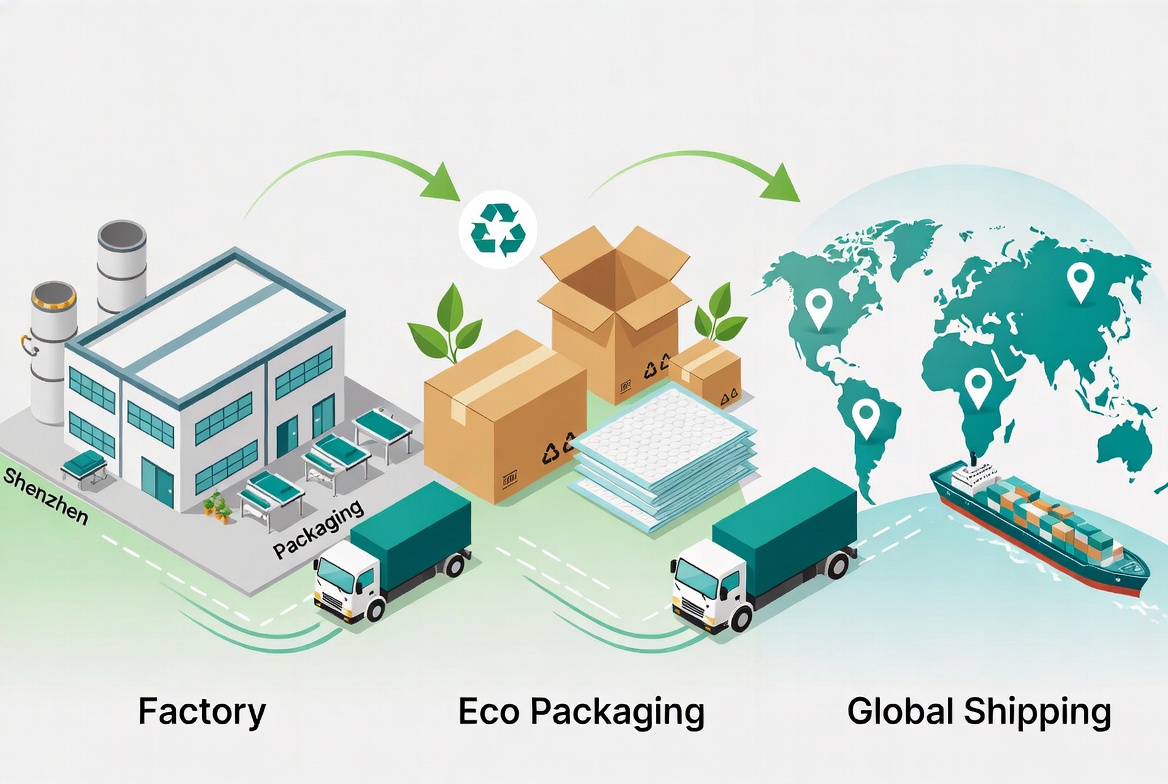
In this article, I will walk you through a practical, expert‑level framework for sustainable shipping and eco‑friendly packaging supplies based on what we see daily as a packaging box manufacturer in Shenzhen, combined with the best current industry research. You will learn how to choose the right materials, redesign your packaging for efficiency, and work with manufacturing partners to reduce your carbon footprint without sacrificing product protection or brand experience. [xkdisplay]
What Makes Shipping "Sustainable"?
Before choosing products, you need a clear definition of sustainable shipping that your procurement, logistics, and marketing teams can share. In practice, sustainable shipping means designing your packaging and logistics so that you minimize resource use and emissions across the entire lifecycle: sourcing, production, transport, use, and end‑of‑life. [dhl]
Key dimensions include:
- Material impact – recycled content, recyclability, compostability, and toxicity of inks and coatings. [dhl]
- Volume and weight – right‑sized boxes and lightweight structures to reduce transport emissions. [dhl]
- Reusability – the ability of boxes and containers to be used multiple times. [youtube]
- End‑of‑life – how easy it is for customers to recycle, compost, or responsibly dispose of the packaging. [dhl]
From a manufacturer's perspective, truly eco‑friendly shipping supplies are those that balance environmental performance, cost‑effectiveness, and protection for the product through actual transit conditions, not just lab tests. [fedex.com]
The Business Case for Eco‑Friendly Shipping Supplies
Many companies still treat sustainable shipping as a compliance checkbox, but the commercial benefits are now too significant to ignore. In our work with international brands, we consistently see four main ROI drivers when they switch to eco‑friendly packaging supplies. [xkdisplay]
- Lower freight costs through right‑sizing
By reducing empty space and moving to lighter structures, shippers cut dimensional weight and save on air and sea freight charges. [dhl]
- Reduced damage and returns
High‑quality corrugated boxes and optimized inner supports reduce breakage, which directly lowers return shipping, repackaging, and disposal costs. [fedex.com]
- Stronger brand and higher customer loyalty
Consumers increasingly expect recyclable or compostable packaging, and many brands report higher satisfaction scores when they communicate their packaging choices clearly. [betterpackaging]
- Future‑proofing against regulation
From extended producer responsibility (EPR) to plastic taxes, regulators are moving fast; brands that act early on sustainable packaging will adapt with less disruption. [betterpackaging]
From the factory side, we also see a fifth benefit: as we standardize sustainable box structures and materials, production efficiency improves, which helps keep unit prices competitive. [xkdisplay]
Core Eco‑Friendly Shipping Supplies You Should Know
1. Recycled and FSC‑Certified Corrugated Boxes
For most B2B shippers, the corrugated shipping box is the backbone of sustainable packaging. We typically recommend: [dhl]
- High‑recycled content kraft liners paired with sturdy fluting, optimized for your specific weight and stacking needs. [xkdisplay]
- FSC‑certified virgin fibers where additional strength or print quality is required, especially for display‑grade boxes. [dhl]
From a manufacturing standpoint, we can fine‑tune board grades (for example, moving from unnecessarily heavy double wall to engineered single wall) to reduce material while maintaining test performance. [dhl]
2. Paper‑Based Mailers and Inserts
For smaller items and e‑commerce orders, paper mailers and die‑cut paper inserts are now standard alternatives to poly mailers and plastic void fill. Properly designed, they provide a compact, mono‑material solution that simplifies recycling for end users. [ecoenclose]
Manufacturers can combine water‑based adhesives and flexo printing with low‑VOC inks to keep the entire mailer compatible with existing paper recycling streams. [ecoenclose]
3. Biobased and Biodegradable Options
The industry is rapidly scaling bio‑based materials such as PLA (polylactic acid) and mushroom‑based packaging for specific use cases like protective molds or inner trays. These materials offer plastic‑like functionality with lower toxicity and, in some cases, compostability, though they often require industrial composting conditions. [youtube]
Our advice as a manufacturer is to use these advanced materials strategically, where they clearly outperform paper or traditional plastics and you have clarity on end‑of‑life infrastructure in your target markets. [youtube]
How to Audit Your Current Packaging Footprint
Most companies underestimate how much they can gain from a structured packaging audit. Before redesigning everything, we encourage customers to walk through these steps: [fedex.com]
1. Map all packaging SKUs
List every box, mailer, tape, filler, and label you use, including dimensions, materials, and annual volumes. [fedex.com]
2. Measure recyclability and recycled content
Identify which items are mono‑material and widely recyclable, and which rely on mixed materials or plastic films that complicate disposal. [dhl]
3. Analyze dimensional weight vs. product weight
For your main shipping configurations, compare the outer dimensions of the box to the actual product size and weight to detect over‑sized packaging. [dhl]
4. Review damage and return data
Coordinate with customer service and logistics to understand where breakage or leakage occurs and how packaging contributes. [fedex.com]
5. Prioritize "quick wins"
Start with high‑volume SKUs where a small structural change or switch to recycled board will yield immediate environmental and cost impact. [fedex.com]
From our experience, simply consolidating box sizes and eliminating unnecessary inner boxes can already cut material use and shipping emissions noticeably without any complex material changes. [xkdisplay]
Designing Right‑Sized Packaging to Reduce Carbon Footprint
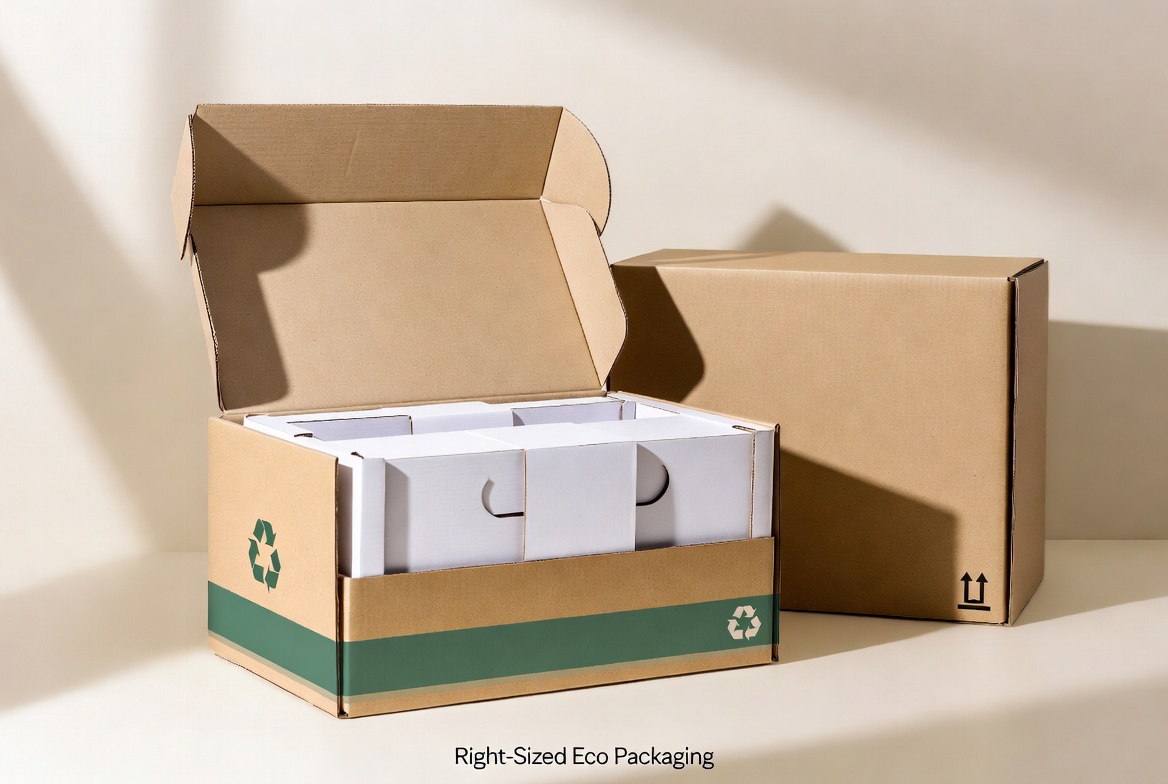
Right‑sizing is one of the fastest ways to reduce your shipping carbon footprint because it cuts both material consumption and transport emissions. In our design studio, we typically follow this approach: [xkdisplay]
- Eliminate empty space
We adjust box dimensions to tightly match product or order profiles, using modular sizes to balance production efficiency and warehouse complexity. [dhl]
- Optimize structure, not just material
Many brands over‑spec board grades; by redesigning internal supports or using engineered corrugation, we can reduce grammage while maintaining stacking strength and compression performance. [dhl]
- Reduce print layers and coatings
Simplifying graphics and moving to water‑based inks reduces resource use and improves recyclability, especially for dark or heavy coverage designs. [dhl]
- Test before full rollout
We always recommend sample testing under real transit conditions and gathering customer feedback before converting 100% of your shipments. [fedex]
The result is a packaging system that "fits like a glove" – not only for your product, but also for pallets, containers, and shelf space, which further reduces handling and storage emissions. [dhl]
Emerging Sustainable Packaging Trends You Should Track
To build a future‑proof packaging strategy, it is important to follow the leading sustainable packaging trends shaping 2026 and beyond. Based on global logistics and industry reports, three developments are especially relevant. [youtube]
1. Next‑Generation Biobased Materials
Businesses are increasing adoption of advanced bio‑based materials, such as PLA and mycelium (mushroom‑based) packaging, especially for protective applications. These materials aim to deliver plastic‑like strength with lower long‑term environmental impact, though their practical benefits still depend on local collection and composting systems. [youtube]
2. Smart Packaging for Better Disposal
Smart packaging using QR codes, NFC tags, or printed instructions is helping customers understand how to dispose of materials properly. This trend integrates digital experiences with physical packaging, guiding users toward recycling or reuse rather than landfill. [youtube]
3. Circular and Reuse‑Based Systems
Refill and reuse models, where durable outer packaging is paired with minimal refill cartridges or liners, are expanding into new sectors beyond beauty and household products. For B2B shipments, returnable crates, foldable cartons, and rental packaging pools are becoming more common, especially in regional supply chains. [betterpackaging]
As a manufacturer, we increasingly design boxes not as single‑use consumables but as components in a circular packaging system that supports multiple trips and simplified end‑of‑life recovery. [xkdisplay]
Manufacturer's Perspective: How We Support Sustainable Shipping
As a professional printing and packaging box manufacturer with over 20 years of experience, we see our role as a technical partner rather than a simple supplier. When international brands ask us to help reduce their shipping emissions and improve packaging sustainability, we typically provide: [shippingonline]
- Material consulting – Selecting the right balance of recycled content, virgin fibers, and coatings for each application. [dhl]
- Structural design – Engineering right‑sized boxes, display units, and inserts using CAD and performance testing. [xkdisplay]
- Print and branding optimization – Recommending low‑impact inks, simplified designs, and layout changes that reduce waste while preserving brand impact. [dhl]
- Quality and consistency – Maintaining strict quality control to ensure every batch meets agreed strength, print, and sustainability standards. [shippingonline]
Our factory in Shenzhen is set up for custom production runs for clients in more than 30 countries, allowing us to align packaging specifications with different regional regulations and logistics realities. This hands‑on experience helps us validate what actually works in transit, not just on paper. [shippingonline]
Practical Roadmap: How to Transition to Eco‑Friendly Shipping Supplies
If you are just starting or planning your next optimization cycle, use this step‑by‑step roadmap as a practical action plan. [fedex]
1. Audit your current packaging system
Map SKUs, identify over‑sized boxes and non‑recyclable materials, and link them to damage and freight cost data. [fedex.com]
2. Set clear sustainability and performance targets
Define goals such as minimum recycled content, maximum number of box sizes, or a reduction in average dimensional weight. [dhl]
3. Engage your packaging manufacturer early
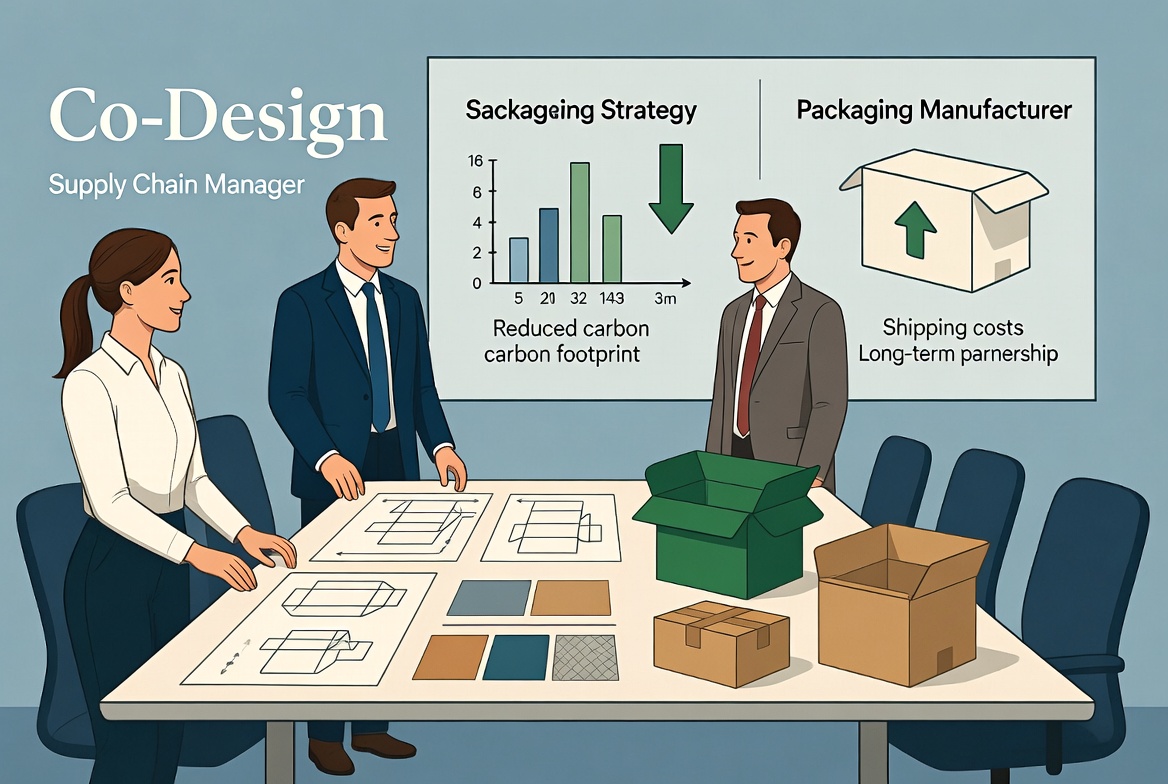
Share your audit and targets with your packaging supplier; they can propose board grades, structures, and print options aligned with your goals. [xkdisplay]
4. Prototype and test
Produce small test batches to evaluate assembly time, packing efficiency, shipping performance, and customer feedback. [fedex]
5. Train your packing team
Provide clear instructions on how much filler to use, how to place items in the box, and how to seal packages consistently to avoid waste. [fedex]
6. Communicate with customers
Print simple icons, QR codes, or short text on boxes that explain how to recycle or reuse the packaging and why you chose these materials. [youtube]
7. Iterate based on data
Track breakage rates, freight costs, and customer feedback over several months, then refine dimensions and materials as necessary. [fedex.com]
This structured approach ensures that sustainability improvements translate into measurable performance gains rather than isolated marketing claims. [fedex.com]
Example: From Over‑Packaging to Optimized Shipping Box
To illustrate how these principles work in practice, consider a hypothetical brand shipping fragile consumer electronics internationally. Initially, they use large double‑wall boxes with foam inserts and plastic fillers, resulting in high dimensional weight and mixed‑material waste. [dhl]
Working with a packaging manufacturer, they redesign the system as follows:
- Move to a right‑sized single‑wall corrugated box with engineered inner cardboard supports that lock the product in place. [xkdisplay]
- Replace foam and plastic void fill with recycled paper cushioning and custom‑cut inserts. [dhl]
- Simplify print to one‑color branding with water‑based inks and add a clear recycling instruction on the bottom panel. [dhl]
The result is lower material use, reduced shipping weight, consistent product protection, and easier disposal for customers – all of which contribute to a smaller carbon footprint and stronger brand perception. [fedex.com]
Choosing the Right Eco‑Friendly Packaging Partner
The quality of your sustainable shipping strategy depends heavily on the partner you select for printing and packaging box production. When evaluating suppliers, we recommend assessing: [xkdisplay]
| Evaluation factor |
What to look for |
Why it matters |
| Experience |
10+ years in packaging design and printing for international clients. (xkdisplay) |
Ensures they understand different markets and logistics conditions. (xkdisplay) |
| Material options |
Range of recycled, FSC‑certified, and specialty materials. (dhl) |
Gives flexibility to match sustainability with performance and cost. (dhl) |
| Design capability |
In‑house structural and graphic design support. (xkdisplay) |
Helps you move quickly from idea to tested prototypes. (dhl) |
| Quality control |
Clear testing standards and documented inspections. (xkdisplay) |
Reduces risk of box failures and inconsistent print quality. (fedex.com) |
| Global service |
Ability to serve multiple regions reliably. (xkdisplay) |
Important for brands shipping to many countries. (xkdisplay) |
A partner that combines engineering expertise with sustainable material knowledge can effectively become an extension of your own packaging and sustainability team. [dhl]
Call to Action: Turn Your Shipping Into a Sustainability Advantage
Sustainable shipping is no longer about switching one or two products; it is about building a packaging system that aligns environmental responsibility with commercial performance. By auditing your current packaging, adopting eco‑friendly supplies, and working closely with an experienced packaging box manufacturer, you can reduce your carbon footprint while improving logistics efficiency and customer satisfaction. [dhl]
If you are planning your next packaging optimization or want expert support translating sustainability goals into real‑world box designs, now is the time to involve your packaging manufacturing partner and start testing new solutions in your supply chain. [xkdisplay]
FAQs on Sustainable Shipping and Eco‑Friendly Supplies
Q1. What is the fastest way to reduce the carbon footprint of my shipments?
The quickest wins usually come from right‑sizing boxes and reducing empty space, which lowers both material use and shipping weight without major system changes. [dhl]
Q2. Are recycled boxes strong enough for heavy or fragile products?
Yes, when the corrugated structure and board grade are properly engineered, recycled‑content boxes can achieve the required compression and stacking strength for heavy or fragile items. [dhl]
Q3. Do biobased materials always outperform traditional plastics?
Not always; their benefits depend on application, performance requirements, and the availability of suitable recycling or composting infrastructure in destination markets. [youtube]
Q4. How can I make it easier for customers to recycle my packaging?
Use mono‑material solutions, avoid complex laminates, and add clear disposal instructions or QR codes that link to simple recycling guidance. [youtube]
Q5. What should I expect from a packaging manufacturer supporting my sustainability goals?
Expect consulting on materials, structural design, print optimization, and quality control, plus the ability to prototype and test eco‑friendly packaging before full rollout. [xkdisplay]
References
1. DHL. "Sustainable Packaging in Logistics: 8 Examples & Solutions." – <https://www.dhl.com/discover/en-global/logistics-advice/sustainability-and-green-logistics/sustainable-packaging-in-logistics> [dhl]
2. DHL. "Top Sustainable Packaging Trends for 2026." – <https://www.dhl.com/discover/en-ca/logistics-advice/sustainability-and-green-logistics/sustainable-packaging-trends> [dhl]
3. FedEx. "Eco‑Friendly Packing Strategies for Small Businesses." – <https://www.fedex.com/zh-cn/small-business/streamline-operations/eco-friendly-packing-strategies.html> [fedex]
4. EcoEnclose. "Sustainable Packaging and Shipping Supplies." – <https://www.ecoenclose.com> [ecoenclose]
5. Better Packaging Co. "Eco Friendly Packaging." – <https://www.betterpackaging.com> [betterpackaging]
6. Shenzhen XingKun Packing Products Co., Ltd. Company profile. – <https://www.xkdisplay.com> [shippingonline]


