Content Menu
● Why Printing Flash Cards Matters for Learning Products
● What Makes a High-Quality Flash Card
● Printing Flash Cards for Different Markets
● How to Design Flash Cards That People Actually Use
● Materials and Finish Options
● Manufacturing Workflow for Custom Flash Cards
>> A practical production flow
● Latest Market and Product Signals
● Common Mistakes to Avoid
● Why XingKun Is a Strong OEM and ODM Partner
● How to Choose the Right Manufacturer
● Conclusion
● FAQ
>> 1. What is the best paper thickness for printing flash cards?
>> 2. Should flash cards be glossy or matte?
>> 3. What size is best for custom flash cards?
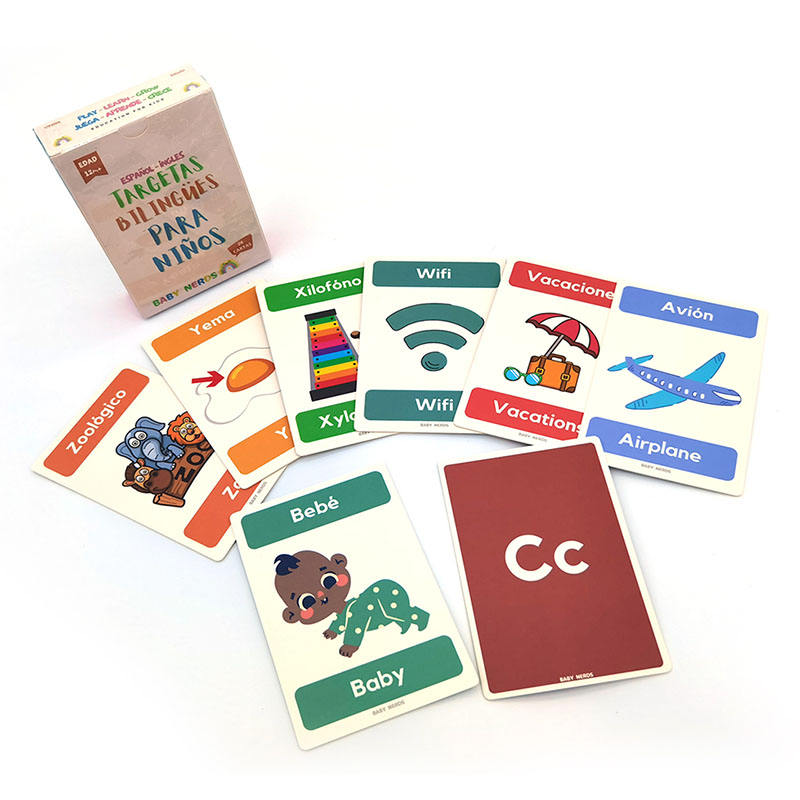
>> 4. Can flash cards be printed in bilingual formats?
>> 5. Why do manufacturers ask for print-ready files?
>> 6. How can I make my flash cards more effective for learning?
● References
If you are looking for printing flash cards that feel durable, look professional, and support real learning outcomes, the difference is in the details: card stock, finish, cut quality, print consistency, and smart content design. For brands, publishers, schools, and wholesalers, custom flashcard printing is not just a production job—it is a product strategy that affects usability, perceived value, and repeat purchase potential.
Why Printing Flash Cards Matters for Learning Products
Flash cards are still one of the most practical tools for memory-based learning. Research-based study guidance shows that flashcards work best when they encourage active retrieval, re-ordering, and repetition rather than passive review. That means the way cards are printed and structured can directly influence how useful they are in real study sessions. [retrievalpractice]
For manufacturers and brands, this creates a clear opportunity. A well-printed flashcard deck can serve educational institutions, language-learning brands, exam-prep publishers, children's learning companies, and retail gift markets. In other words, the product must perform as both a learning tool and a commercial item.
What Makes a High-Quality Flash Card
A flash card should be easy to hold, easy to read, and hard to damage. The best products balance tactile durability with visual clarity, because users may handle the cards repeatedly over weeks or months. Industry printing guidance commonly starts with choosing size, layout, stock, finish, file preparation, and final proofing before production. [smartpress]
The most important quality factors are:
Card stock thickness. Thicker stock resists bending and feels more premium.
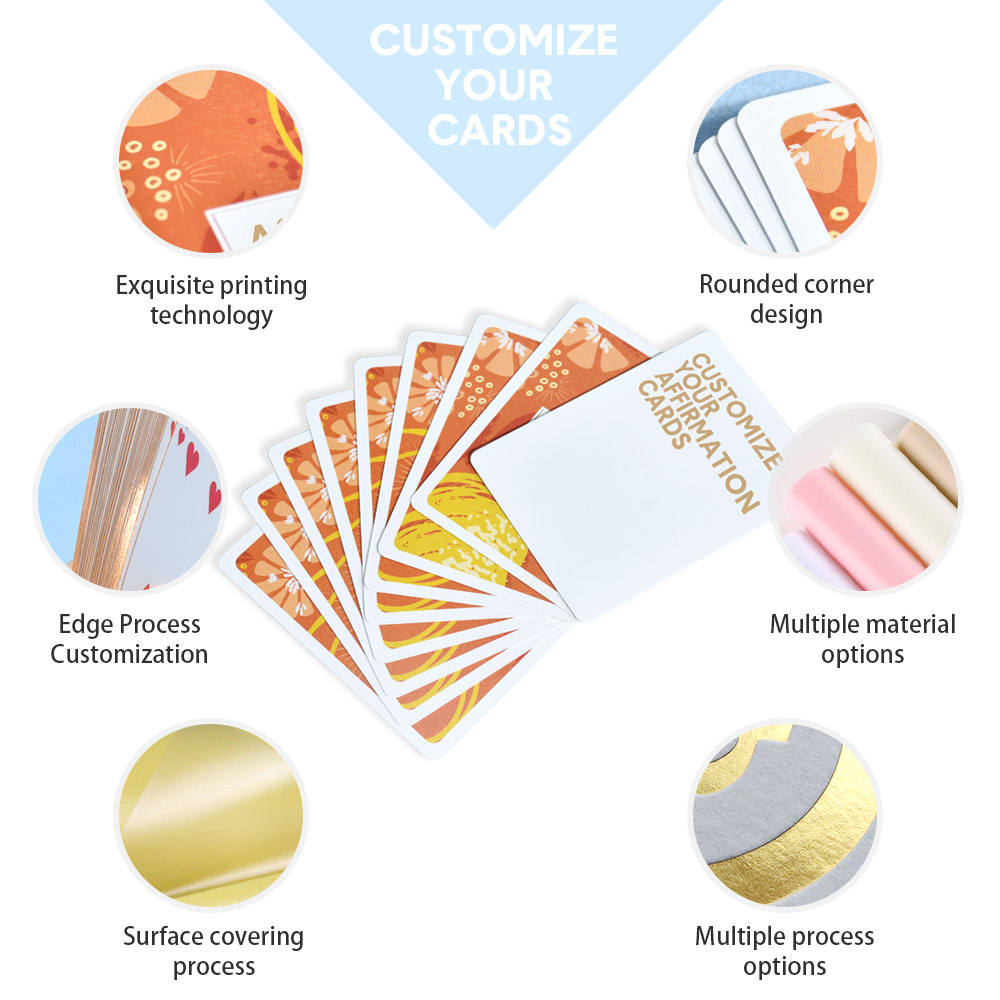
Surface finish. Matte, linen, or soft-touch finishes can improve grip and reduce glare.
Cut accuracy. Clean edges and consistent corners make the deck feel professional.
Color consistency. Accurate color reproduction matters for branding and educational clarity.
Binding or packaging. Boxes, bands, or shrink wrap affect both retail presentation and shipping protection.
For educational products, readability is especially important. Large fonts, strong contrast, and simple layouts reduce cognitive load and help users focus on recall rather than visual clutter. [retrievalpractice]
Printing Flash Cards for Different Markets
Not every flash card deck is used for the same purpose. A children's alphabet deck, a language-learning deck, and a corporate training deck each need different design and material choices.
| Market segment | Best card style | Key printing priority |
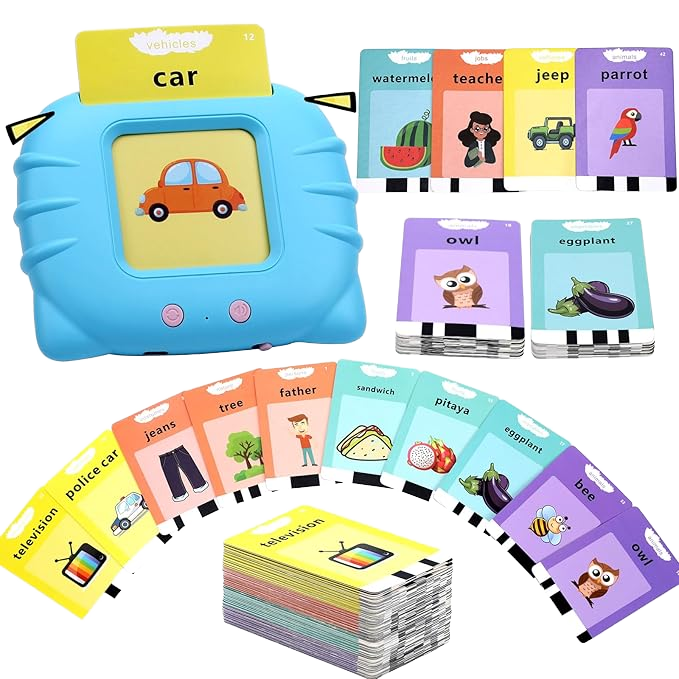
| Preschool learning | Large icons, bold type, rounded corners | Safety, clarity, durability |
| Language learning | Bilingual text, icons, examples | Readability, organization, portability |
| Exam preparation | Dense factual content, numbered sets | Content hierarchy, fast scanning |
| Retail hobby / gift | Premium finish, collectible packaging | Shelf appeal, perceived value |
| Classroom use | Bulk-friendly, sturdy stock | Low cost, repeat handling |
This segmentation matters because product expectations are different. A school buyer may prioritize longevity and price, while a retail brand may prioritize premium appearance and packaging impact.
How to Design Flash Cards That People Actually Use
Good flashcard design should support retrieval practice, not turn the card into a mini textbook. Research on effective flashcard use recommends a question-answer structure, card shuffling, and repeated recall attempts to strengthen memory. The visual layout should therefore encourage short prompts and clear answers. [retrievalpractice]
Follow these design rules:
1. Keep one idea per card.
2. Use short questions and short answers.
3. Put the most important term first.
4. Use icons or illustrations only when they support understanding.
5. Leave enough white space to prevent visual overload.
6. Make the front and back instantly distinguishable.
A useful example is a language flashcard with the target word on the front and the translation, pronunciation, and sample sentence on the back. This format supports both memorization and context, while still staying compact enough for daily study.
Materials and Finish Options
Material choice has a strong impact on user experience and product positioning. A budget educational deck may use standard paperboard, while a premium collectible set may use heavier stock with a special coating. Printing guides for flashcards commonly recommend selecting stock and finishes based on use case, handling frequency, and desired look. [smartpress]
Common options include:
Paperboard stock. Cost-effective and suitable for mass production.
Gloss coating. Bright and vibrant, but may create glare under strong light.
Matte coating. Easier to read, more modern, and often preferred for study products.
Lamination. Adds protection from wear, moisture, and smudging.
Rounded corners. Improve comfort and reduce edge damage during use.
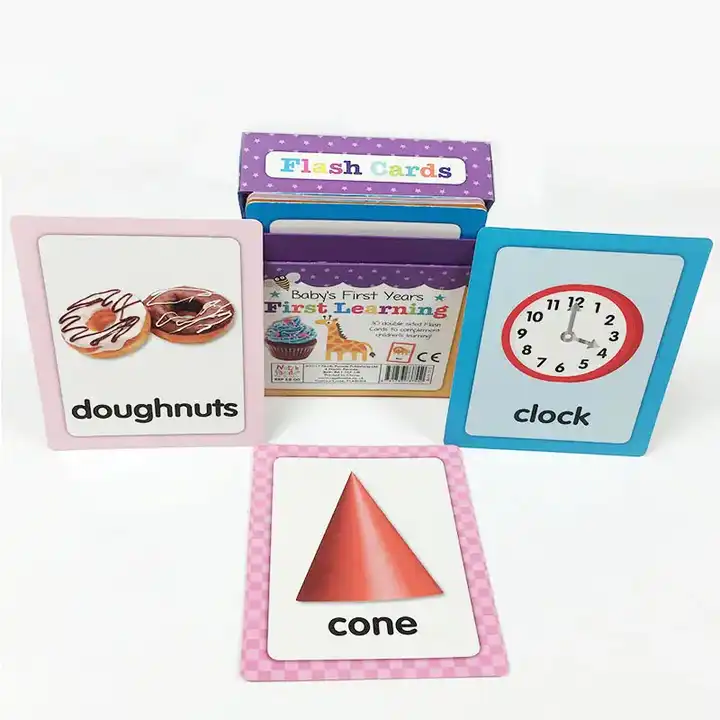
For flashcards used by children, rounded corners and laminated surfaces are especially valuable because they improve safety and extend product life. For premium brands, soft-touch or linen-style finishes can increase perceived value.
Manufacturing Workflow for Custom Flash Cards
A strong production workflow reduces errors, protects margins, and speeds up delivery. In practical terms, custom flash card production usually follows a sequence from concept to prepress to sampling to mass production. That process is especially important for OEM and ODM buyers who need consistent output across multiple SKUs. [smartpress]
A practical production flow
1. Define the target user and learning purpose.
2. Confirm card size, quantity, and packaging style.
3. Prepare content, artwork, and print-ready files.
4. Review proof samples for color, text, and trim.
5. Approve production materials and finishing.
6. Run mass printing and cutting.
7. Inspect, pack, and ship.
This workflow is simple, but each step protects against expensive mistakes. Text misalignment, weak color contrast, and incorrect card sequencing can all damage the user experience and increase reprint costs.
Latest Market and Product Signals
The flash card market continues to show growth potential. A recent market outlook projects the flash cards market to reach USD 3.84 billion by 2035, with a forecast CAGR of 5.4% from 2026 to 2035. While market reports vary, the broader signal is clear: learning tools, study aids, and educational print products remain commercially relevant, especially when they combine physical usability with strong design and branding. [wiseguyreports]
At the same time, consumers are becoming more design-aware. Across print products, premium finishes, collectible packaging, and visually distinctive card formats are gaining traction. For flash card brands, this means product design should not be treated as an afterthought. Packaging, finish, and visual hierarchy can influence whether a deck feels like a low-cost study tool or a premium educational product. [vistaprint]
Common Mistakes to Avoid
Many flash card projects fail for simple reasons. The content may be too dense, the font too small, or the card stock too flimsy for repeated use. In many cases, the problem is not printing quality alone—it is poor product planning.
Avoid these mistakes:
Overloading each card with too much information.
Using weak contrast between text and background.
Choosing stock that bends or wears out too fast.
Ignoring user age and reading level.
Skipping physical samples before mass production.
Designing packaging that looks good but does not protect the cards.
If you want a flash card product that performs well in the market, the deck must be usable first and attractive second. The best products do both.
Why XingKun Is a Strong OEM and ODM Partner
For brands, wholesalers, and publishers looking for a China manufacturing partner, XingKun offers a useful advantage: one factory can handle custom packaging boxes, playing cards, jigsaw puzzles, printed books, stickers, and flash cards under an OEM/ODM model. That makes it easier to coordinate print consistency, packaging, and shipping across related products.
This is especially valuable for international buyers who want one supply partner for multiple SKUs. A flash card project may also require display packaging, instruction booklets, shrink wrap, or bundling with books and other learning products. A multi-category factory can simplify procurement and reduce vendor management overhead.
How to Choose the Right Manufacturer
Selecting the right flash card printer is not just about price. You should evaluate the supplier's ability to manage material quality, print precision, sampling, and communication. For overseas buyers, reliable OEM/ODM execution matters as much as final product appearance.
Use this checklist:
Ask for sample decks.
Confirm stock, finish, and thickness options.
Review color matching capability.
Check whether the factory supports custom box packaging.
Ask about minimum order quantity and lead time.
Confirm export experience and communication response time.
A manufacturer that can consistently deliver clean cutting, stable color, and accurate packaging will save you time and protect your brand reputation.
Conclusion
Printing flash cards successfully means combining learning science, print craftsmanship, and product strategy. A strong flash card deck is clear, durable, easy to use, and aligned with the needs of its target audience. For brands and wholesalers, the best results come from working with a manufacturer that can manage design, materials, finishing, packaging, and export-ready production in one workflow. [bookprintingchina]
If you want flash cards that sell well and perform well in the hands of users, focus on usability first, then elevate the product with premium printing, smart packaging, and precise manufacturing.
FAQ
1. What is the best paper thickness for printing flash cards?
The best thickness depends on use case, but thicker card stock is usually better for repeated handling because it resists bending and feels more premium.
2. Should flash cards be glossy or matte?
Matte is often better for study use because it reduces glare and improves readability, while gloss can make colors appear brighter.
3. What size is best for custom flash cards?
Common sizes depend on the content, but the best size is one that fits the amount of text without crowding and still feels comfortable in the hand.
4. Can flash cards be printed in bilingual formats?
Yes. Bilingual flash cards are very common for language learning and export markets, as long as the layout remains clear and easy to scan.
5. Why do manufacturers ask for print-ready files?
Print-ready files reduce production errors by ensuring the artwork has correct bleed, resolution, spacing, and layout before mass printing.
6. How can I make my flash cards more effective for learning?
Use short prompts, keep one concept per card, shuffle the deck, and encourage active recall instead of passive reading. [retrievalpractice]
References
1. Smartpress. "How to Make Flashcards in 7 Steps: From Concept to Print."
2. Retrieval Practice. "Make Flashcards More Powerful with These 3 Tips."
3. XingKun. Flash cards product page.
4. WiseGuy Reports. "Flash Cards Market Trends | Competitive Market Analysis 2035."
5. VistaPrint. "8 Business Card Trends 2026."


