Content Menu
● What Are Graphic Overlays?
● Why Graphic Overlays Matter in Product Design
● Main Materials for Graphic Overlays
>> Polyester Overlays
>> Polycarbonate Overlays
>> How to Choose the Right Material
● Printing Methods That Affect Performance
>> Screen Printing
>> Digital Printing
>> Hybrid Printing Strategy
● Adhesives and Backing Options
● Common Applications
● Design Features That Improve UX
>> Tactile and Visual Guidance
>> Backlighting and Window Areas
>> Brand Consistency
● New Insight: What Buyers Often Miss
>> 1. Environmental Stress Testing
>> 2. Interface Behavior After Assembly
>> 3. Long-Term Readability
● How to Specify a Custom Graphic Overlay
>> Step-by-Step Specification Checklist
● Quality Control and Production Considerations
● Why Work With a China OEM/ODM Factory
● Graphic Overlays vs. Labels vs. Decals
● Industry Outlook and 2026 Design Direction
● Best Practices for Buyers
● Why XingKun Is a Strong Manufacturing Partner
● Conclusion
● FAQ
>> 1. What is a graphic overlay?
>> 2. Which material is better, polyester or polycarbonate?
>> 3. What printing method is best for graphic overlays?
>> 4. Can graphic overlays be custom shaped?
>> 5. Where are graphic overlays commonly used?
>> 6. How do I make sure the overlay lasts long-term?
● References
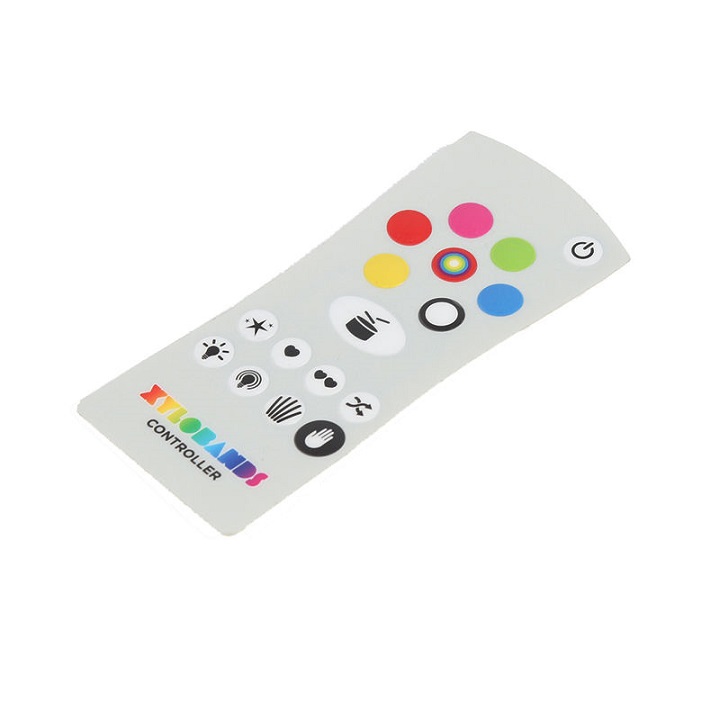
Graphic overlays are more than just a printed top layer. They are the visible interface between a product and its user, combining branding, protection, usability, and durability in one precision-engineered component. [durakeypad]
For brands, engineers, and procurement teams, choosing the right graphic overlay can improve product performance, extend service life, and strengthen the end-user experience. In this guide, we will explain what graphic overlays are, how they are made, which materials and adhesives work best, and how to choose the right supplier for OEM and ODM projects. [packagingworldinsights]
What Are Graphic Overlays?
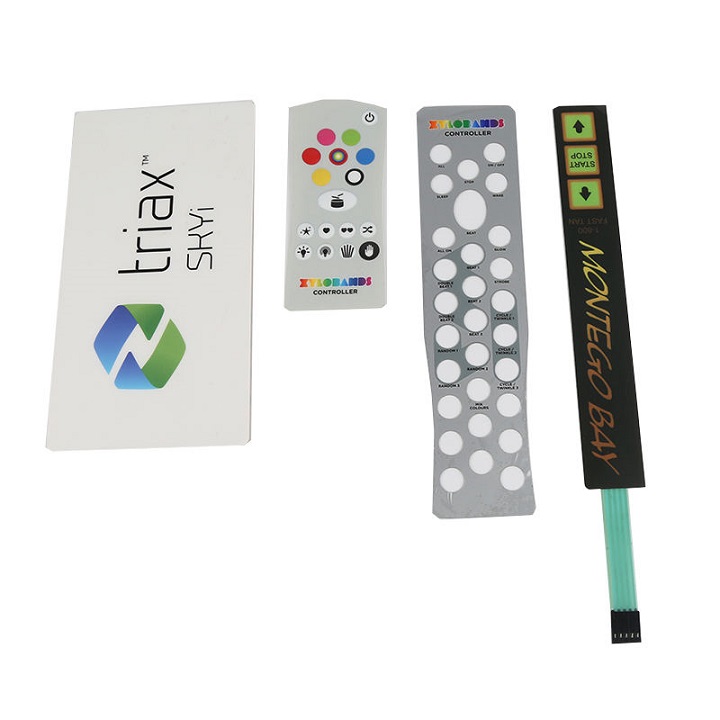
A graphic overlay is a printed surface layer placed on the top of a device, control panel, membrane switch, or instrument interface. Its role is to display labels, symbols, instructions, and branding while protecting the underlying structure from wear, moisture, chemicals, UV exposure, and repeated handling. [kittl]
In practice, a well-designed overlay does three jobs at once. It communicates clearly, resists harsh environments, and enhances the product's visual identity. That is why graphic overlays are widely used in industrial equipment, medical devices, consumer electronics, laboratory instruments, and control systems. [durakeypad]
Why Graphic Overlays Matter in Product Design
Many companies treat overlays as a small finishing detail, but they often have a direct impact on product quality perception. A clean, durable overlay can make a device feel premium, easier to use, and safer to operate. [kittl]
From an UX perspective, overlays reduce user error by improving symbol clarity, tactile guidance, and layout consistency. From a manufacturing perspective, they help standardize interfaces across product families while supporting customized branding and multilingual labels. [durakeypad]
Main Materials for Graphic Overlays
Choosing the right substrate is one of the most important decisions in overlay production. The two most common materials are polyester and polycarbonate, and each has different strengths depending on the application environment. [eheyin]
Polyester Overlays
Polyester is often preferred for applications that demand strong chemical resistance and excellent flex life. It is widely used in overlays that need to endure repeated actuation, abrasion, and long-term performance. [eheyin]
Best for:
Industrial equipment.
Medical instruments.
High-cycle membrane switches.
Environments with exposure to cleaners or solvents. [eheyin]
Polycarbonate Overlays
Polycarbonate is valued for its optical clarity, surface finish options, and ease of forming. It is commonly selected when design presentation and visual appearance are priorities. [kittl]
Best for:
Clear window areas.
Product branding applications.
Control panels requiring a polished cosmetic finish.
Projects where print quality and appearance are critical. [eheyin]
How to Choose the Right Material
Use polyester when the overlay must survive frequent use, chemicals, or demanding mechanical stress. Use polycarbonate when the focus is visibility, surface appearance, and clean graphic presentation. [durakeypad]
A practical rule is simple: performance first means polyester, while cosmetic clarity first often points to polycarbonate. [durakeypad]
Printing Methods That Affect Performance
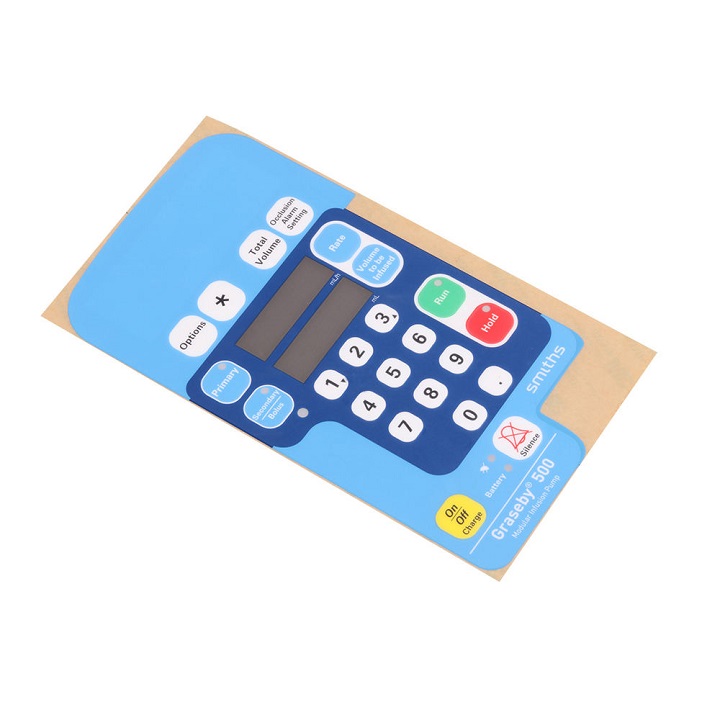
The printing method affects color consistency, durability, cost, and design flexibility. The most common methods are screen printing and digital printing, and in some projects, a hybrid approach is best. [packagingworldinsights]
Screen Printing
Screen printing is ideal for solid colors, thick ink layers, and high-durability output. It is especially useful when the design must maintain sharp opacity over time. [packagingworldinsights]
Advantages:
Excellent ink durability.
Strong color density.
Suitable for large-volume production.
Good for functional markings and long-life industrial use. [packagingworldinsights]
Digital Printing
Digital printing is better for complex artwork, short runs, gradients, and frequent artwork changes. It reduces setup time because it does not require screens. [packagingworldinsights]
Advantages:
Fast turnaround.
Flexible for custom versions.
Good for small batches.
Suitable for detailed graphics and multicolor designs. [packagingworldinsights]
Hybrid Printing Strategy
For many OEM and ODM projects, a hybrid approach provides the best balance. For example, a project may use screen printing for critical icons and digital printing for secondary artwork or variable content. [packagingworldinsights]
Adhesives and Backing Options
The adhesive is just as important as the printed film. A poor adhesive choice can cause peeling, bubbling, edge lift, or early failure even if the print quality is excellent. [packagingworldinsights]
Graphic overlay adhesive selection should consider:
Substrate type.
Operating temperature.
Humidity exposure.
Chemical resistance.
Outdoor or indoor use.
Required bond strength.
Compliance needs. [packagingworldinsights]
In many industrial applications, pressure-sensitive adhesive systems are chosen for consistent bonding and efficient assembly. Surface preparation also matters: cleaning, alignment, and proper pressure application all affect final adhesion quality. [packagingworldinsights]
Common Applications
Graphic overlays are used across many industries because they combine information display with surface protection. Their flexibility makes them suitable for both functional and branded uses. [kittl]
Typical applications include:
Control panels.
Membrane switches.
Medical device interfaces.
Industrial machinery.
Consumer electronics.
Laboratory instruments.
Appliance dashboards. [kittl]
In every case, the overlay must remain readable and intact even after repeated contact, cleaning, or exposure to demanding conditions. [durakeypad]
Design Features That Improve UX
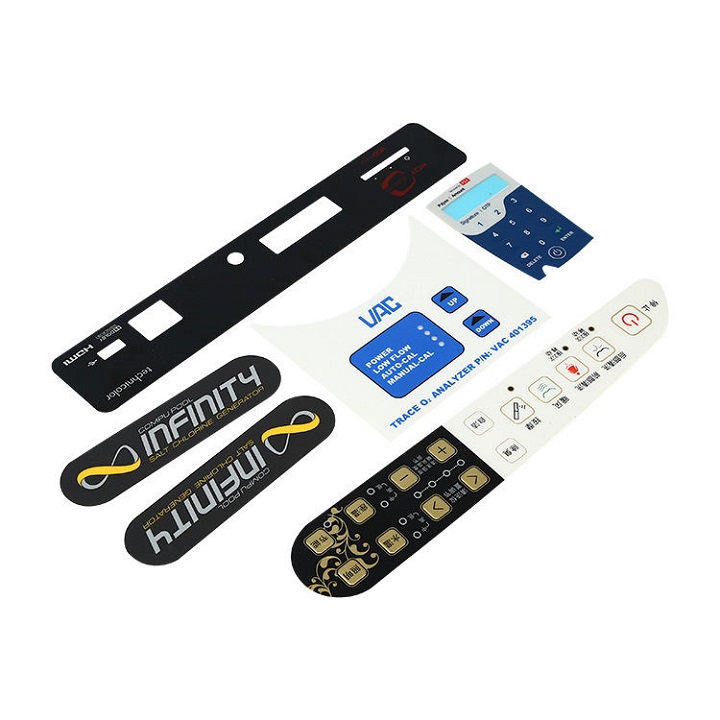
A strong overlay is not only durable. It should help users complete tasks quickly and accurately. [kittl]
Tactile and Visual Guidance
Embossing, doming, and texture differentiation can improve usability by giving users a clearer physical reference point. This is especially useful in medical and industrial environments where operators may rely on touch as much as sight. [kittl]
Backlighting and Window Areas
If the product is used in low-light conditions, overlays can be designed with transparent windows or backlighting support. This improves readability while maintaining a clean front-panel appearance. [kittl]
Brand Consistency
Overlay colors, finishes, and layout can reinforce brand identity across multiple product lines. This is particularly useful for companies that want a unified visual language across global markets. [durakeypad]
New Insight: What Buyers Often Miss
Many buyers compare only price and print appearance, but three factors often determine whether an overlay succeeds in real use.
1. Environmental Stress Testing
Heat, humidity, UV light, cleaner exposure, and abrasion can all change how an overlay performs over time. A sample that looks great on day one may fail after repeated exposure if the material or adhesive is mismatched. [durakeypad]
2. Interface Behavior After Assembly
An overlay should be evaluated after installation, not only as a flat printed sheet. Cutouts, bonding pressure, edge sealing, and alignment can all affect how the interface feels and functions. [packagingworldinsights]
3. Long-Term Readability
Readable graphics matter more than decorative graphics in industrial and medical settings. If icons fade or text becomes hard to see, the product becomes less safe and less efficient to use. [durakeypad]
How to Specify a Custom Graphic Overlay
If you are planning an OEM or ODM project, use a structured specification process. This reduces misunderstandings and helps suppliers quote accurately.
Step-by-Step Specification Checklist
1. Define the application environment, including temperature, humidity, chemicals, and UV exposure.
2. Choose the base material, such as polyester or polycarbonate.
3. Select the printing method based on quantity, detail, and durability.
4. Confirm the adhesive type and bonding surface.
5. Define cutouts, windows, embossing, and thickness.
6. Check color standards, especially Pantone matching.
7. Request prototype samples before full production.
8. Validate fit, adhesion, and legibility during testing.
This process improves both procurement efficiency and final product performance. [eheyin]
Quality Control and Production Considerations
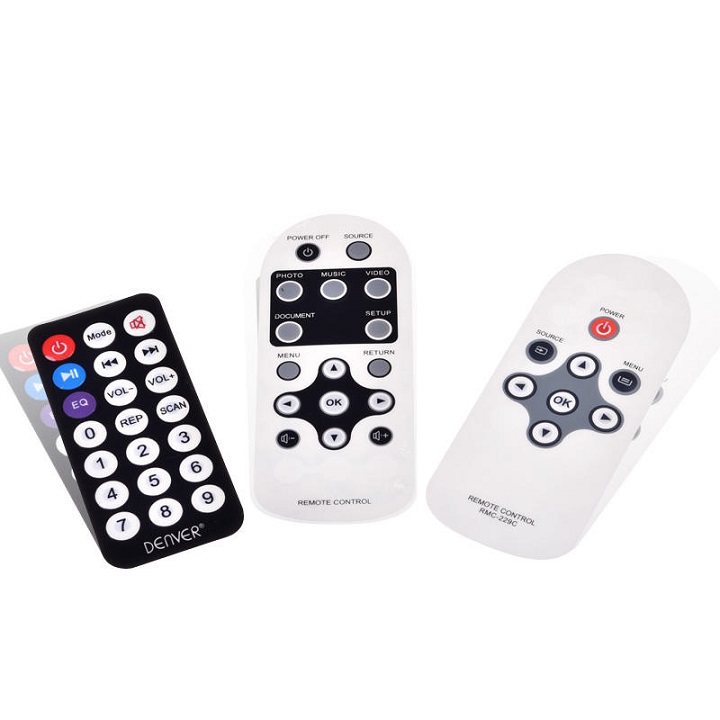
Good suppliers do not simply print and ship. They verify consistency at multiple stages, including artwork review, substrate inspection, print registration, adhesive selection, and final dimensional accuracy. [kittl]
A reliable production partner should be able to support:
Prototype development.
Material recommendations.
Artwork adjustment.
Mass production.
Stable repeat orders.
Custom packaging and export support.
For overseas buyers, this matters because a responsive factory shortens development time and reduces costly revision cycles.
Why Work With a China OEM/ODM Factory
Working with a specialized Chinese factory can offer better flexibility in customization, faster sampling, and more competitive pricing for volume orders. For international brands, wholesalers, and manufacturers, this is especially useful when projects require both design support and manufacturing stability. [kittl]
A factory like Shenzhen XingKun Packing Products Co., Ltd. can support multi-category customization across packaging and printed products, which is useful for buyers managing several SKUs or launch programs at once. That makes sourcing simpler, especially when you need one partner for coordinated branding across packaging and display-related items.
Graphic Overlays vs. Labels vs. Decals
Although people sometimes use these terms interchangeably, they are not the same thing.
| Item | Main Purpose | Durability | Best Use Case |
| Graphic overlay | Interface, branding, and protection | High | Control panels, equipment fronts, membrane switches |
| Label | Identification or warning | Medium to high | Asset tags, product ID, compliance labels |
| Decal | Decorative or informational surface application | Variable | Branding, graphics, light-duty marking |
If your product requires repeated use, tactile interaction, or long-term environmental resistance, a graphic overlay is usually the stronger choice. [durakeypad]
Industry Outlook and 2026 Design Direction
Current graphic design trends show a strong move toward layered visuals, texture, tactile realism, and humanized imperfections. While these are design trends rather than overlay-specific standards, they matter because buyers increasingly expect functional graphics to look modern as well as durable. [youtube]
For graphic overlays, this means brands may request cleaner minimal systems, stronger contrast, subtle textures, and more intuitive visual hierarchies. In other words, the overlay is no longer just a technical part; it is also part of product storytelling and user trust. [digitalsynopsis]
Best Practices for Buyers
If you are sourcing custom graphic overlays, the best results usually come from a clear brief and an early prototype review.
Keep these points in mind:
Share the operating environment early.
Provide artwork in editable vector format when possible.
Confirm exact cutout sizes and window positions.
Ask for material recommendations instead of assuming one material fits all.
Test at least one sample in real conditions before approving mass production.
Plan for long-term supply consistency, not only initial cost.
These steps reduce rework and improve launch success.
Why XingKun Is a Strong Manufacturing Partner
XingKun specializes in custom printed and packaging products for global buyers, which makes it a useful partner for brands that need precise OEM and ODM execution. For graphic overlays, that means the production team can focus on customization, functional print quality, and export-ready service while supporting broader packaging and print programs.
If your project requires integrated branding across packaging boxes, cards, stickers, books, puzzles, and graphic overlays, working with one experienced factory can simplify communication and improve visual consistency across your product line.
Conclusion
Graphic overlays are a small component with a big impact. They influence usability, durability, branding, and customer perception all at once. The right material, print method, and adhesive can dramatically improve product life and user experience, while the wrong combination can cause premature failure. [eheyin]
For buyers, the most effective approach is to treat overlays as an engineering and UX decision, not just a printing task. If you are planning a custom project, build your specification carefully, test your samples thoroughly, and choose a manufacturer that understands both performance and presentation.
FAQ
1. What is a graphic overlay?
A graphic overlay is the top printed layer on a device or control panel that shows symbols, text, branding, and functional markings while protecting the surface beneath it. [durakeypad]
2. Which material is better, polyester or polycarbonate?
Polyester is usually better for chemical resistance and flex life, while polycarbonate is often chosen for clarity and cosmetic appearance. [eheyin]
3. What printing method is best for graphic overlays?
Screen printing is typically best for high-durability, high-volume work, while digital printing is better for short runs, fast changes, and complex artwork. [packagingworldinsights]
4. Can graphic overlays be custom shaped?
Yes. They can include custom cutouts, windows, embossed areas, textures, and special finishes based on the product design. [kittl]
5. Where are graphic overlays commonly used?
They are commonly used on control panels, membrane switches, industrial machines, medical devices, consumer electronics, and laboratory equipment. [durakeypad]
6. How do I make sure the overlay lasts long-term?
Choose the right material, adhesive, and print method for the environment, then validate samples under real operating conditions before mass production. [eheyin]
References
1. XingKun Packaging Products, "Graphic Overlays." [https://www.xkdisplay.com/graphic-overlays.html] [kittl]
2. Epec Tech, "Graphic Overlay Materials." [https://www.epectec.com/overlays/materials/] [durakeypad]
3. Hengping Industry, "Graphic Overlay Printing Guide: Screen Printing or Digital Printing." [https://hengping-industry.com/blog/graphic-overlay-printing-guide-screen-printing-or-digital-printing/] [packagingworldinsights]
4. Data Graphics Inc., "Polycarbonate vs. Polyester: Choosing the Right Overlay." [https://www.datagraphicsinc.com/articles/choosing-the-right-graphic-overlay-material/] [datagraphicsinc]
5. Label Aid, "Polyester vs. Polycarbonate Graphic Overlays." [https://www.label-aid.com/resources/blog/polyester-vs-polycarbonate-overlays/] [label-aid]
6. Butler Technologies, "Digital vs Screen Printing: Which Method Fits Your Project?" [https://butlertechnologies.com/blog/digital-vs-screen-printing] [butlertechnologies]
7. Digital Synopsis, "Top 20 Graphic Design Trends For 2026." [https://digitalsynopsis.com/design/graphic-design-trends-2026/] [digitalsynopsis]
8. Kittl Blog, "Graphic Design Trends 2026." [https://www.kittl.com/blogs/graphic-design-trends-2026/] [kittl]


