Content Menu
● Why Tarot Printing Matters Now
● Understanding the Tarot Product
● Choosing Card Specs
>> Recommended card choices
● Artwork and Legibility
● Packaging That Sells
>> Common box styles
● A Practical Production Workflow
● Quality Control That Protects Your Brand
>> Key inspection points
● Market and Buyer Trends
● How To Differentiate Your Deck
● Why Work With a Factory Partner
● Best Practices For Buyers
● Conclusion
● FAQ
>> 1. What is a standard tarot deck?
>> 2. What paper is best for printing tarot cards?
>> 3. Which finish is best for tarot cards?
>> 4. Should tarot decks include a box and booklet?
>> 5. Why are tarot decks a growing niche?
>> 6. How can a factory help with tarot printing?
● References
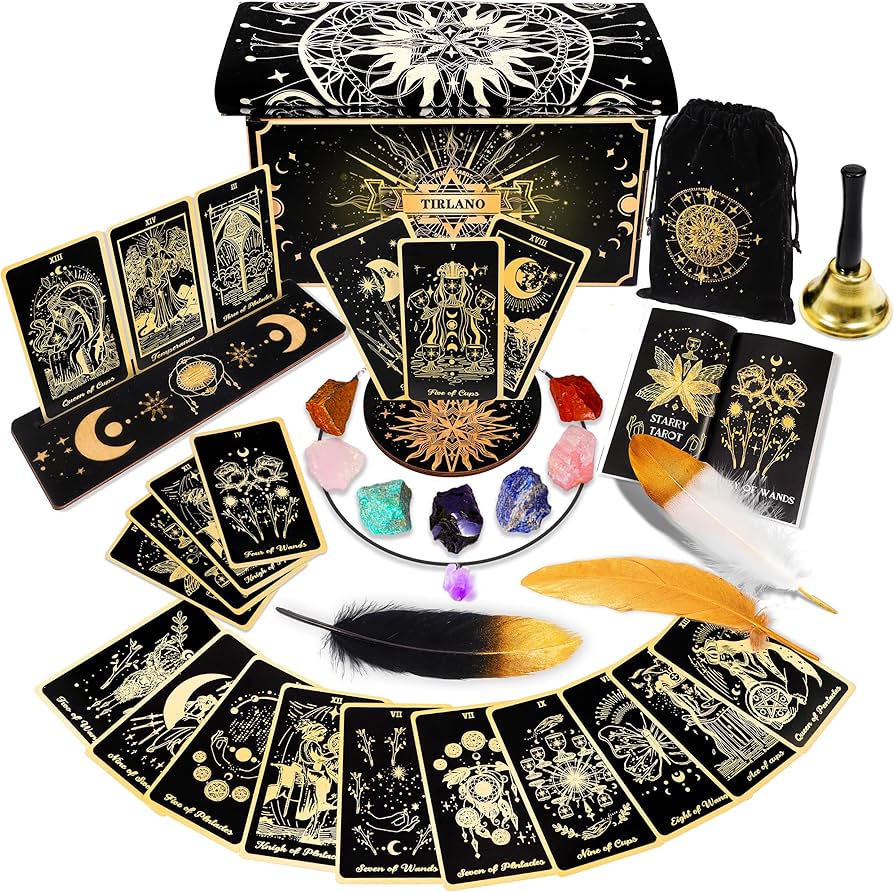
Printing tarot cards is more than producing a deck of 78 cards. It is a blend of art direction, print engineering, packaging design, and brand storytelling that turns a symbolic product into something people want to keep, gift, and collect. For brands, publishers, and creators, the best results come from treating tarot as a premium printed experience rather than a simple card game product. [keen]
Tarot demand continues to benefit from spirituality, self-discovery, and online retail behavior, while market research also points to steady growth in the category over the next several years. That makes print quality, packaging, and fulfillment strategy important business decisions, not cosmetic details. [greenerprinter]
Why Tarot Printing Matters Now
The tarot deck has a clear structure: 22 Major Arcana cards and 56 Minor Arcana cards, for a total of 78 cards. That standard structure gives publishers a reliable production framework, but the market still rewards highly differentiated decks with stronger art, better materials, and elevated packaging. [ezracard]
A well-made deck does three jobs at once:
It supports accurate readings by keeping card size, finish, and handling consistent.
It reinforces brand value through premium tactile and visual design.
It improves sell-through because buyers often compare decks by presentation as much as by symbolism.
Understanding the Tarot Product
A successful tarot deck starts with the card system itself. The Major Arcana usually carries the big narrative moments, while the Minor Arcana covers everyday themes across four suits. That structure affects layout, iconography, and the amount of text or guidance you place on each card, especially for beginner-friendly editions. [static1.squarespace]
In practical print terms, tarot decks are often positioned as a mix of spiritual tool, art object, and gift product. That mix is why so many manufacturers offer custom size, paper, finishing, and box options for tarot and oracle decks. [greenerprinter]
Choosing Card Specs
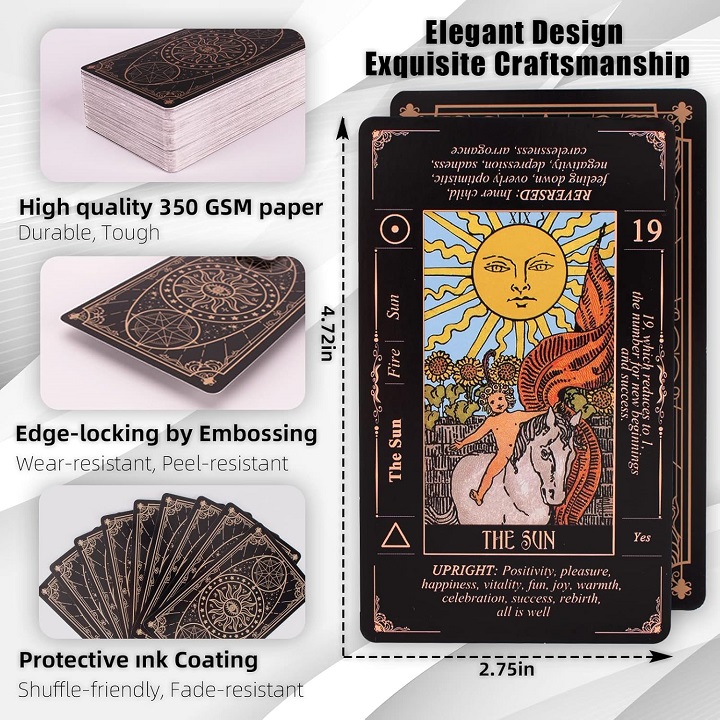
The most common production mistakes happen before printing starts. Buyers often focus on artwork first, but the real user experience depends on paper stock, core structure, coating, and edge handling. Most tarot cards are produced from paperboard, coated cardstock, or PVC plastic depending on durability and shuffle feel. [ezracard]
Recommended card choices
| Spec | Practical effect | Best use case |
| Black core paperboard | Better opacity and premium feel | Premium retail decks |
| White core cardstock | Strong print brightness and lower cost | General market decks |
| PVC plastic | High durability and water resistance | Long-life or novelty decks |
| Matte lamination | Softer look, lower glare | Reading-focused decks |
| Gloss lamination | Brighter colors, more shine | Art-forward decks |
| Soft-touch finish | Luxury feel, tactile appeal | Premium collector editions |
Finishing options such as matte, gloss, varnish, linen, soft-touch, and anti-scratch lamination can change how a deck feels in the hand and how well it survives repeated shuffling. In practice, the finish should match the deck's audience: readers usually prefer control and readability, while collectors often want luxury and visual drama. [greenerprinter]
Artwork and Legibility
Tarot is a visual product, so the art must do more than look beautiful. It has to remain legible at card size, with clear contrast, well-balanced typography, and symbolic elements that still read under low light or at a glance. The strongest decks balance visual richness with enough negative space to keep the composition from becoming cluttered.
A good rule is to test every face card at actual print size before approving production. What looks elegant on a monitor may become too dense when reduced to standard tarot dimensions, especially on cards with borders, titles, keywords, or multilingual labels.
Packaging That Sells
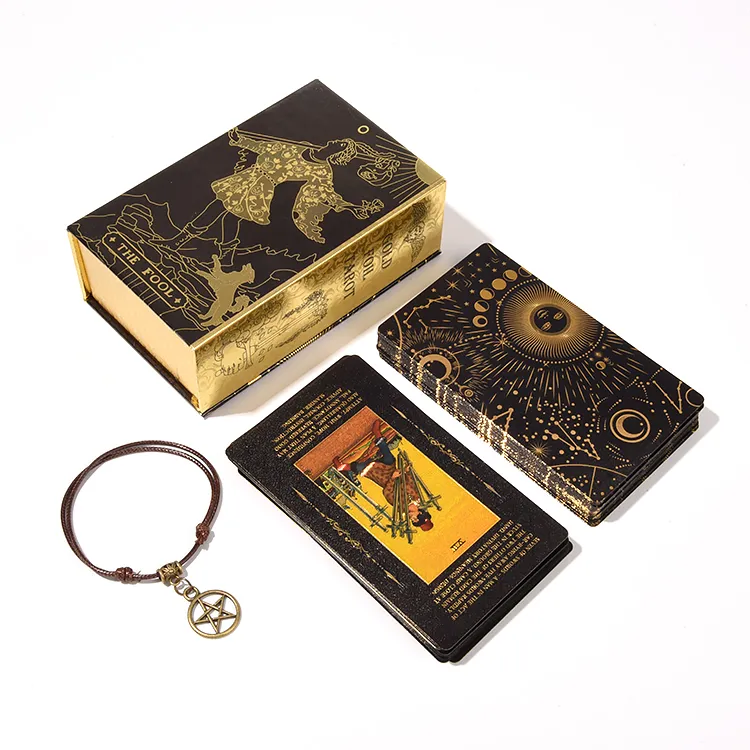
Packaging is often the deciding factor for first-time buyers and retail partners. Tarot decks are frequently sold as premium gifts, so the box should protect the cards and communicate brand value immediately. Manufacturers in this category often offer custom boxes along with the cards themselves, which is useful for OEM and ODM projects. [xkdisplay]
Common box styles
Two-piece rigid box for luxury positioning.
Tuck box for compact, lower-cost retail packaging.
Magnetic closure box for premium collector editions.
Slide box for a modern giftable presentation.
If the deck includes a guidebook, insert, or pouch, the box structure must be planned early. Last-minute packaging changes often create cost overruns, resizing problems, and shipping inefficiencies.
A Practical Production Workflow
A professional tarot project works best when the artwork and print process are managed together. Below is a practical workflow that reduces rework and protects your margin.
1. Define the audience, such as beginner readers, spiritual consumers, gift buyers, or collectors.
2. Confirm the deck format, including card size, card count, finish, and box style.
3. Prepare print-ready files with correct bleed, safe zones, and consistent color profiles.
4. Review a physical proof for color, contrast, shuffle feel, and packaging fit.
5. Approve mass production only after the proof matches both the art direction and the brand standard.
6. Plan shipping, carton packing, and retail-ready labeling at the same time.
This workflow matters because tarot buyers judge the product through touch, handling, and unboxing as much as through imagery.
Quality Control That Protects Your Brand
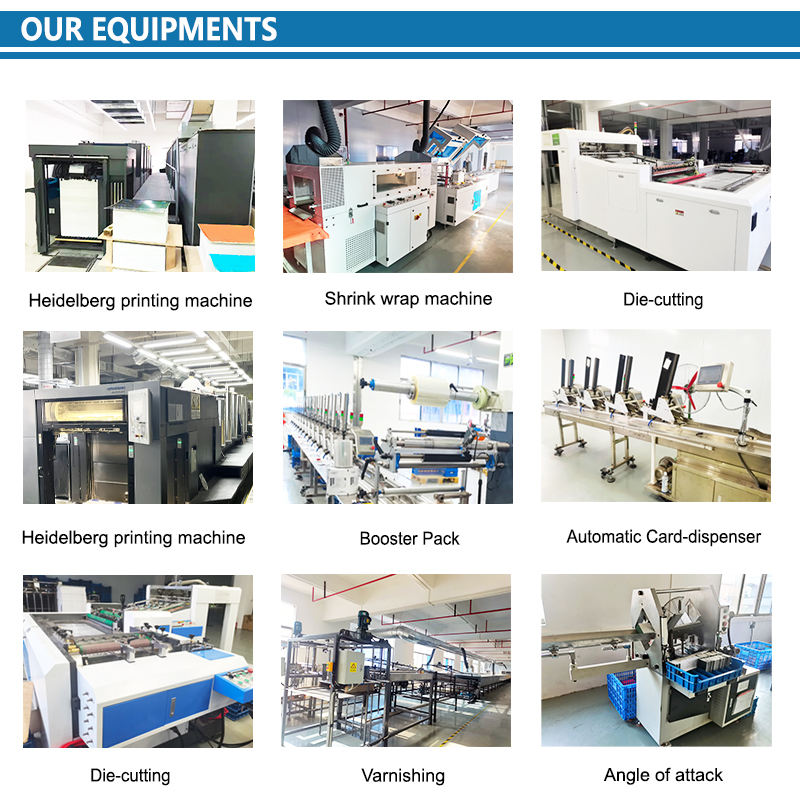
Quality control should be stricter for tarot than for many generic card products. A deck with tiny registration shifts, uneven trimming, weak lamination, or inconsistent color can undermine trust fast, especially in a category where users expect symbolic precision and premium presentation. [ezracard]
Key inspection points
Color consistency across all 78 cards.
Accurate cutting and rounded corners.
Smooth shuffling without sticking.
Box strength and print alignment.
Guidebook completeness and binding quality.
For export buyers, it is also wise to check carton labeling, barcode placement, and drop-test performance. Small defects become expensive once the deck is on a long supply chain.
Market and Buyer Trends
Recent market coverage suggests that tarot remains supported by spiritual interest, self-reflection habits, wellness culture, and online commerce. One 2025 market report placed the global tarot cards market at $93.80 million by 2027, with CAGR of 5.04% from 2023 to 2030. Another 2026 outlook cited a larger and faster-growing forecast, which shows how different research firms can vary in scope and methodology. [linkedin]
For manufacturers, the important takeaway is not the exact forecast number. It is that buyers now expect more customization, more premium finishes, and better packaging than they did a few years ago. [greenerprinter]
How To Differentiate Your Deck
If you want a tarot deck to stand out, improve the product in ways the customer can feel immediately. That usually means a clearer brand concept, stronger card handling, and packaging that feels collectible rather than disposable.
Useful differentiators include:
Holographic or metallic accents for special editions.
Soft-touch lamination for a luxury reading experience.
Custom insert trays to improve unboxing and storage.
Matching guidebooks that teach the deck's unique symbolism.
Recycled or FSC-oriented paper options for sustainability positioning.
A practical example: a wellness brand may choose matte cards, earthy tones, and an instructional booklet, while an art-led creator may choose foil accents, rich blacks, and a magnetic box for collector appeal.
Why Work With a Factory Partner
Working with a factory that already produces packaging boxes, playing cards, printed books, and stickers can reduce friction in a tarot project because the card deck, box, and booklet can be developed under one production system. XingKun positions its tarot cards as customizable and printable, with materials, coatings, inks, and finishing options that support a broad range of deck styles. [xkdisplay]
For overseas brands and wholesalers, that matters because one supplier can coordinate print consistency across the deck, insert, and outer packaging. It also helps reduce communication gaps when you are building a private-label or OEM/ODM tarot line.
Best Practices For Buyers
Before placing an order, buyers should request samples, confirm material options, and lock the target audience. The best tarot projects are built with the end user in mind, not just the illustrator's portfolio.
Use this checklist:
Define your sales channel: e-commerce, wholesale, retail, or crowdfunding.
Decide whether the deck is beginner-friendly or collector-focused.
Choose a finish that matches shuffle behavior and visual style.
Include packaging and guidebook requirements in the first brief.
Ask for a physical proof before mass production.
Conclusion
Printing tarot cards successfully requires more than attractive artwork. It requires careful decisions about materials, finishing, packaging, and user experience so that the final deck feels credible, durable, and worth its price. For brands that want to enter or expand in this category, the strongest strategy is to combine premium print quality with a clear audience, a tight production workflow, and a packaging concept that matches the deck's identity. [cognitivemarketresearch]
A tarot deck that is beautiful, readable, and well-made has a better chance of becoming a repeatable product, not just a one-time purchase.
FAQ
1. What is a standard tarot deck?
A standard tarot deck contains 78 cards: 22 Major Arcana cards and 56 Minor Arcana cards. [en.wikipedia]
2. What paper is best for printing tarot cards?
Black core paperboard, white core cardstock, and coated cardstock are common choices, while PVC suits more durable or water-resistant decks. [ezracard]
3. Which finish is best for tarot cards?
Matte and soft-touch finishes are often preferred for reading decks, while gloss and holographic finishes are better for visually striking collector editions. [greenerprinter]
4. Should tarot decks include a box and booklet?
Yes. A box protects the deck and strengthens presentation, while a booklet helps readers understand the symbolism and use the cards more confidently. [xkdisplay]
5. Why are tarot decks a growing niche?
Market reports point to rising interest in spirituality, self-discovery, wellness, and online retail, which continue to support demand for custom decks. [techsciresearch]
6. How can a factory help with tarot printing?
A factory with experience in cards, boxes, and books can coordinate the full project more efficiently, especially for OEM and ODM buyers. [xkdisplay]
References
1. Cognitive Market Research — [Tarot Cards market size will be $93.80 Million by 2027] [cognitivemarketresearch]
2. XingKun — [Tarot Cards] [xkdisplay]
3. GreenerPrinter — [Custom Tarot Card Printing & Deck Design] [greenerprinter]
4. Keen — [Tarot Basics: Your Simple Guide to Major & Minor Arcana] [keen]
5. Wikipedia — [Major Arcana] [en.wikipedia]
6. TechSci Research — [Tarot Cards Market to Grow with a CAGR of 3.39% through 2031F] [techsciresearch]
7. EzraCard — [A Complete Guide to Tarot Card Materials and Finishing] [ezracard]
8. Accio — [Tarot Trend Updates: 2026 Updated Guide] [accio]


