Content Menu
● Why Custom Printed Noodle Boxes Matter
● How Custom Noodle Boxes Protect and Present Your Product
● Materials for Custom Printed Noodle Boxes
>> 1. Kraft and Recycled Boards
>> 2. SBS and Coated Boards
>> 3. Specialty and Decorative Papers
● Printing and Finishing Techniques That Make Noodle Boxes Stand Out
>> Printing Methods
>> Finishing Options
>> Add‑On Effects
● Sustainability and Consumer Expectations
● How to Design a Custom Noodle Box That Converts
>> Step 1: Define Your Brand Identity
>> Step 2: Fit the Box to the Product
>> Step 3: Optimize the Layout
>> Step 4: Add Interactive or Emotional Elements
● OEM & ODM Services for Noodle Packaging
● Choosing the Right Supplier for Custom Printed Noodle Boxes
● Case‑Style Example: How a Noodle Brand Can Use Custom Boxes
● Your Next Step: From Concept to Custom Noodle Box
● Conclusion
● FAQs
>> 1. What is a custom printed noodle box?
>> 2. What materials are best for noodle boxes?
>> 3. Can I get small‑quantity custom noodle boxes?
>> 4. How do custom noodle boxes improve brand recognition?
>> 5. What sustainability options exist for custom noodle boxes?
● References
If you run a noodle‑brand, instant‑meal line, or ready‑to‑eat food business, custom printed noodle boxes are not just containers—they're one of your most powerful branding and sales tools. A well‑designed, structurally sound noodle box can differentiate your product on crowded supermarket shelves, e‑commerce platforms, and delivery‑only food‑service menus.
In this guide, you'll learn:
Why custom printed noodle boxes matter for brand recognition and sales.
What materials and printing techniques work best for noodles and similar hot‑fill foods.
How to design a noodle box that stands out, protects your product, and meets sustainability goals.
How an OEM / ODM packaging manufacturer like XingKun (Shenzhen XingKun Packing Products Co., Ltd.) can help you scale custom noodle packaging for global markets.
Why Custom Printed Noodle Boxes Matter
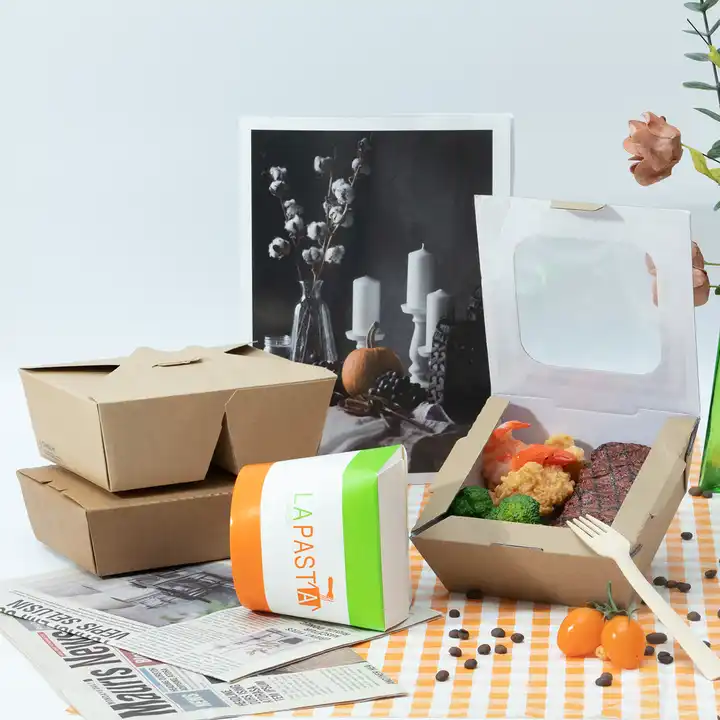
Most packaged noodles today are sold in plain, generic boxes with minimal branding. That makes it easy for consumers to overlook them. A custom printed noodle box, by contrast, gives your brand a visual identity and tells a story in seconds.
Key benefits include:
Brand recognition: A consistent box design, logo placement, and color palette help consumers recognize your product across retailers and online stores.
Perceived value: A premium‑looking box with specialty finishes (soft‑touch lamination, spot UV, hot‑foil stamping) makes customers feel the product inside is higher quality. [cppboxes]
Shelf and online visibility: Bright colors, bold typography, and clear flavor cues help your noodle box catch the eye in physical stores and on mobile screens. [oxopackaging.com]
For foreign brands and distributors, partnering with a China‑based OEM/ODM packaging manufacturer like XingKun lets you access high‑quality printing, flexible materials, and scalable production without maintaining your own factory.
How Custom Noodle Boxes Protect and Present Your Product
Well‑designed noodle boxes are not just pretty; they must protect the product from moisture, heat, and physical damage while also being easy to transport and stack. [thepremierpackaging]
Typical functional requirements:
Moisture and grease resistance: Cooked noodles and sauces can soften many paper‑based boards; coatings and laminates are essential.
Stackability and rigidity: Retailers and distributors need boxes that hold shape under pressure and can be stacked safely.
Microwave‑ and freezer‑safety: Some noodle boxes are used for both preparation and storage, so material compatibility matters. [xkdisplay]
Customization allows you to:
Adjust box size and thickness to fit your noodle portion and sauce packets.
Add inserts such as corrugated dividers or plastic blisters to keep forks, sachets, or toppings organized.
Optimize closure design (tuck‑flap, interlocking, or folding lids) depending on how the box will be used (take‑out, home cooking, meal‑kit). [xkdisplay]
Manufacturers like XingKun typically offer corrugated shipping boxes, folding cartons, and salad‑style containers that can be adapted for noodle packaging, giving you multiple structural options under one supplier. [xkdisplay]
Materials for Custom Printed Noodle Boxes
Choosing the right board material is critical for both performance and sustainability. Here's a reality check on common options:
1. Kraft and Recycled Boards
Natural brown kraft / uncoated unbleached kraft (UUK): Great for "eco" or "artisan" brands; gives a rustic, earthy feel.
White or black kraft: Holds ink beautifully and can be paired with glossy or matte finishes for a modern look.
Fully recycled CCNB (Clay Coated News Back): Offers a smoother surface for printing while still being recyclable.
Kraft‑based boards are often marketed as eco‑friendly and recyclable, which aligns with growing consumer demand for sustainable packaging. [oxopackaging.com]
2. SBS and Coated Boards
SBS C1S / C2S (Solid Bleached Sulphate): Provides a bright, white, ultra‑smooth surface ideal for high‑resolution offset printing and vibrant colors.
Clay‑coated boards (CCK, CNK): Handle heavy ink coverage and are good for folding cartons that need a premium feel.
These boards are commonly used for retail‑ready noodle boxes that need crisp graphics and strong brand colors. [xkdisplay]
3. Specialty and Decorative Papers
Metallic paper, holographic, and textured papers can be used for short‑run or promotional noodle boxes.
Soft‑touch coatings and anti‑scratch laminates add a tactile, premium feel that elevates perceived value. [xkdisplay]
When you work with a custom packaging manufacturer, you can mix and match these materials based on budget, target market, and sustainability goals.
Printing and Finishing Techniques That Make Noodle Boxes Stand Out
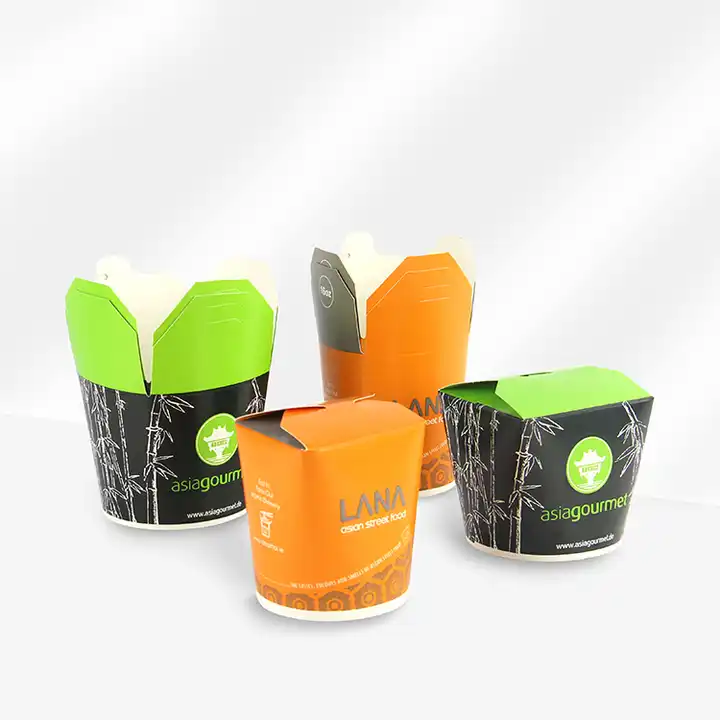
Simply printing a logo on a box is not enough. A high‑impact custom printed noodle box combines several printing and finishing techniques:
Printing Methods
Offset printing: Best for high‑volume runs; delivers sharp, consistent color and crisp text. Ideal for standard retail noodle boxes.
Digital printing: Better for short runs, prototypes, or seasonal / limited‑edition designs (e.g., Lunar New Year, festival flavors).
UV printing / Scodix digital enhancement: Adds metallic or raised effects, giving a 3D "pop" to logos and key visual elements. [xkdisplay]
Finishing Options
Aqueous coating: Protects against light scuffing and gives a uniform matte or gloss finish.
UV coating: Higher‑gloss, more durable, and better for boxes that will be handled heavily.
Soft‑touch coating: Creates a velvety feel that strongly signals premium quality. [xkdisplay]
Add‑On Effects
Hot‑foil stamping or cold‑foil printing: Adds metallic logos, borders, or decorative accents.
Blind embossing / debossing and combination embossing: Builds texture without ink, reinforcing brand identity through touch.
Window patching: Allows consumers to see the product inside, which is useful for higher‑end or "artisan" noodle lines. [xkdisplay]
These techniques are especially valuable if you're targeting grocery retailers, health‑food stores, or premium food‑service channels where visual differentiation matters. [cppboxes]
Sustainability and Consumer Expectations
"Eco‑friendly noodle boxes" are now table stakes, not a luxury. Many consumers actively look for recyclable, compostable, or minimally plastic packaging. [thepremierpackaging]
Manufacturers are responding by:
Offering fully recycled paperboard with proper certifications.
Using water‑based inks and FSC‑compliant materials.
Reducing unnecessary plastic windows or laminates where food‑safety and print quality allow. [thepremierpackaging]
If you're building a global noodle brand, clearly communicate:
What materials are used.
Whether the box is recyclable in your local market.
Any certifications (e.g., FSC, recyclability labels).
This transparency builds trust and credibility, which are key components of Google's E‑E‑A‑T framework for product‑related content. [venntov]
How to Design a Custom Noodle Box That Converts
A beautiful box doesn't help if it's confusing or hard to use. Here's a practical, step‑by‑step design approach:
Step 1: Define Your Brand Identity
Ask:
Who is your target customer (college students, health‑conscious adults, busy parents)?
What tone do you want (fun and playful vs. premium and minimalist)?
What colors and fonts are already used on your logo and website?
Consistency across your noodle box, website, and social media strengthens recognition and trust. [oxopackaging.com]
Step 2: Fit the Box to the Product
Work with your packaging supplier to:
Measure the noodle portion, sauce sachets, and any utensils.
Decide whether you need rigid folding cartons, corrugated boxes, or micro‑corrugated for lighter goods.
Add inserts such as corrugated dividers or plastic blisters to keep contents organized. [xkdisplay]
Step 3: Optimize the Layout
Key zones to design:
Front panel: Brand name, main flavor, hero image, and a clear call‑to‑value (e.g., "Ready in 3 minutes").
Side and back panels: Key ingredients, nutrition facts, cooking instructions, allergen warnings, and certifications.
Seal or closure area: Make sure printing in this region doesn't interfere with folding or sealing. [thepremierpackaging]
Step 4: Add Interactive or Emotional Elements
QR codes that link to recipes, brand stories, or social‑media content.
Seasonal or limited‑edition designs that create urgency and collectibility.
Storytelling text ("hand‑crafted," "inspired by street food in Tokyo") that connects emotionally with consumers. [venntov]
An experienced packaging manufacturer like XingKun can help you balance aesthetics, regulatory compliance, and production efficiency while keeping your design cost‑effective. [cn.linkedin]
OEM & ODM Services for Noodle Packaging
As a China‑based OEM / ODM packaging manufacturer, XingKun Packing Products Co., Ltd. offers more than just printing; they provide end‑to‑end packaging solutions for brands worldwide. [cn.linkedin]
Typical services include:
Custom structural design: Box shapes, sizes, and folding mechanisms tailored to your noodles and sauces.
Prototyping and sampling: Physical mock‑ups and small‑batch runs before mass production.
Material sourcing and testing: Selecting the right board, coatings, and adhesives for heat, moisture, and durability.
Printing and finishing: From offset to digital, plus UV, foil, embossing, and specialty coatings.
Insert and accessory integration: Blister inserts, dividers, and paperboard supports to organize contents. [xkdisplay]
Because XingKun also produces packaging boxes, playing cards, puzzles, printed books, and display stands, they bring cross‑category design experience that can help you create a cohesive brand ecosystem across products and point‑of‑sale displays. [cn.linkedin]
Choosing the Right Supplier for Custom Printed Noodle Boxes
When evaluating manufacturers, consider:
Experience with food‑grade packaging: Look for partners who understand regulations, moisture resistance, and food‑safety requirements.
Flexibility in MOQs: Some brands need small trial runs before committing to large orders.
Production capacity and lead times: Ensure the factory can scale with your growth and meet seasonal demand (e.g., Lunar New Year, holidays). [cn.linkedin]
For international brands, a China‑based factory with strong export experience can streamline logistics, reduce unit costs, and maintain consistent quality across batches. XingKun serves clients in over 30 countries and regions, which indicates a proven track record in global supply‑chain management. [xkdisplay]
Case‑Style Example: How a Noodle Brand Can Use Custom Boxes
Imagine a premium instant‑noodle brand launching in both retail supermarkets and online marketplaces. Here's how they might use custom printed noodle boxes:
1. Retail‑ready folding carton:
SBS C2S board with offset printing and aqueous gloss.
One‑piece design with a tuck‑flap closure; printed brand logo and flavor artwork on all main panels.
Back panel with nutrition facts, QR code to brand website, and retailer barcodes.
2. E‑commerce friendly shipping box:
Corrugated outer box with a window patch and custom printed branding.
Internal corrugated dividers to protect multiple noodle units.
Minimalist design focused on legibility and brand recognition, even in thumbnail images.
3. Seasonal limited‑edition run:
Short‑run digital printing on white kraft with spot UV and hot‑foil stamping.
Limited‑edition flavor callouts and collector‑style storytelling on the box.
By working with a manufacturer that offers multiple board types, printing methods, and finishing options, a brand can maintain a unified look across formats while adapting to different channels and budgets. [thepremierpackaging]
Your Next Step: From Concept to Custom Noodle Box
If you're ready to move from generic packaging to custom printed noodle boxes, start with a clear brief:
Your target market and price point.
The number of SKUs and flavors.
Whether you need retail, e‑commerce, or food‑service variants.
Any sustainability or certification requirements.
Then, partner with a manufacturer that can:
Provide design and technical guidance.
Offer prototypes and samples before full production.
Support OEM and ODM customization so your packaging aligns with your brand's long‑term strategy.
XingKun Packing Products Co., Ltd. specializes in custom high‑end printed packaging, including noodle boxes, folding cartons, and display stands, and can help you turn packaging into a competitive advantage across global markets. [cn.linkedin]
Conclusion
Custom printed noodle boxes are more than simple containers; they are strategic tools for branding, differentiation, and consumer trust. By choosing the right materials, printing techniques, and finishing options, and by working with an experienced manufacturer like XingKun, you can create packaging that protects your product, delights your customers, and supports your brand's growth. For brands that are serious about standing out in the crowded noodle and instant‑meal market, investing in a well‑designed custom box is one of the highest‑ROI decisions you can make.
FAQs
1. What is a custom printed noodle box?
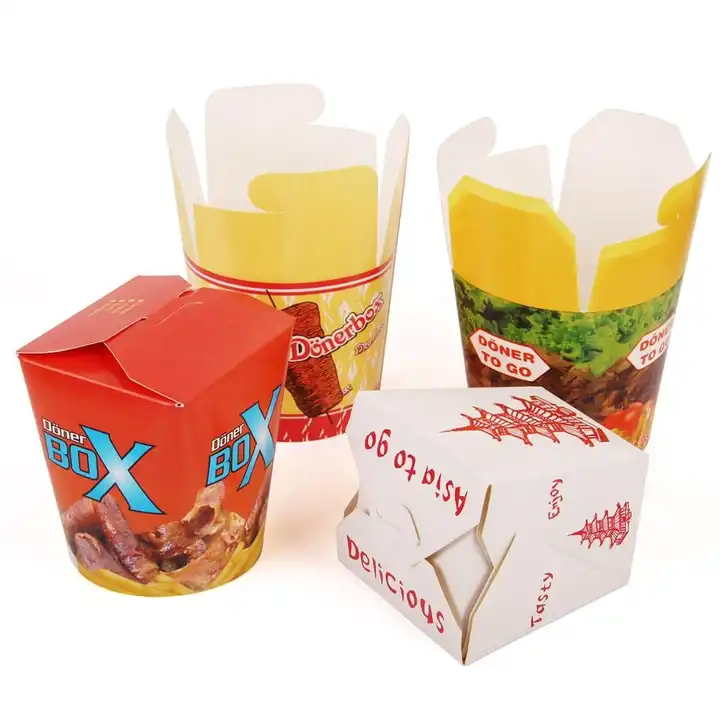
A custom printed noodle box is a packaging box specifically designed for noodles, with your brand's logo, colors, and artwork printed directly onto the board. It can be used for instant noodles, ramen, udon, or other noodle‑based meals. [thepremierpackaging]
2. What materials are best for noodle boxes?
Common materials include kraft paper, recycled CCNB, SBS C1S/C2S, and corrugated boards, often coated or laminated for moisture resistance. The best option depends on your budget, sustainability goals, and whether the box will be used in retail, e‑commerce, or food‑service. [oxopackaging.com]
3. Can I get small‑quantity custom noodle boxes?
Yes; manufacturers that offer digital printing and short‑run capabilities can produce small‑quantity custom noodle boxes for prototypes, limited editions, or testing new designs. [xkdisplay]
4. How do custom noodle boxes improve brand recognition?
A unique design, consistent colors, and clear branding help consumers recognize your product across shelves and online platforms. Over time, this builds top‑of‑mind awareness and loyalty. [cppboxes]
5. What sustainability options exist for custom noodle boxes?
You can choose recyclable paperboard, FSC‑certified materials, water‑based inks, and reduced plastic components. Many brands also highlight recyclability and eco‑friendly materials on the box to meet consumer expectations. [oxopackaging.com]
References
"Custom Noodle Boxes – What Makes Them the Perfect Choice for Businesses?" – CPP Packaging Boxes [cppboxes]
"How to write content for Google's E‑E‑A‑T guidelines" – Venntov [venntov]
"Long‑Tail Keywords: The Ultimate Guide for 2025"


