Content Menu
● Why Category-Specific Display Stands Matter
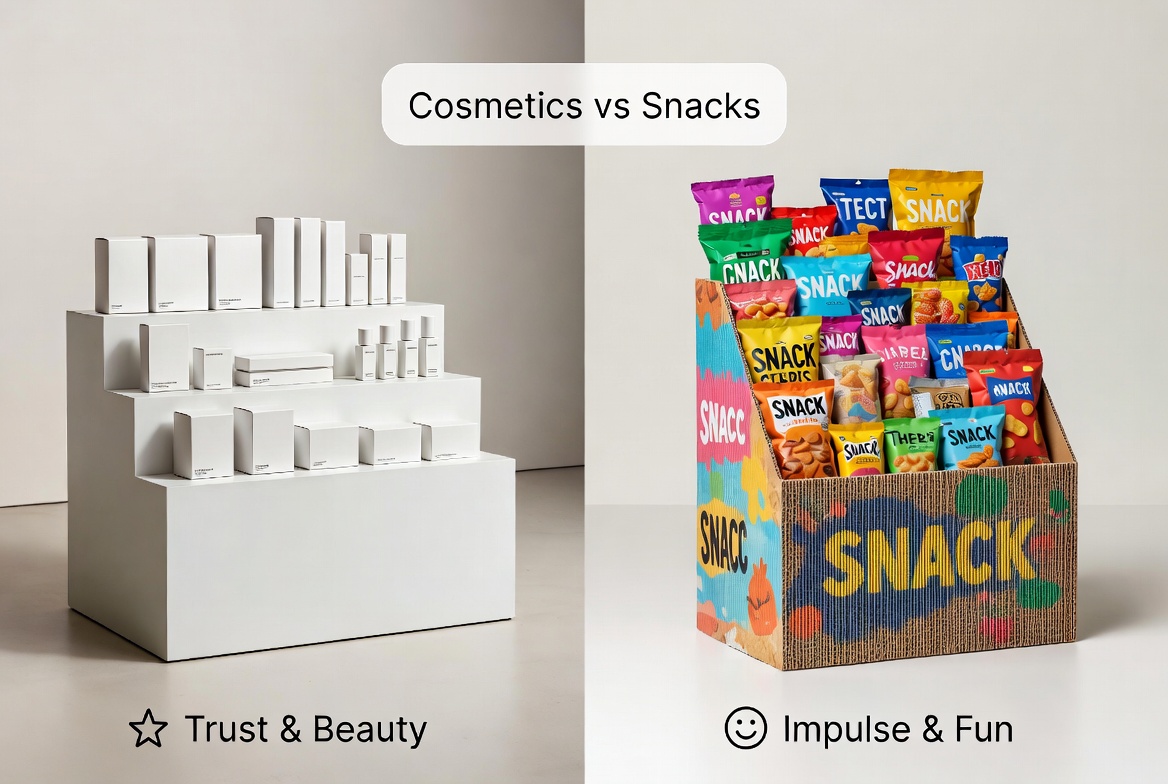
● Brand and Shopper Psychology – Cosmetics vs Snacks
>> Emotional Positioning for Cosmetics
>> Impulse and Fun for Snacks
● Structural Design Differences Between Cosmetic and Snack Display Stands
>> Materials and Finishing
>> Load Capacity, Stability and Ergonomics
>> Space Planning and Modularity
● Printing, Graphics and Visual Hierarchy
>> Graphic Priorities for Cosmetics
>> Graphic Priorities for Snacks
>> Compliance and Information Space
● Retail Placement and Shopper Journey
>> Typical Placement for Cosmetic Display Stands
>> Typical Placement for Snack Display Stands
>> Replenishment and Operational Efficiency
● Latest Industry Trends – Data-Driven Display Stand Design
>> Sustainability and Eco-Friendly Materials
>> Short-Run Customization and Localization
>> Data-Backed Design Decisions (Expert Insight)
● Practical Selection Guide – Cosmetics vs Snacks
>> Key Decision Factors for Brands and Buyers
>> Summary Table – Cosmetic vs Snack Display Stands
● How Shenzhen XingKun Supports Both Categories
>> Manufacturer Experience and Global Service
>> Process Blueprint – From Brief to Finished Stand
● Call to Action – Partner with a Category-Focused Display Stand Manufacturer
● FAQ
● References
Display stands for cosmetics and display stands for snacks may look similar at first glance, but they follow very different design logics, shopper journeys, and branding requirements, especially for global brands working with experienced manufacturers like Shenzhen XingKun Packing Products Co., Ltd. [xkdisplay]
Choosing the right display stand is no longer a simple matter of size and material; it is a strategic decision that affects brand perception, sales conversion, and in‑store shopper experience. For cosmetics and snacks, the same shelf space can deliver very different results depending on how the stand is engineered, printed, and optimized for category‑specific behavior. [xkdisplay]
Why Category-Specific Display Stands Matter
Retailers and brand owners increasingly expect category‑optimized displays rather than generic fixtures, because each product type has unique visibility, hygiene, and replenishment needs. A cosmetic floor stand must communicate premium quality and trust, while a snack stand must drive impulse grabs and fast turnover. [zhibangpackaging]
From the manufacturer's perspective, developing separate solutions for cosmetics and snacks allows better structural design, targeted graphics, and more efficient packaging and transportation. For a company like Shenzhen XingKun, category specialization is also a key E‑E‑A‑T signal: it demonstrates experience, industry‑specific expertise, and the ability to deliver reliable trustworthy outcomes for brand partners in over 30 countries and regions. [linkedin]
Brand and Shopper Psychology – Cosmetics vs Snacks
Emotional Positioning for Cosmetics
Cosmetic display stands are essentially mini brand theaters. They must deliver a sense of safety, efficacy, and aspiration in a very limited footprint. Shoppers interact with cosmetics close to the face and skin, so they look for visual cues of cleanliness, precision, and sophistication. [zhibangpackaging]
Common psychological priorities for cosmetic displays include:
- Premium perception through matte lamination, metallic foils, and clean color palettes. [zhibangpackaging]
- Trust and hygiene via neat layout, smooth surfaces, and minimal clutter. [zhibangpackaging]
- Guided discovery with tiered structures, clear product segmentation, and educational panels. [xkdisplay]
The result is a stand that works almost like a consultant, helping people choose the right product rather than just stacking SKUs.
Impulse and Fun for Snacks
Snack display stands, especially in supermarkets and convenience stores, focus on instant attention and fast decision‑making. Bright colors, bold typographic claims, and easy reach matter more than subtle texture. [holidaypac]
Typical psychological elements for snack display stands include:
- High‑impact colors (reds, yellows, bold contrasts) for quick visual capture. [xkdisplay]
- Abundant visibility with multiple facings and open shelves to suggest variety and abundance. [holidaypac]
- Impulse triggers such as limited‑time graphics, price flashes, or combo offers printed on headers. [xkdisplay]
Here, the stand acts like a signal: "Grab me now, I'm tasty and convenient."
Structural Design Differences Between Cosmetic and Snack Display Stands
Materials and Finishing
Experienced manufacturers of display stands, like Shenzhen XingKun, usually offer a wide range of materials: corrugated cardboard, rigid board, plastic accessories, and specialty finishes. For cosmetics and snacks, these options are combined differently to match category needs. [xkdisplay]
- Cosmetic display stands often use higher‑grade board with laminated or coated surfaces, foil stamping, and sometimes spot UV to highlight brand logos or product images. [zhibangpackaging]
- Snack display stands prioritize durability and load‑bearing capacity in corrugated board, with strong structural design and sometimes plastic clips or reinforcements for high‑turnover environments. [oneplusdisplay]
Finishing for cosmetics supports luxury storytelling, while for snacks it supports robustness and cost‑effective mass deployment.
Load Capacity, Stability and Ergonomics
From an engineering standpoint, snack stands usually carry heavier cumulative weight (multipacks, bottles, large bags) compared to slim cosmetic containers. That means more attention to: [holidaypac]
- Wider bases and reinforced shelves for snacks. [xkdisplay]
- More vertical segmentation and lighter tier loads for cosmetics to keep each product visible and accessible. [zhibangpackaging]
- Ergonomic heights: lipsticks and skincare should sit in the eye‑to‑hand zone, while snacks can occupy broader ranges, including lower shelves for bulk packs. [holidaypac]
The manufacturer's design team needs clear information about product dimensions, weights, and shopper touchpoints to make category‑appropriate decisions.
Space Planning and Modularity
Brands working with global partners often request modular display systems that can be reconfigured for different campaigns. In cosmetics, modularity focuses on swapping graphics and sub‑brand clusters; in snacks, it is about flexible shelf heights and hooks. [xkdisplay]
- Cosmetic modular design: removable side panels, interchangeable header cards, and optional testers or mirror accessories. [zhibangpackaging]
- Snack modular design: adjustable shelf slots, optional hooks for hanging packs, and stackable units for end‑caps. [xkdisplay]
This modularity makes displays more future‑proof, reducing waste and improving ROI across multiple promotions.
Printing, Graphics and Visual Hierarchy
Graphic Priorities for Cosmetics
Cosmetic displays make extensive use of high‑fidelity printing to preserve skin tones, product photography, and subtle gradients. Color management and resolution are critical. [zhibangpackaging]
Key design points include:
- Brand logo and range name at the top for immediate recognition.
- Large hero image (model or product close‑up) to communicate benefits.
- Clear hierarchy of product categories (foundation, lipstick, skincare) using color bands or shelf labels.
Manufacturers with strong printing expertise, such as Shenzhen XingKun, leverage advanced color processes and consistent QC to ensure that the printed stand matches brand guidelines across all markets. [linkedin]
Graphic Priorities for Snacks
Snack graphics focus on energy and appetite appeal. While resolution is still important, bold illustration style and large typography play a bigger role than subtle photographic detail. [holidaypac]
Typical visual hierarchy for snack display stands:
- Big brand masthead and flavor call‑outs.
- Price or promotion blocks in high‑contrast shapes.
- Quick icons like "family pack," "new," or "limited edition" at eye level.
The goal is to help shoppers process information in one or two seconds, supporting high‑traffic environments like convenience stores or transit hubs. [xkdisplay]
Compliance and Information Space
Cosmetics sometimes require more regulatory copy (ingredients, usage notes, safety warnings), which may influence how much text is printed on the stand itself. Snacks may focus more on nutrition claims and certifications. [xkdisplay]
For both categories, the stand should leave enough clean zones for barcodes, shelf labels, and store‑specific price tags without breaking the main design. [xkdisplay]
Retail Placement and Shopper Journey
Typical Placement for Cosmetic Display Stands
Cosmetic display stands are often found in:
- Beauty stores and specialty counters.
- Pharmacy and drugstore beauty aisles.
- Department store promotional zones.
They are usually placed where shoppers linger and compare, which means the stand must support longer interaction time and possibly touch‑and‑try behavior. Features like mirrored panels, tester trays, and educational copy all support this extended journey. [zhibangpackaging]
Typical Placement for Snack Display Stands
Snack display stands usually appear in:
- Supermarket aisles and end‑caps. [holidaypac]
- Convenience store front zones and near the checkout. [xkdisplay]
- Seasonal or promotional islands (e.g., holiday displays). [holidaypac]
These locations emphasize visibility from a distance and access from multiple angles for quick grabs. Structural robustness and easy replenishment become primary success factors.
Replenishment and Operational Efficiency
From a retailer's perspective, a good stand must be easy to refill and maintain. [xkdisplay]
- Cosmetic stands: more precise arrangement, smaller SKUs, and careful alignment; replenishment is slower but more detail‑sensitive. [zhibangpackaging]
- Snack stands: bulk cartons and bags; shelves need open fronts and clear capacity markers to avoid overloading. [xkdisplay]
Designing with operational UX in mind reduces damage, improves cleanliness, and keeps displays compliant with store standards.
Latest Industry Trends – Data-Driven Display Stand Design
Sustainability and Eco-Friendly Materials
Global brands now expect eco‑friendly display solutions, especially in categories with frequent promotions like cosmetics and snacks. Corrugated cardboard, recyclable laminations, and optimized die‑cuts are gaining traction. [xkdisplay]
Manufacturers focusing on export markets emphasize:
- FSC or similar certified paper sources where required.
- Designs that use less material while maintaining stability.
- Fold‑flat structures to reduce shipping volume and emissions.
This shift helps brands meet ESG targets while still achieving high visual impact. [xkdisplay]
Short-Run Customization and Localization
Another trend is short‑run, highly customized displays tailored to specific regions or retail chains. For cosmetics, this might mean localized language versions and seasonal campaigns; for snacks, limited‑edition flavors and local price points. [xkdisplay]
Experienced manufacturers who work with multiple global markets, like Shenzhen XingKun, can support:
- Flexible printing setups for multiple language versions. [xkdisplay]
- On‑demand structural adjustments for different retail formats. [holidaypac]
This capability directly reinforces Google's E‑E‑A‑T criteria, as it shows real‑world experience and deep understanding of client needs.
Data-Backed Design Decisions (Expert Insight)
From an expert SEO and retail marketing perspective, the next stage of display design involves data feedback loops. While detailed in‑store analytics are often proprietary, several measurable factors are commonly used internally by brands:
1. Sell‑through rate before and after the new stand implementation.
2. Average dwell time in front of the display for cosmetics, captured via in‑store observation or sensor systems.
3. Impulse purchase share for snacks, tracked through POS data linked to specific display locations.
By combining structural attributes (tier count, shelf angle, color scheme) with these performance indicators, brands can iteratively refine their displays and request evidence‑based upgrades from their manufacturing partners.
Practical Selection Guide – Cosmetics vs Snacks
Key Decision Factors for Brands and Buyers
When deciding between a cosmetic or snack display stand, or when commissioning both from one manufacturer, consider the following expert checklist:
1. Product category and weight – define load requirements clearly.
2. Brand positioning – premium vs mass, playful vs clinical.
3. Retail environment – beauty store, supermarket, convenience, pharmacy.
4. Campaign duration – short‑term promo vs long‑term fixture.
5. Sustainability goals – material certifications, recyclability.
6. Localization needs – language, price tags, regulatory copy.
This structured approach ensures that each stand is optimized for its business role, not just its appearance.
Summary Table – Cosmetic vs Snack Display Stands
| Aspect | Display Stands for Cosmetics | Display Stands for Snacks |
| Shopper psychology | Focus on trust, beauty, and careful comparison; longer interaction time. | Focus on impulse, fun, and fast grabs; very short decision window. |
| Materials & finish | Higher‑end board, lamination, foil, smooth textures for premium feel. (zhibangpackaging) | Corrugated board optimized for load, robust shelves, often simpler finishes. (holidaypac) |
| Graphics style | High‑fidelity photography, subtle gradients, elegant typography. (zhibangpackaging) | Bold colors, large typography, appetite appeal images, promo flashes. (holidaypac) |
| Load & structure | Lighter products, more vertical segmentation, precise slotting. (zhibangpackaging) | Heavier products, reinforced shelves, wider bases, open fronts. (holidaypac) |
| Typical placement | Beauty counters, pharmacies, department store zones. | Supermarket aisles, end‑caps, convenience store checkout areas. (holidaypac) |
| UX focus | Guided discovery, hygiene, and brand storytelling. | Quick access, abundant facings, easy replenishment. (holidaypac) |
How Shenzhen XingKun Supports Both Categories
Manufacturer Experience and Global Service
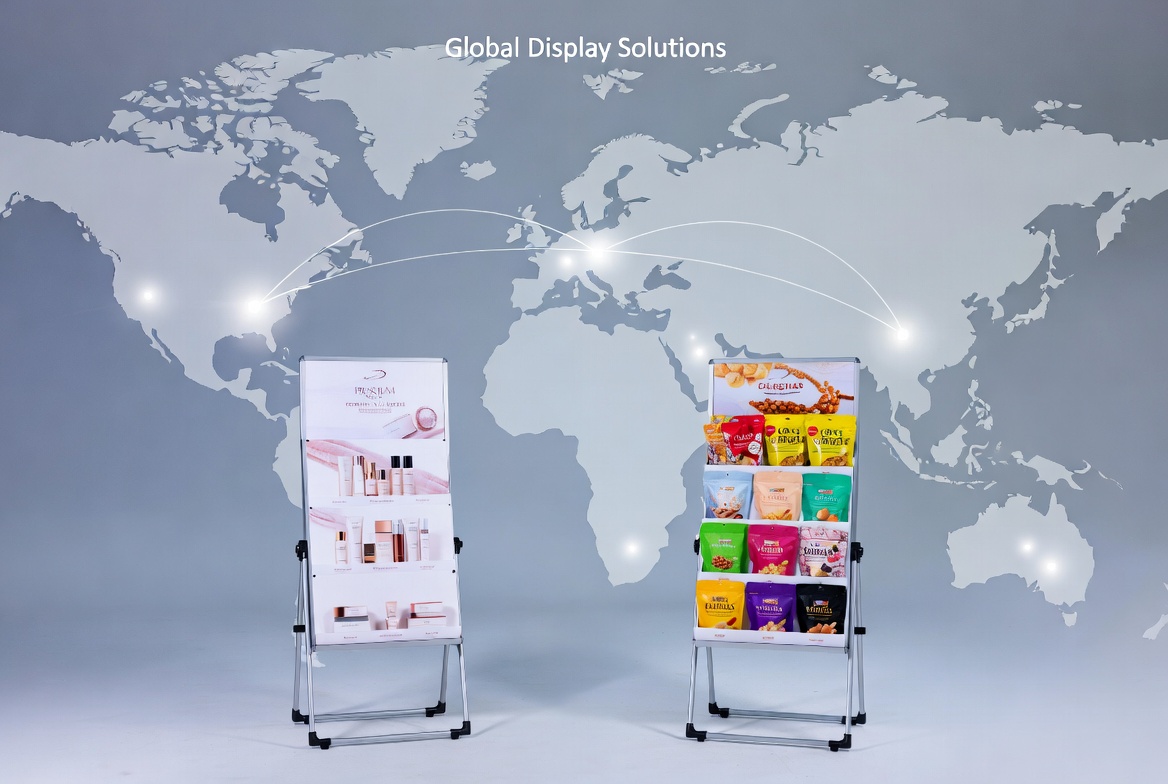
Shenzhen XingKun Packing Products Co., Ltd. is recognized as a professional display stand manufacturer and supplier in China, providing a wide range of display stands and printed packaging products. With over 20 years of industry experience and high‑quality printing capabilities, the company offers one‑stop services from design to production for global clients. [linkedin]
XingKun serves brands and distributors in more than 30 countries and regions, enabling reliable scaling of both cosmetic and snack display programs across different retail formats. Its expertise in corrugated display stands, retail floor stands, and custom cosmetic structures allows efficient alignment with brand guidelines and local market requirements. [xkdisplay]
Process Blueprint – From Brief to Finished Stand
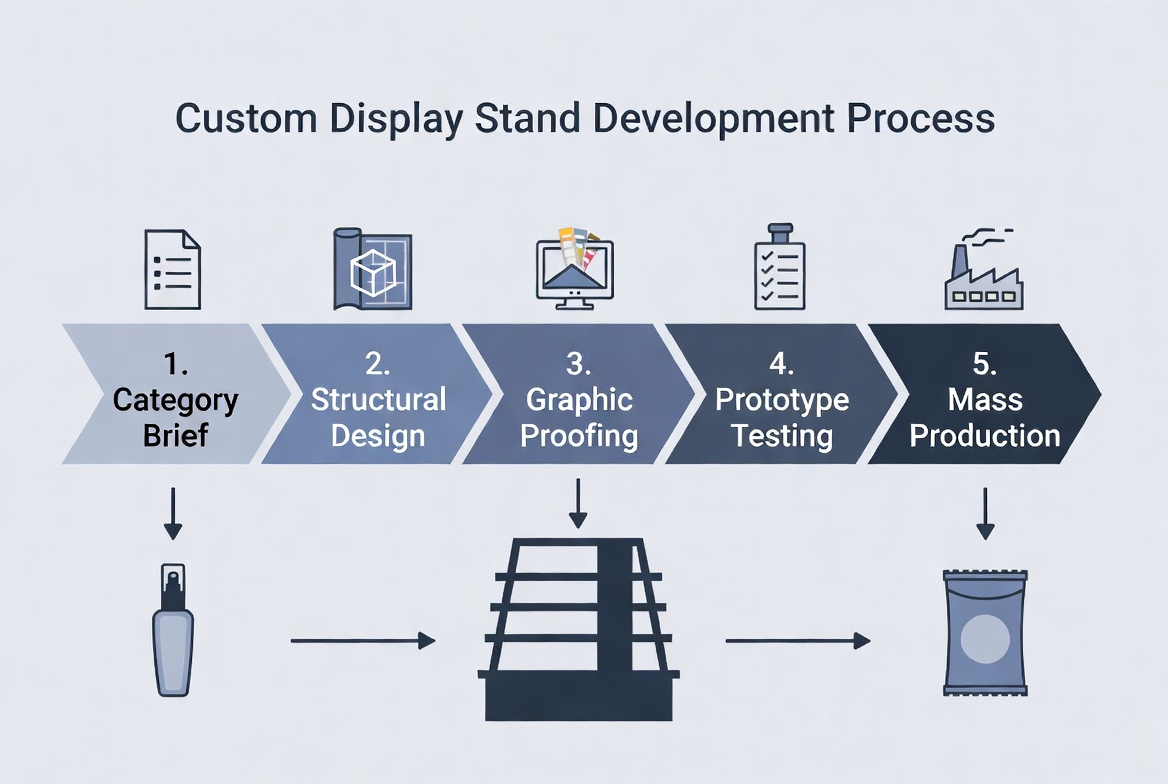
A practical collaboration workflow with an experienced manufacturer typically follows these steps:
1. Category briefing – clearly state whether the stand is for cosmetics or snacks, including product samples and brand positioning.
2. Structural design proposal – engineering team outputs 3D drawings and load estimates tailored to category. [xkdisplay]
3. Graphic layout and proofing – print designers integrate brand assets, regulatory copy, and retail requirements. [xkdisplay]
4. Prototype and testing – on‑site or in‑store testing to validate stability, visibility, and UX. [xkdisplay]
5. Batch production and logistics – fold‑flat packaging, export arrangements, and retailer distribution plans. [xkdisplay]
Call to Action – Partner with a Category-Focused Display Stand Manufacturer
Whether you are planning a new cosmetic launch or a large‑scale snack promotion, choosing a manufacturer with proven category experience will significantly improve display performance and reliability. With decades of professional printing and packaging expertise and a portfolio covering cosmetic and snack display stands, Shenzhen XingKun Packing Products Co., Ltd. can support your next project from design consultation to mass production. [linkedin]
If you are ready to optimize your display stands for cosmetics or display stands for snacks, define your category requirements, target markets, and sustainability goals, then consult a specialized partner to co‑create a solution that fits both your brand and your retailers.
FAQ
Q1: What is the main difference between cosmetic and snack display stands?
A: Cosmetic stands focus on premium brand storytelling and guided product discovery, while snack stands emphasize impulse visibility, high load capacity, and fast replenishment in high‑traffic areas.
Q2: Which materials are most suitable for cosmetic display stands?
A: Cosmetic displays often use high‑quality board with laminated surfaces, foil stamping, and smooth finishes to support a luxury appearance and precise printing of product imagery. [zhibangpackaging]
Q3: How can snack display stands improve impulse sales?
A: Snack displays boost impulse purchases through bright colors, bold typography, clear promotions, and strategic placement near aisles, end‑caps, or checkouts that maximize quick grab behavior. [xkdisplay]
Q4: Are cardboard display stands durable enough for snacks?
A: Well‑engineered corrugated cardboard stands with reinforced shelves and stable bases are designed to handle the weight and turnover of snack products while remaining lightweight and cost‑effective. [oneplusdisplay]
Q5: Why should brands work with a specialized display stand manufacturer?
A: Specialized manufacturers combine structural engineering, printing expertise, and global logistics experience, allowing brands to receive category‑optimized displays that meet performance, sustainability, and retailer requirements across multiple markets. [linkedin]
References
1. [XINGKUN]
2. [Top Display Stand Manufacturers in China: Why Choose Them? – XINGKUN]
3. [XingKun Packing Products Co Ltd – LinkedIn Company Profile]
4. [6-Tier Cardboard Display Stand For Cosmetics From Shenzhen]
5. [Retail Floor Display Stands – HolidayPac]
6. [XINGKUN Snack Display Stand]
7. [Custom Cardboard Floor Display Rack for Candy Snack Food Displays – POP Display Stand]


