Content Menu
● What Counts as Package Identification in Real-World Warehousing?
● Why Shipping Labels Are Mission-Critical for Delivery Accuracy
>> Key Data Elements on a High-Performance Shipping Label
>> The Cost of Poor Labeling: Errors You Can Avoid
● The Growing Strategic Value of Labels in Global Trade
>> Market Growth and Why Labels Are a Strategic Asset
>> E-Commerce, Compliance and Traceability: Labels as Data Carriers
● Emerging Label Trends: What Shippers Need to Plan For
>> Digital, Smart and Extended Content Labels
>> Automation and Cloud-Based Label Management
● Practical Best Practices for Shipping Labels and Package Identification
>> Design and Printing Guidelines You Should Enforce
>> Step-by-Step: Building a Reliable Package Identification System
● Expert Insights from 20+ Years in Stickers and Labels
● How Shenzhen XingKun Packing Products Co., Ltd. Supports Your Label Strategy
● FAQs
● References
A well-designed package identification and shipping label system is no longer a back-office detail—it is a core driver of delivery accuracy, customer trust, and brand growth for modern e-commerce and global trade. [athenaswc]
In over 20 years of working with global brands on stickers, labels and printed packaging, I've seen one simple truth: clear, scannable, and compliant labels are the backbone of a reliable supply chain. When your shipping labels and package identification are precise, your inventory moves faster, errors drop, and both warehouse teams and end customers feel the difference. [g-ecx.images-amazon]
From the warehouse aisle to the customer's doorstep, the shipping label is the one document that travels every step of the journey. It holds the receiver's address, sender details, contact information, tracking IDs and carrier codes—everything carriers and fulfillment systems need to route a parcel correctly. When that data is well-structured, machine-readable and durable, your logistics operation becomes predictable instead of risky. [quickcreator]
Shenzhen XingKun Packing Products Co., Ltd. has helped brands in more than 30 countries standardize their packaging documentation—from product stickers to shipping labels, packing slips and compliance tags—so that every box can be identified instantly in the warehouse and in transit. In this article, I'll share practical, expert-level guidance drawn from hands-on projects with B2B manufacturers, e-commerce sellers and distribution partners. [jwzpackaging]
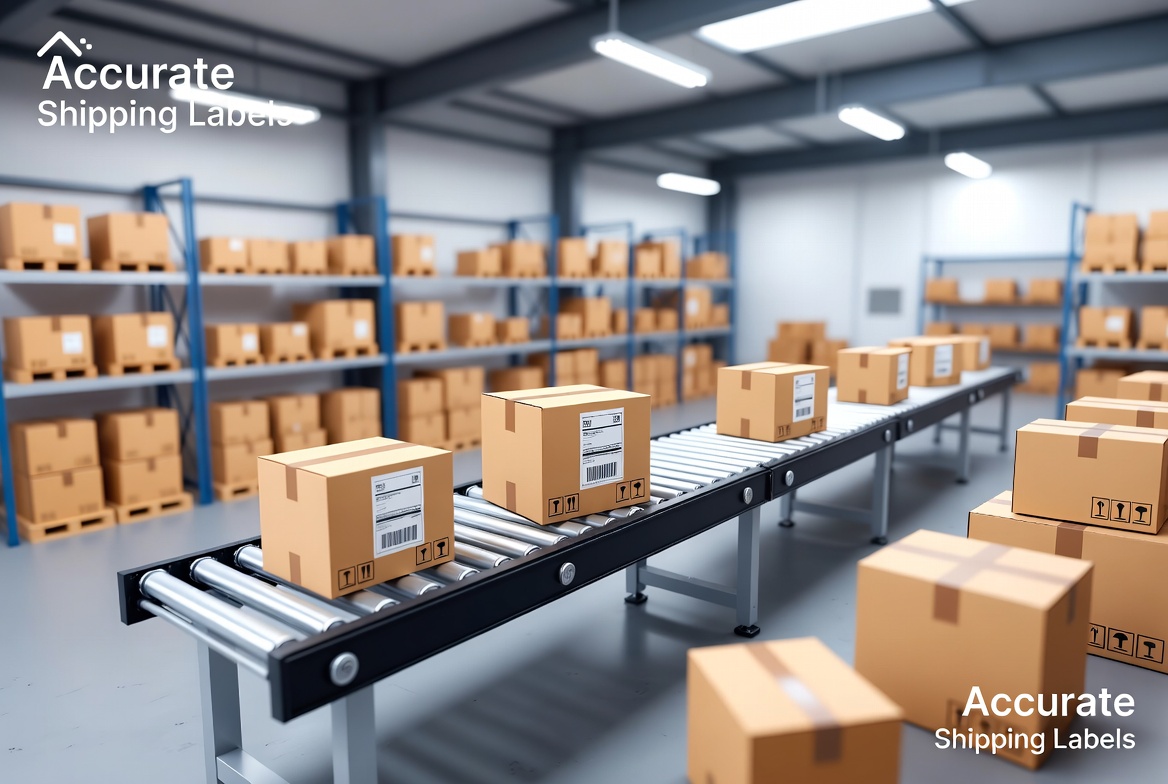
What Counts as Package Identification in Real-World Warehousing?
Package identification is more than a single label on a box; it's the entire information layer that tells people and systems what a shipment is, where it should go, and how it should be handled. [athenaswc]
Typical components include: [g-ecx.images-amazon]
- Shipping label with addresses, tracking IDs and carrier data
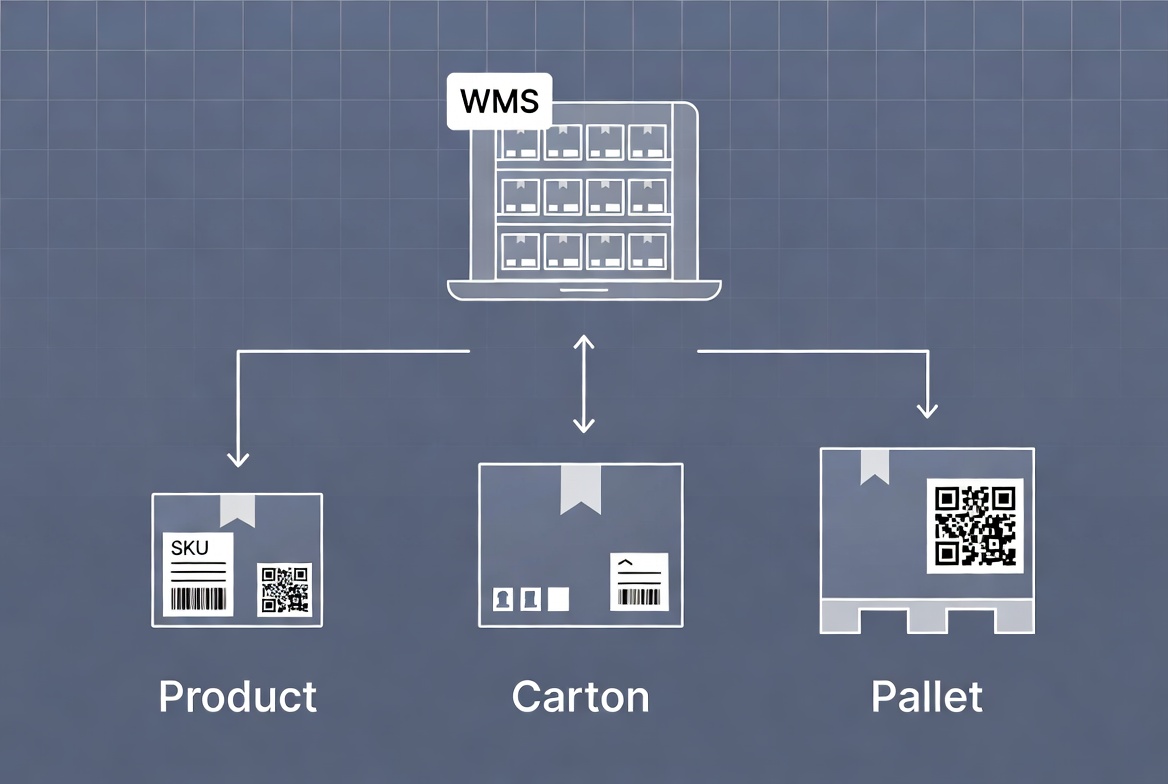
- Product labels and stickers with SKU, lot or batch information
- Barcodes or QR codes linked to inventory systems
- Handling labels (fragile, heavy weight, temperature-sensitive)
- Compliance and regulatory labels (hazardous materials, food safety marks)
In many warehouses, documentation quickly becomes complicated because each item can require a shipping label, packing slip and internal identification. Without a consistent system, staff rely on manual checks and ad hoc notes, which increases the risk of mis-picks, misroutes and delayed deliveries. [freightamigo]
A robust package identification framework ensures that every unit, box and pallet can be uniquely and unambiguously identified. This is especially critical for omnichannel operations where online orders, wholesale shipments and returns all flow through the same facilities. [jwzpackaging]
Why Shipping Labels Are Mission-Critical for Delivery Accuracy
Key Data Elements on a High-Performance Shipping Label
A shipping label is the primary instruction sheet for carriers and sortation systems. While formats vary, effective labels consistently include: [freightamigo]
- Full receiver address, validated and correctly formatted
- Sender name, address and contact details
- Carrier service level and routing barcodes
- Unique tracking ID and shipment reference numbers
- Weight, dimensions and, where relevant, customs or regulatory information
From a user experience perspective, labels must be easy to scan and easy to read. Carriers recommend keeping labels away from carton seams, at least 3 cm from edges, and free from tape or any material that obscures key information. Printing with laser technology instead of inkjet helps prevent smudging and ensures that barcodes remain scannable throughout transit. [g-ecx.images-amazon]
The Cost of Poor Labeling: Errors You Can Avoid
Businesses often underestimate how labeling errors ripple through operations. Common problems include: [freightamigo]
- Labels printed at low resolution or on incompatible media
- Barcodes covered by tape or distorted along seams
- Multiple shipments combined in one box with conflicting IDs
- Missing "Heavy Weight" warnings on boxes above recommended limits
- Unclear set labeling for multi-component products
These issues lead directly to misrouted parcels, damaged goods, and inventory discrepancies between what your system says and what actually leaves the warehouse. In high-volume e-commerce environments, even a 1–2% error rate can translate into thousands of support tickets, refunds and reputational damage each month. [g-ecx.images-amazon]
When we work with clients as a label and packaging manufacturer, one of the simplest yet most impactful steps is to standardize label formats and enforce placement rules across all SKUs and warehouses. This alignment reduces training time for staff and dramatically improves scan success rates at inbound and outbound docks. [quickcreator]
The Growing Strategic Value of Labels in Global Trade
Market Growth and Why Labels Are a Strategic Asset
The label printing market has evolved from a tactical cost center to a strategic enabler of e-commerce and global trade. Recent industry data shows the global label printing market growing from around US$48.89 billion in 2024 to an estimated US$52.11 billion in 2025, with a compound annual growth rate of 6.6%. By 2029, it is expected to exceed US$70.5 billion as demand for personalized packaging, compliance and traceability continues to rise. [jwzpackaging]
Packaging and labeling now account for nearly half of the printing industry in some regions, and growth rates of 9–11% annually far outperform traditional commercial print. For logistics and B2B manufacturers, this means that high-quality labeling is now part of competitive differentiation, not a background expense. [konicaminolta]
From a buyer's perspective, consistent labels across regions and product lines communicate professionalism and stability. For operations leaders, standardized identification supports advanced warehouse automation, multi-site inventory visibility and efficient auditing. [sessionsuk]
E-Commerce, Compliance and Traceability: Labels as Data Carriers
As e-commerce and cross-border shipping mature, regulators and marketplaces increasingly expect rich, accurate label data. Variable data printing—adding QR codes, serialized IDs, batch information and localized text—turns each label into a powerful data carrier. [konicaminolta]
This supports:
- Lot and batch tracking across global supply chains
- Rapid recall management and quality investigations
- Automated check-in and check-out at third-party logistics hubs
- Omnichannel visibility, linking online orders to physical shipments
Chinese and other Asian manufacturing hubs are investing heavily in digital and intelligent label production to support these needs, with smart factories integrating cloud platforms and AI-powered scheduling. For shippers and brands, partnering with label manufacturers who understand these trends is essential to keep up with both regulatory changes and customer expectations. [quickcreator]
Emerging Label Trends: What Shippers Need to Plan For
Digital, Smart and Extended Content Labels
By 2026, several label trends are reshaping logistics and packaging strategy: [sixb]
- Digital printing and short-run customization allow brands to localize content, run targeted campaigns and adapt quickly to regulatory changes. [jwzpackaging]
- Variable data and smart labels (QR codes, NFC, serialized IDs) connect physical packages with online experiences and track inventory more precisely. [sessionsuk]
- Extended Content Labels (ECLs)—multi-layer or booklet-style labels—provide additional regulatory, safety or multilingual information without increasing packaging size. [konicaminolta]
- Sustainable materials and water-based inks are becoming baseline expectations, driven by environmental regulations and customer demand. [jwzpackaging]
For shipping operations, these trends mean that label design must integrate with IT, compliance and sustainability strategy, not just with graphic design. When we advise clients, we look at their full ecosystem: data sources, ERP, WMS, carrier integrations and brand guidelines, then design labels that align with all of them. [sessionsuk]
Automation and Cloud-Based Label Management
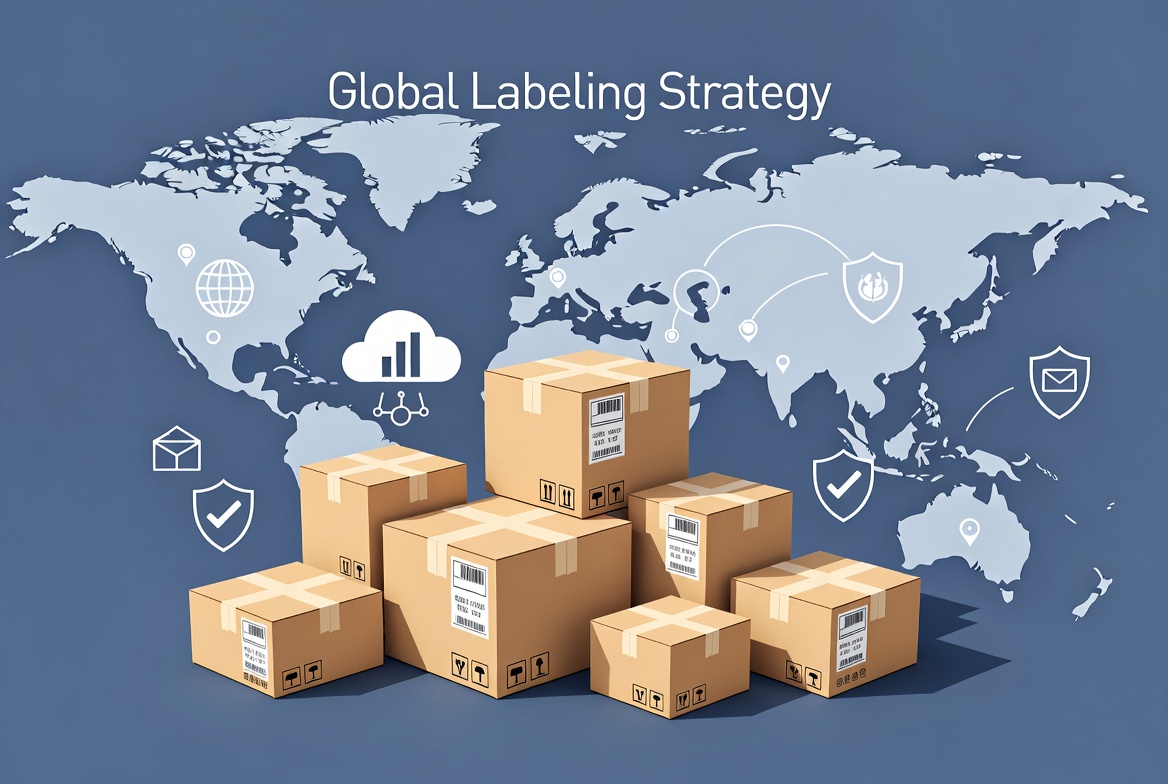
Automation is transforming how labels are created, updated and deployed across factories and warehouses. Cloud-based label management platforms centralize templates, rules and data mappings so that every plant or 3PL can print compliant labels from a single source of truth. [sessionsuk]
Practical benefits include: [sessionsuk]
- Consistent layouts and content across multiple locations
- Rapid rollout of regulatory changes or new product lines
- Reduced manual intervention, minimizing human error
- Easier integration with MES, WMS and shipping platforms
For brands expanding globally, aligning physical label production with a central digital governance layer is one of the most effective ways to scale without losing control. Our experience as a long-term label manufacturer has shown that companies who invest early in integrated labeling workflows experience fewer disruptions when entering new markets or channels. [quickcreator]
Practical Best Practices for Shipping Labels and Package Identification
Design and Printing Guidelines You Should Enforce
High-performing shipping labels follow a few consistent principles. [freightamigo]
- Use laser printing or high-resolution digital printing for clarity and durability.
- Keep labels at least 3 cm away from carton edges and never across seams. [g-ecx.images-amazon]
- Avoid covering barcodes or key text with tape or other materials. [freightamigo]
- Ensure contrast between background and text/barcodes for better scan rates. [freightamigo]
- Select label materials that match your environment (humidity, cold chain, rough handling). [jwzpackaging]
From an operational perspective, standardize label sizes, fonts and iconography so warehouse staff can instantly recognize key information like service level, destination region or handling requirements. This reduces cognitive load and speeds up training for new employees. [freightamigo]
Step-by-Step: Building a Reliable Package Identification System
To implement or upgrade your package identification framework:
1. Map your information needs.
List all data points needed at item, box and pallet level: SKUs, batch IDs, addresses, routing codes, regulatory fields. [athenaswc]
2. Define label types and hierarchies.
Decide which labels belong on products, inner cartons, outer cartons and pallets, and how they relate logically. [g-ecx.images-amazon]
3. Standardize formats and placement.
Create clear guidelines with diagrams showing size, content zones and placement for each label type. [g-ecx.images-amazon]
4. Connect labels to your data systems.
Integrate label templates with ERP, WMS or e-commerce platforms to generate data-driven labels rather than manual entry. [sessionsuk]
5. Test for scanability and durability.
Run pilot shipments across typical routes, checking that labels remain scannable and legible at each touchpoint. [g-ecx.images-amazon]
6. Train teams and audit regularly.
Provide short training modules, then audit outbound shipments and returns to verify compliance and identify improvement opportunities. [freightamigo]
As a manufacturer, we often support customers by co-developing print-ready templates and material specs, then delivering bulk labels or integrated stickers that meet these standards out of the box. That reduces implementation friction and keeps warehouse leaders focused on operations rather than label experimentation. [jwzpackaging]
Expert Insights from 20+ Years in Stickers and Labels
Over two decades of producing stickers, labels and packaging for brands and distributors in more than 30 countries have shown us a few consistent lessons: [jwzpackaging]
- Labels are long-term infrastructure. When logistics teams treat them as strategic assets, they unlock smoother automation and more reliable data. [quickcreator]
- Cross-functional alignment matters. The best label systems are co-designed by operations, IT, compliance and branding, not in isolation. [konicaminolta]
- Material choices directly affect UX. If labels peel, fade or smudge, warehouse staff and customers quickly lose confidence in the process. [freightamigo]
- Localization is now standard. Multi-language content and region-specific regulations require flexible, modular label architectures. [konicaminolta]
For shippers and manufacturers, partnering with a specialized label and packaging producer who understands both printing technology and logistics realities can dramatically reduce trial-and-error. Our role is not only to print labels but to help clients design identification systems that can evolve with market demands. [athenaswc]
How Shenzhen XingKun Packing Products Co., Ltd. Supports Your Label Strategy
With more than 20 years of experience in stickers, labels and diverse printed packaging, Shenzhen XingKun Packing Products Co., Ltd. provides end-to-end support for brands and distributors worldwide. We combine industrial-grade printing capabilities with a deep understanding of warehousing, shipping and regulatory requirements. [jwzpackaging]
Clients typically rely on us for:
- Custom shipping labels aligned with carrier and marketplace standards
- Product identification stickers with barcodes, QR codes and batch data
- Extended content labels for regulated industries and multi-language markets
- Durable materials for cold chain, heavy-duty handling and long-distance freight
- Collaborative template design that integrates with existing ERP and WMS systems
By working closely with operations and logistics teams, we help convert labeling from a pain point into a competitive advantage, improving delivery accuracy and customer satisfaction while keeping costs predictable. [quickcreator]
If you're ready to upgrade your package identification and shipping labels, contact Shenzhen XingKun's label specialists to review your current system and co-create a scalable, compliant labeling strategy tailored to your warehouses and markets. [jwzpackaging]
FAQs
Q1: What is the difference between a shipping label and a product label?
A shipping label focuses on routing and delivery information for carriers, while a product label identifies the item itself with SKUs, batch data and branding elements. [athenaswc]
Q2: Why do carriers care so much about label placement?
Poor placement across seams or near edges can cause labels to tear or distort, making barcodes unscannable and increasing the chance of misrouted shipments. [g-ecx.images-amazon]
Q3: How can smart labels improve my warehouse operations?
Smart labels with QR codes or serialized IDs link physical units to digital records, streamlining receiving, picking, inventory checks and recall management. [sessionsuk]
Q4: Are sustainable label materials suitable for heavy-duty shipping?
Yes, modern eco-friendly substrates and water-based inks are engineered for durability in demanding logistics environments when correctly specified. [jwzpackaging]
Q5: When should I consider extended content labels?
Extended content labels are ideal when you must include detailed safety, regulatory or multilingual information but have limited packaging space. [konicaminolta]
References
1. Packageit – The Importance of Package Identification and Labels for Shipping https://www.packageit.com/the-importance-of-package-identification-and-labels-for-shipping
2. Amazon FBA – Shipping Best Practices (UK Quick Reference Guide) http://g-ecx.images-amazon.com/images/G/02/fba-help/QRG/ShippingBestPractices-UK.pdf
3. QuickCreator – SEO for Packaging Manufacturers: 2025 Best Practices https://quickcreator.io/blog/seo-for-packaging-manufacturers-2025-best-practices/
4. FreightAmigo – Mastering the Art of Package Labeling: A Comprehensive Guide for Businesses https://www.freightamigo.com/en/blog/logistics/mastering-the-art-of-package-labeling-a-comprehensive-guide-for-businesses/
5. Sessions UK – Latest Trends in Labelling Technology 2025 https://sessionsuk.com/latest-trends-in-labelling-technology-2025/
6. SixB Labels – 2026 Label Trends Every Business Should Know https://www.sixb.com/blog/2026-label-printing-trends
7. Konica Minolta – Label Printing in 2026 – Trends Reshaping the Future https://www.konicaminolta.eu/eu-en/news/label-printing-in-2026-trends-reshaping-the-future
8. JWZ Packaging – Label Printing Industry In 2025: Digitalization, Intelligence and Sustainability https://www.jwzpackaging.com/news_detail/114505.html
9. OnlineLabels – Label & Packaging Print Trends to Watch Now https://www.onlinelabelsus.com/2025/12/08/label-packaging-print-trends-to-watch-now/
10. Athena SWC – SEO for Packaging Manufacturers: Why Industry-Specific Expertise Drives Results https://www.athenaswc.com/resources/blog/seo-for-packaging-manufacturers-why-industry-specific-expertise-drives-results/


