Content Menu
● What an Enamel Pin Maker Actually Does
● Why Enamel Pins Remain Strong in 2026
● Soft Enamel vs Hard Enamel
● How to Evaluate an Enamel Pin Maker
>> 1. Check design capability
>> 2. Ask about plating options
>> 3. Review QC standards
>> 4. Confirm packaging support
● Common Design Mistakes to Avoid
>> Avoid overly thin details
>> Avoid tiny enclosed areas
>> Avoid too many colors
>> Avoid using non-production artwork only
● Production Process Explained
● New Insight: What Strong Buyers Ask For in 2026
● New Insight: How to Reduce Risk in OEM/ODM Orders
>> Use this workflow
● Why Packaging Matters for Pins
● How to Choose the Right Supplier
● Why Work With a Packaging-Focused Factory
● Practical Buyer Tips
● Conclusion
● FAQ
>> 1. What is an enamel pin maker?
>> 2. What is the difference between soft enamel and hard enamel?
>> 3. How do I prepare artwork for an enamel pin?
>> 4. What is the minimum order quantity for enamel pins?
>> 5. Why is packaging important for enamel pins?
>> 6. How do I choose a reliable enamel pin maker?
● References
If you are searching for an enamel pin maker, you are likely looking for more than just a factory. You need a partner who can turn a small piece of metal into a product that looks premium, sells well, and reflects your brand with precision.
In today's custom merchandise market, the best enamel pin maker is not only a manufacturer. It is a production advisor, quality controller, and brand support partner.
What an Enamel Pin Maker Actually Does
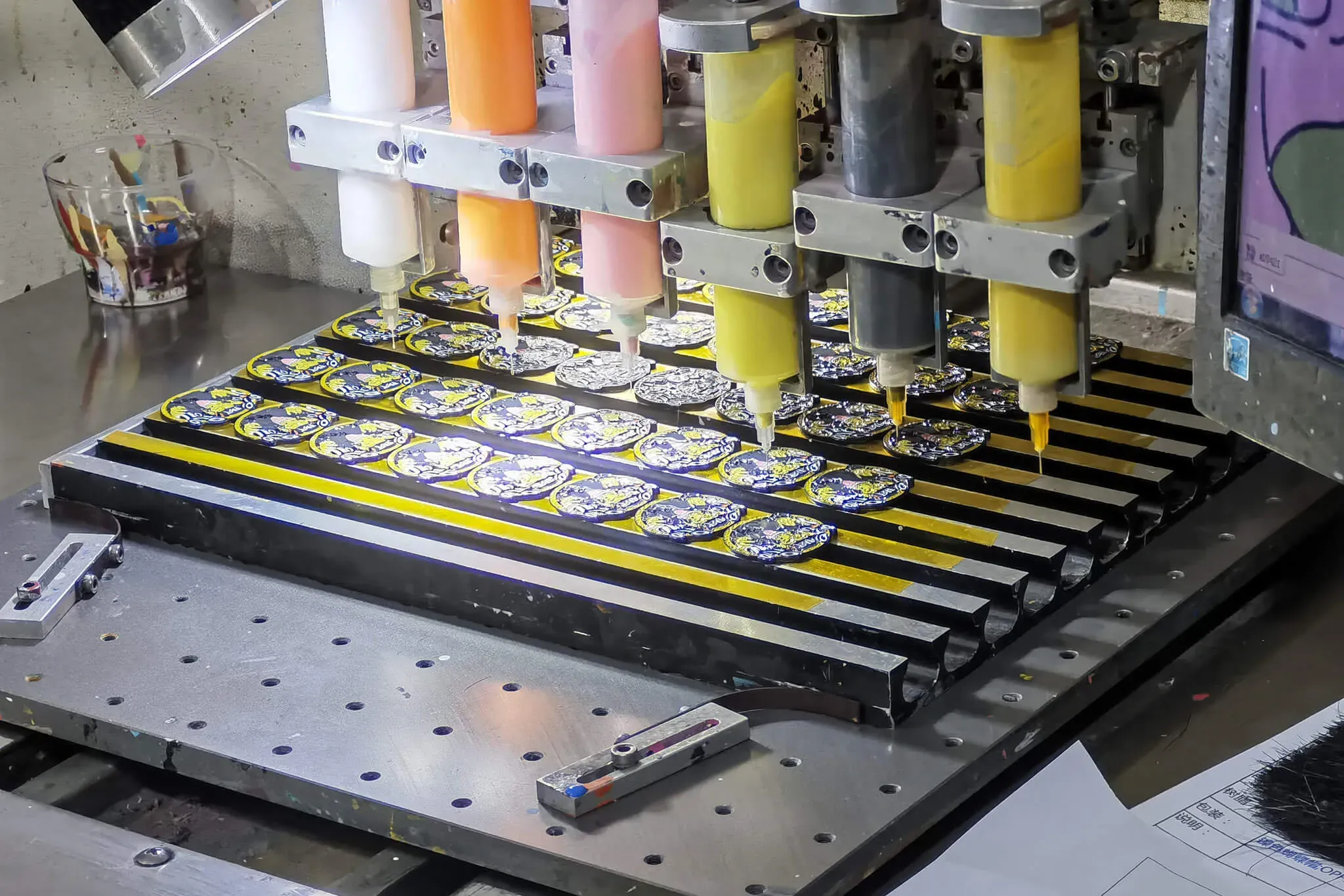
An enamel pin maker is a manufacturer that transforms artwork into custom metal pins using tooling, plating, coloring, polishing, and finishing processes. These pins are widely used for branding, retail, fandom merchandising, corporate gifts, events, campaigns, and collectibles.
A reliable pin maker typically handles:
- Artwork review and file correction.
- Mold/tooling production.
- Metal stamping or casting.
- Electroplating or surface finishing.
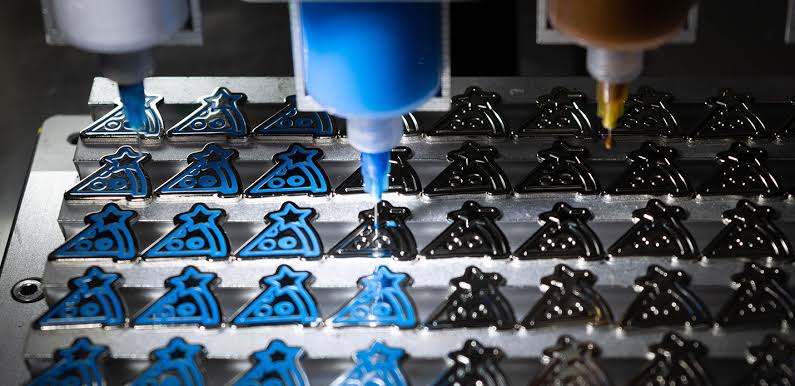
- Enamel filling or paint filling.
- Quality inspection and packaging.
- Export preparation for international buyers.
For B2B buyers, this matters because the manufacturer directly affects lead time, defect rate, color accuracy, packaging quality, and customer satisfaction.
Why Enamel Pins Remain Strong in 2026
The enamel pin category continues to perform well because it combines low unit storage cost, high perceived value, and strong collectability. Industry trend reports also continue to show demand from fandom, fashion, branding, and event marketing segments. [accio]
From a commercial perspective, enamel pins work especially well because they are:
- Easy to customize.
- Lightweight for shipping.
- Affordable in bulk.
- Suitable for premium packaging.
- Highly shareable on social media.
This is why many brands use them not just as products, but as identity-driven merchandise.
Soft Enamel vs Hard Enamel
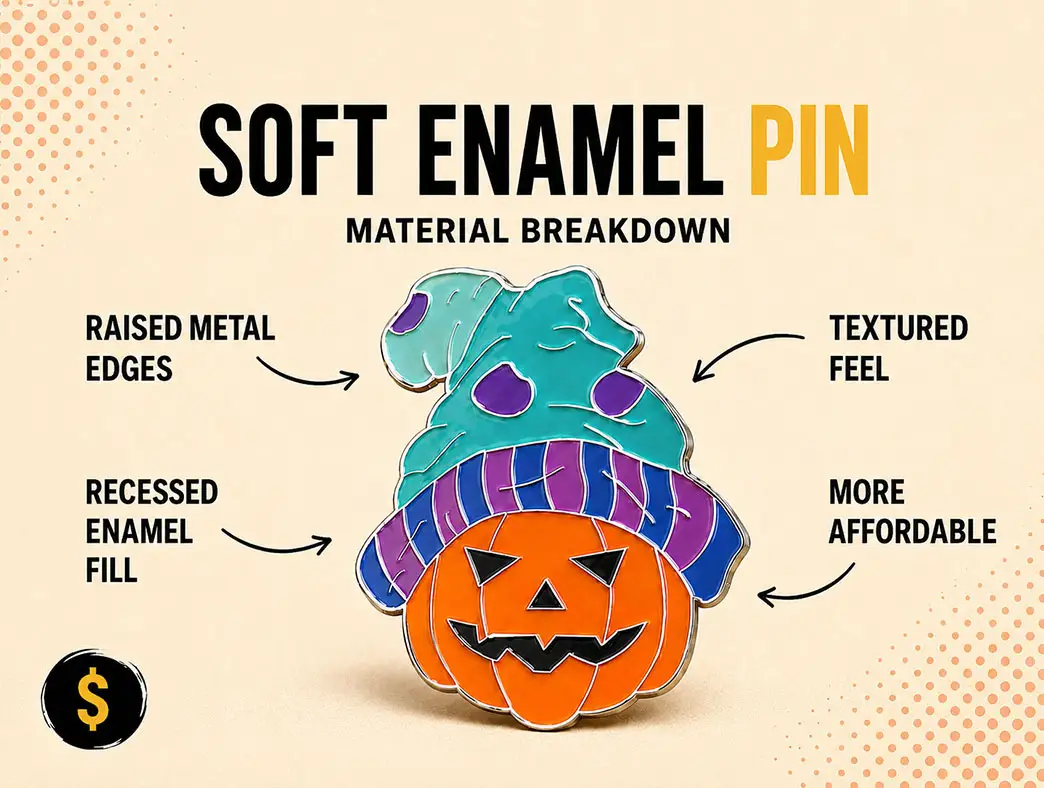
Before choosing an enamel pin maker, you should understand the two main production styles. This is one of the most important decisions because it affects appearance, price, and final use.
| Type | Look | Cost | Best For |
| Soft enamel | Textured surface, recessed color | Lower | Promotional pins, collectible designs, bold artwork |
| Hard enamel | Smooth, polished surface | Higher | Premium gifts, luxury branding, retail products |
Soft enamel is often preferred when the design has strong metal outlines and visible texture. Hard enamel is better when you want a smoother, more finished look that feels closer to jewelry.
A professional enamel pin maker should explain these differences clearly before production instead of simply quoting the cheapest option.
How to Evaluate an Enamel Pin Maker
Choosing the right supplier is not about price alone. In my experience working with OEM and ODM buyers, the best results come from factories that can balance engineering, color control, and communication.
Here is a practical evaluation framework.
1. Check design capability
A strong enamel pin maker should be able to review your artwork and advise on:
- Minimum line thickness.
- Minimum color area.
- Metal line separation.
- Text legibility at small sizes.
- Color simplification when needed.
Production-focused artwork guidance is critical because complex designs often need revision before tooling. [ksnoble]
2. Ask about plating options
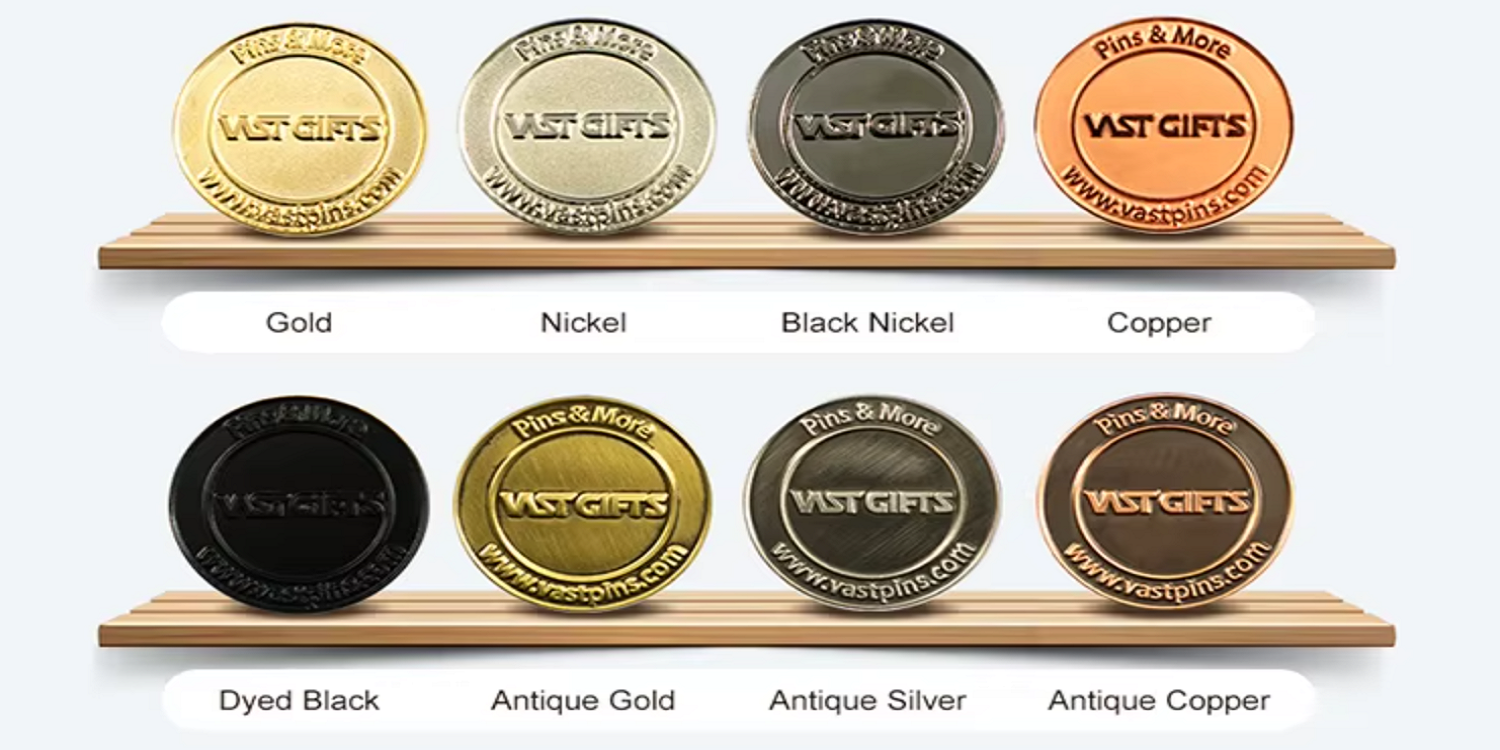
A good supplier should offer multiple plating finishes, such as:
- Gold.
- Silver.
- Black nickel.
- Antique brass.
- Antique copper.
- Matte finishes.
Plating changes the tone of the product and can dramatically affect brand perception. Premium buyers often prefer plating that matches their packaging and audience positioning.
3. Review QC standards
Quality control is one of the most overlooked issues in enamel pin sourcing. A serious manufacturer should inspect:
- Surface scratches.
- Color overflow.
- Misaligned outlines.
- Plating inconsistency.
- Attachment strength.
- Backing and clutch fit.
If a factory cannot explain its inspection process, that is a risk signal.
4. Confirm packaging support
Because enamel pins are often sold as retail items or gift products, packaging matters. A capable enamel pin maker should be able to supply:
- Poly bags.
- Backing cards.
- Paper boxes.
- Velvet pouches.
- Custom printed packaging.
This is where a packaging-oriented manufacturer like Shenzhen XingKun Packing Products Co., Ltd. has a natural advantage, because product presentation is part of the full customer experience.
Common Design Mistakes to Avoid
Many first-time buyers lose money because the artwork looks good on screen but fails in production. The most common mistakes are easy to prevent if you understand them early.
Avoid overly thin details
Very thin lines often disappear during stamping or filling. Industry guides repeatedly recommend simplifying intricate elements so the final pin remains readable. [ksnoble]
Avoid tiny enclosed areas
Small color spaces are difficult to fill cleanly. If the design is too crowded, the enamel may overflow or look inconsistent. [medium]
Avoid too many colors
More colors can increase complexity, production time, and cost. For smaller pins, fewer colors usually create a cleaner result. [ksnoble]
Avoid using non-production artwork only
A beautiful illustration is not automatically a production-ready pin file. The best results come from vector-based artwork with clear outlines and separated color zones.
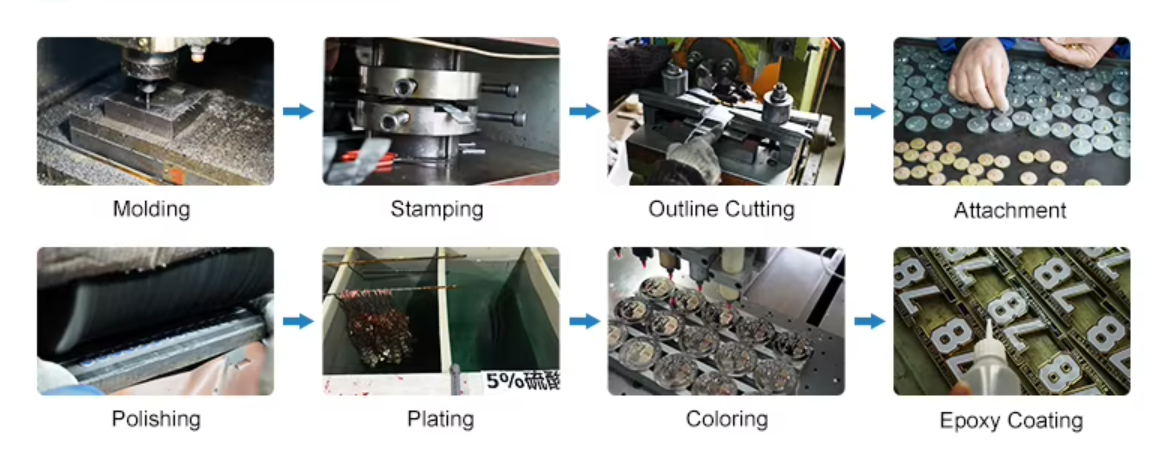
Production Process Explained
If you want to judge an enamel pin maker properly, you should understand the production workflow. This also helps you communicate more efficiently with the factory.
1. Artwork review. The factory checks the design for manufacturability.
2. Mold creation. A metal mold is created from the approved artwork.
3. Stamping or casting. The metal base is formed.
4. Trimming and shaping. Excess material is removed.
5. Plating. The metal surface receives its final finish.
6. Color filling. Enamel or paint is applied into recessed areas.
7. Polishing and curing. The pin is finished and refined.
8. Back attachment. The pin post and clutch are installed.
9. QC and packing. Final inspection and export packaging are completed.
This process is standard across much of the industry, although quality and precision vary significantly by factory. [medium]
New Insight: What Strong Buyers Ask For in 2026
One of the clearest changes in the market is that buyers now want more than a pin. They want a product that is ready for merchandising, retail display, and brand storytelling.
Strong buyers increasingly ask their enamel pin maker for:
- Limited-edition packaging to increase collectability.
- Matching backing cards for retail shelf appeal.
- Eco-conscious packaging to support sustainability positioning.
- Multi-SKU development for seasonal or campaign-based releases.
- Pre-shipment photo proofs for remote approval.
This is important because the pin is now part of a broader unboxing and branding system, not a standalone item.
New Insight: How to Reduce Risk in OEM/ODM Orders
If you are an overseas buyer, the safest ordering model is to treat the factory relationship like a controlled product launch.
Use this workflow
1. Send a vector file and product brief.
2. Ask for a production proof before mold approval.
3. Confirm plating, size, thickness, and backing type in writing.
4. Request a sample or pre-production sample.
5. Approve final packaging before mass production.
6. Ask for inspection photos or video before shipment.
This method reduces misunderstandings, especially when working across time zones and languages.
Why Packaging Matters for Pins
Many pin buyers underestimate packaging. In reality, packaging strongly affects perceived value, giftability, and retail conversion.
A well-designed packaging system can help your pins:
- Look more premium.
- Sell better in offline retail.
- Improve unboxing experience.
- Support influencer marketing.
- Reduce damage during transport.
For brands that sell internationally, packaging can be the difference between a simple accessory and a collectible product.
How to Choose the Right Supplier
If you need a practical decision rule, use this short checklist.
Choose an enamel pin maker that can provide:
- Clear engineering guidance.
- Stable communication.
- Transparent pricing.
- Sampling support.
- Strong QC.
- Export-ready packaging.
- Custom OEM/ODM service.
If a supplier only offers a low price but cannot explain how they protect quality, they are usually not the best long-term partner.
Why Work With a Packaging-Focused Factory
For buyers in the branding, gift, and retail sectors, a factory that understands both product manufacturing and packaging presentation can be more valuable than a pin-only vendor.
A packaging-focused supplier can help you build a more complete offer by combining:
- Custom pin production.
- Retail packaging.
- Backing card design.
- Insert cards.
- Box presentation.
- Export-friendly packing solutions.
That is especially useful for brands selling through e-commerce, exhibitions, wholesale channels, and promotional campaigns.
Practical Buyer Tips
Before you place an order, remember these best practices:
- Keep the design bold and readable.
- Use fewer colors for small pins.
- Confirm size and thickness early.
- Ask for a digital proof.
- Check sample quality before mass production.
- Match packaging to your target market.
- Choose a supplier who understands both production and branding.
These steps save time and prevent expensive revisions later.
Conclusion
A good enamel pin maker does more than manufacture metal accessories. The right partner helps you protect design quality, improve retail appeal, and reduce sourcing risk.
If you want to create pins that perform well in international markets, choose a supplier that combines manufacturing skill, packaging support, and B2B communication ability. That is how you turn a simple pin into a brand asset.
Call to action: If you are planning a custom enamel pin project and need OEM/ODM support, request a quote, artwork review, or sample consultation before mass production.
FAQ
1. What is an enamel pin maker?
An enamel pin maker is a factory or supplier that produces custom pins from artwork through molding, plating, filling, finishing, and packing.
2. What is the difference between soft enamel and hard enamel?
Soft enamel has a textured surface with recessed color, while hard enamel is polished flat and usually looks more premium.
3. How do I prepare artwork for an enamel pin?
Use clean vector artwork, avoid tiny details, keep lines bold, and separate colors clearly so the factory can convert it into production-ready files.
4. What is the minimum order quantity for enamel pins?
MOQ varies by supplier, size, and design complexity. Many factories set higher MOQ because tooling and setup costs are significant.
5. Why is packaging important for enamel pins?
Packaging improves presentation, protects the product during shipping, and increases the perceived value of the pin for retail and gifting.
6. How do I choose a reliable enamel pin maker?
Check their artwork guidance, quality control, plating options, sampling support, communication speed, and packaging capabilities before ordering.
References
1. Custom Enamel Pins Guide: Design Rules, File Prep & Cost Tips — [https://www.xkdisplay.com/badges.html] [ksnoble]
2. Understanding Enamel Pin Manufacturing — [https://www.xkdisplay.com/badges.html] [medium]
3. How Custom Enamel Pins Are Made (2026) | Factory Process
4. Custom Pin Trends 2025: Top Designs & Demand
5. Trending Enamel Pins 2025: Must-Know Design Trends
6. Pin Badge Market Size & Industry Growth 2032


