Content Menu
● Introduction
● What MOQ Means
● China Suppliers vs Local Manufacturers
● Typical MOQ Ranges
● Why China Often Wins on MOQ Economics
● Where Local Manufacturers Win
● Hidden Cost Factors
● Expert Buying Framework
● Case Scenarios
● How to Negotiate MOQ
● Why Experience Matters
● Final Buying Advice
● FAQ
>> 1. What is a good MOQ for display stands?
>> 2. Are China suppliers always cheaper than local manufacturers?
>> 3. Can I order samples before bulk production?
>> 4. Which is better for a very small test order?
>> 5. How can I lower MOQ without hurting quality?
>> 6. Why does MOQ vary so much between suppliers?
● References
Introduction
When you source display stands, the MOQ is often the first number that decides whether a project moves forward or stops. The real question is not only who offers the lower MOQ, but which supply chain gives you the best balance of price, speed, quality, and flexibility.
For brands, distributors, and retailers, the choice between China suppliers and local manufacturers affects the whole project, from sampling to replenishment. This guide compares both options in a practical way so you can choose the right production model for your budget, timeline, and market plan.
What MOQ Means
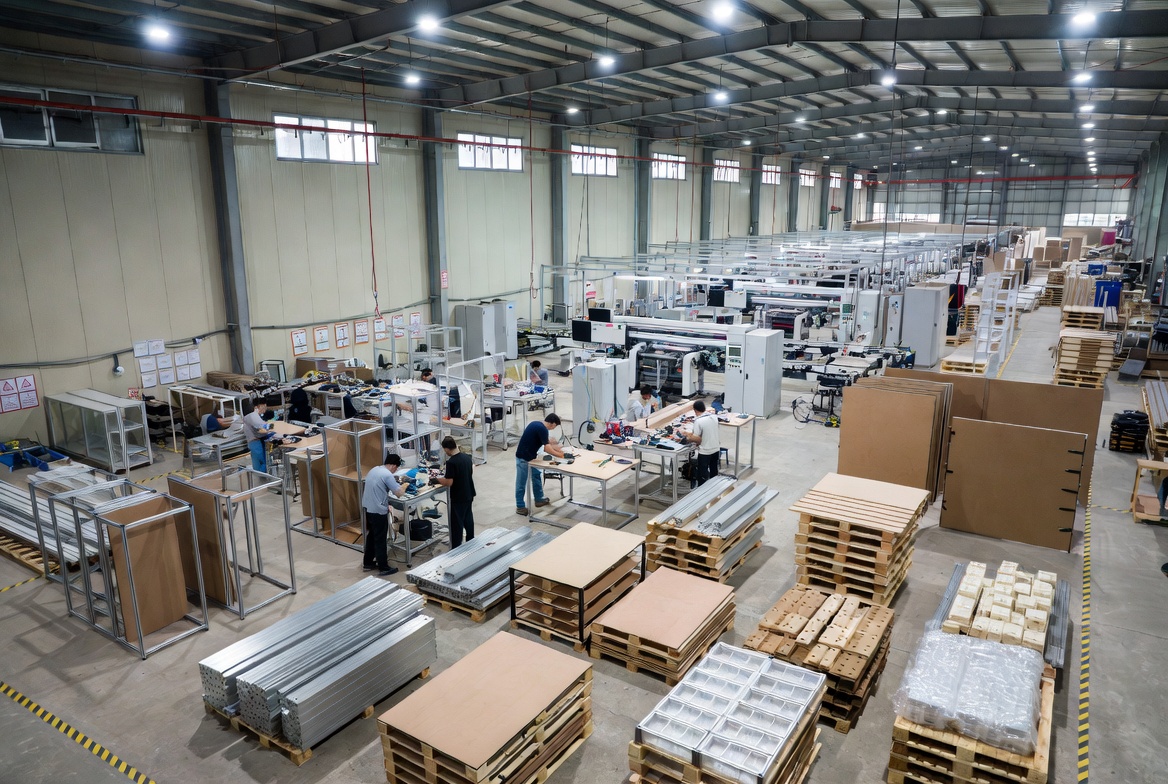
MOQ means Minimum Order Quantity, or the smallest number of units a supplier will accept for one production run. For display stands, MOQ is influenced by tooling, printing setup, material waste, assembly labor, and shipping efficiency.
For custom display stands, MOQ is usually tied to the supplier's real break-even point. If the order includes custom dimensions, branded printing, mixed materials, or special finishing, the minimum quantity often rises because the production setup becomes more complex.
China Suppliers vs Local Manufacturers
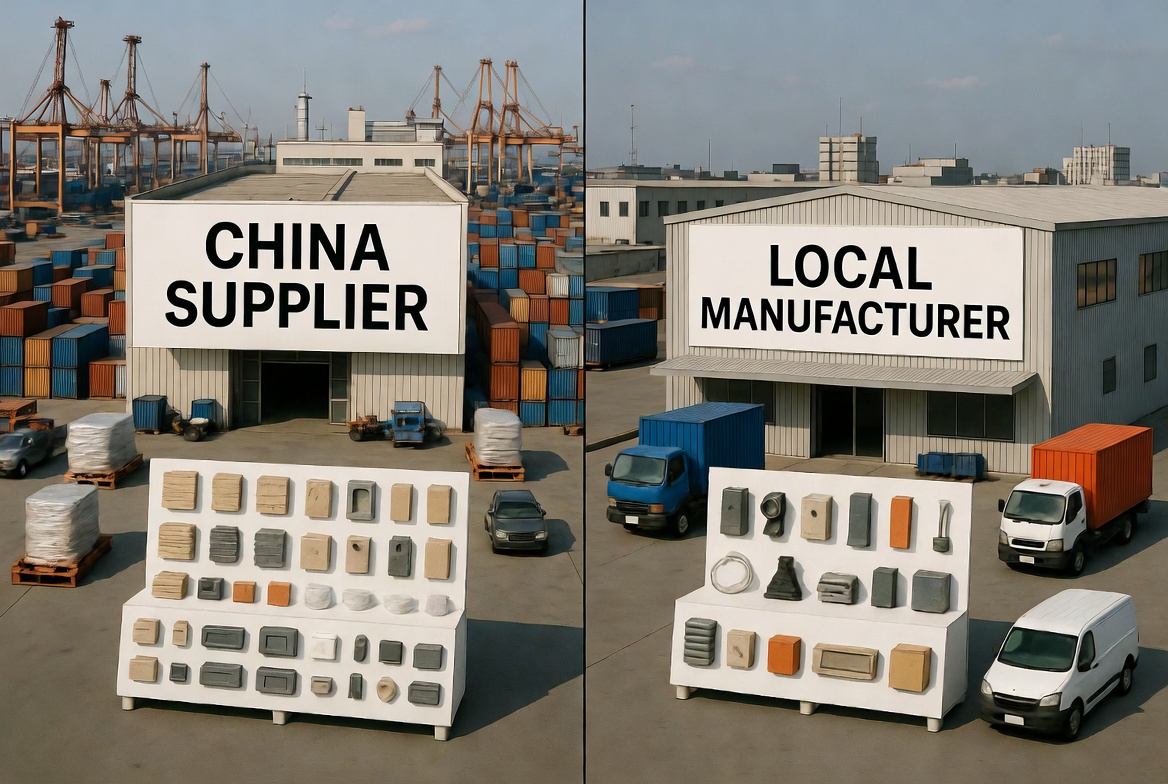
China suppliers are often chosen for lower unit cost and stronger material specialization, while local manufacturers are often chosen for faster communication and shorter transport time. The best choice depends on whether your project prioritizes scale economics or speed and proximity.
| Factor | China Suppliers | Local Manufacturers |
| MOQ level | Often lower for standardized or semi-custom display stands. | Often lower for very small runs, prototypes, or urgent regional orders. |
| Unit price | Usually more competitive on medium and large volumes. | Usually higher because labor and overhead are less optimized. |
| Sample speed | Common sample lead time is roughly 2–15 days depending on design. | Often faster for nearby buyers and in-person approval. |
| Lead time | Standard production often falls around 10–30 days. | Usually shorter for local logistics, but capacity may be smaller. |
| Customization | Strong for acrylic, cardboard, metal, wood, and mixed-material solutions. | Good for quick-turn custom work, but material variety may be narrower. |
| Best for | Rollouts, export projects, and cost-sensitive scaling. | Pilot launches, urgent replenishment, and low-volume campaigns. |
Typical MOQ Ranges
Current market examples show that display stand MOQ from China can vary by material and complexity. Acrylic and cardboard display stands often sit in a lower range, while larger or more complex retail and exhibition structures usually require higher quantities.
Common benchmark ranges include:
- Acrylic display stands: around 50–200 pieces in some factory examples, with broader market ranges often reaching 100–1,000 depending on structure.
- Cardboard display stands: commonly 100–200 pieces, though some suppliers accept 1-piece sample orders.
- Freestanding or custom retail display stands: often 100+ units for better pricing, but small MOQ programs do exist.
- Expo or exhibition stands: often lower quantity per project, but higher complexity can raise the practical MOQ threshold.
Local manufacturers often accept smaller pilot batches when the buyer values flexibility over price efficiency. Low-MOQ programs may start from single samples, 5 units, or small custom runs depending on the supplier and product type.
Why China Often Wins on MOQ Economics
China remains competitive because display stand production is supported by strong industrial clusters, mature supply chains, and specialized factories across several manufacturing regions. These clusters reduce sourcing friction and make it easier to spread setup costs across a larger run.
For buyers, this usually means the MOQ can be more acceptable without giving up customization. A factory that handles export packaging, printing, structural assembly, and QC in one workflow can often offer a lower practical entry point than a local generalist manufacturer.
Another advantage is production flexibility. Many China suppliers can combine branding, mixed materials, and packaging optimization in one production system, which is useful when you need display stands that ship safely and look consistent across stores.
Where Local Manufacturers Win
Local manufacturers are often the better choice when time is the critical variable. If you need a prototype this week, a local supplier can usually reduce friction in approval, sampling, and last-minute changes.
They also help when the order volume is very small. For market tests, pop-up shops, or one-off campaigns, the total landed cost of importing from China may outweigh the lower factory price.
Local production can also be valuable if your team wants face-to-face quality checks, fast rework, or easy support after delivery. In those cases, the premium can be justified by lower execution risk.
Hidden Cost Factors
MOQ should never be judged alone. A low MOQ may look attractive, but the real cost also includes packaging, freight, customs, sample fees, tooling charges, and rework risk.
For display stand sourcing, the hidden cost drivers often include:
- Packaging engineering for fragile materials.
- Design revision time.
- Sample shipping and approval cycles.
- Freight efficiency on small orders.
- Reorder inconsistency if the first batch is too small.
In many cases, a slightly higher MOQ from a strong China supplier may produce better total value than a tiny local batch. That is especially true when the program is meant to scale across multiple stores or regions.
Expert Buying Framework
A practical sourcing decision should follow a simple sequence:
1. Define the display stand purpose: retail shelf, countertop, floor-standing, or exhibition use.
2. Confirm the material: cardboard, acrylic, wood, metal, or mixed media.
3. Estimate annual demand, not just first-order demand.
4. Ask for sample lead time, production lead time, and reorder terms.
5. Compare total landed cost, not only the factory quote.
A professional supplier should be able to explain the MOQ logic clearly. The minimum order should reflect setup cost, printing method, assembly labor, and packaging volume.
Case Scenarios
Case 1: Launching a new retail promotion.
A brand wants 300 cardboard floor displays for a 60-store campaign. A China factory may be ideal because the run is large enough to absorb setup costs while keeping unit pricing competitive.
Case 2: Testing a new SKU in one city.
A distributor only needs 20 acrylic counter displays for a short test. A local manufacturer may be more suitable because the buyer can move faster, approve the sample in person, and avoid import complexity.
Case 3: Multi-country rollout.
A brand needs consistent display stands across several export markets. China suppliers often win here because their export packaging, customization depth, and cost structure support repeated production and regional expansion.
How to Negotiate MOQ
MOQ is often negotiable if you approach it correctly. The best strategy is to trade flexibility in one area for value in another, such as accepting a higher unit price, simpler packaging, stock colors, or longer lead time.
Effective negotiation methods include:
- Requesting a pilot order before full rollout.
- Simplifying structure or finishing.
- Using existing supplier components.
- Consolidating multiple SKUs into one production run.
- Planning a reorder commitment in advance.
An experienced manufacturer can often suggest a production method that lowers MOQ without hurting visual impact or durability.
Why Experience Matters
A display stand may look simple, but export-quality production requires more than printing and assembly. The supplier must manage material consistency, structural strength, visual branding, packing protection, and shipping practicality.
That is why experience matters so much in B2B display manufacturing. A manufacturer with more than 20 years of production background and service experience across multiple countries is usually better positioned to reduce risk and recommend the right MOQ strategy for your business.
For companies like Shenzhen XingKun Packing Products Co., Ltd., this background matters because customers are not buying a single unit. They are buying a repeatable production system that supports branding, logistics, and retail execution at scale.
Final Buying Advice
Choose China suppliers when your goal is competitive pricing, scalable production, and stronger customization options. Choose local manufacturers when your priority is speed, small pilot runs, and direct communication.
The smartest procurement decision is not the lowest MOQ on paper. It is the supplier that can deliver the right mix of quality, responsiveness, and total landed value for your specific display stand project.
If you are planning a custom display stand project and want to compare MOQ, sample options, and production cost more accurately, request a quotation with your size, quantity, material, and branding requirements. A detailed specification is the fastest way to receive a practical MOQ recommendation and avoid unnecessary revisions.
FAQ
1. What is a good MOQ for display stands?
A good MOQ depends on material and complexity, but many acrylic and cardboard display stand projects fall somewhere between 50 and 200 units, while custom or complex projects may require more.
2. Are China suppliers always cheaper than local manufacturers?
Not always, but China suppliers often have a cost advantage on medium and large runs because of industrial clustering, specialized labor, and mature export supply chains.
3. Can I order samples before bulk production?
Yes. Many suppliers offer paid samples, and sample lead times can range from a few days to about two weeks depending on the structure and material.
4. Which is better for a very small test order?
For a very small test order, local manufacturers are often easier because they reduce shipping complexity and allow faster approval cycles.
5. How can I lower MOQ without hurting quality?
You can simplify the design, choose standard materials, accept longer lead time, or commit to a reorder plan. These adjustments often help suppliers reduce MOQ while keeping quality stable.
6. Why does MOQ vary so much between suppliers?
MOQ varies because setup cost, tooling, printing method, packaging, and labor intensity are different for each design. A simple standard display stand is much easier to run than a fully custom retail structure.
References
1. [How to Source Display Stands and Retail Fixtures from China] [epicsourcing]
2. [China Factory MOQ: Typical Ranges by Category in 2026] [chinamakershub]
3. [Top Display Stand Manufacturers | Custom Solutions for Retail & Exhibits] [accio]
4. [Display Stand for Expo Supplier - Custom & Portable] [accio]
5. [Custom Display Stands — Design to Production, Step by Step] [wetopacrylic]
6. [Custom Branded Displays for Small Businesses with Low MOQs] [displaysandholders]
7. [Acrylic display stand factory, Acrylic display stand manufacturer from China] [custom-displays]
8. [Custom Pegboard Retail Hanging Floor Hook Display Rack Cardboard Display Stand] [holidaypac]
9. [Cardboard Display Stand, Pop Display Stand, Pallet Display for Mugs] [cardboarddisplay8]
10. [High Quality Corrugated Cardboard Display Stand Retail Floor Display Stand Customized Drink Brand] [faradaydisplay]
11. [Instantly Formed - Automatic Assembly Display Stand] [ecodisplaycn]
12. [Display Stand Manufacturer In China - Free Design Small MOQ] [sqdisplaymfg]


