Content Menu
● What Flame Retardant Labels Are
● Why They Matter in Modern Manufacturing
● Common Applications
● Material Options Compared
● Performance Features to Look For
● Standards and Compliance
● How to Choose the Right Label
● Manufacturing and Quality Control
● Industry Case Examples
● Latest Market Perspective
● Why Choose XingKun
● Practical Buying Tips
● Conclusion
● FAQ
>> 1. What are flame retardant labels used for?
>> 2. What material is best for flame retardant labels?
>> 3. Are flame retardant labels the same as heat-resistant labels?
>> 4. Can flame retardant labels be printed with barcodes and QR codes?
>> 5. Do flame retardant labels need certification?
>> 6. Why should I request samples before mass production?
● References
Flame retardant labels are engineered for products and environments where fire resistance, heat stability, and long-term traceability matter. For industries such as electronics, automotive, aerospace, electrical equipment, and high-temperature manufacturing, the right label does more than identify a product — it helps support safety, compliance, and operational reliability. [vizlent]
When I evaluate industrial labeling for demanding applications, I look at three things first: material behavior under heat, adhesive stability, and print durability. A label that survives heat but loses adhesion, or prints poorly after exposure to solvents, creates hidden risk across the supply chain. [circuitnet]
What Flame Retardant Labels Are
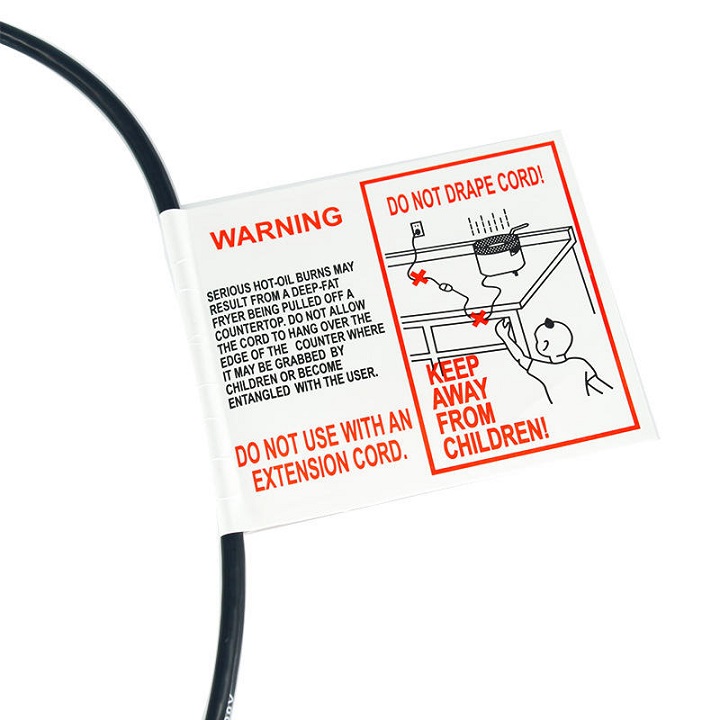
Flame retardant labels are pressure-sensitive labels made from heat-resistant and fire-retardant materials such as polyimide or specialized PET constructions. They are designed to resist ignition, reduce flame spread, and remain legible in harsh environments where standard paper or polyester labels may fail. [protolabs]
In practical terms, these labels are commonly used for equipment identification, barcode tracking, serial numbers, warning labels, and compliance marking. The goal is not only to preserve the label itself, but also to keep critical information readable during production, use, service, and inspection. [milabels]
Why They Matter in Modern Manufacturing
Heat exposure is no longer limited to a few niche industries. Electronics assembly, EV battery systems, power equipment, and advanced manufacturing all require labels that can survive high temperatures, process chemicals, and repeated handling. [polyonics]
From a quality-control perspective, a failed label can create expensive downstream problems: misidentification, rejected audits, damaged brand credibility, or rework in traceability systems. That is why flame retardant labels are often treated as a functional component rather than a simple printed accessory. [barscantechnologies]
Common Applications
Flame retardant labels are used where both heat resistance and identification performance are essential. Typical applications include:
- PCB and electronics traceability.
- Lithium battery and EV component marking.
- Power equipment and substation labels.
- Aerospace and avionics identification.
- Automotive under-the-hood labeling.
- Industrial machinery and electrical panels. [vizlent]
In these applications, labels may face soldering heat, solvent cleaning, UV exposure, abrasion, or long service life requirements. A well-chosen label helps preserve data integrity across the entire product lifecycle. [circuitnet]
Material Options Compared
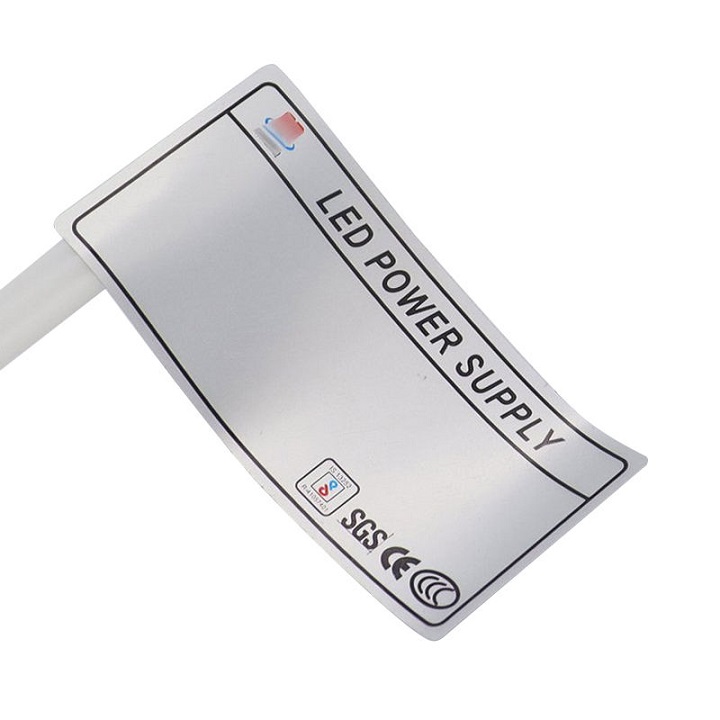
Different flame retardant label constructions serve different use cases. The table below shows a practical comparison.
| Material Type | Strengths | Best Fit | Notes |
| Polyimide | Very high heat resistance, excellent dimensional stability | PCB, electronics, aerospace | Often used where reflow soldering or extreme thermal exposure is expected. |
| High-performance PET | Lower cost than polyimide, good general heat resistance | Electrical equipment, industrial labeling | Suitable when temperatures are elevated but not extreme. |
| Specialized flame-retardant composites | Balanced fire resistance and printability | Custom industrial applications | Useful when compliance and durability both matter. |
For most severe heat environments, polyimide-based labels are the most widely referenced solution in current supplier data and product literature. They are repeatedly described as suitable for high-temperature processes, chemical resistance, and durable traceability. [barscantechnologies]
Performance Features to Look For
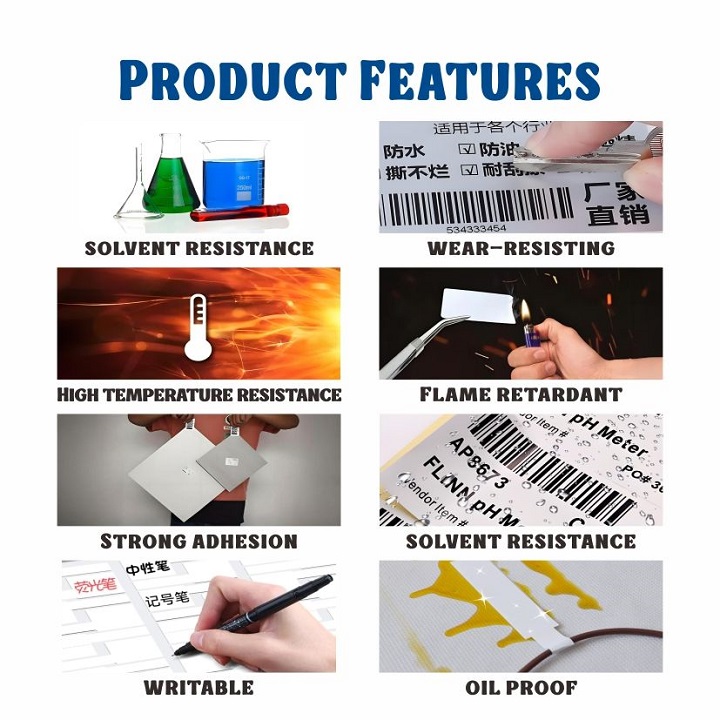
A strong flame retardant label should deliver more than fire resistance. Look for the following performance characteristics:
- Flame resistance or UL 94 V-0-type performance where applicable.
- High-temperature adhesion.
- Barcode and QR code readability after thermal exposure.
- Chemical and solvent resistance.
- Abrasion resistance.
- Low outgassing or low contamination risk for sensitive manufacturing environments. [polyonics]
For example, supplier data for flame-retardant polyimide materials frequently highlights resistance to reflow soldering temperatures around 260 °C, short-term excursions above that, and stable print performance. That level of durability is especially important in electronics and power applications. [vizlent]
Standards and Compliance
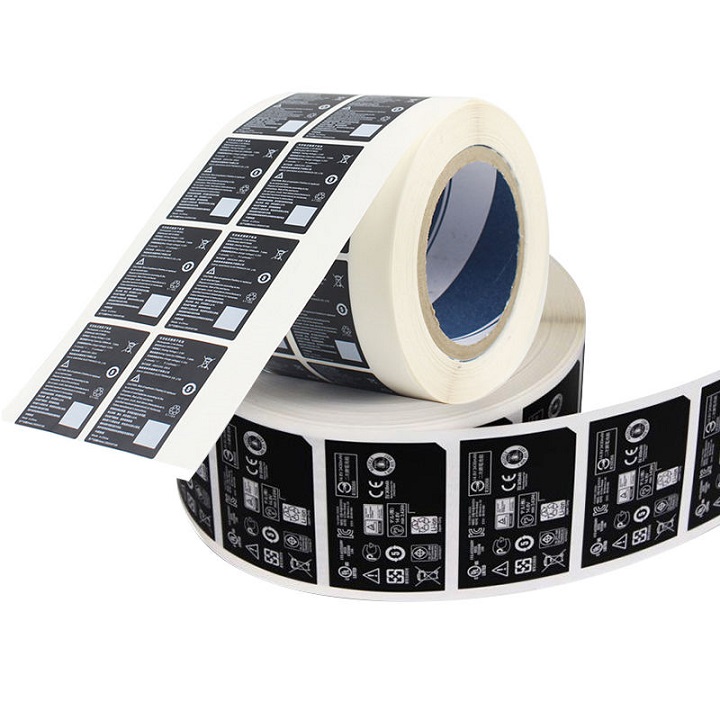
When buyers search for flame retardant labels, they often use terms like UL 94 V-0 labels, high temperature labels, or fire resistant label materials. These terms matter because compliance expectations vary by industry and region. [protolabs]
UL 94 is a widely referenced plastics flammability classification system, and UL 969 is commonly associated with label durability requirements in industrial contexts. In aerospace and automotive environments, additional requirements may apply, including low-smoke, low-toxicity, burn test, or sector-specific safety standards. [circuitnet]
ISO 9705 is a full-scale room fire test for surface products, but it is important to note that the ISO page now shows the 1993 edition as withdrawn and revised by ISO 9705-1:2016. That means buyers should always verify the most current standard or test method before specifying compliance language on a product page. [iso]
How to Choose the Right Label
Selecting the right flame retardant label is easier when you follow a structured process. Here is a practical buyer checklist:
1. Define the operating temperature range.
2. Identify the exposure type: soldering, heat, UV, chemicals, or abrasion.
3. Confirm the substrate: metal, plastic, PCB, cable, or coated surface.
4. Choose the required print method: thermal transfer, laser, or pre-print.
5. Verify compliance needs: UL, RoHS, REACH, or industry-specific standards.
6. Request sample testing before mass production. [polyonics]
This process reduces trial-and-error and helps prevent label failure after the product is already in the field. In B2B procurement, sample validation is often the fastest way to align engineering, purchasing, and compliance teams. [barscantechnologies]
Manufacturing and Quality Control
High-performance labels depend on both material science and production discipline. A reliable manufacturer should control face stock quality, adhesive formulation, die-cut precision, print consistency, and roll winding accuracy. [drgtech]
For OEM and ODM buyers, quality control should also include:
- Heat aging tests.
- Adhesion tests after thermal cycling.
- Solvent resistance checks.
- Barcode scan verification.
- Sample approval against the final application surface. [vizlent]
This is especially relevant for custom-label projects because the same material may behave differently on glossy plastics, powder-coated metals, or textured industrial housings. In my experience, application testing is often the difference between a "good-looking label" and a truly reliable one. [barscantechnologies]
Industry Case Examples
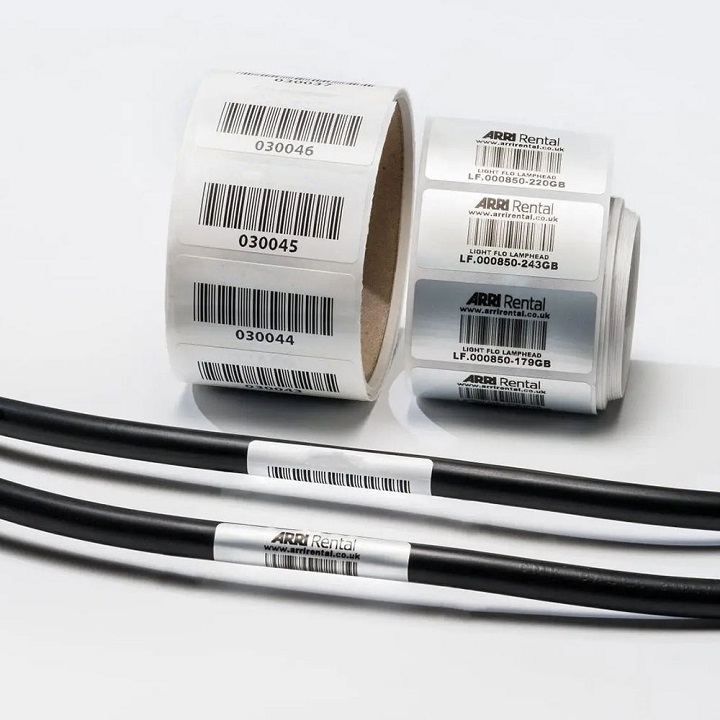
In electronics manufacturing, flame retardant polyimide labels are often selected for PCB and component traceability because they must survive reflow and remain readable after processing. Supplier literature specifically highlights resistance to soldering temperatures and maintaining barcode legibility through thermal cycles. [milabels]
In aerospace and avionics, the label must withstand harsh environments while supporting long-term identification. Industry suppliers describe flame-retardant polyimide constructions as suitable for these uses because of their durability, thermal stability, and fire-related performance. [globalspec]
In automotive, under-the-hood and interior labeling may require flame-retardant materials tested against burn-related standards. Product literature from industrial label manufacturers shows that these labels are used where heat, vibration, and chemical exposure are all part of normal operation. [circuitnet]
Latest Market Perspective
The labeling market continues to benefit from technology adoption and more predictable demand growth, according to a 2026 market forecast cited by Labels & Labeling. That matters because flame retardant labels sit inside a broader shift toward smarter, more durable, and more application-specific industrial labeling. [labelsandlabeling]
At the same time, product suppliers continue to expand flame-retardant label options for electronics, power, aerospace, and battery applications. The practical trend is clear: buyers want labels that are not only compliant, but also easier to print, easier to test, and more dependable in real operating conditions. [polyonics]
Why Choose XingKun
Shenzhen XingKun Packing Products Co., Ltd. supports OEM and ODM projects for international buyers who need custom printed packaging and label-related products. For flame retardant labels, the real value lies in combining customization, technical understanding, and stable manufacturing execution. [xkprint-pack]
If your brand needs industrial labels that match a specific substrate, size, finish, barcode requirement, or packaging standard, working with a manufacturer that understands both print quality and end-use performance can reduce project risk. That is especially important for overseas buyers managing sourcing, compliance, and brand presentation at the same time. [xkprint-pack]
Practical Buying Tips
Before placing a bulk order, ask your supplier these questions:
- What is the material base?
- What is the recommended operating temperature?
- Which printing method works best?
- Has the label been tested for adhesion, abrasion, and solvent resistance?
- Can you provide samples and technical data?
- Are there any compliance documents available? [vizlent]
A serious supplier should answer these clearly. If the answers are vague, the risk usually shows up later in production or field use. [barscantechnologies]
Conclusion
Flame retardant labels are a critical component in modern industrial labeling because they combine safety, durability, and traceability. The best choice depends on temperature, environment, compliance needs, and print performance, but polyimide-based constructions are a leading option for harsh applications. [circuitnet]
For OEM and ODM buyers, the smartest approach is to define the use case first, test samples under real conditions, and work with a manufacturer that understands both packaging production and technical label requirements. In high-risk environments, the right label is not an expense — it is a control measure. [xkprint-pack]
FAQ
1. What are flame retardant labels used for?
They are used for identification, traceability, safety marking, and compliance labeling in high-heat or fire-sensitive environments such as electronics, automotive, aerospace, and power equipment. [polyonics]
2. What material is best for flame retardant labels?
Polyimide is often the strongest choice for extreme heat and demanding industrial use, while specialized PET or composite materials may suit less severe conditions. [protolabs]
3. Are flame retardant labels the same as heat-resistant labels?
Not always. Heat-resistant labels can survive temperature exposure, but flame retardant labels are designed to reduce ignition risk and flame propagation as well. [vizlent]
4. Can flame retardant labels be printed with barcodes and QR codes?
Yes. Many high-performance flame retardant labels are designed for thermal transfer or laser printing and are used specifically for barcode traceability. [milabels]
5. Do flame retardant labels need certification?
It depends on the industry. Common references include UL 94, UL 969, and sector-specific standards, but the exact requirement should match the application and market. [protolabs]
6. Why should I request samples before mass production?
Because adhesion, print quality, and heat resistance can vary by substrate and application. Sample testing is the best way to confirm real-world performance before a larger order. [barscantechnologies]
References
1. Shenzhen Xingkun Packing Products Co., Ltd. product and company overview: [XingKun] [xkprint-pack]
2. ISO standard page for ISO 9705:1993, showing status and revision info: [ISO] [iso]
3. Labels & Labeling, 2026 global market predictions: [Labels & Labeling] [labelsandlabeling]
4. Polyonics flame-retardant label materials PDF: [Polyonics PDF] [drgtech]
5. Vizlent flame-retardant polyimide label material product page: [Vizlent] [vizlent]
6. Polyonics aerospace and avionics label materials page: [Polyonics Aerospace] [polyonics]
7. Polyonics industrial announcement page with flame-retardant materials: [GlobalSpec] [globalspec]
8. Ruilisibo flame-retardant UL94 V0 polyimide labels: [Ruilisibo] [milabels]
9. Polyonics automotive flame-retardant label materials announcement: [CircuitNet PDF] [circuitnet]
10. BarScan Technologies polyimide PCB labels page: [BarScan Technologies] [barscantechnologies]


