Content Menu
● UV Printing vs Offset Printing on Display Stands
● What Is Offset Printing for Display Stands?
>> Key Features of Offset Printing on Display Stands
● What Is UV Printing for Display Stands?
>> Key Features of UV Printing on Display Stands
● Side‑by‑Side Comparison for Display Stand Projects
>> UV Printing vs Offset Printing: Core Criteria
● How These Technologies Impact Real Display Stand Performance
>> Durability and In‑Store Lifespan
>> Color Impact and Brand Consistency
● Cost, Lead Time, and Total ROI
>> Direct Costs vs Hidden Time Costs
>> Matching Volume and Complexity to the Right Process
● Application Scenarios for Display Stands
>> When Offset Printing Is Usually the Better Fit
>> When UV Printing Gives You a Strategic Advantage
● Expert Insights from a Display Stand Manufacturer's Perspective
>> How a Hybrid UV + Offset Strategy Works in Practice
>> Common Mistakes Buyers Make When Choosing Between UV and Offset
● Practical Step‑by‑Step Framework to Choose UV vs Offset for Your Next Display Stand
>> Step 1 – Clarify Campaign Objectives and Lifespan
>> Step 2 – Map Materials and Structural Requirements
>> Step 3 – Evaluate Volume, SKUs, and Versioning
● Why Partner with an Experienced Display Stand Manufacturer
>> Integrated Design, Printing, and Finishing
>> Global Experience and Quality Assurance
● Conclusion – UV Printing vs Offset Printing on Display Stands
● FAQ
● References
When you print display stands, the choice between UV printing and offset printing directly shapes your color impact, durability, lead time, and total cost of ownership. As a manufacturer with more than 20 years of experience in custom display stands and packaging, Shenzhen XingKun Packing Products Co., Ltd. helps global brands balance these factors in real projects every day. [xingkun.crpjc]
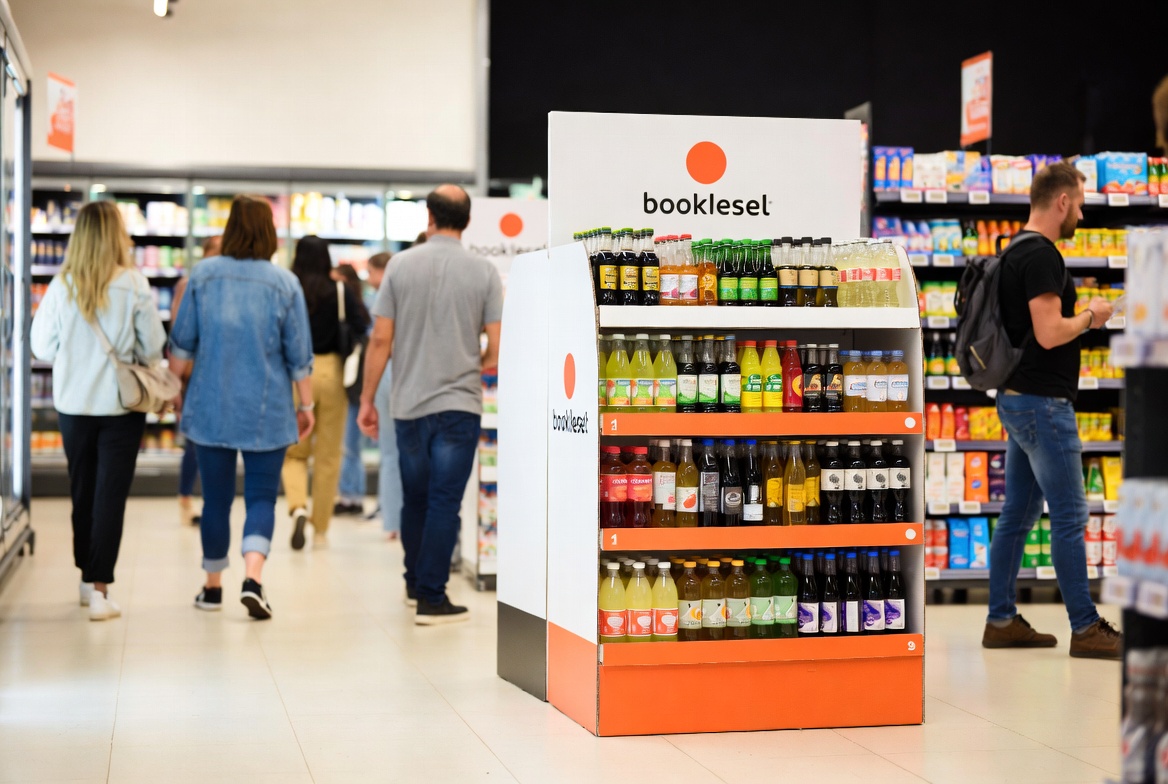
UV Printing vs Offset Printing on Display Stands
For most brands, offset printing remains a cost‑effective workhorse for high‑volume cardboard display stands, while UV printing delivers superior durability, material flexibility, and premium visual effects for more demanding retail environments. The best solution is rarely "either/or" – it is often a hybrid strategy that matches printing technology to SKUs, sales channels, and campaign lifecycles. [cbmprint]
What Is Offset Printing for Display Stands?
Offset printing uses aluminum plates to transfer ink to a rubber blanket, and then onto paperboard or other substrates, producing highly consistent images at scale. For folding cartons and corrugated or cardboard display stands, this process has become a gold standard in packaging because of its stability, speed at scale, and color control. [signs]
Key Features of Offset Printing on Display Stands
- High consistency on large runs – Once a job is set up, offset printing maintains very stable color and image quality over thousands of sheets. [cbmprint]
- Excellent CMYK and Pantone accuracy – Offset integrates Pantone Matching System (PMS) inks to lock in brand colors across batches and campaigns. [cbmprint]
- Competitive cost per unit at volume – Despite higher setup, unit cost drops significantly once you go above roughly 1,000–2,000 units. [signs]
- Strong fit with paper‑based materials – Ideal for art paper, coated board, and standard corrugated substrates used in many POS and floor displays. [cbmprint]
From a practical manufacturing perspective, offset is extremely efficient when you need national rollouts, standard graphics, and recurring orders where artwork changes infrequently. [signs]
What Is UV Printing for Display Stands?
UV printing uses ultraviolet light to instantly cure specially formulated inks as soon as they are deposited on the substrate. This curing process creates a hard, scratch‑resistant ink film and allows printing on materials that traditional offset cannot handle. [plate-ctp]
Key Features of UV Printing on Display Stands
- Instant curing and faster turnaround – No drying time means sheets can be cut, laminated, or assembled immediately, compressing lead times on urgent campaigns. [linkedin]
- Superior durability and scratch resistance – Cured UV inks stand up better to abrasion, handling, and transport, which is critical for high‑traffic display placements. [iehk]
- Material versatility – UV printing works on paperboard, plastics, acrylic, metal foils, and coated or specialty stocks often used in premium display stands. [iehk]
- Special visual effects – Spot gloss, texture, drip‑off, and layered coatings can create tactile, high‑gloss or matte contrasts directly on the print surface. [qinprinting]
For brands, this means more creative freedom on structure and finish, especially when displays must survive long retail campaigns or be reused across events. [iehk]
Side‑by‑Side Comparison for Display Stand Projects
The table below summarizes how UV and offset printing perform on typical decision criteria for retail display stands.
UV Printing vs Offset Printing: Core Criteria
| Criterion | Offset Printing on Display Stands | UV Printing on Display Stands |
| Print principle | Ink transferred from plate to rubber blanket, then to substrate. (cbmprint) | Ink jetted or rolled, instantly cured with UV light. (plate-ctp) |
| Best volume range | Medium to very large runs (1,000+ units) with stable artwork. (cbmprint) | Small to medium runs, seasonal or segmented campaigns. (cbmprint) |
| Color performance | Excellent CMYK; precise Pantone brand color matching. (cbmprint) | Vivid CMYK on many substrates; white and spot colors on dark or metallic stocks. (cbmprint) |
| Material flexibility | Mainly paperboard, white or light substrates, some kraft. (cbmprint) | Paperboard, kraft, plastics, acrylic, metallic and specialty stocks. (cbmprint) |
| Durability | Good for normal retail use; may need lamination or varnish. (cbmprint) | Excellent scratch resistance and surface hardness; often no extra lamination. (cbmprint) |
| Turnaround time | Requires drying; finishing steps often separated. (cbmprint) | One‑pass print + cure; shorter production cycles. (linkedin) |
| Unit cost | Lower cost per unit at high volume; higher setup. (cbmprint) | More flexible for short runs; can reduce total cost when factoring time and finishing steps. (cbmprint) |
| Eco profile | Soy/water‑based inks with relatively low VOC emissions. (cbmprint) | Low‑VOC UV inks; reduced solvents, but energy use depends on curing setup. (linkedin) |
| Typical use cases | Mass‑market POS units, supermarket displays, pallet wraps. (cbmprint) | Premium brand displays, cosmetics, electronics, reusable stands. (cbmprint) |
How These Technologies Impact Real Display Stand Performance
Durability and In‑Store Lifespan
In high‑traffic retail or exhibition environments, display stands are frequently touched, bumped, and moved. UV‑cured inks form a tougher surface that resists scratching, rubbing, and cracking better than conventional offset inks. For long campaigns or reusable stands, this extra durability can postpone reprints and reduce total lifecycle cost. [studocu]
Offset printing can still perform well, but it often requires additional lamination or varnish to reach the same level of protection, adding extra process steps and time. When deadlines are tight or handling is intense, those extra steps quickly become bottlenecks. [linkedin]
Color Impact and Brand Consistency
If your brand relies on a specific Pantone red, blue, or metallic accent, offset printing is extremely reliable at delivering that exact tone across thousands of displays and multiple reorders. The process is optimized for fine halftone dots and smooth gradients, which is ideal for photorealistic images and detailed brand assets. [signs]
UV printing, by contrast, excels when you need high contrast on non‑white materials, such as white ink on kraft board or full‑color graphics on metallic or pearlescent substrates. This is particularly powerful for display stands that must stand out next to standard printed cardboards in crowded categories like cosmetics, beverages, and consumer electronics. [iehk]
Cost, Lead Time, and Total ROI
Direct Costs vs Hidden Time Costs
From a purely per‑sheet perspective, offset printing often looks cheaper, especially for large print runs. However, once you factor in separate drying, lamination, and spot UV steps, the true cost includes extra machine time, labor, handling, and scheduling complexity. [linkedin]
In many modern plants, UV printing and UV drip‑off technologies allow printers to combine color, protection, and effects in one pass, compressing jobs that used to take several days into a single day. For time‑sensitive launches, this speed makes the higher nominal print cost more than acceptable, especially when late placement means lost sales days. [linkedin]
Matching Volume and Complexity to the Right Process
- For very large, stable campaigns (for example, the same structure and artwork across a national retail chain), offset remains a cost‑optimized solution. [cbmprint]
- For regional variations, test markets, seasonal promotions, or frequent creative refreshes, UV printing often provides better flexibility and lower overall risk. [linkedin]
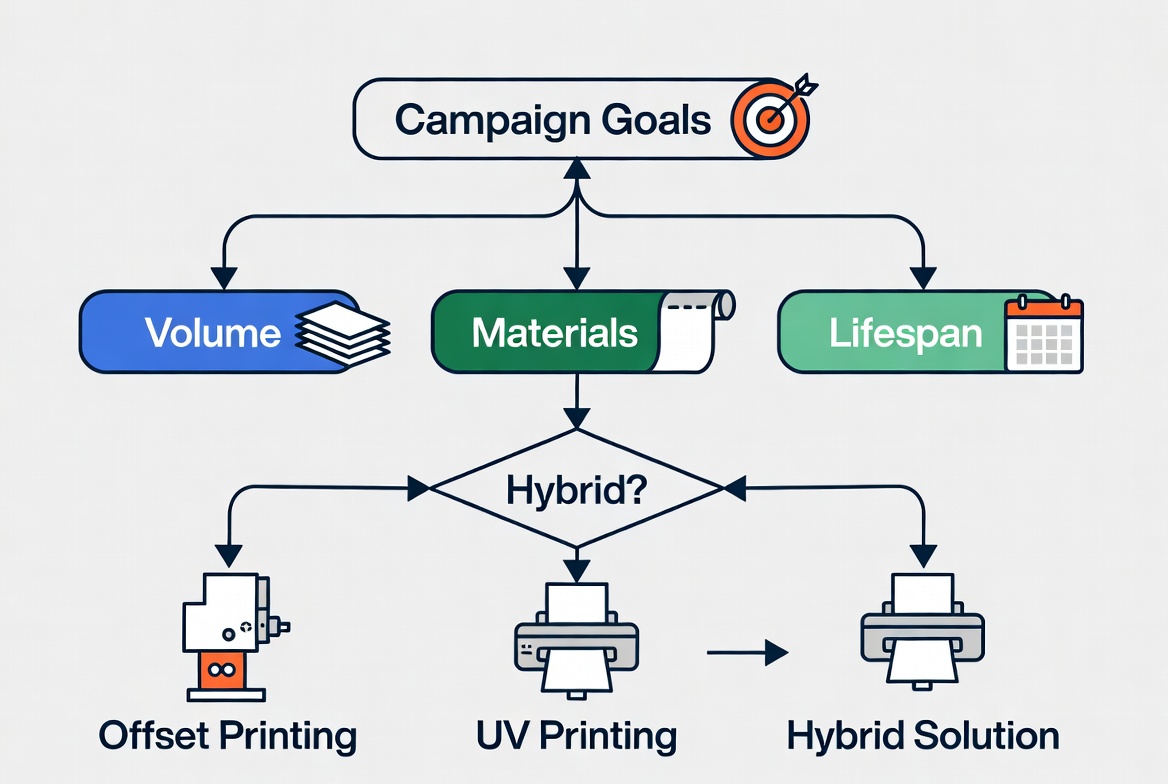
Many international brands now adopt a tiered approach: use offset printing for base structures and high‑volume SKUs, then apply UV printing for premium editions, hero products, or modular elements that change frequently. [printing.omet]
Application Scenarios for Display Stands
When Offset Printing Is Usually the Better Fit
Offset printing tends to be the smarter choice when:
- You are producing thousands of identical display units for supermarkets, hypermarkets, or convenience store chains. [xkdisplay]
- Your artwork is CMYK or Pantone‑driven on white or light‑colored substrates, without complex specialty finishes. [cbmprint]
- Cost per unit and brand color consistency are more important than extreme surface durability or material experimentation. [signs]
For example, a national FMCG brand rolling out a price promotion across pallet displays in multiple chains can use offset to print stable, repeatable graphics across all stores. [xkdisplay]
When UV Printing Gives You a Strategic Advantage
UV printing becomes a clear advantage when:
- You need white ink or full‑color printing on kraft, black board, or metallic substrates for more premium shelf presence. [iehk]
- Your stands will be assembled and disassembled repeatedly, shipped between events, or placed in high‑traffic zones where scratching and scuffing are unavoidable. [linkedin]
- You want eye‑catching spot gloss, texture, drip‑off, or 3D‑like effects without adding multiple offline finishing processes. [qinprinting]
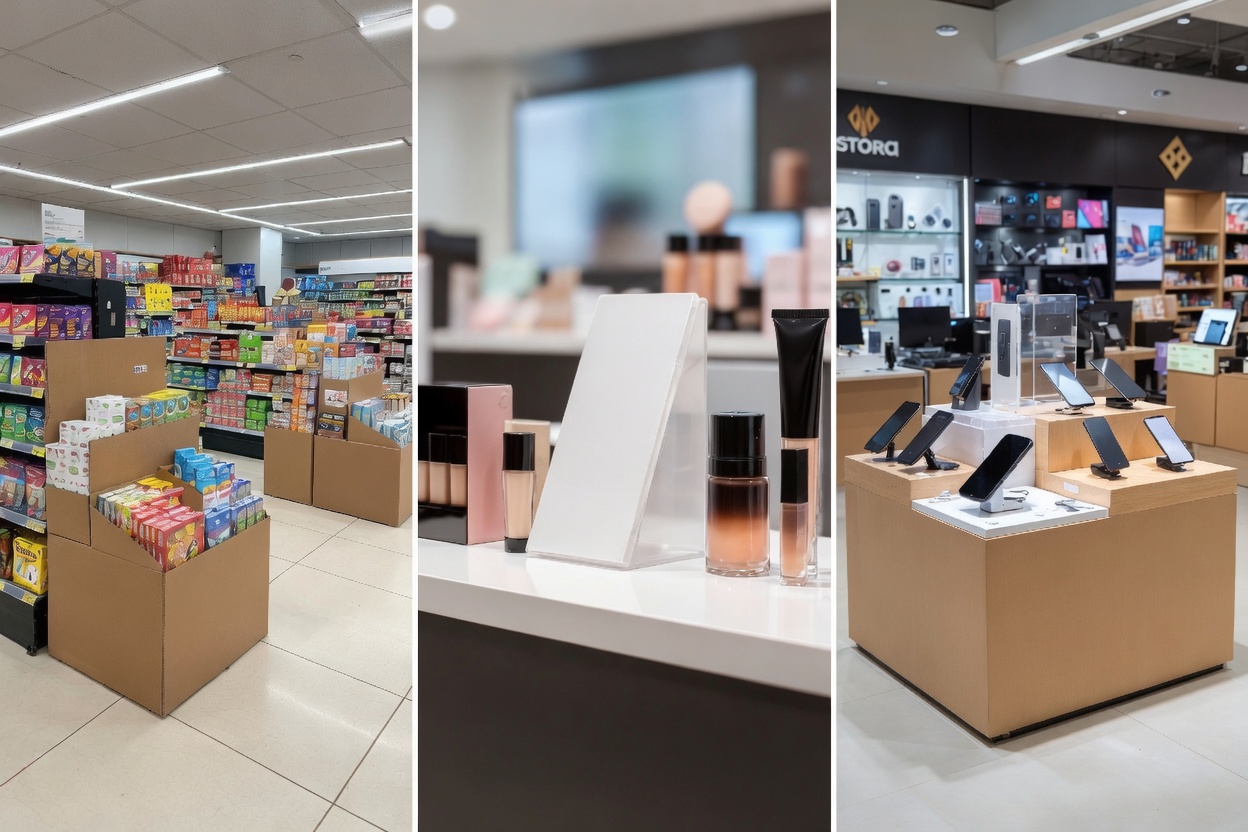
This is common in cosmetics, high‑end beverages, electronics, and cross‑border retail where stands must travel long distances yet still look fresh on arrival. [iehk]
Expert Insights from a Display Stand Manufacturer's Perspective
How a Hybrid UV + Offset Strategy Works in Practice
As a professional manufacturer of display stands, boxes, plastic packaging and related printed products, Shenzhen XingKun Packing Products Co., Ltd routinely combines offset and UV technologies within the same program. For high‑volume base structures, offset delivers predictable color and cost, while UV is reserved for hero elements, interchangeable panels, or special runs that require elevated finishes. [xingkun.crpjc]
This hybrid approach allows overseas brands to standardize structural design, while localizing or refreshing graphics without re‑engineering the entire display system. It also simplifies inventory, because UV‑printed components can be run in smaller batches and updated more frequently than fully offset‑printed sets. [xkdisplay]
Common Mistakes Buyers Make When Choosing Between UV and Offset
From daily project experience, several recurring mistakes stand out:
- Focusing only on per‑unit print cost and ignoring the cost of delays, reprints, or premature wear. [studocu]
- Underestimating how material choice (for example, kraft vs coated board vs acrylic) drives the practical suitability of each process. [cbmprint]
- Treating premium effects as purely aesthetic, rather than understanding how gloss, contrast, and tactile elements actually improve stopping power and conversion. [qinprinting]
Addressing these points early, during design and quotation, leads to more reliable budgets and stronger in‑store performance. [xkdisplay]
Practical Step‑by‑Step Framework to Choose UV vs Offset for Your Next Display Stand
Step 1 – Clarify Campaign Objectives and Lifespan
Define how long your display needs to perform in the market and how it will be handled:
1. Estimate campaign duration (weeks, months, or long‑term use).
2. Identify whether stands will be single‑use, multi‑use, or rotated across locations.
3. Map the expected handling intensity (static corner display vs central aisle with heavy traffic).
Longer, more demanding campaigns generally benefit from the durability of UV printing or at least a protective coating strategy. [linkedin]
Step 2 – Map Materials and Structural Requirements
Next, align your creative vision with realistic substrates:
1. Decide whether you need standard cardboard, kraft, plastic, or mixed materials (for example, cardboard body with acrylic headers). [xkdisplay]
2. Confirm any environmental requirements, such as recyclability or reusable construction. [xkdisplay]
3. For unusual materials or dark stocks, check whether UV printing is necessary to achieve coverage and brightness. [iehk]
This step often reveals that base components can be offset‑printed, while special panels or brand blocks are better suited to UV. [printing.omet]
Step 3 – Evaluate Volume, SKUs, and Versioning
1. Group SKUs by volume and artwork stability: high‑volume, low‑change items vs low‑volume, frequently updated ones. [signs]
2. Assign offset to large, stable groups and UV to small batches, seasonal versions, or country‑specific artwork. [linkedin]
3. Consider the impact of MOQ and storage: shorter UV runs can reduce warehousing risk compared with large offset batches that may become obsolete. [cbmprint]
This segmentation makes your printing strategy more flexible and protects budget against unpredictable demand.
Why Partner with an Experienced Display Stand Manufacturer
Integrated Design, Printing, and Finishing
A manufacturer that offers both UV and offset printing, along with structural design and finishing, can guide you to the best‑fit mix instead of pushing a single technology. At Shenzhen XingKun Packing Products Co., Ltd, advanced equipment (including Heidelberg printing lines and modern finishing systems) supports full‑process control from artwork to finished stands. [xingkun.crpjc]
This integrated model minimizes miscommunication between design, prepress, printing, and assembly, which is especially important for complex display structures or multi‑material constructions. [xkdisplay]
Global Experience and Quality Assurance
For brands and distributors in more than 30 countries and regions, stable quality and on‑time delivery matter as much as pure print technology. With established export workflows, quality control systems, and multilingual support, an experienced manufacturer can help you de‑risk global display programs while maintaining consistent brand presentation across markets. [xingkun.crpjc]
Conclusion – UV Printing vs Offset Printing on Display Stands
For display stands, offset printing remains the most efficient solution for high‑volume, standard campaigns on paper‑based substrates, particularly when tight color matching and low per‑unit cost are priority. UV printing, on the other hand, unlocks higher durability, broader material options, faster turnarounds, and more striking visual effects, making it ideal for premium or high‑stress applications. [signs]
The most effective strategy is to combine both: use offset where scale and stability matter, and deploy UV strategically where differentiation, robustness, and flexibility generate measurable returns on shelf. With the right manufacturing partner, you do not need to choose one technology forever; you can align each project—and even each component of a single stand—with the process that creates the greatest impact for your budget and your brand. [printing.omet]
FAQ
1. Is UV printing always more expensive than offset printing for display stands?
Not necessarily. While UV printing can have a higher price per sheet, it often reduces total cost by combining printing, protection, and special effects in a single pass, and by shortening production time for urgent campaigns. [linkedin]
2. Can I use UV printing on corrugated cardboard display stands?
Yes. UV printing works well on many paper‑based substrates, including corrugated and folding cartons, especially when you need improved scratch resistance or white ink on kraft or dark stocks. [iehk]
3. Which method is better for eco‑friendly display stands?
Offset printing traditionally uses soy or water‑based inks with low VOC emissions, while modern UV inks are formulated to minimize solvents and reduce environmental impact; the greener option depends on the exact ink and curing system used. [cbmprint]
4. How does printing technology affect lead times for large display stand orders?
Offset printing may require separate drying and finishing steps, which can extend production times, whereas UV printing cures instantly and can integrate protective and decorative coatings in one pass, often cutting turnaround by one or more days. [linkedin]
5. Can I mix UV and offset printing in a single display stand project?
Yes. Many brands print high‑volume structural elements with offset and add UV‑printed components for premium areas, modular headers, or limited‑edition versions, balancing cost and visual impact. [printing.omet]
References
1. Winpack. "UV Printing vs Offset Printing for Cosmetic Packaging – Which Is the Better Choice for Your Brand?" Winpack Printing Blog – https://www.winpackprinting.com/blog/uv-printing-vs-offset-printing-for-cosmetic-packaging-which-is-the-better-choice-for-your-brand
2. CBM Print. "Offset vs UV Printing: Best Method for Custom Paper Boxes." CBM – https://www.cbmprint.com/finishing/offset-print-vs-uv-printing/
3. Signs.com. "UV vs Screen vs Offset Printing – Signage 101." Signs.com Blog – https://www.signs.com/blog/uv-screen-offset-printing/
4. Yangzhu Technology. (UV Color Printing Service) – https://www.yangzhu.com.tw/applications/uv-printing-service
5. Plate‑CTP. "What Is the Difference Between UV and Offset Printing?" – https://www.plate-ctp.com/blog/uv-and-offset-printing-difference/
6. IEHK. "What Is UV Printing? How It Works, Materials & Benefits." – https://iehk.com/what-is-uv-printing-2/
7. LinkedIn. "Why UV Printing / Drip Off Printing Is Rising Over Traditional Offset Printing." – https://www.linkedin.com/pulse/why-uv-printing-drip-off-rising-over-traditional-offsetprinting-bctlf
8. OMET. "UV Web Offset Printing Is One of the Current Trends in Packaging Printing." – https://printing.omet.com/en/stampa-offset-uv-a-bobina-una-delle-tendenze-attuali-nella-stampa-di-imballaggi/
9. JGED Research. "Comparison of Durability: UV Inkjet vs. Offset Prints Under Accelerated Ageing." – https://www.studocu.com/en-za/document/union-high-school/practical-research-2/comparison-of-durability-uv-inkjet-vs-offset-print
10. Shenzhen XingKun Packing Products Co., Ltd. Official site – http://xingkun.crpjc.com/
11. XK Display. "Top Display Stand Manufacturers in China: Why Choose Them?" – https://www.xkdisplay.com/top-display-stand-manufacturers-in-china-why-choose-them.html


