Content Menu
● Why Custom Picture Playing Cards Matter
>> Common use cases
● What Buyers Usually Want
● Materials and Finishes
>> Popular card stock options
>> Surface finishes that improve user experience
● Design Tips for Better Photo Cards
● How the Manufacturing Process Works
>> Typical production workflow
● Quality Checks That Protect Your Brand
● Industry Trends in 2026
>> What is trending now
● Why China Is a Strong OEM Choice
● Practical Buying Checklist
● Why XingKun Is a Good Fit
● How to Get Better Results
● Conclusion
● FAQ
>> 1. What are custom picture playing cards?
>> 2. What is the best material for custom photo playing cards?
>> 3. Can I print 54 different photos on one deck?
>> 4. What finishes make the deck look more premium?
>> 5. Why should I request a sample before mass production?
>> 6. Is China a good place to manufacture custom playing cards?
● References
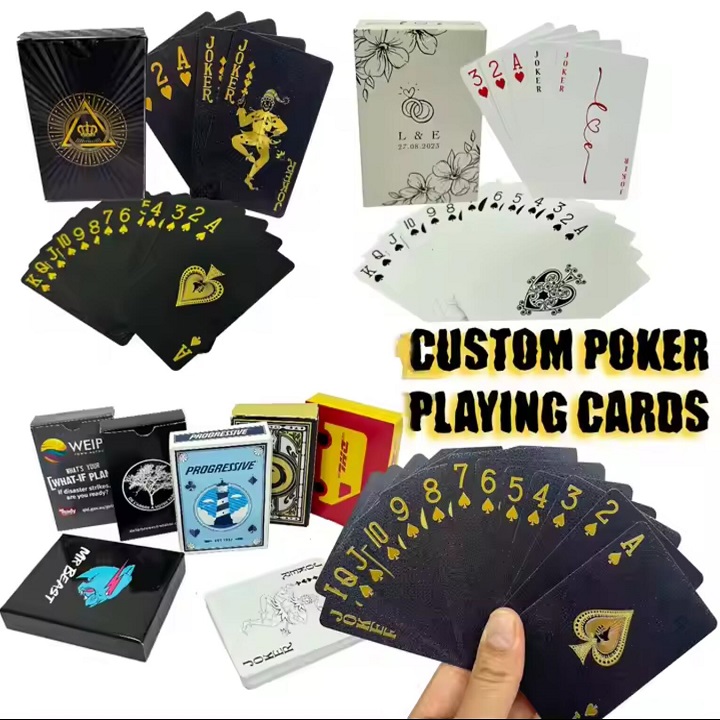
Custom picture playing cards are more than a novelty gift. They are a versatile branding product for retailers, creators, event planners, publishers, and promotional campaigns that need a memorable, tactile, and highly customizable format. If you want a deck that looks premium, feels smooth in hand, and tells a visual story, custom photo playing cards can do all three at once. [mrplayingcard]
In this guide, I'll break down how custom picture playing cards are made, what materials and finishes matter most, how brands use them, and how to choose the right manufacturing partner for OEM and ODM production. [developers.google]
Why Custom Picture Playing Cards Matter
Custom picture playing cards perform well because they combine utility, emotion, and repeat exposure. A deck is not a one-time impression; it is handled repeatedly, shown to others, stored, gifted, and reused in game nights, events, and retail settings. [mrplayingcard]
From a branding perspective, that repeated handling makes playing cards a strong physical marketing asset. From a consumer perspective, photo decks feel personal, collectible, and giftable, which is why they are popular for weddings, family keepsakes, real estate gifts, team merchandise, and branded promotions. [developers.google]
Common use cases
- Personal gifts: family photos, pet portraits, anniversary decks, and travel memories. [mrplayingcard]
- B2B promotions: trade show giveaways, corporate gifts, and event merchandise. [mrplayingcard]
- Retail products: art decks, creator merchandise, fandom products, and collector editions. [mrplayingcard]
- OEM/ODM projects: private-label game decks, educational cards, and custom packaging programs. [toprintgames]
What Buyers Usually Want
Most buyers searching for custom picture playing cards are not just looking for printing. They want a product that balances image quality, durability, playable feel, and packaging appeal. That means the best deck is rarely the cheapest deck; it is the deck that matches the intended use case. [vnkplayingcard]
For example, a wedding favor deck may prioritize full-color photo clarity and elegant tuck-box presentation, while a casino-style promotional deck may prioritize shuffle performance, stock stiffness, and long wear life. A creator launching a limited-edition art deck may care most about soft-touch lamination, foil stamping, and premium unboxing value. [vnkplayingcard]
Materials and Finishes
The materials you choose determine how the deck feels, how long it lasts, and how premium it appears. In 2026, buyers increasingly favor heavier premium stock, black-core paper, linen texture, and upgraded tuck-box finishes for higher perceived value. [mrplayingcard]
Popular card stock options
| Stock type | Best for | Key advantage |
| Standard paper stock | Promotions and low-cost giveaways | Cost-efficient and easy to print vnkplayingcard |
| Black-core stock | Premium gameplay and collector decks | Better opacity and a more premium feel vnkplayingcard |
| Blue-core stock | General-purpose decks | Balanced cost and performance vnkplayingcard |
| Plastic/PVC | Waterproof or long-life use | Strong durability and moisture resistance vnkplayingcard |
Surface finishes that improve user experience
- Matte finish: reduces glare and gives a refined look. [vnkplayingcard]
- Gloss finish: enhances color brightness and visual pop. [vnkplayingcard]
- Linen air-cushion finish: improves glide and shuffle feel, especially for premium decks. [mrplayingcard]
- Soft-touch lamination: creates a luxury tactile effect for gift and retail products. [mrplayingcard]
- Foil stamping: adds high-end visual contrast to tuck boxes and covers. [mrplayingcard]
Design Tips for Better Photo Cards
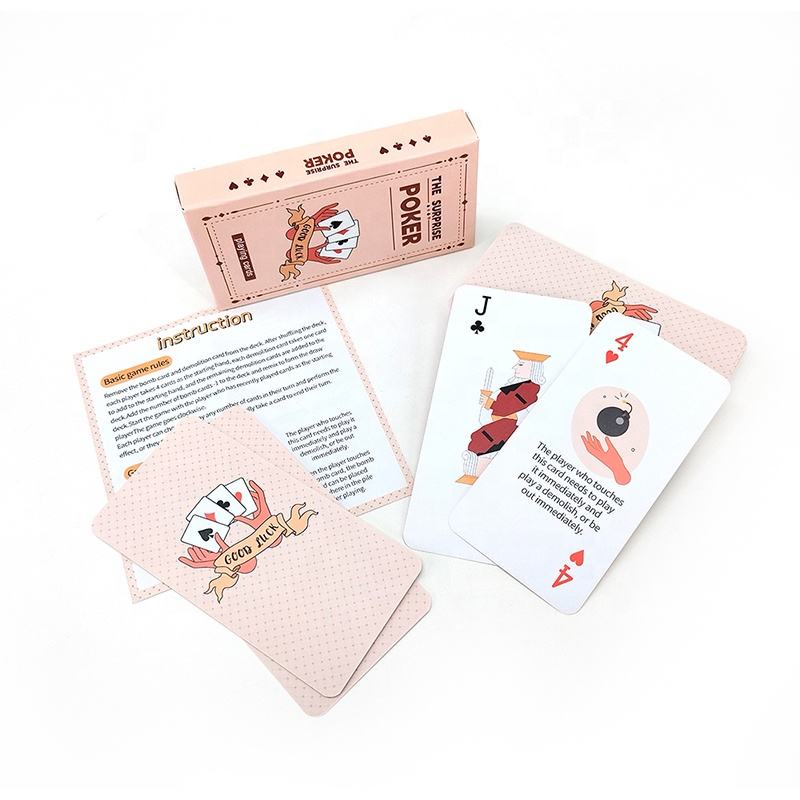
Good design is what turns a custom deck into a product people keep using. With photo cards, the biggest risk is not poor printing — it is cluttered design that makes images look cramped or unreadable.
Here are the design choices that matter most:
1. Use high-resolution images. Blurry photos reduce perceived quality immediately.
2. Leave safe margins. Important faces, text, and logos should not sit too close to the trim area.
3. Keep card faces readable. If each card includes a photo, the rank and suit should still be easy to identify.
4. Match color mode properly. Print artwork should be prepared in CMYK, not RGB, for better color accuracy. [mrplayingcard]
5. Balance front and back. A striking back design and clean, readable fronts often work better than over-designed everything. [mrplayingcard]
A useful rule is this: photo decks should feel personal, but not crowded. The best layouts usually give each image enough space to breathe while preserving gameplay clarity.
How the Manufacturing Process Works
For brands ordering OEM or ODM custom picture playing cards, the production process usually follows a clear sequence. A professional factory should guide you through each step so the final deck is consistent, printable, and ready for distribution. [toprintgames]
Typical production workflow
1. Project briefing: confirm deck size, quantity, stock, finish, and packaging.
2. Artwork preparation: final files are checked for bleed, resolution, and color mode.
3. Proofing and sample approval: a sample or digital proof is reviewed before mass production.
4. Printing: the faces, backs, and packaging are printed with the chosen method.
5. Finishing: coating, lamination, foil, or embossing is added if needed.
6. Die cutting and collation: cards are cut, sorted, and assembled into decks.
7. Packaging and QC: each deck is boxed, inspected, and prepared for shipment.
This workflow matters because playing cards are judged by consistency. A deck with attractive artwork but poor cutting, uneven coating, or weak box construction will quickly disappoint users. [vnkplayingcard]
Quality Checks That Protect Your Brand
Quality control is one of the biggest differentiators between a basic printer and a reliable custom card manufacturer. For branded products, a small defect rate can become a large customer service problem if the deck is sold at retail or used as a promotional gift. [vnkplayingcard]
Strong QC should cover:
- Color consistency across the entire run.
- Cut alignment so borders are even.
- Corner radius for smooth handling.
- Surface finish for uniform texture.
- Box integrity for shipping and retail display.
- Card count accuracy so every deck is complete.
For premium decks, buyers increasingly expect both visual quality and tactile consistency. That is especially important when the deck is part of a brand launch, collector drop, or gift campaign. [mrplayingcard]
Industry Trends in 2026
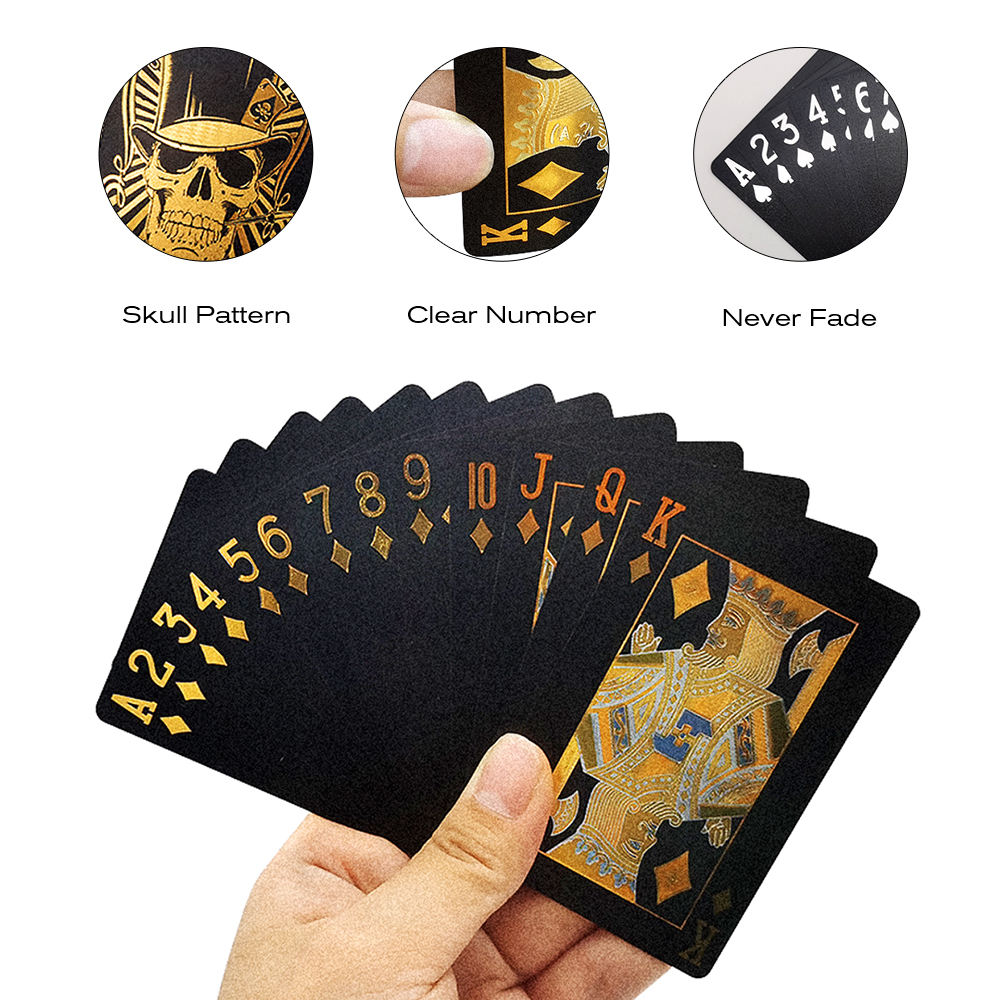
The custom playing card market is moving toward premiumization. Recent industry commentary shows stronger demand for heavier stock, foil tuck boxes, soft-touch coatings, and short-run prototype orders before full production. That trend reflects a broader shift: brands want to reduce risk while increasing perceived value. [developers.google]
What is trending now
- 310 GSM premium stock is increasingly preferred for higher-end decks. [mrplayingcard]
- Foil-stamped tuck boxes are replacing plain printed boxes in premium launches. [mrplayingcard]
- Short-run prototyping is becoming more common before large-scale fulfillment. [mrplayingcard]
- Promo decks for events remain a strong use case for brands and trade shows. [mrplayingcard]
- Personalized photo decks continue to perform well in gifting and memorial products. [mrplayingcard]
For manufacturers, this means the winning strategy is no longer "lowest price only." It is quality, customization depth, and dependable service. [mrplayingcard]
Why China Is a Strong OEM Choice
China remains a major production hub for custom playing cards because it offers scale, flexible customization, and competitive manufacturing economics. For international buyers, this is especially useful when the project requires packaging, inserts, foil effects, or mixed product bundles beyond the cards themselves. [yuyoung]
That said, sourcing from China works best when the supplier is transparent about specifications, sample approval, and quality standards. A serious OEM/ODM partner should be able to support different deck sizes, custom tuck boxes, packaging upgrades, and bulk production without losing print consistency. [toprintgames]
Practical Buying Checklist
Before placing an order, use this checklist to reduce mistakes and rework:
- Confirm the deck purpose. Gift, game use, retail sale, or promotional giveaway.
- Choose the right stock. Match feel and durability to the target audience.
- Decide on finishes. Matte, gloss, linen, foil, or soft-touch.
- Prepare artwork correctly. High-resolution files with correct bleed and CMYK color.
- Ask for a sample. Always approve a prototype before mass production.
- Verify packaging. Tuck box, rigid box, tin box, or custom-set packaging.
- Check delivery timing. Build in time for shipping, customs, and rework if needed.
This checklist is especially valuable for first-time buyers because card projects often fail at the specification stage, not the printing stage.
Why XingKun Is a Good Fit
For buyers looking for custom picture playing cards from a factory with OEM and ODM capability, Shenzhen XingKun Packing Products Co., Ltd. can be positioned as a flexible manufacturing partner for brands, wholesalers, and producers. Your factory background in packaging boxes, playing cards, jigsaw puzzles, printed books, and stickers also strengthens cross-category sourcing for clients who need coordinated packaging and print solutions. [mrplayingcard]
If your customers need branded decks with custom packaging, a single supplier that understands both printing and packaging can simplify communication, reduce lead time, and improve consistency across the final product line. [toprintgames]
How to Get Better Results
To get the best result from a custom deck project, focus on clarity before decoration. The more precise your specs are, the easier it is for the factory to quote accurately and produce reliably. [mrplayingcard]
A strong project brief should include:
- Deck size and card count.
- Material and finish preference.
- Photo placement style.
- Tuck box or special packaging.
- Quantity target.
- Shipping destination.
- Sample approval requirements.
When these details are clear, the project moves faster and the final deck usually looks more professional.
Conclusion
Custom picture playing cards are one of the most effective personalized print products because they combine storytelling, utility, and repeat brand exposure. Whether your goal is a family keepsake, a promotional gift, or a premium retail product, the best results come from strong artwork, the right card stock, the right finish, and a manufacturer that understands both quality control and packaging. [mrplayingcard]
For B2B buyers, the opportunity is even bigger. A well-made deck can support brand launches, trade shows, retail sales, and OEM/private-label programs all at once. If you want a deck that feels premium and ships professionally, the right next step is to request a sample, confirm the production spec, and build the deck around the end user's experience. [toprintgames]
FAQ
1. What are custom picture playing cards?
Custom picture playing cards are personalized card decks that feature photos, branded artwork, or custom graphics on the card faces, backs, or packaging. [mrplayingcard]
2. What is the best material for custom photo playing cards?
For premium decks, black-core or premium coated paper is often preferred because it improves opacity, handling feel, and perceived quality. [vnkplayingcard]
3. Can I print 54 different photos on one deck?
Yes. A standard 54-card deck can carry 54 unique photos, one per card, which is a popular format for memory decks, gift decks, and promotional projects. [mrplayingcard]
4. What finishes make the deck look more premium?
Soft-touch lamination, foil stamping, matte lamination, gloss coating, and linen textures are the most common premium upgrades. [vnkplayingcard]
5. Why should I request a sample before mass production?
A sample helps you verify color accuracy, cut alignment, surface feel, and packaging quality before you approve a full run. [vnkplayingcard]
6. Is China a good place to manufacture custom playing cards?
Yes, especially for OEM and ODM projects that need flexible customization, bulk pricing, and integrated packaging support. [yuyoung]
References
1. Google Search Central. Creating Helpful, Reliable, People-First Content. [https://developers.google.com/search/docs/fundamentals/creating-helpful-content]
2. MrPlayingCard. Custom Photo Playing Cards: Print Your Photos on a Real Deck. [https://www.mrplayingcard.com/blog/custom-photo-playing-cards-personalized-decks]
3. MrPlayingCard. 2026 Custom Playing Card Trends. [https://www.mrplayingcard.com/blog/2026-custom-playing-card-trends]
4. VNK Playing Card. Custom Playing Cards. [https://www.vnkplayingcard.com/custom-playing-cards]
5. XingKun Packing Products. Poker Cards. [https://www.xkdisplay.com/poker-cards.html]
6. Yuyoung. How to Manufacture Custom Playing Cards in China. [https://www.yuyoung.com/news/how-to-manufacture-custom-playing-cards-in-china]
7. Toprintgames. Custom Full-Color Playing Cards & Board Games. [https://www.toprintgames.com/product-oem-odm-manufacturers-printing-services-custom-full-color-deck-playing-cards-board-card-wit...]


