Content Menu
● What Are Metal Nameplates Used For?
● How to Choose the Best Metal Nameplate Material
>> Aluminum Nameplates: Lightweight and Versatile
>> Stainless Steel Nameplates: Match the Grade to the Environment
>> Brass Nameplates: Appearance With Maintenance Considerations
● Metal Nameplate Manufacturing Processes Explained
>> Engraving and Etching
>> Screen Printing
>> Embossing
>> Photosensitive Anodized Aluminum
● Designing Custom Metal Nameplates for Human and Machine Reading
>> Barcode and QR Code Nameplates Need Verification
● Attaching Metal Nameplates: Adhesive, Rivets, or Screws?
>> Adhesive-Backed Metal Nameplates
>> Mechanically Fastened Nameplates
● Three Application Scenarios That Improve Material Decisions
>> Outdoor Equipment Near the Coast
>> Machinery With Frequent Cleaning
>> Premium Indoor Product Branding
● A Practical Sample-Approval Checklist
● What to Include in a Metal Nameplate Quote Request
● Conclusion
● Frequently Asked Questions About Metal Nameplates
>> What is the best material for outdoor metal nameplates?
>> Are stainless steel nameplates antibacterial?
>> Can metal nameplates include unique serial numbers and QR codes?
>> How long do metal nameplates last?
>> Should I choose engraving or printing?
>> What should I provide before requesting a quotation?
● References
Custom metal nameplates do more than display a company logo. They identify equipment, communicate operating information, support asset tracking, and help users find the right instructions. Choosing the right combination of metal, marking process, and attachment method determines whether that information remains useful throughout the product's working life.
At Shenzhen XingKun Packing Products Co., Ltd., we bring more than 20 years of experience in printing and packaging manufacturing, including nameplates and other printed products. We have served brands and distributors across more than 30 countries and regions.
From a buyer's perspective, our starting point is straightforward: readability matters more than appearance alone. A plate should remain securely attached, easy to understand, and suitable for its actual operating environment.
This guide explains how to specify metal nameplates with those priorities in mind.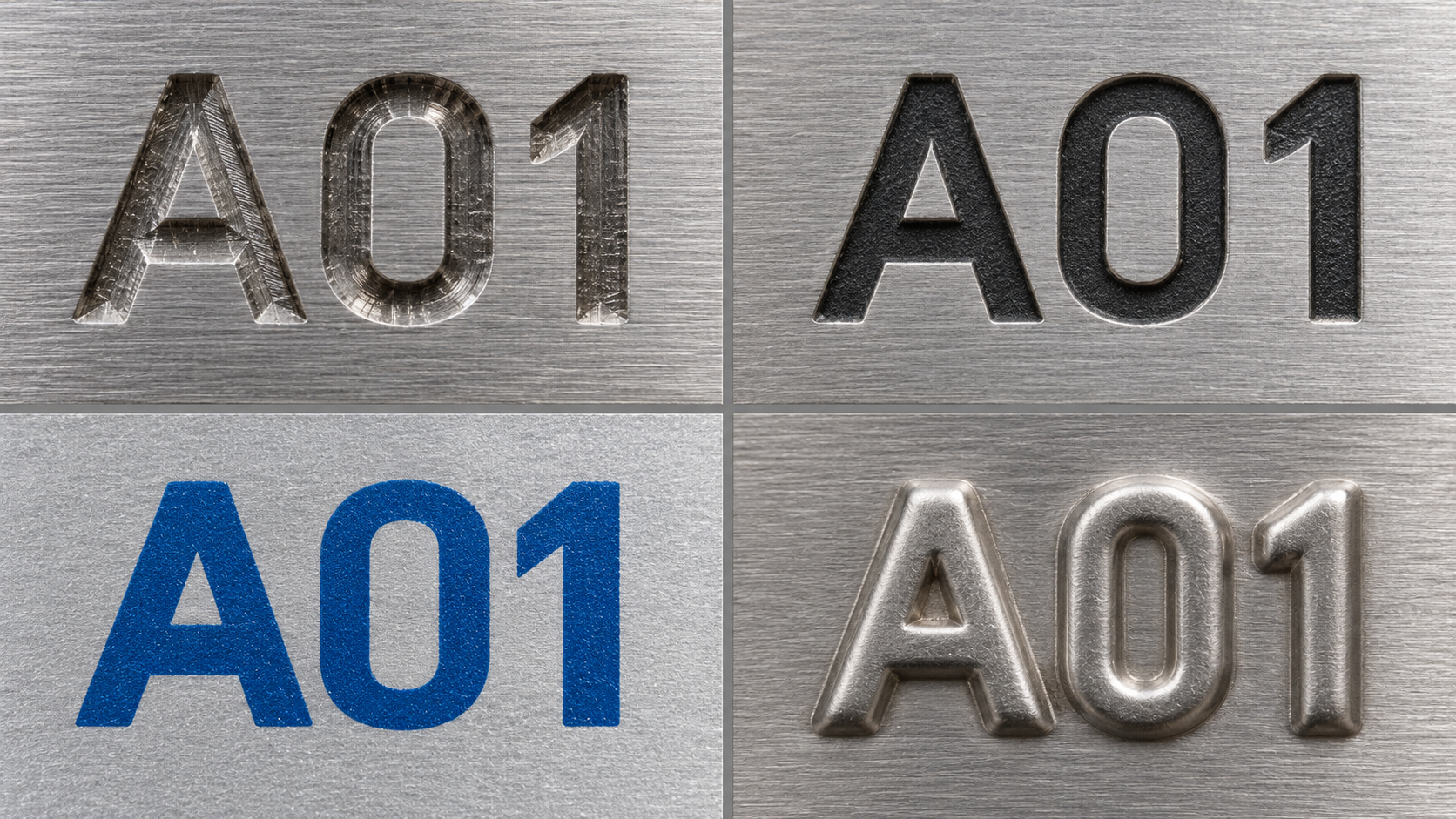
What Are Metal Nameplates Used For?
Metal nameplates are identification plates made from materials such as aluminum, stainless steel, or brass. They can carry permanent product information, decorative branding, or variable data that changes between individual units.
Common applications include:
- Equipment identification plates displaying model numbers and serial numbers.
- Machine rating plates showing electrical or operating information.
- Asset tags carrying barcodes, QR codes, or tracking identifiers.
- Control panels identifying switches, settings, and operating functions.
- Safety plates communicating warnings and handling instructions.
- Branded nameplates for furniture, appliances, and premium products.
These applications require different specifications. A decorative indoor badge may prioritize color and finish. An outdoor equipment plate must also address sunlight, moisture, cleaning, and attachment reliability.
Before discussing materials, define what the plate must communicate and how long that information must remain readable.
How to Choose the Best Metal Nameplate Material
There is no universally best metal for every application. The appropriate choice depends on exposure, appearance, weight, marking requirements, and the complete installed cost.
| Material |
Typical advantages |
Common applications |
Important limitations |
| Aluminum |
Low weight, versatile finishes, compatibility with anodizing |
Equipment plates, control panels, asset tags |
Performance depends on alloy, finish, and marking method |
| Stainless steel |
Strength, cleanability, corrosion resistance |
Industrial equipment and frequently cleaned surfaces |
Grade selection matters; chlorides can cause corrosion |
| Brass |
Warm metallic appearance and decorative appeal |
Premium branding, architectural plaques, furniture |
Can tarnish; finish and maintenance require consideration |
Aluminum Nameplates: Lightweight and Versatile
Aluminum is a practical starting point when low weight and flexible appearance are important. It suits many equipment identification and branding applications.
However, "aluminum nameplate" describes the substrate, not the durability of the complete product. Surface printing, anodized coloring, and photosensitive anodized imaging protect graphics differently.
For outdoor aluminum nameplates, ask:
- Is the aluminum anodized?
- How are the graphics produced and protected?
- What exposure conditions support the supplier's durability claim?
- Will cleaners or repeated handling affect the image?
Photosensitive anodized aluminum is a specialized option in which the image is sealed within the anodic layer. Do not assume that every printed aluminum plate offers equivalent protection.
Stainless Steel Nameplates: Match the Grade to the Environment
Stainless steel is worth considering when strength and repeated cleaning are priorities. Its cleanability makes it useful in hygiene-sensitive environments.
Nevertheless, ordinary stainless steel is not inherently antimicrobial. Cleaning and disinfection remain necessary.
Grade selection also matters. Grade 316 contains molybdenum and generally offers better resistance to salt-related corrosion than grade 304. Neither grade is immune to all chloride exposure.
For coastal equipment or aggressive cleaning conditions, specify the environment rather than simply requesting "rustproof stainless steel." Identify cleaning chemicals, concentrations, temperatures, and exposure frequency before approving the material.
Brass Nameplates: Appearance With Maintenance Considerations
Brass offers a distinctive warm appearance for decorative branding and architectural identification.
Its appearance can change through oxidation and handling. Depending on the intended effect, this may be desirable patina or unwanted discoloration.
Discuss whether the plate should retain a polished appearance, develop an aged finish, or receive a protective coating.
Avoid treating brass as a universal solution for hazardous environments. Any safety-related material requirement needs separate technical assessment.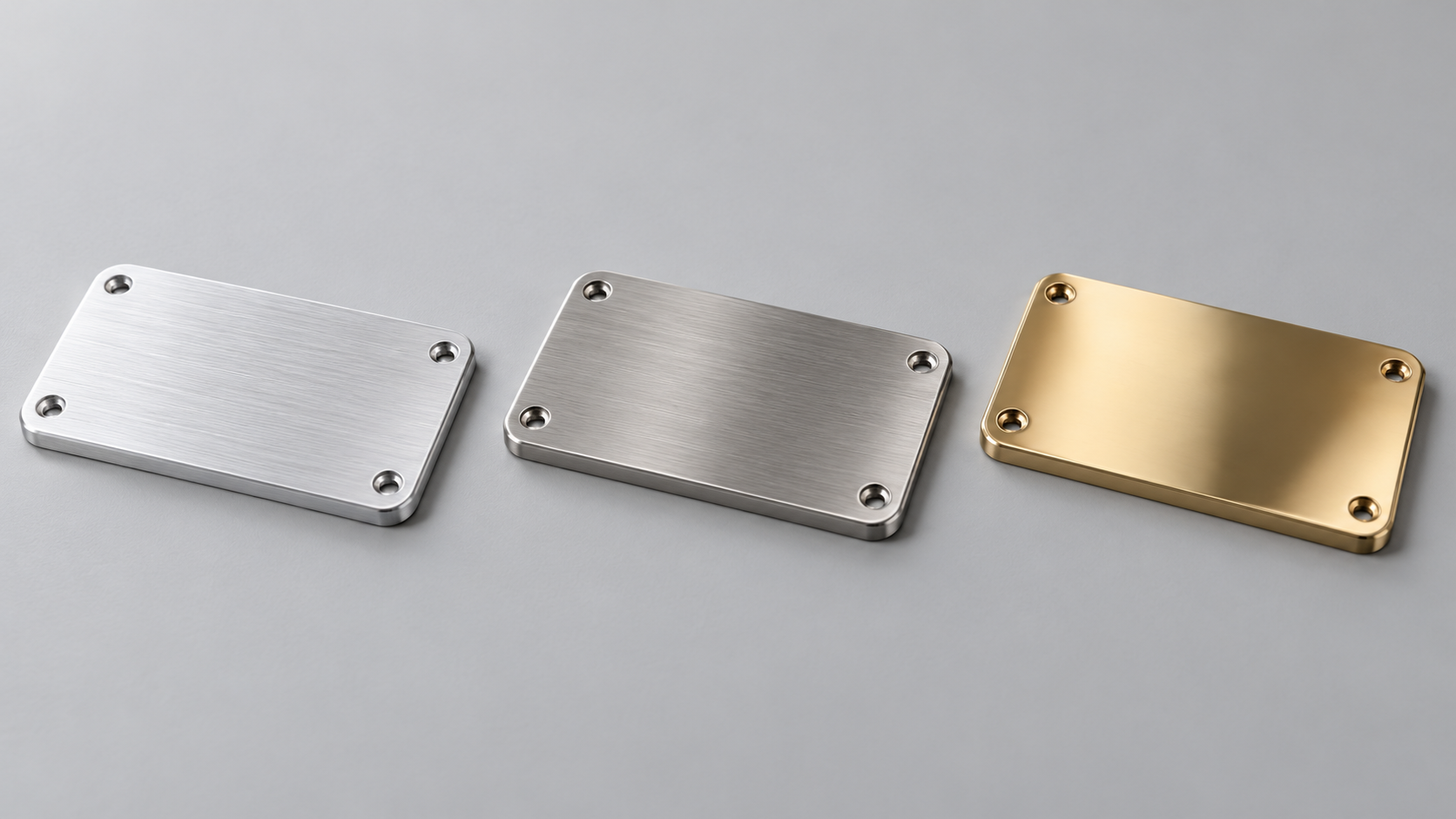
Metal Nameplate Manufacturing Processes Explained
Material selection and marking selection should happen together. A durable substrate does not automatically protect graphics applied to its surface.
Engraving and Etching
Engraving removes material mechanically or through a suitable laser process. Etching creates recessed details through a controlled chemical process.
These approaches can create text that remains physically present even if an added color fill deteriorates. However, the remaining information must still provide enough contrast to read.
Ask the supplier to distinguish between:
- The durability of the recessed marking.
- The durability of any paint or color fill.
- The readability of the finished plate under actual lighting.
Screen Printing
Screen printing is useful for colored graphics, logos, and control-panel layouts.
Its suitability depends on the ink system, substrate preparation, curing, and any protective finish. Outdoor performance should not be assumed from the printing method alone.
Where operators clean the plate frequently, evaluate the finished print against the actual cleaning product.
Embossing
Embossing forms raised characters or patterns in the metal. It provides a dimensional appearance and can support identification that does not rely entirely on surface ink.
Confirm whether the required character size, plate thickness, and surrounding layout suit the forming process.
Photosensitive Anodized Aluminum
This specialized process creates high-resolution images sealed within anodized aluminum. It is relevant when detailed variable information must withstand demanding exposure.
Commercial material manufacturers publish durability information for their products. Treat those figures as material-specific evidence, not guarantees for every aluminum plate or installation.
Confirm availability, processing requirements, and suitability with the selected manufacturer.
Designing Custom Metal Nameplates for Human and Machine Reading
A successful nameplate serves the person reading it, not just the artwork approval team.
Start with information hierarchy:
1. Make the equipment or product identity easy to locate.
2. Group related technical information together.
3. Separate warnings from routine identification.
4. Position serial numbers where technicians can inspect them.
5. Keep mounting holes and edges clear of essential content.
Evaluate the design at its actual size. A layout that looks clear on a monitor may be difficult to read once reduced and installed.
Avoid decorative fonts for critical information. Consider glare, viewing distance, gloves, dirt, and the lighting available during maintenance.
Barcode and QR Code Nameplates Need Verification
A code that scans once on a phone has not necessarily passed a meaningful quality assessment.
ISO/IEC 15416 addresses linear barcode print quality, while ISO/IEC 15415 addresses two-dimensional symbols. Application requirements determine the appropriate verification method and acceptance criteria.
Before production, confirm:
- The required code type and encoded information.
- Available space, including the required clear area around the code.
- Expected scanning distance and equipment.
- Whether variable data must match a customer database.
- How code quality will be checked and reported.
Reflective finishes and inconsistent contrast can complicate scanning. Test the finished metal plate, not only a digital artwork file.
Attaching Metal Nameplates: Adhesive, Rivets, or Screws?
Attachment is part of the nameplate specification, not an afterthought.
An otherwise suitable plate can fail if the adhesive does not match the mounting surface or if mechanical fasteners interfere with essential information.
Adhesive-Backed Metal Nameplates
Adhesives provide a clean appearance without drilling. Their performance depends on surface condition, adhesive chemistry, application temperature, pressure, and bond-development time.
For its VHB tape applications, 3M recommends an isopropyl alcohol and water mixture for preparing many substrates, while identifying surfaces that require additional treatment. Follow the instructions for the exact adhesive selected.
Painted, powder-coated, oily, textured, or curved surfaces require particular attention. Ask for a sample and test it on the actual equipment finish.
Mechanically Fastened Nameplates
Rivets and screws may be suitable where drilling is permitted and a mechanical attachment is preferred.
Specify hole positions, hole diameters, fastener clearance, and access for installation. Assess the compatibility of the plate, fasteners, and supporting metal where moisture exposure could create corrosion concerns.
The best attachment method is the one validated for the complete installation.
Three Application Scenarios That Improve Material Decisions
The following examples are planning scenarios, not reported customer projects.
Outdoor Equipment Near the Coast
A coastal installation requires more than an "outdoor-rated" description.
Compare substrate corrosion resistance, graphic protection, mounting compatibility, and drainage. Salt deposits and repeated wetting can challenge both the plate and its attachment.
Request evidence relevant to the expected conditions and validate a finished sample.
Machinery With Frequent Cleaning
For frequently cleaned equipment, prioritize readable markings and compatibility with the cleaning procedure.
Stainless steel may be a suitable substrate, but that does not establish the resistance of printed graphics, color fills, or adhesive backing.
Include the actual cleaning chemical and exposure schedule in the specification.
Premium Indoor Product Branding
For furniture or decorative products, finish consistency may matter more than severe environmental resistance.
Compare brass, aluminum, and stainless steel samples under the lighting in which the product will be displayed. Review edge quality, color consistency, fingerprints, and alignment after installation.
A Practical Sample-Approval Checklist
Before approving bulk production, define acceptance criteria that reflect the real application.
1. Check dimensions, thickness, corner shape, and mounting holes.
2. Confirm artwork, spelling, units, and revision information.
3. Verify serial numbers and encoded data against the approved file.
4. Review text readability and barcode performance.
5. Test attachment on the actual mounting surface.
6. Evaluate cleaning resistance using the intended cleaning procedure.
7. Assess relevant environmental exposure with an agreed test method.
8. Retain an approved reference sample for production comparison.
Define the exposure conditions, evaluation method, and pass criteria before testing. "Looks acceptable" is too subjective for repeat purchasing.
Accelerated testing can support comparison, but it should not automatically be translated into a guaranteed number of service years without a justified basis.
What to Include in a Metal Nameplate Quote Request
A complete specification helps suppliers recommend appropriate options and produce comparable quotations.
Include:
- Application and installation location.
- Dimensions, thickness, shape, and quantity.
- Preferred material and finish, if already selected.
- Artwork and required colors.
- Fixed text and variable-data requirements.
- Attachment method and mounting-surface details.
- Temperature, moisture, sunlight, and chemical exposure.
- Inspection, packaging, and delivery requirements.
Separate essential performance requirements from preferences. This allows alternatives to be evaluated without compromising the plate's purpose.
When comparing prices, consider sampling, tooling, data preparation, inspection, installation, and replacement risk—not just the unit price.
Conclusion
Choosing the right custom metal nameplates means looking beyond appearance. The material, marking process, layout, and attachment method must work together to keep essential information readable throughout the intended service life. Whether you need aluminum equipment plates, stainless steel identification tags, or brass branding badges, start with the operating environment and validate the finished design before bulk production.
At Shenzhen XingKun Packing Products Co., Ltd., we bring more than 20 years of printing and packaging manufacturing experience, serving brands and distributors across more than 30 countries and regions. Share your artwork, dimensions, order quantity, and installation requirements with our team to discuss suitable materials, available production options, and sample approval for your next custom nameplate project.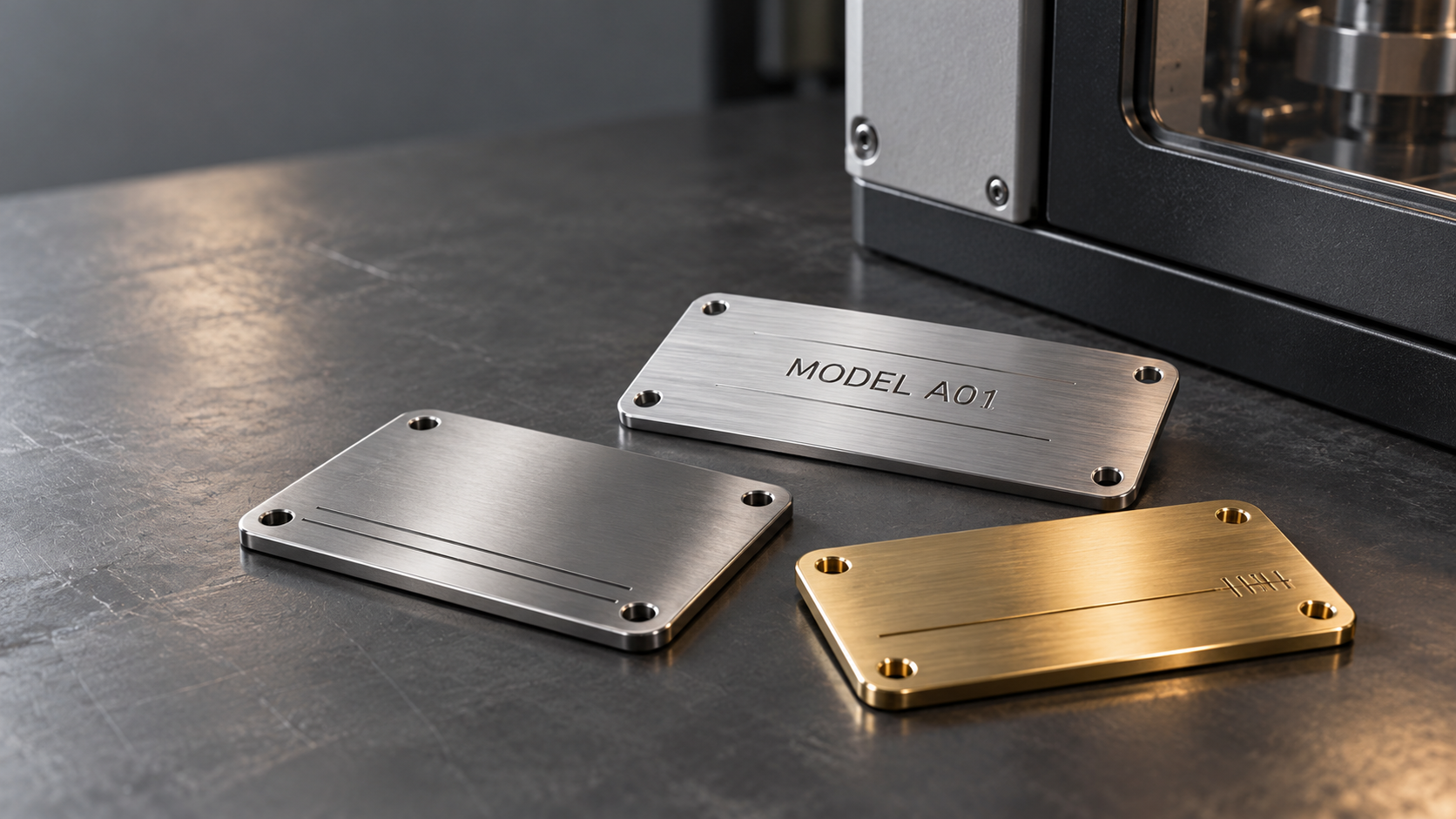
Frequently Asked Questions About Metal Nameplates
What is the best material for outdoor metal nameplates?
There is no single best option. Aluminum and stainless steel can both suit outdoor applications, depending on their grade, finish, graphics, attachment, and exposure conditions. Evaluate the complete construction.
Are stainless steel nameplates antibacterial?
Ordinary stainless steel is not inherently antimicrobial. It is valued for cleanability and suitability for sanitization. Proper cleaning remains necessary, including around edges and mounting points.
Can metal nameplates include unique serial numbers and QR codes?
Yes. Suitable processes can produce variable information. Confirm data handling, minimum code dimensions, contrast, and verification requirements before approving production.
How long do metal nameplates last?
Service life depends on the substrate, marking process, attachment, and operating environment. Request evidence for the specified construction rather than relying on a general lifespan claim.
Should I choose engraving or printing?
Choose according to the information and exposure. Engraving can create recessed identification; printing supports colored graphics. Test the finished construction when readability is critical.
What should I provide before requesting a quotation?
Provide dimensions, quantity, artwork, installation method, and operating conditions. For serialized plates, include the data format and checking requirements. These details help prevent unsuitable recommendations.
References
1. [American Nameplate — "Everything You Need to Know About Metal Nameplates"], September 16, 2024. Original article used to identify the core topic, material categories, and manufacturing-process coverage. [american-nameplate]
2. [worldstainless — "Stainless Steel in Hygienic Applications"]. Technical publication supporting the distinction between stainless steel's cleanability and an active antimicrobial effect. [worldstainless]
3. [worldstainless — "Corrosion Properties"]. Technical overview supporting the limitations of stainless steel under chloride exposure. [worldstainless]
4. [worldstainless — "Benefits of Stainless Steel in the Modern Kitchen"]. Supporting information on grades 304 and 316, including the role of molybdenum in grade 316. [worldstainless]
5. [3M — "Surface Preparation for 3M™ VHB™ Tape Applications"]. Manufacturer guidance on surface preparation and substrate-specific treatment for adhesive bonding. [3m]
6. [Metalphoto — "Photosensitive Anodized Aluminum"]. Manufacturer information on sealed anodic images, variable-data applications, and product-specific durability testing. [metalphoto]
7. [GS1 — "2D Barcode Verification Process Implementation Guideline"]. Guidance on barcode verification, reporting, and ISO/IEC 15415-based quality assessment. [gs1]
8. [GS1 — "Solution Provider 2D Readiness"]. Explanation of linear and two-dimensional barcode verification standards and measurement requirements. [ref.gs1]
9. Shenzhen XingKun Packing Products Co., Ltd. — Company information supplied for this article: more than 20 years of manufacturing experience and service to brands and distributors across more than 30 countries and regions. No customer reviews, independently verified project results, or company website link were supplied.


