Content Menu
● What Do Custom Stickers Suppliers Actually Provide?
● Why Choosing the Right Custom Sticker Supplier Matters
● How to Evaluate Custom Stickers Suppliers
>> 1. Confirm Their Product Range and Technical Fit
>> 2. Ask Material-and-Adhesive Questions Before Requesting a Final Quote
>> 3. Evaluate Print Quality Beyond a Digital Mockup
>> 4. Assess Quality Control and Factory Communication
● Custom Sticker Specifications: What Buyers Should Prepare
>> Sticker RFQ Checklist
● Digital, Flexographic, and Offset Printing: Which Is Best?
● Compliance and Sustainability: Avoid Claims You Cannot Support
● A Practical Supplier Scorecard for Buyers
>> Example: Comparing Two Sticker Suppliers
● Why Work With XingKun for Custom Sticker Projects?
● Conclusion
● FAQ
>> 1. What information should I send to custom stickers suppliers for a quote?
>> 2. What is the difference between die-cut and kiss-cut stickers?
>> 3. Which sticker material is best for waterproof applications?
>> 4. Can custom stickers suppliers match Pantone colors?
>> 5. Are paper stickers recyclable?
>> 6. How can I reduce defects when ordering custom stickers from China?
>> 7. Can one supplier produce both stickers and packaging boxes?
● References
When brands search for custom stickers suppliers, they are rarely buying "just stickers." They are sourcing a visible brand asset that must adhere properly, survive its real-use environment, communicate product information clearly, and arrive on time at a commercially viable cost.
For brand owners, wholesalers, manufacturers, and e-commerce sellers, the best custom sticker supplier is not simply the factory with the lowest quote. The right partner can help you select the correct material, adhesive, print method, finish, packaging format, and quality-control process for the product's actual application.
At Shenzhen XingKun Packing Products Co., Ltd. (XingKun), we work with overseas OEM and ODM buyers on custom printed packaging and promotional products, including stickers, labels, packaging boxes, playing cards, jigsaw puzzles, printed books, and related paper-based products. From a manufacturing perspective, a successful sticker order begins well before printing: it begins with asking the right technical and commercial questions.
This guide explains how to evaluate custom stickers suppliers, reduce avoidable sourcing risks, and build a sticker specification that supports both product performance and brand presentation.
What Do Custom Stickers Suppliers Actually Provide?
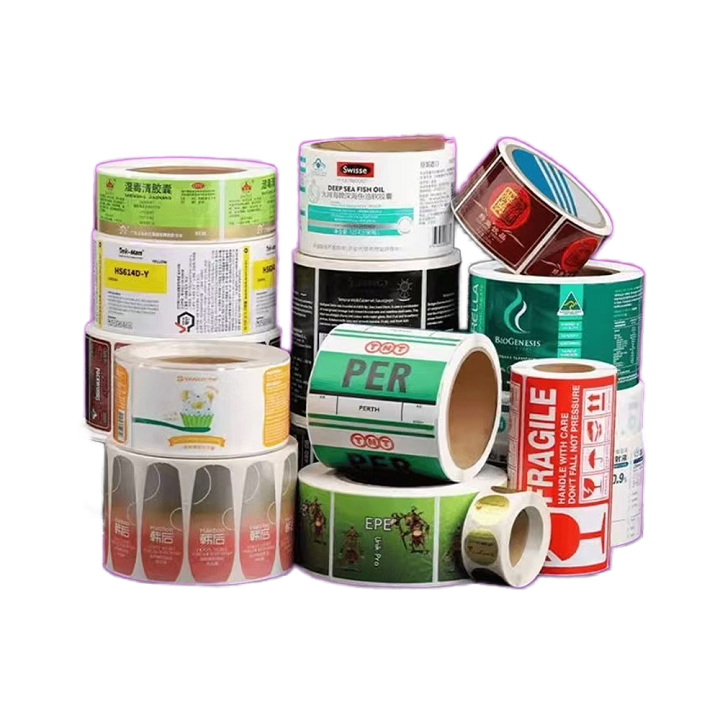
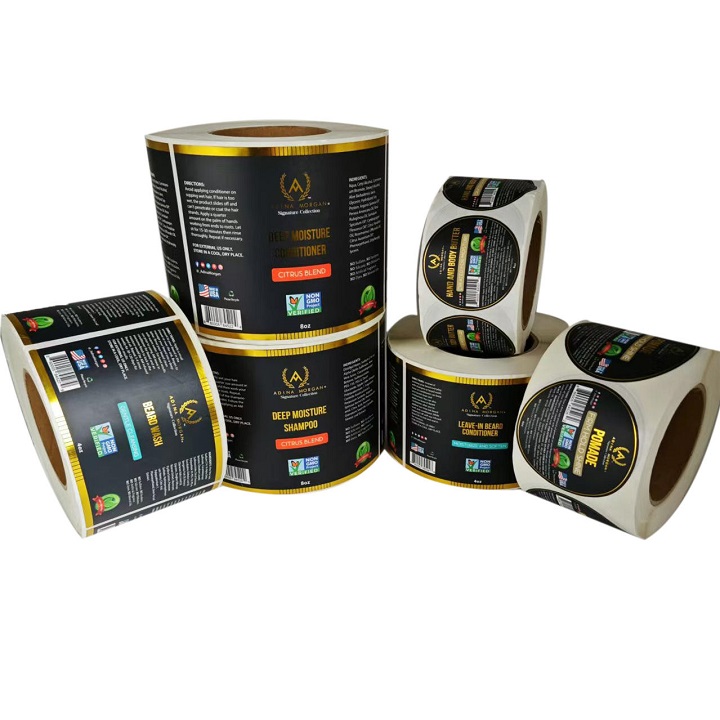
A custom sticker supplier converts a brand's artwork, size requirements, material preference, and application needs into finished adhesive products. Depending on the factory's capabilities, the order may include custom die-cut stickers, kiss-cut sticker sheets, roll labels, waterproof vinyl decals, paper stickers, holographic stickers, clear stickers, or promotional sticker packs.
However, professional custom stickers suppliers do far more than operate a printer. A capable OEM partner should support the process from specification through final delivery.
Core supplier responsibilities typically include:
- Artwork review and prepress checks
- Material and adhesive recommendations
- Color-management support
- Digital, flexographic, offset, or screen-printing options
- Custom shapes, die cutting, kiss cutting, and sheet formatting
- Protective coatings and laminations
- Packing, inspection, and export coordination
- Repeat-order consistency and production documentation
For a new buyer, sticker sourcing may seem straightforward: upload a design, choose a size, and request a quote. In reality, the same design can perform very differently depending on whether it is printed on coated paper, polypropylene, polyester, clear PET, or vinyl; whether it uses permanent, removable, freezer-grade, or high-tack adhesive; and whether it will be applied to glass, cardboard, flexible pouches, plastic bottles, metal, or curved containers.
The most reliable suppliers start by understanding the end use, not by quoting only from a design file.
Why Choosing the Right Custom Sticker Supplier Matters
A sticker is often a customer's first physical interaction with a product. It may identify a product variant, reinforce premium positioning, provide instructions, seal a package, display barcodes, or create a collectible branded experience.
A poor supplier decision can result in more than visual defects. It can create operational, compliance, and brand risks.
| Buyer concern |
What can go wrong |
What a qualified supplier should do |
| Adhesion |
Labels lift, wrinkle, curl, or fall off |
Match adhesive to the substrate and use environment |
| Color consistency |
Brand colors vary between batches |
Use approved artwork, controlled proofing, and repeat-order references |
| Durability |
Ink scratches, fades, or smears |
Recommend lamination, varnish, or suitable material |
| Size and fit |
Labels do not fit the package panel |
Confirm dielines, bottle curvature, wrap area, and application tolerances |
| Compliance |
Required content is missing or unreadable |
Flag layout concerns and encourage buyer review of regulatory requirements |
| Shipping readiness |
Stickers arrive damaged or disorganized |
Use appropriate rolls, sheets, bags, cartons, and packing labels |
| Scalability |
Reorders look different from the first order |
Maintain specifications and approved samples for repeat production |
For example, a glossy paper sticker may look excellent on a cosmetic carton. But if the same sticker is applied to a chilled beverage bottle, moisture and condensation can affect performance. A waterproof film label with the right adhesive may be the better commercial choice, even if its initial unit price is higher.
In other words, the lowest sticker price is not always the lowest total cost. Rework, product relabeling, delayed launches, and customer complaints can cost far more than selecting the correct material from the beginning.
How to Evaluate Custom Stickers Suppliers
1. Confirm Their Product Range and Technical Fit
Not every sticker manufacturer is suitable for every project. Some factories are optimized for promotional decals and branded giveaway stickers. Others specialize in high-volume roll labels for food, cosmetics, supplements, logistics, or industrial products.
Before contacting custom stickers suppliers, define whether you need:
- Die-cut stickers for individual branded giveaways
- Kiss-cut sticker sheets with multiple designs on one backing sheet
- Roll labels for automated or manual product labeling
- Paper labels for dry, indoor applications
- Vinyl or film stickers for moisture resistance and longer durability
- Clear stickers for a "no-label" visual effect
- Holographic stickers for premium presentation or anti-counterfeit visual impact
- Tamper-evident seals for packaging security
- Barcode or variable-data labels for inventory and fulfillment
- Custom sticker packs for retail, events, influencer campaigns, and subscription boxes
Ask suppliers for examples that are relevant to your intended application. A supplier that produces beautiful promotional stickers may not necessarily be the right choice for labels that must withstand refrigeration, exposure to oils, chemical contact, or high-speed automated application.
2. Ask Material-and-Adhesive Questions Before Requesting a Final Quote
Material and adhesive compatibility is one of the most important yet most frequently overlooked sourcing issues.
A professional factory should ask what surface the sticker will be applied to and what conditions it will face. This includes whether the surface is smooth, textured, curved, dusty, cold, oily, flexible, or exposed to water.
Common sticker material options include:
| Material |
Typical strengths |
Suitable uses |
| Uncoated paper |
Natural feel, writable, economical |
Product tags, craft packaging, indoor retail labels |
| Glossy coated paper |
Bright print appearance, cost-effective |
Cartons, jars, dry consumer goods |
| PP / BOPP film |
Water and oil resistance, flexible |
Food containers, cosmetics, personal-care products |
| PET film |
Strong durability and dimensional stability |
Industrial labels, premium bottles, electronics |
| PVC or vinyl |
Weather resistance and flexibility |
Decals, outdoor applications, promotional stickers |
| Clear film |
Transparent appearance |
Glass bottles, clear packaging, minimalist branding |
| Holographic film |
Eye-catching reflective effect |
Collectibles, event marketing, premium promotional use |
Adhesives also need careful selection. Permanent adhesive is common, but it is not a universal solution. A removable adhesive may be better for temporary promotions. A freezer-grade adhesive may be needed for cold-chain products. High-tack adhesive may be required for textured or low-energy plastic surfaces.
Label and marking systems can lose adhesion, curl, wrinkle, shrink, or degrade when exposed to humidity, water, heat, sunlight, or chemicals. These are exactly the environmental factors that should be considered before material selection rather than after a production problem occurs. [ul]
Expert sourcing tip: Send the supplier a photo of the actual package, identify its surface material, and explain storage and usage conditions. If possible, provide physical samples for a real application test.
3. Evaluate Print Quality Beyond a Digital Mockup
A PDF proof is essential, but it is not the same as an approved physical sample. Screens display colors differently, and print results can change based on substrate, ink, coating, and print technology.
Ask prospective custom stickers suppliers about:
- Their supported color systems, such as CMYK and spot colors
- Whether they can match Pantone colors where required
- Their artwork requirements and bleed recommendations
- How they manage text readability at small sizes
- Whether they provide production samples or pre-production proofs
- How they control color consistency on repeat orders
- Whether they inspect die-cut alignment, trim accuracy, and coating quality
For critical brand colors, send a Pantone reference or approved printed sample. For detailed designs, ask whether fine lines, gradients, small reversed text, QR codes, and barcodes will remain legible after printing and finishing.
A sticker that looks good at 100% size on a computer may still fail in practice if a QR code is too small, a barcode lacks contrast, or small white text fills in after printing.
4. Assess Quality Control and Factory Communication
The supplier's communication process is often as important as its machinery. International buyers need a partner that can clearly document specifications, raise questions early, and report issues before mass production is complete.
Look for evidence of an organized workflow:
1. Quotation based on clear specifications
2. Artwork review and revision feedback
3. Digital proof approval
4. Material and finish confirmation
5. Pre-production sample, where needed
6. Mass-production monitoring
7. Final inspection
8. Packing confirmation and shipment documentation
Ask suppliers how they handle quality issues. A dependable factory should explain its inspection approach instead of simply stating that it has "high quality."
Useful quality-control questions include:
- How do you inspect color, cutting, adhesion, and finish?
- What is the acceptable tolerance for size and die-cut alignment?
- Can you provide photos or videos before shipment?
- Can you retain approved samples for future reorders?
- How are sticker sheets, rolls, or individual pieces counted?
- What happens if there is a confirmed production defect?
For large or high-risk orders, buyers may also arrange third-party inspection. This is particularly useful when the stickers will be used on premium retail products, compliance-sensitive packaging, or major product launches.
Custom Sticker Specifications: What Buyers Should Prepare
The fastest way to receive accurate quotes from custom stickers suppliers is to provide a structured request for quotation, often called an RFQ.
A vague request such as "Please quote 10,000 stickers" forces the supplier to guess. A well-prepared RFQ reduces email rounds, avoids quotation errors, and makes supplier comparisons more meaningful.
Sticker RFQ Checklist
Include the following details:
- Sticker type: Individual die-cut sticker, sheet, roll label, seal, or decal
- Final size: Width × height, in mm or inches
- Shape: Circle, rectangle, oval, square, custom contour, or other
- Artwork file: AI, PDF, EPS, PSD, or high-resolution editable vector artwork
- Print colors: CMYK, Pantone, white ink, metallic ink, or special effects
- Material: Paper, vinyl, PP, PET, clear film, holographic film, etc.
- Adhesive: Permanent, removable, freezer-grade, high-tack, or other
- Finish: Gloss lamination, matte lamination, UV varnish, soft-touch, foil, embossing
- Format: Individual pieces, sheets, rolls, or booklet-style sticker packs
- Quantity: Per design and total order quantity
- Application surface: Glass, carton, bottle, pouch, metal, plastic, etc.
- Use environment: Indoor, outdoor, refrigerated, wet, oily, high-temperature, etc.
- Packaging: Bulk pack, individual polybags, retail header cards, custom boxes
- Destination: Country and postal code for logistics estimation
- Required delivery date: Include whether it is a hard launch deadline
This level of detail makes quotations more comparable. It also helps the supplier identify concerns before manufacturing begins.
Digital, Flexographic, and Offset Printing: Which Is Best?
There is no universally "best" printing method. The right choice depends on order volume, artwork complexity, material, turnaround time, finishing requirements, and unit-cost target.
| Printing method |
Best for |
Key advantages |
Considerations |
| Digital printing |
Short runs, multiple designs, fast revisions |
Flexible, fast setup, economical for lower quantities |
Unit cost may be higher at very large volumes |
| Flexographic printing |
High-volume roll labels |
Efficient for long runs, suited to many label substrates |
Setup costs and lead time may be higher |
| Offset printing |
High-detail sheets, sticker books, premium paper items |
Strong image quality and color control |
Often better suited to larger paper-based runs |
| Screen printing |
Specialty inks and durable graphic applications |
Strong ink opacity, special effects, durable print |
Usually slower and less economical for small general-purpose orders |
For a startup launching five seasonal sticker designs in limited quantities, digital printing may offer the best balance of speed and flexibility. For an established beverage company ordering hundreds of thousands of roll labels, flexographic production may be more cost-effective.
The right question is not "Which print method is best?" It is "Which method best fits this sticker's use, quantity, design, and reorder plan?"
Compliance and Sustainability: Avoid Claims You Cannot Support
Sticker design can include product information, safety information, recycling symbols, ingredient lists, barcodes, and environmental claims. Buyers should treat these elements seriously because labels are often part of a regulated consumer-facing package.
For food products sold in the United States, FDA-regulated packaged foods are subject to federal labeling requirements. Depending on the product, required information can include the statement of identity, net quantity, ingredient declaration, nutrition labeling, allergen declarations, and the manufacturer, packer, or distributor's name and place of business. [fda]
Your sticker supplier can help verify print layout, text clarity, barcode placement, and label dimensions. However, the brand owner remains responsible for confirming that product claims and label content comply with the laws of the target market.
Sustainability claims deserve the same caution. The U.S. Federal Trade Commission advises marketers not to use broad, unqualified environmental claims such as "eco-friendly" or "green" because such claims can be difficult or impossible to substantiate. The FTC also advises qualifying recyclable claims where suitable recycling facilities are not available to at least 60% of consumers or communities where the product is sold. [ftc]
Instead of making a vague claim, use precise and verifiable language where appropriate, such as:
- "Contains 30% post-consumer recycled paper."
- "Paper face stock is sourced from responsibly managed forests," if documentation supports the claim.
- "Please check local recycling guidance," where local infrastructure varies.
- "Remove label before recycling," if that is relevant to the package design and recycling stream.
A reputable custom sticker supplier should be prepared to discuss available materials and documentation. But sustainability messaging should be approved by the buyer's legal, compliance, or product team before printing.
A Practical Supplier Scorecard for Buyers
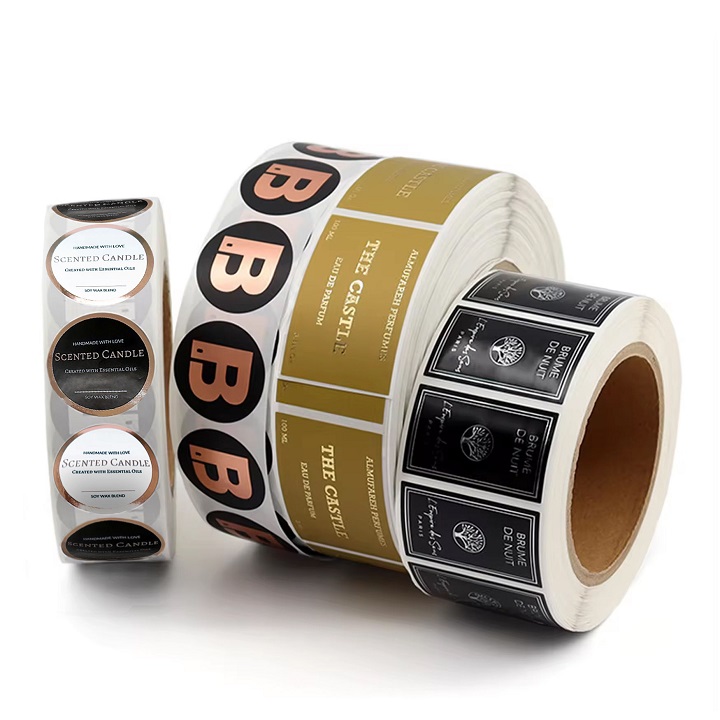
When comparing multiple custom stickers suppliers, do not compare quotations only by unit price. Use a weighted scorecard so that operational reliability, technical fit, and communication receive appropriate value.
| Evaluation area |
Suggested weight |
What to examine |
| Material and adhesive expertise |
20% |
Does the supplier ask application-specific questions? |
| Print and finishing capability |
15% |
Can it deliver the material, color, cut, and finish required? |
| Quality-control process |
15% |
Does it explain inspection, tolerances, and defect handling? |
| Communication and responsiveness |
15% |
Are answers clear, timely, and technically useful? |
| Quotation transparency |
10% |
Are tooling, plates, proofs, freight, and packaging clearly stated? |
| Sample quality |
10% |
Does the physical sample meet the approved specification? |
| Lead time and delivery reliability |
10% |
Are production and shipping windows realistic? |
| Sustainability and documentation |
5% |
Can the supplier provide credible material information? |
This approach prevents a common procurement mistake: choosing a supplier based on a low initial quote while overlooking issues that create higher downstream costs.
Example: Comparing Two Sticker Suppliers
Supplier A is 8% cheaper but gives only a generic quote and does not ask what surface the stickers will be applied to.
Supplier B costs slightly more but asks for the bottle material, confirms refrigeration conditions, recommends a moisture-resistant film, provides a physical sample, and documents the approved specification for repeat orders.
For a brand selling chilled beverages or cosmetics, Supplier B may be the lower-risk and lower-total-cost option. The initial price difference may be insignificant compared with the cost of relabeling inventory or delaying a retail launch.
Why Work With XingKun for Custom Sticker Projects?
XingKun is a China-based OEM and ODM manufacturer serving overseas brand owners, wholesalers, and manufacturers with custom printing and packaging products. Our product scope includes custom stickers and labels, packaging boxes, printed books, playing cards, jigsaw puzzles, and related branded packaging materials.
For sticker projects, our objective is to make ordering clearer and more controllable for international buyers. We focus on practical production questions:
- What will the sticker be applied to?
- Will it be exposed to water, cold, friction, oil, sunlight, or repeated handling?
- Does the design require special effects, such as foil, holographic material, clear film, or white ink?
- Will the stickers be distributed individually, on sheets, in rolls, or in retail packs?
- Does the project need matching packaging, inserts, printed books, or promotional materials?
This broader packaging perspective is valuable for brands that want stickers to work as part of a complete product presentation rather than as an isolated print item. For example, a brand can coordinate sticker seals, custom cartons, instruction booklets, and promotional inserts through a single manufacturing partner, helping maintain visual consistency across the customer unboxing experience.
To explore available sticker options and submit a project request, visit XingKun's [custom stickers manufacturer page]. [xkdisplay]
Conclusion
Choosing among custom stickers suppliers is ultimately a risk-management decision as much as a purchasing decision. The strongest supplier is not merely the one that can print your artwork. It is the one that understands your use case, recommends appropriate materials and adhesives, communicates clearly, verifies specifications, and supports repeatable quality.
Before placing an order, define the sticker's application environment, package surface, required durability, visual finish, packaging format, quantity, and delivery deadline. Request a detailed quote, approve physical samples for critical applications, and document final specifications for future reorders.
For brands, wholesalers, and manufacturers seeking OEM or ODM support, XingKun can help translate a sticker concept into a practical production plan—whether you need promotional die-cut stickers, retail sticker sheets, packaging seals, durable product labels, or coordinated printed packaging.
Ready to source custom stickers with clearer specifications and lower production risk? Contact XingKun with your artwork, quantity, intended application, and target delivery date to request a tailored quotation and material recommendation.
FAQ
1. What information should I send to custom stickers suppliers for a quote?
Send the final size, shape, artwork, quantity, material preference, adhesive requirement, finish, packaging format, application surface, use environment, and destination country. The more specific your request, the more accurate the supplier's quotation and recommendation will be.
2. What is the difference between die-cut and kiss-cut stickers?
A die-cut sticker is cut through both the sticker material and backing paper, creating an individual custom-shaped piece. A kiss-cut sticker is cut through the sticker material only, leaving the backing sheet intact. Kiss-cut formats are popular for sticker sheets because multiple designs can remain on one backing card.
3. Which sticker material is best for waterproof applications?
For many waterproof or moisture-exposed applications, film materials such as PP/BOPP, PET, or vinyl are more suitable than standard paper. The best choice also depends on the container material, adhesive requirement, temperature range, and whether the product will face abrasion, oils, or outdoor exposure.
4. Can custom stickers suppliers match Pantone colors?
Many professional suppliers can work with Pantone references, but results depend on the printing process, material, coating, and artwork. For brand-critical colors, provide a Pantone specification and request a physical proof or production sample before approving mass production.
5. Are paper stickers recyclable?
Recyclability depends on the complete construction: paper face stock, adhesive, coating, liner, attached package, and the recycling systems available where the product is sold. Avoid broad recyclable claims unless they are supported by credible evidence and appropriate local recycling access. The FTC advises qualification of recyclable claims when relevant facilities are not broadly available. [ftc]
6. How can I reduce defects when ordering custom stickers from China?
Use a complete RFQ, submit editable vector artwork, specify material and finish, confirm the target application, approve a proof or sample, define tolerances, request pre-shipment photos or inspection, and retain the approved sample and specification for future reorders.
7. Can one supplier produce both stickers and packaging boxes?
Yes. A manufacturer with broader custom-printing capabilities may be able to produce stickers, labels, cartons, inserts, printed books, and promotional materials as a coordinated project. This can simplify supplier management and help maintain color and branding consistency, although buyers should still confirm each product category's technical capability and quality-control process.
References
1. [XingKun – Stickers Manufacturer & Supplier] — Product and manufacturer reference page for XingKun's custom sticker and label offering. [xkdisplay]
2. [U.S. Food and Drug Administration — Guidance for Industry: Food Labeling Guide] — FDA overview of required statements for packaged food labels under the FD&C Act and Fair Packaging and Labeling Act. [fda]
3. [U.S. Food and Drug Administration — General Food Labeling Requirements and Questions and Answers] — FDA compliance-policy material covering food label elements, including ingredients, allergen declarations, nutrition labeling, net quantity, and business identification. [fda]
4. [U.S. Federal Trade Commission — Environmental Claims: Summary of the Green Guides] — Guidance on substantiating environmental marketing claims, including recyclable and recycled-content claims. [ftc]
5. [U.S. Federal Trade Commission — Guides for the Use of Environmental Marketing Claims (Green Guides)] — FTC guidance explaining qualification requirements for recyclable claims and consumer access to recycling facilities. [ftc]
6. [UL Solutions — Marking and Labeling Testing and Certification] — Overview of durability and permanency factors affecting labels, including humidity, water, heat, sunlight, chemicals, adhesion loss, curling, wrinkling, and shrinkage. [ul]


