Content Menu
● What Is Flexographic Printing?
● How Flexographic Printing Works
>> 1. Artwork Preparation and Prepress Review
>> 2. Flexographic Plate Production
>> 3. Ink Metering Through the Anilox Roller
>> 4. Plate Cylinder and Impression Cylinder
>> 5. Ink Drying and Curing
>> 6. Converting and Packaging Finishing
● Common Flexographic Printing Applications
>> Retail and Shipping Packaging
>> Flexible Packaging
>> Labels and Product Identification
>> Paper-Based Consumer Products
● Which Materials Are Suitable for Flexo Printing?
● Advantages of Flexographic Printing for Packaging
>> High-Speed Production for Repeat Orders
>> Broad Substrate Compatibility
>> Fast Ink Drying
>> Strong Performance on Packaging Materials
>> Cost Efficiency at Scale
● Limitations to Consider Before Choosing Flexo
>> Fine Photographic Detail Can Be Challenging
>> Setup Is Less Efficient for Very Small Orders
>> Material and Ink Must Be Matched
>> Color Expectations Need Clear Agreement
● Flexographic Printing vs. Other Methods
>> When Flexo Is Usually the Right Choice
>> When Another Method May Be Better
● A Packaging Buyer's Checklist Before Production
● Expert Production Insight: Print Quality Starts Before the Press
● The Future of Flexographic Packaging Printing
● Work With an Experienced Packaging Manufacturer
● FAQs
>> What is flexographic printing used for?
>> Is flexographic printing suitable for custom packaging boxes?
>> What is an anilox roller in flexographic printing?
>> Is flexo printing better than digital printing?
>> Can flexographic printing be used on corrugated cardboard?
>> Which inks are used in flexographic printing?
>> Is flexographic printing suitable for food packaging?
>> What should I provide for a flexographic packaging quotation?
● References
Flexographic printing, often called flexo printing, is a high-speed rotary printing method that uses flexible relief plates, precisely metered ink, and continuous drying systems to print on packaging materials. For brands purchasing custom packaging boxes, corrugated cartons, labels, paper bags, flexible films, or laminated packaging, it remains one of the most versatile production methods available.
At Shenzhen XingKun Packing Products Co., Ltd., we have spent more than 20 years manufacturing printed packaging and serving brands and distributors in over 30 countries and regions. From our production experience, flexography is most valuable when a project requires dependable color, material adaptability, efficient high-volume output, and a packaging solution engineered around real distribution needs—not merely an attractive design on screen.
The global flexographic printing market was valued at approximately USD 230 billion in 2024 and is forecast to expand at around 3.0% annually through 2029. Packaging is a major driver of this demand, particularly flexible packaging, labels, folding cartons, corrugated packaging, and consumer-facing e-commerce formats.
What Is Flexographic Printing?
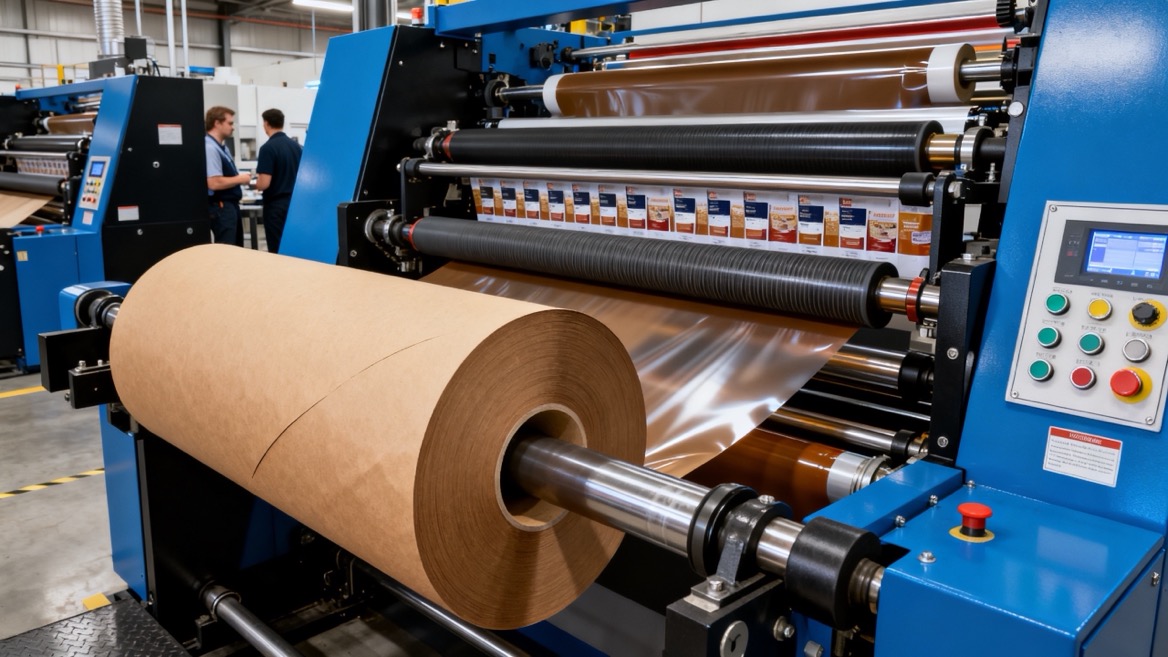
Flexographic printing is a relief printing process. The image area on the printing plate is raised above the non-image area. Ink is transferred onto those raised elements and then pressed onto the selected substrate.
Unlike printing methods designed mainly for smooth paper sheets, flexography can work on many porous and non-porous packaging materials, including:
- Kraft paper
- Coated paperboard
- Corrugated cardboard
- Plastic films
- Polyethylene and polypropylene
- Metallized films
- Foils
- Laminated materials
- Self-adhesive label stock
- Nonwoven materials
This adaptability makes flexo printing especially suitable for packaging production. A single packaging program may involve shipping cartons, retail boxes, paper sleeves, labels, and flexible pouches. Flexographic technology can support a broad range of these materials, depending on the press configuration, ink system, finishing requirements, and artwork complexity.
In simple terms: flexography transfers controlled amounts of fast-drying ink from an engraved roller to a flexible plate, then onto packaging material moving through a press.
How Flexographic Printing Works
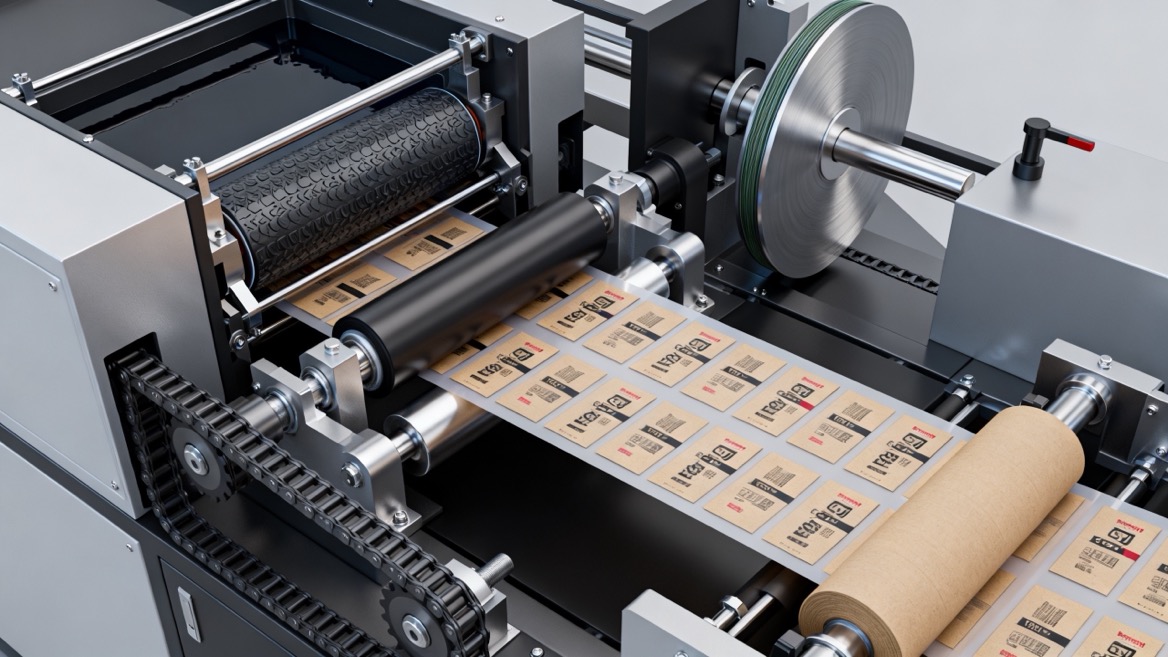
Although a modern flexographic press can operate at very high speeds, the printing sequence follows a clear and carefully controlled process. Every stage affects the final appearance, color consistency, adhesion, and production efficiency of the packaging.
1. Artwork Preparation and Prepress Review
The process begins with production-ready artwork. Before plates are produced, the print file should be checked for:
- Correct dieline placement
- Bleed and safe-area requirements
- Font conversion or embedding
- Image resolution
- Color separation
- Barcode readability
- Overprint settings
- Trapping between adjacent colors
- Material-specific limitations
For packaging boxes, this stage is not only about visual appearance. A design must account for folds, glue areas, perforations, cutouts, handles, product windows, and the direction of corrugated flutes where applicable.
A premium-looking design can still fail if important text lands too close to a fold line, barcode contrast is insufficient, or color elements shift at a joining edge. Reviewing these details before plate production helps avoid unnecessary cost, delay, and material waste.
2. Flexographic Plate Production
A flexographic plate is typically made from a flexible photopolymer material. The plate is processed so that the intended printing image becomes raised while the non-printing areas remain recessed.
The raised image areas receive ink and transfer it to the substrate. Because the plates are flexible, they can conform better than rigid plates to packaging surfaces with texture or compression, including certain corrugated and paper-based materials.
Each print color generally requires its own plate. For example, a four-color process design normally uses separate cyan, magenta, yellow, and black plates. A design using additional spot colors, metallic ink, varnish, or white underprint may require additional stations and plates.
3. Ink Metering Through the Anilox Roller
The anilox roller is one of the most important components in flexographic printing. It has thousands of microscopic engraved cells that carry a controlled amount of ink.
A doctor blade removes excess ink from the surface of the anilox roller, leaving ink only inside the engraved cells. The roller then transfers a precise ink film to the raised surface of the printing plate.
This controlled ink transfer supports:
- More consistent solid-color coverage
- Better repeatability across long production runs
- Reduced risk of excessive ink application
- Cleaner text and linework
- More stable color performance
Anilox selection must match the artwork and material. Fine text and detailed graphics may require different ink-volume control than large solid backgrounds or heavily textured packaging substrates.
4. Plate Cylinder and Impression Cylinder
The flexible plate is mounted to a plate cylinder. As the cylinder rotates, it receives ink from the anilox roller.
The packaging material passes between the plate cylinder and the impression cylinder. Controlled pressure allows the inked image to transfer from the plate to the substrate.
Too little pressure can lead to incomplete transfer. Too much pressure can create distorted graphics, heavier edges, poor tonal reproduction, or a "squeezed" appearance in fine details. This is why experienced press setup matters, particularly for corrugated cartons, thin films, and designs containing delicate typography.
5. Ink Drying and Curing
Flexographic inks are designed to dry rapidly so that material can move continuously through the press and into later conversion stages.
Depending on the job, a manufacturer may use:
- Water-based inks
- Solvent-based inks
- UV-curable inks
- Electron-beam-curable inks in specialized applications
The appropriate ink system depends on the substrate, end use, regulatory requirements, food-contact considerations, lamination plan, rub resistance, and required production speed.
Water-based and UV-curable systems can help reduce the use of conventional solvent-based systems in appropriate applications. However, "more sustainable" should never be treated as a universal claim. The correct choice must consider the specific material structure, drying energy, end-of-life pathway, local regulations, and product-performance needs.
6. Converting and Packaging Finishing
After printing, the material may go through additional finishing and converting operations, including:
- Die cutting
- Creasing
- Folding
- Gluing
- Laminating
- Varnishing
- Embossing
- Foil stamping
- Window patching
- Perforating
- Slitting and rewinding
- Quality inspection
- Carton assembly
For a folding carton or corrugated packaging project, printing is only one part of the finished result. Structural design, paper selection, board strength, accurate die cutting, glue quality, and packing method all influence whether the final box performs well in retail, shipping, and storage.
Common Flexographic Printing Applications
Most people encounter flexographic printing every day without noticing it. The method is widely used because packaging often needs high-volume, repeatable printing on materials that are not limited to smooth paper.
Retail and Shipping Packaging
Flexography is commonly used for:
- Corrugated shipping cartons
- E-commerce mailer boxes
- Shelf-ready packaging
- Display cartons
- Produce boxes
- Beverage trays
- Industrial cartons
- Branded kraft boxes
For corrugated packaging, flexography can produce logos, handling icons, shipping marks, product information, and retail graphics directly on the board.
Flexible Packaging
Flexible packaging applications include:
- Snack bags
- Coffee packaging
- Candy wrappers
- Frozen-food packaging
- Stand-up pouches
- Sachets
- Wrap films
- Laminated rolls
Flexible films require strong ink adhesion, careful drying control, and compatibility with downstream lamination or sealing processes. The print design must also consider how the package will be filled, sealed, displayed, and transported.
Labels and Product Identification
Flexo printing is widely used for:
- Food labels
- Beverage labels
- Cosmetic labels
- Pharmaceutical labels
- Logistics labels
- Barcode labels
- Promotional labels
- Peel-and-reseal labels
Labels often require accurate registration, clear small text, dependable adhesive compatibility, and consistent color across repeat orders. These requirements should be discussed before production rather than after a product reaches the market.
Paper-Based Consumer Products
Other common uses include:
- Paper bags
- Gift wrap
- Envelopes
- Tissue packaging
- Paper sleeves
- Disposable food-service packaging
- Napkins
- Lightweight paper products
Which Materials Are Suitable for Flexo Printing?
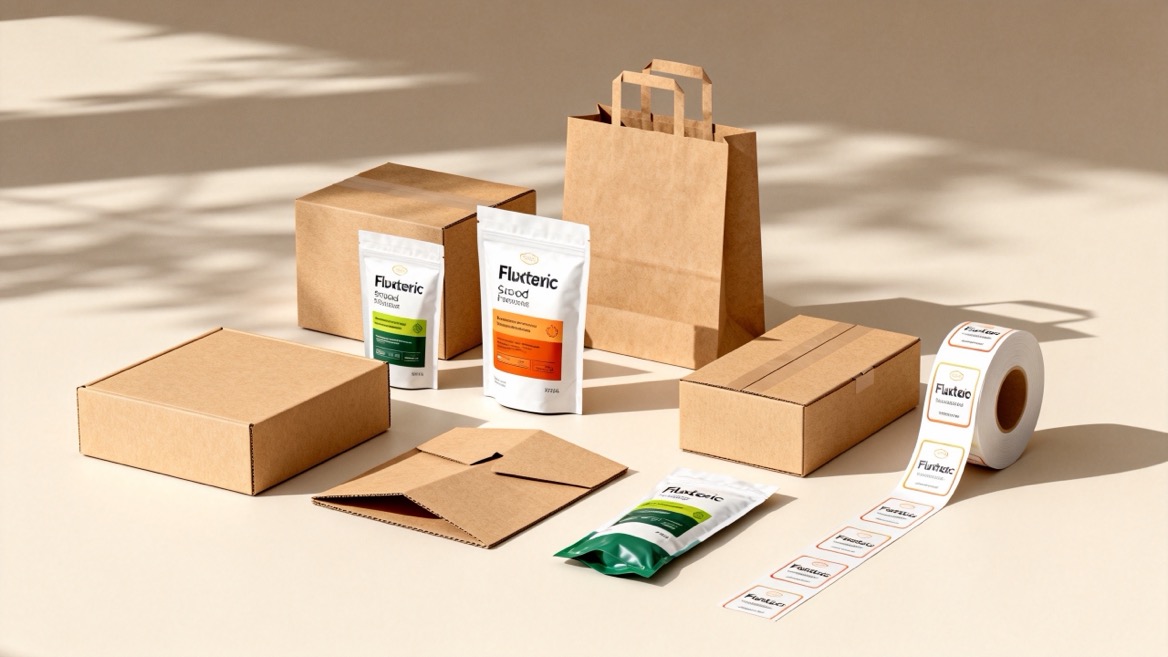
Flexography is known for material flexibility, but not every substrate behaves the same way. Surface energy, porosity, coating, thickness, texture, and absorbency can all influence the printing outcome.
| Material |
Typical Packaging Use |
Flexo Considerations |
| Kraft paper |
Paper bags, eco-style boxes, wraps |
Absorbent surface may soften fine detail or reduce ink vibrancy |
| Coated paperboard |
Folding cartons, cosmetics, food boxes |
Supports cleaner graphics and stronger visual presentation |
| Corrugated cardboard |
Shipping cartons, mailers, displays |
Board texture and flute profile influence print sharpness |
| Plastic film |
Pouches, wraps, labels |
Requires proper ink adhesion and surface treatment |
| Metallized film |
Premium food and cosmetic packaging |
Needs careful color control and compatible ink systems |
| Foil and laminates |
Barrier packaging, specialty packs |
Often requires process-specific adhesion and curing control |
| Self-adhesive stock |
Labels and stickers |
Must match the label face material, adhesive, and application conditions |
Practical recommendation: do not select a printing method only from a digital proof. Request a material-based sample, especially when your design includes large solid colors, gradients, very small text, metallic effects, or critical brand colors.
Advantages of Flexographic Printing for Packaging
Flexo printing remains widely used because it offers a practical balance of speed, adaptability, and operational efficiency.
High-Speed Production for Repeat Orders
Flexographic presses are designed for continuous production. Once a job is set up correctly, they can efficiently produce large volumes of printed material.
This is particularly useful for brands with:
- Stable, repeatable packaging designs
- Multi-market distribution
- Frequent replenishment cycles
- Promotional packaging campaigns
- Seasonal product launches
- Large retail or distributor orders
For longer runs, plate costs can be spread across more units, making the per-unit cost more competitive.
Broad Substrate Compatibility
Flexography can print on paper, board, films, foils, and laminates. This is valuable for brands that want visual consistency across multiple packaging formats.
For example, a skincare brand may need a folding carton, shipping box, product label, paper insert, and promotional pouch. A coordinated manufacturing plan can help align colors, logo treatment, and material appearance across those components.
Fast Ink Drying
Fast drying supports continuous production and can reduce the risk of smudging between printing and converting stages.
This can be especially important for:
- Roll-to-roll flexible packaging
- High-volume labels
- Corrugated cartons
- Time-sensitive replenishment orders
- Packaging with multiple finishing operations
Strong Performance on Packaging Materials
Flexible relief plates can accommodate some surface variation better than methods designed primarily for extremely smooth sheet stock. This makes flexography practical for many corrugated, paper, and film-based applications.
Cost Efficiency at Scale
Flexography involves setup work and plate creation, so it is not always the best first choice for tiny quantities or highly variable personalized designs. However, for medium-to-long production runs, it can offer a strong balance of quality, speed, and cost control.
Limitations to Consider Before Choosing Flexo
A credible packaging recommendation should include limitations as well as advantages. Flexography is powerful, but it is not automatically the best method for every project.
Fine Photographic Detail Can Be Challenging
Modern flexo technology has improved significantly, but extremely fine photographic detail, subtle tonal transitions, and highly complex gradients may still require special prepress planning or another print method.
If your design depends on museum-quality photographic reproduction, very small reversed text, or precision color matching across challenging surfaces, request a press proof or material sample before full production.
Setup Is Less Efficient for Very Small Orders
Plates, setup, color calibration, and press preparation take time. For a limited trial run, prototype, regional test, or design with variable text and images, digital printing may be more suitable.
Material and Ink Must Be Matched
A film, coating, board surface, or laminate can require specific inks, primers, surface treatment, drying conditions, and testing. Printing directly onto an unsuitable material without validation can result in poor adhesion, color inconsistency, rub-off, cracking, or downstream lamination problems.
Color Expectations Need Clear Agreement
A screen image is not a physical packaging product. Monitor settings, lighting conditions, material color, ink coverage, and surface texture can all affect how a color appears.
For brand-critical work, provide Pantone references where relevant, specify the viewing conditions, and approve a physical sample or contract proof whenever the project requires tight color expectations.
Flexographic Printing vs. Other Methods
Choosing the right process depends on your order quantity, substrate, visual requirements, budget, delivery schedule, and whether the design will change frequently.
| Printing Method |
Best For |
Main Strength |
Key Limitation |
| Flexographic printing |
Medium-to-long packaging runs |
High-speed printing on many packaging materials |
Plate setup makes very short runs less efficient |
| Offset printing |
Premium paperboard cartons and detailed graphics |
Strong image reproduction on smooth paperboard |
Less suited to many flexible films and textured materials |
| Digital printing |
Short runs, prototypes, personalized packaging |
No plates and fast artwork changes |
Unit cost can rise on large repeat orders |
| Gravure printing |
Very long runs and high-detail flexible packaging |
Excellent tonal detail and consistency |
High cylinder cost and longer preparation |
When Flexo Is Usually the Right Choice
Flexographic printing is often a strong option when your project includes:
- A repeat order or a long production run
- Labels, films, corrugated cartons, or paper-based packaging
- A need for quick production after setup
- Consistent spot colors or brand graphics
- Multiple packaging substrates
- Fast-drying ink requirements
- Standardized designs across regions or product lines
When Another Method May Be Better
Consider digital printing when you need prototypes, small quantities, localized artwork, serialized labels, or frequent design changes. Consider offset printing for highly detailed graphics on premium paperboard. Consider gravure for extremely high-volume flexible packaging where exceptional fine-detail reproduction justifies the higher setup investment.
A Packaging Buyer's Checklist Before Production
The most successful packaging projects begin with the right technical questions. Before approving flexographic printing, clarify the following details with your packaging manufacturer.
1. What is the final packaging format?
Confirm whether you need a folding carton, corrugated shipper, label, pouch, paper bag, sleeve, or another structure.
2. What is the required order quantity?
Quantity strongly affects the most practical printing method and total cost structure.
3. Which material is appropriate?
Define board grade, flute type, paper weight, film structure, coating, or laminate requirements.
4. How complex is the artwork?
Identify spot colors, gradients, metallic effects, white ink, fine reverse text, barcodes, and photographs.
5. What product will the packaging protect?
Consider product weight, fragility, moisture sensitivity, food-contact requirements, and transportation risks.
6. What finishing is needed?
Specify lamination, varnish, embossing, foil stamping, spot effects, windows, inserts, or special die cuts.
7. How will color be approved?
Decide whether a digital proof is enough or whether a physical pre-production sample is required.
8. What testing is necessary?
Depending on the project, this may include drop testing, compression testing, rub testing, barcode verification, adhesion testing, or transport simulation.
A clear specification saves time. It also reduces the risk of receiving packaging that looks acceptable but does not perform properly in filling, shipping, retail display, or end-user handling.
Expert Production Insight: Print Quality Starts Before the Press
After two decades of packaging manufacturing, one lesson is consistent: most expensive printing problems begin before the press starts.
The best way to improve flexographic packaging quality is not simply to demand "better printing." It is to build a proper pre-production process that connects artwork, material, structural design, color expectations, and logistics requirements.
For example, a bold black logo may look excellent on a white coated carton but appear softer on natural kraft paper. A complex gradient may reproduce differently on corrugated board than on a smooth laminated film. A glossy finish may increase visual impact but may not be the best choice when a package must resist scuffing in long-distance transportation.
The solution is not to avoid creative packaging. The solution is to evaluate design and material together, then select the most suitable print and finishing route before mass production.
The Future of Flexographic Packaging Printing
Flexography continues to evolve through better automation, plate technologies, ink systems, color-management workflows, and hybrid production lines. Market research indicates that packaging demand will continue to support growth in flexographic printing, especially across flexible packaging, labels, folding cartons, and consumer-oriented box formats.
Several developments are shaping modern flexographic production:
- Improved plate technology for sharper text, highlights, and tonal graphics
- Advanced anilox engraving for more controlled ink transfer
- Automated color and registration controls to reduce setup variation
- Hybrid press systems that combine conventional and digital capabilities
- Water-based and UV-curable ink development for selected applications
- More material innovation in paper, recyclable structures, barrier coatings, and lightweight packaging formats
- Data-driven quality control to improve repeatability on ongoing packaging programs
For buyers, the most important trend is not one machine or ink type. It is the growing ability to match packaging performance, brand appearance, production efficiency, and material strategy more precisely.
Work With an Experienced Packaging Manufacturer
Flexographic printing can be an efficient and reliable solution for packaging boxes, corrugated cartons, labels, flexible packaging, and paper-based printed products—particularly when your project requires scalable production and dependable material compatibility.
Shenzhen XingKun Packing Products Co., Ltd. brings more than 20 years of printing and packaging manufacturing experience to custom projects for international brands and distributors. We can help evaluate your box structure, material choice, artwork requirements, print method, finishing options, sampling requirements, and bulk-production plan.
Send us your artwork, dimensions, target quantity, material preference, and destination market to receive a practical packaging recommendation and customized quotation.
FAQs
What is flexographic printing used for?
Flexographic printing is used for packaging boxes, corrugated cartons, labels, flexible packaging, paper bags, food wrappers, shrink sleeves, shipping materials, and many other printed products. It is especially useful for medium-to-long production runs and materials that are not limited to smooth paper sheets.
Is flexographic printing suitable for custom packaging boxes?
Yes. Flexographic printing can be suitable for custom packaging boxes, especially corrugated cartons, e-commerce mailers, kraft packaging, retail-ready boxes, and high-volume box programs. The ideal result depends on board type, artwork complexity, color requirements, and finishing needs.
What is an anilox roller in flexographic printing?
An anilox roller is an engraved roller that measures and transfers a controlled amount of ink to the printing plate. Its microscopic cells help maintain consistent ink coverage and support repeatable print quality during production.
Is flexo printing better than digital printing?
Neither method is universally better. Flexographic printing is generally more cost-effective for medium-to-long runs and continuous packaging production. Digital printing is often more practical for short runs, prototypes, personalized packaging, and designs that change frequently.
Can flexographic printing be used on corrugated cardboard?
Yes. Flexography is widely used for corrugated cardboard, including shipping cartons, e-commerce mailers, produce boxes, point-of-sale displays, and retail packaging. Print sharpness can vary based on the board surface, flute profile, artwork design, and ink system.
Which inks are used in flexographic printing?
Common flexographic ink systems include water-based, solvent-based, UV-curable, and specialized formulations. The appropriate ink depends on the substrate, product application, drying method, adhesion requirements, and applicable safety or regulatory requirements.
Is flexographic printing suitable for food packaging?
Flexographic printing is commonly used for food packaging, including labels, cartons, wraps, pouches, and paper-based packaging. Food-contact suitability depends on the complete packaging structure, ink system, coating, barrier layers, migration controls, and applicable regulations in the destination market.
What should I provide for a flexographic packaging quotation?
Provide the packaging dimensions, box style or dieline, artwork file, required quantity, material preference, print colors, finishing requirements, product weight, destination country, and desired delivery schedule. If available, provide a physical sample or reference images of the preferred result.
References
1. [Custom Box Makers: Flexo Vs. Gravure Printing]
2. [U.S. Environmental Protection Agency: Pollution Prevention Experiences in Flexographic Printing]
3. [Georgia Environmental Protection Division: Control Techniques Guidelines for Flexible Package Printing]
4. [Smithers: The Future of Flexographic Printing Markets to 2029]
5. [Flexographic Technical Association: Smithers Studies Future of Flexographic Printing Markets]
6. [Iowa State University Digital Press: Flexographic Plate Technology]
7. [Flexographic Technical Association: The Growth of Water-Based Inks in Flexible Packaging]


