Content Menu
● What Is Custom Hardcover Book Printing?
● Why Hardcover Books Matter for Brands
● Hardcover Book Materials Explained
>> Cover Board: The Structural Core
>> Text Paper: Choose for Reading, Images, and Weight
>>> Uncoated paper
>>> Coated art paper
>>> Specialty and sustainable papers
>> Endpapers: Small Component, Major Effect
● Hardcover Binding Options
>> Smyth-Sewn Binding for Premium Durability
>> PUR or Adhesive Case Binding
>> Lay-Flat Expectations: Clarify Early
● Hardcover Cover Materials and Styles
>> Printed Case Wrap
>> Cloth-Bound Hardcover
>> PU and Leather-Look Covers
● Printing Finishes That Add Value
>> Foil Stamping and Embossing
>> Dust Jackets, Slipcases, and Inserts
● How to Choose the Right Hardcover Specification
>> Step 1: Define the Book's Job
>> Step 2: Choose the Interior Paper First
>> Step 3: Confirm Binding and Opening Requirements
>> Step 4: Select the Cover Experience
>> Step 5: Plan Finishes Around Brand Priorities
● Prepress Checklist for Custom Hardcover Books
● Common Mistakes to Avoid
>> Choosing Paper by Weight Alone
>> Adding Too Many Finishes
>> Ignoring Freight Weight
>> Making Unverified Sustainability Claims
● Why Work With XingKun for Hardcover Book Printing?
● Conclusion
● FAQ
>> 1.What is the difference between hardcover and case-bound book printing?
>> 2.What is the best binding for a premium hardcover book?
>> 3.Which paper is best for a hardcover photo book?
>> 4.Can I add foil stamping or embossing to a hardcover book?
>> 5.Can a hardcover book lie completely flat?
>> 6.What information is needed for a hardcover book quotation?
>> 7.Can a hardcover book use FSC-certified materials?
>> 8.Are hardcover books suitable for small quantities?
● References
Custom hardcover book printing is not simply about putting pages between rigid covers. For a brand, publisher, artist, educator, or corporate buyer, it is a manufacturing decision that affects perceived value, durability, color reproduction, usability, sustainability claims, shipping cost, and the reader's long-term relationship with the book.
At Shenzhen XingKun Packing Products Co., Ltd. (XingKun), we approach custom hardcover book printing as a complete product-development process. The best result comes from matching the right paper stock, case binding method, cover material, printing specification, and finishing technique to the book's purpose—not from adding premium options indiscriminately.
Whether you are producing a coffee-table book, branded company profile, children's book, art catalogue, commemorative edition, yearbook, cookbook, collector's publication, or retail-ready gift book, this guide explains how to make informed choices before production begins.
> Key takeaway: A successful hardcover book is built from the inside out. First define how the book will be read and used; then select the text paper, binding, cover construction, and decorative finishes that support that use.
What Is Custom Hardcover Book Printing?
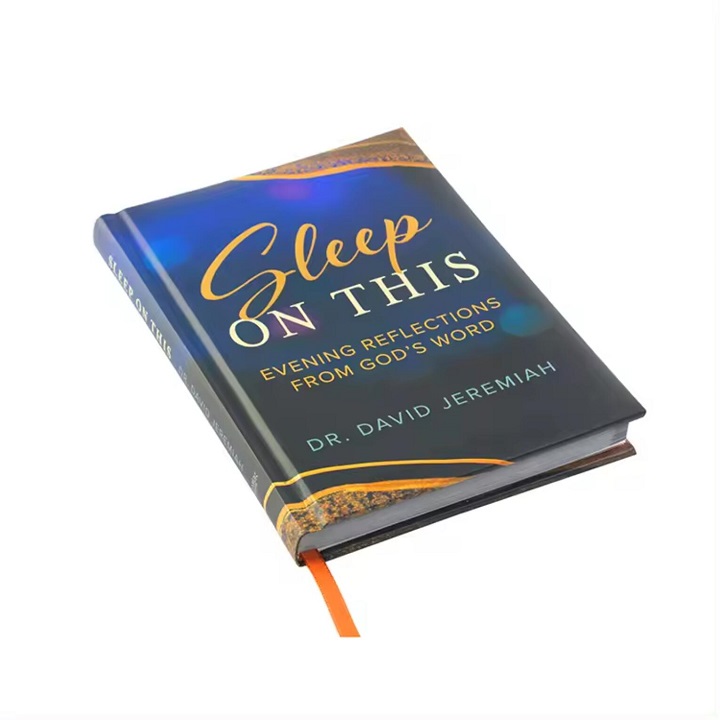
Custom hardcover book printing refers to the production of books with a rigid outer cover—commonly called a case-bound cover—made from thick binder's board, chipboard, or greyboard. The board is wrapped with printed paper, book cloth, PU, or another covering material. The printed interior pages, called the text block, are then attached to the case using endpapers.
Unlike a paperback cover, a hardcover case does not flex easily. This construction protects the pages, creates a premium presentation, and supports long-term use.
A standard hardcover book normally includes:
- A printed text block
- Folded signatures or individual pages
- A sewn or adhesive-bound spine
- Printed or plain endpapers
- Rigid greyboard or chipboard
- A printed case wrap, cloth, PU, or specialty cover material
- Optional dust jacket, ribbon marker, headbands, slipcase, or belly band
- Optional decorative finishes such as foil stamping, embossing, debossing, or spot UV
Case binding is widely used for books intended to be retained, displayed, gifted, or repeatedly referenced. Industry descriptions of case binding consistently identify the structure as a rigid board cover combined with a sewn or glued text block, endpapers, and a printed or cloth-wrapped case. [printingpartners]
Why Hardcover Books Matter for Brands
A hardcover book is both a printed publication and a physical brand object. It signals permanence. It can be displayed on a desk, placed in a retail environment, mailed to high-value clients, or sold as a premium edition.
For B2B buyers, hardcover printing is especially useful when the publication must do more than deliver information.
| Business purpose | Recommended hardcover approach | Why it works |
| Corporate profile or annual report | Printed case wrap, matte lamination, foil logo | Professional appearance with strong logo visibility |
| Photography or art book | Smyth-sewn binding, coated art paper, lay-flat-friendly design | Supports color images and repeated viewing |
| Children’s book | Durable case binding, scuff-resistant lamination, rounded corners if appropriate | Better protection for frequent handling |
| Cookbook | Coated inner paper, stain-resistant cover finish, sewn binding | Handles full-color photography and regular kitchen use |
| Luxury brand catalogue | Cloth or PU cover, foil stamping, embossed logo, slipcase | Creates a collectible, gift-worthy impression |
| Training manual or reference book | Case binding, durable text stock, tabs or ribbon marker | Supports frequent reference and shelf storage |
| Commemorative book | Sewn signatures, premium endpapers, dust jacket or gift box | Helps position the book as a keepsake |
The format is particularly valuable when buyers need the publication to communicate credibility, craftsmanship, and long-term value before a reader turns to the first page.
Hardcover Book Materials Explained
Material selection determines how the book feels, performs, ages, and photographs. It also affects unit cost, production lead time, minimum order quantity, and freight weight.
Cover Board: The Structural Core
The rigid board inside a hardcover case is commonly called greyboard, chipboard, binder's board, or book board. It gives the cover its stiffness and protects the text block from bending and impact.
The appropriate board thickness depends on the book size, page count, intended use, and covering material.
| Board consideration | Practical impact |
| Board thickness | Thicker board creates a more substantial, premium feel but increases weight |
| Book size | Larger trim sizes often need stronger board to prevent warping |
| Cover material | Cloth, PU, and laminated printed paper may require different handling during casing |
| Shipping method | Heavy boards can raise air-freight and courier costs |
| Intended lifespan | Premium gift books and archival-style editions often justify stronger construction |
A large-format art book with 250 pages generally requires different board selection than a compact 64-page brand notebook. A reliable manufacturer should evaluate the trim size, spine width, board thickness, and paper weight together, rather than treating each item as a separate decision.
Text Paper: Choose for Reading, Images, and Weight
The inner pages do most of the functional work. Text paper should be selected based on the book's content, ink coverage, opacity, desired tactile experience, and shipping constraints.
Uncoated paper
Uncoated paper has a natural, non-reflective surface. It is commonly used for novels, journals, memoirs, educational books, writing-oriented publications, and selected brand books.
Benefits include:
- A warm, readable appearance
- Low glare under direct lighting
- A tactile, natural paper feel
- Better suitability for writing or note-taking
- A premium editorial look for text-heavy content
Cream or white uncoated papers are frequently used for fiction and narrative non-fiction, while white uncoated papers can work well for diagrams, text, and restrained illustrations. [cliffordghostwriting]
Coated art paper
Coated paper is designed for sharper image detail, stronger color density, and more controlled ink absorption. It is commonly selected for product catalogues, cookbooks, fashion books, art books, photography books, and high-image-content corporate publications.
Typical options include:
- Gloss coated paper: Strong image contrast and vivid color
- Matte coated paper: Sophisticated, lower-glare image presentation
- Silk or satin coated paper: A balance between gloss and matte characteristics
For image-heavy books, coated paper helps preserve image clarity and color impact. Industry guidance commonly recommends coated stocks for high-resolution, full-color visual publications. [cliffordghostwriting]
Specialty and sustainable papers
For brands with a sustainability story or a distinctive tactile identity, specialty papers can add value:
- Recycled paper
- FSC-certified paper options
- Textured uncoated paper
- Natural-tone paper
- High-bulk paper
- Black, colored, or dyed-through paper for endpapers
- Specialty metallic or pearlescent cover papers
However, a sustainability claim should never be added casually. FSC explains that products carrying an FSC label must be produced using certified inputs and through a printer with valid FSC Chain of Custody certification. [anz.fsc]
> Expert note: Ask the supplier to clarify whether they can provide an FSC-certified finished product claim, not merely FSC paper. These are not automatically the same thing.
Endpapers: Small Component, Major Effect
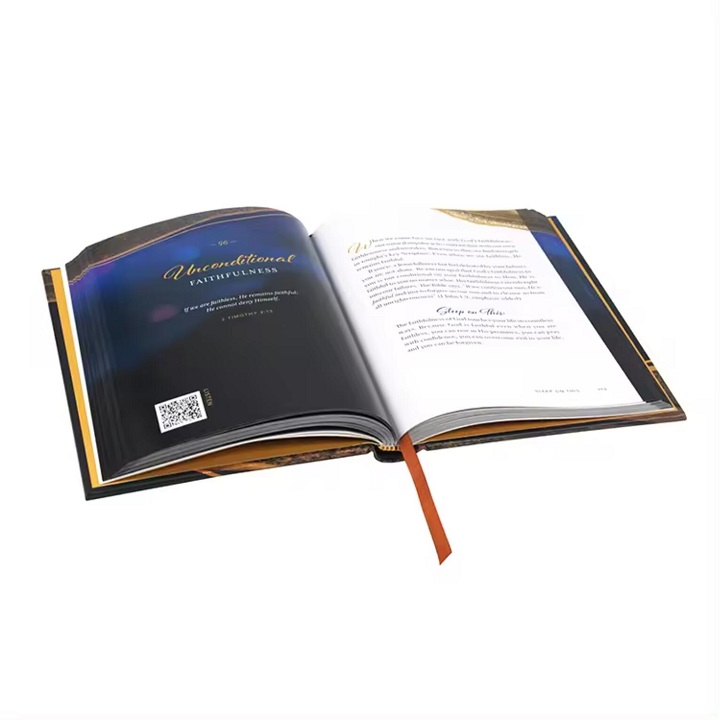
Endpapers connect the text block to the hardcover case. They are also one of the first visual elements a reader sees when opening the book.
Common endpaper options include:
- Plain white or cream endpapers
- Colored endpapers
- Printed brand-pattern endpapers
- Map-style endpapers for travel, history, or children's books
- Textured specialty paper
- Black endpapers for luxury editions
Custom printed endpapers can make a book feel intentionally designed from the first interaction. For a brand book, they are an effective location for subtle logos, illustration patterns, campaign graphics, or storytelling details.
Hardcover Binding Options
The binding method affects how flat the book opens, how long it lasts, how well it handles frequent use, and how much it costs.
Smyth-Sewn Binding for Premium Durability
Smyth-sewn binding, also called section-sewn binding, is widely regarded as one of the most durable hardcover binding methods. The printed sheets are folded into signatures, then sewn together with thread before being attached to the case.
This option is particularly suitable for:
- Art books
- Cookbooks
- Photography books
- High-end brand books
- Large-page-count publications
- Books expected to be opened frequently
- Collectible editions
Sewn signatures improve flexibility and durability, helping the book open more comfortably while reducing stress on the spine. Current industry descriptions continue to identify Smyth sewing as a premium method valued for strength and improved opening behavior. [cliffordghostwriting]
PUR or Adhesive Case Binding
PUR binding uses polyurethane reactive adhesive. It can provide strong page adhesion and good flexibility, making it a practical option for many custom hardcover book printing projects.
It is often appropriate for:
- Medium-run corporate books
- Catalogues
- Educational publications
- Books with moderate page counts
- Projects with cost constraints
- Books using coated stocks where glue performance matters
The right adhesive system depends on paper type, page count, grain direction, ink coverage, and how the book will be used. Adhesive binding is not automatically "low quality." A well-specified PUR-bound hardcover can be durable and cost-efficient. However, for a heavily used premium book, section sewing remains the stronger choice.
Lay-Flat Expectations: Clarify Early
Many buyers say they want a "lay-flat hardcover book," but this phrase can mean different things.
A standard case-bound book may open comfortably without lying perfectly flat. A sewn book can offer improved opening behavior. A true lay-flat construction may require a different binding approach, such as specific lay-flat photographic binding systems.
Before quoting, clarify:
1. Must the book open fully flat at the center spread?
2. Will full-bleed images cross the gutter?
3. Is the book designed for reading, display, photography, or writing?
4. Is a visible gutter acceptable?
5. How important is long-term durability versus maximum flat opening?
This one clarification can prevent costly redesigns after the artwork is complete.
Hardcover Cover Materials and Styles
The case cover is the book's most visible component. It should match the audience, brand personality, retail positioning, and anticipated handling conditions.
Printed Case Wrap
A printed case wrap uses a full-color printed sheet laminated or finished before it is wrapped around the rigid board. It is one of the most versatile and widely used hardcover cover styles.
It works well for:
- Full-color branding
- Product photography
- Illustrated books
- Children's books
- Corporate publications
- Educational books
- Retail-ready catalogues
Common protective finishes include gloss lamination, matte lamination, soft-touch lamination, and anti-scratch films.
Cloth-Bound Hardcover
A cloth-bound hardcover uses book cloth wrapped around the boards. The cloth may be plain, textured, colored, or printed, depending on the material.
This format communicates a classic, literary, and premium identity. It is particularly suitable for limited editions, history books, literary works, premium journals, and high-end corporate gifts.
A cloth case often looks best with:
- Foil stamping
- Blind debossing
- Embossed title elements
- Printed dust jackets
- Ribbon bookmarks
- Headbands
- Slipcases
PU and Leather-Look Covers
PU, vegan leather, imitation leather, and selected specialty synthetic materials are often used for luxury corporate gifts, premium journals, Bibles, commemorative books, and executive editions.
These materials can create a refined look, especially when paired with debossing, foil stamping, gilded edges, or ribbon markers. They should be evaluated carefully for texture consistency, color matching, scratch resistance, odor, and aging performance.
Printing Finishes That Add Value
Finishing should reinforce the concept of the book. The best finish is not necessarily the most expensive one; it is the one that supports the content and the brand.
| Finish | Best use | Main benefit |
| Matte lamination | Corporate books, art books, premium catalogues | Elegant, low-glare surface |
| Gloss lamination | Children’s books, colorful retail books | Bright color and visual impact |
| Soft-touch lamination | Luxury branding, gift books | Velvety tactile feel |
| Anti-scratch lamination | Dark-color covers, high-handling books | Better scuff resistance |
| Foil stamping | Logos, titles, luxury editions | High-contrast premium detail |
| Embossing | Brand marks, patterns, titles | Raised tactile dimension |
| Debossing | Leather-look or cloth covers | Refined pressed-in detail |
| Spot UV | Selected graphic elements | Gloss contrast on matte surfaces |
| Die-cut window | Packaging-style or concept books | Reveals an inner graphic or texture |
| Gilded edges | Luxury, religious, commemorative books | Decorative premium appearance |
| Ribbon marker | Journals, reference books, gift editions | More useful reader experience |
| Dust jacket | Literature, art, high-end gifts | Adds storytelling and protection |
| Slipcase | Collector’s sets, boxed editions | Improves shelf impact and protection |
Foil Stamping and Embossing
Foil stamping uses heat and pressure to transfer metallic or pigmented foil to a cover. Gold, silver, copper, black, white, holographic, and colored foils are common options.
Embossing raises an image or text above the surface. Debossing presses it below the surface. Both work especially well with cloth, PU, and premium laminated cases.
For the best result:
- Keep fine foil lines thick enough for reliable reproduction
- Avoid overly detailed artwork on textured materials
- Use vector artwork for logos and type
- Request a physical sample when color or texture is critical
- Consider contrast between foil, cover stock, and lighting conditions
Dust Jackets, Slipcases, and Inserts
A dust jacket is more than a protective wrap. It creates additional print space for copy, reviews, brand storytelling, author information, and retail messaging.
A slipcase provides a more premium presentation and is well suited to:
- Multi-volume sets
- Anniversary editions
- High-value company gifts
- Collector's books
- Branded kits
- Books bundled with cards, booklets, or inserts
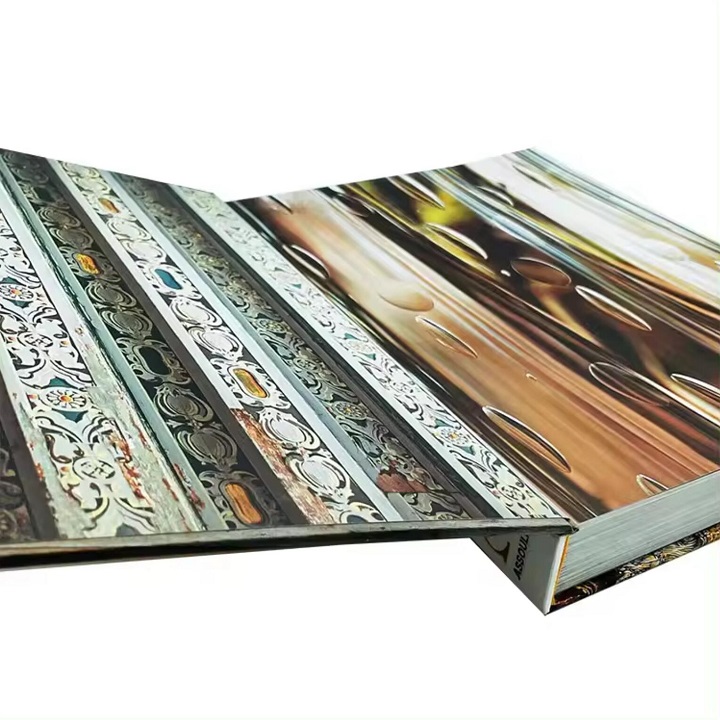
These components require early planning because they influence dimensions, artwork templates, assembly, packing, and freight volume.
How to Choose the Right Hardcover Specification
The most efficient custom hardcover book printing process starts with the end use—not the quotation form.
Step 1: Define the Book's Job
Ask what the book needs to accomplish:
- Sell products?
- Build brand trust?
- Preserve photographs?
- Support learning?
- Serve as a premium gift?
- Be read repeatedly?
- Sit on a retail shelf?
- Be shipped internationally?
A 300-page reference manual and a 96-page luxury lookbook may both be hardcover books, but they should not be specified in the same way.
Step 2: Choose the Interior Paper First
Interior paper drives much of the book's performance. Decide whether the content is primarily:
- Text-heavy
- Full-color and image-heavy
- Mixed text and diagrams
- Designed for writing
- Intended for frequent handling
- Sensitive to show-through or opacity
Then choose the paper type, weight, surface, and opacity accordingly.
Step 3: Confirm Binding and Opening Requirements
Specify whether you need:
- Smyth-sewn signatures
- PUR adhesive binding
- Improved openability
- A true lay-flat format
- A ribbon marker
- Headbands
- Reinforced spine construction
Do not wait until pre-production to define these points.
Step 4: Select the Cover Experience
Choose whether the book should feel:
- Modern and graphic
- Classic and literary
- Natural and sustainable
- Luxurious and giftable
- Playful and colorful
- Highly durable for everyday use
This decision guides the choice between printed case wrap, cloth, PU, specialty paper, or another cover material.
Step 5: Plan Finishes Around Brand Priorities
Use finishing strategically. For example:
- A premium brand may use soft-touch lamination + gold foil
- A children's publisher may use gloss lamination + rounded corners
- A design studio may use matte lamination + blind embossing
- A sustainability-focused project may use uncoated paper + minimal finishing + compliant certification claims
Prepress Checklist for Custom Hardcover Books
Many quality issues originate in file preparation, not on press. Before sending artwork to a hardcover book manufacturer, verify the following.
1. Final trim size: Confirm width, height, and orientation.
2. Final page count: Hardcover books are commonly planned in signature-friendly page counts; discuss this early with the printer.
3. Bleed: Include the printer's required bleed for full-bleed pages and cover artwork.
4. Spine width: Do not finalize the cover file until the paper type, paper weight, page count, and binding method are confirmed.
5. Color mode: Use CMYK files unless the printer gives different instructions.
6. Image resolution: Use high-resolution images suitable for the intended print size.
7. Black settings: Confirm whether body text, rich black backgrounds, and large solid areas need different CMYK values.
8. Fonts: Outline fonts or package them according to the printer's file-submission requirements.
9. Foil and special finishes: Supply them on separate, clearly named spot-color layers.
10. Proofing: Review a digital proof and consider a physical dummy or production proof for complex projects.
> Practical warning: Never assume the spine measurement from a previous book will apply to a new edition. A change in paper bulk, page count, coating, or binding can change the spine width.
Common Mistakes to Avoid
Choosing Paper by Weight Alone
A paper's GSM is important, but it does not tell the whole story. Bulk, opacity, coating, stiffness, grain direction, and ink coverage also matter.
For example, two papers with the same GSM can produce noticeably different spine widths and page feel.
Adding Too Many Finishes
A cover can become visually confusing when foil, spot UV, embossing, texture, and multiple laminations compete for attention. Premium design often comes from restraint.
Choose one primary visual effect and one supporting effect.
Ignoring Freight Weight
Hardcover books are heavier than paperbacks. Thick board, high-GSM coated paper, slipcases, and large trim sizes can increase freight costs significantly—especially for air shipment.
For international projects, calculate landed cost early:
Landed Cost=Unit Production Cost+Packaging+Freight+Duty/Tax Where Applicable+Local Handling
Making Unverified Sustainability Claims
Terms such as "eco-friendly," "sustainable," or "FSC-certified" should be used only when the supplier can support the claim with appropriate documentation and certification scope.
FSC states that printed products carrying FSC labels require valid certified sourcing and production through an FSC Chain of Custody-certified printer. [anz.fsc]
Why Work With XingKun for Hardcover Book Printing?
XingKun supports international brands, wholesalers, publishers, and manufacturers seeking custom printed products and packaging solutions. For hardcover book projects, the goal is not simply to produce a rigid cover. It is to help buyers coordinate the full specification:
- Custom book size and page count
- Interior paper selection
- Full-color CMYK printing
- Case-bound hardcover construction
- Printed, cloth, PU, or specialty cover materials
- Matte, gloss, soft-touch, and anti-scratch lamination
- Foil stamping, embossing, debossing, and spot UV
- Dust jackets, slipcases, ribbons, headbands, and inserts
- OEM and ODM development support
- Sampling and pre-production confirmation
- Export-oriented packaging and shipping planning
A detailed inquiry produces a more accurate quotation and a more reliable production plan. For the fastest evaluation, provide your size, page count, paper preferences, binding requirement, cover material, desired finishes, order quantity, target market, and delivery deadline.
Conclusion
Custom hardcover book printing is a balance of design, engineering, cost control, and reader experience. The strongest books start with a clear purpose, then align interior paper, binding method, rigid cover construction, and finishing details around that purpose.
For a premium art book, Smyth-sewn binding and coated paper may be the best investment. For a durable corporate publication, a printed case wrap with matte or anti-scratch lamination may deliver better value. For a luxury gift edition, cloth or PU covers, foil stamping, ribbon markers, and a slipcase can transform a printed book into a long-lasting brand asset.
The right specification does not always mean the most expensive specification. It means choosing materials and processes that readers can see, touch, use, and remember.
Ready to develop a custom hardcover book? Contact XingKun with your artwork, page count, trim size, material preferences, quantity, and target delivery date to receive a tailored production recommendation and quotation.
FAQ
1.What is the difference between hardcover and case-bound book printing?
In most commercial printing contexts, "hardcover" and "case-bound" describe the same general construction. A rigid board case is produced separately and then attached to the printed text block using endpapers.
2.What is the best binding for a premium hardcover book?
Smyth-sewn binding is often the preferred option for premium, frequently used, or high-page-count books because the folded signatures are stitched together with thread. It provides strong durability and improved opening performance. [cliffordghostwriting]
3.Which paper is best for a hardcover photo book?
Matte, silk, or gloss coated art paper is normally the best choice for photo books because it supports sharper image detail and more vibrant color reproduction. Matte paper is often preferred for an elegant, low-glare result; gloss can create stronger contrast and color intensity. [cliffordghostwriting]
4.Can I add foil stamping or embossing to a hardcover book?
Yes. Foil stamping, embossing, debossing, spot UV, and other decorative finishes can be applied to many hardcover cover types. The best method depends on the cover material, artwork detail, and desired visual effect.
5.Can a hardcover book lie completely flat?
A standard case-bound book may open comfortably but will not always lie fully flat. If images or text must run across the center gutter, discuss sewn binding, open-flat performance, or a true lay-flat construction with the manufacturer before finalizing your design.
6.What information is needed for a hardcover book quotation?
Provide the final trim size, page count, interior paper type and weight, printing colors, binding preference, cover material, cover finishes, quantity, packaging needs, shipping destination, and requested delivery date. If the book includes special elements such as dust jackets, slipcases, ribbons, inserts, or foil stamping, include those details as well.
7.Can a hardcover book use FSC-certified materials?
Potentially, yes—but the claim must be properly supported. FSC indicates that a printed item carrying an FSC label requires eligible certified materials and production through a printer with valid FSC Chain of Custody certification. Confirm the supplier's certificate scope and labeling process before using FSC branding. [anz.fsc]
8.Are hardcover books suitable for small quantities?
They can be, but the per-unit cost may be higher because hardcover production involves additional material, assembly, setup, and finishing steps. Quantity, size, page count, cover material, and special finishes all affect the final unit cost.
References
1. Forest Stewardship Council. "[Paper & Print]." Guidance on FSC-certified paper and printed products, including evidence requirements for certified-material claims. [anz.fsc]
2. Forest Stewardship Council UK. "[FSC in Print]." Guidance on FSC Chain of Custody certification and requirements for FSC labels on printed materials. [uk.fsc]
3. Forest Stewardship Council. "[Paper & Packaging]." Information on responsible sourcing and FSC certification processes for paper and packaging products. [fsc]
4. Printing Partners. "[Case Binding and Hardcover Book Binding]." Overview of hardcover case construction, endpapers, cover options, and typical finishing choices. [printingpartners]
5. Printing Partners. "[Book Printing Services: Hardcover, Paperback, Short Run]." Reference information on case-bound books, cover structures, and common use cases. [printingpartners]
6. Printing Industry Exchange. "[Hardbound Book Printing Options]." Overview of fabric, leather, and paper-laminated board constructions for hardbound books. [printindustry]
7. Ghostwriting LLC. "[Premium Hardcover Printing USA: The 2026 Guide to Quality]." Industry discussion of Smyth sewing, PUR binding, cover materials, and premium finishing options. [ghostwritingllc]
8. XingKun. "[Custom Hardcover Book Printing]." Product reference page for custom hardcover book manufacturing inquiries. The webpage could not be retrieved during research, so confirm current specifications directly with XingKun.


