Content Menu
● What Makes a Good Beverage Display Stand?
● Why Display Stands Matter for Beverage Brands
● Materials and Construction: Why Corrugated Display Stands Win
● Experience: Lessons from 20+ Years in Display Production
● Core Qualities of High-Impact Display Design
>> 1. Easy to Relocate
>> 2. Visually Appealing and On-Brand
>> 3. Customizable and Brand-Specific
>> 4. Right-Sized for Products and Stores
>> 5. Centered Around a Clear Brand Story
>> 6. Clean, Well-Stocked, and Easy to Maintain
● Common Types of Beverage Display Stands
>> Overview of Key Display Types
● Shopper Psychology and Visual Hierarchy
● Trends in Beverage Display Stands for 2026
● Practical Design and Execution Checklist
>> Pre-Design Planning
>> Structural Design Checklist
>> Graphic Design Checklist
>> In-Store Execution Checklist
● Case Insight: From Generic Stand to High-Performing Campaign
● How to Work Effectively with a Display Manufacturer
● Call to Action: Turn Your Next Beverage Display into a Profit Center
● Frequently Asked Questions (FAQ)
● References
A high-performing beverage display today is not just a cardboard stand—it is a strategic retail tool that blends shopper psychology, brand storytelling, structural engineering, and data-driven merchandising. This guide shows you how to design beverage displays that sell more, last longer, and strengthen your brand, while positioning your content to rank strongly in search results for display stand and beverage display keywords. [ranktracker]
What Makes a Good Beverage Display Stand?
A good beverage display stand is durable, lightweight, easy to move, and strategically designed to attract shoppers and convert attention into sales. In modern retail, display stands also need to support flexible merchandising, clear branding, and rapid campaign changes across different store formats. [arri-displays]
Effective beverage displays consistently combine four core elements:
- Structural performance (strength, stability, and safety)
- Visual impact (color, layout, and hierarchy)
- Brand clarity (logos, messages, and personality)
- Retail fit (size, traffic flow, and category conventions) [ranktracker]
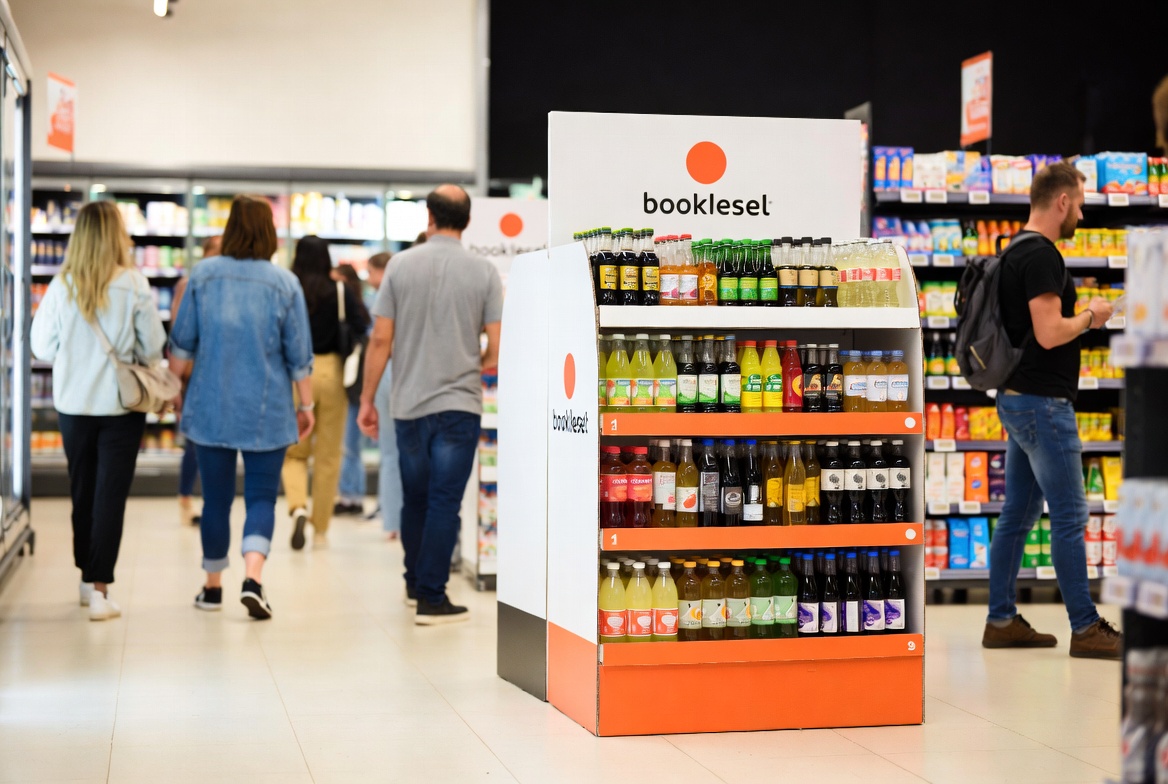
Why Display Stands Matter for Beverage Brands
In crowded beverage aisles, shoppers typically scan shelves in seconds, so well-designed displays are often the only way new or niche brands get noticed. A well-placed endcap or floor stand can shift a product from "invisible on shelf" to "hero product" for a whole category. [imagecoltd]
From a commercial perspective:
- Displays help launch new SKUs and seasonal flavors without needing a full shelf reset.
- Retailers use displays to test pricing, pack sizes, and bundle offers with minimal risk.
- Strong displays generate measurable lifts in sales, often becoming permanent fixtures for top-performing brands. [quadrant2design]
Materials and Construction: Why Corrugated Display Stands Win
Most high-performing beverage displays today use premium corrugated cardboard because it offers an ideal balance of strength, weight, and flexibility. Corrugated board's multi-layer structure allows it to carry heavy loads—such as bottled water or multipacks—while remaining easy to assemble and relocate. [arri-displays]
Key benefits of corrugated display stands:
- Tough yet lightweight: Easy for in-store staff to move when layouts change.
- Highly printable: Supports vivid full-color graphics and brand finishes.
- Cost-effective: Ideal for seasonal or campaign-based displays.
- Eco-forward: Compatible with recycled content and recyclable after use. [imagecoltd]
For brands working with experienced manufacturers, corrugated structures can also integrate reinforcement features (double-wall panels, locking tabs, die-cut supports) to handle heavy beverage loads without compromising appearance. [ranktracker]
Experience: Lessons from 20+ Years in Display Production
Having produced display stands and printed packaging for global brands for over two decades, Shenzhen XingKun Packing Products Co., Ltd. has seen thousands of projects succeed—or underperform—for very specific reasons. Across beverage categories, three recurring success factors stand out: [nomadicdisplay]
1. Early structural planning
Displays that start with clear load requirements, palletization needs, and store constraints almost always perform better than those treated as "just a graphic project." [nomadicdisplay]
2. Retailer collaboration
The most successful brands involve retail buyers early, validating heights, footprints, and safety rules before final design—and reducing costly redesigns. [quadrant2design]
3. Print and finishing consistency
Consistency in color, varnish, and branding across multiple batches builds trust at both retailer and shopper level, especially for national or global rollouts. [linkbuilder]
By approaching displays as engineered products, not just marketing props, brands can reduce damage, returns, and in-store frustrations while maximizing shopper impact. [nomadicdisplay]
Core Qualities of High-Impact Display Design
The original article identified several important qualities of effective beverage displays; building on that foundation, we can sharpen and prioritize them for today's retail environment. [imagecoltd]
1. Easy to Relocate
Retail staff frequently reflow store layouts, especially around seasonal peaks, promotions, and traffic hot spots. If a display is heavy, fragile, or difficult to move, it will often be left in suboptimal locations. [ranktracker]
A display should therefore be:
- Light enough for one or two staff members to reposition.
- Stable enough to move without products collapsing.
- Compact enough to fit through aisles, doors, and backroom spaces. [quadrant2design]
Design choices like integrated hand-holds, modular shelves, and simple knock-down mechanisms all improve relocation ease. [arri-displays]
2. Visually Appealing and On-Brand
The primary purpose of a display is to attract the eye and guide it to the product. In beverage categories, color contrast, clean typography, and smart use of imagery (e.g., product close-ups, pouring shots, lifestyle scenes) all influence whether shoppers stop or walk by. [mavrk]
Strong visual design typically includes:
- A clear focal point, such as a hero image or key bottle.
- Readable headlines with concise claims or benefits.
- Consistent brand codes (logos, colors, patterns) used across SKUs and campaigns. [imagecoltd]
3. Customizable and Brand-Specific
Off-the-shelf display templates can be useful for speed, but custom-designed stands better express your brand's personality and functional needs. For example, energy drink brands may prioritize bold, high-contrast graphics and vertical forms, while premium teas might use softer tones and curved silhouettes. [arri-displays]
Custom options can include:
- Unique die-cut shapes that echo brand icons.
- Tailored shelf heights to match pack sizes.
- Interchangeable header cards for different campaigns. [ranktracker]
4. Right-Sized for Products and Stores
A display that is too small will look under-stocked; too large, and it appears empty or blocks traffic. Both problems hurt shopper confidence and reduce sales. [ranktracker]
To get sizing right, consider:
- Product dimensions and weight (especially for glass bottles).
- Desired days of supply before restocking.
- Store constraints (ceiling height, aisle width, fire exits). [quadrant2design]
Right-sizing also supports planogram compliance, helping retailers integrate displays into broader category flows without friction. [imagecoltd]
5. Centered Around a Clear Brand Story
Shoppers should instantly recognize your brand and understand what makes it different when they look at your display. This means: [mavrk]
- A clear brand name and logo at the top and front.
- A concise value proposition ("Zero sugar energy," "Cold brew for busy mornings," "Electrolyte hydration").
- Visual cues that match your advertising and packaging. [linkbuilder]
Displays that lack a clear brand story often become generic "commodity stands," easily ignored in competitive aisles. [imagecoltd]
6. Clean, Well-Stocked, and Easy to Maintain
Even the best-designed display fails if it looks messy or empty. Retailers and shoppers expect stands to be:
- Free of dust, scuffs, and damage
- Regularly replenished so they never appear abandoned
- Easy to restock, with shelves and compartments accessible for staff [ranktracker]
Simple design details—such as front lips to prevent roll-off, clear labeling, and intuitive shelf layouts—make it easier for staff to keep displays looking fresh. [imagecoltd]
Common Types of Beverage Display Stands
Different beverage categories and store formats call for different stand types. Choosing the right structure is as important as choosing the right graphic design. [ranktracker]
Overview of Key Display Types
| Display Type | Primary Location | Best Use Case | Key Advantage |
| Floor Display | Open floor areas | New launches, hero SKUs | High visibility at eye level (ranktracker) |
| Endcap | Aisle ends | Promotions, seasonal offers | Perceived value and convenience (ranktracker) |
| Case Stacker | Near aisles or entries | Bulk beverages, multipacks | Maximizes stock in small footprint (ranktracker) |
| Pallet Display | Warehouse or hypermarkets | Large volume promotions | Rapid deployment, high impact (ranktracker) |
| Dump Bin | Wide aisles or front zones | Impulse buys, clearance | Urgency and "treasure hunt" feel (ranktracker) |
| Counter Display | Checkouts and counters | Single-serve drinks, shots | Last-second impulse purchase (ranktracker) |
By aligning display type with shopper missions—stock-up trips, quick top-ups, or impulse treats—brands can dramatically increase conversion. [imagecoltd]
Shopper Psychology and Visual Hierarchy
In modern retail, visual hierarchy—the order in which a shopper notices elements—can make or break a display's effectiveness. For beverage displays, we typically design for this sequence: [mavrk]
1. Color and shape: Does the display pop against its surroundings?
2. Headline or benefit: What problem does this drink solve?
3. Product visibility: Are bottles or cans clearly seen and recognizable?
4. Price and offer: Is there a clear call-to-action (e.g., "2 for 1," "New flavor")?
Practical tips to build better visual hierarchy:
- Use high contrast between background and text for legibility at distance.
- Keep headline copy under 7–10 words for quick comprehension.
- Ensure front-facing products are not blocked by messaging panels.
- Reserve complex storytelling (e.g., sourcing, sustainability) for side panels where engaged shoppers will linger. [mavrk]
Trends in Beverage Display Stands for 2026
Retail display design has evolved rapidly, driven by sustainability, omnichannel shopping, and in-store digital experiences. In 2026, three trends stand out for beverage brands: [arri-displays]
1. Sustainable and modular designs
Retailers increasingly expect displays to use recycled or responsibly sourced materials and to be recyclable at end of life. Modular structures allow brands to refresh graphic panels, headers, or trays without replacing the entire stand, cutting both cost and waste. [arri-displays]
2. Interactive and sensory elements
While not every display needs a screen, more brands are integrating small digital elements, motion graphics, or light accents, particularly for premium or functional beverages. Where budgets are limited, simple sensory cues—such as textured finishes or large, tactile buttons—can still draw attention. [imagecoltd]
3. Warm minimalism and simplified layouts
In contrast to cluttered point-of-sale environments, many retailers now prefer cleaner displays with fewer messages but stronger focus. Minimal color palettes, tidy product blocks, and open negative space often feel more premium and trustworthy to shoppers. [imagecoltd]
By aligning your next-generation display program with these trends, you position your brand as both current and responsible, which supports Google's E-E-A-T expectations for authoritative content. [linkbuilder]
Practical Design and Execution Checklist
To bridge strategy and execution, it helps to use a simple yet comprehensive checklist for each display project. Below is a practical framework many brands follow with their manufacturing partners. [arri-displays]
Pre-Design Planning
Before your designer opens any software, answer:
- Who is the primary shopper? (e.g., parents, students, athletes)
- What is the main purchase mission? (stock-up, treat, trial)
- What store formats will this display live in? (supermarkets, convenience stores, club stores)
- What are the load requirements? (total weight, number of packs, days of supply) [quadrant2design]
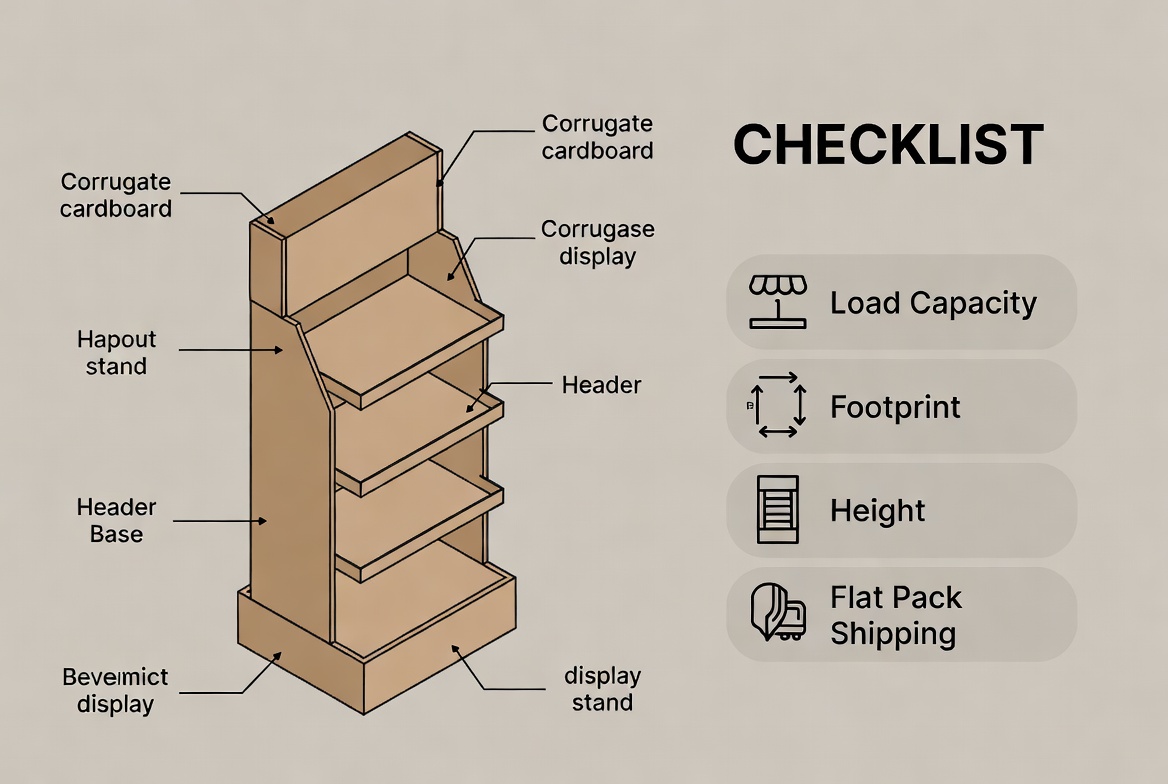
Structural Design Checklist
- Confirm footprint and height with retailers.
- Validate weight-bearing capacity with your display manufacturer.
- Design for flat-pack shipping, minimizing transport volume.
- Add locking mechanisms or safety features for stability. [nomadicdisplay]
Graphic Design Checklist
- Place the primary keyword or benefit in the top header (e.g., "Electrolyte Hydration," "Sugar-Free Energy").
- Use brand colors and typography consistently with packaging.
- Ensure legible typography from at least 2–3 meters away.
- Highlight single, clear call-to-action ("Try Now," "New Taste," "Limited Edition"). [mavrk]
In-Store Execution Checklist
- Provide assembly instructions with clear diagrams or QR-linked videos.
- Label cartons and components for fast identification.
- Train field teams or merchandisers on stock rotation and refilling.
- Collect photo evidence from launch week to monitor compliance and performance. [mavrk]
Case Insight: From Generic Stand to High-Performing Campaign
In practice, many beverage brands start with generic, low-cost displays and later upgrade to custom-engineered solutions after seeing the performance difference. For example, a regional beverage brand moving from basic shelf trays to a fully branded floor stand often reports: [nomadicdisplay]
- Higher product visibility from multiple aisles.
- Improved price communication through integrated price holders.
- Better stock control with dedicated bays for each flavor.
Manufacturers like Shenzhen XingKun Packing Products Co., Ltd. typically support this shift by prototyping new structures, testing them under real load conditions, and optimizing print finishes to match brand expectations. This iterative approach reduces risk while steadily improving display ROI across campaigns. [nomadicdisplay]
How to Work Effectively with a Display Manufacturer
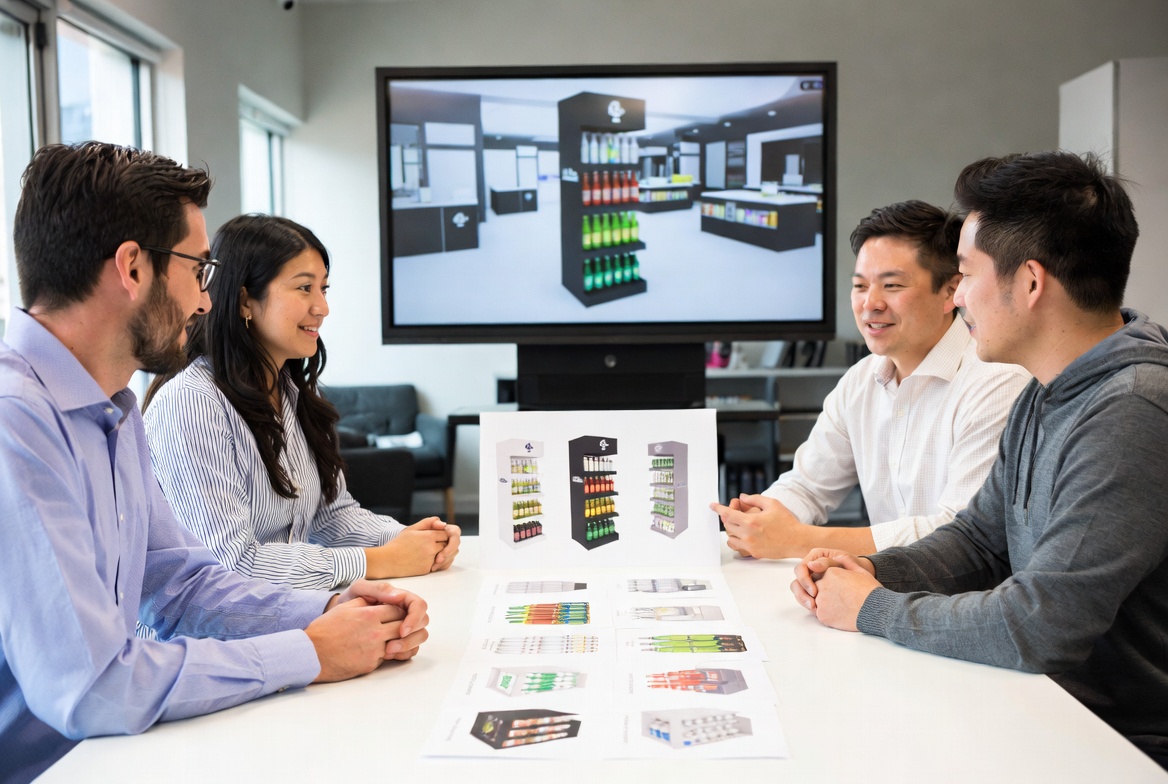
Choosing the right production partner is as important as the design itself, especially for multi-country rollouts. A professional manufacturer ensures that what you approve on-screen is what appears in-store. [nomadicdisplay]
Look for a partner who can:
- Provide end-to-end services from structural design and sampling to mass production and packing. [nomadicdisplay]
- Support multi-language artwork and compliance for different regions.
- Offer color management systems to maintain consistency across runs.
- Advise on logistics, packing, and palletization to minimize damage in transit. [quadrant2design]
With over 20 years of experience and customers in more than 30 countries, manufacturers like Shenzhen XingKun Packing Products Co., Ltd. are well-positioned to guide brands through these complexities. [nomadicdisplay]
Call to Action: Turn Your Next Beverage Display into a Profit Center
If your current beverage displays are generic, hard to assemble, or failing to drive incremental sales, now is the time to rethink your strategy. By combining expert structural design, focused branding, shopper psychology, and the latest retail trends, you can turn every display stand into a measurable driver of growth. [ranktracker]
For beverage brands and distributors looking to upgrade their display programs with custom, high-quality corrugated stands, partnering with an experienced manufacturer can significantly reduce time-to-market and risk while improving in-store performance. [arri-displays]
Frequently Asked Questions (FAQ)
1. Why are corrugated cardboard display stands so common for beverages?
Corrugated display stands are strong enough to support heavy beverage loads, but light enough for store staff to assemble and relocate easily, making them ideal for frequent promotions and seasonal campaigns. [arri-displays]
2. How do I choose between a floor display and an endcap display for my drinks?
Use floor displays when you want flexibility in placement and storytelling, but choose endcap displays when your retail partners can secure high-traffic aisle ends where shoppers naturally expect promotions and value offers. [ranktracker]
3. What is the most important design element for a high-conversion beverage display?
Clear, on-brand messaging with a strong visual focal point is often the biggest driver of conversion, because it helps shoppers understand the product's benefit within seconds in a crowded store environment. [mavrk]
4. How can I make my beverage display more sustainable without losing impact?
Work with your manufacturer to use recycled or certified materials, design for modularity (swap graphics without replacing the whole structure), and communicate these sustainability efforts on the display in a concise, credible way. [arri-displays]
5. What information should I share with a display manufacturer before starting a project?
You should provide product dimensions and weights, preferred store formats, intended display type, campaign duration, branding guidelines, and any retailer-specific requirements around size, safety, or recyclability. [quadrant2design]
References
1. Creative Displays Now – “Chapter 2: What Makes a Good Display?” https://www.creativedisplaysnow.com/guides/design-elements-to-consider-for-beverage-displays/what-makes-a-good-display/
2. Shenzhen XingKun Packing Products Co., Ltd – Company Overview. http://xingkun.yingfanzhileng.com
3. ARRI Displays – “2026 Retail Display Stand Trends: How Smart Display Stand Solutions Drive In-Store Sales Growth”. https://www.arri-displays.com/news/2026-retail-display-stand-trends-how-smart-display-stand-solutions-drive-in-store-sales-growth
4. Imageco – “Retail Display Trends 2026: What’s Working in Stores Right Now”. https://imagecoltd.com/news/retail-display-trends-2026-whats-working-in-stores-right-now/
5. Linkbuilder – “Google E-E-A-T: Guide to Creating Expert Content in 2026”. https://linkbuilder.com/blog/google-eeat-guide
6. Ranktracker – “Food & Beverage SEO: Boosting Your Business’s Online Visibility”. https://www.ranktracker.com/blog/food-beverage-seo/
7. Quadrant2Design – “The Ultimate Guide to Exhibition Stand Design”. https://www.quadrant2design.com/the-ultimate-guide-to-exhibition-stand-design/


