Content Menu
● Why Custom Playing Cards Matter
● What a Custom Deck Includes
● Choosing The Right Specification
>> Key specification factors
● Design Principles That Improve Sales
● Manufacturing Process For Custom Decks
>> Typical production flow
● How To Evaluate A Supplier
● Industry Use Cases
>> Common applications
● What Makes A Deck Feel Premium
● Working With A China Factory
● How To Plan Your Order
● Conclusion
● FAQ
>> 1. What is a custom deck of playing cards?
>> 2. What file format is best for card artwork?
>> 3. Can I customize both the cards and the box?
>> 4. What is the difference between OEM and ODM?
>> 5. How do I choose the right finish for my deck?
>> 6. Why do some decks feel more premium than others?
● References
A custom deck of playing cards is more than a simple printed product. It is a compact brand asset that can support retail sales, promotional campaigns, tabletop games, education, and premium gifting, especially when it is designed and manufactured with the right materials, print specs, and quality controls.
Why Custom Playing Cards Matter
A custom deck works well because it combines utility, collectability, and branding in one format. Compared with many other printed products, it stays in the customer's hands longer, gets handled repeatedly, and can carry a strong visual identity on every card face, the tuck box, and even inserts or outer packaging.
For brands, this creates a practical marketing tool. For game publishers, it becomes part of the user experience. For wholesalers and distributors, it is a flexible SKU with many price and quality tiers.
What a Custom Deck Includes
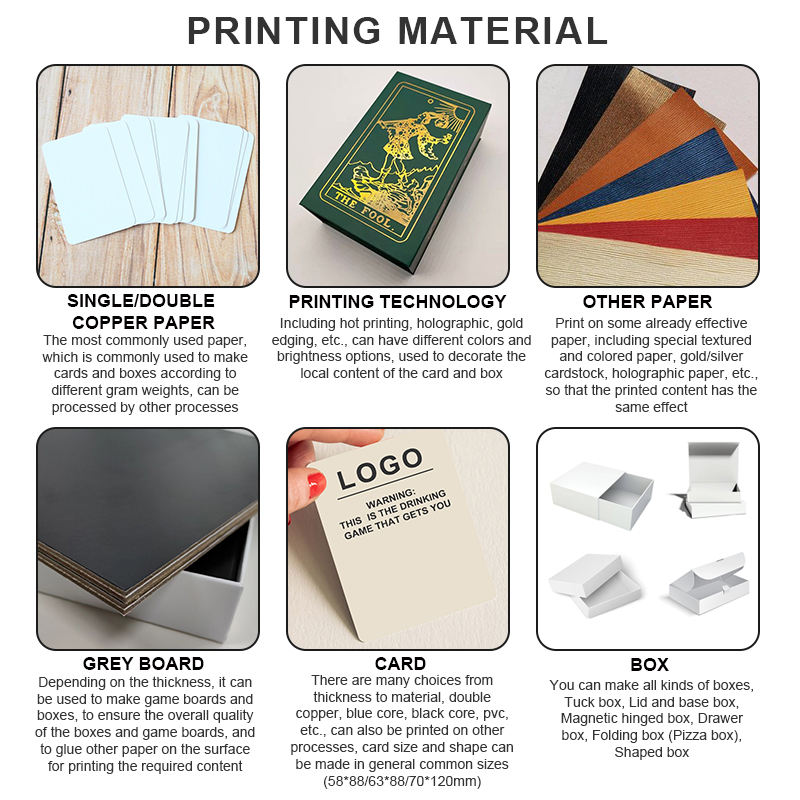
A professional deck usually contains more than just 52 cards. Depending on the project, it may include jokers, instruction cards, reference cards, custom packaging, and special finishing effects.
Common components include:
- Card faces, such as number cards, court cards, custom artwork, or branded content.
- Card backs, which often carry the main visual identity.
- Tuck box or rigid box, used for retail presentation and protection.
- Optional inserts, such as game rules, QR codes, or promotion cards.
- Special finishes, such as embossing, foil, spot UV, or matte coating.
Choosing The Right Specification
The most successful decks are built from the end use backward. A casino-style deck, a promotional deck, and a game deck may all use similar formats, but they require different paper stock, coating, opacity, and packaging strength.
Key specification factors
| Specification | Why it matters | Typical decision point |
| Card stock | Affects feel, durability, and shuffle performance | Premium game play vs promotional use |
| Core material | Controls opacity and print-through resistance | Standard decks vs high-end decks |
| Finish | Affects texture and handling | Glossy, matte, linen, or air-cushion feel |
| Card size | Impacts usability and market positioning | Poker size, bridge size, tarot size, custom size |
| Packaging | Affects shelf appeal and shipping safety | Tuck box, rigid box, shrink wrap, sleeve |
When you plan a product line, it is better to define the user first. A collector, a retailer buyer, and a board game publisher will usually expect very different product details.
Design Principles That Improve Sales
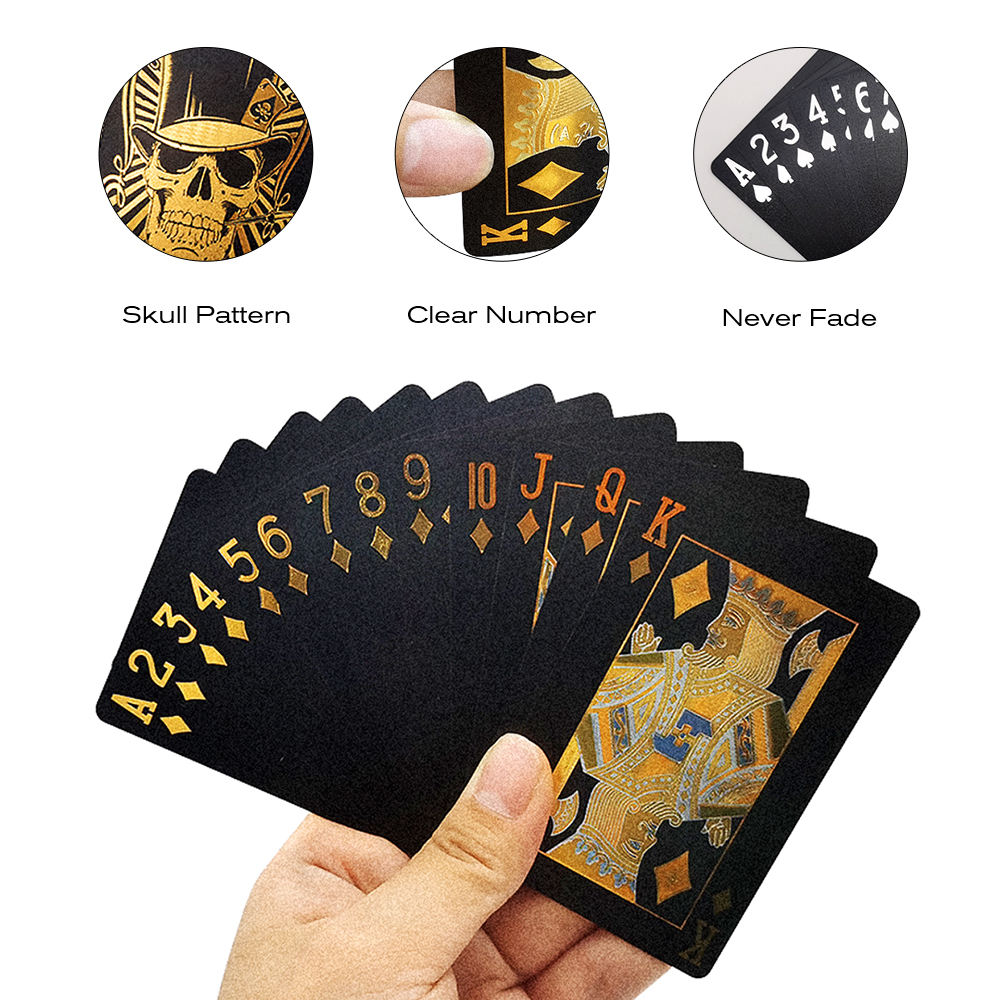
Good card design is not only about art. It is about readability, rhythm, and brand recognition. The best custom decks balance visual originality with practical usability, so the cards look strong in photos and still feel comfortable in the hand.
A few design rules matter most:
- Keep card faces readable. Numbers, suits, icons, and game information should be easy to identify at a glance.
- Use the back design as a brand signature. The back is the most visible part when the deck is stacked, fanned, or boxed.
- Plan for print limitations. Very fine lines, tiny text, and low-contrast color pairs can disappear in production.
- Match the design to the audience. A corporate gift deck should feel different from a fantasy game deck or a children's learning deck.
A strong deck usually has one primary idea and repeats it consistently across the entire product system.
Manufacturing Process For Custom Decks
A dependable production workflow helps reduce defects and delays. In general, custom card manufacturing moves through design approval, prepress checks, printing, coating, cutting, collation, packaging, and final inspection.
Typical production flow
1. Confirm product goals and quantity.
2. Finalize artwork and dielines.
3. Review proofs and color expectations.
4. Print and apply surface finishing.
5. Cut, round-corner, and collate the cards.
6. Assemble packaging and inserts.
7. Check samples and mass-production quality.
8. Prepare shipping and export documentation.
This sequence matters because errors discovered late are expensive. A small issue in bleed, safe zone, or coating selection can affect the final look across thousands of decks.
How To Evaluate A Supplier
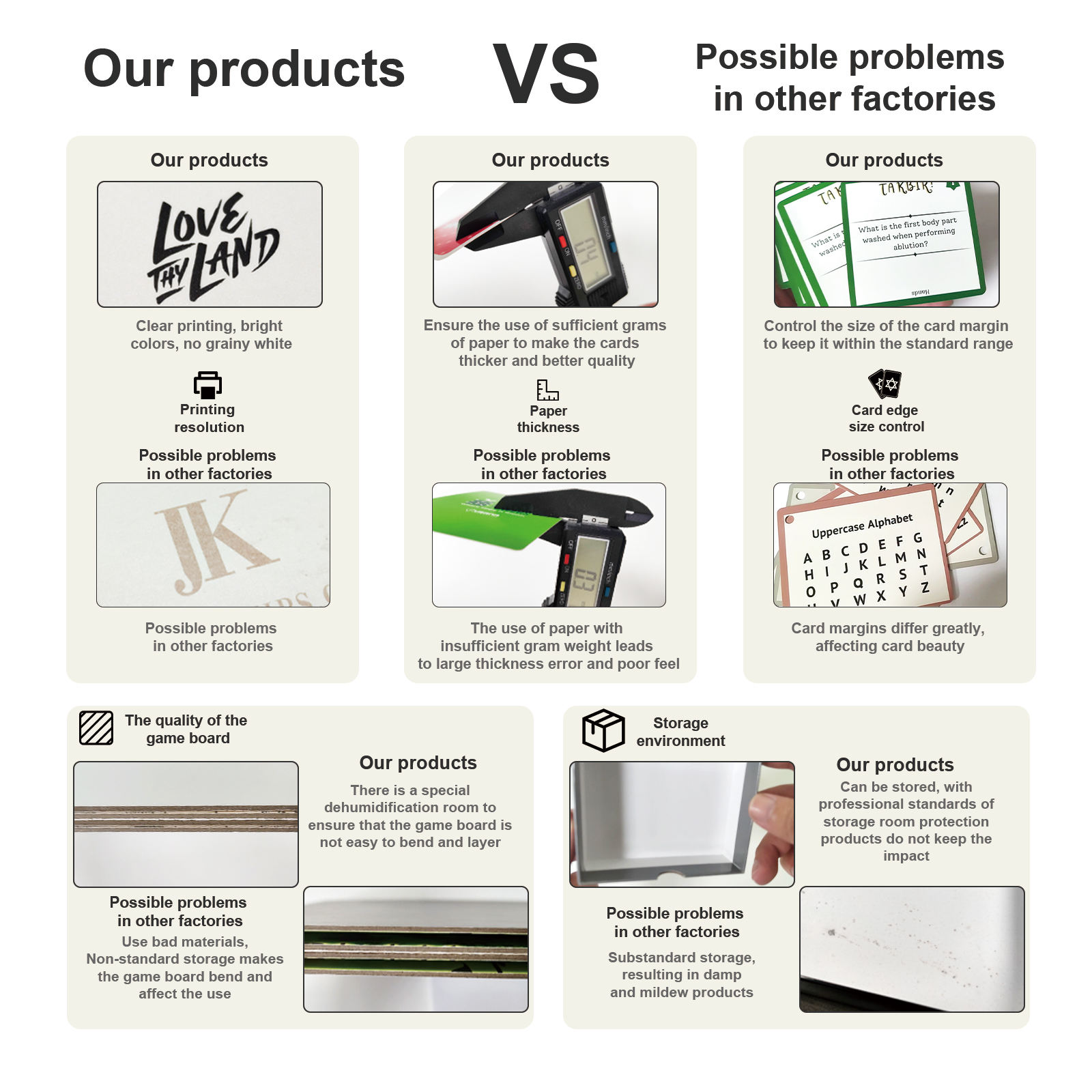
Selecting the right factory is often the difference between a good product and a costly remake. A capable supplier should not only print the cards, but also guide structure, finishing, packaging, and export readiness.
Look for these strengths:
- OEM/ODM support, especially if you need custom branding or game-specific structures.
- Sample capability, so you can test feel, colors, and packaging before mass production.
- Stable quality control, including inspection at multiple stages.
- Export experience, which helps with shipping, labeling, and documentation.
- Flexible order handling, from short runs to larger wholesale volumes.
For brands that need a factory-direct solution, Shenzhen XingKun Packing Products Co., Ltd. offers custom printing and packaging services across playing cards, boxes, books, stickers, puzzles, and other printed products, which can be useful when you want a single manufacturing partner for a broader product line. [xkdisplay]
Industry Use Cases
Custom decks are used across several commercial categories. Each category has a different buying logic, which should shape both the artwork and the specification.
Common applications
| Use case | Buyer priority | Best product approach |
| Game publishing | Function and durability | High-opacity stock, clear iconography, strong packaging |
| Retail gift product | Shelf appeal and perceived value | Premium box, elegant finishes, coherent branding |
| Corporate promotion | Memorability and brand visibility | Logo-led design, practical pricing, fast turnaround |
| Educational cards | Clarity and repeated use | Durable stock, easy-to-read layouts, rounded corners |
| Collector edition | Exclusivity and presentation | Special finishes, numbered packaging, premium inserts |
A well-positioned deck can move between these markets, but only if the manufacturing plan matches the buyer's intent.
What Makes A Deck Feel Premium
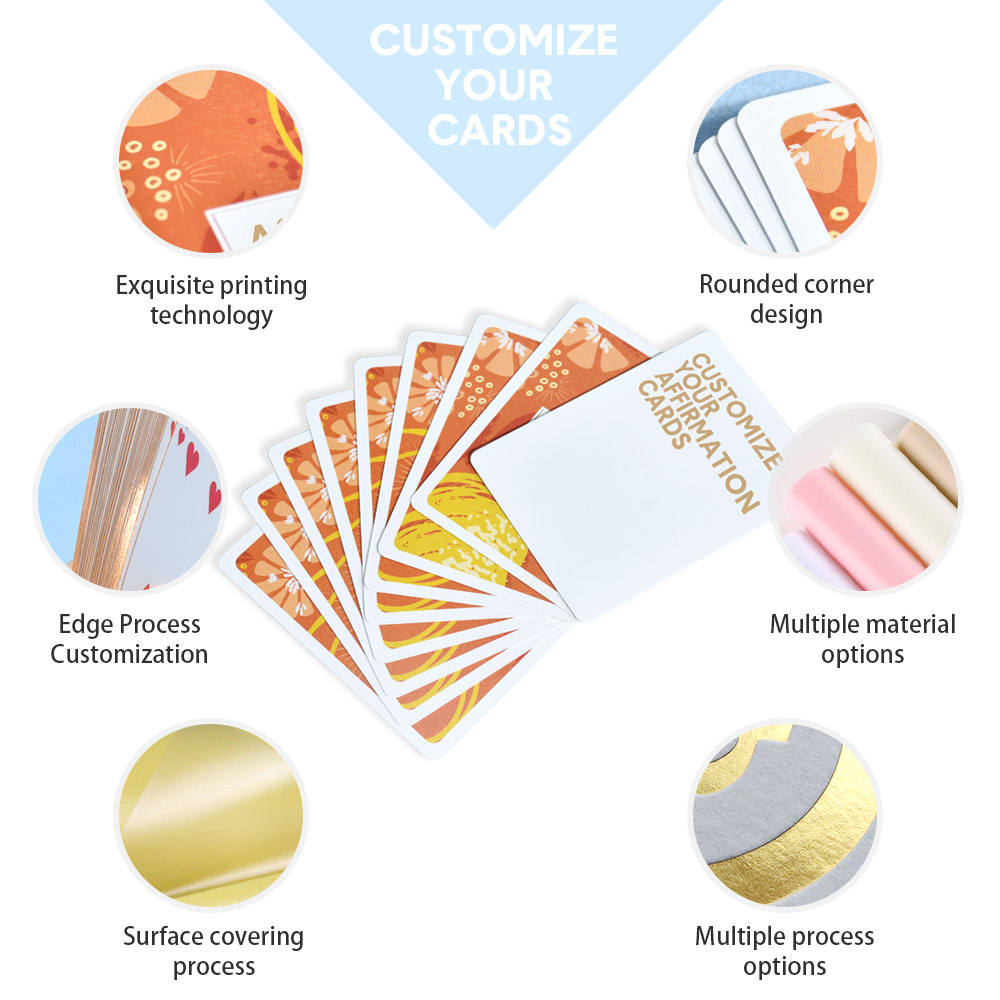
The perceived value of a custom deck often comes from details that customers may not describe in technical terms, but they definitely notice. Card thickness, shuffle feel, print consistency, and box construction all shape the first impression.
Premium cues usually include:
- Smooth but controlled handling, not flimsy or overly stiff cards.
- Consistent color reproduction, especially on repeated elements.
- Sharp cut edges and uniform corners.
- Strong packaging alignment, so the deck sits neatly in the box.
- Finish that fits the brand story, such as matte luxury or glossy retail energy.
Small production details often influence repeat orders more than the art concept itself.
Working With A China Factory
For overseas buyers, a China-based factory can be attractive because it may combine printing, packaging, and export coordination in one place. This can simplify communication, reduce supplier fragmentation, and improve cost control across a product line.
A strong factory partner should support:
- Artwork review and technical feedback.
- Material and finish recommendations.
- Sample production before bulk order.
- Packaging customization.
- International shipping support.
Shenzhen XingKun's own product positioning emphasizes packaging boxes, playing cards, books, puzzles, stickers, and OEM services, which makes it suitable for buyers who need more than one printed category from a single source. [xkdisplay]
How To Plan Your Order
Before requesting a quotation, prepare a concise brief. The better the brief, the faster the supplier can propose the right structure and pricing.
Include these items:
1. Card size and deck count.
2. Target audience and use case.
3. Artwork status, including whether files are final.
4. Preferred stock, finish, and box type.
5. Order quantity and target delivery date.
6. Shipping destination and any compliance needs.
This simple preparation step reduces back-and-forth and makes supplier comparisons much easier.
Conclusion
A custom deck of playing cards is a high-impact printed product because it blends branding, functionality, and repeat use in one format. If you want the best result, focus on the full product system: card stock, finish, packaging, print accuracy, and the supplier's ability to support OEM/ODM production.
For brands, game publishers, and wholesalers, the smartest approach is to define the end use first and then choose the right manufacturing path. A clear brief, a reliable factory, and a strong visual concept will usually produce a better deck, a smoother production process, and a stronger commercial result.
FAQ
1. What is a custom deck of playing cards?
It is a fully personalized card deck made with custom artwork, branding, packaging, and optional inserts for retail, games, promotions, or gifts.
2. What file format is best for card artwork?
Print-ready vector or high-resolution files are usually best because they preserve sharp text, clean lines, and color accuracy.
3. Can I customize both the cards and the box?
Yes. Most professional suppliers can customize the card faces, card backs, tuck box, rigid box, and inserts as part of one project.
4. What is the difference between OEM and ODM?
OEM means the factory produces according to your design. ODM means the factory may help develop or adapt a product concept for you.
5. How do I choose the right finish for my deck?
Choose the finish based on how the cards will be used. Matte often feels elegant, glossy can look vivid, and linen-style textures may improve handling.
6. Why do some decks feel more premium than others?
Premium decks usually have better stock, more consistent printing, cleaner cutting, stronger packaging, and a finish that suits the intended market.
References
- XingKun product and company introduction: [https://www.xkdisplay.com/playing-cards-manufacturer.html] [xkdisplay]
- XingKun company overview and capabilities: [https://www.xkdisplay.com/zh-CN/] [xkdisplay]
- Mazaifei playing cards manufacturer page for market positioning reference: [https://www.mazaifeiplaycard.com] [mazaifeiplaycard]
- WJPC playing card manufacturer page for OEM/ODM and production scope reference: [https://wjplayingcard.com] [wjplayingcard]
- WellCards manufacturer page for premium custom deck positioning reference: [https://wellcards1990.com] [wellcards1990]
- Made-in-China supplier listing for industry category reference: [https://www.made-in-china.com/manufacturers/playing-cards.html] [made-in-china]


