Content Menu
● Why budget-conscious brands are embracing custom packaging
● Understanding the real role of custom packaging
● Key term spotlight: budget-friendly custom packaging
● Start small: focus on core elements
● Choosing materials that work hard for your budget
● Smart printing choices for small and mid-size runs
● How to control costs without downgrading perception
● Practical implementation steps for custom packaging on a budget
● Customer feedback: what buyers actually notice
● Long-term benefits for growing brands
● Practical examples of cost-effective custom packaging
● How experienced manufacturers support brands on a budget
● FAQs
● References
Custom packaging can be surprisingly achievable even for small and growing brands when you focus on smart choices, leverage flexible print methods, and partner with experienced manufacturers that understand cost control and brand consistency. [lekac]
Why budget-conscious brands are embracing custom packaging
For more than two decades, I've watched small and mid-sized brands treat packaging either as a cost center or a design afterthought—and miss out on repeat sales and word-of-mouth. When you approach packaging strategically, even modest investments in boxes, stickers, and labels can deliver visible returns in perceived quality, unboxing satisfaction, and brand recognition. [brillpack]
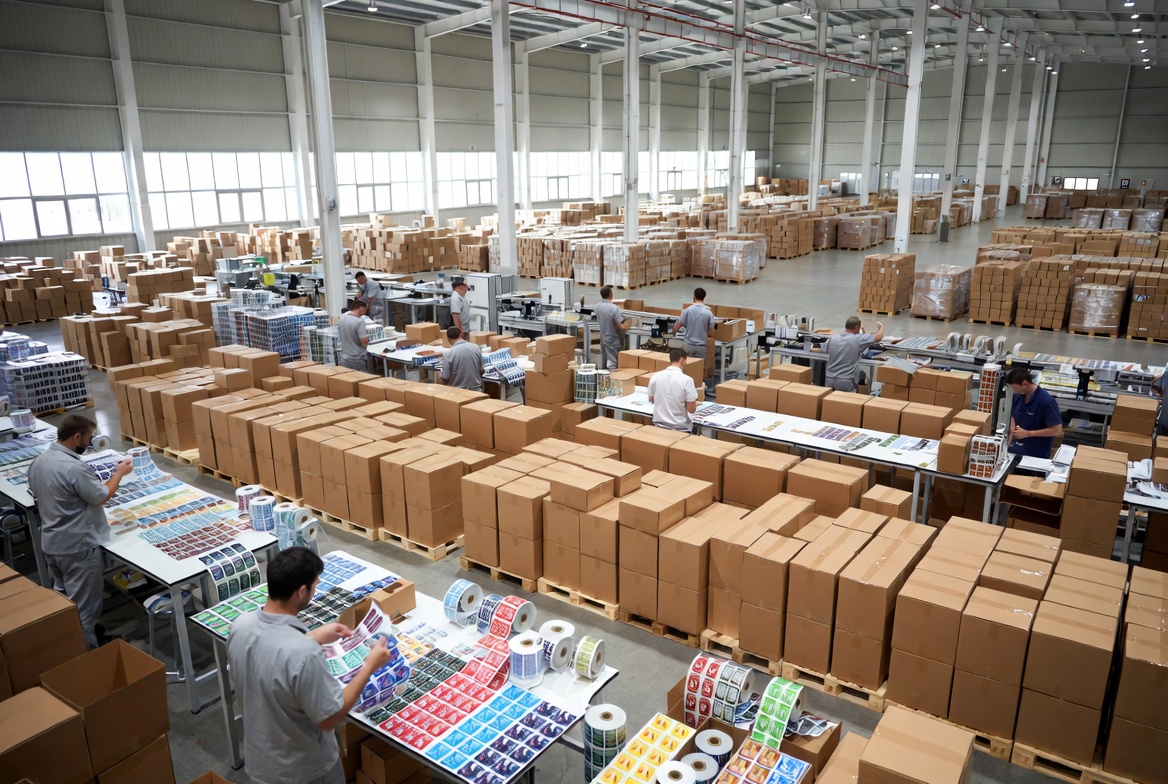
Today, custom packaging is no longer reserved for big retail names. Digital printing, lower minimum order quantities, and modular design systems make it realistic for lean teams and new product lines to launch customized packaging without overextending budgets. As a long-term manufacturing partner serving brands in more than 30 countries, Shenzhen XingKun Packing Products Co., Ltd. has seen how the right mix of packaging boxes and stickers & labels helps businesses test, iterate, and scale their presentation in a controlled, cost-effective way. [holacustomboxes]
Understanding the real role of custom packaging
Custom packaging is not only a protective shell; it is part of the product story the customer remembers when they decide whether to buy again or recommend your brand. A simple corrugated box, when combined with well-designed labels and a coherent color system, can instantly upgrade how your product feels in hand and on social media unboxing content. [youtube]
When brands underestimate packaging, several issues appear:
- Generic cartons that fail to differentiate on crowded shelves. [lekac]
- Inconsistent labels that confuse customers about variants and specifications. [holacustomboxes]
- Overpacked boxes that waste material and inflate shipping costs. [gwp.co]
The practical goal is to balance visual impact, information clarity, and cost per unit, then align these elements with your positioning—premium, eco-conscious, minimalist, or value-focused. [brillpack]
Key term spotlight: budget-friendly custom packaging
To keep implementation realistic, think in terms of budget-friendly custom packaging: tailored boxes and label systems that stay within a defined cost range per unit while still delivering differentiation and a memorable experience. This concept focuses less on decorating every surface and more on picking a few high-impact touchpoints—such as a front-facing logo box panel and a hero product label—and optimizing them. [lekac]
In practice, budget-friendly custom packaging usually combines:
- Standard-size boxes with targeted print zones.
- A flexible sticker and label kit for different SKUs.
- One or two inside-the-box "surprise" elements, like a branded thank-you label or seal. [brillpack]
This modular approach is particularly effective for export brands that must keep freight costs predictable while adapting packaging to local languages or regulatory requirements in different regions. [brillpack]
Start small: focus on core elements
For businesses new to customization, starting small reduces risk and speeds up learning. Rather than redesigning every component at once, prioritize a few key pieces that define the experience: [packageit]
- The outer box that customers first see.
- The primary product label that carries core information.
- A closure or seal (tape, sticker, or label) that visually signals your brand. [packageit]
This phased approach lets you:
1. Establish a base visual system (logo, primary color, typeface).
2. Collect feedback from early customers.
3. Upgrade and extend the system after confirming what works. [lekac]
Manufacturers with deep experience in boxes and labels can help you choose which panel or label area to prioritize for printing so you get the most impact from a limited budget. [holacustomboxes]
Choosing materials that work hard for your budget
Material selection has one of the strongest effects on both appearance and cost per unit. Lightweight yet durable materials—notably corrugated cardboard in standard flute grades and kraft-based boards—offer an effective balance of protection, printability, and freight efficiency. [holacustomboxes]
Common tactics for controlling cost while maintaining a quality feel include:
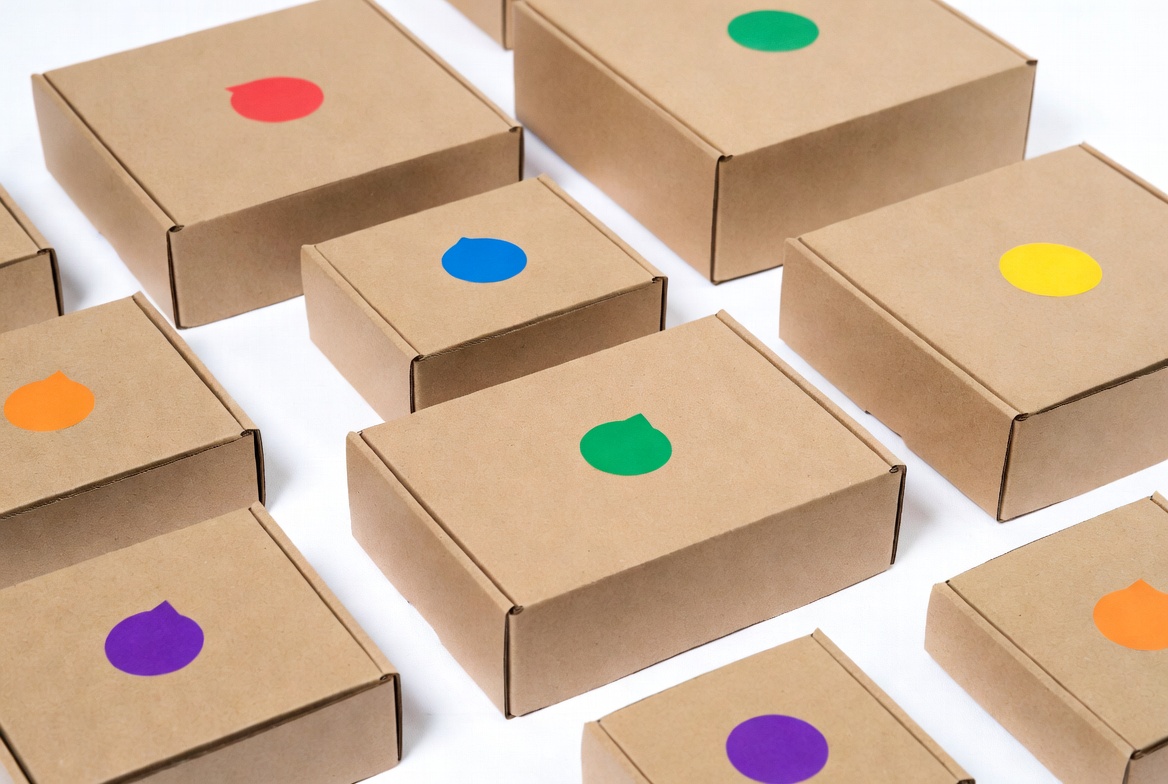
- Using plain kraft boxes with high-contrast stickers and labels instead of full-surface printing on every panel. [lekac]
- Selecting recycled cardboard or biodegradable paper to align with environmentally conscious positioning while keeping unit costs manageable. [holacustomboxes]
- Limiting spot colors and complex varnishes to one or two hero elements rather than the entire box. [holacustomboxes]
For brands shipping globally, material consistency also matters for stacking strength, pallet optimization, and compliance with local recycling expectations. [brillpack]
Smart printing choices for small and mid-size runs
Print method decisions drive much of the cost structure for custom packaging. For smaller batches or frequent design changes, digital printing provides a practical way to test new concepts and limited editions without paying for high setup costs. [brillpack]
For established designs and higher annual volumes, traditional methods such as offset printing or flexographic printing can bring down unit costs and deliver extremely consistent color over long runs. A typical sequence for growing brands looks like this: [lekac]
1. Use digital printing for initial packaging concepts and pilot launches.
2. Refine graphics based on feedback and performance.
3. Switch mature designs to offset or flexo when demand stabilizes and volumes justify the move. [brillpack]
Working with a packaging partner that offers multiple printing technologies allows you to move seamlessly from testing to scaling while preserving your visual identity. [holacustomboxes]
How to control costs without downgrading perception
The most effective cost control strategies focus on structure and information design rather than simply removing every decorative element. In cost-effective projects, three principles appear consistently: [customlogothing]
- Fit is critical: right-sized boxes avoid both wasted material and inflated dimensional-weight charges for shipping. [gwp.co]
- Information hierarchy matters: clear labels with a structured layout reduce the need for excessive printing or multiple overlapping stickers. [customlogothing]
- One or two standout details: a single bold seal, foil logo, or carefully designed product label often creates more perceived value than multiple small visual effects spread everywhere. [gwp.co]
As an example, many growing brands pair unprinted corrugated boxes with a striking front-facing product label and a contrasting closure sticker or tape, creating a composed look without the cost of full-panel multicolor printing. [lekac]
Practical implementation steps for custom packaging on a budget
From a practitioner's standpoint, implementing customized boxes and labels in a cost-conscious way works best when you follow a step-by-step process. [customlogothing]
1. Define product and logistics requirements
List product dimensions, fragility, weight, typical order quantities, and transport modes. This reveals realistic packaging sizes and strength requirements before any design work starts. [gwp.co]
2. Set target cost per unit
Determine acceptable packaging cost relative to product price and margin. For many small businesses, typical packaging costs fall in the range of a fraction of the product price, with tighter limits for lower-price items. [brillpack]
3. Choose a base box structure
Select one to three standardized box sizes that cover most SKUs. Using a shared structure across lines simplifies inventory and reduces tooling and storage complexity. [gwp.co]
4. Create a modular label system
Design main labels, variant stickers, and optional promotional labels as a kit that can adapt to language versions, seasonal campaigns, and regulatory elements without redesigning the entire box. [customlogothing]
5. Prototype with digital printing
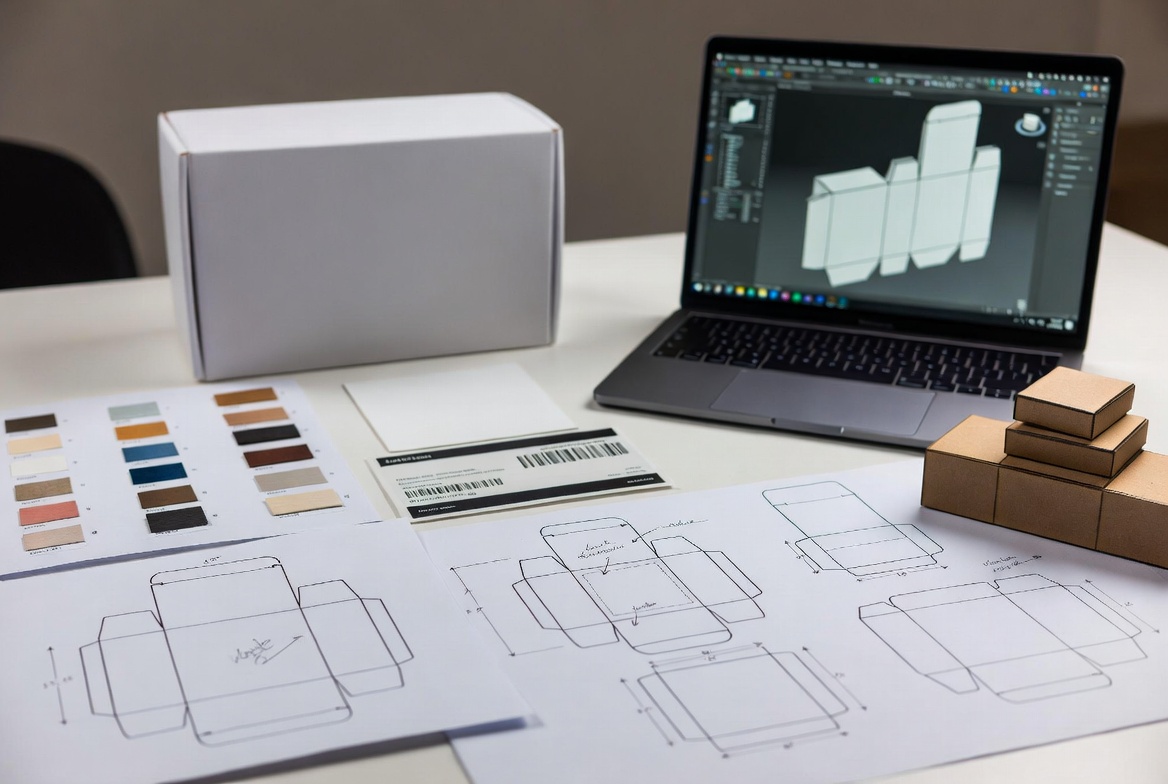
Produce short-run samples to verify color, readability, and fit. Test real products in actual handling and shipping scenarios before committing to bulk production. [holacustomboxes]
6. Refine and scale with proven data
Once you confirm which combinations of boxes and labels perform best, move higher-volume designs to the most cost-efficient printing method and lock in material specifications for consistency. [customlogothing]
Manufacturing partners that handle both boxes and labels streamline this workflow, since structural, graphic, and labeling decisions can be coordinated in one place. [holacustomboxes]
Customer feedback: what buyers actually notice
Real-world customer comments often emphasize the same themes: clarity, coherence, and care. Buyers appreciate when packaging makes it easy to identify the product, understand key specs, and recycle or dispose of materials without confusion. [youtube]
Common positive feedback trends include:
- Simple yet distinctive boxes that arrive intact and are easy to open. [lekac]
- Labels that clearly show model, size, and usage information at a glance. [holacustomboxes]
- Stickers that make returns, warranty handling, or re-orders straightforward. [holacustomboxes]
Negative feedback usually reflects either poor protection (damaged goods), unclear labeling, or excessive packaging that feels wasteful and outdated. When designing budget-conscious packaging, prioritizing structural integrity and straightforward labels often yields better customer satisfaction than adding more decorative elements. [gwp.co]
Long-term benefits for growing brands
Once a brand invests in a coherent box and label system, several long-term advantages appear. Reorders become smoother, warehouse staff identify products faster, and marketing teams can reuse packaging visuals across catalogs, online listings, and campaigns. [customlogothing]
Over time, the alignment between physical packaging and digital presence makes product pages more trustworthy and reduces friction for new customers. A well-established packaging system also simplifies expansion into new markets, since localized labels can be added while core structures and visual signatures remain consistent. [customlogothing]
Having a single supplier that understands both export logistics and print possibilities can help brands maintain this consistency as they add new SKUs, update regulations, or shift their positioning. [brillpack]
Practical examples of cost-effective custom packaging
Across categories, several recurring patterns show how brands implement distinctive packaging on tight budgets. [lekac]
- Apparel brands use plain mailer boxes with a strong front logo label and an inside lid sticker that carries a short brand message.
- Food and beverage producers rely on standard cartons paired with color-coded labels for flavors and compliance information.
- Industrial and B2B equipment suppliers favor durable corrugated boxes with large-format product labels and minimal decorative printing, emphasizing clarity and protection.
In each scenario, stickers and labels do most of the visual and informational work, while the underlying box structure focuses on strength, sizing, and stacking performance. [lekac]
How experienced manufacturers support brands on a budget
Manufacturers with long experience in packaging boxes and labeling systems add value beyond simply following artwork files. They can stress-test concepts against production realities, material behavior, and typical transport scenarios. [brillpack]
Partners that serve multiple regions and industries often help brands:
- Adjust board grades and box styles based on actual shipment patterns.
- Select adhesives and label stocks that perform across temperature and humidity ranges.
- Align print files with both digital and traditional presses for future scalability. [brillpack]
By combining this practical insight with each brand's positioning and cost targets, you can create packaging that feels intentional, consistent, and reliable, even at the lower end of the budget range. [brillpack]
FAQs
Q1: What is the most cost-effective way to start with custom packaging?
Begin with standardized box sizes and a focused label system that carries your logo, product information, and a single accent color before extending into more complex print areas. [lekac]
Q2: How can small brands avoid overpaying for short runs?
Use digital printing for early batches and limited editions, then transition mature designs to offset or flexographic printing when demand stabilizes and volumes increase. [holacustomboxes]
Q3: What materials should I consider for affordable yet sturdy packaging?
Lightweight corrugated cardboard and kraft-based boards provide a dependable combination of protection, printability, and manageable freight costs for many product types. [brillpack]
Q4: How do stickers and labels help control costs?
Stickers and labels let you keep box structures simple while adding differentiated visuals and information for variants, regions, and campaigns without constantly redesigning the entire box. [lekac]
Q5: How can packaging support international expansion?
Use a consistent box structure and core visual system, then add localized labels for language, regulations, and market-specific messaging so you maintain recognition while meeting regional requirements. [brillpack]
References
1. Lekac. "Insider Tips: Low Cost + Effective Custom Packaging Solutions." [https://lekac.com/general/low-cost-effective-custom-packaging-solutions] [lekac]
2. Iconic Fashion Figure. "Custom Packaging on a BUDGET (That Looks Expensive)." [https://www.youtube.com/watch?v=OV_ewmP8r2o] [youtube]
3. Brillpack. "How to Create Affordable Product Packaging in 5 Simple Steps: A Complete Guide for Small Businesses." [https://brillpack.com/steps-create-affordable-product-packaging/] [brillpack]
4. Hola Custom Boxes. "5 Tips for Affordable Custom Packaging Design That Make Lasting Impression." [https://holacustomboxes.com/blogs/5-tips-for-affordable-custom-packaging-design-that-make-lasting-impression] [holacustomboxes]
5. GWP. "Cost Effective Packaging Design – 7 Ways to Reduce Your Packaging Costs." [https://www.gwp.co.uk/guides/cost-effective-packaging-design/] [gwp.co]
6. Custom Logo Things. "How to Design Cost Effective Packaging with Precision." [https://customlogothing.com/blog/design-cost-effective-packaging] [customlogothing]
7. Packageit. "How Do You Implement Custom Packaging on a Budget?" [https://www.packageit.com/implement-custom-packaging-on-a-budget] [packageit]


