Content Menu
● What Are Polyimide High Temperature Labels?
>> The Science Behind Polyimide Film Technology
>> Polyimide vs. Kapton Labels: Clarifying the Terminology
● Critical Performance Specifications for Polyimide High Temperature Labels
>> Temperature Resistance Ratings by Application
>>> Temperature Ratings by Manufacturing Process
>> Chemical and Solvent Resistance Profile
>> Dimensional Stability and Mechanical Properties
● Industry Applications: Where Polyimide High Temperature Labels Excel
>> Electronics Manufacturing and PCB Traceability
>> Automotive and Electric Vehicle (EV) Battery Manufacturing
>> Aerospace and Defense Component Tracking
>> Medical Devices and Sterilization-Compatible Labeling
● Adhesive Selection Guide: Matching Performance to Your Application
>> Silicone Adhesive: The High-Temperature Champion
>> Acrylic Adhesive: Cost-Effective for Moderate Temperatures
>> Specialty Adhesives for Niche Applications
● Step-by-Step: Implementing Polyimide High Temperature Labels in Your Production Line
>> Step 1: Define Application Requirements
>> Step 2: Select the Right Label Construction
>> Step 3: Optimize Printing Parameters
>> Step 4: Validate Performance Through Testing
>> Step 5: Establish Quality Control Protocols
● Common Mistakes to Avoid When Using Polyimide High Temperature Labels
>> Mistake 1: Using the Wrong Adhesive for the Temperature
>> Mistake 2: Skipping Surface Preparation
>> Mistake 3: Overlooking Print Compatibility
>> Mistake 4: Ignoring Label Size Constraints
>> Mistake 5: Failing to Test Under Real Conditions
● The Future of Polyimide High Temperature Labels: Trends and Innovations
>> Trend 1: Ultra-Thin Films for Miniaturized Electronics
>> Trend 2: Sustainable and Recyclable Polyimide Options
>> Trend 3: Direct Laser Marking (DLM) Compatibility
>> Trend 4: Smart Labels with Embedded RFID
● Conclusion
● Frequently Asked Questions (FAQ)
>> 1. What is the maximum temperature that polyimide high temperature labels can withstand?
>> 2. Are Kapton labels and polyimide labels the same?
>> 3. Can polyimide labels survive autoclave sterilization?
>> 4. What's the difference between polyimide and polyester (PET) labels?
>> 5. Can I print barcodes on polyimide high temperature labels?
● References
Polyimide high temperature labels represent the gold standard for component identification in extreme thermal and chemical environments. For electronics manufacturers, automotive suppliers, and aerospace engineers, selecting the right polyimide label directly impacts product traceability, compliance, and long-term reliability. [labelingnews]
Whether you're labeling PCBs through wave soldering processes, tracking battery components in electric vehicles, or marking aerospace parts exposed to jet fuel, understanding the technical specifications, adhesive options, and application best practices for polyimide high temperature resistant labels is essential. This comprehensive guide delivers actionable insights from industry experts to help you make informed decisions. [hpp.arkema]
What Are Polyimide High Temperature Labels?
The Science Behind Polyimide Film Technology
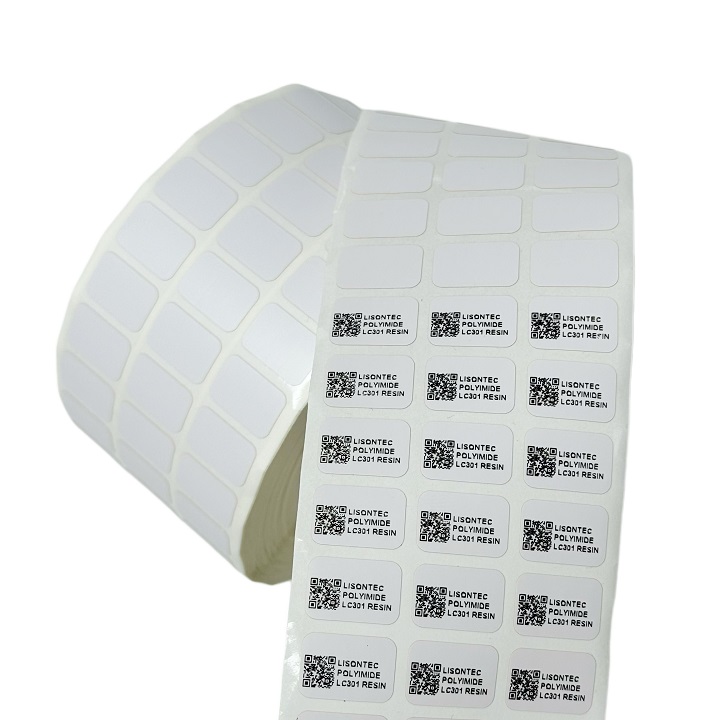
Polyimide high temperature labels are engineered from advanced polymer films capable of withstanding extreme thermal cycling, aggressive chemicals, and harsh manufacturing environments without degradation. First developed in the 1950s, polyimide film—most notably DuPont's Kapton—has become the industry benchmark for durable labeling in electronics, aerospace, defense, and automotive applications. [labelingnews]
The label structure consists of a sophisticated multi-layer construction:
- Release liner: Silicone-coated backing enabling easy dispensing during automated application
- Pressure-sensitive adhesive: Typically silicone or acrylic-based, formulated for high-temperature bonding
- Polyimide film substrate: The core material, usually 1-2 mil (25-50 microns) thick, providing thermal stability
- Printable topcoat: Specially treated surface accepting thermal transfer, laser, or inkjet printing while maintaining barcode legibility [labelingnews]
This engineered construction allows polyimide high temperature resistant labels to maintain adhesion and print integrity through processes that would destroy conventional label materials—including wave soldering at 260°C, reflow ovens, conformal coating, and aggressive flux washing. [5.imimg]
Polyimide vs. Kapton Labels: Clarifying the Terminology
One common question in the industry: Are Kapton labels and polyimide labels the same? [labelingnews]
Kapton is a registered trademark of DuPont for their specific polyimide film product line. The relationship parallels "Kleenex" and "facial tissue": all Kapton labels are polyimide labels, but not all polyimide labels use genuine Kapton film. [labelingnews]
| Term | Definition |
| Polyimide label | Generic term for any label manufactured from polyimide film |
| Kapton label | Label made specifically from DuPont's Kapton-branded polyimide film |
In practice, manufacturers often use these terms interchangeably. However, for applications requiring strict traceability, military compliance (MIL-STD), or UL certification, specifying genuine Kapton film may be necessary to meet quality assurance requirements. Alternative polyimide film manufacturers offer comparable performance at different price points, making generic polyimide a cost-effective choice for many commercial applications. [labelingnews]
Critical Performance Specifications for Polyimide High Temperature Labels
Temperature Resistance Ratings by Application
Understanding temperature tolerance is fundamental when selecting polyimide high temperature labels for your application. Performance varies significantly based on adhesive formulation, substrate, and exposure duration. [vizlent]
Standard polyimide labels typically withstand:
- Continuous exposure: -100°C to +250°C (-148°F to +482°F)
- Short-term peak exposure: Up to +400°C (+752°F) for 10-30 seconds [vizlent]
High-performance grades extend this range further, with specialized constructions tolerating brief excursions to 400°C—critical for lead-free soldering processes and burn-in testing. [hpp.arkema]
Temperature Ratings by Manufacturing Process
| Application | Typical Thermal Exposure | Recommended Polyimide Grade |
| Wave soldering | 260°C for 10 seconds | Standard polyimide with silicone adhesive |
| Reflow soldering (lead-free) | 250-260°C for 60-90 seconds | Standard or high-temp polyimide |
| Burn-in testing | 150°C extended duration | Standard polyimide |
| Automotive under-hood | -40°C to +200°C continuous | High-temperature adhesive formulation |
| Aerospace engine components | -55°C to +260°C continuous | Specialized high-temp polyimide |
| Battery cell marking | Up to 85°C continuous, 150°C peaks | UL 94 V-0 certified polyimide |
| Medical autoclave sterilization | 121-134°C with steam pressure | Silicone adhesive polyimide |
[bradycanada]
Industry Insight: For lead-free soldering processes (now mandatory under RoHS compliance), select polyimide labels specifically rated for 260°C peak temperatures. Standard grades may experience adhesive flow or edge lifting under these conditions. [vizlent]
Chemical and Solvent Resistance Profile
Beyond thermal performance, polyimide high temperature resistant labels excel in chemical resistance—a critical factor for electronics manufacturing, automotive, and aerospace applications. [hpp.arkema]
Polyimide labels resist:
- Flux and flux removers (including no-clean and water-soluble formulations)
- Isopropyl alcohol (IPA) and other cleaning solvents
- Acetone, MEK (methyl ethyl ketone), and aggressive degreasers
- Most acids and bases (pH 2-12 range)
- Hydraulic fluids, oils, and fuels (critical for aerospace and automotive)
- Conformal coating materials (acrylic, silicone, urethane) [bradycanada]
This chemical inertness ensures barcode legibility and label adhesion survive multiple cleaning cycles, flux washing, and exposure to harsh manufacturing environments. [5.imimg]
Dimensional Stability and Mechanical Properties
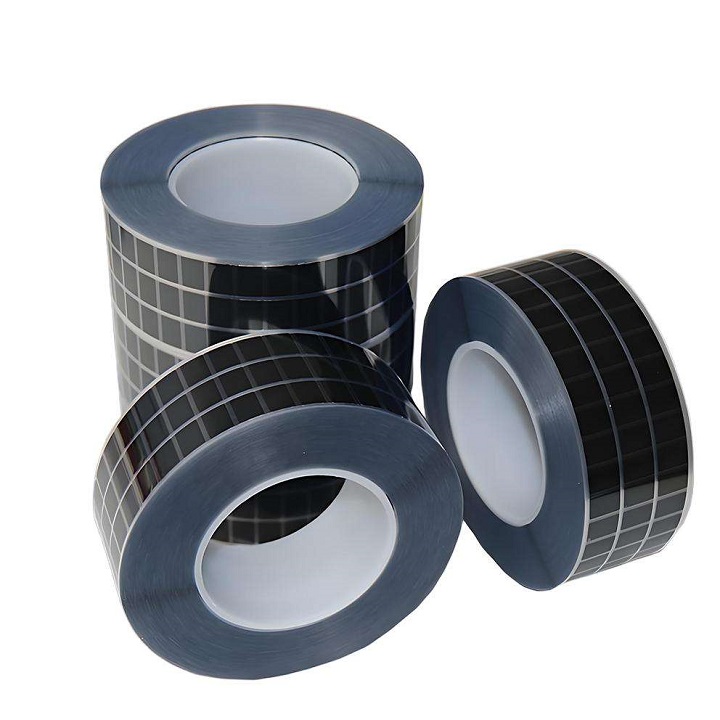
Unlike polyester (PET) or paper labels that shrink, curl, or deform under thermal stress, polyimide film maintains exceptional dimensional stability:
- Coefficient of thermal expansion (CTE): Matched to FR4 PCB substrates, minimizing stress during thermal cycling [vizlent]
- Tensile strength: 23,000+ PSI, resisting tearing during automated application
- Elongation at break: 70%+, allowing conformability to curved surfaces
- Thickness: 1-2 mil (25-50 microns), adding minimal bulk to compact assemblies [vizlent]
Practical Impact: Barcodes remain scannable after 10+ reflow cycles, and label edges stay adhered without lifting—a common failure mode with inferior materials. [bradycanada]
Industry Applications: Where Polyimide High Temperature Labels Excel
Electronics Manufacturing and PCB Traceability
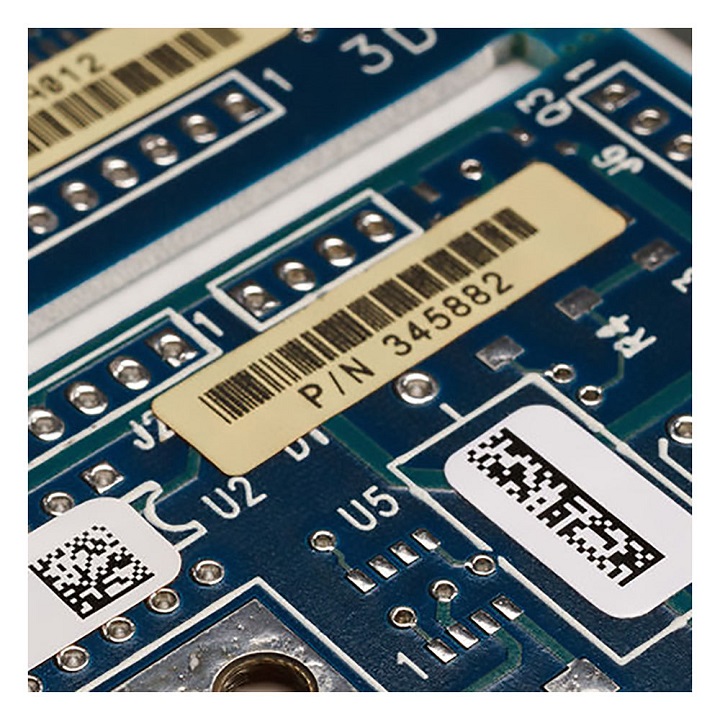
Printed circuit board (PCB) labeling represents the largest application segment for polyimide high temperature labels, accounting for an estimated 60-70% of global demand. [linkedin]
Typical use cases include:
- Pre-assembly labeling: Marking bare PCBs before component placement
- SMT (Surface Mount Technology) tracking: Identifying boards through reflow soldering
- Wave solder labeling: Surviving 260°C exposure and flux washing
- Conformal coating protection: Maintaining adhesion under acrylic, silicone, or urethane coatings
- Final assembly and testing: Barcode tracking through functional testing and quality inspection [5.imimg]
Market Data: The U.S. high-temperature polyimide labels market for printed circuit boards was valued at USD 0.12 billion in 2024 and is projected to grow at a CAGR of 6.8% through 2033, driven by increased electronics production, 5G infrastructure deployment, and electric vehicle adoption. [linkedin]
Automotive and Electric Vehicle (EV) Battery Manufacturing
The automotive sector, particularly EV battery production, has emerged as a fast-growing application for polyimide high temperature labels. [hpp.arkema]
Key applications:
- Lithium-ion battery cell marking: UL 94 V-0 certified polyimide labels for thermal runaway protection and traceability
- Battery pack assembly: Tab cover labels, jelly-roll fixing, and cell-case wrapping
- Under-hood component identification: Sensor labels, ECU (Engine Control Unit) marking, and wire harness identification
- Power semiconductor modules: IGBT and MOSFET labeling in inverters and converters [hpp.arkema]
Critical Requirement: For EV battery applications, polyimide labels must meet UL 94 V-0 flammability ratings and withstand thermal cycling from -40°C to +150°C without adhesive degradation. [hpp.arkema]
Aerospace and Defense Component Tracking
Aerospace applications demand extreme environmental resistance, including exposure to jet fuel, hydraulic fluids, and temperature excursions from -55°C to +260°C. [bradycanada]
Polyimide labels in aerospace:
- Meet MIL-STD-202G and MIL-STD-810 environmental testing requirements
- Provide permanent part identification on components exposed to aviation fuels and lubricants
- Support UID (Unique Identification) marking for defense contract compliance
- Maintain adhesion on aluminum, titanium, and composite substrates [bradycanada]
Compliance Note: Many aerospace contractors require polyimide labels with UL 969 certification for permanent marking applications, ensuring long-term durability under specified environmental conditions. [bradycanada]
Medical Devices and Sterilization-Compatible Labeling
Medical device manufacturers rely on polyimide high temperature labels for sterilization-compatible identification of surgical instruments, implantable components, and diagnostic equipment. [vizlent]
Sterilization methods supported:
- Autoclave (steam): 121-134°C with pressure, 15-30 minute cycles
- Gamma radiation: Up to 50 kGy exposure without degradation
- Ethylene oxide (EtO): Resistant to gas penetration and discoloration
- E-beam sterilization: Maintains adhesion and print integrity [labelingnews]
Application Example: Polyimide labels with silicone adhesive are standard for reusable surgical instruments, surviving hundreds of autoclave cycles without edge lifting or print fading. [labelingnews]
Adhesive Selection Guide: Matching Performance to Your Application
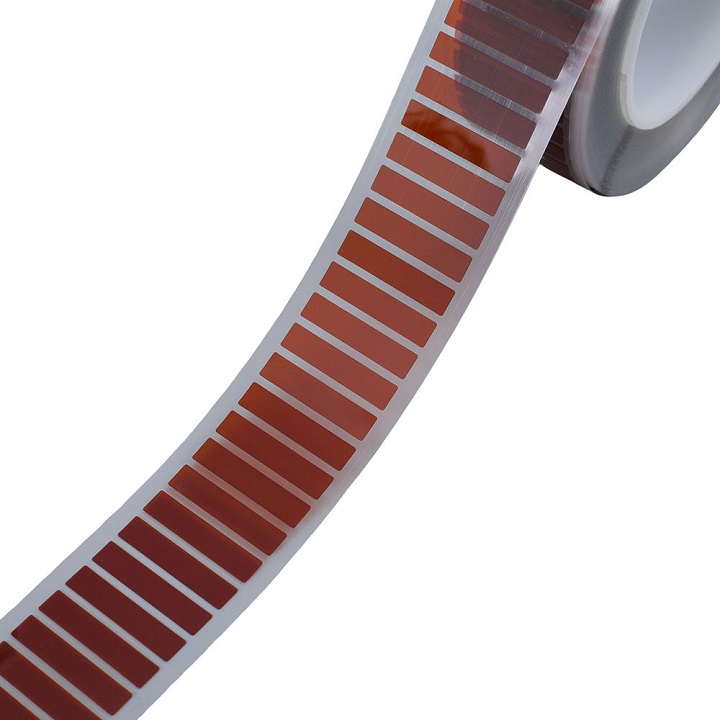
Selecting the right adhesive is as critical as choosing the polyimide film itself. Adhesive performance directly affects label longevity, thermal resistance, and substrate compatibility. [hpp.arkema]
Silicone Adhesive: The High-Temperature Champion
Silicone-based adhesives are the gold standard for extreme thermal applications:
- Temperature range: -73°C to +260°C continuous, with peaks to 300°C
- Best for: Wave soldering, reflow processes, automotive under-hood, aerospace
- Substrate compatibility: FR4, ceramics, metals, high-temperature plastics
- Trade-offs: Higher cost than acrylic, lower initial tack [vizlent]
Expert Recommendation: For any application involving soldering processes or temperatures above 200°C, silicone adhesive is non-negotiable. Acrylic formulations will flow, migrate, or delaminate under these conditions. [vizlent]
Acrylic Adhesive: Cost-Effective for Moderate Temperatures
Acrylic adhesives offer strong chemical resistance at a lower price point:
- Temperature range: -40°C to +150°C continuous
- Best for: General electronics assembly, conformal coating, indoor applications
- Substrate compatibility: Plastics, metals, coated surfaces
- Advantages: Excellent UV resistance, cost-effective, good initial tack [bradycanada]
Use Case: Acrylic-bonded polyimide labels are ideal for final assembly labeling where thermal exposure remains below 150°C but chemical resistance (flux, IPA, coatings) is required. [labelingnews]
Specialty Adhesives for Niche Applications
- High-tack acrylic: For textured or low-surface-energy substrates (powder-coated metals, certain plastics)
- Removable adhesive: For temporary process labels requiring clean removal without residue
- Conductive adhesive: For EMI/RFI shielding labels in aerospace and defense [bradycanada]
Step-by-Step: Implementing Polyimide High Temperature Labels in Your Production Line
Successfully integrating polyimide high temperature resistant labels into your manufacturing process requires attention to printing, application, and quality control. Follow this implementation framework:
Step 1: Define Application Requirements
Before selecting a label, document your specific requirements:
- Maximum and minimum operating temperatures
- Chemical exposures (fluxes, solvents, coatings, oils)
- Substrate material (FR4, aluminum, plastic, ceramic)
- Label size and shape constraints
- Printing method (thermal transfer, laser, inkjet)
- Regulatory compliance needs (UL, MIL-STD, RoHS, REACH) [hpp.arkema]
Step 2: Select the Right Label Construction
Match your requirements to label specifications:
- Film thickness: 1 mil for tight spaces, 2 mil for durability
- Adhesive type: Silicone for high-temp, acrylic for cost-sensitive applications
- Topcoat: Standard for thermal transfer, specialty coatings for laser or inkjet
- формат: Rolls for automated application, sheets for manual labeling [vizlent]
Step 3: Optimize Printing Parameters
For thermal transfer printing (the most common method):
- Ribbon type: Use resin or wax/resin ribbons for durability (wax-only ribbons will smear)
- Print density: 203-300 DPI for standard barcodes, 600 DPI for high-density 2D codes
- Print speed: 4-6 inches/second for optimal adhesion and sharpness
- Printhead pressure: Adjust to ensure full contact without crushing the polyimide film [multimedia.3m]
Pro Tip: Conduct a smudge test by rubbing printed labels with IPA-soaked cloth. If ink smears, increase printhead temperature or switch to a full-resin ribbon. [multimedia.3m]
Step 4: Validate Performance Through Testing
Before full-scale deployment, validate labels under actual production conditions:
- Thermal cycling test: Run labels through your actual soldering or curing process
- Chemical resistance test: Wipe labels with IPA, flux remover, or other solvents
- Adhesion test: Perform tape pull tests per ASTM D3359
- Barcode verification: Scan barcodes after each stress test to ensure readability [5.imimg]
Step 5: Establish Quality Control Protocols
Implement ongoing QC checks:
- Incoming inspection: Verify label dimensions, adhesive tack, and print quality
- In-process monitoring: Check label adhesion and barcode scan rates hourly
- Lot tracking: Maintain traceability for label batches in case of recalls or defects [5.imimg]
Common Mistakes to Avoid When Using Polyimide High Temperature Labels
Even experienced manufacturers make these critical errors:
Mistake 1: Using the Wrong Adhesive for the Temperature
Problem: Applying acrylic-bonded polyimide labels to PCBs going through wave soldering at 260°C.
Result: Adhesive flows, edges lift, labels fall off during reflow.
Solution: Always specify silicone adhesive for applications exceeding 200°C. [labelingnews]
Mistake 2: Skipping Surface Preparation
Problem: Labeling oily, dusty, or contaminated surfaces without cleaning.
Result: Poor initial adhesion leading to premature failure.
Solution: Clean substrates with IPA or appropriate solvent before label application. Allow to dry completely. [5.imimg]
Mistake 3: Overlooking Print Compatibility
Problem: Using wax ribbons on polyimide labels for thermal transfer printing.
Result: Print smudges or rubs off during flux washing or cleaning.
Solution: Use resin or wax/resin ribbons designed for polyimide substrates. [multimedia.3m]
Mistake 4: Ignoring Label Size Constraints
Problem: Selecting labels too large for small components or tight spaces.
Result: Labels wrinkle, peel, or interfere with component placement.
Solution: Choose 1 mil thickness and minimum practical dimensions (down to 0.125" x 0.125" for some applications). [bradycanada]
Mistake 5: Failing to Test Under Real Conditions
Problem: Assuming laboratory specs match actual production performance.
Result: Unexpected label failures during mass production.
Solution: Always conduct pilot testing with actual production boards, thermal profiles, and cleaning processes before full deployment. [5.imimg]
The Future of Polyimide High Temperature Labels: Trends and Innovations
The polyimide label market is evolving rapidly, driven by miniaturization, sustainability demands, and advanced manufacturing requirements.
Trend 1: Ultra-Thin Films for Miniaturized Electronics
As devices shrink, sub-1 mil polyimide films are emerging for wearables, medical implants, and micro-PCBs. These ultra-thin labels maintain thermal performance while adding minimal profile—critical for space-constrained applications. [hpp.arkema]
Trend 2: Sustainable and Recyclable Polyimide Options
Environmental regulations (particularly in the EU) are driving demand for recyclable polyimide labels and bio-based adhesive formulations. While still niche, these sustainable options are gaining traction among eco-conscious manufacturers. [linkedin]
Trend 3: Direct Laser Marking (DLM) Compatibility
Laser-markable polyimide labels eliminate the need for ribbons and thermal transfer printers. Instead, fiber lasers directly ablate the polyimide surface to create permanent, high-contrast marks. This technology is expanding in automotive and aerospace for high-volume, permanent marking applications. [vizlent]
Trend 4: Smart Labels with Embedded RFID
Integration of RFID tags within polyimide label constructions enables automated tracking without line-of-sight scanning. Early adopters in aerospace and defense are using these "smart labels" for UID (Unique Identification) compliance and supply chain visibility. [linkedin]
Conclusion
Polyimide high temperature labels are indispensable for electronics, automotive, aerospace, and medical manufacturers requiring durable, reliable identification under extreme conditions. By understanding the technical specifications, adhesive options, application best practices, and common pitfalls outlined in this guide, you can make informed decisions that enhance product traceability, ensure compliance, and reduce costly production failures. [hpp.arkema]
For manufacturers seeking custom polyimide high temperature labels with specialized dimensions, adhesives, or printing requirements, partnering with an experienced OEM/ODM supplier like Shenzhen XingKun Packing Products Co., Ltd. provides access to tailored solutions meeting rigorous performance standards. [5.imimg]
Ready to optimize your labeling process? Contact our team today for a free consultation on polyimide high temperature label solutions tailored to your application.
Frequently Asked Questions (FAQ)
1. What is the maximum temperature that polyimide high temperature labels can withstand?
Standard polyimide labels withstand continuous exposure up to 250°C (482°F) and short-term peaks to 400°C (752°F) for 10-30 seconds. Actual performance depends on adhesive selection (silicone vs. acrylic) and exposure duration. For wave soldering at 260°C, silicone-bonded polyimide is required. [labelingnews]
2. Are Kapton labels and polyimide labels the same?
Kapton is DuPont's brand name for polyimide film. All Kapton labels are polyimide labels, but not all polyimide labels use genuine Kapton film. For most applications, generic polyimide offers equivalent performance at lower cost. However, applications requiring MIL-STD or UL certification may specify genuine Kapton for quality assurance. [labelingnews]
3. Can polyimide labels survive autoclave sterilization?
Yes. Polyimide labels with silicone adhesive withstand autoclave cycles at 121-134°C with steam pressure, making them suitable for reusable surgical instruments and medical device components requiring repeated sterilization. [vizlent]
4. What's the difference between polyimide and polyester (PET) labels?
Polyester (PET) labels are more economical but max out around 150°C continuous exposure. Polyimide handles temperatures 100°C+ higher and offers superior chemical resistance. Use polyester for general durability applications; use polyimide when thermal or chemical exposure is severe. [labelingnews]
5. Can I print barcodes on polyimide high temperature labels?
Absolutely. Polyimide labels accept thermal transfer printing with resin ribbons, producing durable barcodes (1D and 2D) that remain scannable after soldering, cleaning, and environmental exposure. Laser marking and inkjet printing (with appropriate topcoat) are also viable options. [multimedia.3m]
References
1. Labeling News – "Polyimide Labels & Kapton Labels: Applications, Specs, and Benefits" – Comprehensive technical overview of polyimide label construction, performance specifications, and industry applications. [https://www.labelingnews.com/polyimide-labels/]
2. LinkedIn Pulse – "United States High Temperature Polyimide Labels Market By Application | IoT Strategy & Future Outlook 2026-2033" – Market size data and growth projections for polyimide labels in electronics and automotive sectors. [https://www.linkedin.com/pulse/united-states-high-temperature-polyimide-labels-market-66y1f]
3. Arkema HPP – "Advanced Polymers for Adhesives & Tapes" – Technical data on polyimide tape applications in battery manufacturing, semiconductor packaging, and PCB production. [https://hpp.arkema.com/en/markets-and-applications/adhesives-and-tapes/]
4. Avery Dennison – "Polyimide Labels Product Documentation (PDF)" – Application guidelines for PCB labeling, including temperature resistance and chemical compatibility specifications. [http://5.imimg.com/data5/SELLER/Doc/2025/11/563111436/YZ/DG/MJ/211758/high-temperature-300c-labels.pdf]
5. Vizlent Label Materials – "Heat Resistant Polyimide Labels For Industrial Use" – Detailed specifications for polyimide labels in PCB assembly, battery cell traceability, and automotive electronics. [https://vizlent.com/products/heat-resistant-polyimide-labels-for-industrial-use/]
6. Brady Corporation – "High Temperature Glossy Polyimide Labels Technical Data Sheet" – Product specifications including UL 969 compliance, temperature ratings, and chemical resistance properties. [https://www.bradycanada.ca/barcode-labels/high-temperature-glossy-polyimide-labels-pid-ththd-70-727-12]
7. 3M – "Thermal Transfer Polyimide Label Material 7812 Technical Data (PDF)" – Printing specifications and adhesive performance data for polyimide label materials. [https://multimedia.3m.com/mws/media/99627O/3m-thermal-transfer-polyimide-label-material-7812.pdf]
8. Shenzhen XingKun Packing Products Co., Ltd. – "Polyimide High Temperature Labels Product Page" – OEM/ODM customization options and manufacturing capabilities for polyimide label solutions. [https://www.xkdisplay.com/polyimide-high-temperature-labels.html]


