Content Menu
● Why Tarot Card Text Matters More Than You Think
● Understanding Tarot Card Structure: What Needs Writing
>> The Major Arcana (22 Cards)
>> The Minor Arcana (56 Cards)
● What to Write on Each Card Type: Expert Recommendations
>> 1. Card Names (Titles)
>> 2. Keywords and Core Meanings
>> 3. Upright and Reversed Meanings
>> 4. Elemental and Astrological Correspondences
>> 5. Personal or Brand Messaging
● Designing Text Layout for Readability and Aesthetics
>> Front-of-Card Text Best Practices
>> Back-of-Card and Guidebook Content
● Industry Case Study: How Professional Tarot Decks Handle Text
>> Xinyi Card Printing (China) – 2025 Guide
>> XingKun Packing Products – Tarot Card Production
● 2026 Tarot Market Trends: Why Text Quality Impacts Sales
>> Market Growth Data
>> Key Market Drivers
>> What This Means for Your Text Decisions
● Step-by-Step: Writing Content for Your Homemade Tarot Deck
>> Step 1: Define Your Deck's Theme
>> Step 2: Create a Content Template
>> Step 3: Write in Your Voice
>> Step 4: Review for Consistency
>> Step 5: Prepare Print-Ready Files
● Common Mistakes to Avoid When Writing Tarot Card Text
>> Mistake 1: Overcrowding Cards with Text
>> Mistake 2: Inconsistent Terminology
>> Mistake 3: Ignoring Print Constraints
>> Mistake 4: Skipping Cultural Sensitivity
● How to Work with a Tarot Card Manufacturer (OEM/ODM Guide)
>> What to Provide Your Manufacturer
>> XingKun's OEM/ODM Capabilities
● Conclusion: Crafting Tarot Cards That Resonate and Sell
● FAQ: Common Questions About Writing Tarot Card Content
>> 1. What is the standard size for tarot cards?
>> 2. Should I include reversed meanings on my tarot cards?
>> 3. How many keywords should I put on each tarot card?
>> 4. Can I print tarot cards with custom text in multiple languages?
>> 5. What file format should I use when sending tarot card designs to a printer?
● References
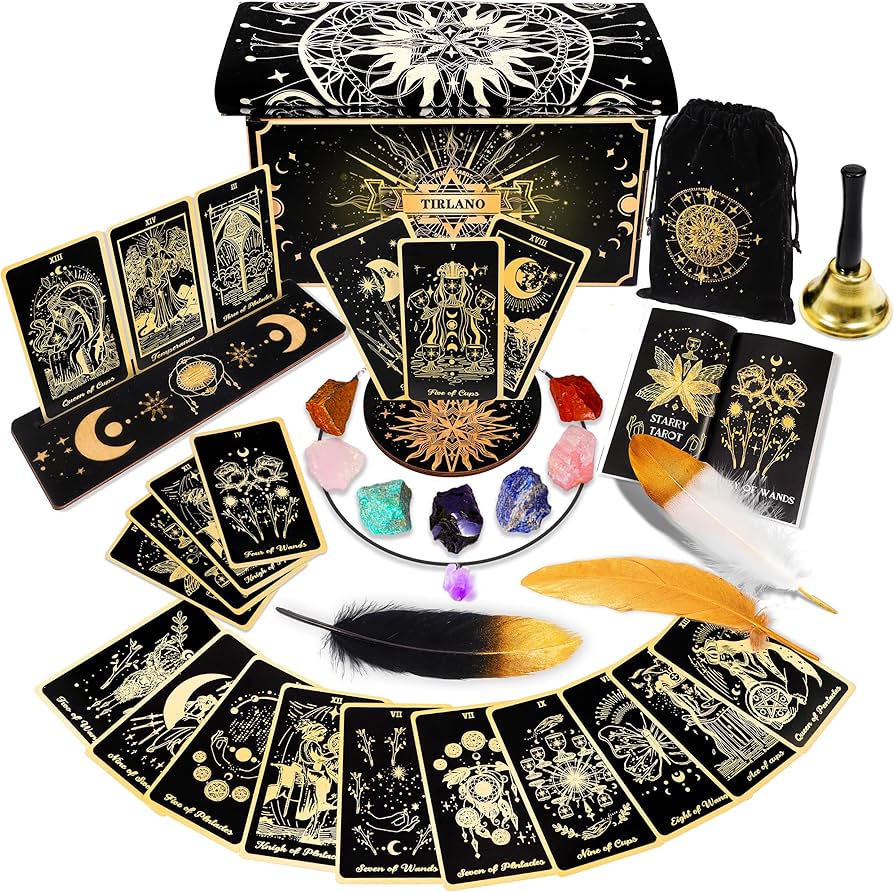
Creating homemade tarot cards is more than a craft project—it's an act of personal storytelling, spiritual expression, and increasingly, a commercial opportunity for brands entering the booming wellness market. Whether you're an independent creator designing your first deck or a business exploring custom tarot card printing for retail, knowing what to write on homemade tarot cards determines whether your deck resonates with users or falls flat.
This guide, written from the perspective of a printing industry expert with years of experience in OEM/ODM card production, combines tarot symbolism knowledge, design best practices, and 2026 market insights to help you create tarot cards that are both meaningful and professionally viable.
Why Tarot Card Text Matters More Than You Think
Tarot cards are visual-first, but text anchors meaning. Well-chosen words on each card help users:
- Interpret symbolism quickly during readings
- Connect emotionally with archetypes and themes
- Build confidence as beginners learning the system
- Create consistency across a 78-card deck
According to tarot educator Jane Friedman, the tarot offers "a rich language for finding—and articulating—ourselves," making word choice as critical as imagery when building a deck that speaks to users. [janefriedman]
Understanding Tarot Card Structure: What Needs Writing
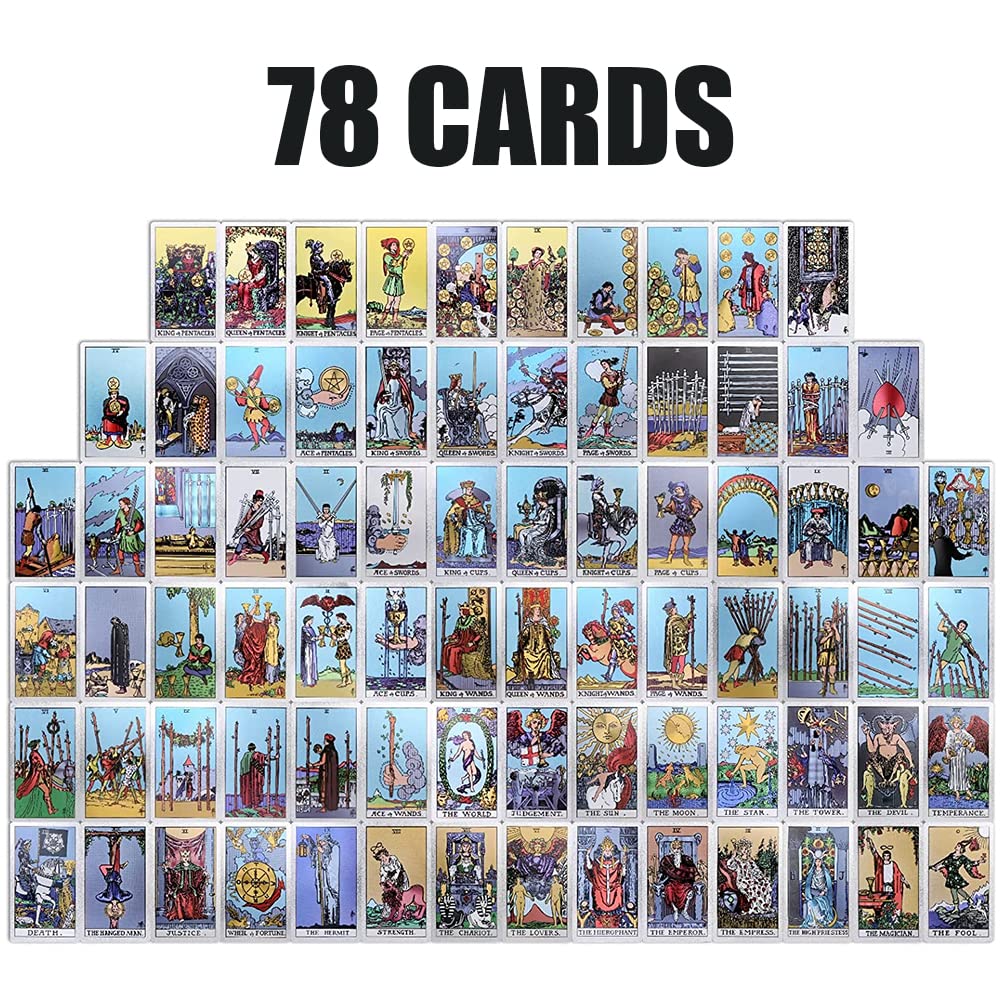
A standard tarot deck contains 78 cards divided into two sections:
The Major Arcana (22 Cards)
These represent life's big themes and spiritual lessons:
- The Fool – New beginnings, innocence, spontaneity
- The Magician – Manifestation, resourcefulness, power
- The High Priestess – Intuition, sacred knowledge, divine feminine
- The Empress – Femininity, beauty, nature, nurturing
- The Emperor – Authority, structure, control, fatherhood
- The Hierophant – Spiritual wisdom, religious beliefs, conformity
- The Lovers – Love, harmony, relationships, values alignment
- The Chariot – Control, willpower, success, action
- Strength – Courage, persuasion, influence, compassion
- The Hermit – Introspection, solitude, inner guidance
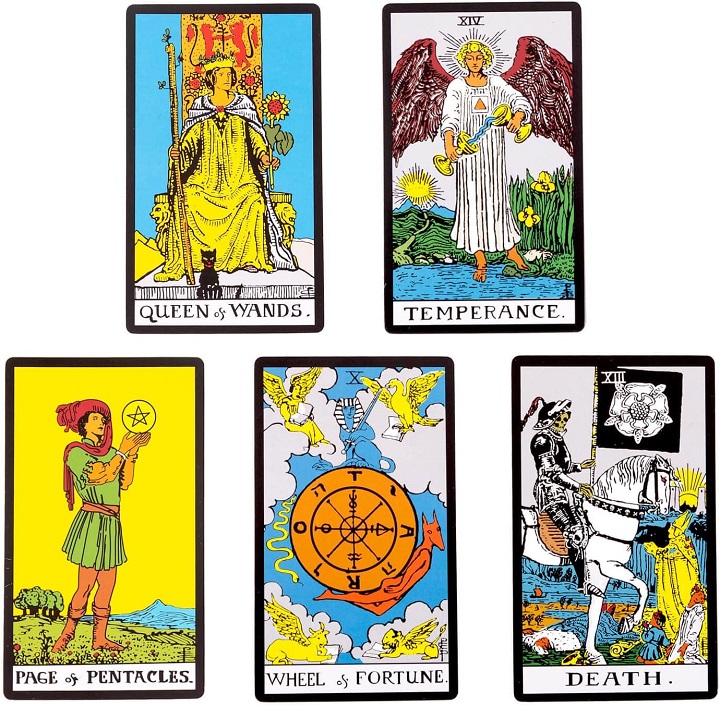
- Wheel of Fortune – Good luck, karma, life cycles, destiny
- Justice – Justice, fairness, truth, cause and effect
- The Hanged Man – Pauses, surrender, letting go, suspension
- Death – Endings, change, transformation, transition
- Temperance – Balance, moderation, patience, purpose
- The Devil – Shadow self, attachment, addiction, restriction
- The Tower – Sudden change, upheaval, chaos, revelation
- The Star – Hope, faith, purpose, renewal, spirituality
- The Moon – Illusion, fear, anxiety, subconscious, intuition
- The Sun – Positivity, fun, warmth, success, vitality
- Judgement – Judgement, rebirth, inner calling, absolution
- The World – Completion, integration, accomplishment, travel
The Minor Arcana (56 Cards)
These cover everyday life situations across four suits:
| Suit | Element | Life Area |
| Wands | Fire | Creativity, energy, ambition |
| Cups | Water | Emotions, relationships, intuition |
| Swords | Air | Thoughts, communication, conflict |
| Pentacles | Earth | Material world, work, finances |
Each suit contains Ace through 10, plus Page, Knight, Queen, and King court cards. [sacredessence.co]
What to Write on Each Card Type: Expert Recommendations
1. Card Names (Titles)
Always include the card name prominently on the front. Options include:
- Traditional names: "The Fool," "Three of Cups," "Knight of Wands"
- Translated names: For international decks, consider bilingual titles (e.g., English + Japanese for Asian markets)
- Numbered titles: Some modern decks use only numbers (0–21 for Major Arcana)
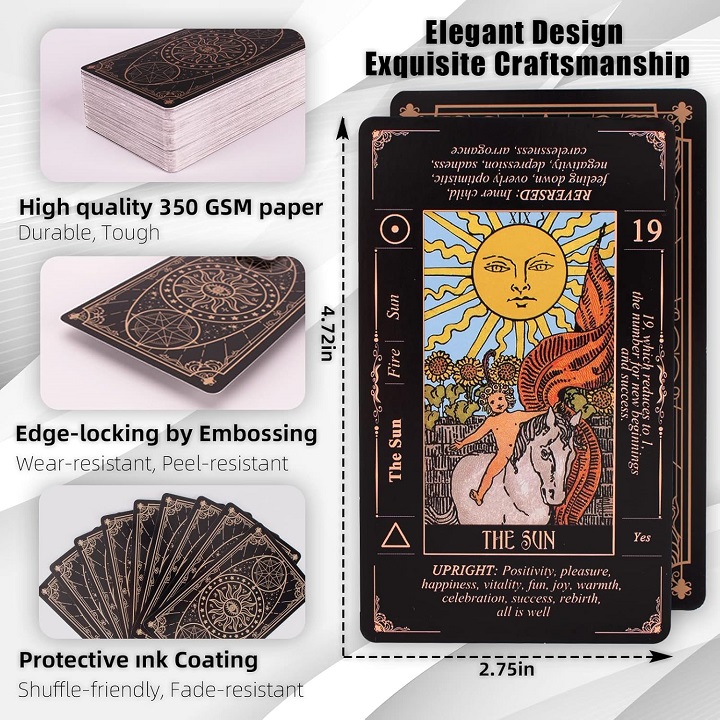
Typography tip: Use clear, readable fonts at sizes that remain legible even on smaller card formats (standard tarot size: 70×120mm or 2.75×4.75 inches). [xinyicardprinting]
2. Keywords and Core Meanings
Add 3–5 keywords on each card to capture its essence:
Example – The Empress:
- Fertility
- Abundance
- Nature
- Creativity
- Nurturing
Example – Five of Swords:
- Conflict
- Defeat
- Tension
- Betrayal
- Aftermath
Where to place keywords:
- Front of card: Below or beside the main image (minimal text)
- Back of card: Detailed meanings and interpretations
- Guidebook: Full explanations for each card
3. Upright and Reversed Meanings
Many readers use reversed card meanings (when a card appears upside-down). Include both:
The Tower – Upright:
- Sudden upheaval
- Breakthrough
- Awakening
- Revelation
The Tower – Reversed:
- Fear of change
- Delayed disaster
- Resisting transformation
- Internal crisis
Industry insight: Professional tarot decks increasingly include reversed meanings on the back or in companion guidebooks to support both beginner and advanced readers. [tarotprint]
4. Elemental and Astrological Correspondences
For advanced users, add symbolic associations:
- Element: Fire, Water, Air, Earth
- Astrological sign: Aries, Scorpio, Pisces, etc.
- Planet: Mars, Venus, Mercury, etc.
- Kabbalistic path: For esoteric decks
Example – The Sun:
- Element: Fire
- Astrology: Sun in Leo
- Keywords: Joy, success, vitality, clarity
5. Personal or Brand Messaging
For custom tarot decks created for brands or as promotional products, consider adding:
- Brand logo on the card back
- Tagline or mission statement on the guidebook or box insert
- QR code linking to brand website or reading app
- Custom card: A unique "brand archetype" card not found in traditional decks
Designing Text Layout for Readability and Aesthetics
Front-of-Card Text Best Practices
- Keep it minimal: Card imagery should dominate
- Use high contrast: White or gold text on dark backgrounds, black on light
- Test at small sizes: What looks good on screen may be unreadable when printed at 70×120mm
- Maintain consistency: Same font family and positioning across all 78 cards
Back-of-Card and Guidebook Content
If text goes on the card back or in a companion guidebook, expand with:
- Full paragraph interpretations (50–100 words per card)
- Sample readings showing how the card interacts with others
- Journaling prompts for self-reflection
- Affirmations or mantras related to the card's energy
Industry Case Study: How Professional Tarot Decks Handle Text
Xinyi Card Printing (China) – 2025 Guide
According to Xinyi, a leading custom tarot card manufacturer, professional decks follow these specifications:
- Card size: 70×120mm or 63×88mm (custom available)
- Card stock: 300gsm standard, 350–400gsm premium
- Finishes: Matte, glossy, spot UV, or foil stamping
- File setup: 300 dpi, CMYK mode, 3mm bleed
- Text considerations: Minimum 6pt font for legibility after printing [xinyicardprinting]
XingKun Packing Products – Tarot Card Production
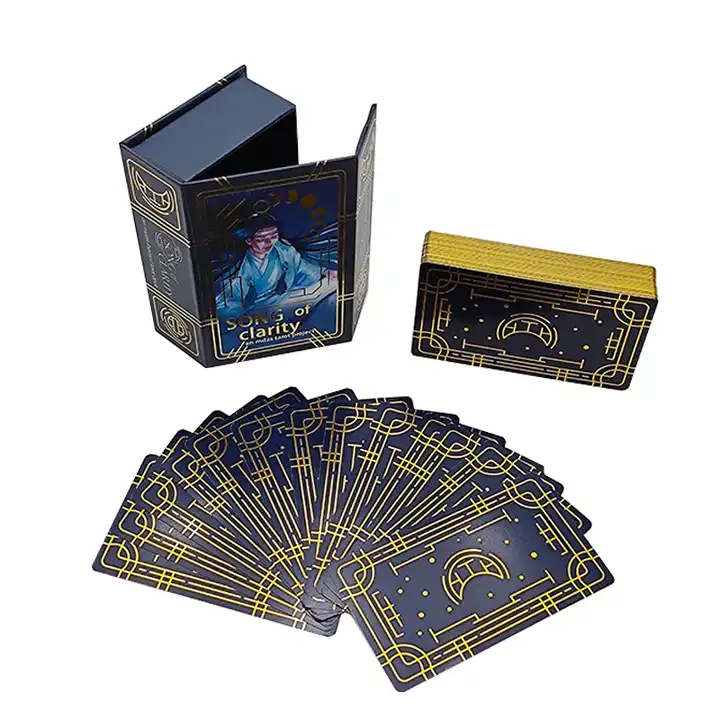
Shenzhen XingKun Packing Products Co., Ltd. (XingKun) offers OEM/ODM tarot card production with:
- Premium materials: Black Kraft, CCNB, Metallic Paper, Textured finishes
- Printing methods: Offset, Digital, UV Print
- Finishing options: Spot Gloss UV, Soft Touch Coating, Hot Foil Stamping, Embossing
- Eco-friendly inks: Water-based, Soy-Vegetable Based, Pantone Metallic
Key insight: XingKun's production capabilities support custom text placement, foil-stamped titles, and embossed lettering for luxury tarot decks targeting premium markets. [web:product]
2026 Tarot Market Trends: Why Text Quality Impacts Sales
Market Growth Data
The global tarot cards market is experiencing explosive growth:
| Year | Market Size (USD Million) | YoY Growth |
| 2025 | 1,292.28 | 5.85% |
| 2026 | 1,390.97 | 7.64% |
| 2027 | 1,541.07 | 10.79% |
| 2032 (projected) | 2,150.00 | — |
Source: P Market Research, 2026 [pmarketresearch]
Key Market Drivers
1. Online E-commerce dominance: 55.6% of tarot sales in 2025 occurred online, where product descriptions and guidebook previews heavily influence purchases. [pmarketresearch]
2. North American leadership: 42.1% market share, with consumers treating tarot as both collectible and personal-use item. [pmarketresearch]
3. Premium finishes drive value: Buyers favor decks with foil stamping, premium packaging, and high-quality card stock—all of which enhance text legibility and perceived value. [pmarketresearch]
What This Means for Your Text Decisions
- Professional text layout signals quality to online shoppers viewing product images
- Bilingual or multilingual text opens access to Asia Pacific markets, the fastest-growing region (2026–2032). [pmarketresearch]
- Guidebook quality (including clear, well-written card meanings) is a key differentiator in crowded marketplaces like Etsy and Amazon.
Step-by-Step: Writing Content for Your Homemade Tarot Deck
Step 1: Define Your Deck's Theme
Is your deck:
- Traditional (Rider-Waite-Smith based)?
- Modern/Minimalist (clean lines, simple keywords)?
- Themed (anime, nature, astrology, fantasy)?
- Brand-focused (custom deck for business promotion)?
Your theme dictates tone, vocabulary, and visual style.
Step 2: Create a Content Template
For each card, prepare:
-Card Name: [Title]
-Card Number: [0–21 or Ace–10 + Court]
-Suit: [Wands/Cups/Swords/Pentacles or N/A for Major Arcana]
-Keywords: [3–5 words]
-Upright Meaning: [50–100 words]
-Reversed Meaning: [50–100 words]
-Element: [Fire/Water/Air/Earth]
-Astrology: [Optional]
-Affirmation: [Optional]
Step 3: Write in Your Voice
- Beginner-friendly decks: Use simple, encouraging language
- Advanced/esoteric decks: Include deeper symbolism and Kabbalistic references
- Brand decks: Align text with brand values and messaging
Step 4: Review for Consistency
- Are all keywords formatted the same way?
- Do upright and reversed meanings follow a parallel structure?
- Is tone consistent across all 78 cards?
Step 5: Prepare Print-Ready Files
Work with your OEM/ODM manufacturer (like XingKun) to ensure:
- Text is outlined/embedded in PDF files
- Bleed and safety zones are respected (3mm standard)
- Color mode is CMYK for accurate printing [tarotprint]
Common Mistakes to Avoid When Writing Tarot Card Text
Mistake 1: Overcrowding Cards with Text
Problem: Too much text obscures artwork and overwhelms users.
Solution: Keep front-of-card text to card name + 3–5 keywords max. Move detailed meanings to the back or guidebook.
Mistake 2: Inconsistent Terminology
Problem: Using "Upright" on some cards and "Positive" on others confuses readers.
Solution: Standardize terms across the entire deck.
Mistake 3: Ignoring Print Constraints
Problem: Text that looks fine on screen becomes unreadable when printed at 70×120mm.
Solution: Always test print a sample card before full production. Work with your manufacturer on minimum font sizes and color contrast. [twinflamegalaxy]
Mistake 4: Skipping Cultural Sensitivity
Problem: Using sacred symbols or language without understanding their origins.
Solution: Research cultural contexts, especially if targeting international markets (e.g., Japanese, Chinese, or Middle Eastern consumers).
How to Work with a Tarot Card Manufacturer (OEM/ODM Guide)
What to Provide Your Manufacturer
1. Print-ready artwork files (PDF, 300 dpi, CMYK, with bleed)
2. Text content for each card (names, keywords, meanings)
3. Card size specification (standard or custom)
4. Material and finish preferences (e.g., 350gsm with soft-touch lamination)
5. Packaging requirements (tuck box, rigid box, gift set)
XingKun's OEM/ODM Capabilities
Shenzhen XingKun Packing Products Co., Ltd. supports:
- Custom tarot card printing with foil stamping, embossing, and spot UV
- Multi-language text support for global distribution
- Low MOQ options for independent creators and startups
- Full packaging solutions including boxes, guidebooks, and inserts [web:product]
Pro tip: Request a physical proof before full production to verify text legibility, color accuracy, and finish quality.
Conclusion: Crafting Tarot Cards That Resonate and Sell
Knowing what to write on homemade tarot cards is the difference between a deck that sits unused and one that becomes a cherished tool or bestselling product. By combining traditional tarot meanings, modern design principles, and professional printing standards, creators and brands can produce decks that honor the spiritual tradition while meeting 2026 market expectations.
Whether you're making tarot cards for personal use, gift-giving, or commercial sale, remember:
- Text anchors meaning—don't treat it as an afterthought
- Less is more on card fronts; expand in guidebooks
- Work with experienced manufacturers like XingKun to ensure professional results
- Stay informed about market trends to position your deck for success
The tarot market is projected to reach USD 2.15 billion by 2032, and there's never been a better time to bring your unique deck to life. [pmarketresearch]
FAQ: Common Questions About Writing Tarot Card Content
1. What is the standard size for tarot cards?
Answer: The most common tarot card size is 70×120mm (2.75×4.75 inches), though some decks use 63×88mm. Custom sizes are available through OEM manufacturers like XingKun. Always confirm dimensions with your printer before finalizing text layout. [twinflamegalaxy]
2. Should I include reversed meanings on my tarot cards?
Answer: It depends on your target audience. Beginner decks often omit reversed meanings to simplify learning, while advanced decks include them on the card back or in guidebooks. If including reversals, clearly label them as "Reversed" to avoid confusion. [tarotprint]
3. How many keywords should I put on each tarot card?
Answer: 3–5 keywords per card is ideal for front-of-card text. This provides enough guidance without overcrowding the design. Additional meanings can go in the guidebook or on the card back.
4. Can I print tarot cards with custom text in multiple languages?
Answer: Yes. Many manufacturers, including XingKun, support bilingual or multilingual text for international markets. This is especially valuable for targeting regions like Asia Pacific, where tarot interest is growing rapidly. [web:product] [pmarketresearch]
5. What file format should I use when sending tarot card designs to a printer?
Answer: Use PDF files with the following specifications:
- 300 dpi resolution
- CMYK color mode
- 3mm bleed on all sides
- Text outlined or embedded to prevent font issues
Always request a template from your manufacturer before starting design work. [xinyicardprinting]
References
1. P Market Research – "Worldwide Tarot Cards Market 2026" – Market size, growth projections, and regional breakdown. [https://pmarketresearch.com/worldwide-tarot-cards-market-research/]
2. Deep Market Insights – "Tarot Cards Market Size, Share & Growth Report | 2031" – Industry analysis and CAGR forecasts. [https://deepmarketinsights.com/report/tarot-cards-market-research-report]
3. Sacred Essence – "Tarot Card Meanings – Major & Minor Arcana Guide" – Complete tarot card meanings reference. [https://www.sacredessence.co.uk/pages/tarot-card-meanings]
4. Xinyi Card Printing – "How to Design and Print Custom Tarot Cards: The New 2025 Edition" – Professional printing specifications and design guidelines. [https://xinyicardprinting.com/how-to-design-and-print-custom-tarot-cards/]
5. Tarot Print – "Tarot Card Printing Guide for Independent Creators" – Technical checklist for creator decks. [https://tarotprint.com/tarot-card-printing-guide-for-independent-creators/]
6. Twin Flame Galaxy – "How to Print Tarot Cards at Home: A Step-by-Step Guide for Custom Deck Creation" – DIY tarot card printing process. [https://twinflamegalaxy.com/how-to-print-tarot-cards-at-home/]
7. Jane Friedman – "How to Use Tarot to Build Your Brand as a Creative" – Tarot as a brand-building tool. [https://janefriedman.com/how-to-use-tarot-to-build-your-brand-as-a-creative/]
8. XingKun Packing Products – "Tarot Cards" – Product specifications and manufacturing capabilities. [https://www.xkdisplay.com/tarot-cards.html]


