Content Menu
● What Most People Get Wrong About Pizza Box Recycling
● Can Greasy Pizza Boxes Really Be Recycled?
● How Local Rules Affect Pizza Box Recycling
● Designing Pizza Boxes for Maximum Recyclability
>> 1. Choose the Right Substrate
>> 2. Keep Non‑Paper Components Minimal
>> 3. Print Smart, Not Heavy
● Practical Guidance for Consumers: How to Recycle Pizza Boxes Correctly
● How Food Brands Can Transition to More Sustainable Pizza Packaging
● Why Choosing the Right Packaging Partner Matters
● Emerging Trends in Sustainable Food Packaging
● UX‑Driven Design for Food Packaging Sustainability
● A Practical Framework for Upgrading Your Pizza Boxes
● Example Specification Snapshot
● Why Work With Shenzhen XingKun for Pizza Boxes and Printed Packaging?
● Clear Call‑to‑Action
● FAQs About Pizza Box Recycling and Sustainable Packaging
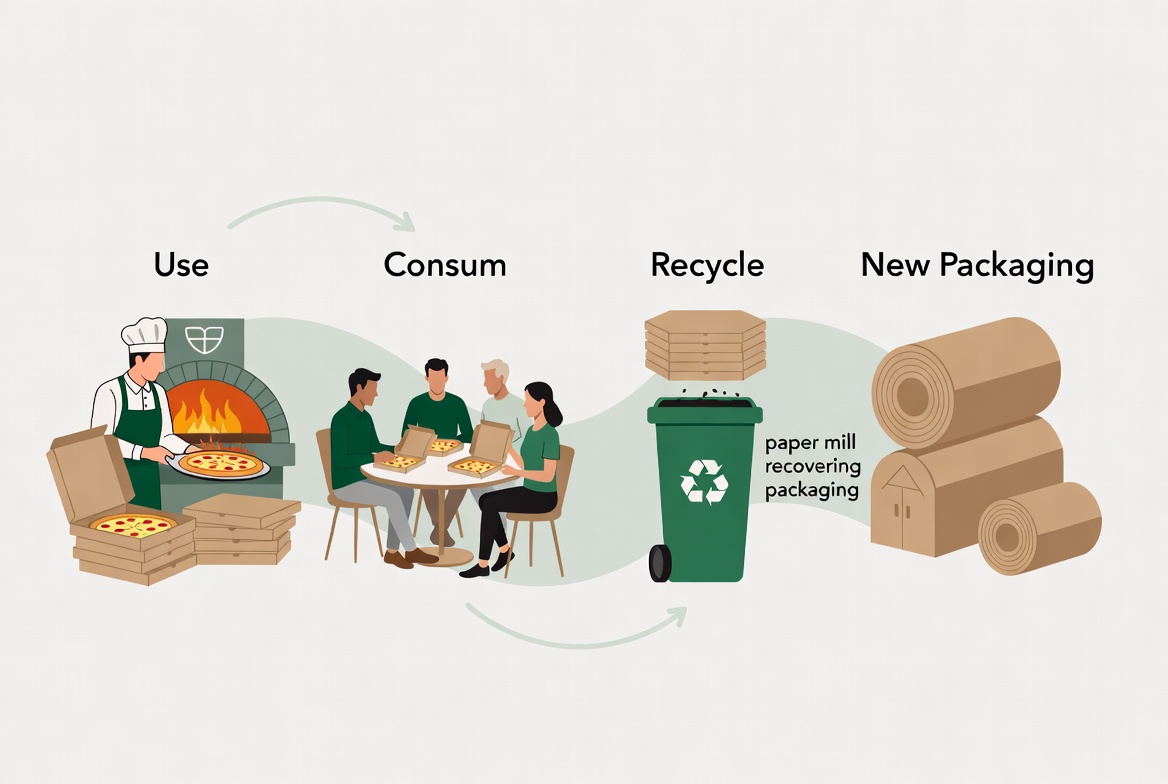
Yes, pizza boxes can be recycled in most communities, and brands that choose the right packaging partner can turn pizza box recycling into a real sustainability win instead of a confusing gray area. As a printing and packaging manufacturer with 20+ years of export experience, Shenzhen XingKun Packing Products Co., Ltd. can help food brands design pizza boxes that are both highly recyclable and optimized for performance, branding, and global compliance. [recyclingpartnership]
What Most People Get Wrong About Pizza Box Recycling
For years, the biggest question around pizza boxes has been simple: does grease make them non‑recyclable?
Recent, peer‑reviewed research on corrugated pizza boxes has finally settled this debate. Studies show that the typical amounts of grease and cheese left on pizza boxes do not harm the recycling process or the quality of new paper products made from that fiber. In fact, recycling mills in many regions successfully process used corrugated pizza boxes every day, as long as large food residues are removed. [recyclesmartma]
From the consumer side, confusion remains because local programs often communicate inconsistently. Around 70% of U.S. community recycling programs historically did not clearly state whether pizza boxes are accepted, which led many people to throw them into the trash "just to be safe." That is wasted fiber, avoidable emissions, and a missed opportunity for brands that want to show real commitment to circular packaging. [recyclesmartma]
Can Greasy Pizza Boxes Really Be Recycled?
The short answer: yes, in most cases. But there are important nuances that brands and consumers should understand.
- Typical grease levels on the bottom panel of a pizza box do not significantly affect the strength of recycled board or the efficiency of pulping systems. [recyclingpartnership]
- Small amounts of cheese residue are generally acceptable, as they are screened out or separated during the recycling process. [cmmonline]
- The main concern is heavy contamination – boxes soaked with oil, filled with toppings, or lined with non‑recyclable materials such as waxed sheets or aluminumized liners. [cmmonline]
From a mill perspective, corrugated pizza boxes are simply another stream of recovered cardboard, provided they are reasonably empty and free from extra non‑paper components. For brands, the takeaway is clear: designing the box right and educating customers clearly are the two leverage points that turn pizza boxes into a reliable source of high‑quality recovered fiber. [recyclesmartma]
How Local Rules Affect Pizza Box Recycling
Even when the science is clear, local recycling rules can differ. Some municipalities accept all corrugated pizza boxes as long as they are empty, while others restrict food‑contact packaging or require boxes to be clean and dry. [restaurant]
Key factors that influence local policy include:
- The capabilities of nearby paper mills and material recovery facilities.
- Whether the system is optimized for mixed paper or separated corrugated.
- How local guidelines define "contamination" and how strictly they are enforced. [restaurant]
For multinational food brands, this variability can create UX friction. Customers may see a recycling symbol on the box, but local signage tells them a different story. That is why leading packaging suppliers now collaborate with brands to:
- Add simple, location‑agnostic instructions such as "Remove leftover food. Recycle this box where corrugated is accepted."
- Provide QR codes linking to regional recycling maps or guidelines.
- Test box designs with recycling stakeholders to confirm acceptability before large‑scale rollouts. [restaurant]
Designing Pizza Boxes for Maximum Recyclability
For pizzerias, QSR chains, and frozen pizza brands, the pizza box is a workhorse. It must protect hot food, display branding, resist grease, and still behave predictably in recycling streams. The following design choices have a major impact on recyclability and performance.
1. Choose the Right Substrate
Most pizza boxes are made from corrugated cardboard, which is widely accepted in recycling programs when clean or lightly soiled. To optimize for circularity: [cmmonline]
- Favor uncoated or lightly coated kraft‑based liners where possible.
- Avoid plastic‑laminated or heavily waxed boards that cannot be repulped in standard mills.
- Use board grades that balance stiffness, heat resistance, and printability without over‑engineering.
As a specialized packaging manufacturer, Shenzhen XingKun can customize board thickness, flute type, and coating strategy to meet both performance and recyclability targets across different markets. [xkdisplay]
2. Keep Non‑Paper Components Minimal
Anything on or in the box that is not paper adds friction in recycling systems. Common issues include:
- Foil or plastic liners fixed to the base.
- Plastic "pizza savers," windows, or handles.
- Laminated coupons or multi‑material inserts.
Best practice is to design a mono‑material solution wherever possible. When additional elements are essential, they should be easy for the consumer to remove and discard separately. Clear on‑pack icons such as "Remove liner – discard as waste" significantly improve behavior and reduce contamination. [restaurant]
3. Print Smart, Not Heavy
High‑coverage, multi‑pass printing with heavy ink loads does not automatically make a box unrecyclable. However, it can increase processing complexity and may require more de‑inking, especially for boxes that will be turned into white or light‑colored products.
A smarter approach is to combine:
- High‑contrast, minimalistic branding on natural kraft.
- Targeted use of color and specialty finishes on key zones only.
- Clear sustainability messaging that explains recyclability.
With 20+ years of experience in offset and flexographic printing, Shenzhen XingKun helps global brands balance vivid artwork with fiber‑friendly specifications that perform well in recycling systems. [cn.linkedin]
Practical Guidance for Consumers: How to Recycle Pizza Boxes Correctly
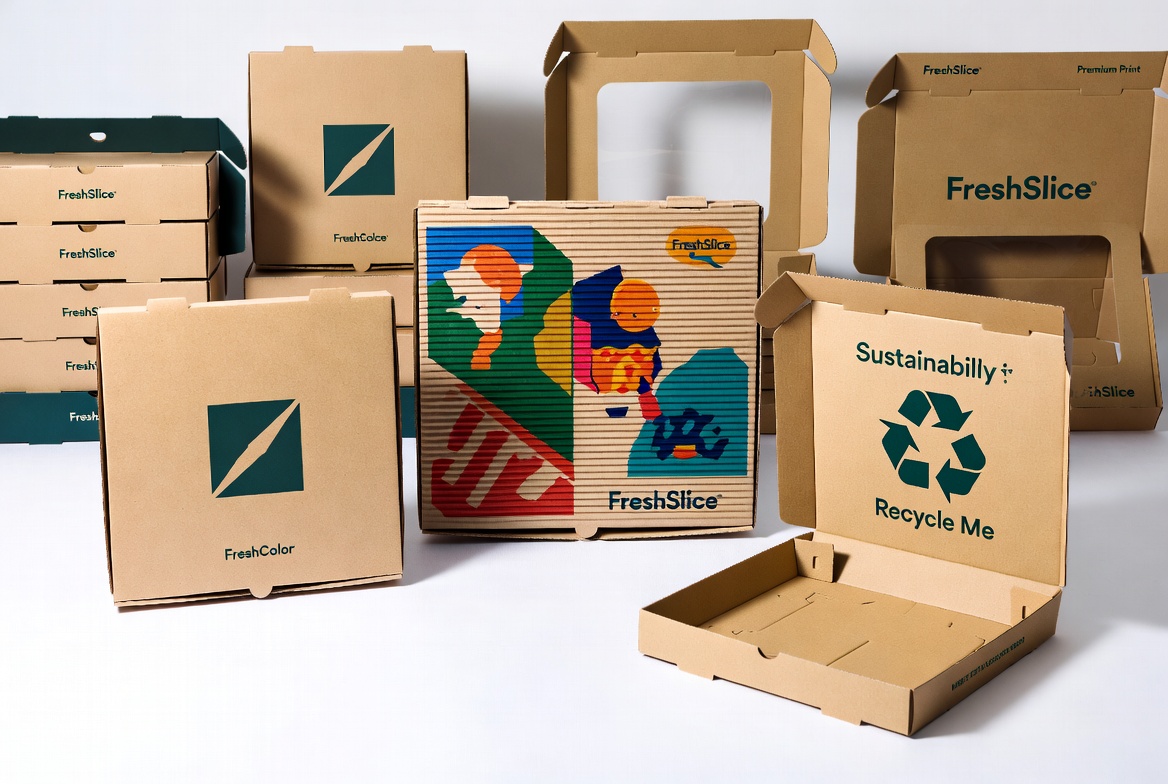
From a UX standpoint, the most effective pizza box is one that makes the next step obvious. Clear, simple instructions can transform recycling rates. Best‑in‑class messaging is built around four core actions repeatedly emphasized by recycling organizations. [recyclingpartnership]
Step‑by‑step checklist for consumers:
1. Empty the box completely.
- Remove leftover slices, crusts, sauces, and toppings. [recyclingpartnership]
2. Remove liners and extras.
- Take out foil sheets, wax paper, plastic pizza savers, and sauce cups. [cmmonline]
3. Check contamination.
- Light grease stains are fine; heavily soaked or burnt boxes should go in the trash. [recyclesmartma]
4. Flatten the box.
- Break it down to save space in recycling bins and make sorting easier. [cmmonline]
5. Follow local rules.
- If your city only accepts "clean cardboard," recycle the clean lid and discard only the heavily soiled base.
By printing this checklist—or a simplified version—on the inside flap of the box, brands can nudge behavior at precisely the moment the user is most engaged with the packaging.
How Food Brands Can Transition to More Sustainable Pizza Packaging
Switching to a better pizza box is not only about printing a recycling symbol. It is a structured project that touches supply chain, operations, and brand positioning. [restaurant]
Key considerations recommended by food industry associations include: [restaurant]
- Performance: The box must keep hot foods hot, prevent leaks, and withstand delivery conditions without collapsing.
- Right‑sizing: The interior dimensions should fit the pizza closely enough to prevent sliding and reduce material waste. [restaurant]
- Ease of disposal: Customers should immediately know whether to recycle, compost, or reuse the container after use. [restaurant]
- Local infrastructure: Packaging must align with local curbside recycling or commercial composting capabilities in key markets. [restaurant]
- Vendor collaboration: Working with suppliers who actively propose better materials and production methods is critical. [restaurant]
Shenzhen XingKun supports this transition by offering structured development steps: material sampling, print and performance prototyping, small‑batch pilot runs, and final mass production aligned with each client's sustainability roadmap. [xkdisplay]
Why Choosing the Right Packaging Partner Matters
Global brands increasingly expect their packaging suppliers to function as strategic partners, not just box makers. When it comes to pizza boxes and other food packaging, the manufacturer's expertise directly influences sustainability, UX, and cost.
A capable partner should be able to:
- Translate recycling science and local policies into realistic packaging specifications.
- Suggest alternative structures that use less material without compromising protection.
- Optimize artwork and print processes to reduce waste and improve brand consistency.
- Provide reliable export quality, documentation, and compliance support for global markets.
With more than two decades of experience and clients in over 30 countries and regions, Shenzhen XingKun has built a reputation for high‑precision printing, flexible customization, and responsive technical support for B2B food and retail brands. This is particularly valuable for businesses that need to roll out consistent, sustainable pizza box designs across multiple markets with different recycling infrastructures. [cn.linkedin]
Emerging Trends in Sustainable Food Packaging
Pizza boxes do not exist in isolation. They are part of a broader shift toward more sustainable food packaging across categories, from bakery to frozen and ready‑to‑eat meals.
Industry insights show strong growth in:
- Recyclable paper‑based containers designed for curbside collection.
- Compostable packaging for markets with robust organics programs.
- Hybrid solutions with minimal plastic content and clear disposal instructions. [flavorish]
Consumers and regulators are increasingly skeptical of complex multi‑layer plastics and opaque sustainability claims. Brands that move first with credible, recyclable pizza boxes and aligned food packaging often enjoy better customer loyalty and smoother compliance with evolving regulations. [goodnaturedproducts]
UX‑Driven Design for Food Packaging Sustainability
Sustainability is not only about materials. It is also about user experience – how easily customers understand, use, and dispose of the packaging.
Leading restaurant and foodservice organizations emphasize the importance of graphic signage and on‑pack instructions to guide disposal behavior. For pizza boxes and other takeout containers, this translates into: [restaurant]
- Intuitive icon systems indicating "Recycle," "Trash," or "Compost."
- Short, action‑oriented microcopy (for example: "Empty, tear, recycle the box").
- QR codes linking to short videos or local recycling maps.
In multi‑language regions, icons and simple English phrases often outperform long paragraphs of text. Shenzhen XingKun frequently collaborates with brands to integrate UX‑optimized layouts that combine branding, regulatory information, and end‑of‑life instructions without cluttering the design. [xkdisplay]
A Practical Framework for Upgrading Your Pizza Boxes
For brands looking to update their pizza box program, the most effective approach is a structured, phased process. Below is a practical framework that many food businesses can adapt.
Phase 1 – Assessment
- Audit current pizza box specifications, suppliers, and unit costs.
- Map top markets and their recycling or composting infrastructure.
- Collect feedback from customers, store staff, and delivery partners on box performance.
Phase 2 – Design & Prototyping
- Select substrate options based on recyclability and performance benchmarks.
- Co‑develop structures and artwork with your packaging partner to minimize non‑paper components.
- Prototype and test boxes in real‑world scenarios (temperature, delivery, stacking).
Phase 3 – Pilot Launch
- Roll out improved boxes in a limited number of markets.
- Train staff on key talking points and disposal instructions.
- Monitor recycling behavior, damage rates, and customer feedback.
Phase 4 – Scale & Optimize
- Standardize successful designs across similar markets, with minor localization as needed.
- Use production data to optimize print runs and reduce material waste.
- Regularly revisit specs every 12–24 months as regulations and recycling systems evolve.
A manufacturing partner like Shenzhen XingKun can support each phase with design input, structural engineering, sample production, and full‑scale manufacturing under one roof, reducing complexity and lead times. [cn.linkedin]
Example Specification Snapshot
Below is a simple illustration of how pizza box design choices relate to recyclability and UX outcomes.
| Design element | Recommended choice | Impact on recyclability & UX |
| Board material | Corrugated kraft with light coating | Widely recyclable in curbside programs when empty. (recyclesmartma) |
| Non‑paper components | Removable liner only when essential | Reduces contamination and sorting complexity. (restaurant) |
| Printing style | Minimal high‑contrast branding | Lower ink load, easier de‑inking, clear messaging. (restaurant) |
| On‑pack instructions | Short checklist with icons | Improves correct recycling behavior at home. (recyclingpartnership) |
| Box structure | Right‑sized, easy‑to‑flatten design | Less material use, better bin fit, easier collection. (restaurant) |
Why Work With Shenzhen XingKun for Pizza Boxes and Printed Packaging?
As a dedicated printing and packaging producer based in Shenzhen, Shenzhen XingKun Packing Products Co., Ltd. offers:
- Over 20 years of experience in packaging box production, including food and retail applications. [xkdisplay]
- A full range of services from packaging design to high‑quality printing and finishing.
- Proven export capabilities, with long‑term cooperation with brands and distributors in more than 30 countries and regions. [cn.linkedin]
- Flexible MOQs, rapid sampling, and reliable lead times optimized for global supply chains.
For pizza boxes specifically, XingKun can:
- Customize sizes, board grades, and print methods for different pizza menus and delivery models.
- Integrate sustainability messaging, disposal icons, and brand storytelling directly into the box artwork.
- Coordinate quality control and documentation for North America, Europe, and other key markets.
If you are planning to upgrade your pizza box program or develop new sustainable food packaging, partnering with a specialist manufacturer gives you a faster path from concept to shelf with fewer operational surprises.

Clear Call‑to‑Action
If your brand is ready to turn pizza boxes from a recycling headache into a visible sustainability advantage, it starts with better packaging design and the right manufacturing partner.
Contact Shenzhen XingKun Packing Products Co., Ltd. to discuss your next‑generation pizza box or food packaging project, request material and print samples, or explore customized solutions for your key markets. With expert guidance on structure, materials, and user‑centric messaging, your packaging can work harder for the planet, your customers, and your brand. [xkdisplay]
FAQs About Pizza Box Recycling and Sustainable Packaging
1. Are all pizza boxes recyclable, even if they are greasy?
Most corrugated pizza boxes are recyclable even when they have light grease stains, because typical contamination levels do not harm the recycling process. However, boxes that are heavily soaked with oil or filled with food should be discarded, while clean sections such as the lid can often still be recycled. [recyclingpartnership]
2. What should consumers do before putting a pizza box into the recycling bin?
They should remove leftover pizza, sauces, foil or wax paper liners, and plastic "pizza savers," then flatten the box. If local rules emphasize "clean cardboard only," consumers can separate heavily soiled parts for trash and recycle the rest. [recyclingpartnership]
3. How can brands make pizza boxes more sustainable without hurting performance?
Brands can choose recyclable corrugated board, minimize non‑paper components, optimize box size, and use smart printing that balances branding with lower ink coverage. They should also design clear disposal instructions on the box to guide end‑of‑life behavior. [recyclesmartma]
4. Why do recycling rules differ between cities or countries?
Local recycling policies reflect the capabilities of nearby mills, sorting facilities, and waste management contracts. Some systems easily handle food‑contact corrugated, while others restrict or require it to be almost completely clean, which is why checking local guidance is important. [cmmonline]
5. How can a packaging manufacturer like Shenzhen XingKun support our sustainability goals?
A specialized manufacturer can recommend appropriate substrates, optimize box structures, ensure print quality, and integrate on‑pack sustainability messaging tailored to target markets. They also provide prototyping, testing, and export support to help brands scale new designs smoothly and consistently across regions. [cn.linkedin]


