Content Menu
● Why custom flash cards still convert
● What makes a flash card deck effective
● Choosing the right use case
● Design principles that improve usability
● Recommended card sizes and formats
● Paper, coating, and durability
● Print-ready file checklist
● Production workflow for OEM buyers
● A practical comparison
● Industry insight: where flash cards add real value
● Case-style applications
● How to make your deck stand out
● Why XingKun is a strong OEM partner
● CTA: start your custom quote
● Conclusion
● FAQ
>> 1. What is the best size for custom flash cards?
>> 2. What file format should I send to print flash cards?
>> 3. Can flash cards be used for marketing?
>> 4. What finish is best for frequently handled cards?
>> 5. Why are flash cards effective for learning?
>> 6. What should OEM buyers confirm before production?
● References
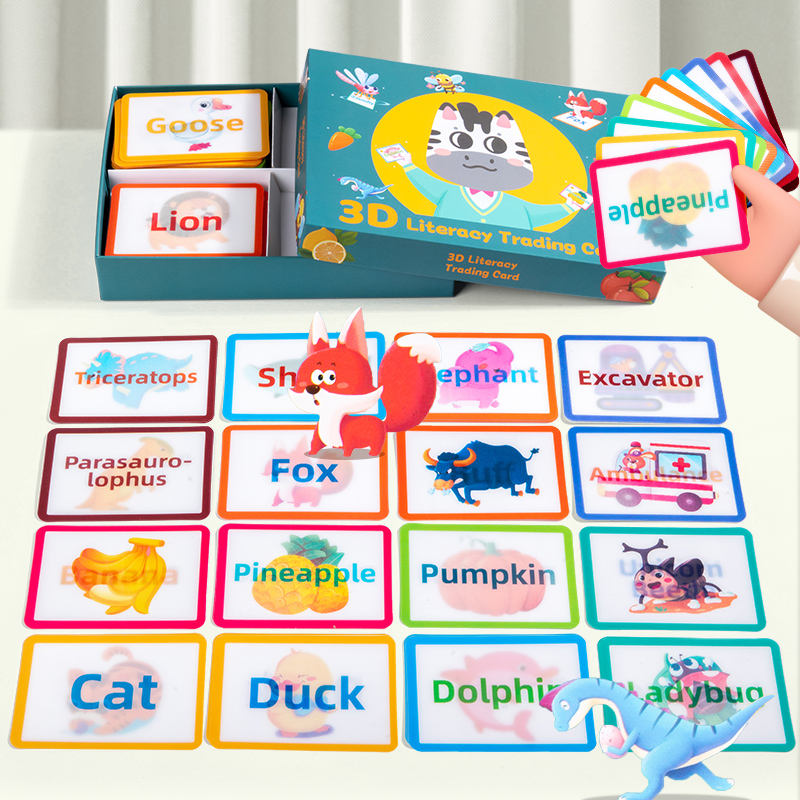
Print custom flash cards when you need a compact, durable, and highly effective tool for learning, training, product education, or brand promotion. In my experience working with OEM and ODM print projects, flash cards perform best when the content is simple, the design is clear, and the printing spec matches the real use case. [bookprintingchina]
Businesses often underestimate how versatile flash cards can be. Beyond classroom learning, they can support onboarding, language training, sales enablement, wellness programs, children's education, and even promotional campaigns when designed with strong visual hierarchy and print-ready production standards. [hobo-web.co]
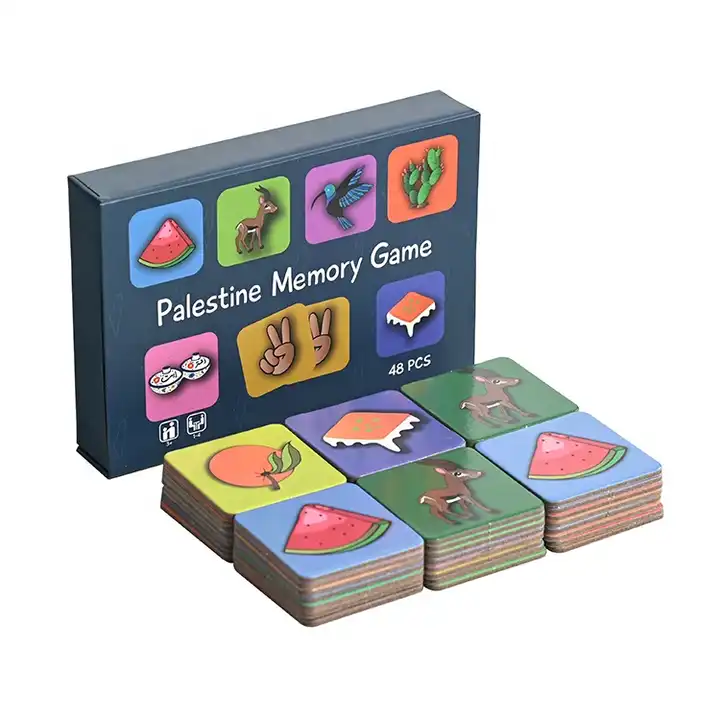
Why custom flash cards still convert
Custom flash cards remain popular because they combine speed, portability, and recall. Each card delivers one idea, one question, or one visual prompt, which makes the format ideal for active learning and repeated review. [nesslabs]
For brands, that same simplicity becomes a marketing advantage. A single deck can showcase product features, explain procedures, teach terminology, or reinforce brand messages without overwhelming the reader. [smartpress]
What makes a flash card deck effective
A good deck is not just "printed well." It is designed around how people actually use flash cards in real life. Research on spaced repetition shows that distributed review is more effective than cramming, and flash cards are one of the easiest tools for that method. [en.wikipedia]
The most effective decks usually share four traits:
One idea per card.
Clear front-and-back logic.
Readable typography and strong contrast.
Durable paper, coating, and finish choices. [smartpress]
Choosing the right use case
Before you print custom flash cards, define the exact job the deck must do. A learning deck for language students needs a different layout than a branded product deck for distributors or a training deck for employees. [bookprintingchina]
Common use cases include:
Education and exam prep.
Language learning.
Corporate onboarding.
Product training.
Sales and retail education.
Children's learning games.
Wellness, affirmation, and coaching decks. [bookprintingchina]
When the use case is clear, the card size, artwork style, paper stock, and finishing can all be chosen with purpose instead of guesswork. [smartpress]
Design principles that improve usability
Flash cards work best when the reader can process them quickly. That means short content, predictable structure, and enough white space to keep the deck easy to scan. [mrplayingcard]
Use these design rules:
Put the question, term, or visual on the front.
Put the answer, explanation, or supporting detail on the back.
Use a strong font hierarchy for titles and body text.
Keep each side focused on one learning outcome.
Avoid crowded layouts and decorative clutter. [mrplayingcard]
A helpful rule is to treat each card like a micro-lesson. If a card contains two or three concepts, it is usually too dense and should be split into separate cards. [youtube]
Recommended card sizes and formats
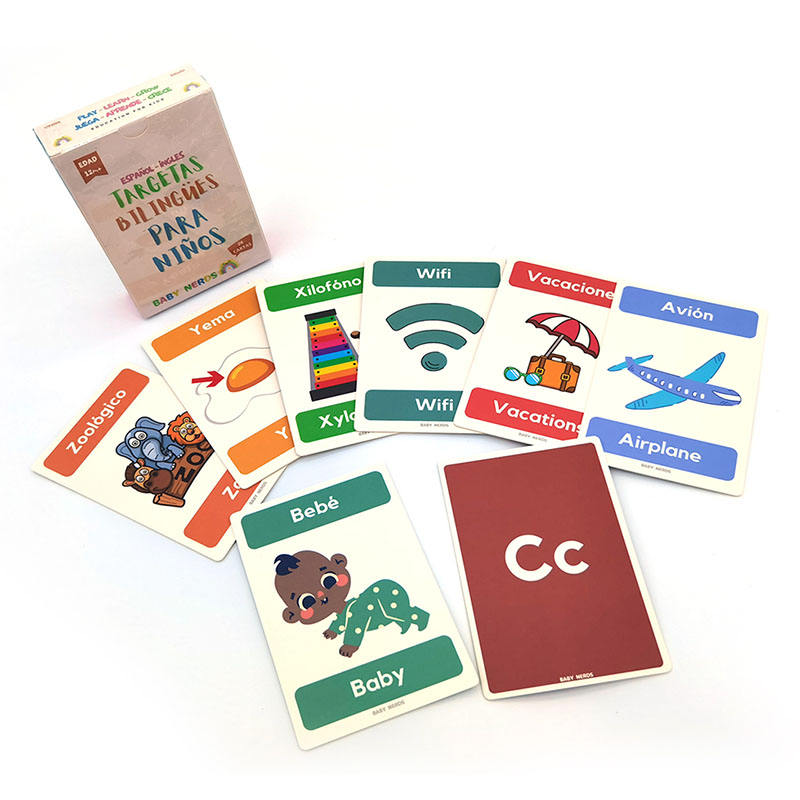
Card size depends on where and how the deck will be used. Smaller sizes are easier to carry, while larger cards give more room for graphics, examples, or bilingual content. [smartpress]
| Use case | Better size direction | Why it works |
| Study or language review | 3" x 5" or similar compact format | Easy to hold and sort |
| Product or brand education | 4" x 6" or custom size | More room for visuals and text |
| Training or workshop materials | 5" x 7" or larger custom size | Better for diagrams and instructions |
| Children’s learning cards | Rounded custom size with durable finish | Safer feel and stronger handling durability |
If your deck is intended for repeated handling, choose a format that remains readable without forcing the user to squint or rotate the card constantly. [smartpress]
Paper, coating, and durability
For printed flash cards, material choice is a major part of the user experience. A thinner stock may be fine for short-term study kits, but decks that are handled often should use sturdier paper and protective finishing. [bookprintingchina]
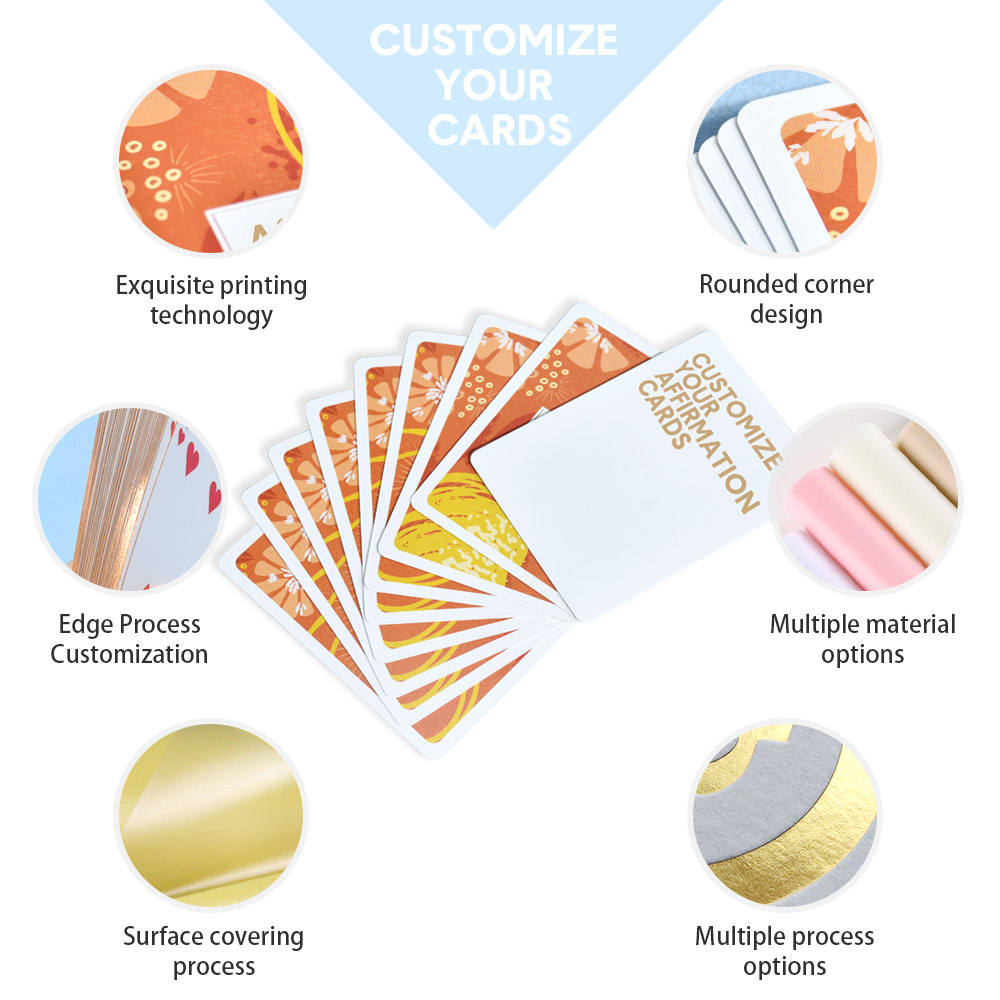
Smart production options commonly include:
Coated or uncoated cardstock.
Lamination for extra wear resistance.
Soft-touch finish for a premium feel.
UV coating for surface protection.
Anti-scratch options for long-term use. [smartpress]
From a manufacturing perspective, the best choice depends on whether the deck will be used in classrooms, retail environments, children's hands, or repeated shipping cycles. [bookprintingchina]
Print-ready file checklist
A lot of printing problems happen before production even starts. That is why file preparation matters as much as paper selection. [printninja]
Before sending artwork to print, make sure you have:
1. High-resolution images, ideally 300 DPI for print. [smartpress]
2. CMYK color mode for better print accuracy. [mrplayingcard]
3. Proper bleed and trim area to avoid cutting issues. [mrplayingcard]
4. Correct card order and pagination for collated decks. [smartpress]
5. A final proof check for text, colors, spelling, and alignment. [printninja]
If a deck includes both text and image-heavy cards, a proof is especially important because layout drift can affect readability and learning flow. [printninja]
Production workflow for OEM buyers
For international brands, wholesalers, and publishers, the OEM process should feel transparent and predictable. A strong factory workflow usually includes quotation, artwork review, proofing, production, quality control, packaging, and shipping. [printninja]
A practical OEM production flow looks like this:
1. Confirm deck purpose, quantity, and target market.
2. Choose size, stock, finish, and packaging.
3. Prepare or upload print-ready artwork.
4. Review digital proof or physical proof.
5. Approve mass production.
6. Inspect final quality and packaging.
7. Arrange freight or fulfillment delivery. [printninja]
This workflow helps reduce misunderstandings between brand teams and factories, especially when multiple languages, markets, or retail channels are involved. [mrplayingcard]
A practical comparison
Here is a quick way to match product goals with production choices.
| Goal | Best content style | Best finish choice | Best manufacturing priority |
| Learning and revision | Simple Q&A, one fact per card | Matte or soft-touch | Readability |
| Premium brand deck | Visual storytelling, minimal copy | Soft-touch, laminated | Brand feel |
| Children’s cards | Big type, icons, durable layout | Protective coating | Safety and durability |
| Sales and product cards | Short benefits, product images | Coating for repeated handling | Presentation quality |
Industry insight: where flash cards add real value
One reason flash cards continue to grow as a product category is that they serve both education and commerce. Smartpress notes that flash cards can function as branding assets, product showcases, and how-to guides, not just study tools. [smartpress]
That matters for B2B buyers because one well-designed deck can serve multiple channels at once. For example, the same deck can be used in schools, sold through distributors, included in a product kit, or packaged as a premium add-on item. [bookprintingchina]
Case-style applications
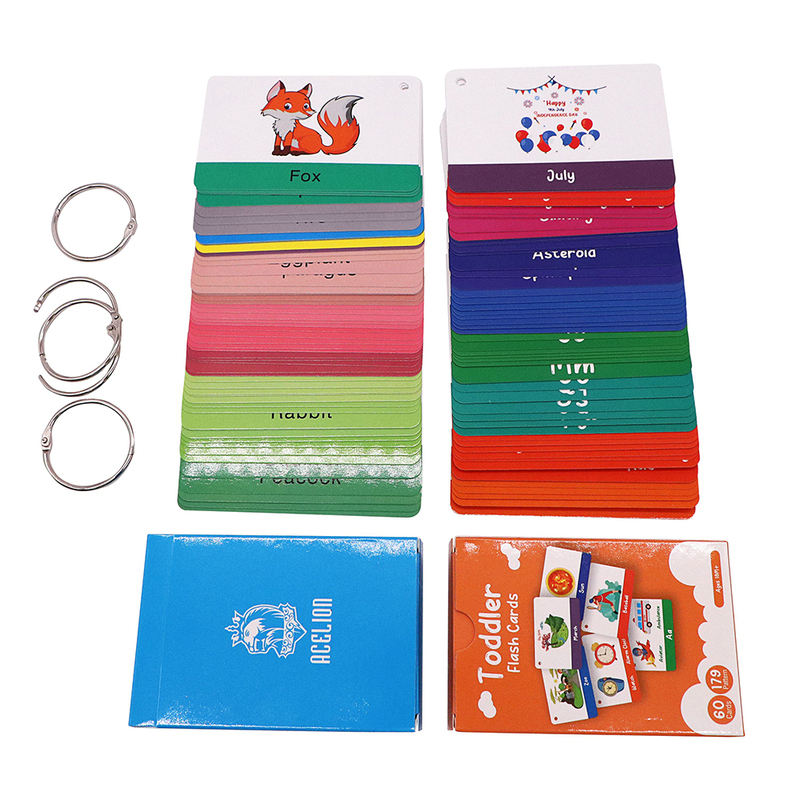
Here are examples of how different buyers can use custom flash cards:
Language brands: vocabulary drills, pronunciation prompts, grammar review.
Training teams: onboarding steps, compliance reminders, customer service scripts.
Wellness brands: affirmations, journaling prompts, coaching exercises.
Retail brands: product features, comparison cards, usage instructions.
Publishers and educators: curriculum support, revision decks, classroom tools. [nesslabs]
This is where print custom flash cards become more than stationery. They become a reusable learning system or a brand touchpoint that customers can physically keep and return to. [nesslabs]
How to make your deck stand out
If you want your deck to feel premium, think beyond the basic card. Color contrast, typography, texture, and consistency often matter more than adding extra decoration. [mrplayingcard]
A high-performing deck usually does three things well:
Makes the message obvious in under three seconds.
Feels comfortable to hold and sort.
Survives repeated handling without looking cheap. [smartpress]
For brand owners, that balance is critical. A deck that looks beautiful but fails in daily use will not deliver the long-term value users expect. [printninja]
Why XingKun is a strong OEM partner
As a China-based printing factory, Shenzhen XingKun Packing Products Co., Ltd. is positioned to support custom card projects that need flexible specifications, wholesale pricing, and branded packaging options. The company also lists related packaging and print capabilities across products such as packaging boxes, playing cards, printed books, stickers, and puzzles, which is useful for buyers planning a coordinated product line. [bookprintingchina]
That broader manufacturing scope matters for global brands because it allows one supplier to support multiple SKU formats, packaging styles, and seasonal campaigns with more consistent quality control. [bookprintingchina]
CTA: start your custom quote
If you are planning to print custom flash cards for education, training, retail, or promotion, start by defining your card size, quantity, stock, finish, and target audience. Then prepare a print-ready file or request layout support so production can begin smoothly. [bookprintingchina]
For product details, deck inspiration, and OEM customization ideas, visit the product page here: [Flash Cards]. [bookprintingchina]
Conclusion
Print custom flash cards are still one of the most practical printed tools for learning, training, and brand communication because they combine clarity, portability, and strong recall value. When the design is simple, the file is print-ready, and the material matches the use case, a flash card deck can deliver both educational value and commercial impact. [nesslabs]
FAQ
1. What is the best size for custom flash cards?
The best size depends on the use case; compact formats suit study decks, while larger custom sizes work better for visual-heavy or branded decks. [smartpress]
2. What file format should I send to print flash cards?
A print-ready PDF is usually the safest choice, and artwork should be prepared in CMYK with high-resolution images and bleed. [mrplayingcard]
3. Can flash cards be used for marketing?
Yes. Flash cards can be used as product showcases, how-to guides, branding assets, and premium inserts in kits or packaging. [smartpress]
4. What finish is best for frequently handled cards?
Lamination or other protective coatings are usually better for decks that will be touched often or used by children and students. [smartpress]
5. Why are flash cards effective for learning?
They support active recall and spaced repetition, two methods widely associated with better retention than cramming. [bcu.ac]
6. What should OEM buyers confirm before production?
They should confirm size, quantity, stock, finish, artwork, proof approval, packaging, and delivery terms before mass production begins. [printninja]
References
1. Smartpress, "How to Make Flashcards in 7 Steps: From Concept to Print," https://smartpress.com/blog/on-press/how-to-make-flashcards-in-7-steps-from-concept-to-print [smartpress]
2. XingKun product page, "Flash Cards," https://www.xkdisplay.com/flash-cards.html [bookprintingchina]
3. Mr Playing Card, "Design and Print Your Own Custom Flashcards (Without a Designer)," https://mrplayingcard.com/blog/design-and-print-your-own-custom-flashcards-without-a-designer [mrplayingcard]
4. PrintNinja, "Custom Flash Card Printing | Educational & Game Cards," https://printninja.com/printing-products/custom-flash-card-printing/ [printninja]
5. Ness Labs, "The power of spaced repetition and flashcards," https://nesslabs.com/spaced-repetition [nesslabs]
6. British Columbia University, "Spaced repetition and the 2357 method," https://www.bcu.ac.uk/exams-and-revision/best-ways-to-revise/spaced-repetition [bcu.ac]
7. Google helpful content / E-E-A-T commentary sources for 2026 context: https://www.hobo-web.co.uk/the-google-helpful-content-update-and-its-relevance-in-2026/ and https://upwardengine.com/blog/google-helpful-content-update-ultimate-guide/ [upwardengine]


