Content Menu
● Japan's Comic and Manga Market
● Structure of the Manga Production Pipeline
● Key Characteristics of Japanese Comic Printers
● Market Growth and Opportunities for OEM Collaboration
● What International Buyers Should Evaluate
● Digital vs. Offset Printing in Japan
● Distribution Channels and Events
● Role of Ancillary Printed Products
● About Shenzhen XingKun as a Global OEM Partner
● Combining Japanese Printing with International Packaging
● Sustainability and Material Choices
● Practical Workflow for Working with Japanese Suppliers
● Risks and How to Mitigate Them
● Future Trends for Comic Book Manufacturers and Suppliers
● Conclusion
● FAQ
>> 1) How can foreign publishers start working with Japanese Comic Book Manufacturers and Suppliers?
>> 2) What advantages do Japanese Comic Book Manufacturers and Suppliers offer compared with other regions?
>> 3) Can small indie creators work with Japanese Comic Book Manufacturers and Suppliers, or are they only for large publishers?
>> 4) How does an OEM partner like Shenzhen XingKun fit into a comic project?
>> 5) What should brands consider when planning logistics for Japan-printed comics and overseas packaging?
● Citations
Japan stands at the heart of the global comics and manga ecosystem, supported by an advanced printing and publishing infrastructure and a strong export orientation. For brands, publishers, and wholesalers searching for reliable Comic Book Manufacturers and Suppliers, Japan offers a blend of traditional publishing powerhouses and modern OEM-capable printing partners that can handle both domestic and international Comic Bookprojects.[2][3][6]
Japan's Comic and Manga Market
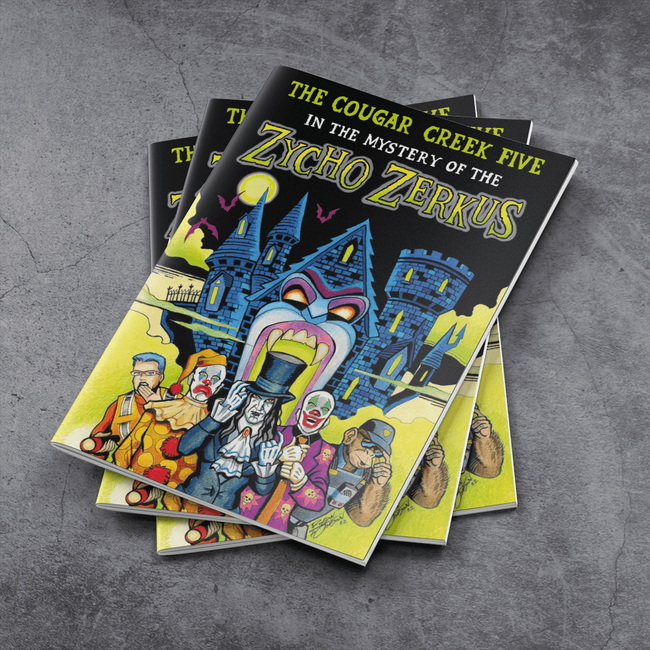
The manga and comic sector in Japan is a multi-billion-dollar industry that has remained one of the most dynamic segments of the country's publishing market. Recent data shows the Japanese comic book market generating several billion USD in annual revenue, with forecasts indicating continued growth over the next decade as both digital and non-digital formats expand.[3][6][2]
Print comics remain central to fan culture even as digital reading platforms grow, which keeps demand high for experienced Comic Book Manufacturers and Suppliers able to manage large, frequent print runs. The synergy between print manga, anime adaptations, and merchandise further drives the need for consistent, high-quality production capacity.[7][8][2][3]
Structure of the Manga Production Pipeline
The Japanese manga pipeline begins with creators (mangaka) and their studios, but it relies heavily on professional printing and distribution networks to bring works to readers. Major publishers oversee serialization, volume compilation, and collaboration with Comic Book Manufacturers and Suppliers to schedule, print, and distribute titles on demanding weekly or monthly cycles.[4][6]
This system is supported by a sophisticated logistics and consignment model in which bookstores can return unsold items, resulting in complex distribution flows that printers and suppliers must accommodate. At the same time, independent and doujinshi creators often rely on smaller Comic Book Manufacturers and Suppliers or digital presses for limited runs sold at conventions and events.[6][4]
Key Characteristics of Japanese Comic Printers
Japanese Comic Book Manufacturers and Suppliers are renowned for their ability to reproduce detailed line art and subtle screentones, which are essential to manga aesthetics. They typically use high-grade offset presses, precise color management systems, and specialized inks suited to both monochrome interiors and vibrant covers.[3][6]
These printers usually offer a wide range of binding options, such as saddle-stitch for slim anthologies, perfect binding for tankōbon volumes, and durable thread-sewn hardcover editions for deluxe releases. Many also maintain strict quality control procedures and certifications to satisfy both domestic publishers and export-oriented clients.[11][6][3]
Market Growth and Opportunities for OEM Collaboration
The Japanese comic book market is forecast to grow significantly through 2033, driven by global interest in manga and anime-related content. As anime adaptations reach audiences worldwide via streaming platforms, demand for original and translated manga rises, creating more work for Comic Book Manufacturers and Suppliers with export experience.[5][8][3]
This environment opens opportunities for OEM partnerships in which overseas brands collaborate with Japanese printers to produce exclusive lines, localized editions, or manga-inspired original series. OEM-friendly Comic Book Manufacturers and Suppliers can handle foreign-language typesetting, custom branding, and coordinated shipping to multiple international markets.[12][4][5][3]
What International Buyers Should Evaluate
When foreign brands evaluate Comic Book Manufacturers and Suppliers in Japan, several considerations are especially important:
- Technical capabilities: ability to reproduce fine screen tones, gradients, and detailed character art without moiré or banding.[6]
- Format flexibility: support for different trim sizes, page counts, and thicknesses commonly used for shonen, shojo, seinen, and omnibus editions.[7][6]
- Turnaround and scheduling: capacity to meet strict release calendars, coordinate with marketing campaigns, and handle repeat reprints when a title becomes a hit.[3][6]
- Export experience: knowledge of packaging, documentation, and compliance for North America, Europe, and emerging markets.[7][3]
Clear project briefs that define target readers, expected print runs, and long-term series plans help Comic Book Manufacturers and Suppliers propose the best technical solutions and pricing.[4][6]
Digital vs. Offset Printing in Japan
While offset printing remains the default for large-volume manga production, digital printing plays a growing role for smaller runs and experimental releases. Digital presses allow Comic Book Manufacturers and Suppliers to offer:[4][7]
- Short-run proofs for testing new series concepts or cover variants.[4]
- Limited editions and event-only exclusives with special finishes or personalized content.[7][4]
- Rapid reprints of backlist titles to respond quickly to demand spikes after anime releases or viral social media exposure.[8][5]
For indie creators and foreign publishers exploring the Japanese market, digital-first runs can reduce risk while still benefiting from local print quality and distribution.[6][4]
Distribution Channels and Events
Beyond bookstores and convenience stores, Japan's comic ecosystem relies on specialized events and fan conventions where small-batch printing is crucial. Doujinshi events such as Comiket and Comitia serve as major outlets where creators sell self-produced works printed by agile Comic Book Manufacturers and Suppliers.[6]
These events have become important testing grounds for new concepts and styles that may later be picked up by mainstream publishers, which in turn generates larger print orders. Publishers and printers monitor such spaces for emerging trends, informing their strategies for future lines and collaborations.[9][4][6]
Role of Ancillary Printed Products
Comics rarely stand alone; they are often part of a broader suite of printed and physical products that support fan engagement and retail presence. Many brands therefore work not only with Comic Book Manufacturers and Suppliers but also with specialized packaging and promotional-item manufacturers.[8][4]
Shenzhen XingKun Packing Products Co., Ltd. is an example of such an OEM partner, providing custom items like paper boxes, plastic boxes, notebooks, playing cards, flash cards, stickers, labels, brochures, and display solutions for international clients. By combining Japanese-printed comic interiors with packaging and promotional materials produced by partners such as Shenzhen XingKun, brands can build cohesive product ecosystems around their IP.[13][14]
About Shenzhen XingKun as a Global OEM Partner
Shenzhen XingKun Packing Products Co., Ltd., established in 2004, specializes in custom printing and packaging for international brands, wholesalers, and manufacturers. The company integrates design, printing, die-cutting, and finishing to produce display stands, paper and plastic boxes, notebooks, playing cards, flash cards, stickers, labels, booklets, and related items.[14][13]
With OEM services focused on overseas markets, Shenzhen XingKun is able to align its production schedule and specifications with those of Comic Book Manufacturers and Suppliers, supporting synchronized launches and bundled product sets. This makes it possible for comic publishers to create boxed sets, collector bundles, and retail-ready displays that increase the perceived value of printed titles.[15][13][14]
Combining Japanese Printing with International Packaging
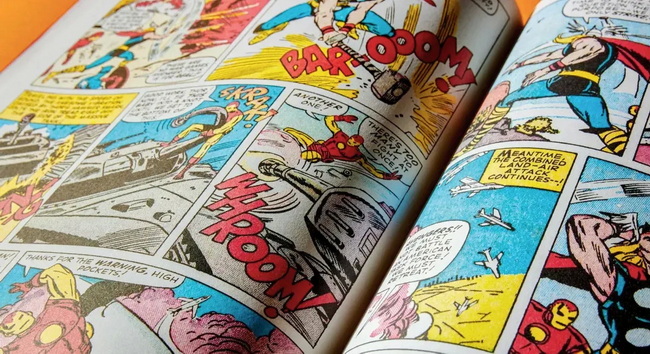
A common strategy for global brands is to print the core comic content in Japan while producing packaging and side products in high-capacity OEM hubs like Shenzhen. This approach allows brands to leverage Japanese reputation and quality for content, while optimizing costs and flexibility for packaging, merchandising, and logistics.[16][17][13]
For example, a publisher might work with Japanese Comic Book Manufacturers and Suppliers for tankōbon volumes, then collaborate with Shenzhen XingKun to create:
- Branded slipcases, collector boxes, or subscription boxes.[13][14]
- Character-themed notebooks, flash cards, or playing cards as bundled extras.[18][13]
- In-store display stands, header cards, and shelf-talkers for bookstores and comic shops.[14][13]
This integrated strategy supports stronger brand storytelling and retail impact while keeping production scalable and cost-effective.[15][13]
Sustainability and Material Choices
Sustainability is an increasingly important consideration for Comic Book Manufacturers and Suppliers and their clients. Printers in Japan and OEM partners abroad are adopting eco-friendly papers, soy-based or low-VOC inks, and recyclable or reusable packaging structures to meet regulatory and consumer expectations.[19][11][7]
Brands that articulate clear environmental targets—such as using certified paper stocks or minimizing plastic in packaging—can work with their manufacturing partners to design solutions that balance durability, cost, and ecological impact. Communicating these choices through on-product messaging and marketing can also strengthen brand reputation with environmentally conscious readers.[19][7]
Practical Workflow for Working with Japanese Suppliers
To collaborate successfully with Comic Book Manufacturers and Suppliers in Japan while integrating international OEM packaging, many brands follow a staged workflow:
1. Concept and planning
Define target demographics, distribution channels, and long-term series plans, including possible spin-offs and merchandise. Decide early which elements will be produced in Japan and which will be handled by partners like Shenzhen XingKun.[13][14][4][6]
2. Specification development
Detail page count, trim size, paper types, binding method, and finishing effects. Parallel to this, design packaging, display stands, and accessories so that all visual elements share a unified style.[11][19][13][6]
3. Supplier selection and sampling
Shortlist Comic Book Manufacturers and Suppliers with relevant experience and request print samples and test runs. Do the same with OEM partners for boxes, cards, stickers, and other items to compare quality and durability.[14][3][13][6]
4. Prepress, proofing, and alignment
Finalize print-ready files, confirm color profiles, and approve physical or digital proofs. Coordinate production timelines so comic printing and packaging fabrication complete in sync, minimizing warehouse time and handling costs.[11][19][13][6]
5. Production, QC, and logistics
Monitor production progress, review quality reports, and schedule inspections where necessary. Plan consolidated shipments that combine comics, packaging, and promotional materials for efficient distribution to regional hubs or key retailers.[3][13][14][7]
Risks and How to Mitigate Them
Working across multiple Comic Book Manufacturers and Suppliers and OEM partners introduces risks related to quality inconsistencies, schedule slippage, and communication gaps. These can be mitigated by:[3][6]
- Establishing detailed technical specifications and visual style guides that all suppliers must follow.[11][6]
- Using clear project management frameworks with shared milestones, buffer times, and contingency plans.[7][3]
- Appointing a lead coordinator—either in-house or a trusted external partner—to oversee communication among Japanese printers, overseas OEM factories, and logistics providers.[12][4]
By approaching the supply chain holistically, brands can fully leverage the strengths of Comic Book Manufacturers and Suppliers in Japan while ensuring smooth integration with global partners like Shenzhen XingKun.[13][14]
Future Trends for Comic Book Manufacturers and Suppliers
Looking ahead, several trends are likely to shape how Comic Book Manufacturers and Suppliers operate in Japan and worldwide:
- Digital-physical hybrids: print runs coordinated with digital releases, including QR-linked bonuses, AR features, or limited physical rewards for digital subscribers.[4][3]
- Greater customization: small-batch variants, region-specific covers, and personalized extras targeting different fan segments.[4][7]
- Automation and AI in prepress: tools that accelerate layout, proofing, and error detection to keep up with tight schedules.[5][7]
- Sustainable supply chains: more emphasis on traceable materials, low-impact production, and optimized logistics.[19][7]
Comic Book Manufacturers and Suppliers that embrace these trends will be better positioned to support ambitious, globally oriented comic and manga brands.[5][3]
Conclusion
Japan remains one of the most important centers for high-quality comic and manga production, backed by a robust ecosystem of publishers, printers, and logistics providers. For international brands, working with experienced Comic Book Manufacturers and Suppliers in Japan offers access to refined printing techniques, mature distribution systems, and a powerful association with Japanese pop culture.[2][8][6][3]
At the same time, combining Japanese printing with global OEM partners such as Shenzhen XingKun Packing Products Co., Ltd. makes it possible to design comprehensive product lines that include comics, packaging, displays, and related printed goods. Careful planning, clear specifications, and coordinated timelines allow publishers, licensors, and wholesalers to maximize quality, manage costs, and deliver memorable products that resonate with fans worldwide.[14][13][3][7]
FAQ
1) How can foreign publishers start working with Japanese Comic Book Manufacturers and Suppliers?
Foreign publishers should begin by defining their project scope, including format, print volume, and target markets, then research suitable Japanese printers with proven comic and manga experience. Initial contact usually involves sharing sample files, requesting quotations, and reviewing print samples to confirm that color, detail, and binding meet expectations.[6][11][3]
2) What advantages do Japanese Comic Book Manufacturers and Suppliers offer compared with other regions?
Japanese suppliers have decades of experience handling serialized manga, complex schedules, and high-volume reprints, which translates into stable quality and reliable delivery. Their deep familiarity with screentones, panel layout, and manga-specific finishing methods also helps ensure that artwork looks exactly as creators intended.[2][3][6]
3) Can small indie creators work with Japanese Comic Book Manufacturers and Suppliers, or are they only for large publishers?
While major publishers dominate large-scale production, some printers and service intermediaries offer options for smaller runs suitable for indie creators and doujinshi circles. Digital printing and short-run offset allow these creators to produce professional-looking books for conventions, online sales, or pitches to publishers without committing to massive quantities.[6][7][4]
4) How does an OEM partner like Shenzhen XingKun fit into a comic project?
An OEM partner such as Shenzhen XingKun typically focuses on packaging, display stands, notebooks, cards, stickers, and other printed collateral that supports the main comic product. By coordinating with Comic Book Manufacturers and Suppliers, they ensure that all materials share consistent branding, dimensions, and quality levels, resulting in cohesive product bundles and stronger in-store presentation.[15][13][14]
5) What should brands consider when planning logistics for Japan-printed comics and overseas packaging?
Brands need to align production schedules so that comics and packaging are completed at compatible times, then plan consolidated shipments to minimize handling and storage costs. Attention to customs requirements, labeling rules, and packaging durability is essential to prevent delays and damage during international transport.[19][3][7]
Citations
[1](https://www.ibisworld.com/blog/how-manga-has-dominated-the-comic-book-publishing-industry/)
[2](https://www.statista.com/topics/7559/manga-industry-in-japan/)
[3](https://www.grandviewresearch.com/horizon/outlook/comic-book-market/japan)
[4](https://www.ulpa.jp/post/the-business-of-manga-and-anime-in-japan-a-complete-guide)
[5](https://www.linkedin.com/pulse/japan-comic-book-market-2026-ai-size-surge-key-xlx7e)
[6](https://pmc.ncbi.nlm.nih.gov/articles/PMC9510287/)
[7](https://deepmarketinsights.com/vista/insights/comic-book-market/japan)
[8](https://comicbookclique.com/popculturenews/anime-economic-boom)
[9](https://www.ijprems.com/uploadedfiles/paper/issue_6_june_2025/41891/final/fin_ijprems1749561562.pdf)
[10](https://www.prnewswire.com/news-releases/manga-market-to-grow-by-usd-28-15-billion-2025-2029-boosted-by-growing-e-commerce-industry-ai-redefining-market-landscape---technavio-302369868.html)
[11](https://www.kyodoprinting.com/company-profile/pdf/profile2024_en.pdf)
[12](https://www.takaski.com/oem-japan/)
[13](https://www.xkdisplay.com/aboutus.html)
[14](https://www.xkdisplay.com)
[15](https://www.xkdisplay.com/top-poker-cards-manufacturers-and-suppliers-in-netherlands.html)
[16](https://www.accio.com/supplier/manga-manufacturers)
[17](https://www.alibaba.com/showroom/japan-manga-comics.html)
[18](https://www.syloon.com/best-coloring-book-manufacturers-in-china)
[19](https://www.qinprinting.com/packaging/)


