Content Menu
● What "Game Card Manufacturers" Really Do Today
● Market Outlook: Why Demand for Custom Game Cards Is Surging
● Core Capabilities to Look For in Game Card Manufacturers
>> 1. Materials and Cardstock Engineering
>> 2. Color Management and Print Consistency
>> 3. Precision in Cutting, Collation, and Packaging
>> 4. Scalability, Lead Times, and MOQs
● Compliance, Safety, and Certifications: Non-Negotiables for Global Brands
● OEM vs ODM: What Kind of Partner Do You Need?
● Cost Structure: What Really Drives Your Per-Unit Price
● Sustainability and Eco-Friendly Game Card Manufacturing
● Digital Trends: From AR Integrations to Print-on-Demand
● Case-Style Scenario: From Prototype to Mass Production with XingKun
● Comparison: Local vs Overseas Game Card Manufacturers
>> Key Differences at a Glance
● Practical Checklist for Vetting Game Card Manufacturers
● How XingKun Positions Itself Among Game Card Manufacturers
● Conclusion
● FAQ
>> 1. What is the minimum order quantity (MOQ) when working with game card manufacturers?
>> 2. How long does it take to produce custom game cards?
>> 3. Can game card manufacturers handle packaging, manuals, and extras?
>> 4. How do I ensure my game cards meet safety standards for my target market?
>> 5. Are eco-friendly materials available for game cards and packaging?
● References
Game publishers and brand owners searching for game card manufacturers today face a crowded, global supply base with huge differences in print quality, MOQs, certifications, and service reliability. As a China-based factory working directly with overseas brands, Shenzhen XingKun Packing Products Co., Ltd. has seen first-hand how the right manufacturing partner can decide whether a project ships on time—or never reaches the market. [giiresearch]
What "Game Card Manufacturers" Really Do Today
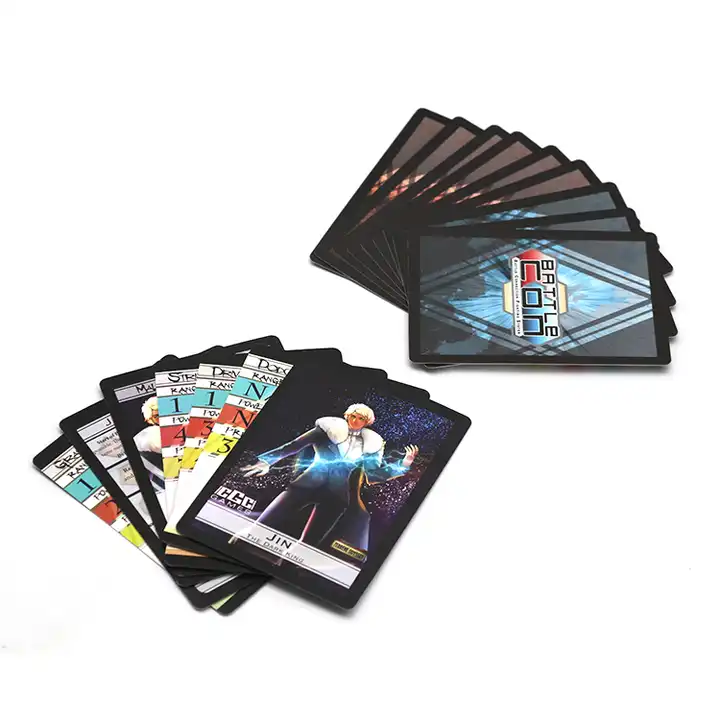
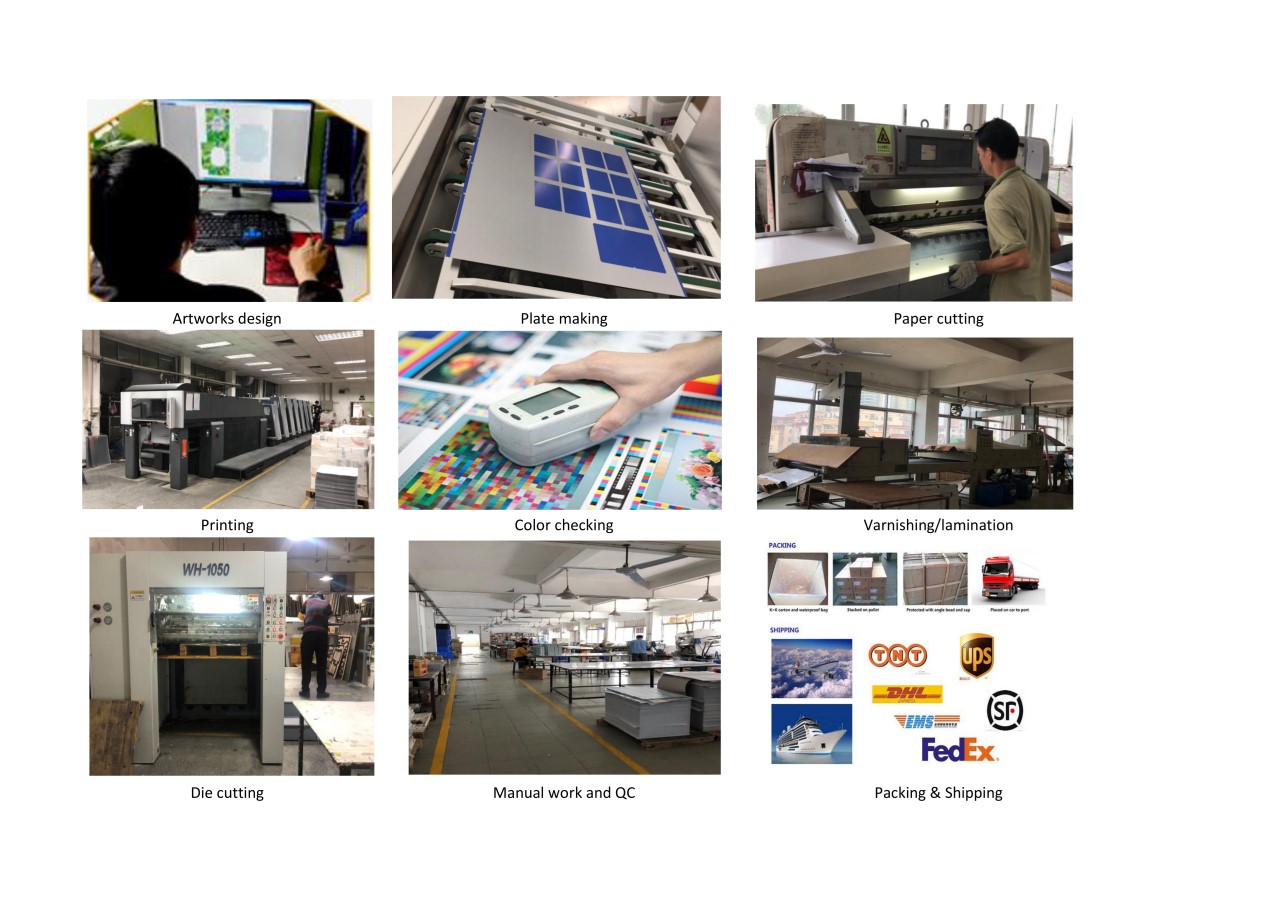
Modern game card manufacturers are no longer just printers; they are integrated partners handling design support, material engineering, color management, assembly, and fulfillment. From indie card games and trading cards to jigsaw puzzles, packaging boxes, and books, manufacturers are expected to deliver consistent quality across a full product ecosystem. [arizton]
A professional manufacturer like XingKun typically provides:
- Offset and digital printing for game cards, boxes, and manuals. [accio]
- Cardstock engineering (core, thickness, stiffness, finish). [giiresearch]
- Color calibration and proofing for brand consistency.
- Die-cutting, collating, shrink-wrapping, and kitting.
- Export packaging, palletization, and shipping coordination.
This end-to-end capability is what separates commodity print shops from true game manufacturing partners.
Market Outlook: Why Demand for Custom Game Cards Is Surging
The demand for custom game cards and board games has grown steadily alongside the broader tabletop boom. This growth underlines why choosing scalable, experienced game card manufacturers is now a strategic decision, not a back-office detail. [openresearch.ocadu]
Key data points:
- The global board games market was valued at around 21 billion USD in 2023 and is projected to approximately double by the end of the decade. [arizton]
- The custom card game printing segment alone was valued in the hundreds of millions of USD in 2024, with stable mid-single-digit annual growth driven by personalized games and niche themes. [accio]
- The custom trading cards market was about 777 million USD in 2024 and is forecast to exceed 1.7 billion USD by 2034, with a CAGR of over 12%. [intelmarketresearch]
For publishers, this means:
- More competition on retail shelves and crowdfunding platforms.
- Higher expectations on component quality and artwork fidelity.
- Greater need for cost-efficient, reliable manufacturers that can scale.
Core Capabilities to Look For in Game Card Manufacturers
When we evaluate factories—whether as a customer or as a peer in the industry—we typically look at four core dimensions: materials, color, precision, and scalability.
1. Materials and Cardstock Engineering
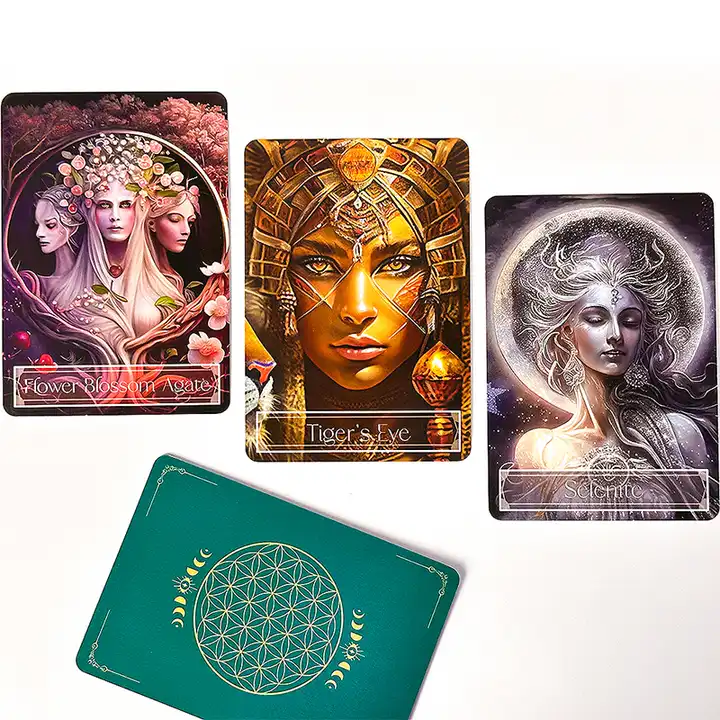
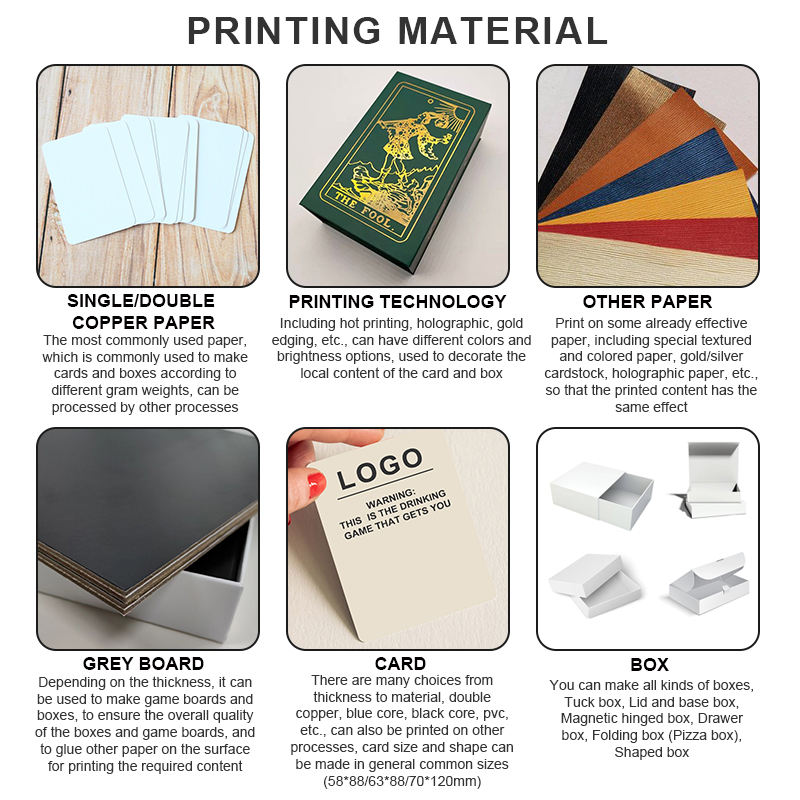
The feel of a deck in hand is often what makes a game feel premium or cheap. Professional game card manufacturers will offer clear options rather than vague "thick card" claims.
Key material questions to ask:
- Card core: Is it gray core, blue core, or black core? (Blue/black core helps reduce show-through and improves opacity for professional games.) [giiresearch]
- Grammage and thickness: Typical playing cards use around 280–330 gsm; heavier stock is often used for tarot cards or luxury editions.
- Finish: Linen (embossed), smooth, or special coatings (UV, matte, anti-scratch).
- Durability: Can they demonstrate shuffle tests, bending tests, or provide lab reports?
At XingKun, international clients often request casino-style blue-core cardstock with a linen finish for longer-lasting, professional-feeling decks, especially for frequently shuffled games like CCGs or poker-style titles. [accio]
2. Color Management and Print Consistency
For brand owners, color accuracy across multiple reprints and expansions is critical. Inconsistent colors can make expansions look like bootlegs or "incorrect" components.
Signs a manufacturer takes color seriously:
- Uses industry-standard color systems (like Pantone) and can print spot colors where needed.
- Offers hard proofs or press proofs for approval before mass production.
- Maintains calibrated presses and documented color profiles.
Experienced factories will also guide you on how to prepare files:
- CMYK artwork with sufficient bleed.
- Minimum font sizes and line weights.
- Clear layer separation for special finishes (foil, spot UV, white ink).
3. Precision in Cutting, Collation, and Packaging
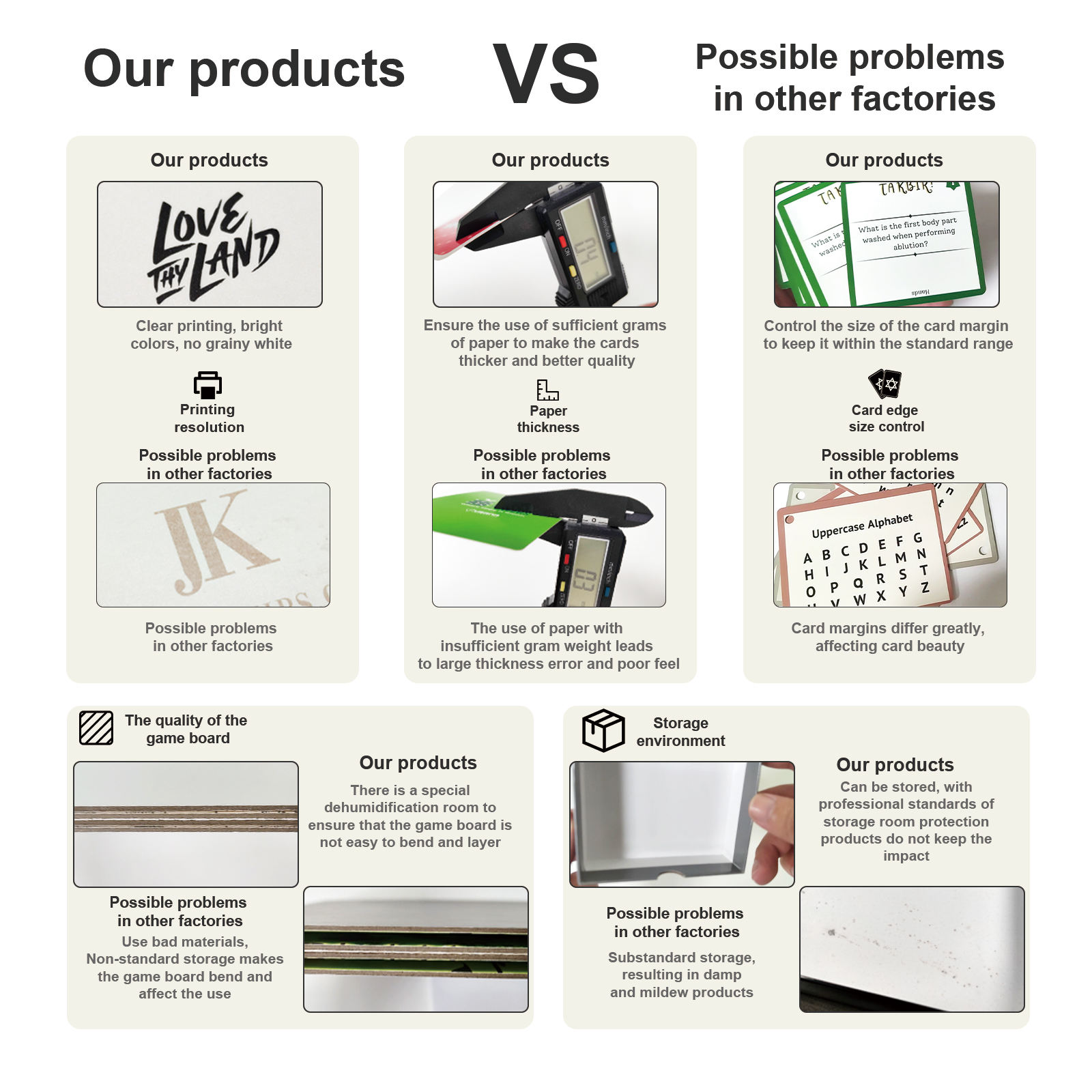
Misaligned cuts and inconsistent rounding are among the most common complaints creators have when working with low-cost printers.
Professional game card manufacturers should demonstrate:
- Tight tolerances on cutting and rounded corners.
- Accurate card collation and sorting sequences.
- Correct component counts per box, backed by QC processes.
A factory used to board games and card games will also understand nuances like:
- Matching card backs to avoid marked decks.
- Keeping card stacks flat and even to prevent warping during shrink-wrapping and shipping.
4. Scalability, Lead Times, and MOQs
Your first print run may be small, but a successful game will require fast reprints. Mature manufacturers balance MOQs (Minimum Order Quantities) with flexible capacity.
Discuss with your manufacturer:
- Standard lead time from final file approval to shipment.
- Options for express runs or partial shipments.
- Ability to expand from small pilot runs to large retail runs without changing quality.
Factories like XingKun that serve global OEM/ODM customers tend to have more standardized processes for scaling up while maintaining consistent quality and documentation. [accio]
Compliance, Safety, and Certifications: Non-Negotiables for Global Brands
If you sell into North America or Europe, your game card manufacturer must understand and comply with local regulations. Skipping this step can lead to customs delays, recalls, or legal issues.
Key compliance items:
- EN-71, CE, and relevant safety standards for toys and games in the EU.
- ASTM and other applicable standards for the US and other markets.
- Documentation on ink safety, heavy metals, and material safety.
A serious manufacturer will:
- Provide test reports or support third-party lab testing.
- Advise on compliant warning labels, age grading, and packaging icons.
- Understand retailer requirements (e.g., big-box chains may have stricter standards).
OEM vs ODM: What Kind of Partner Do You Need?
For most overseas brands, working with a Chinese game card manufacturer involves either OEM or ODM services:
- OEM (Original Equipment Manufacturer): You provide complete designs; the factory manufactures exactly to your specs.
- ODM (Original Design Manufacturer): The factory provides design templates, structural engineering, and sometimes artwork support, which you can customize.
As a factory with long-term OEM/ODM experience, XingKun often:
- Helps new brands transform basic game concepts into production-ready files.
- Suggests cost-optimized structures for boxes and inserts without compromising gameplay.
- Standardizes component sizes to reduce waste and production time.
This is particularly valuable for first-time Kickstarter creators, who may not have in-house production engineers.
Cost Structure: What Really Drives Your Per-Unit Price
Many buyers initially focus on unit price, but from the manufacturing side, we see that total project cost depends on several less obvious factors.
Key drivers of cost:
- Number of unique cards: A deck with 300 unique designs is much more complex than one using 60 repeating cards.
- Color coverage and special finishes: Heavy ink coverage, foils, spot UV, and metallics all add cost.
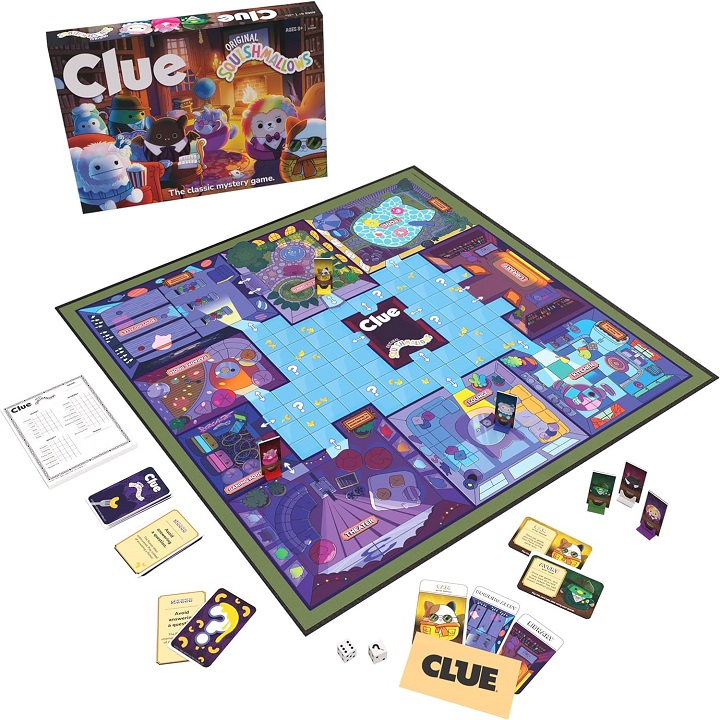
- Box type and inserts: Rigid boxes, custom vac trays, and multi-layer inserts can significantly increase material and assembly costs.
- Manuals and extras: Full-color rulebooks, punchboards, stickers, and extras all add steps.
A transparent game card manufacturer will break down costs so you can decide where to allocate budget—for example, using standard-sized boxes but investing in better cardstock and finish where players actually feel the difference.
Sustainability and Eco-Friendly Game Card Manufacturing
Sustainability is no longer a niche; many backers and retailers expect eco-conscious materials and processes. [arizton]
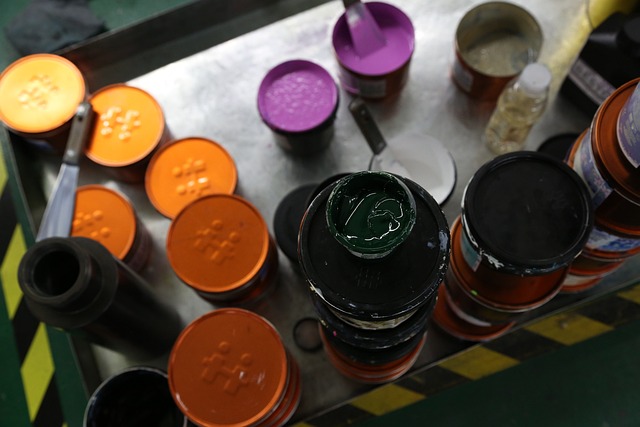
Forward-looking manufacturers offer options like:
- FSC-certified or responsibly sourced paper and cardboard.
- Soy-based or low-VOC inks.
- Reduced plastic in packaging (e.g., paper bands instead of plastic wraps where possible).
- Optimized carton sizes to reduce freight emissions.
Industry reports note a growing trend toward environmentally sustainable game materials, and publishers using these options often highlight them as a selling point. [giiresearch]
Digital Trends: From AR Integrations to Print-on-Demand
While physical cards remain the core, the industry is shifting in ways that affect how game card manufacturers operate. [arizton]
Notable trends:
- Hybrid games: Physical cards combined with apps, AR overlays, or digital tracking. [giiresearch]
- On-demand and short-run printing: Supporting content creators who want frequent, small updates and expansions.
- NFT-inspired collectibles: Some brands experiment with physical cards inspired by digital IPs and collectibles. [giiresearch]
An adaptable manufacturer will be able to:
- Handle frequent reprints and expansions without color drift.
- Collaborate on insert cards, QR codes, and cross-media packaging.
- Provide short-run prototypes ahead of crowdfunding.
Case-Style Scenario: From Prototype to Mass Production with XingKun
Consider a mid-sized publisher launching a custom card game plus a mini-expansion, targeting Europe and North America. They need:
- 110 poker-sized cards with unique artwork.
- A rigid box with plastic tray.
- A 24-page color rulebook.
- Stickers for stretch goals.
Working with XingKun as their game card manufacturer, a typical path would be:
1. Pre-production consultation
- Review game components, target markets, and budget.
- Suggest optimal cardstock and finish combinations.
2. File preparation and proofing
- Provide dielines and templates.
- Produce digital and, if needed, hard copy proofs for color and cut verification.
3. Pilot run or full production
- Once proofs are approved, run printing, cutting, collating, and assembly.
- Apply QC checks for color consistency, correct collation, and component counts.
4. Packing and logistics
- Design export cartons based on destination and shipping mode.
- Coordinate with forwarders or ship to specified consolidation warehouses.
This factory-level perspective helps reduce surprises in timeline, quality, and cost when scaling from a small run to a multi-thousand-unit print.
Comparison: Local vs Overseas Game Card Manufacturers
For many brands, the main strategic decision is whether to work with local manufacturers or overseas partners like China-based factories such as XingKun.
Key Differences at a Glance
| Factor | Local Manufacturer (e.g., US/EU) | Overseas Manufacturer (e.g., XingKun, China) |
| Per-unit cost | Higher on average | Often lower at scale |
| MOQs | More flexible but costlier | Competitive MOQs with cost optimization |
| Lead times | Shorter shipping, similar production | Longer shipping, flexible scheduling |
| Communication | Same/nearby time zone | Requires clear processes and documentation |
| Component ecosystem | Sometimes limited locally | Very broad (cards, boxes, puzzles, books, stickers) |
| Certifications experience | Strong in domestic standards | Strong in multi-region export standards |
| Custom packaging options | Available but pricier | Wide range of OEM/ODM packaging solutions |
For companies building multi-component products (cards, jigsaw puzzles, packaging boxes, printed books, stickers), integrated factories like XingKun often provide more cost-effective, unified production under one roof, reducing coordination overhead.
Practical Checklist for Vetting Game Card Manufacturers
From an industry expert perspective, here is a practical checklist you can use when screening manufacturers:
1. Portfolio and samples
- Request printed samples of cards, boxes, and manuals.
- Ask specifically to see projects similar to yours (e.g., tarot, TCG, family card games).
2. Technical capabilities
- Confirm available card sizes, finishes, and special effects (foil, embossing).
- Ask about maximum number of unique cards and typical tolerances.
3. Certifications and compliance
- Request relevant test reports or compliance statements.
- Verify experience shipping to your target countries.
4. Process transparency
- Understand their proofing process and revision steps.
- Clarify how they handle production errors or defects.
5. Communication and project management
- Evaluate response speed and clarity.
- Confirm you will have a dedicated project manager or contact window.
6. Long-term support
- Ask about timelines and pricing for reprints and expansions.
- Check if they can handle bundling multiple SKUs or mixed pallets.
How XingKun Positions Itself Among Game Card Manufacturers
Shenzhen XingKun Packing Products Co., Ltd. is a China-based factory focused on custom printed packaging boxes, playing cards, jigsaw puzzles, printed books, and stickers for overseas brands, wholesalers, and producers.
From a manufacturing and UX standpoint, XingKun's positioning emphasizes:
- OEM & ODM specialization for game-related and packaging products.
- Ability to coordinate multi-component, brand-consistent sets: cards, boxes, inserts, and marketing materials.
- Active collaboration with overseas clients to ensure files, materials, and logistics match marketplace expectations.
For buyers, this means you can centralize more of your product line (game cards plus related printed materials) with one trusted partner instead of juggling multiple vendors.
Conclusion
Choosing the right game card manufacturer is a strategic decision that affects cost, quality, brand reputation, and delivery timelines. As the custom card and board game markets continue to grow, working with a factory that understands global standards, sustainability trends, and real-world player expectations is increasingly important. [intelmarketresearch]
For publishers, IP owners, and brand managers who need a manufacturing partner—not just a printer—XingKun offers OEM/ODM expertise across cards, boxes, puzzles, books, and stickers, with a focus on helping overseas clients bring polished, compliant, and cost-effective products to market efficiently. If you are planning your next card game, tarot deck, promotional card set, or multi-component boxed game, now is the time to engage with a specialized game card manufacturer and align production with your long-term product roadmap.
Call to Action:
If you are looking for a reliable game card manufacturer with OEM/ODM capability in China to support your next project, reach out to Shenzhen XingKun Packing Products Co., Ltd. to discuss materials, samples, and timelines tailored to your brand's needs.
FAQ
1. What is the minimum order quantity (MOQ) when working with game card manufacturers?
MOQs vary by factory, but many specialized game card manufacturers offer competitive minimums that balance setup costs with unit pricing; overseas factories often provide more favorable MOQs for complex projects.
2. How long does it take to produce custom game cards?
Typical lead times range from several weeks for standard projects to longer for complex sets with multiple components, and you should also factor in international shipping time when working with overseas manufacturers.
3. Can game card manufacturers handle packaging, manuals, and extras?
Many professional manufacturers, including integrated factories like XingKun, can produce cards alongside packaging boxes, rulebooks, stickers, and other printed components to keep branding and quality consistent.
4. How do I ensure my game cards meet safety standards for my target market?
You should confirm that your manufacturer understands regional regulations, can provide relevant test reports, and supports compliance with standards like EN-71, CE, and ASTM for toys and games.
5. Are eco-friendly materials available for game cards and packaging?
Yes, more manufacturers now offer options such as responsibly sourced paper, eco-conscious inks, and reduced-plastic packaging, which can enhance your brand story and appeal to environmentally aware customers. [arizton]
References
1. Accio – "Trend of Card Game Custom Printing in 2025." [accio]
2. The Business Research Company – "Playing Cards And Board Games Global Market Report 2024." [giiresearch]
3. Arizton – "Board Games Market Size, Demand, Growth Analysis & Report." [arizton]
4. Intel Market Research – "Custom Trading Cards Market Outlook 2026–2034." [intelmarketresearch]
5. OCAD University – "A Comprehensive Market Research of The Board Game Industry." [openresearch.ocadu]


