Content Menu
● Why Equipment Label Compliance Matters
● Start With the Applicable Requirements
>> 1. Identify the Product and Market
>> 2. Confirm Which Standards Apply
● Essential Information for Industrial Labels
>> Core Equipment Identification Data
>> Performance and Operating Ratings
>> Safety and Warning Content
● Choose Materials for the Real Environment
>> Label Material Selection Guide
>> Adhesive Is Part of Compliance
● Make Traceability Practical, Not Just Technical
>> Build a Traceability System Around Use Cases
>> Expert Tip: Protect Data Hierarchy
● Industry-Specific Label Considerations
>> Forklifts and Powered Industrial Trucks
>> Medical Devices
>> Aircraft and Aerospace Components
>> Electrical Products and Certified Marks
● Pre-Production Compliance Checklist
>> Content Verification
>> Design Verification
>> Material Verification
>> Final Approval
● Partner With a Label Manufacturer Early
● Frequently Asked Questions
>> What information should be on an equipment label?
>> What makes an industrial label durable?
>> Are QR codes suitable for equipment labels?
>> What is the difference between a nameplate and a sticker label?
>> How should I test a label before mass production?
>> Can one label work for every export market?
● References
Industrial labels are not decorative details. They are working components that communicate safety instructions, equipment ratings, product identity, and traceability information throughout a product's service life.
For manufacturers, distributors, and equipment brands, a well-designed industrial equipment label can support safer operation, smoother inspections, faster maintenance, and more reliable global distribution. A poorly specified label, however, may fade, peel, become unreadable, or fail to carry the information required for its intended market.
At Shenzhen XingKun Packing Products Co., Ltd., we have spent more than 20 years producing stickers, labels, and printed packaging products for brands and distributors in over 30 countries and regions. From our experience supporting custom printing projects, the best outcomes begin long before production: with a clear compliance brief, the right material construction, and a practical understanding of the product's real operating environment.
This guide provides a practical equipment label compliance checklist for industrial, electrical, medical, machinery, warehouse, and export applications.
Why Equipment Label Compliance Matters
A compliant equipment label helps users identify a product, understand its safe limits, and trace it back through manufacturing or service records. In many sectors, it is also a required part of product documentation and market access.
Labels commonly communicate:
- Manufacturer name and contact details
- Product model, part number, or equipment type
- Serial number, batch number, or unique identifier
- Electrical, pressure, capacity, or load ratings
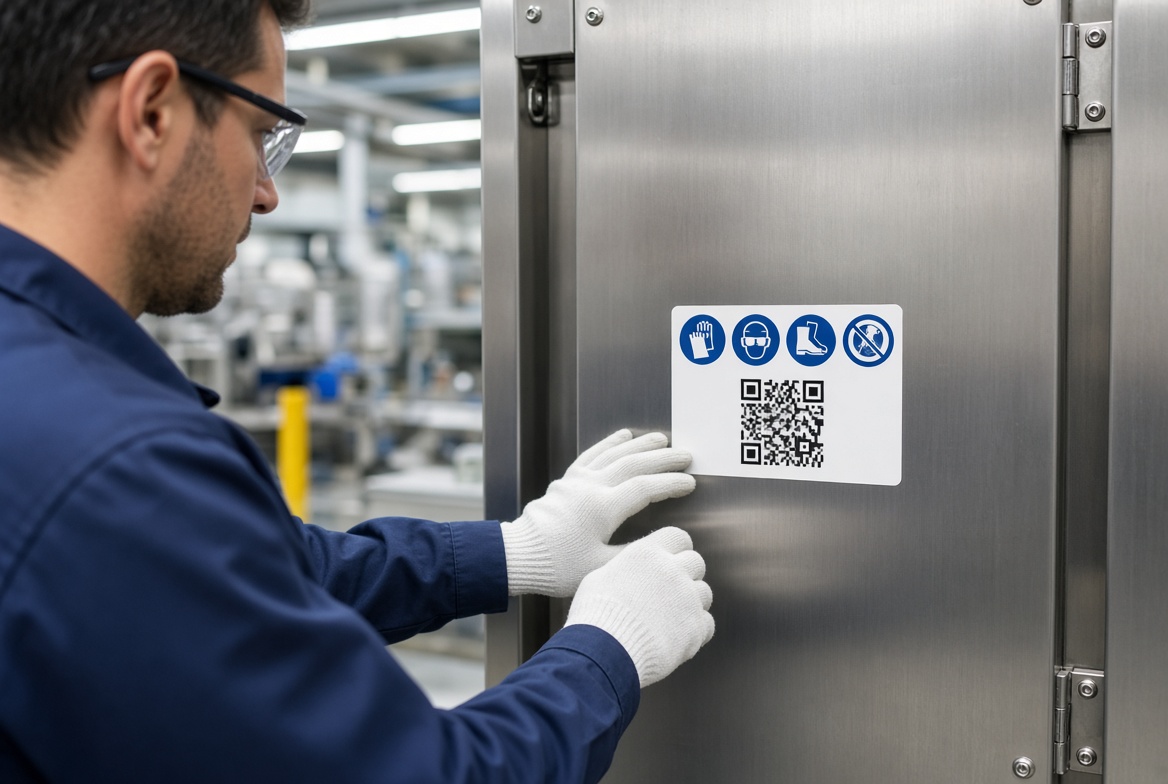
- Safety symbols, signal words, and operating warnings
- Manufacturing date, country of origin, or certification information
- Barcode, QR code, or machine-readable tracking data
The important point is that information alone is not enough. It must remain legible, securely attached, and correctly placed for the duration expected by the relevant product requirements.
For example, a forklift operator must be able to read the truck's capacity information before using attachments or lifting a load. A technician servicing an electrical control panel may need voltage ratings and hazard warnings immediately visible. A medical-device distributor may need a machine-readable identifier that supports product tracking.
Start With the Applicable Requirements
There is no single universal rule for every label. The requirements depend on the product type, target market, intended use, certification route, and operating environment.
Before choosing label stock, adhesive, ink, or printing method, define the following.
1. Identify the Product and Market
Ask these questions first:
- What product will carry the label?
- Where will it be sold, installed, or serviced?
- Is the product used indoors, outdoors, or in harsh industrial conditions?
- Does it need to meet customer-specific specifications?
- Is the label related to product safety, certification, identification, logistics, or branding?
- Will the label be exposed to chemicals, abrasion, heat, moisture, oil, salt spray, UV light, or repeated cleaning?
A label designed for a dry indoor appliance may fail quickly on machinery exposed to solvents, vibration, and high temperatures. The operating environment should shape the specification from the beginning.
2. Confirm Which Standards Apply
Depending on the product, requirements may involve workplace safety rules, electrical certification programs, medical-device identification requirements, aviation rules, or quality-management procedures.
Common examples include:
| Application | Key requirement area | Typical label information |
| Industrial machinery | Electrical and equipment identification | Manufacturer, serial number, rated voltage, load data |
| Forklifts and warehouse equipment | Powered industrial truck safety | Capacity, attachments, model, serial number, warning information |
| Electrical products | Certified marking and permanence | Approved marks, control details, safety information |
| Medical devices | Device identification and traceability | Unique identifier in human- and machine-readable form |
| Aircraft and components | Permanent identification | Builder, model, serial number, certification-related data |
| General workplace hazards | Safety communication | Signal word, hazard description, instruction, symbol |
Do not copy a label layout from a different product category without verification. A visually similar label may have entirely different content, placement, durability, or authorization requirements.
Essential Information for Industrial Labels
A reliable way to avoid omissions is to build a label data sheet before artwork begins. This document should be approved by engineering, quality, regulatory, purchasing, and the customer where applicable.
Core Equipment Identification Data
Most industrial equipment labels require some combination of the following:
- Manufacturer name and business location
- Brand name or logo
- Product name or equipment description
- Model number
- Part number
- Serial number
- Production lot or batch number
- Date of manufacture
- Country-of-origin marking where required
- Website, service contact, or technical-support details
Performance and Operating Ratings
Technical labels should show only verified, approved information. Depending on the equipment, this may include:
- Rated voltage, current, frequency, and power
- Maximum load or lifting capacity
- Pressure rating
- Temperature range
- Speed rating
- Fuel type
- IP rating or environmental protection rating
- Weight
- Compatible attachments or accessories
- Torque, flow, or dimensional limits
Use units consistently. If a product will enter several markets, determine whether dual units are necessary. Technical data should be easy to scan and should not rely on tiny type merely to fit more content into a small space.
Safety and Warning Content
Safety labels must communicate the actual hazard and the action needed to reduce risk. Generic wording such as "Use Carefully" offers little practical value.
A stronger label structure is:
1. Signal word
2. Hazard description
3. Consequence of ignoring the hazard
4. Required action or prohibited action
5. Appropriate symbol, where applicable
For example:
> WARNING: Disconnect power before servicing. Failure to do so may result in electric shock or serious injury.
Workplace accident-prevention signs and tags are intended to alert employees to hazardous or potentially hazardous conditions and equipment. Safety communication must therefore be visible, understandable, and relevant to the point of risk.
Choose Materials for the Real Environment
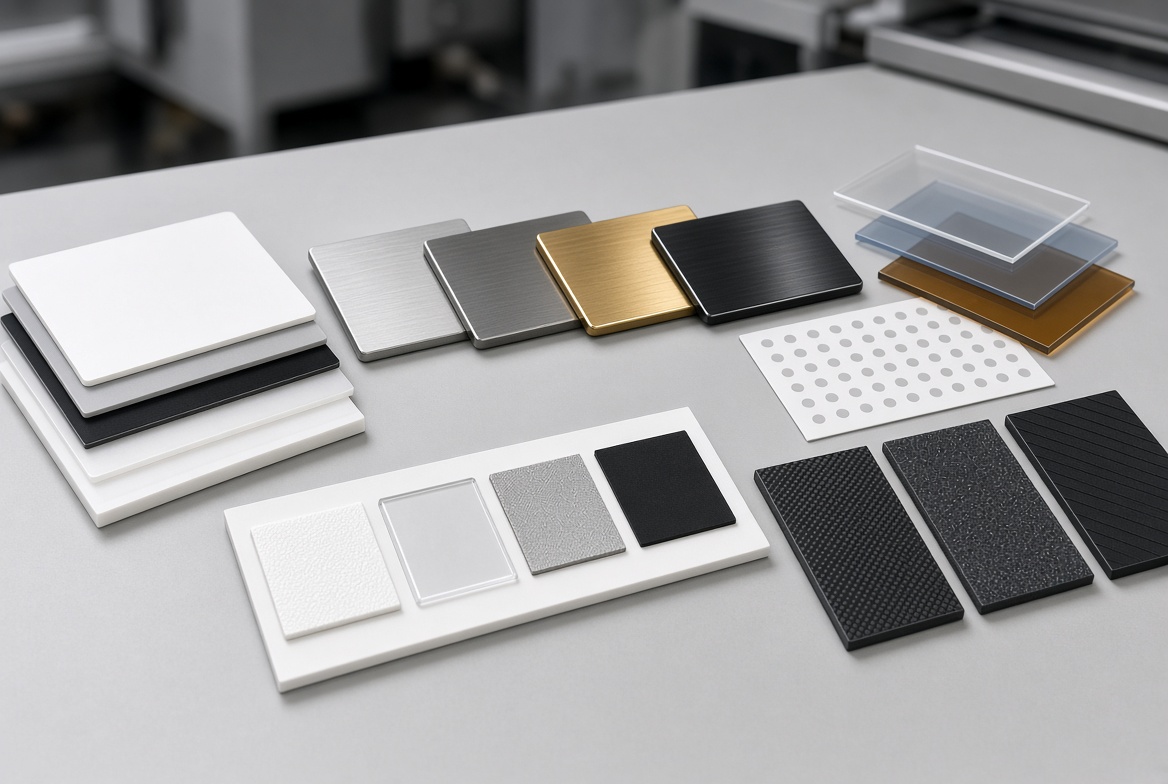
The most attractive artwork cannot compensate for the wrong substrate or adhesive. Material selection should be based on expected exposure, surface type, product life, application method, and performance requirements.
Label Material Selection Guide
| Operating condition | Suitable material direction | Important consideration |
| Indoor, low-contact equipment | Paper or standard film labels | Cost-effective, but confirm moisture resistance |
| Outdoor equipment | Durable synthetic film or metal plate | UV, rain, temperature cycling, and fading resistance |
| Chemical exposure | Chemical-resistant film, coating, and adhesive | Test against actual cleaners, oils, and solvents |
| High heat | High-temperature materials and inks | Confirm peak and continuous temperature limits |
| Rough or textured surfaces | Aggressive adhesive or mechanical fastening | Surface energy and texture affect bond strength |
| Long-life assets | Polyester, polyimide, anodized aluminum, or engraved solutions | Prioritize permanence and service-life legibility |
| Curved containers or cables | Flexible films or wrap-around formats | Match label stiffness to the application surface |
For safety-related permanent marking applications, UL's marking and labeling systems program evaluates labels, nameplates, markers, label materials, and related products. Its listed categories include systems associated with UL 969 and CSA C22.2 No. 0.15.
Adhesive Is Part of Compliance
Adhesive performance is often underestimated. A label can use a durable face material and still fail because the adhesive was not selected for the surface or environment.
Consider:
- Surface material: metal, powder coating, glass, plastic, rubber, painted surface, or low-energy plastic
- Surface condition: clean, oily, textured, curved, cold, or newly painted
- Application temperature
- Long-term service temperature
- Exposure to water, condensation, chemicals, and abrasion
- Required permanence and removal resistance
For high-value equipment, we recommend a pre-production validation approach: apply samples to the actual product surface, allow the adhesive to cure, then expose samples to realistic cleaning, temperature, handling, and chemical conditions.
Make Traceability Practical, Not Just Technical
Traceability labels create value when employees, distributors, service teams, and customers can use them quickly. A serial number hidden in a long paragraph or a QR code printed too small to scan does not support efficient operations.
ISO 9001-based identification and traceability practices focus on identifying outputs where needed, controlling unique identification when traceability is required, and retaining documented information that enables traceability.
Build a Traceability System Around Use Cases
Start by asking what each identifier must enable.
| User | Typical question | Label feature that helps |
| Production team | Which batch is this? | Batch or lot code |
| Quality team | Which inspection record applies? | Serial number or data matrix code |
| Service technician | Which replacement part fits? | Model and part number |
| Distributor | Is this the correct stock item? | Barcode and SKU |
| End user | Where can I access setup instructions? | QR code linked to approved documentation |
| Recall team | Which units are affected? | Unique serial or production identifier |
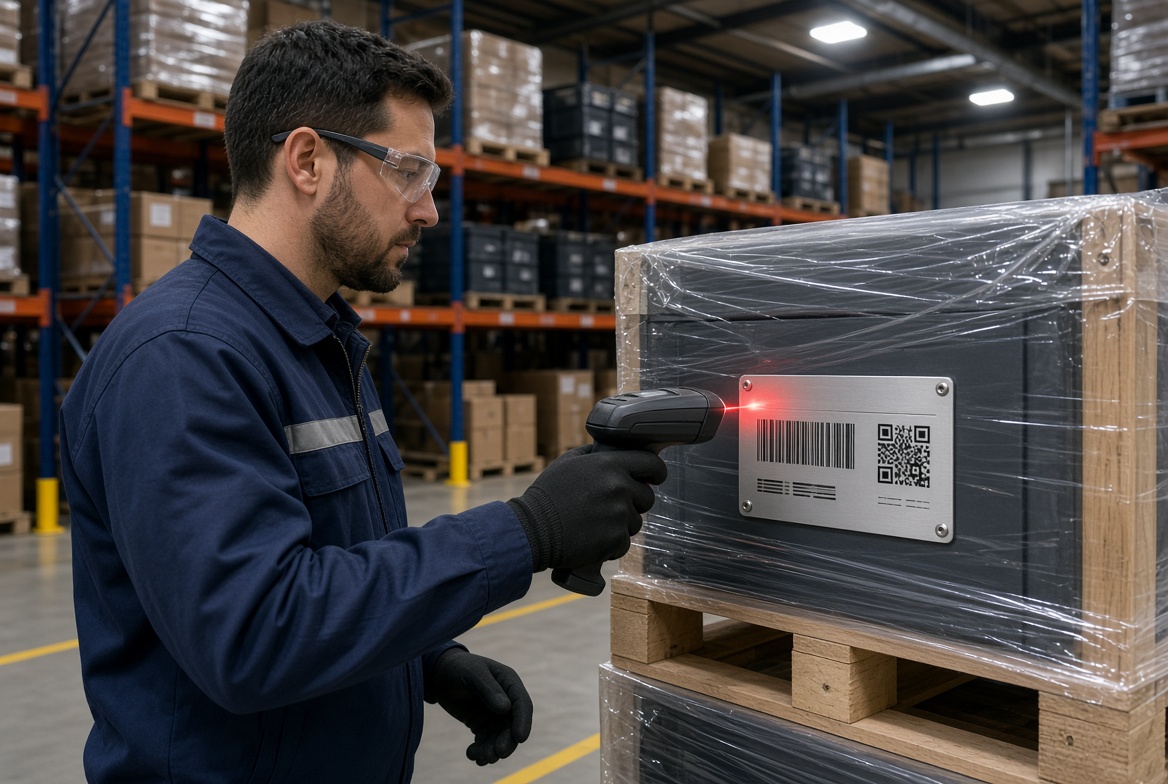
A practical label often combines human-readable text with a barcode, QR code, or data matrix code. Before approving artwork, test the code at the expected scanning distance and under realistic lighting. Also confirm that the digital destination is stable, mobile-friendly, and maintained after the product ships.
Expert Tip: Protect Data Hierarchy
Not every piece of information deserves the same visual weight. Use a clear hierarchy:
- Put the product model and critical safety ratings in the most visible area.
- Separate warnings from technical data.
- Keep serial numbers easy to locate for service and warranty purposes.
- Reserve QR codes for supporting information, not essential safety instructions.
- Maintain adequate white space around machine-readable codes.
This approach makes labels easier to use under time pressure, especially in maintenance, warehouse, and field-service environments.
Industry-Specific Label Considerations
Forklifts and Powered Industrial Trucks
Powered industrial truck requirements cover safety, design, maintenance, and use of forklifts, tractors, platform lift trucks, and similar equipment.
For these applications, capacity information deserves special attention. The label should clearly reflect the truck configuration and any attachment-related capacity changes. Operators need accurate information to avoid unsafe loading conditions.
Key checklist items include:
- Manufacturer and model identification
- Serial number
- Truck weight
- Rated capacity
- Capacity with approved attachments
- Lift height or relevant load-center details
- Readable and durable data presentation
- Placement that remains visible during normal operation
Medical Devices
Medical-device labeling must be handled with exceptional care. In the United States, the general rule under 21 CFR 801.20 requires the label and device package of medical devices to bear a unique device identifier unless an exception or alternative applies.
The identifier must be planned as part of the product's wider labeling, packaging, and data-management process. FDA guidance explains that the identifier is generally presented in both easily readable plain text and automatic identification and data-capture form.
Aircraft and Aerospace Components
Aircraft identification requirements may require a permanent, fireproof identification plate secured to the aircraft. Aerospace labels and plates should be specified for long-term exposure, vibration, temperature variation, and strict recordkeeping needs.
Electrical Products and Certified Marks
Where a certified mark is required, do not treat it as ordinary artwork. The mark, label construction, printing process, authorization route, and supplier capability may all be controlled.
UL explains that when a certification mark and required safety-related information are printed on the same custom label, the label supplier must be an Authorized Label Supplier. Confirm approval requirements before printing, especially when an order includes certification marks, unique tracking details, or pre-approved artwork.
Pre-Production Compliance Checklist
Use this checklist before releasing artwork to production.
Content Verification
- Confirm all model, serial, rating, and warning data with engineering.
- Verify spelling, units, symbols, and language versions.
- Confirm correct market-specific marks and regulatory statements.
- Check that variable data fields have a controlled numbering method.
- Ensure barcode and QR code content matches the approved database or URL.
Design Verification
- Use high contrast between text and background.
- Confirm type size is readable at the intended viewing distance.
- Keep critical information away from bends, edges, screws, and seams.
- Use standardized safety symbols where required.
- Review artwork at actual printed size, not only on a computer screen.
Material Verification
- Match face stock, ink, finish, and adhesive to the environment.
- Confirm adhesion to the actual product surface.
- Evaluate exposure to abrasion, moisture, chemicals, heat, and UV.
- Specify permanent attachment when required.
- Retain approved samples and production records.
Final Approval
- Obtain sign-off from engineering and quality teams.
- Confirm customer approval for branded or regulated content.
- Check variable-data samples before full production.
- Inspect the first production run for legibility, adhesion, and scan performance.
- Keep a controlled artwork version for future reorders.
Partner With a Label Manufacturer Early
The lowest unit price is not always the lowest total cost. Reprints, product delays, rejected shipments, field replacements, and damaged brand trust can cost far more than selecting the right label construction from the start.
A capable printing partner should help you evaluate:
- Label material and adhesive options
- Printing method for expected durability
- Color consistency and symbol reproduction
- Variable-data printing
- Barcode and QR code quality
- Custom shapes, sizes, finishes, and packaging
- Sampling and approval workflow
- Repeat-order consistency for global supply programs
Shenzhen XingKun Packing Products Co., Ltd. supports custom stickers, labels, packaging products, and print solutions for international brands and distributors. With more than two decades of manufacturing experience and service across 30+ countries and regions, our team can help turn technical label requirements into practical, production-ready specifications.
Need custom industrial labels that match your product, environment, and traceability needs? Contact XingKun with your artwork, product photos, target market, and operating conditions to request a tailored quotation and sample recommendation.
Frequently Asked Questions
What information should be on an equipment label?
Most equipment labels include the manufacturer name, product model, serial number, production date, relevant technical ratings, and required safety information. The exact content depends on the product category, market, and applicable requirements.
What makes an industrial label durable?
Durability depends on the full label construction: face material, adhesive, ink, protective finish, attachment method, and compatibility with the operating environment. UV exposure, chemical contact, abrasion, temperature, and surface texture should all be evaluated.
Are QR codes suitable for equipment labels?
Yes, QR codes can provide fast access to manuals, service instructions, certificates, parts pages, or warranty registration. They should be tested for scan reliability and should not replace essential safety information that must remain directly visible.
What is the difference between a nameplate and a sticker label?
A nameplate is generally intended for long-term or permanent product identification and may use metal, rigid plastic, engraving, or highly durable film. A sticker label is broader and may serve short-term, promotional, logistical, instructional, or permanent identification purposes.
How should I test a label before mass production?
Apply samples to the actual product surface and evaluate adhesion, legibility, print resistance, barcode scanning, and appearance under realistic conditions. Testing should reflect expected exposure to cleaning chemicals, heat, cold, moisture, sunlight, abrasion, and handling.
Can one label work for every export market?
Not always. Markets and product categories may have different language, marking, certification, traceability, or placement requirements. Review the intended destination and product requirements before standardizing one universal label design.
References
- [Occupational Safety and Health Administration: 29 CFR 1910.145—Specifications for Accident Prevention Signs and Tags]
- [Occupational Safety and Health Administration: 29 CFR 1910.178—Powered Industrial Trucks]
- [UL Solutions: Marking and Labeling Systems Program]
- [UL Solutions: Marking and Labeling Systems FAQs]
- [U.S. Food and Drug Administration: Unique Device Identification System Guidance]
- [21 CFR § 801.20: Label to Bear a Unique Device Identifier]
- [Federal Aviation Administration: Identification and Registration Marking]
- [U.S. Government Publishing Office: 14 CFR Part 45—Identification and Registration Marking]
- [Keyence: ISO 9001 Identification and Traceability Overview]
- [American Nameplate: Ensuring Your Equipment Labels Meet Industry Regulations]


