Content Menu
● What Are Eco Hang Tags?
● Why Eco Hang Tags Matter for Modern Brands
● Eco Hang Tag Materials: How to Choose the Right Option
>> Recycled vs. Recyclable: Do Not Confuse Them
● Design Principles for High-Impact Eco Hang Tags
>> Keep the Message Simple
>> Use Texture Instead of Plastic Coating
>> Design for Die-Cutting
● The Sustainability Claim Checklist: Avoid Greenwashing
>> Use Specific Claims
>> Match the Claim to the Exact Component
>> Check Certification Rules Before Printing Logos
● A Practical Specification Template for Buyers
● Expert Insight: The "Less Ink, More Story" Approach
● 2026 Compliance Insight: EU and US Green Claims
● How to Order Custom Eco Hang Tags from XingKun
● Cost and Minimum Order Considerations
● Common Mistakes to Avoid
● Conclusion
● FAQ
>> 1. What are eco hang tags?
>> 2. Are kraft hang tags always eco-friendly?
>> 3. Can I print "100% recycled" on my hang tags?
>> 4. What is the best material for luxury eco hang tags?
>> 5. Can eco hang tags include QR codes?
>> 6. How do I avoid greenwashing on hang tags?
>> 7. What attachment should I use for an eco hang tag?
● References
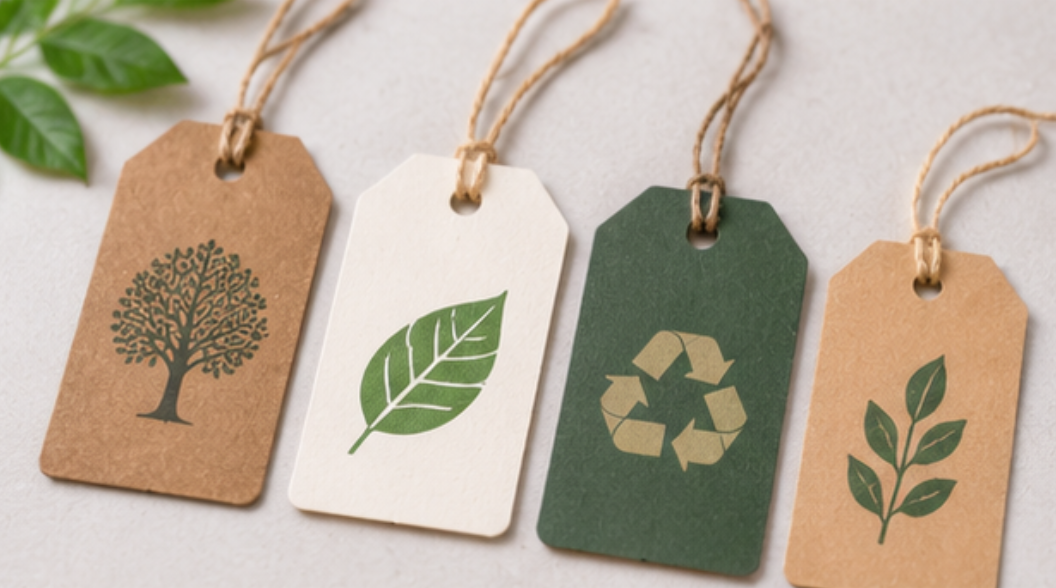
Eco hang tags are sustainable swing tags made from responsibly sourced, recycled, biodegradable, or lower-impact materials and printed with processes that reduce waste and chemical use. For apparel, cosmetics, food, gifts, and lifestyle brands, they turn a small piece of paperboard into a visible proof point for a credible sustainability strategy.
As a manufacturer serving global OEM and ODM buyers, we see the same issue repeatedly: brands want an "eco" tag, but they are unsure what that actually means. A tag is not sustainable simply because it is brown. True eco hang tags require deliberate decisions across material sourcing, ink, coatings, attachments, print method, recyclability, and claim substantiation.
This guide explains how to design, specify, and source eco hang tags that look premium, perform in retail, and avoid greenwashing risk.
What Are Eco Hang Tags?
Eco hang tags—also called sustainable swing tags, recycled hang tags, or environmentally friendly hang tags—are product tags designed to reduce environmental impact while communicating brand identity, price, sizing, care instructions, materials, certifications, and product stories.
They are commonly used on:
- Clothing and fashion accessories
- Footwear and bags
- Jewelry and cosmetics
- Candles, skincare, and wellness products
- Food, beverage, and gift items
- Toys, stationery, and home goods
At XingKun, eco hang tags can be produced in recycled paper, kraft paper, FSC-certified paperboard, and other custom material options, with digital printing, die-cutting, embossing, debossing, and foil stamping available depending on the design and sustainability target. [xkdisplay]
The key distinction is this: an eco hang tag is a system, not just a material. A recycled board printed with heavy plastic lamination and attached with a non-recyclable plastic fastener may undermine the environmental benefit you intended to communicate.
Why Eco Hang Tags Matter for Modern Brands
Eco hang tags matter because they sit at the point of purchase, where customers make fast judgments about quality, value, and brand values.
A well-designed sustainable tag can:
- Reinforce brand positioning without adding bulk to packaging
- Communicate material provenance and responsible sourcing
- Support premium perception through texture, typography, and finishing
- Reduce packaging waste by replacing larger inserts or plastic labels
- Create a QR-code touchpoint for product traceability, care guidance, or recycling instructions
- Differentiate private-label products in crowded retail environments
However, the wording on the tag matters as much as the material. In the United States, the FTC's Green Guides require environmental claims to be truthful, clear, and substantiated. If a tag is only partly recycled, the recycled-content percentage should be clearly qualified—for example, "Made with 30% recycled material." [consumer.ftc]
Eco Hang Tag Materials: How to Choose the Right Option
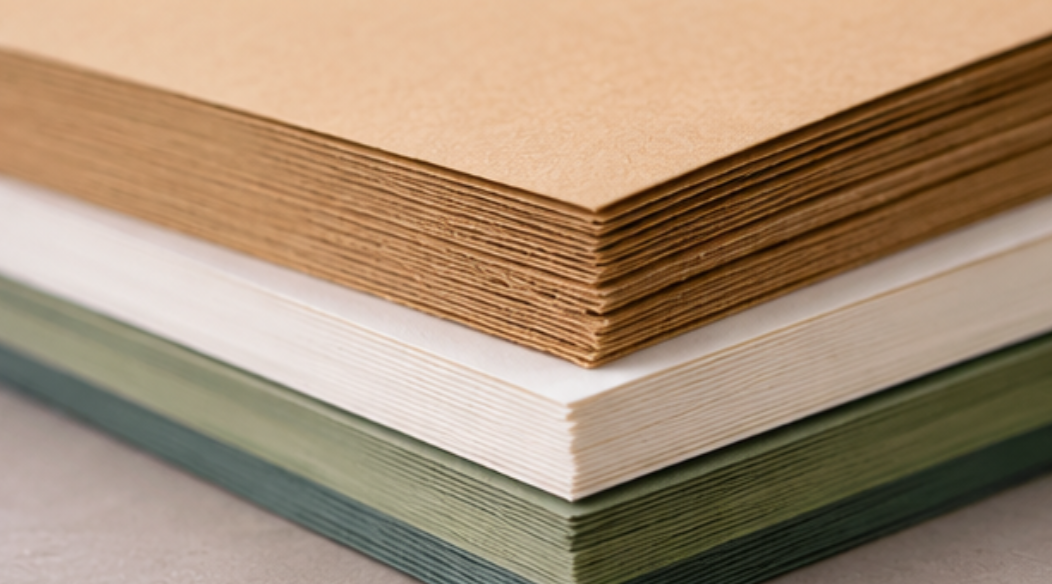
Material selection is the foundation of a credible eco hang tag program. The best choice depends on your product category, budget, brand aesthetic, durability needs, and disposal environment.
| Material |
Best for |
Sustainability advantage |
Design consideration |
| Recycled paperboard |
Apparel, accessories, general retail |
Diverts material from the waste stream; supports recycled-content messaging |
Specify recycled percentage and whether it is pre- or post-consumer |
| Kraft paper |
Artisan, organic, food, and natural brands |
Natural appearance and strong association with simplicity |
Uncoated kraft can absorb ink differently than coated stock |
| FSC-certified paper |
Brands needing traceable fiber sourcing |
Supports responsible forest management claims when properly certified |
Use certification marks only according to the certifier’s rules |
| Cotton rag or specialty fiber paper |
Luxury, jewelry, and premium gifts |
Distinctive texture and premium tactile feel |
Usually higher cost; check fiber origin and certification |
| Seed paper |
Campaigns, seasonal gifts, promotional tags |
Can be planted after use in suitable conditions |
Not ideal for every product; germination and local planting rules vary |
| Stone paper |
Water-resistant applications |
Tree-free material and durable surface |
Recyclability and end-of-life pathways vary by region |
| Biodegradable/compostable stock |
Short-life promotional tags |
Can reduce persistence in waste streams where appropriate infrastructure exists |
Avoid broad “compostable” claims without clear conditions and evidence |
XingKun offers recycled paper and kraft paper among its material options, alongside standard paper and plastic for applications where durability or water resistance is required. [xkdisplay]
Recycled vs. Recyclable: Do Not Confuse Them
These terms are often mixed up, but they mean different things:
- Recycled content means the tag contains material recovered from manufacturing or post-consumer waste.
- Recyclable means the tag can be collected and processed through recycling systems—assuming local facilities accept it.
- Compostable means the material can break down under specified composting conditions, which may be industrial rather than home composting.
The FTC specifically distinguishes recycled content from recyclability and advises marketers to qualify partial recycled-content claims with a clear percentage. [ftc]
Design Principles for High-Impact Eco Hang Tags
An eco tag should not look like an afterthought. The strongest designs combine sustainability with retail clarity.
Keep the Message Simple
A hang tag has only a few seconds to communicate. Prioritize:
1. Brand logo
2. Product name or collection
3. Price, size, or barcode where required
4. Material or sustainability claim
5. QR code or website
6. Care, origin, or recycling information
Avoid filling every millimeter with copy. White space improves legibility and makes a sustainability message feel intentional rather than promotional.
Use Texture Instead of Plastic Coating
Many brands reach for glossy lamination because it looks polished. But for eco hang tags, consider:
- Uncoated recycled board for a natural, tactile finish
- Embossing or debossing for dimensional branding without additional material
- Letterpress-style impression for premium minimalism
- Soy-based or water-based inks, where compatible with the paper and print system
- Spot UV only in small areas, if a high-contrast effect is essential
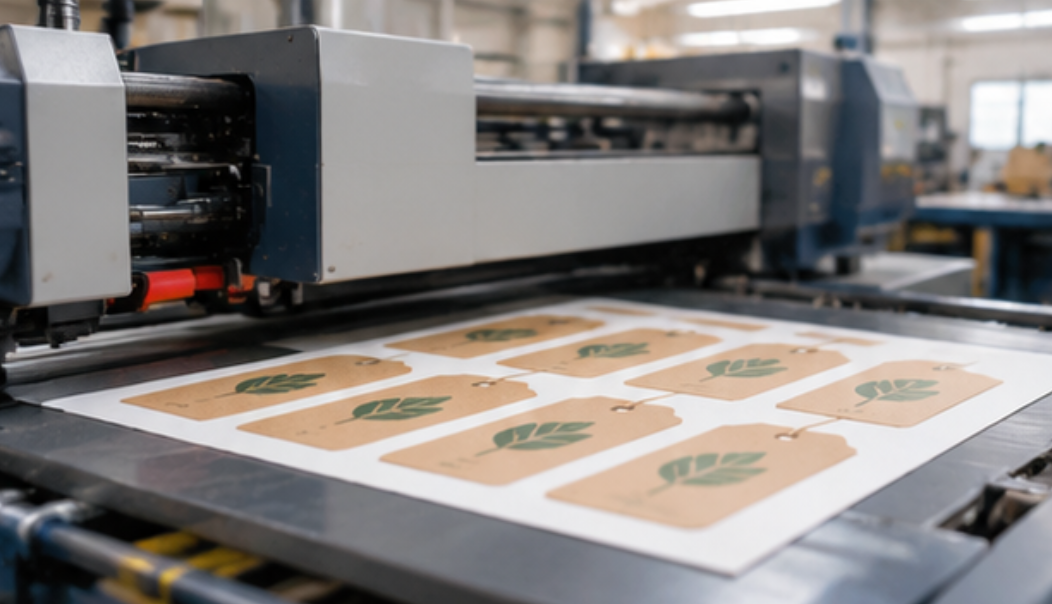
XingKun's production capabilities include digital printing, die-cutting, foil stamping, and embossing/debossing, allowing brands to create visual interest without relying solely on full plastic lamination. [xkdisplay]
Design for Die-Cutting
Die-cut shapes can make a tag memorable, but complex shapes create more waste and can slow production. A good rule is:
- Use simple silhouettes for high-volume runs
- Reserve intricate die-cuts for premium collections or limited editions
- Nest shapes efficiently on the sheet to reduce trim waste
- Avoid fragile thin extensions that may tear during shipping
Die-cut hang tags are especially effective for apparel, accessories, gifts, and boutique products because the shape itself becomes part of the brand experience. [xkdisplay]
The Sustainability Claim Checklist: Avoid Greenwashing
This is the section most brands underestimate. A beautiful eco tag with an unsupported claim can create legal, reputational, and retail-compliance risks.
Use Specific Claims
Instead of vague wording, use claims you can document:
| Avoid |
Better |
| “Eco-friendly” |
“Made with 300gsm recycled paperboard” |
| “Green” |
“Printed with water-based inks” |
| “Sustainable” |
“FSC-certified paper” or “Made with 50% post-consumer recycled fiber” |
| “Plastic-free” |
“No plastic lamination; attached with cotton string” |
| “Biodegradable” |
“Paperboard tag; remove string before disposal” |
The FTC warns that broad claims such as "eco-friendly" or "green" can be deceptive if they imply a comprehensive environmental benefit that cannot be substantiated. Claims should specify whether they refer to the product, packaging, service, or a component. [consumer.ftc]
Match the Claim to the Exact Component
If the tag board is recycled but the foil, laminate, string, or plastic fastener is not, do not imply that the entire tag is recycled. For example:
- Accurate: "Tag board made with 40% post-consumer recycled fiber."
- Risky: "100% eco-friendly hang tag" if the attachment or coating is not included in that claim.
The FTC advises that unqualified recycled-content claims are appropriate only when the entire product or package, excluding minor incidental components, is made from recycled material. Partial content should be qualified by weight or percentage. [ftc]
Check Certification Rules Before Printing Logos
Certification logos can build trust, but they must be used correctly. FSC trademark rules, for example, require the product type to be specified unless all materials of the product and packaging are FSC certified; the Mobius loop should not be used without a percentage figure supported through chain-of-custody controls. [fsc]
Before approving artwork, ask your supplier for:
- Certificate number and validity
- Scope of certification
- Chain-of-custody documentation
- Approval process for logo use
- Exact claim wording
- Recycled-content calculation method

A Practical Specification Template for Buyers
Use this checklist when requesting a quote for custom eco hang tags.
1. Tag size: Width × height, including bleed and safe margins
2. Material: Recycled paperboard, kraft, FSC stock, or specialty paper
3. Thickness: For example, 300gsm, 350gsm, or point-based board specification
4. Color: CMYK, Pantone, or monochrome
5. Print method: Digital, offset, flexographic, or other suitable process
6. Finishing: Embossing, debossing, foil, spot UV, die-cutting, or none
7. Attachment: Cotton string, jute twine, recycled paper string, safety pin, or plastic fastener
8. Hole style: Standard round hole, reinforced eyelet, custom punch, or no hole
9. Quantity: Include trial, launch, and annual volume
10. Sustainability requirement: Recycled percentage, FSC status, ink preference, coating restriction
11. Compliance claims: Exact approved wording and supporting evidence
12. Barcode/QR requirements: Quiet zone, minimum size, scan testing
13. Artwork format: Vector AI/PDF with outlined fonts and dieline
14. Delivery destination: This affects shipping method, duties, and lead time
XingKun's standard production workflow includes concept development, material selection, proofing, printing, and finishing before delivery. [xkdisplay]
Expert Insight: The "Less Ink, More Story" Approach
From a manufacturing perspective, the most successful eco hang tags usually follow a "less ink, more story" approach.
Instead of covering the tag with heavy ink coverage, brands use:
- A natural kraft or recycled board as the visual background
- One or two ink colors
- A debossed logo
- A short sustainability statement
- A QR code linking to a fuller product or sourcing story
This approach often reduces complexity, improves recyclability, and creates a more premium handmade feel. It also gives the brand room to explain *why* the tag is sustainable, rather than relying on a generic green label.
For example, a skincare brand might use:
> "Tag board: 350gsm recycled kraft. Printed with water-based ink. Attached with cotton cord. Scan to learn about our ingredient sourcing."
That is clearer, more credible, and more useful to the customer than simply printing "eco-friendly."
2026 Compliance Insight: EU and US Green Claims
Sustainability marketing rules are becoming more demanding, especially for brands selling into the EU.
Under the EU's Empowering Consumers for the Green Transition Directive, rules that took effect on 27 September 2026 restrict unsubstantiated generic environmental claims, including broad terms such as "sustainable" and "eco," as well as certain carbon-offset-based claims and non-compliant sustainability labels. [legal500]
In the United States, the FTC's Green Guides remain the central reference for environmental marketing claims. They require clear, prominent, understandable disclosures and substantiation for claims such as recycled content. [consumer.ftc]
For global brands, the practical implication is straightforward: design your eco hang tag artwork around verifiable facts, not aspirational language.
How to Order Custom Eco Hang Tags from XingKun
XingKun provides custom design hang tags with OEM and ODM support, including customization of materials, design, size, shape, printing, and finishing. The company highlights recycled paper and kraft paper as eco-friendly options, along with quality assurance, fast turnaround, and expert guidance throughout the design process. [xkdisplay]
A typical ordering process looks like this:
1. Share your brief: Product type, quantity, size, material preference, sustainability goal, and target market.
2. Select the material: Recycled board, kraft, FSC-certified paper, or another suitable option.
3. Approve the dieline and artwork: Confirm dimensions, hole placement, barcode area, and claim wording.
4. Review a digital proof: Check spelling, color, QR code, certification marks, and legal claims.
5. Approve production: The tags are printed, die-cut, finished, inspected, and prepared for shipment. [xkdisplay]
For best results, send a print-ready PDF or vector file with:
- CMYK color values
- Outlined fonts
- 3 mm bleed where applicable
- Separate dieline layer
- QR code test file
- Approved sustainability wording
- Attachment and finishing notes
Cost and Minimum Order Considerations
Eco hang tags do not have to be expensive, but cost depends on several variables:
- Material: Recycled and specialty stocks can cost more than standard paper
- Print method: Digital suits short runs; offset becomes more efficient at higher volumes
- Finishing: Foil, embossing, custom die-cutting, and eyelets add cost
- Attachment: Cotton cord and recycled paper string may cost more than basic plastic fasteners
- Quantity: Larger runs reduce unit cost but increase inventory commitment
- Certification: Certified materials and logo licensing may involve additional documentation or fees
A smart approach is to launch with a simple recycled kraft or recycled white board tag, then upgrade to embossing, foil, or a custom die-cut shape once the product line proves demand.
Common Mistakes to Avoid
- Using "eco-friendly" as a standalone claim without evidence or context
- Printing a recycling symbol on a tag that includes non-recyclable coatings or attachments
- Choosing dark, heavy ink coverage that conflicts with a natural, low-impact brand story
- Using plastic lamination while marketing the tag as plastic-free
- Ignoring QR-code quiet zones, resulting in poor scanning
- Ordering overly complex die-cuts that increase waste and production risk
- Failing to document recycled-content percentages before printing claims
- Using certification logos incorrectly or without supplier approval
Conclusion
Eco hang tags are one of the most cost-effective ways to make sustainability visible at the product level. The best tags combine responsible materials, clean design, honest claims, and practical functionality.
For brands sourcing from China, the winning formula is not simply "choose kraft paper." It is to define the tag's purpose, select a material you can substantiate, minimize problematic coatings and attachments, use certification marks correctly, and write claims that meet the rules of your target market.
If you are developing apparel, cosmetics, gifts, food packaging, or private-label products, start with a clear specification and request a proof before mass production. A well-executed eco hang tag can strengthen brand trust while reducing unnecessary packaging impact.
Ready to create custom eco hang tags for your brand? Contact XingKun to discuss recycled paper options, FSC-compatible sourcing, custom die-cut shapes, premium finishes, and OEM/ODM production support.
FAQ
1. What are eco hang tags?
Eco hang tags are sustainable swing tags made from materials such as recycled paperboard, kraft paper, or responsibly sourced certified paper. They communicate product information and brand identity while reducing environmental impact compared with conventional tags. [xkdisplay]
2. Are kraft hang tags always eco-friendly?
Not automatically. Kraft paper has a natural appearance, but its environmental profile depends on fiber source, recycled content, ink, coating, attachment, and end-of-life treatment. The most credible approach is to specify the material and support any claim with documentation. [consumer.ftc]
3. Can I print "100% recycled" on my hang tags?
Only if the entire tag, excluding minor incidental components, is made from recycled material and you can substantiate that claim. If only part of the tag is recycled, use a qualified claim such as "Made with 30% recycled material." [ftc]
4. What is the best material for luxury eco hang tags?
For premium brands, thick recycled paperboard, cotton rag paper, textured kraft, or FSC-certified specialty stock can work well. Embossing, debossing, foil stamping, and die-cutting can add perceived value without relying on heavy plastic coatings. [xkdisplay]
5. Can eco hang tags include QR codes?
Yes. QR codes are highly effective for linking to ingredient sourcing, care instructions, recycling guidance, authenticity verification, or product stories. Keep a clear quiet zone around the code and test it after printing.
6. How do I avoid greenwashing on hang tags?
Use specific, substantiated claims; identify whether the claim applies to the tag, product, or packaging; qualify partial recycled content; and avoid broad terms such as "eco-friendly" unless you can support the full implied benefit. [consumer.ftc]
7. What attachment should I use for an eco hang tag?
Cotton string, jute twine, recycled paper cord, or a minimal metal eyelet can align better with an eco positioning than conventional plastic fasteners. Always consider durability, safety, recyclability, and the product's retail environment.
References
1. XingKun, "Design Hang Tags Manufacturer in China," [https://www.xkdisplay.com/design-hang-tags.html] [xkdisplay]
2. FTC, *Guides for the Use of Environmental Marketing Claims* (Green Guides), [https://www.ftc.gov/sites/default/files/attachments/press-releases/ftc-issues-revised-green-guides/greenguides.pdf] [ftc]
3. FTC Consumer Advice, "Eco-Friendly and Green Marketing Claims," [https://consumer.ftc.gov/articles/eco-friendly-and-green-marketing-claims] [consumer.ftc]
4. FTC Business Guidance, "Environmental Claims: Summary of the Green Guides," [https://www.ftc.gov/business-guidance/resources/environmental-claims-summary-green-guides] [ftc]
5. Federal Register, "Guides for the Use of Environmental Marketing Claims," [https://www.federalregister.gov/documents/2022/12/20/2022-27558/guides-for-the-use-of-environmental-marketing-claims] [federalregister]
6. FSC, *Requirements for Use of the FSC Trademarks by Certificate Holders*, [https://fsc.org/sites/default/files/2021-09/FSC-STD-50-001%2520V2-1%2520EN.pdf] [fsc]
7. Legal 500, "Green Claims Update: October 2026," [https://www.legal500.com/intelligence/united-kingdom/consumer-protection/green-claims-update-october-2026] [legal500]


