Content Menu
● What Is Nameplate Product Branding?
● How Custom Nameplates Support Your Brand
>> Create Consistency Between Packaging and Product
>> Communicate Attention to Detail
>> Support Identification After Purchase
● Start With the Product Environment, Not the Finish
● Choosing Materials for Custom Product Nameplates
>> Evaluate the Complete Construction
● Design a Nameplate People Can Read
>> Establish a Clear Information Hierarchy
>> Review Artwork at Actual Size
>> Make Finishing Serve the Design
● Nameplate Adhesive and Attachment: Preventing Avoidable Failures
>> Identify the Actual Mounting Surface
>> Define the Installation Procedure
>> Consider Mechanical Fixing When Appropriate
● A Practical Sample-Approval Workflow
>> Step 1: Confirm the Drawing
>> Step 2: Approve a Physical Reference
>> Step 3: Install on Representative Products
>> Step 4: Evaluate Relevant Exposures
>> Step 5: Document Acceptance Criteria
● Add Digital Access Without Losing Essential Information
● An Illustrative Nameplate Planning Scenario
● What to Include in a Nameplate Quotation Request
● Plan Your Next Custom Nameplate With XingKun
● Frequently Asked Questions
>> What Should a Product Nameplate Include?
>> Which Material Is Best for Outdoor Nameplates?
>> Can Custom Nameplates Be Attached to Plastic?
>> Do Nameplates Automatically Increase Product Value?
>> Should We Add a QR Code to Our Nameplate?
>> How Can We Keep Repeat Orders Consistent?
● References
Nameplate product branding turns a small product detail into a lasting connection between your company and its customers. A well-designed nameplate identifies the manufacturer, reinforces visual identity, and helps users find essential product information.
At Shenzhen XingKun Packing Products Co., Ltd., we approach this detail from a printing and packaging perspective: the nameplate should belong to the product, not look like an afterthought. With more than 20 years of experience serving brands and distributors across over 30 countries and regions, our priority is to connect appearance with practical production requirements.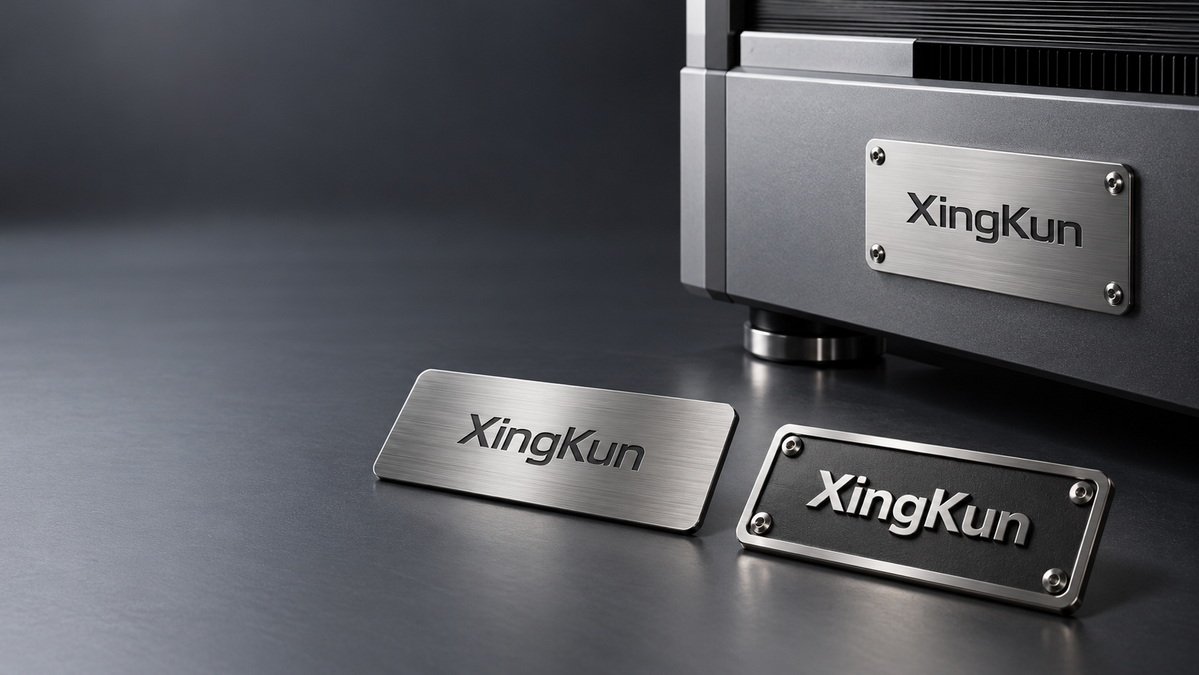
What Is Nameplate Product Branding?
Nameplate product branding uses a permanently or securely attached identification plate to communicate a product's identity. Depending on the application, that plate may include a logo, company name, model number, serial number, or service information.
Its role differs from packaging. Packaging introduces the product before use; a nameplate can remain visible after the box has disappeared.
That makes it relevant to appliances, equipment, furniture, electronics, and other products that customers keep and use repeatedly.
A useful distinction separates two functions:
- Brand identification: helping people recognize the manufacturer.
- Product identification: helping people distinguish the model, unit, or specification.
One nameplate can perform both functions, but the layout should make their relationship clear.
How Custom Nameplates Support Your Brand
Create Consistency Between Packaging and Product
A customer should recognize the same visual identity across the box, instructions, website, and finished product.
Use consistent logo proportions, approved colors, and typography. However, consistency does not require identical production methods. A printed packaging gradient may need simplification when translated into an engraved or embossed plate.
The objective is recognizable identity, not an impractical reproduction of every graphic detail.
Communicate Attention to Detail
A crooked plate, rough edge, or poorly matched finish can interrupt an otherwise carefully designed product.
A clean, proportionate nameplate supports a more coherent presentation. It does not automatically prove product quality or justify a higher selling price, but it avoids creating an unnecessary visual mismatch.
From a manufacturing standpoint, this makes placement accuracy and edge quality part of the branding discussion—not merely finishing details.
Support Identification After Purchase
Clear model and serial information can help customers communicate with distributors or service teams.
For example, a service request becomes easier to interpret when the user can identify the exact product rather than describe its appearance.
Where space permits, combine readable identification with a useful support destination.
Start With the Product Environment, Not the Finish
Before selecting brushed metal or a glossy surface, establish where the nameplate will operate.
A decorative badge on indoor furniture faces different conditions from an identification plate near industrial cleaning chemicals.
Prepare a short application profile covering:
- Indoor or outdoor installation.
- Expected temperature range.
- Contact with water, oils, or cleaning products.
- Exposure to sunlight and abrasion.
- Flat, curved, smooth, or textured mounting surfaces.
- Required readability period.
- Installation method and production-line constraints.
Avoid asking only whether a nameplate is "durable." Durability must describe resistance to particular conditions.
A useful requirement might be: "The plate must remain attached and readable on this painted housing after exposure to the cleaning process used by our customers."
That statement gives the supplier something concrete to evaluate.
Choosing Materials for Custom Product Nameplates
Material selection should balance appearance, manufacturing method, exposure, and attachment.
The following table is a starting point for discussion, not a substitute for application-specific testing.
| Material option | Branding direction | Questions to resolve before approval |
| Aluminum | Metallic appearance with opportunities for printed or engraved detail | What thickness, finish, and protection suit the application? |
| Stainless steel | A substantial metal appearance for technical products | How will the marking, surface finish, and attachment be validated? |
| Brass | Warm metallic styling for a traditional visual identity | Is surface aging acceptable, or must the appearance remain consistent? |
| Polyester or polycarbonate | Printed graphics where a thinner construction is desirable | Which film, ink, coating, and adhesive suit the environment? |
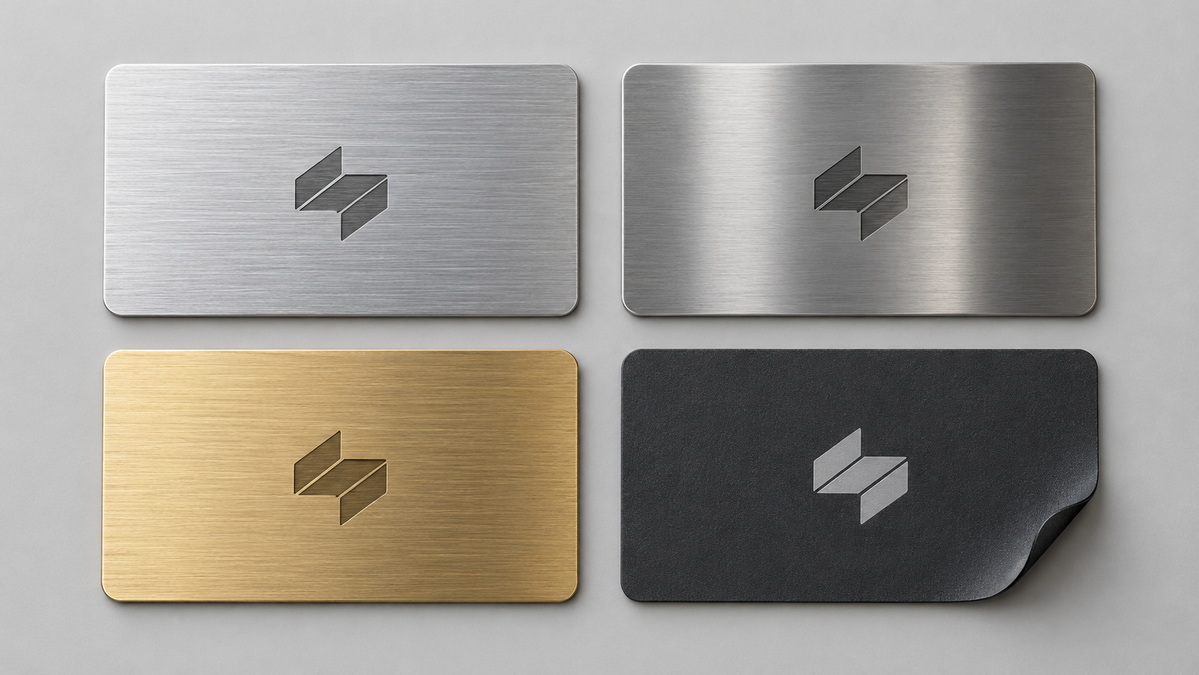
Evaluate the Complete Construction
The face material is only one part of the finished nameplate.
A printed construction may also involve ink, a protective layer, adhesive, and a release liner. A change to one component can affect the overall result.
When comparing quotations, therefore, compare complete specifications rather than material names alone.
Two suppliers offering an "aluminum nameplate" may be proposing different thicknesses, marking processes, finishes, and attachment systems.
Design a Nameplate People Can Read
Establish a Clear Information Hierarchy
Decide what the viewer needs to notice first.
For a decorative brand badge, the logo may dominate. For service identification, the model and serial number may need more space.
A practical hierarchy is:
1. Brand or manufacturer identity.
2. Product model or series.
3. Unit-specific information.
4. Support details, where appropriate.
Keep required safety information sufficiently prominent rather than treating it as leftover text.
Review Artwork at Actual Size
An attractive enlarged mockup can conceal small-text problems.
Review a full-size proof and a physical sample. Check whether thin strokes, narrow spaces, and fine lettering remain clear in the chosen process.
Also inspect the installed plate under realistic lighting. Reflective finishes may look different when viewed from an angle.
Make Finishing Serve the Design
Embossing can introduce raised detail, while contrasting surfaces can separate a logo from its background.
Neither treatment guarantees memorability or commercial success. Use finishing when it improves visual hierarchy, tactile character, or alignment with the product—not simply because another process is available.
Nameplate Adhesive and Attachment: Preventing Avoidable Failures
Attachment deserves as much attention as the visible face.
An adhesive that bonds well to one surface may not perform the same way on another. Surface energy, texture, contamination, temperature, and application pressure all influence contact between an adhesive and the product.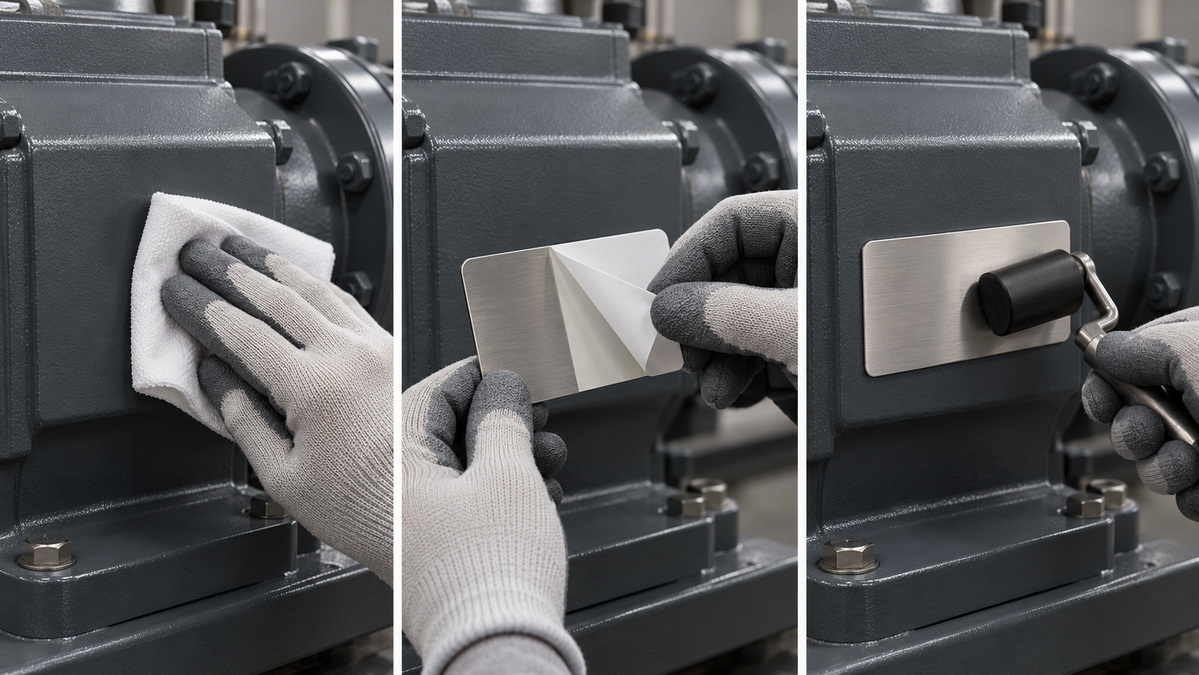
Identify the Actual Mounting Surface
"Plastic housing" is not a complete specification.
Provide the material type, coating details, surface texture, and curvature where available. If possible, send a production component for evaluation.
A powder-coated panel and an uncoated metal panel should not automatically receive the same attachment recommendation.
Define the Installation Procedure
A production instruction should address:
- Approved surface preparation.
- Application temperature.
- Placement alignment.
- Required pressure.
- Any specified waiting period before handling or testing.
Use the adhesive manufacturer's instructions for the selected product rather than applying one universal temperature or waiting time.
Consider Mechanical Fixing When Appropriate
Screws, rivets, or other mechanical arrangements may suit some products, but they introduce their own requirements.
Hole positions, access, appearance, and interaction with the housing must be considered. Select the method with the product design team instead of treating mechanical fixing as a universal upgrade.
A Practical Sample-Approval Workflow
The most valuable sample is one that answers a defined question.
An appearance sample helps assess color and finish. A sample mounted on the intended product helps evaluate fit and installation. Environmental evaluation addresses a different set of concerns.
Use the following workflow before production release.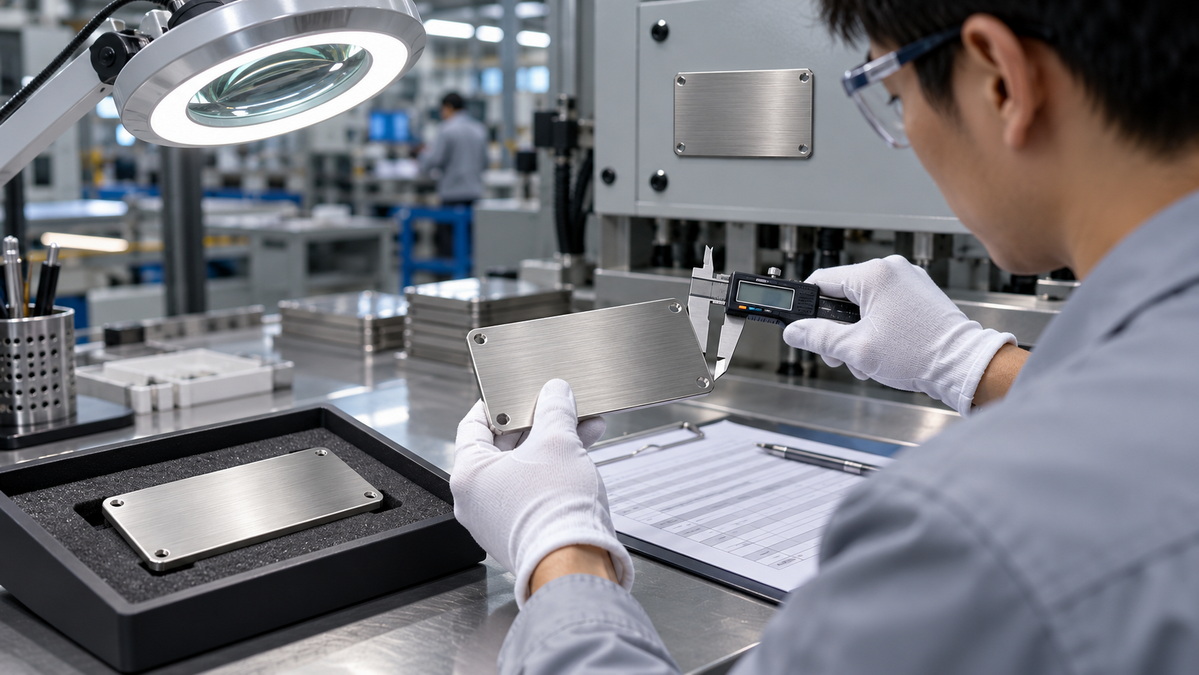
Step 1: Confirm the Drawing
Record dimensions, thickness, corner shape, hole locations, artwork revision, and variable-data fields.
Define tolerances for features that affect fit or appearance.
Step 2: Approve a Physical Reference
Check color, texture, edge quality, lettering, and overall proportions.
Retain an approved reference sample so future orders have a shared comparison point.
Step 3: Install on Representative Products
Use the intended surface preparation and installation process.
Inspect alignment, conformity to curved areas, and any interference with nearby parts.
Step 4: Evaluate Relevant Exposures
Choose checks that reflect actual use, such as cleaning, moisture, abrasion, or temperature exposure.
For safety-related identification, confirm the applicable product and marking requirements with the responsible compliance team. A decorative nameplate approval does not establish suitability for regulated marking.
Step 5: Document Acceptance Criteria
Replace "looks good" with agreed criteria.
Examples include readable characters, correct data, acceptable placement, and no unacceptable lifting or visible damage after the specified evaluation.
Add Digital Access Without Losing Essential Information
A QR code can connect a physical product to instructions, maintenance information, or support.
Its usefulness depends on execution. A code that opens an irrelevant page or becomes unreadable adds friction rather than value.
For a proposed digital feature:
- Choose a destination that answers a real customer need.
- Use a web address your business can maintain.
- Test scanning on the finished production surface.
- Check performance under realistic lighting and viewing angles.
- Keep essential identification readable without scanning.
Do not assume that adding a QR code makes a product traceable. Unit-level traceability also requires controlled identifiers, accurate records, and a process that connects them.
Likewise, a digital destination should supplement—not casually replace—information that must appear on the product.
An Illustrative Nameplate Planning Scenario
Consider an equipment brand launching the same product through several distributors.
The team wants a consistent logo, while each unit needs a different serial number. The housing is painted, and customers periodically wipe it with a cleaning product.
A sensible brief would separate three decisions:
1. Fixed branding artwork shared across all units.
2. Variable information controlled through an approved data format.
3. A construction and attachment system evaluated on the painted housing.
The team could then compare samples against readability, cleaning exposure, and installation requirements.
This is an illustrative planning scenario, not a reported customer project. Its lesson is practical: separate appearance, data, and application requirements before requesting production pricing.
What to Include in a Nameplate Quotation Request
A detailed inquiry reduces assumptions and makes supplier comparisons more meaningful.
Send the following information where available:
| Specification | What to provide |
| Product application | Product type and installation location |
| Artwork | Vector logo, text, and revision reference |
| Dimensions | Length, width, thickness, and tolerances |
| Appearance | Color targets, texture, and finish |
| Attachment | Surface details and preferred fixing method |
| Exposure | Temperature, moisture, cleaning, and abrasion conditions |
| Data | Fixed text, serial numbers, or other variable fields |
| Quantity | Initial order and expected repeat demand |
| Approval | Sample requirements and acceptance criteria |
Also explain packaging and delivery expectations. Protecting the finished face during shipment and handling should be part of the order discussion.
Plan Your Next Custom Nameplate With XingKun
A successful nameplate combines recognizable branding with readable information, suitable construction, and a controlled approval process.
At Shenzhen XingKun Packing Products Co., Ltd., we welcome inquiries from brands and distributors seeking coordinated printing, packaging, and product-identification solutions.
For your next project, send your artwork, dimensions, mounting-surface details, operating conditions, and estimated quantity. Include photographs or a product sample where possible, so the discussion begins with the actual application.
The best starting point is not simply "Which finish looks premium?" It is "What must this nameplate communicate, withstand, and help the customer do?"
Frequently Asked Questions
What Should a Product Nameplate Include?
Include the information needed for its purpose: typically the brand, product identity, and any relevant model or serial details. Confirm required technical or safety information separately.
Which Material Is Best for Outdoor Nameplates?
There is no universal choice. Evaluate the complete construction against sunlight, moisture, temperature, cleaning, and attachment conditions rather than selecting by material name alone.
Can Custom Nameplates Be Attached to Plastic?
Yes, but the plastic type, texture, and surface condition matter. Evaluate the proposed adhesive on the actual housing and follow its application instructions.
Do Nameplates Automatically Increase Product Value?
No. A well-executed nameplate can support consistent presentation, but price and perceived value depend on the wider product, customer experience, and market positioning.
Should We Add a QR Code to Our Nameplate?
Add one when it provides useful access to support or product information. Validate scanning on production samples and keep essential identification readable independently.
How Can We Keep Repeat Orders Consistent?
Maintain approved artwork, drawings, material specifications, physical samples, and inspection criteria. Control revisions so repeat orders do not unintentionally mix different versions.
References
1. American Nameplate. "How Nameplates Promote Your Brand." July 5, 2019. Original article reviewed for its discussion of visual identity, embossing, and product-brand presentation. [american-nameplate]
2. 3M. "Substrate Surface Consideration for Adhesive Selection." Technical guidance supporting the discussion of surface cleanliness, application pressure, surface energy, and adhesive contact. [3m]
3. 3M. "Solutions for Bonding Low Surface Energy Materials." Application guidance supporting the need to assess difficult-to-bond plastics and select an appropriate attachment construction. [3m]
4. UL Solutions. "Marking and Labeling Systems Program." Guidance on evaluation of nameplates and marking systems, including environmental conditioning, adhesion, and legibility. [ul]
5. UL Solutions. "Compliance Guidelines for Marking and Labeling Systems." Technical guidance explaining evaluation of complete constructions on specified surfaces and under relevant exposure conditions. [ul]


