Content Menu
● Etched vs. Engraved Nameplates: The Main Difference
● How Etched Metal Nameplates Are Made
>> Artwork and Protective Masking
>> Etching and Finishing
>> Where Chemical Etching Makes Sense
● How Engraved Nameplates Are Made
>> Mechanical Engraving
>> Laser Engraving
>> Laser Marking Is Not Always Engraving
● Which Nameplate Process Is More Durable?
>> Distinguish Metal Durability From Color-Fill Durability
>> Consider the Mounting System
● Choosing Materials for Custom Metal Nameplates
>> Stainless Steel Nameplates
>> Aluminum Nameplates
>> Brass Nameplates
● Three Practical Selection Scenarios
>> Repeated Equipment Instructions
>> Unique Serial Numbers on Every Plate
>> Identification Exposed to Abrasion
● A Five-Step Sample Approval Workflow
>> 1. Define the Environment
>> 2. Approve Representative Artwork
>> 3. Test the Finished Construction
>> 4. Check Human and Machine Readability
>> 5. Retain an Approved Reference
● Serial Numbers and Codes: Control the Data, Not Just the Mark
● What to Include in a Nameplate Quotation Request
● Plan Your Next Nameplate Project With XingKun
● Frequently Asked Questions
>> Are Etched Nameplates Better Than Engraved Nameplates?
>> Is Laser Etching the Same as Laser Engraving?
>> Can Etched and Engraved Nameplates Be Used Outdoors?
>> Will Color-Filled Lettering Last as Long as the Metal?
>> Which Process Is Best for Serial Numbers?
>> Does a Metal Nameplate Automatically Meet Certification Requirements?
● References
Etched vs. engraved nameplates: which option will keep your product information readable throughout its working life? The answer depends on the material, marking method, operating environment, and information each plate must carry—not simply whether the lettering looks deep.
For equipment manufacturers, brands, and distributors, the choice affects identification, maintenance, replacement costs, and brand presentation.
At Shenzhen XingKun Packing Products Co., Ltd., we bring more than 20 years of printing and packaging manufacturing experience to product identification projects, serving brands and distributors across more than 30 countries and regions.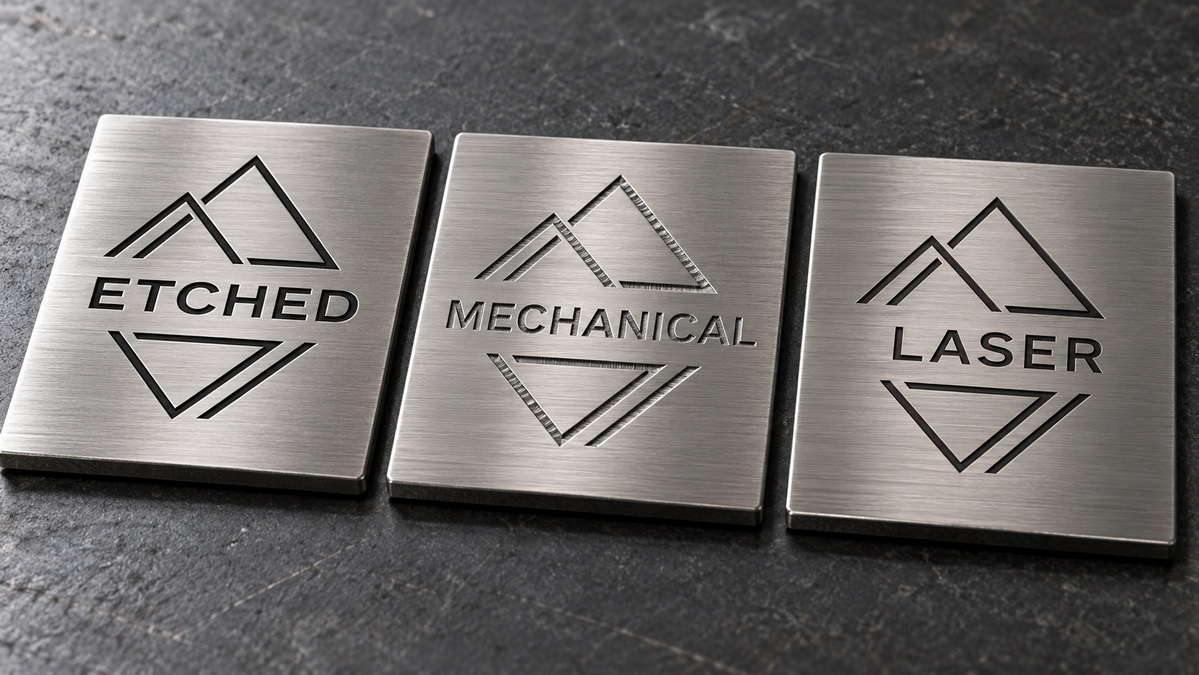
Etched vs. Engraved Nameplates: The Main Difference
Chemical etching selectively removes exposed metal using an etchant, while a protective resist preserves the surrounding design. Engraving removes material with a cutting tool or laser to create recessed markings.
However, supplier terminology varies. "Laser etched" may describe different surface treatments, so buyers should confirm the actual process.
| Selection factor | Chemically etched nameplates | Mechanically engraved nameplates | Laser engraved nameplates |
| Marking method | Selective chemical removal | Rotary cutting tool | Focused laser removes material |
| Common strengths | Detailed, repeated layouts | Defined grooves and tactile lettering | Flexible digital marking and variable data |
| Design considerations | Resist quality, etch depth, undercut | Cutter geometry and access | Material response, settings, contrast |
| Color options | Recesses may receive color fill | Grooves may receive color fill | Depends on substrate and finishing |
| Purchasing priority | Confirm detail and fill durability | Confirm geometry and surface finish | Confirm actual depth and marking method |
No process is automatically the most accurate, durable, or economical for every application.
How Etched Metal Nameplates Are Made
Artwork and Protective Masking
Production starts with approved artwork showing text, symbols, borders, and other required details.
A protective resist covers areas that should remain intact. Depending on the production method, manufacturers may use photoresist or screen-applied masking.
Exposed areas remain available for chemical removal.
Etching and Finishing
The etchant removes exposed metal to form recessed information. After processing, the resist is stripped and the plate is cleaned.
Additional operations may include color filling, cutting, hole punching, or other specified finishing.
Etched stainless steel nameplates can combine detailed graphics with recessed identification. However, achievable detail depends on material, depth, artwork geometry, and process control.
A design that works at one depth may need adjustment when deeper recesses are required.
Where Chemical Etching Makes Sense
Consider chemical etching when your project includes:
- Repeated layouts across a production batch.
- Detailed logos, instructions, or equipment information.
- Recessed graphics with optional contrasting fill.
- Metal substrates suited to the selected chemistry.
Do not assume every serial number must be chemically etched. A fixed etched layout can also be combined with separately applied variable information.
How Engraved Nameplates Are Made
Mechanical Engraving
Mechanical engraving uses a rotating cutter to remove material.
It can create visible, tactile grooves for lettering, numbers, and selected graphics. Tool geometry influences internal corners, line widths, and character shapes.
This makes artwork review important. A narrow letter stroke that looks clear on screen may not suit the selected cutter.
Ask the supplier to evaluate the smallest characters and tightest details before approving production.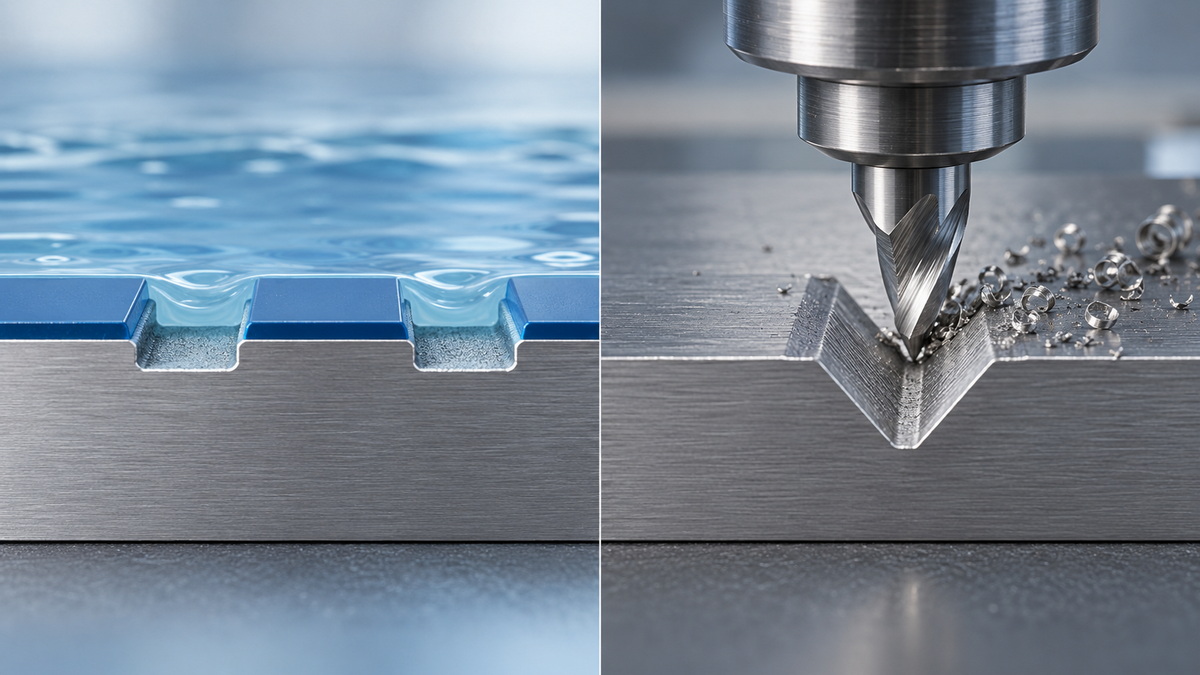
Laser Engraving
Laser engraving removes material using a focused beam, creating a depression in the substrate.
Depth depends on factors including the material, laser parameters, processing time, and number of passes.
Digitally controlled marking makes laser engraving a useful option for changing serial numbers, asset identifiers, and other variable information.
However, deeper marking can require more processing time. Compare the specified result rather than assuming all laser quotations represent equivalent work.
Laser Marking Is Not Always Engraving
Laser marking is a broader category.
Some methods remove material. Others create contrast through changes at the surface, such as oxide formation or coating removal.
A dark, readable laser mark is therefore not necessarily a deep engraving.
Ask a precise question: does the proposed method remove the base metal, remove a coating, or change the surface appearance without creating a recess?
Which Nameplate Process Is More Durable?
The most useful comparison is readability after exposure—not appearance immediately after production.
A recessed mark may remain physically present while losing the contrast needed for quick reading. Conversely, a shallow, high-contrast mark may perform well in an application without heavy abrasion.
Evaluate the complete system:
- Base metal.
- Surface finish.
- Marking depth and geometry.
- Color fill or coating.
- Mounting method.
- Actual operating conditions.
Distinguish Metal Durability From Color-Fill Durability
An etched or engraved recess and its color fill are different parts of the construction.
The metal may remain intact after the fill fades, softens, or wears away. That does not necessarily mean the information remains easy to read.
For critical identification, inspect samples both for physical marking retention and practical contrast.
Avoid accepting "permanent" as a substitute for a defined test requirement.
Consider the Mounting System
A readable plate provides little value if it separates from the equipment.
Adhesive selection should account for the actual mounting surface, contamination, application conditions, temperature, and exposure.
Mechanical fasteners introduce different considerations, including hole placement, assembly access, and compatibility with the surrounding structure.
Specify attachment alongside the plate itself.
Choosing Materials for Custom Metal Nameplates
Stainless Steel Nameplates
Stainless steel is a candidate for demanding industrial applications, but the grade and environment still matter.
Cleaning chemicals, moisture, chloride exposure, surface condition, and maintenance practices can influence performance.
Instead of requesting only "stainless steel," identify the intended service conditions and ask the supplier to propose a suitable grade and finish.
Aluminum Nameplates
Aluminum offers low weight and multiple finishing options.
However, bare aluminum, anodized aluminum, and other treated constructions should not be treated as interchangeable.
When reviewing laser-marked anodized aluminum, clarify whether the process modifies the anodized layer or engraves into the underlying metal.
That distinction affects how the finished construction should be evaluated.
Brass Nameplates
Brass may suit decorative branding and applications where its appearance supports the product identity.
Discuss expected color change, cleaning practices, and protective finishing before approval.
For all materials, judge a representative finished sample—not simply an unprocessed metal swatch.
Three Practical Selection Scenarios
The following examples are selection scenarios, not documented customer projects.
Repeated Equipment Instructions
A manufacturer needs identical instruction plates across a recurring equipment order.
Chemical etching is worth evaluating because the repeated artwork can combine text, symbols, and optional color-filled recesses.
The approval sample should confirm small-text clarity, contrast, and resistance to the intended cleaning products.
Unique Serial Numbers on Every Plate
A distributor requires a different identifier on each plate.
Digital engraving may simplify the handling of changing information. The purchasing brief should include the data format, sequence rules, and procedure for detecting duplicates.
The important question is not only whether the supplier can mark numbers, but whether the production workflow preserves their accuracy.
Identification Exposed to Abrasion
An equipment plate may experience rubbing during operation or maintenance.
Compare candidate constructions through representative abrasion testing rather than selecting solely by nominal depth.
After exposure, check whether technicians can still read the characters under realistic lighting and access conditions.
A Five-Step Sample Approval Workflow
1. Define the Environment
List indoor or outdoor use, temperature conditions, cleaning products, moisture, handling, and likely abrasion.
Where chemical exposure matters, provide the actual substance, concentration, contact duration, and cleaning frequency.
"Chemical resistant" is too broad to function as an acceptance criterion.
2. Approve Representative Artwork
Include the smallest text, most detailed logo, actual mounting holes, and longest variable-data field.
A simplified sample may hide problems that appear in the final layout.
3. Test the Finished Construction
Evaluate the metal, marking, fill, coating, and attachment together.
Agree on test conditions and acceptance criteria before testing begins. Relevant product requirements may determine which formal methods apply.
4. Check Human and Machine Readability
Inspect lettering at the intended viewing distance and under practical lighting.
If the design includes a barcode or Data Matrix symbol, test it using suitable reading equipment. A successful phone scan alone should not replace an agreed verification procedure.
5. Retain an Approved Reference
Keep the accepted sample, drawing revision, material specification, and inspection requirements.
Use these records when checking repeat orders or investigating differences between production batches.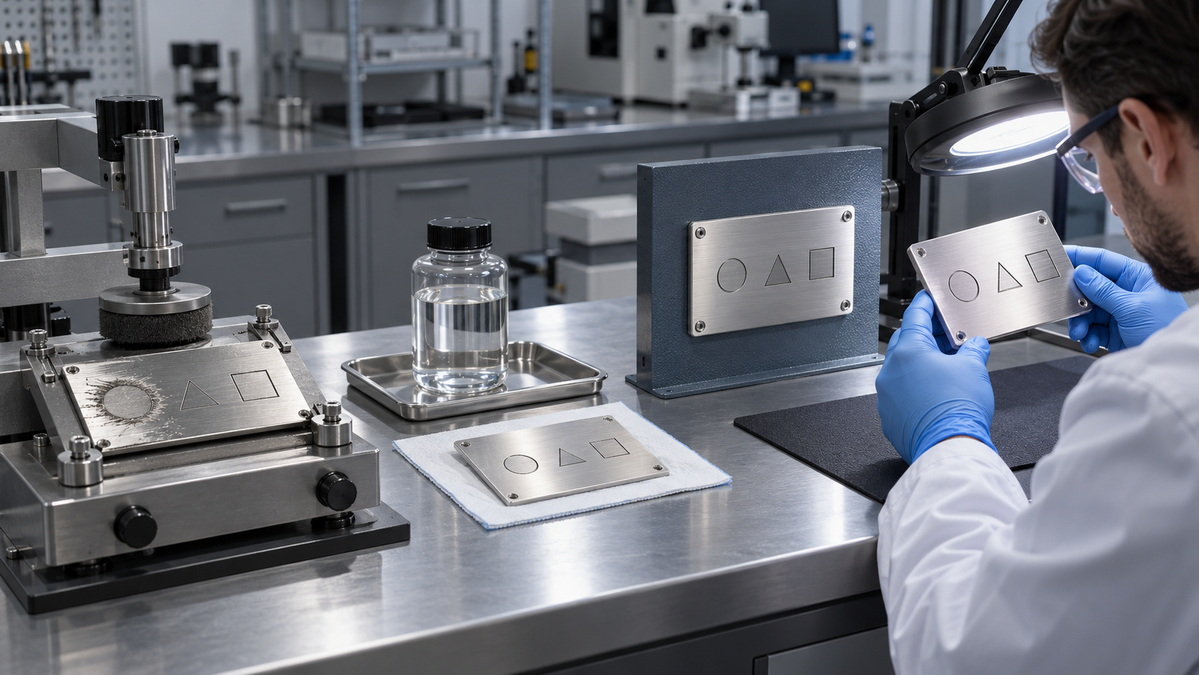
Serial Numbers and Codes: Control the Data, Not Just the Mark
Variable-data errors can make a physically durable nameplate operationally useless.
Provide one controlled data file and identify which fields may change. Define leading zeros, character limits, numbering sequences, and prohibited substitutions.
For example, "000125" and "125" may not be equivalent identifiers in the customer's system.
If using Data Matrix, distinguish a generic symbol from GS1 DataMatrix. The latter follows a defined identification structure; adding a square code does not automatically create a conforming GS1 symbol.
Agree on data checks, sample approval, and production verification before releasing the batch.
What to Include in a Nameplate Quotation Request
A complete brief makes quotations more comparable and reduces clarification cycles.
Include:
1. Plate dimensions, thickness, and tolerances.
2. Material grade and surface finish.
3. Artwork files and revision number.
4. Fixed information and variable-data requirements.
5. Required marking process, or permission to propose alternatives.
6. Color-fill and appearance expectations.
7. Hole positions, fasteners, or adhesive requirements.
8. Operating environment and cleaning conditions.
9. Quantity, delivery schedule, and reorder expectations.
10. Inspection, testing, packaging, and traceability requirements.
Request that suppliers identify assumptions and exclusions.
A lower quotation may reflect a different material, shallower marking, omitted finishing, or a less demanding inspection plan—not necessarily a more efficient equivalent product.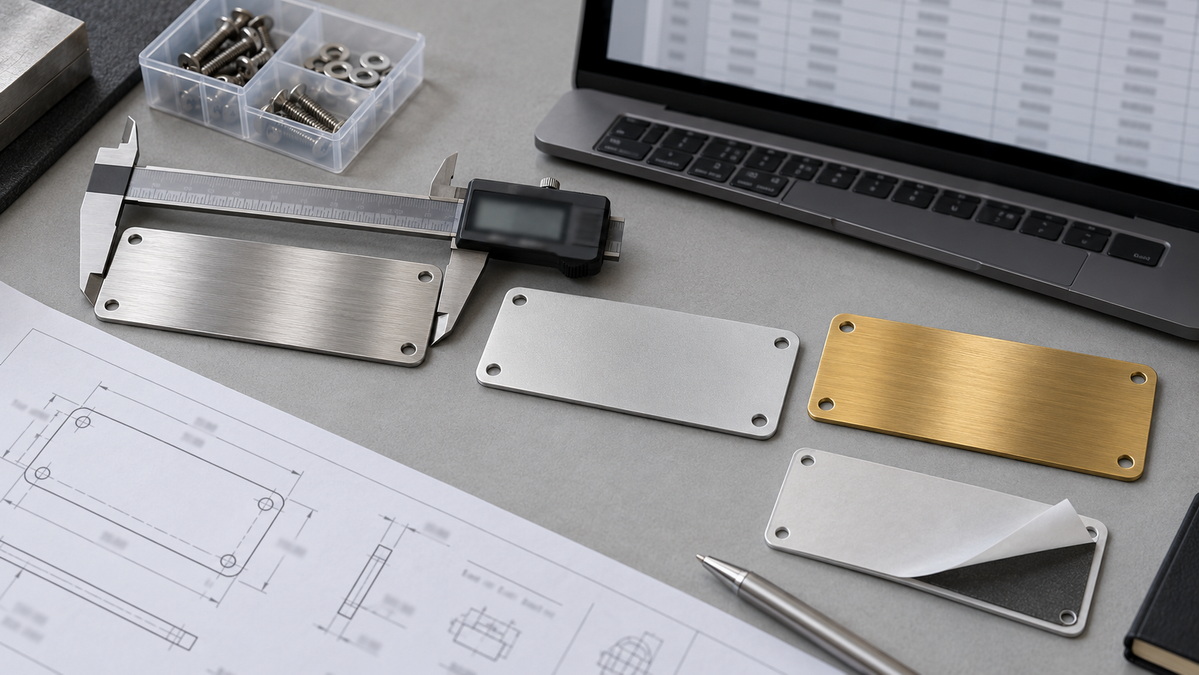
Plan Your Next Nameplate Project With XingKun
The right choice between etched and engraved nameplates starts with a clear application brief and ends with an approved, representative sample.
Send Shenzhen XingKun Packing Products Co., Ltd. your drawing, quantity, mounting details, variable-data needs, and operating conditions.
Ask our team to review the requirements and discuss a suitable nameplate proposal before finalizing production specifications. This gives both parties a clearer basis for evaluating appearance, durability, and repeat-order consistency.
Frequently Asked Questions
Are Etched Nameplates Better Than Engraved Nameplates?
Neither process is universally better. Chemical etching can suit detailed, repeated metal layouts, while engraving can suit recessed lettering and variable information. Select according to the finished construction and application requirements.
Is Laser Etching the Same as Laser Engraving?
Not necessarily. Suppliers use these terms differently. Laser engraving removes material, while other laser-marking methods may alter surface appearance or remove a coating. Confirm the proposed mechanism and required result.
Can Etched and Engraved Nameplates Be Used Outdoors?
Both can be candidates for outdoor service. Performance depends on the substrate, finish, contrast, color fill, mounting, and local exposure. Request testing relevant to the intended installation rather than a blanket outdoor-lifetime claim.
Will Color-Filled Lettering Last as Long as the Metal?
Not automatically. Fill materials can respond differently to ultraviolet light, chemicals, heat, and abrasion. Evaluate the fill separately and check whether the underlying information remains readable if contrast deteriorates.
Which Process Is Best for Serial Numbers?
Digital engraving is often worth considering for changing identifiers. However, the best approach also depends on quantity, layout, material, and data-control requirements. Some projects can combine a fixed etched design with separately marked serial numbers.
Does a Metal Nameplate Automatically Meet Certification Requirements?
No. Material choice or marking method alone does not establish compliance. Confirm the applicable product requirements, required wording, attachment conditions, and any necessary evaluation or authorization before making certification claims.
References
1. American Nameplate. "Difference Between Etched & Engraved Nameplates." Published April 29, 2019. Original comparison article used as the starting point for restructuring and technical qualification. [american-nameplate]
2. TRUMPF. "Laser Marking." Equipment-manufacturer explanation of engraving, annealing, black marking, and other laser-marking mechanisms. Supports the distinction between material removal and surface modification. [trumpf]
3. Modern Machine Shop. "Some Laser Marking Basics." Published May 9, 2025. Technical discussion of annealing, ablation, engraving, coating removal, and factors affecting engraving depth. [mmsonline]
4. Etched Nameplates. "Industrial Nameplates Buyer's Guide." Published March 5, 2024. Industry guidance on substrates, chemical etching, and alternative nameplate constructions. Used for process context, not as proof of universal service-life claims. [etchednp]
5. Metal Marker Manufacturing. "Etching vs. Photo Anodization Pros & Cons." Published September 26, 2019. Supports distinguishing the durability of recessed metal information from that of added color fill. Vendor-specific durability comparisons are not treated as universal conclusions. [metalmarkermfg]
6. UL Solutions Taiwan. "UL Marking and Labeling Systems Service Introduction." Published July 7, 2020. Explains evaluation of label retention and continued legibility, including the role of UL 969 test methods. [taiwan.ul]
7. GS1 Ireland. "GS1 Data Matrix." Official introduction to GS1 DataMatrix, its applications, and image-based reading requirements. [gs1ie]


