Content Menu
● What Is the Main Difference?
● House Name Plates: Personal Identity Meets Outdoor Durability
>> Common Uses for House Name Plates
>> Best Materials for Residential Name Plates
>> Residential Design Advice From a Manufacturer
● Commercial Building Name Plates: Identification, Navigation, and Brand Control
>> Common Commercial Applications
>> Why Commercial Name Plates Need More Planning
>> Commercial Name Plate Materials
● Readability and Viewing Distance Matter More Than Decoration
>> Accessibility Considerations for Commercial Interiors
● Manufacturing Methods and Their Real-World Value
>> Popular Nameplate Production Processes
● How to Choose the Right Name Plate
>> Step-by-Step Buying Checklist
● House Name Plates vs Commercial Building Name Plates: Which One Do You Need?
● Work With an Experienced Custom Nameplate Manufacturer
● FAQ
>> 1. What is the best material for an outdoor house name plate?
>> 2. Can a commercial building name plate include a company logo?
>> 3. What is the difference between engraved and printed name plates?
>> 4. How should I mount a name plate on a wall?
>> 5. Do commercial building name plates need special accessibility features?
>> 6. What information should I provide for a custom nameplate quotation?
>> 7. Can I order a small quantity of personalized house name plates?
● References
House name plates and commercial building name plates may appear similar at first glance, but they serve very different purposes. A house name plate is usually personal, decorative, and focused on helping visitors identify a residence. A commercial building name plate must do far more: it often supports wayfinding, brand recognition, durability, tenant communication, and—in many cases—accessibility requirements.
For property owners, architects, distributors, contractors, and brand managers, choosing the right custom nameplate begins with understanding these functional differences. At Shenzhen XingKun Packing Products Co., Ltd., we have spent more than 20 years producing customized printed products, labels, plaques, packaging, and nameplates for brands and distributors in more than 30 countries and regions. From our manufacturing experience, the most successful name plate projects are not selected by appearance alone. They are designed around the installation environment, reading distance, material performance, mounting method, and the people who need to use the space.
This guide compares house name plates vs commercial building name plates in detail, helping buyers specify a product that looks right, lasts longer, and performs reliably in real-world conditions.
What Is the Main Difference?
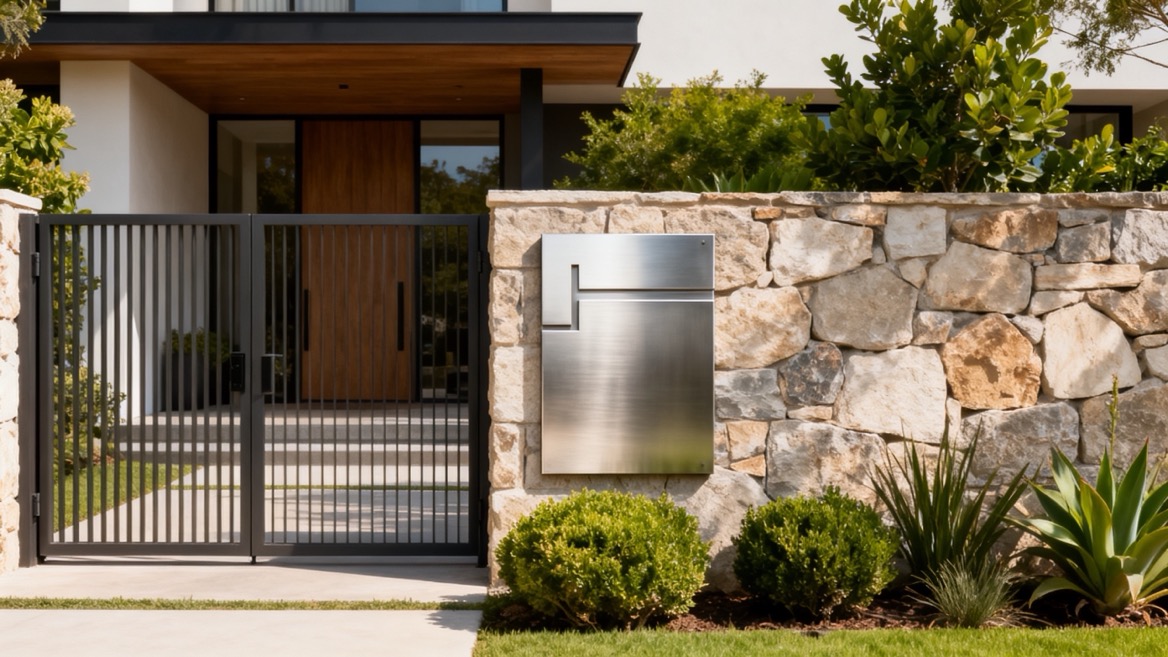
The simplest difference is this: house name plates identify a private place, while commercial building name plates help people find, understand, and move through a business environment.
A residential plaque may only need to display a family surname, house number, street name, or short welcome message. It is usually viewed from a short distance by visitors, delivery personnel, neighbors, and emergency responders.
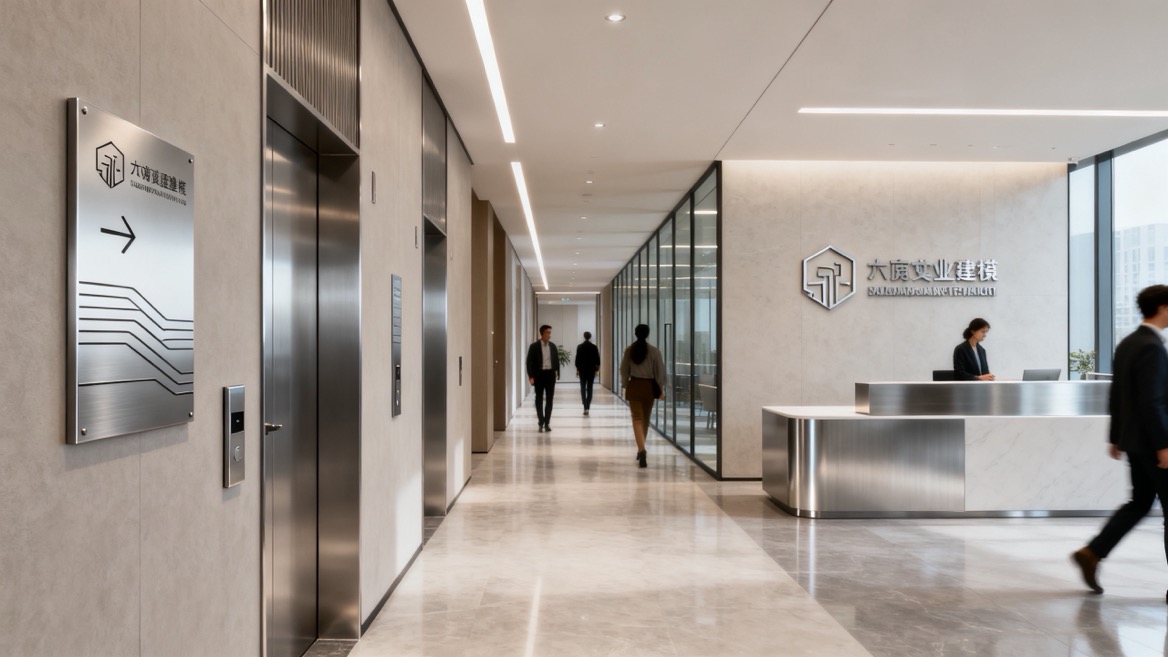
A commercial building name plate often has a wider responsibility. It may identify a company entrance, office suite, department, floor, meeting room, warehouse zone, tenant directory, or safety-related location. It must be visible to visitors who have never been to the property before, and it may need to match a larger visual identity program.
| Comparison Area | House Name Plates | Commercial Building Name Plates |
| Main purpose | Identify a home or residence | Identify, direct, inform, and reinforce a business identity |
| Typical audience | Visitors, delivery drivers, neighbors, emergency services | Customers, employees, tenants, suppliers, contractors, and the public |
| Information shown | House number, surname, street name, short message | Company name, logo, unit number, floor, department, room name, directions |
| Design priority | Personal style and curb appeal | Readability, consistency, navigation, brand control, and durability |
| Order quantity | Often one piece or a small set | Often multiple signs across one site or several locations |
| Update frequency | Usually low | May be higher due to tenant, department, or occupancy changes |
| Compliance considerations | Local rules may apply | Accessibility, building codes, landlord requirements, and local regulations may apply |
| Installation environments | Gates, exterior walls, mailboxes, doors, gardens | Lobbies, entrances, corridors, offices, elevators, parking areas, warehouses |
A well-made nameplate should make identification feel effortless. If a visitor pauses, squints, walks to the wrong door, or cannot find a company reception area, the signage system is not doing its job.
House Name Plates: Personal Identity Meets Outdoor Durability
A house name plate is an important detail in a home's exterior presentation. It can make a property easier to locate while adding character to a front gate, wall, porch, mailbox, or garden entrance.
For residential buyers, the emotional side of the product matters. The plate may carry a family name, a meaningful property name, a house number, or a design style that complements the architecture. A modern villa may use brushed stainless steel and laser-cut black lettering. A traditional residence may suit a cast-metal-look plaque, engraved brass-effect finish, or a textured antique background.
Common Uses for House Name Plates
House name plates are commonly used for:
- Front-door identification
- House numbers and street addresses
- Villa and apartment entrance plaques
- Garden and gate name signs
- Mailbox labels
- Vacation home and rental property identification
- Personalized housewarming gifts
- Residential community unit markers
The best residential signs are typically easy to read from the road or driveway. A stylish typeface can be attractive, but it should not reduce legibility. Decorative lettering with thin strokes, low contrast, or overly complex flourishes may look elegant in a close-up product photo but become difficult to read outdoors.
Best Materials for Residential Name Plates
Material selection should reflect weather exposure, budget, desired appearance, and maintenance expectations.
| Material | Best For | Key Advantages | Considerations |
| Aluminum | Exterior house numbers and address plaques | Lightweight, corrosion-resistant, economical | Needs the right coating or printing method for long outdoor exposure |
| Stainless steel | Modern homes and premium properties | Strong, clean appearance, good corrosion resistance | Fingerprints and surface scratches can be more noticeable |
| Brass | Traditional or luxury house plaques | Warm, classic visual effect | Can oxidize or develop patina without protective finishing |
| Acrylic | Contemporary indoor or sheltered use | Flexible colors, layered visual effects, cost-efficient | May not be ideal for highly exposed outdoor locations |
| PVC or plastic | Budget-friendly address signs | Lightweight and practical | Lower perceived value; UV resistance should be confirmed |
| Zinc alloy or die-cast metal | Decorative and dimensional plaques | Strong 3D details and premium weight | Tooling and unit cost may be higher for custom designs |
For outdoor applications, buyers should ask more than "Is this waterproof?" A stronger specification includes questions such as:
- Is the substrate corrosion-resistant?
- Is the ink, coating, or color layer UV-resistant?
- Can the product withstand repeated temperature changes?
- Is the adhesive suitable for the mounting surface?
- Are the screws, studs, or brackets appropriate for outdoor use?
- Will the finish remain readable after dirt, rain, and sunlight exposure?
A residential nameplate does not need to be oversized, but it should never be too small for its viewing distance. When a house sits back from the road, a small plaque mounted near the front door may be beautiful but ineffective for drivers or delivery personnel.
Residential Design Advice From a Manufacturer
From a production standpoint, the most practical house name plate design usually has three elements:
1. High contrast between text and background. Dark text on a light background, or light text on a dark background, is normally easier to read quickly.
2. A stable mounting plan. Pre-drilled holes, studs, screws, or outdoor-rated adhesive should be selected before finalizing the artwork.
3. A durable decoration method. Engraving, laser marking, UV printing, screen printing, etched metal, embossed detail, or color-filled lettering should match the intended use environment.
For example, a matte-black aluminum plate with white UV-printed house numbers may suit a modern residential project. However, if the plate is mounted on a gate facing strong sunlight and rain, an engraved or laser-marked solution may provide better long-term visual confidence than a basic printed surface alone.
Commercial Building Name Plates: Identification, Navigation, and Brand Control
Commercial building name plates are part of a wider communication system. They must help customers and staff identify where they are, where they need to go, and whether they have reached the correct destination.
This is why commercial nameplates require more planning than residential products. A business sign may be seen from across a parking lot, from a corridor, at a reception desk, near an elevator, or on a warehouse floor. Each location has different lighting, sightline, mounting, and readability requirements.
Common Commercial Applications
Commercial building name plates can include:
- Exterior company entrance plaques
- Office suite name plates
- Reception and lobby signs
- Tenant identification signs
- Department and room identification plates
- Conference room signs
- Warehouse area labels
- Industrial equipment identification plates
- Door number plates
- Directional and wayfinding panels
- Parking and facility signs
- Safety and operational information plaques
A commercial project may also involve a hierarchy of signs. The largest sign identifies the building or brand. Medium-sized signs direct people to departments or entrances. Smaller signs identify rooms, suites, doors, assets, and equipment.
Without a consistent hierarchy, a property can look disorganized even when each individual sign is well made.
Why Commercial Name Plates Need More Planning
A commercial building name plate often needs to balance five demands at once:
- Brand consistency: Colors, logos, typography, and finishes should align with the company's visual identity.
- Fast recognition: Visitors should identify a destination quickly without confusion.
- Long-term durability: Signs may face heavy touch, cleaning chemicals, outdoor exposure, or high traffic.
- Scalable production: A multi-room office or multi-site company needs repeatable specifications.
- Installation coordination: Wall materials, door swings, glass partitions, fire-rated surfaces, and landlord rules can affect mounting options.
For a single corporate office, the purchase may include 50, 100, or several hundred individual plates. In this situation, production accuracy becomes essential. The logo color, character spacing, material thickness, hole positions, corner radius, and installation hardware should remain consistent across every item.
Commercial Name Plate Materials
The correct commercial material depends heavily on whether the sign is for exterior branding, interior wayfinding, industrial use, or temporary tenant identification.
| Material | Suitable Commercial Use | Performance Characteristics |
| Anodized aluminum | Office plaques, equipment labels, industrial panels | Durable, lightweight, professional appearance |
| Stainless steel | Exterior signs, premium lobbies, corporate entrances | Strong and high-end, suitable for modern branding |
| Acrylic | Reception signs, wall logos, interior wayfinding | Excellent for layered signs, colored backgrounds, and dimensional effects |
| Aluminum composite panel | Larger building and directional panels | Rigid, stable, cost-effective for printed graphics |
| Brass or bronze-effect metal | Law firms, hotels, clubs, heritage-style buildings | Premium and formal visual tone |
| Polycarbonate | Industrial labels and protective overlays | Strong impact resistance and useful for demanding environments |
| Flexible vinyl labels | Temporary updates, window graphics, asset tracking | Cost-efficient but typically less permanent |
For commercial facilities, it is useful to separate signs into three categories:
- Permanent identity signs: Building name, company name, reception logo, room identification
- Changeable information signs: Tenant names, meeting room availability, temporary notices
- Operational signs: Equipment labels, warnings, instructions, inventory zones, access control markers
This classification prevents over-specification. A permanent exterior company plaque may justify stainless steel or anodized aluminum. A tenant name that changes frequently may be better suited to a modular insert system or replaceable printed panel.
Readability and Viewing Distance Matter More Than Decoration
One of the most common sign-buying mistakes is evaluating a design only on a computer screen. A nameplate that looks balanced on a digital mockup may perform poorly once installed on a wall, gate, corridor, or building facade.
For both house name plates and commercial building name plates, readability depends on:
- Letter size
- Typeface selection
- Text-to-background contrast
- Surface glare
- Viewing angle
- Installation height
- Lighting conditions
- Distance from the viewer
- Obstacles such as landscaping, parked vehicles, doors, or furniture
A simple rule is useful: the farther away the viewer stands, the less detail the sign should contain.
For exterior building signs, company logos and large primary text should remain clear at the expected approach distance. Secondary information, such as a slogan, suite list, or business hours, should not compete with the main identification message.
For interior commercial signage, visual consistency is often more valuable than visual complexity. Repeating the same fonts, colors, spacing rules, icon style, and mounting position can make a building feel organized and easier to navigate.
Accessibility Considerations for Commercial Interiors
In many commercial environments, permanent room-identification signs may need to follow applicable accessibility rules. Requirements vary by jurisdiction and project type, so buyers should verify their specific local obligations with qualified project professionals.
In the United States, the 2010 ADA Standards include provisions for tactile characters on applicable signs. For example, tactile character height is generally specified between 5/8 inch and 2 inches, measured using the uppercase "I." The standards also address mounting location, raised characters, Braille, contrast, and clear floor space. Building addresses and directories are among the sign types that are generally exempt from tactile requirements, while signs identifying rooms, suites, or dwelling units can be subject to requirements.
For commercial buyers, this has a practical implication: do not assume that a visually attractive plaque is appropriate for every location. A room-identification sign near a permanent office, restroom, meeting room, or suite may need different construction than a decorative lobby logo.
Manufacturing Methods and Their Real-World Value
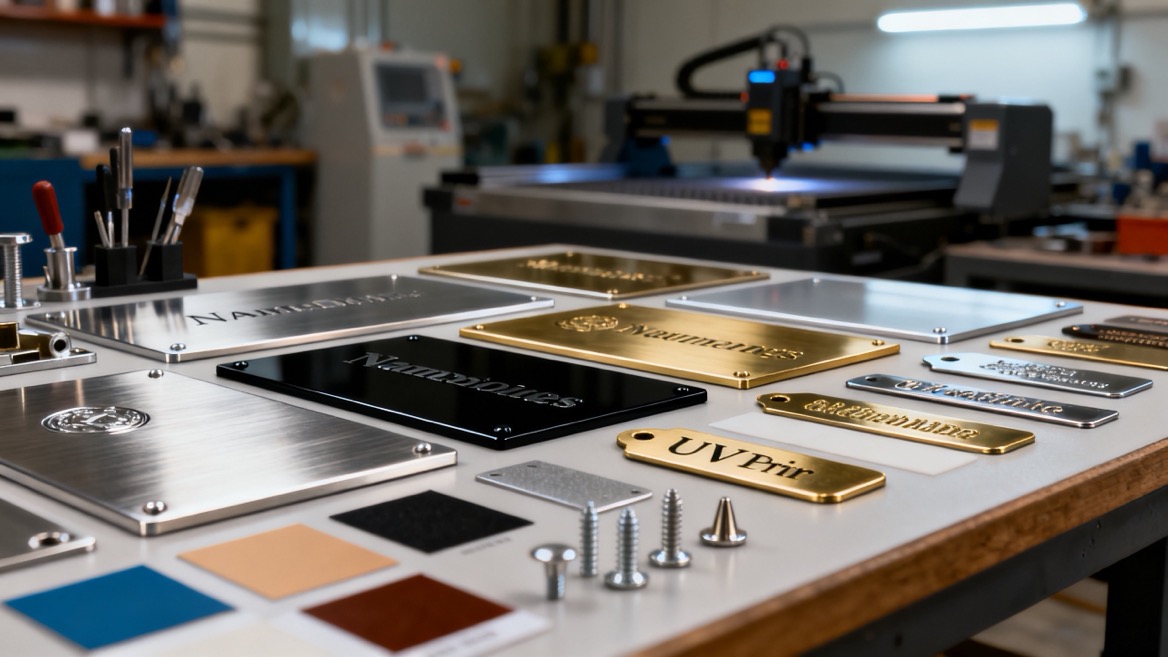
The production method affects how a nameplate looks, feels, performs, and costs. A professional supplier should recommend the process based on the required result—not simply the easiest method to produce.
Popular Nameplate Production Processes
Laser engraving removes or alters the top layer of material to create permanent text or graphics. It is popular for metal, coated aluminum, stainless steel, acrylic, and certain plastics. It can produce a precise and durable result.
UV printing applies full-color graphics directly to a surface. It supports logos, gradients, photos, QR codes, variable information, and small custom runs. It is especially useful for acrylic, PVC, metal, and composite panels.
Screen printing is efficient for repeat orders with fewer colors. It is often selected for industrial panels, control labels, warning plates, and standardized corporate sign programs.
Etching and chemical marking can create refined metal nameplates with durable recessed details. This method is suitable for premium plaques, equipment panels, and long-life metal identification products.
Embossing or debossing creates raised or recessed text and graphics. It adds tactile value and a premium dimensional appearance.
Die casting is appropriate for heavy, decorative, and three-dimensional metal plaques. It is often considered for heritage-style house name plates, commemorative plaques, and premium exterior branding.
The best option depends on the design. A full-color real estate office logo may benefit from UV printing. A factory machine nameplate exposed to oil, heat, and repeated cleaning may require anodized aluminum with more durable marking. A residential gate plaque may benefit from laser engraving, cast metal, or etched stainless steel.
How to Choose the Right Name Plate
Before requesting a quotation, prepare a clear project brief. This reduces revisions, prevents avoidable production errors, and helps the manufacturer recommend a suitable solution.
Step-by-Step Buying Checklist
1. Define the sign's purpose. Is it for home identification, company branding, room identification, tenant information, or equipment labeling?
2. Measure the installation location. Record wall size, available width and height, viewing distance, surface type, lighting, and any installation restrictions.
3. Choose the material based on the environment. Outdoor, indoor, high-humidity, industrial, coastal, and high-touch applications require different materials and finishes.
4. Prepare readable artwork. Supply vector logos when possible and avoid overly thin text, low-contrast color combinations, and small decorative details.
5. Confirm mounting before production. Select screws, holes, studs, double-sided adhesive, magnets, stand-offs, or brackets based on the wall surface.
6. Request a sample or digital proof. Check spelling, size, color, layout, finishes, corner treatment, and hardware details before mass production.
7. Plan for replacements. For commercial projects, order spare signs or establish a repeat-order specification for future tenant or staff changes.
For larger commercial projects, we also recommend creating a sign schedule. This is a structured list containing each sign code, location, size, material, artwork, finish, quantity, and mounting method. It helps property managers, contractors, designers, and manufacturers communicate clearly.
House Name Plates vs Commercial Building Name Plates: Which One Do You Need?
Choose a house name plate when the main goal is to make a residence easy to identify while enhancing the property's visual character. Focus on outdoor resistance, readable house numbers, architectural style, and straightforward installation.
Choose a commercial building name plate when the sign must support a business environment. Focus on brand consistency, visitor navigation, durability, repeatability, information hierarchy, and applicable project requirements.
In some cases, the two categories overlap. A small professional office operating from a converted house may need a residential-scale plaque with commercial-grade branding. A luxury apartment development may require house-style door plates that still follow a controlled, repeatable property-wide design system.
The key is not whether the sign is called a "name plate," "plaque," "door sign," or "building sign." The key question is: what must the person looking at it understand within a few seconds?
Work With an Experienced Custom Nameplate Manufacturer
A good custom nameplate should do more than carry text. It should communicate identity, improve navigation, withstand its environment, and reflect the quality of the property or brand it represents.
Shenzhen XingKun Packing Products Co., Ltd. provides custom nameplates and a broad range of printing and packaging products for global brands and distributors. With more than 20 years of manufacturing experience and service experience across more than 30 countries and regions, our team can support custom material selection, logo reproduction, printing, engraving, finishing, packaging, and production planning.
Whether you need a personalized outdoor house name plate, a coordinated commercial building name plate system, branded office plaques, or durable industrial identification labels, send us your artwork, size requirements, estimated quantity, material preference, and installation environment. We can help turn your concept into a practical, production-ready nameplate solution.
FAQ
1. What is the best material for an outdoor house name plate?
Aluminum, stainless steel, brass, zinc alloy, and weather-resistant acrylic are common choices. For most projects, aluminum offers a strong balance of cost, weight, corrosion resistance, and customization flexibility. Stainless steel is often selected for a more premium modern appearance.
2. Can a commercial building name plate include a company logo?
Yes. Commercial name plates frequently include company names, logos, suite numbers, department names, QR codes, and directional information. For the sharpest results, provide the logo in a vector format such as AI, EPS, PDF, or SVG.
3. What is the difference between engraved and printed name plates?
Engraved name plates create text or graphics by removing or altering the material surface. Printed name plates apply ink to the surface. Engraving is often chosen for durability and tactile detail, while UV printing is ideal for full-color graphics, gradients, photographs, and variable data.
4. How should I mount a name plate on a wall?
The best mounting method depends on the wall material and sign weight. Common options include pre-drilled screw holes, rear studs, double-sided adhesive, stand-off screws, magnetic mounting, and brackets. Outdoor installations normally need more secure mechanical fixing than lightweight indoor signs.
5. Do commercial building name plates need special accessibility features?
Some permanent room-identification signs may need tactile text, Braille, specific character styling, contrast, and installation positioning under applicable regulations. Requirements depend on the country, jurisdiction, building type, and sign purpose. Confirm the project requirements before finalizing artwork and production.
6. What information should I provide for a custom nameplate quotation?
Provide the sign dimensions, quantity, material preference, artwork file, color requirements, thickness, finish, mounting method, application environment, and shipping destination. For commercial projects, a sign schedule can make quotations and production more accurate.
7. Can I order a small quantity of personalized house name plates?
Yes. Many custom house name plate projects begin with one piece, while commercial projects may require larger quantities. The preferred production process may differ depending on quantity, design complexity, and required finish.
References
- [United States Access Board — Chapter 7: Signs]
- [U.S. Department of Justice — 2010 ADA Standards for Accessible Design]
- [U.S. Department of Justice — ADA Standards for Accessible Design Overview]
- [SmartSign — Address Plaques and House Number Plaques]
- [FedEx Office Sign Store — ADA Guidelines]
- [Duncan-Parnell — ADA Signage Requirements Compliance Guide]


