Content Menu
● First: Not Every Metal "Rests"
● Why Metal Name Plates Corrode
● Metal Name Plate Materials Compared
>> Aluminum Name Plates: The Most Versatile Choice
>> Stainless Steel Name Plates: Strong Protection for Harsh Conditions
>> Brass and Decorative Metal Plates
● Surface Finishes That Prevent Corrosion
>> Anodizing for Aluminum Name Plates
>> Powder Coating and Paint
>> Electroplating and PVD Finishes
● The Hidden Risk: Galvanic Corrosion
>> How to Prevent Galvanic Corrosion
● Choosing the Right Graphics Method
● Installation Can Make or Break Service Life
>> Before Installation
>> Adhesive vs. Mechanical Fixing
● Practical Maintenance Checklist
>> Monthly or Quarterly Inspection
>> Safe Cleaning Practices
● A Material Selection Guide by Environment
● Questions to Ask Before Ordering
● Final Recommendation
● FAQ
>> 1. What metal nameplate will not rust?
>> 2. Is aluminum better than stainless steel for nameplates?
>> 3. Can powder coating stop rust permanently?
>> 4. How can I stop corrosion behind a metal nameplate?
>> 5. Why is my stainless steel nameplate turning brown?
>> 6. Should I use adhesive or screws for an outdoor metal nameplate?
>> 7. What is the best marking method for a long-lasting serial number?
● References
Metal name plates are expected to remain legible, secure, and professional for years. Yet outdoor weather, salt air, chemical splash, humidity, fingerprints, and poor installation can quickly turn a high-quality metal identification plate into a stained, corroded, or unreadable component.
For buyers specifying metal name plates , rust prevention begins long before installation. The right substrate, surface treatment, graphics method, adhesive or fasteners, and maintenance plan must work together. At Shenzhen XingKun Packing Products Co., Ltd., we have spent more than 20 years producing nameplates and other printed packaging products for brands and distributors in over 30 countries and regions. In practical production, the most reliable result comes from designing corrosion resistance into the entire nameplate system—not treating it as an afterthought.
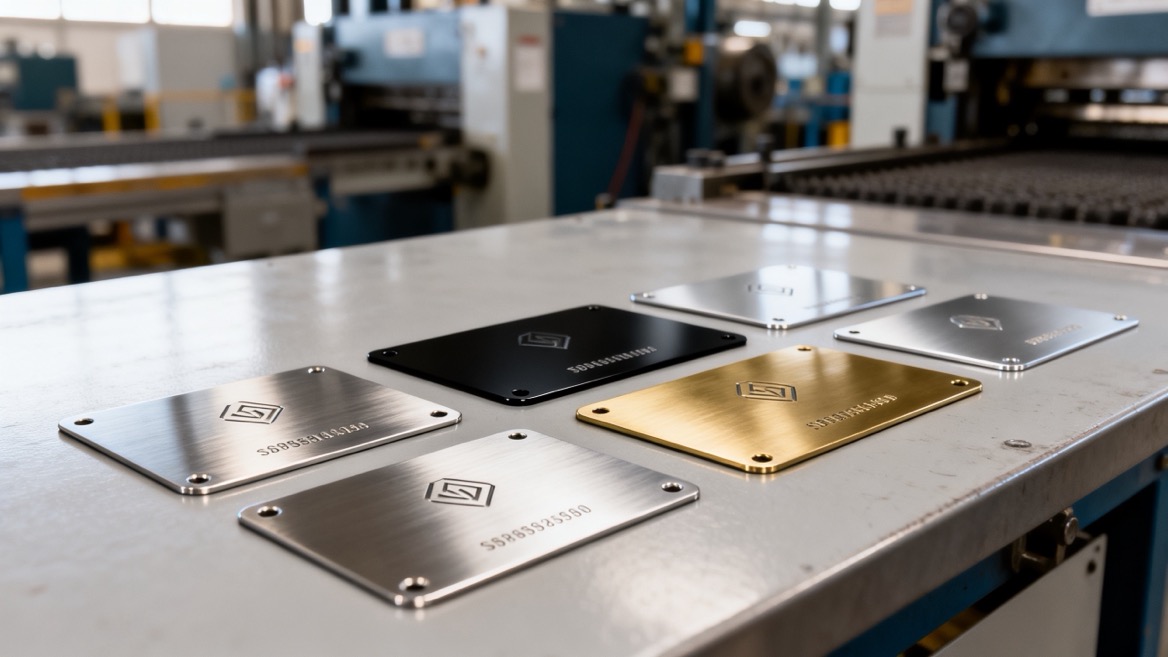
First: Not Every Metal "Rests"
A common purchasing mistake is to describe every form of metal corrosion as "rust." Strictly speaking, rust usually refers to the red-brown iron oxide formed on carbon steel or iron when oxygen and moisture are present.
However, aluminum, stainless steel, brass, zinc alloy, and plated metals can also corrode. Their damage may look different:
- Carbon steel: Red or orange rust, flaking, pitting, and loss of material
- Stainless steel: Tea staining, surface discoloration, crevice corrosion, or pitting in chloride-rich environments
- Aluminum: White powdery oxidation, pitting, dulling, or under-film corrosion
- Brass: Dark tarnish, greenish patina, or localized corrosion
- Zinc-coated steel: White corrosion products, then red rust if the zinc layer is consumed or damaged
For sourcing teams, the key question is not simply "Will this metal rust?" It is:
> What type of corrosion is likely in this application, and which combination of material and finish can resist it?
That distinction matters because a nameplate used on an indoor electrical cabinet needs a very different solution from one installed on a boat engine, agricultural machine, outdoor utility enclosure, chemical-processing device, or refrigerated transport unit.
Why Metal Name Plates Corrode
Metal corrosion is an electrochemical process. In simple terms, metal reacts with its environment when the conditions allow water, oxygen, salts, pollutants, or chemicals to reach the surface.
The most important corrosion triggers for custom metal name plates include:
- High humidity and frequent condensation
- Rainwater retention behind the plate or around mounting holes
- Salt spray in marine, coastal, road-salt, and offshore locations
- Industrial chemicals, such as cleaners, oils, acids, alkalis, solvents, and coolants
- UV exposure that degrades coatings and printed color layers
- Abrasion from handling, cleaning, vibration, or mechanical contact
- Dissimilar-metal contact, such as an aluminum plate mounted directly to steel with the wrong fastener
- Damaged edges, scratches, or drilled holes that expose unprotected base metal
- Poor cleaning practices, including steel wool, abrasive powders, or chlorine-containing products
The most damaging issue is often hidden: water trapped between the metal nameplate and the equipment surface. Once moisture enters a narrow gap, it can remain there for long periods. This creates a favorable environment for crevice corrosion, staining, adhesive failure, and coating lift.
Metal Name Plate Materials Compared
The material is the foundation of rust prevention. A protective coating can improve performance, but it cannot fully compensate for an unsuitable substrate in a harsh environment.
| Material | Corrosion Performance | Best Applications | Main Limitation |
| Aluminum | Naturally corrosion resistant; performs very well with anodizing | Machinery, electronics, equipment panels, outdoor labels, asset tags | Can pit in marine or highly alkaline/acidic environments |
| Stainless steel | Excellent durability, especially in demanding industrial settings | Marine equipment, food equipment, high-end machinery, outdoor assets | Higher cost; incorrect grade or poor cleaning can still cause staining |
| Brass | Good indoor durability and premium appearance | Decorative plaques, heritage products, luxury packaging, awards | Can tarnish and develop patina outdoors |
| Carbon steel | Low natural corrosion resistance | Short-term indoor use only when coated | Will rust quickly if coating is damaged |
| Zinc-coated steel | Better than bare steel due to zinc protection | General industrial use, indoor/outdoor panels with controlled exposure | Zinc layer can wear away or corrode in severe environments |
| Zinc alloy | Suitable for decorative badges and molded emblems with plating | Consumer products, furniture, appliances, branding badges | Requires dependable plating and edge protection |
Aluminum Name Plates: The Most Versatile Choice
For many industrial and commercial projects, aluminum name plates offer the best balance of weight, machinability, printability, appearance, and corrosion resistance.
Aluminum naturally forms a thin oxide film when exposed to air. This film offers basic protection, but it is not always sufficient for long-term outdoor or high-contact applications. Anodizing strengthens the surface by creating a more controlled oxide layer. The process can improve durability, enhance paint adhesion, support color finishing, and increase resistance to wear and corrosion. Proper sealing is especially important because it closes the pores of the anodized layer and improves long-term protection.
For equipment labels, we commonly recommend anodized aluminum when the plate must remain lightweight, readable, and corrosion resistant without the cost of stainless steel.
Best uses for aluminum:
- Electrical control panels
- Consumer appliances
- Automotive components
- Machinery identification plates
- Asset tags
- Outdoor equipment labels
- Branded aluminum badges
- QR code and serial-number plates
Stainless Steel Name Plates: Strong Protection for Harsh Conditions
Stainless steel name plates are a strong choice when the environment includes regular washdown, physical impact, high temperatures, salt exposure, or demanding hygiene requirements.
However, stainless steel is not automatically corrosion-proof. The surface can stain or pit when chlorides, salt deposits, or contaminants remain on it. This is especially relevant near coastlines, on marine equipment, around swimming pools, and in facilities that use chloride-containing cleaners.
For severe service, the alloy grade matters. In many practical specifications, 316 stainless steel provides better resistance to chloride-containing environments than 304 stainless steel. Buyers should also evaluate the finish. A smoother finish generally holds fewer contaminants and is easier to clean than a rough, heavily brushed, or damaged surface.
Choose stainless steel when:
- The nameplate faces salt air or salt spray
- The product is regularly washed or sanitized
- The plate needs high impact resistance
- The installation is exposed to heat or outdoor weather
- A premium technical appearance is important
- The expected service life is long and replacement is costly
Brass and Decorative Metal Plates
Brass nameplates create a warm, premium, traditional appearance. They are popular for furniture, wine boxes, luxury packaging, awards, hotel signage, and commemorative applications.
Their challenge is tarnishing. Brass can darken or develop a greenish patina when exposed to moisture and airborne pollutants. For decorative products, a clear protective lacquer can slow visible tarnish. However, lacquer must be applied evenly and inspected carefully around edges and engraved areas.
Brass is usually selected for visual value rather than maximum outdoor corrosion resistance. If the plate will face continuous coastal moisture, cleaning chemicals, or mechanical abrasion, stainless steel or anodized aluminum is normally the safer choice.
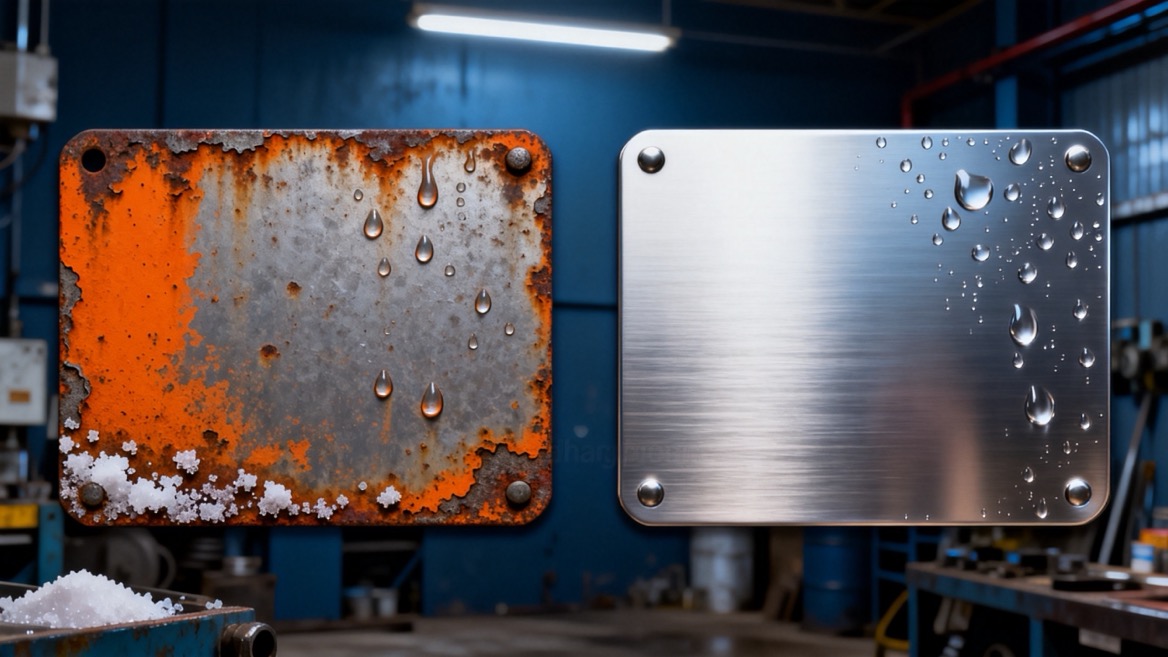
Surface Finishes That Prevent Corrosion
A metal name plate's surface treatment is often as important as its base material. The finish should form a barrier, improve adhesion, resist abrasion, and preserve graphics.
Anodizing for Aluminum Name Plates
Anodizing is an electrochemical conversion treatment for aluminum. Unlike a paint layer that sits only on top of the metal, anodizing converts part of the aluminum surface into a protective oxide layer.
For nameplates, anodizing can offer several advantages:
- Better corrosion resistance
- Greater surface hardness
- Improved scratch resistance
- Better adhesion for subsequent printing or coloring
- A clean, premium metallic appearance
- Long-term readability for engraved or laser-marked graphics
Type II anodizing is widely used for decorative and general industrial aluminum parts. Type III hard anodizing is more suitable where high wear resistance is required. Selection should depend on the actual environment, desired color, finish, and graphic method—not just the thickest available coating. Standards for aluminum anodic coatings cover performance and acceptance requirements including corrosion resistance, abrasion resistance, paint adhesion, and light fastness.
Powder Coating and Paint
Powder coating and industrial paint form barrier layers that separate steel or other metals from moisture, oxygen, salts, and chemicals. For coated steel nameplates, quality depends on surface preparation, coating thickness, curing, edge coverage, and resistance to chips.
Powder coating is often selected because it can provide a durable, consistent film for outdoor hardware and industrial equipment. It is particularly useful when the plate needs a colored background, such as black, white, red, yellow, or a custom corporate color.
Still, buyers should understand a crucial limitation: a coating only protects while it remains intact. A deep scratch, sharp edge impact, or unsealed mounting hole can create a corrosion starting point.
A duplex approach—combining zinc protection with an exterior coating—can provide stronger protection for steel because the systems work together.
Electroplating and PVD Finishes
Electroplating can add nickel, chrome, zinc, brass-tone, black nickel, or other decorative and protective layers to metal badges and nameplates. It is often used for zinc alloy, brass, steel, or die-cast emblems.
For reliable performance, plating quality must be assessed beyond appearance:
- Is the base material clean and properly prepared?
- Is the plating thickness appropriate for the environment?
- Are edges, recessed logos, and corners fully covered?
- Is a protective topcoat required?
- Will the part be touched frequently?
- Can the plate resist cleaning chemicals, sweat, humidity, or UV exposure?
For decorative consumer products, plating may be visually excellent. For outdoor industrial equipment, anodized aluminum or stainless steel can be easier to specify and maintain.
The Hidden Risk: Galvanic Corrosion
Galvanic corrosion occurs when two different metals are electrically connected in the presence of an electrolyte such as water, condensation, or saltwater. One metal can corrode faster because of the electrical potential difference between the two materials.
For example, an aluminum nameplate installed directly on a steel or stainless-steel panel may perform well in a dry office. In a humid or coastal location, trapped water can create a corrosion cell—especially around fasteners, edges, or scratches.
How to Prevent Galvanic Corrosion
Use these practical measures during product design and installation:
1. Match materials where possible. Use compatible fasteners and mounting surfaces.
2. Add insulating barriers. Nylon washers, plastic bushings, rubber gaskets, or insulating tapes can separate different metals.
3. Seal the contact area. Use appropriate gaskets or sealants where water could enter behind the plate.
4. Avoid water traps. Design drainage paths and avoid mounting locations where rainwater or wash water collects.
5. Protect cut edges and holes. These areas are often the first points of coating failure.
6. Specify fasteners deliberately. A corrosion-resistant plate can still fail if the screw, rivet, or washer corrodes first.
Coatings can reduce galvanic corrosion because they isolate metals from direct electrical contact and restrict moisture from acting as an electrolyte.
Choosing the Right Graphics Method
A corrosion-resistant substrate is only part of the solution. The artwork must remain readable after weathering, cleaning, abrasion, and handling.
| Graphics Method | Durability | Suitable Metal Plates | Recommended Use |
| Screen printing | Good to excellent with the correct ink and clear coat | Aluminum, stainless steel, coated metal | Logos, warning labels, brand plates, color information |
| Digital printing | Good for detailed color artwork; requires proper protection | Coated aluminum, stainless steel, metal panels | Short runs, gradients, complex graphics |
| Laser marking | Excellent permanence; no ink layer to peel | Stainless steel, anodized aluminum, coated metals | Serial numbers, QR codes, technical data, traceability |
| Chemical etching | Excellent long-term identification | Stainless steel, brass, aluminum | Industrial plates, compliance labels, machinery tags |
| Engraving | High durability and tactile appearance | Aluminum, brass, stainless steel | Equipment identification, premium plaques, safety labels |
| Embossing | Good for raised branding and decorative effect | Aluminum, brass, stainless steel | Decorative badges, product branding |
For a harsh industrial environment, a good specification might be:
> Anodized aluminum nameplate, laser-marked serial number and QR code, UV-resistant screen-printed logo, sealed edges, and 3M industrial adhesive or corrosion-compatible rivets.
For marine equipment, a more robust configuration could be:
> 316 stainless steel nameplate, chemically etched variable data, passivated finish, marine-grade mounting hardware, and an insulating gasket between the plate and the housing.
Installation Can Make or Break Service Life
Even the best custom metal name plate can fail early if installation is rushed. In our experience, the most common issues are not caused by the plate itself. They are caused by dirty surfaces, trapped moisture, incompatible fasteners, or incorrect adhesives.
Before Installation
Check the following:
- The mounting surface is clean, dry, and free from oil or dust
- The plate fits without bending or forced stress
- Mounting holes align correctly
- The selected adhesive suits the surface material and temperature range
- The fasteners are compatible with both the plate and substrate
- There is no sharp metal edge that can scratch the back coating
- Drainage and airflow are not blocked by the plate
Adhesive vs. Mechanical Fixing
Pressure-sensitive adhesive is clean and cost-effective for many applications. It works particularly well on smooth, stable, properly cleaned surfaces. However, adhesive may be less suitable when the surface is rough, oily, porous, curved, exposed to very high heat, or frequently submerged.
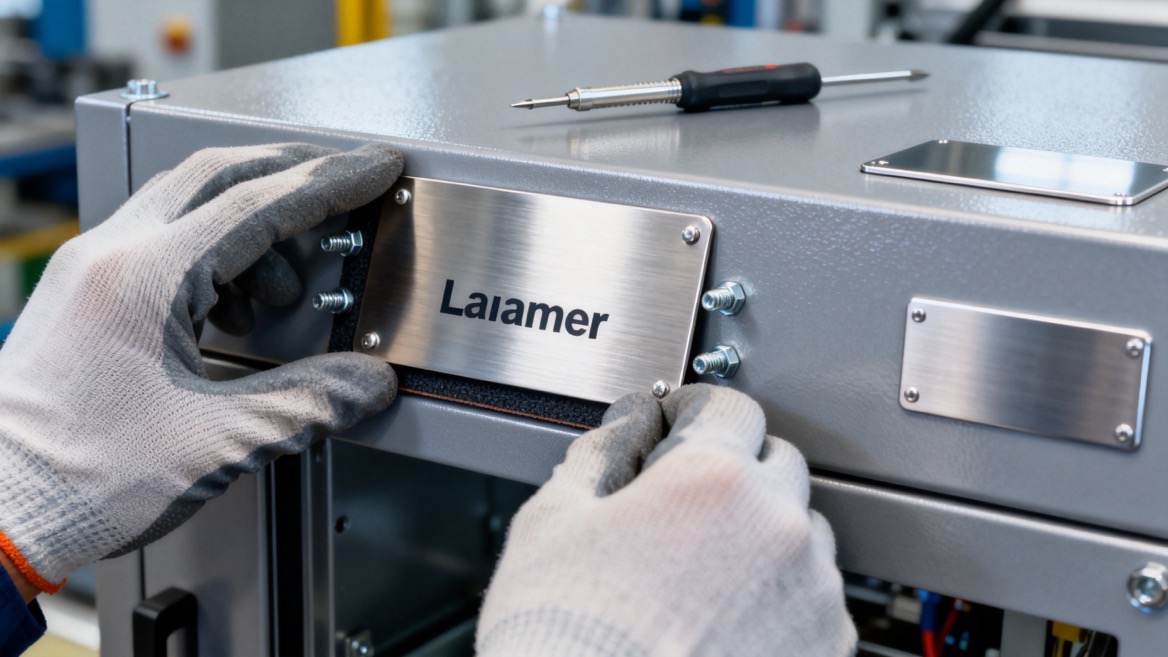
Mechanical fasteners such as screws, rivets, and bolts offer strong retention, but they introduce holes and metal-to-metal contact. If fasteners are used, protect the holes and consider insulating washers or sleeves.
For vibration-heavy machinery, a combined approach may be appropriate: industrial adhesive for full-surface support plus mechanically fixed corners where required.
Practical Maintenance Checklist
A metal nameplate should be inspected as part of normal equipment maintenance. Early action is much less expensive than waiting until corrosion spreads under a coating or makes critical safety information unreadable.
Monthly or Quarterly Inspection
- Check for scratches, chipped coatings, lifted edges, and loose fasteners
- Look for white deposits, red rust, pitting, discoloration, or bubbling
- Inspect mounting holes and plate edges closely
- Remove salt, dust, chemical residue, and standing water
- Confirm serial numbers, warning text, and QR codes remain readable
- Replace failed gaskets, cracked sealants, or corroded hardware
Safe Cleaning Practices
Use a soft cloth, clean water, and a mild neutral cleaner when appropriate. Rinse thoroughly and dry the surface.
Avoid:
- Steel wool
- Abrasive scouring pads
- Strong acids or alkalis unless the plate is specifically designed for them
- Chloride-heavy cleaning chemicals on stainless steel
- Scrapers that can cut through coatings
- Leaving salty or chemical residues to dry on the surface
For stainless steel plates in marine or washdown environments, regular freshwater rinsing can be a simple but valuable preventive practice.
A Material Selection Guide by Environment
| Application Environment | Recommended Nameplate Solution | Why It Works |
| Indoor office or dry equipment room | Screen-printed aluminum or coated aluminum | Economical, lightweight, attractive |
| General factory machinery | Anodized aluminum with screen print, engraving, or laser marking | Strong balance of cost, readability, and durability |
| Outdoor equipment | Anodized aluminum or powder-coated aluminum with UV-resistant graphics | Better weather resistance and lower weight |
| Food processing or washdown areas | 304 or 316 stainless steel with etched or laser-marked data | Resists repeated cleaning and offers a hygienic surface |
| Coastal or marine use | 316 stainless steel, sealed mounting, compatible fasteners | Stronger resistance to salt and moisture exposure |
| Chemical-processing equipment | Stainless steel or specially coated aluminum based on chemical compatibility | The finish must match the exact chemical exposure |
| Luxury packaging or furniture | Brass, stainless steel, or plated zinc alloy with a protective clear coat | Delivers premium appearance with controlled corrosion protection |
| High-vibration machinery | Anodized aluminum or stainless steel with engineered mounting | Resists movement, handling, and long service cycles |
Questions to Ask Before Ordering
Before approving a production order, provide your supplier with as much application information as possible. This avoids under-specification and helps prevent expensive field failures.
Ask:
- Will the nameplate be used indoors, outdoors, or near the coast?
- What is the expected service life?
- Will it contact saltwater, cleaning agents, oils, fuel, coolant, or chemicals?
- Is the plate exposed to direct sunlight?
- Will workers clean it frequently?
- Does the design require variable data, barcodes, QR codes, serial numbers, or compliance text?
- Will the plate be attached with adhesive, rivets, screws, or bolts?
- What material is the host equipment made from?
- Are there temperature, vibration, or abrasion requirements?
- Is a specific test standard, finish, thickness, or approval requirement needed?
The more clearly these conditions are defined, the more accurately the metal nameplate can be engineered.
Final Recommendation
The most effective way to prevent metal name plates from rusting is to select the right material for the environment, apply a suitable finish, use durable graphics, prevent galvanic contact, and install the plate without trapping water.
For most general industrial applications, anodized aluminum name plates deliver excellent value. For coastal, marine, washdown, or chemically demanding environments, stainless steel name plates, especially with etched or laser-marked information, are often the more dependable long-term choice. Decorative brass and plated badges can be highly attractive, but they need careful finishing and realistic expectations about exposure.
Shenzhen XingKun Packing Products Co., Ltd. supports custom nameplate projects from material selection and artwork review through finishing, printing, variable-data marking, and packaging. Share your installation environment, dimensions, artwork, quantity, and durability target with our team to receive a practical custom nameplate recommendation for your product.
FAQ
1. What metal nameplate will not rust?
Stainless steel is the strongest choice when the goal is to avoid conventional iron rust. Aluminum also does not form red iron rust, although it can oxidize or pit in harsh conditions. For most outdoor industrial uses, anodized aluminum or stainless steel is recommended.
2. Is aluminum better than stainless steel for nameplates?
Neither is universally better. Aluminum is lighter, more cost-effective, easy to process, and highly suitable for anodizing. Stainless steel offers better impact resistance and is often preferred for marine, washdown, high-temperature, and aggressive industrial environments.
3. Can powder coating stop rust permanently?
No coating can guarantee permanent protection if it becomes deeply scratched, chipped, poorly bonded, or exposed at edges and holes. Powder coating provides a strong barrier, but durability also depends on surface preparation, coating quality, installation, and maintenance.
4. How can I stop corrosion behind a metal nameplate?
Prevent moisture from entering or remaining behind the plate. Use a suitable gasket, sealing method, drainage design, compatible adhesive, or insulated fasteners. Avoid mounting the plate in areas where water collects.
5. Why is my stainless steel nameplate turning brown?
Brown staining on stainless steel is often caused by salt deposits, chloride-containing cleaners, iron contamination, or moisture retained in crevices. Clean the plate with suitable non-abrasive materials, rinse it well, and inspect mounting areas and fasteners.
6. Should I use adhesive or screws for an outdoor metal nameplate?
It depends on the mounting surface, vibration, temperature, and exposure. High-quality industrial adhesive can work well on smooth, clean surfaces. Screws or rivets can provide stronger mechanical retention, but they should be selected carefully to avoid galvanic corrosion and water entry.
7. What is the best marking method for a long-lasting serial number?
Laser marking, chemical etching, and engraving are usually the strongest options for permanent serial numbers, QR codes, and traceability data. These methods are generally more durable than surface ink when the plate faces abrasion, solvents, or long-term outdoor exposure.
References
1. American Galvanizers Association. "Protective Coatings." [https://galvanizeit.org/corrosion/corrosion-protection/protective-coatings]
2. Aluminum Anodizers Council. "What are the Military Specification MIL-A-8625?" [https://www.anodizing.org/military-specification-mil-a-8625/]
3. Anoplate. "How Does Anodizing Increase Corrosion Resistance?" [https://www.anoplate.com/news-and-events/how-does-anodizing-increase-corrosion-resistance/]
4. RIE Coatings. "Preventing Galvanic Corrosion with Coatings." [https://riecoatings.com/preventing-galvanic-corrosion-with-coatings/]
5. Steel Pro Group. "Preventing Galvanic Corrosion: Factors and Methods." [https://steelprogroup.com/galvanized-steel/maintenance/prevent-galvanic-corrosion/]
6. Cabral-Miramontes, J. et al. "Corrosion Resistance of Hard Coat Anodized AA 6061." *Coatings.* [https://www.mdpi.com/2079-6412/10/6/601]


