Content Menu
● What Is Cardboard?
● What Is Cardboard Made Of?
>> Virgin Fibre
>> Recycled Fibre
>> Coatings, Inks, and Added Materials
● Paperboard vs. Corrugated Cardboard
● How Corrugated Cardboard Works
>> Single-Wall, Double-Wall, and Triple-Wall Board
● Common Corrugated Flute Types
● How Is Cardboard Manufactured?
>> 1. Fibre Preparation and Pulping
>> 2. Sheet Formation
>> 3. Corrugating
>> 4. Printing, Die-Cutting, and Finishing
● Why Cardboard Remains Important for Packaging
>> Lightweight Protection
>> Flexible Customisation
>> Strong Branding Potential
>> Fibre Recovery Potential
● How to Choose the Right Cardboard for Your Product
>> 1. Define the Product Weight and Dimensions
>> 2. Map the Shipping Journey
>> 3. Decide the Packaging Role
>> 4. Select the Board Construction
>> 5. Test the Complete Pack
● Common Cardboard Packaging Mistakes
>> Choosing Material by Thickness Only
>> Using a Premium Finish on a Transit Box
>> Ignoring Humidity and Storage
>> Designing Without Assembly in Mind
>> Making Unverified Environmental Claims
● Expert Perspective: Build a Packaging System, Not Just a Box
● Request a Custom Cardboard Packaging Solution
● Frequently Asked Questions
>> Is cardboard the same as corrugated cardboard?
>> What is the strongest type of cardboard box?
>> Which cardboard is best for shipping boxes?
>> Is cardboard packaging recyclable?
>> What is the difference between paperboard and cardstock?
>> How do I choose cardboard thickness for my product?
>> Can cardboard boxes be printed with premium finishes?
● References
Cardboard is a broad everyday term for rigid paper-based packaging material, but it does not describe one single material. In commercial packaging, it usually refers to either paperboard for folding cartons or corrugated board for shipping boxes. Understanding the difference helps brands choose packaging that protects products, supports printing, controls freight costs, and creates a better unboxing experience.
At Shenzhen XingKun Packing Products Co., Ltd., we have spent more than 20 years producing custom packaging boxes and printed packaging for brands and distributors in over 30 countries and regions. From our production perspective, the best cardboard packaging is never selected by thickness alone. It must match the product weight, shipping route, stacking conditions, print design, assembly requirements, and local recovery system.
This guide explains what cardboard is made of, how corrugated cardboard differs from paperboard, how to choose the right board construction, and what buyers should ask before approving a custom packaging project.
What Is Cardboard?
Cardboard is a common name for thick, stiff paper-based material used to make boxes, cartons, displays, inserts, dividers, backing cards, and protective packaging. It is usually produced from virgin wood fibre, recycled fibre, or a blend of both.
The word is useful in daily conversation, but it can be too general for manufacturing. A packaging supplier needs a more precise specification because a thin retail carton and a heavy-duty export shipping case can both be called "cardboard," while requiring completely different materials and production methods.
In practice, cardboard packaging usually falls into two main categories:
- Paperboard: A solid, flat sheet material used for folding cartons, gift boxes, cosmetic boxes, food cartons, hang tags, and premium retail packaging.
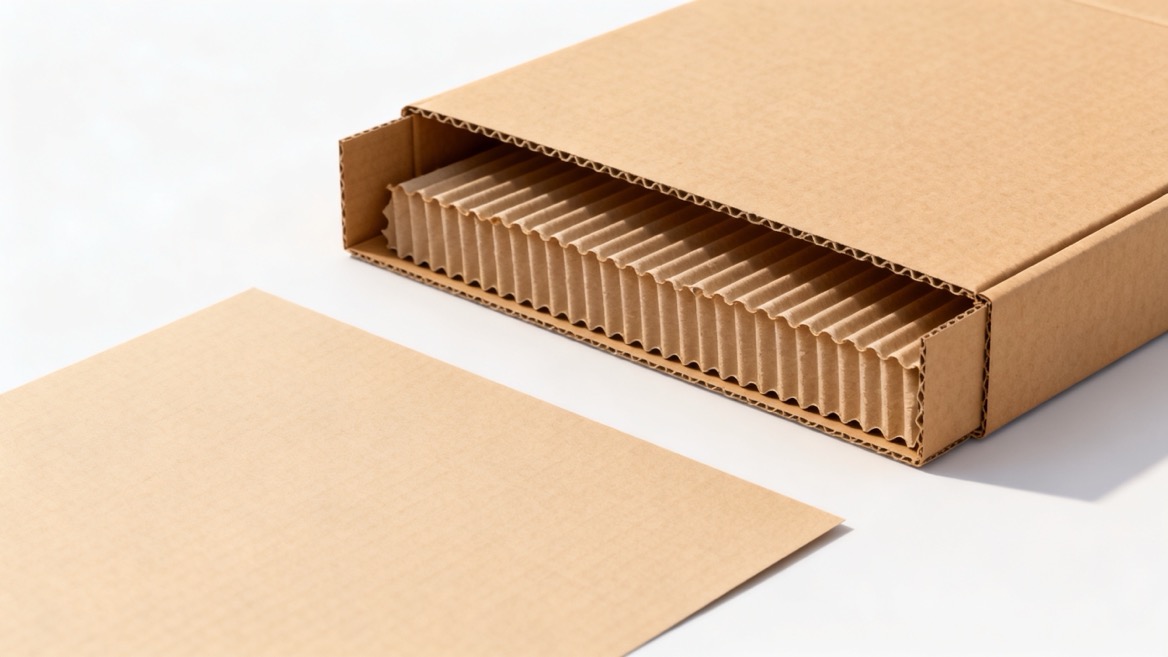
- Corrugated board: A layered material with a fluted or wavy paper medium between flat liner sheets. It is commonly used for shipping cartons, e-commerce mailers, transport boxes, and protective packaging.
The most important distinction is simple: paperboard is solid; corrugated board has flutes inside.
What Is Cardboard Made Of?
Cardboard is primarily made from cellulose fibres derived from wood, recovered paper, agricultural fibre, or a combination of these sources. The fibres are mixed with water to create pulp, formed into sheets, pressed, dried, and converted into packaging materials.
Depending on the intended application, the board may contain different grades of fibre.
Virgin Fibre
Virgin fibre comes from newly processed wood pulp. It is often selected when packaging needs strong tear resistance, clean appearance, consistent colour, food-contact suitability, or high print quality.
Typical applications include:
- Premium cosmetic cartons
- Luxury gift packaging
- Food and beverage cartons
- Pharmaceutical packaging
- High-quality branded retail boxes
- Strong outer liners for transport packaging
Virgin kraft fibre can offer good strength and puncture resistance. However, it is not automatically the right choice for every project. A properly engineered recycled board can perform well for many standard retail and shipping applications.
Recycled Fibre
Recycled fibre is made from recovered paper and board, including old corrugated containers and other paper-based materials. It is widely used in corrugated packaging, greyboard, chipboard, and many folding carton grades.
Recycled-content board can help businesses reduce reliance on new fibre. Yet packaging performance depends on the entire structure, not only on recycled content. The board must still be suitable for its intended load, moisture exposure, print method, and transport environment.
In the United States, more than 33 million tons of cardboard were recycled in 2025, with an estimated cardboard recycling rate of 70% to 75%. This demonstrates the established recovery value of corrugated fibre, although actual collection and processing outcomes differ by region and by packaging design.
Coatings, Inks, and Added Materials
A cardboard box may also include coatings, inks, adhesives, laminations, foils, windows, handles, magnets, or barrier layers. These components can improve appearance, water resistance, grease resistance, shelf appeal, or opening convenience.
However, each extra layer should be evaluated carefully. A package that looks premium but is difficult to separate or recycle may not align with the brand's material goals. Fibre-based packaging is not automatically recyclable in every system; coatings, laminates, inks, and adhesives can influence how the structure behaves during recycling.
Paperboard vs. Corrugated Cardboard
The following comparison helps buyers use the right terminology when discussing a packaging project.
| Feature |
Paperboard |
Corrugated Board |
| Basic structure |
One or more solid paper layers |
Flat liners with a fluted medium between them |
| Common appearance |
Smooth, flat, print-friendly surface |
Can be plain kraft, white-top, printed, coated, or laminated |
| Primary use |
Retail cartons, gift boxes, cosmetic boxes, sleeves, inserts |
Shipping boxes, mailers, e-commerce cartons, transport packaging |
| Strength focus |
Folding performance, stiffness, presentation |
Cushioning, stacking strength, crush resistance, protection |
| Typical printing options |
Offset printing, UV printing, foil stamping, embossing |
Flexographic printing, litho-lamination, digital printing, screen printing |
| Best for |
Products displayed on shelves or given as gifts |
Products transported through warehouses and delivery networks |
| Example |
Perfume carton |
Bottle shipping carton |
A premium skincare box, for example, may use coated paperboard with foil stamping and a rigid greyboard structure. The outer shipping carton for that same skincare set may use corrugated board with internal dividers. Both packages serve the same product, but each solves a different problem.
How Corrugated Cardboard Works
Corrugated cardboard is made from three fundamental elements:
- Outer liner: The outside flat paper layer. It affects appearance, print quality, and surface durability.
- Fluting medium: The wavy inner layer that provides cushioning, spacing, and structural support.
- Inner liner: The inside flat paper layer that completes the board structure and contributes to strength.
The fluted medium works like a paper-based spring. It helps absorb impacts while holding the two liner sheets apart, which increases rigidity without adding excessive weight. This combination of structural support and cushioning makes corrugated board suitable for shipping fragile, heavy, or stacked goods.
Corrugated sheets are available in single-wall, double-wall, and triple-wall constructions, as well as standard flute profiles such as A, B, C, and E.
Single-Wall, Double-Wall, and Triple-Wall Board
Single-wall corrugated board has two liners and one fluted medium. It is commonly used for standard e-commerce boxes, retail-ready transport cartons, and lightweight to medium-weight products.
Double-wall corrugated board has three liners and two fluted mediums. It provides stronger stacking performance and is often selected for export cartons, heavier products, and palletized deliveries.
Triple-wall corrugated board has four liners and three fluted mediums. It is used for demanding industrial shipments, machinery parts, bulk goods, and applications where high protection is required.
The right construction depends on the complete distribution cycle. A box for local delivery may need a very different design from a box that travels by sea freight, enters multiple warehouses, and remains stacked for several weeks.
Common Corrugated Flute Types
Flute type affects a package's thickness, cushioning, print surface, and compression performance. It should be selected based on product vulnerability and transport requirements—not simply on a preference for "thicker cardboard."
| Flute Type |
Approximate Thickness |
Main Advantage |
Common Application |
| A flute |
4.5–5.0 mm |
Strong cushioning and vertical compression potential |
Fragile goods and selected transit applications |
| B flute |
2.5–3.2 mm |
Good crush resistance and compact format |
Produce cartons, standard shipping boxes |
| C flute |
3.5–4.5 mm |
Balanced cushioning and stacking performance |
General shipping cases and e-commerce cartons |
| E flute |
1.2–1.8 mm |
Smooth surface and strong printability |
Die-cut cartons, retail mailers, smaller products |
| F flute |
0.7–1.0 mm |
Fine profile and premium print surface |
Lightweight retail packaging and small cartons |
| BC flute |
6.0–7.0 mm |
Strong double-wall protection |
Export packaging, heavier goods, pallet cartons |
C flute is widely used because it balances thickness, protection, and cost. E flute is often preferred for branded retail packaging because its finer profile supports more refined printing and die-cut details. Double-wall BC flute is frequently considered for heavier products or longer-distance distribution.
How Is Cardboard Manufactured?
Although production systems vary by board type and supplier, cardboard manufacturing generally follows a sequence of fibre preparation, sheet formation, conversion, and quality control.
1. Fibre Preparation and Pulping
Wood fibre, recovered paper, or blended fibre is mixed with water to form pulp. The fibre mixture is cleaned and screened to remove contaminants.
For recycled board, fibre preparation is especially important. Ink particles, tape, plastics, staples, and non-paper contaminants must be managed to support consistent board quality.
2. Sheet Formation
The pulp is spread onto a moving forming section, where water drains away and the fibres begin forming a continuous sheet. The sheet is then pressed and dried.
For paperboard, this sheet may become the finished material or be combined with additional layers. For corrugated board, separate linerboard and corrugating medium are produced before conversion.
3. Corrugating
During corrugating, the medium paper passes through heated corrugating rolls that create its wave shape. Adhesive is applied to the flute tips, and linerboard is bonded to one or both sides.
This is where the core structure of corrugated cardboard is created. Stable adhesive bonding, flute formation, moisture control, and sheet flatness all affect final box performance.
4. Printing, Die-Cutting, and Finishing
After the board is made, it can be converted into packaging through printing, die-cutting, creasing, folding, gluing, laminating, window patching, foil stamping, embossing, or other finishing processes.
At this stage, the package becomes a working brand asset. It must open correctly, hold its shape, carry the required information, protect the product, and look consistent across production batches.
Why Cardboard Remains Important for Packaging
Cardboard remains one of the most versatile packaging materials because it can deliver a practical balance of protection, presentation, weight efficiency, customisation, and fibre recovery potential.
Lightweight Protection
A well-designed corrugated structure adds spacing and cushioning without the weight of many solid materials. This can help reduce unnecessary shipping weight while protecting products against handling impacts.
However, lightweight does not mean weak. Board performance depends on liner quality, flute profile, adhesive bonding, box geometry, and the way the product is packed inside.
Flexible Customisation
Cardboard can be converted into many styles, including:
- Tuck-end folding cartons
- Rigid gift boxes
- Magnetic closure boxes
- Mailer boxes
- Corrugated shipping cartons
- Display boxes
- Drawer boxes
- Sleeve boxes
- Product inserts
- Dividers and partitions
- Counter displays
For brands, this makes cardboard useful across the full customer journey—from a retail shelf carton to a protective master carton.
Strong Branding Potential
Paperboard offers a highly adaptable surface for brand storytelling. Depending on the selected material and finishing method, a box can include:
- Full-colour printing
- Pantone colour matching
- Matte or gloss lamination
- Soft-touch lamination
- Embossing and debossing
- Foil stamping
- Spot UV
- Die-cut windows
- Custom inserts
- QR codes and product instructions
The aim is not to add every available finish. The aim is to use the right combination to make the product easier to understand, more memorable, and appropriate for its price position.
Fibre Recovery Potential
Cardboard packaging can enter established paper recovery streams in many markets. Still, packaging teams should avoid broad environmental claims without considering the full design.
A recyclable base material can become more difficult to process when it includes excessive plastic lamination, mixed-material components, heavy contamination, or hard-to-separate attachments. European guidance recommends considering the requirements and protocols of the target market when evaluating paper-based packaging recyclability.
How to Choose the Right Cardboard for Your Product
The best packaging specification starts with the product and the supply chain. It should not start with a box photo or an arbitrary board thickness.
Use the following process before requesting a quotation.
1. Define the Product Weight and Dimensions
Measure the finished product, including accessories, manuals, cables, inserts, and protective components. Identify the total packed weight rather than the product-only weight.
A small but dense item may require stronger packaging than a larger lightweight product. Glass bottles, metal parts, electronics, ceramics, and tools usually need more attention to impact and crush protection.
2. Map the Shipping Journey
Ask how the package will move:
- Is it sold in-store, online, or through distributors?
- Will it ship as an individual parcel?
- Will it travel by air, sea, road, or rail?
- How many warehouse handling stages are expected?
- Will cartons be palletized?
- Could the package face humidity, long storage periods, or rough handling?
For export packaging, the outer carton must tolerate more than the first delivery. It may be lifted, stacked, transferred, unloaded, re-stacked, and stored before reaching the final customer.
3. Decide the Packaging Role
A single package can serve one or several roles:
- Retail display
- Product protection
- Gift presentation
- E-commerce mailing
- Subscription-box experience
- Shipping consolidation
- Product information delivery
- Tamper evidence
- Internal organization
When one box must do several jobs, the structure should be designed around the highest-risk requirement. For example, a retail-ready mailer may need both a clean print surface and enough strength to survive parcel delivery.
4. Select the Board Construction
Use the product and distribution information to determine the right material direction.
| Packaging Need |
Recommended Starting Point |
| Luxury retail presentation |
Coated paperboard or rigid greyboard box with printed wrap |
| Lightweight branded mailer |
E flute corrugated mailer or folding carton, depending on transit conditions |
| General e-commerce shipment |
C flute single-wall corrugated box |
| Medium-weight product with stronger handling needs |
B flute or C flute corrugated board |
| Heavy products or export transport |
Double-wall corrugated board, often BC flute |
| Fragile bottles or multiple units |
Corrugated carton with fitted inserts, dividers, or molded protection |
| Small premium accessory box |
Paperboard folding carton or fine-flute corrugated board |
This table is a starting point, not a replacement for testing. Final board selection should be confirmed with samples, packed-product trials, and an assessment of the actual supply chain.
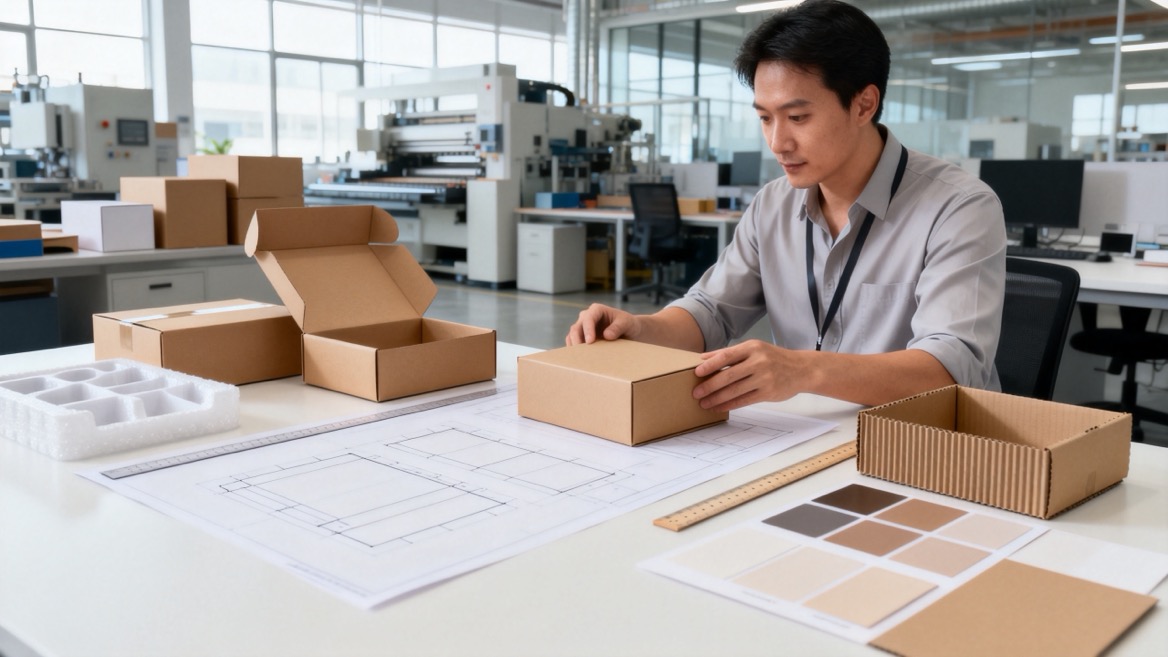
5. Test the Complete Pack
A box can look excellent when empty and still fail during transport. Whenever possible, test the package with the actual product inside.
Useful checks include:
- Does the product move inside the box?
- Does the box close securely after repeated handling?
- Does the print scuff during transport?
- Can the carton withstand expected stacking?
- Do inserts keep fragile products separated?
- Does the package remain presentable after delivery?
- Can staff assemble it efficiently?
A practical lesson from packaging production is that internal fit often matters as much as board strength. An oversized carton may collapse less easily, but if the product moves freely inside, impact damage can still occur.
Common Cardboard Packaging Mistakes
Choosing Material by Thickness Only
Thicker board is not always stronger in the way a product needs. Flute profile, liner quality, board construction, carton dimensions, and product fit all influence performance.
Using a Premium Finish on a Transit Box
Soft-touch lamination, foil, and complex finishing can be effective on a customer-facing retail box. They may be unnecessary or vulnerable on a rough-handled shipping carton.
A layered solution often works better: use a branded retail carton inside a more functional corrugated shipper.
Ignoring Humidity and Storage
Paper-based materials can be affected by humidity. Long sea freight, tropical climates, cold storage, and uncontrolled warehouses may influence stiffness and compression performance.
Discuss the shipping and storage conditions early, especially for international orders.
Designing Without Assembly in Mind
A complex box may look impressive in a digital mock-up but be slow to assemble, expensive to pack, or inconvenient for warehouse teams.
Ask whether the packaging will be hand-assembled or machine-packed. Simple structural changes can reduce labour time while improving consistency.
Making Unverified Environmental Claims
Avoid describing a package as fully recyclable, plastic-free, compostable, or environmentally friendly unless the full material structure and destination market support the claim.
A more reliable approach is to specify the materials accurately and design with recovery in mind: use clear material choices, minimize unnecessary mixed components, and check the target market's collection infrastructure.
Expert Perspective: Build a Packaging System, Not Just a Box
For growing brands, packaging should be treated as a connected system.
A well-planned system may include:
- A retail box that communicates brand value
- A protective insert that prevents movement
- A shipping carton that withstands distribution
- A master carton that supports efficient warehouse handling
- Clear artwork files and colour standards for production consistency
- A material strategy that considers recovery pathways in destination markets
This approach prevents a common sourcing problem: investing heavily in a beautiful product box, then discovering that it does not survive transport without excessive void fill or an oversized outer carton.
At Shenzhen XingKun Packing Products Co., Ltd., our practical recommendation is to review the product, box style, artwork, insert needs, delivery method, and destination market together before finalising a material. This reduces avoidable revisions and helps ensure that the final packaging performs as well as it looks.
Request a Custom Cardboard Packaging Solution
The right cardboard packaging can protect your product, improve shelf appeal, support a consistent brand experience, and make fulfilment easier. Whether you need custom folding cartons, rigid gift boxes, corrugated mailers, retail display packaging, or export shipping cartons, the material and structure should be built around your actual product journey.
Share your product dimensions, product weight, box style, artwork, quantity, and destination market with Shenzhen XingKun Packing Products Co., Ltd. Our packaging team can help you evaluate suitable board options, develop a tailored structure, and create packaging that is practical for production, shipping, and your customers.
Frequently Asked Questions
Is cardboard the same as corrugated cardboard?
No. Cardboard is a general term for thick paper-based material. Corrugated cardboard is a specific type of cardboard made with flat liner sheets and a fluted inner medium. Paperboard is another common type of cardboard and is generally solid rather than fluted.
What is the strongest type of cardboard box?
There is no single strongest box for every application. Double-wall and triple-wall corrugated board are generally stronger than single-wall board for heavy products and demanding transport. However, strength also depends on flute profile, liner quality, box dimensions, product weight, packing method, and stacking conditions.
Which cardboard is best for shipping boxes?
C flute is a common choice for general shipping because it offers a useful balance of cushioning, thickness, and stacking performance. B flute can work well where crush resistance and a more compact profile are important. For heavier products or export shipments, double-wall combinations such as BC flute may be more suitable.
Is cardboard packaging recyclable?
Many cardboard and paperboard packages can be recycled through paper recovery systems. However, recyclability depends on local collection and sorting systems as well as the complete package design. Heavy plastic laminations, non-paper attachments, certain coatings, food contamination, and mixed materials can affect recovery.
What is the difference between paperboard and cardstock?
Cardstock is generally a lighter paper-based material commonly used for cards, folders, labels, and craft applications. Paperboard is a broader industrial packaging term for heavier board grades used to make folding cartons, product boxes, and other rigid paper-based packaging components.
How do I choose cardboard thickness for my product?
Start with the product weight, dimensions, fragility, shipping method, storage conditions, and desired presentation. Do not select thickness alone. A packaging manufacturer should also review flute type, board grade, internal protection, carton style, and whether the package will be stacked or shipped internationally.
Can cardboard boxes be printed with premium finishes?
Yes. Depending on the board type and box structure, cardboard packaging can use full-colour printing, Pantone colours, lamination, spot UV, foil stamping, embossing, debossing, die-cut windows, and other decorative finishes. The best finish depends on whether the box is intended for retail display, gifting, e-commerce, or transport.
References
1. [Custom Box Makers — What Is Cardboard?]
2. [American Forest & Paper Association — Paper Industry Announces 2025 U.S. Paper Recycling Rates]
3. [American Forest & Paper Association — Packaging and Cardboard Recycling Information]
4. [U.S. Environmental Protection Agency — Paper and Paperboard Material-Specific Data]
5. [International Paper — Corrugated Packaging Sheets]
6. [Fibre Box Association — Corrugated Packaging Resources]
7. [Fibre Box Association — The Fibre Box Handbook]
8. [Sustainable Packaging Coalition — Paper Packaging Recyclability Collaborative]
9. [CEPI — Paper-Based Packaging Recyclability Guidelines]
10. [4evergreen — Fibre-Based Packaging Recyclability Evaluation Protocol]


