Content Menu
● Matte vs Gloss Lamination at a Glance
● How Each Lamination Finish Changes a Tote Bag
>> Matte Lamination Creates a Premium, Low-Glare Look
>> Gloss Lamination Makes Colors Brighter and More Noticeable
● Choosing the Right Finish for Your Brand
>> Match the Finish to the Artwork
>> Consider Lighting Before Approving the Finish
● Performance, Cost, and Sustainability Considerations
>> Total Cost Is More Than the Unit Price
>> Lamination and End-of-Life Planning
● A Practical Selection Process for Custom Tote Bags
● Frequently Asked Questions
>> Is matte lamination more premium than gloss lamination?
>> Which lamination is better for colorful custom tote bags?
>> Does matte lamination scratch more easily than gloss lamination?
>> Can I use foil stamping with matte or gloss lamination?
>> Are laminated tote bags suitable for heavy products?
>> Should I choose matte or gloss for a black paper tote bag?
>> Can matte and gloss finishes be combined on one bag?
● References
When choosing a finish for custom tote bags, the decision often comes down to matte lamination vs gloss lamination. Both finishes can protect printed paper tote bags, strengthen their surface, and improve their perceived value. However, they create very different visual experiences and are suited to different brand positions, artwork styles, retail environments, and handling conditions.
At Shenzhen XingKun Packing Products Co., Ltd., we have spent more than 20 years producing custom printed packaging and tote bags for brands and distributors in over 30 countries and regions. From luxury retail bags to event giveaways and high-volume promotional packaging, we have seen one consistent lesson: the right lamination finish is not simply a design preference. It affects how a bag photographs, how easily it shows fingerprints, how customers perceive the brand, and how the bag performs throughout shipping and daily use.
This guide compares matte laminated tote bags and gloss laminated tote bags from a practical manufacturing and brand-use perspective. It will help you select a finish that supports your artwork, budget, end user, and intended market.
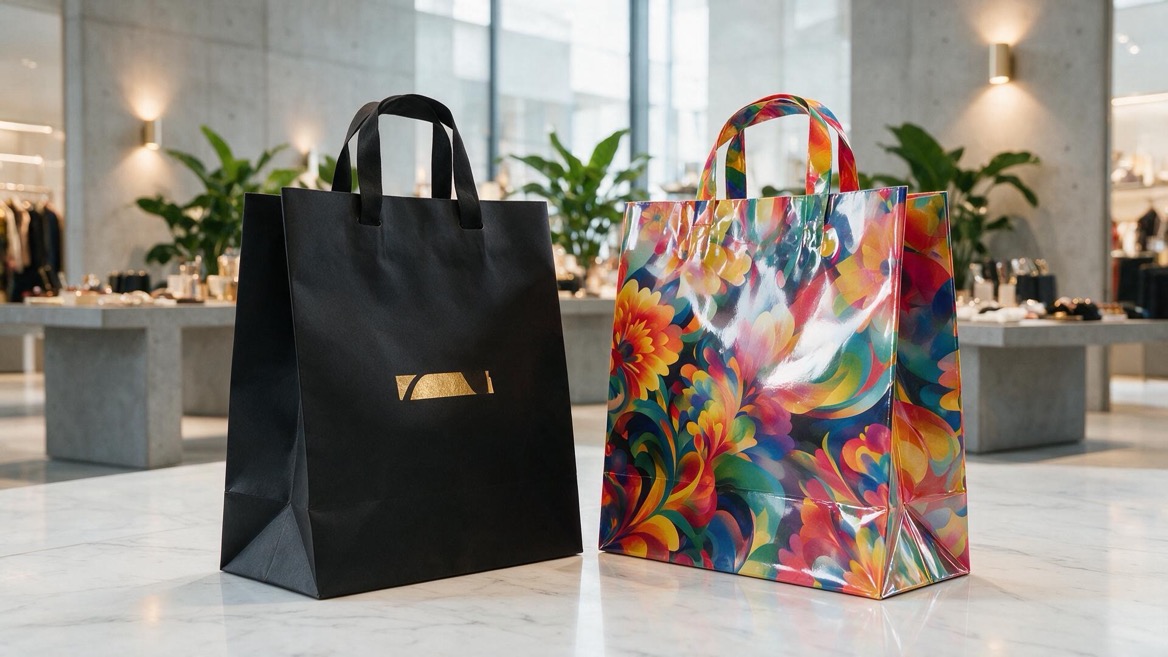
Matte vs Gloss Lamination at a Glance
Lamination is a protective film applied to the printed paper surface of a tote bag. It helps improve resistance to moisture, rubbing, scratches, and surface wear. The two most common options are matte lamination and gloss lamination.
| Feature | Matte Lamination | Gloss Lamination |
| Surface appearance | Low-shine, refined, understated | Shiny, bright, highly reflective |
| Color effect | Softer and more restrained | Richer, more vivid, higher contrast |
| Light reflection | Reduces glare | Reflects light strongly |
| Brand impression | Premium, modern, artistic, sophisticated | Bold, energetic, commercial, eye-catching |
| Fingerprint visibility | Can show marks, especially on dark colors | Usually easier to wipe clean |
| Photography | Often works well under direct lighting | Can create glare in photos |
| Best for | Luxury, fashion, beauty, gifts, boutiques | Retail promotions, colorful graphics, events |
| Typical artwork style | Minimal logos, dark fields, elegant typography | Product images, bright graphics, bold colors |
The most important distinction is simple: matte lamination communicates restraint, while gloss lamination creates visual energy.
A glossy bag is designed to catch the eye quickly. A matte bag is designed to reward closer inspection. Neither is automatically better. The best finish is the one that matches the customer's expectations when they touch, carry, and reuse the bag.
How Each Lamination Finish Changes a Tote Bag
Matte Lamination Creates a Premium, Low-Glare Look
Matte lamination uses a non-reflective film that softens the appearance of the printed surface. It gives custom tote bags a calm, clean, and contemporary look. For premium brands, this controlled appearance can make a logo, foil detail, embossed area, or ribbon handle feel more intentional.
Matte lamination is particularly effective for:
- Luxury fashion shopping bags
- Jewelry and watch packaging
- Beauty and skincare gift bags
- Boutique and lifestyle brands
- Corporate presentation bags
- High-end event welcome bags
- Minimalist black, white, beige, gray, or dark-color designs
A matte laminated tote bag can make a simple design look more expensive without adding excessive artwork. For example, a deep navy bag with a centered white logo may look understated in matte, while the same design in gloss can appear more promotional.
From a production viewpoint, matte lamination also helps reduce harsh reflections under retail lighting. This is valuable when the bag includes fine typography, pale colors, detailed illustrations, or a subtle brand pattern. Customers can read the design without the strong shine that may appear on glossy surfaces.
However, matte does require thoughtful color planning. Dark matte bags, especially black, navy, burgundy, and charcoal designs, may show scuffs, dust, handling marks, or fingerprints more readily than lighter colors. This does not mean matte is weak; it means surface marks can be more visible because the finish does not reflect light away from them.
For dark matte custom tote bags, we usually recommend reviewing the bag under real handling conditions before confirming mass production. A physical sample can reveal whether the selected paper, ink coverage, lamination film, and handle construction are appropriate for the intended use.
Gloss Lamination Makes Colors Brighter and More Noticeable
Gloss lamination creates a smooth, reflective surface that enhances visual contrast. It can make colors appear more saturated and gives photographs, product images, gradients, and bold graphics greater impact.
Gloss laminated tote bags are often chosen for:
- Retail campaigns
- Promotional shopping bags
- Trade show bags
- Cosmetics launches
- Toys, gifts, and youth-focused brands
- Food and beverage promotions
- Seasonal retail packaging
- Designs with colorful illustrations or product photography
If your artwork uses bright red, yellow, orange, blue, green, or multi-color graphics, gloss lamination can help the design stand out. It is often an excellent choice for brands that want the bag to work as a moving advertisement in a shopping mall, exhibition hall, or busy high street.
Gloss also tends to be more forgiving for everyday handling. Its smooth surface is generally easier to wipe, and fingerprints are often less visually distracting than on a dark matte finish. This makes it a practical choice for bags that may be handled frequently by sales teams, store employees, event visitors, or customers.
The trade-off is reflection. Under strong store lighting, camera flash, or sunlight, gloss can create glare. Fine text, QR codes, small icons, and delicate visual details should be checked carefully during proof approval. A design that looks excellent on a screen may need adjusted contrast or spacing when printed on a reflective surface.

Choosing the Right Finish for Your Brand
The decision between matte lamination and gloss lamination on custom tote bags should start with your intended customer experience, not with a generic rule about which option looks more premium.
Use matte lamination when your brand needs to feel:
- Elegant rather than loud
- Modern rather than decorative
- Luxury-oriented rather than promotional
- Minimal rather than colorful
- Soft and tactile rather than highly reflective
Use gloss lamination when your brand needs to feel:
- Colorful and energetic
- Highly visible in a retail setting
- Friendly and accessible
- Promotional or campaign-focused
- Image-led and visually expressive
Match the Finish to the Artwork
Artwork is often the deciding factor.
Matte works particularly well with large areas of solid color, refined typography, monochrome layouts, subtle patterns, and carefully spaced logos. It can elevate a simple composition because the finish itself adds visual sophistication.
Gloss works especially well with photo-heavy artwork, colorful patterns, gradients, high-contrast illustrations, and promotional messaging. It adds depth and brightness, which is useful when the bag must attract attention from a distance.
Before approving production, ask your manufacturer to review the following items:
1. Ink coverage: Heavy dark ink coverage can show rubbing or marks differently on matte and gloss surfaces.
2. Small text: Fine copy should maintain sufficient contrast, especially on glossy backgrounds.
3. Logo placement: A central logo may benefit from matte, while a full-coverage campaign visual may be stronger in gloss.
4. Special finishes: Foil stamping, embossing, debossing, spot UV, and textured paper should be tested with the selected lamination.
5. Bag use conditions: A bag carried in humid weather, crowded stores, or long-distance export shipments needs a finish appropriate for repeated handling.
Consider Lighting Before Approving the Finish
A tote bag is rarely viewed in only one environment. It may be photographed for a product launch, displayed under retail spotlights, carried outdoors, placed in a customer's car, or reused at home.
This is why a screen proof alone is not enough for an important project. We recommend a simple three-setting review:
1. View the printed sample under normal office lighting.
2. Check it under direct retail-style lighting.
3. Photograph it with a phone under daylight and indoor light.
This process is especially useful for glossy bags with photographic artwork and matte bags with dark full-coverage backgrounds. It allows the brand team to identify glare, color shifts, visibility concerns, and surface-mark issues before the full order is produced.
Performance, Cost, and Sustainability Considerations
Both matte and gloss lamination add protection to paper tote bags. They can help reduce damage from light moisture, abrasion, and normal handling. However, lamination is not a substitute for good structural design.
A durable custom tote bag depends on several connected specifications:
- Paper type and paper weight
- Bag dimensions and loading capacity
- Bottom board and side gusset construction
- Handle material and handle reinforcement
- Glue quality and folding accuracy
- Lamination film type and application quality
- Printing method and ink adhesion
- Packing method for export shipment
For example, a premium matte finish cannot compensate for an undersized bottom board or weak rope-handle reinforcement. Likewise, a bright gloss surface will not solve problems caused by insufficient paper strength for heavy products.
Total Cost Is More Than the Unit Price
Matte lamination may cost more than a standard gloss finish, depending on film availability, bag size, printing coverage, order quantity, and additional finishing requirements. However, the most useful purchasing question is not, "Which finish is cheaper?"
Instead, ask:
> Which finish helps this bag deliver the strongest brand impression and the lowest risk of rejection, damage, or redesign?
A bag used for a one-week sales promotion may benefit from gloss because it delivers immediate visibility. A bag intended for a luxury product launch may justify matte because customers are more likely to retain and reuse it.
The true cost also includes artwork revisions, sampling time, shipping damage risk, retail presentation, and the potential value of continued brand exposure when customers reuse the bag.
Lamination and End-of-Life Planning
Laminated paper bags contain more than one material, so their recycling outcome depends on the local collection system, the film structure, adhesive, paper composition, and the requirements of the recycling facility. A laminated bag should not automatically be described as recyclable in every market.
For brands with environmental packaging targets, it is important to discuss the finish at the design stage. Consider whether the bag needs full lamination, one-sided protection, a lighter coating, reduced ink coverage, or an alternative construction. Clear, market-specific disposal instructions are also preferable to broad environmental claims.
The most responsible approach is to use only the finish and material layers necessary for the bag's actual performance requirements.
A Practical Selection Process for Custom Tote Bags
For buyers comparing matte laminated tote bags and gloss laminated tote bags, this five-step process can prevent expensive mistakes.
1. Define the bag's job.
Is it a luxury carrier, a retail shopping bag, an event giveaway, a gift bag, or a reusable promotional item?
2. Review the artwork honestly.
Minimal dark designs often favor matte. Bright images and colorful campaign artwork often favor gloss.
3. Set the handling requirement.
Consider bag weight, expected reuse, shipping distance, humidity exposure, and store handling frequency.
4. Request physical samples.
Compare matte and gloss versions using the same paper, artwork, size, and handle option whenever possible.
5. Approve a complete specification.
Confirm paper weight, dimensions, lamination type, handle style, reinforcement, print colors, special finishes, packing method, and quality standard before bulk production.
At XingKun, we encourage customers to treat a tote bag as part of the product experience rather than as an afterthought. The bag often becomes the first physical touchpoint between the customer and the brand. Its finish should reinforce the same message communicated by the product, store, and campaign.
Whether you choose a sophisticated matte laminated tote bag or a vibrant gloss laminated tote bag, the goal is the same: create packaging that looks right, performs reliably, and gives customers a reason to carry it again.
Ready to compare finishes for your next custom tote bag project? Contact Shenzhen XingKun Packing Products Co., Ltd. with your artwork, bag size, target quantity, and intended use. Our team can recommend suitable paper, lamination, handle, and finishing options, then prepare samples for practical review before production.

Frequently Asked Questions
Is matte lamination more premium than gloss lamination?
Matte lamination is often associated with luxury because of its low-glare, understated appearance. However, gloss can also look premium when paired with strong artwork, quality paper, accurate printing, and refined bag construction. The finish should match the brand rather than follow a universal rule.
Which lamination is better for colorful custom tote bags?
Gloss lamination is usually better for colorful graphics, product images, gradients, and high-contrast promotional artwork because it increases visual brightness and color impact.
Does matte lamination scratch more easily than gloss lamination?
Both finishes can experience surface wear during handling. On dark matte bags, scuffs and fingerprints may be more visible. Testing an actual sample is the best way to evaluate the appearance of both finishes for your specific artwork and handling conditions.
Can I use foil stamping with matte or gloss lamination?
Yes. Foil stamping can be used with both finishes. Matte lamination often creates a strong contrast with gold, silver, copper, or holographic foil, while gloss lamination can support a brighter, more decorative effect. Sampling is recommended before final approval.
Are laminated tote bags suitable for heavy products?
They can be, but lamination alone does not determine load capacity. Paper weight, bag dimensions, bottom reinforcement, handle type, handle attachment, and glue quality are all important for carrying heavier products.
Should I choose matte or gloss for a black paper tote bag?
Matte can create a highly refined black tote bag, especially for fashion, jewelry, cosmetics, and premium gifting. However, black matte bags should be sampled because fingerprints and scuff marks can be more noticeable. Gloss black may be more reflective and easier to wipe but produces a different brand mood.
Can matte and gloss finishes be combined on one bag?
Yes. A common option is matte lamination with selective gloss effects, such as spot UV on a logo, pattern, or product image. This creates contrast and helps draw attention to specific design elements.
References
1. [WITPAX — Lamination in Packaging: Materials, Benefits, and Applications] — Overview of gloss, matte, and soft-touch finishes, including their visual characteristics and typical applications. [witpax]
2. [EnviroPackaging — Gloss vs. Matte Laminated Eurotote Bags for Your Business] — Practical comparison of visual appeal, durability, moisture resistance, and brand positioning for laminated retail bags. [enviropackaging]
3. [CEPI — Recyclability Guidelines for Paper-Based Packaging] — Guidance on minimizing non-paper constituents, using one-sided lamination where feasible, and designing paper-based packaging with end-of-life considerations. [cepi]
4. [Confederation of Paper Industries — Design for Recyclability Guidelines] — Detailed discussion of laminated paper structures, adhesives, fiber recovery, and recycling-system compatibility. [thecpi.org]
5. [Eurosac and CEPI Eurokraft — Paper Sacks Design for Recyclability Guidelines] — Recommendations on reducing non-fiber content and assessing thermoplastic coatings in paper packaging. [eurosac]
6. [UGI — Lamination Film Selection: Substrate and Thermal Guide] — Technical guidance on confirming end-use conditions, material compatibility, and sample testing before final specification approval. [ukugi]


