Content Menu
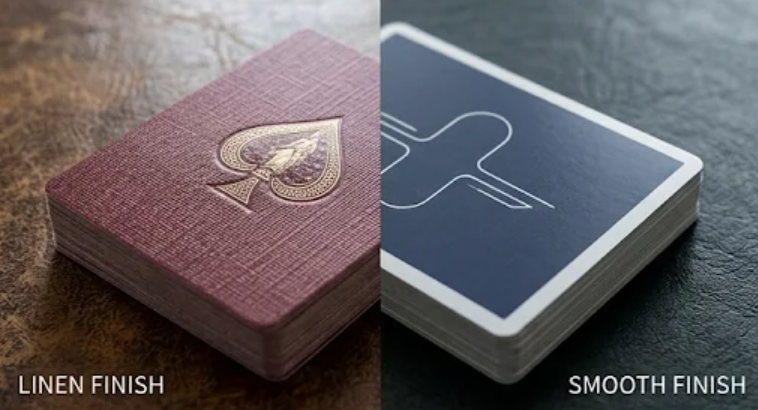
● Linen Finish vs Smooth Finish Playing Cards: Comparison at a Glance
● What Is a Linen Finish on Playing Cards?
>> How Linen Texture Influences Card Handling
>> Is Linen the Same as Air-Cushion Finish?
● What Is a Smooth Finish on Playing Cards?
>> Smooth Cards Can Be Coated and Performance-Oriented
>> Smooth Is Not a Synonym for Matte
● Which Finish Is Better for Shuffling and Gameplay?
>> Evaluate Glide and Control Separately
>> Include Intended Users in Testing
● Which Finish Is Better for Artwork and Readability?
>> Match the Surface to Your Visual Priorities
>> Do Not Approve Artwork from a Screen Alone
● Durability: Why Finish Alone Cannot Predict Deck Life
>> Compare Complete Constructions
>> Neither Finish Makes Paper Cards Waterproof
● Stock, Coating, and Core: Three Variables Buyers Often Miss
>> Paper Stock Controls More Than Surface Feel
>> The Coating Is a Functional Component
>> Opacity Is a Separate Requirement
● A Practical Seven-Step Sample Testing Protocol
>> Step 1: Write a One-Sentence Use Case
>> Step 2: Request Comparable Samples
>> Step 3: Standardize the Review Conditions
>> Step 4: Repeat the Same Handling Tasks
>> Step 5: Inspect After Repeated Use
>> Step 6: Score Against Your Priorities
>> Step 7: Approve a Reference Sample
● Application-Based Recommendations for Custom Playing Cards
>> Poker and Frequently Shuffled Game Decks
>> Promotional and Photo Playing Cards
>> Cardistry and Magic Decks
>> Educational and Information-Led Decks
● Cost Comparison: Ask for Matched Quotes, Not Generic Percentages
● What Many Finish Comparisons Leave Unanswered
● How to Brief XingKun on a Custom Playing Card Project
● Conclusion
● Frequently Asked Questions
>> 1. Are linen finish playing cards always better than smooth cards?
>> 2. Does a linen finish contain real linen?
>> 3. Are smooth finish playing cards uncoated?
>> 4. Which finish should I consider for photo playing cards?
>> 5. Does linen finish make a deck waterproof?
>> 6. Will two manufacturers' linen cards feel the same?
>> 7. Does a black core mean a card has a linen finish?
>> 8. What should I approve before ordering custom playing cards in bulk?
Linen finish vs smooth finish playing cards is not simply a choice between a textured surface and a flat one. It is a product-development decision that affects how a deck shuffles, displays artwork, feels in the hand, and supports your brand positioning. Linen finishes introduce an embossed surface pattern, while smooth finishes have little or no visible embossing. However, the paper stock, protective coating, and cutting process also influence the finished deck's performance. [classicdecks]
My recommendation is straightforward: start by evaluating linen for decks built around frequent shuffling and tactile appeal, and evaluate smooth for projects where photographs, illustrations, or information presentation lead the experience. Then compare physical samples. Manufacturers offer both professional smooth stocks and linen stocks, so neither surface category is automatically a quality grade. [makeplayingcards]
For international brands, wholesalers, and manufacturers sourcing custom playing cards, the most useful question is therefore not "Which finish is better?" It is "Which complete card specification best serves our users?"
This guide explains that distinction and provides a practical framework for selecting, sampling, and specifying custom decks.
Linen Finish vs Smooth Finish Playing Cards: Comparison at a Glance
The following table summarizes the main differences. These are starting points for evaluation, not guarantees that apply to every supplier's products. Finish names and handling characteristics vary between manufacturers. [classicdecks]
| Comparison point |
Linen finish playing cards |
Smooth finish playing cards |
| Surface structure |
Embossed pattern with small raised and recessed areas |
Relatively flat surface without prominent embossing |
| Tactile impression |
Noticeably textured |
More uniform to the touch |
| Handling considerations |
Texture can support gliding, spreading, and dealing |
Coating and stock can also deliver smooth shuffling |
| Artwork considerations |
Texture becomes part of the visual presentation |
Often worth evaluating for photography and detailed imagery |
| Typical starting applications |
Frequently handled decks, tactile game products, performance-oriented decks |
Photo decks, promotional decks, illustrated cards, information-led products |
| Main purchasing risk |
Assuming all linen stocks handle identically |
Assuming smooth means uncoated or inexpensive |
| Best approval method |
Test the actual stock, coating, print, and cut together |
Test the actual stock, coating, print, and cut together |
MakePlayingCards, for example, describes its M31 linen stock as embossed for handling, while its S30 smooth stock uses varnishing to support shuffling and protect the printed surface. This demonstrates why the full construction matters more than the finish label alone. [makeplayingcards]
What Is a Linen Finish on Playing Cards?
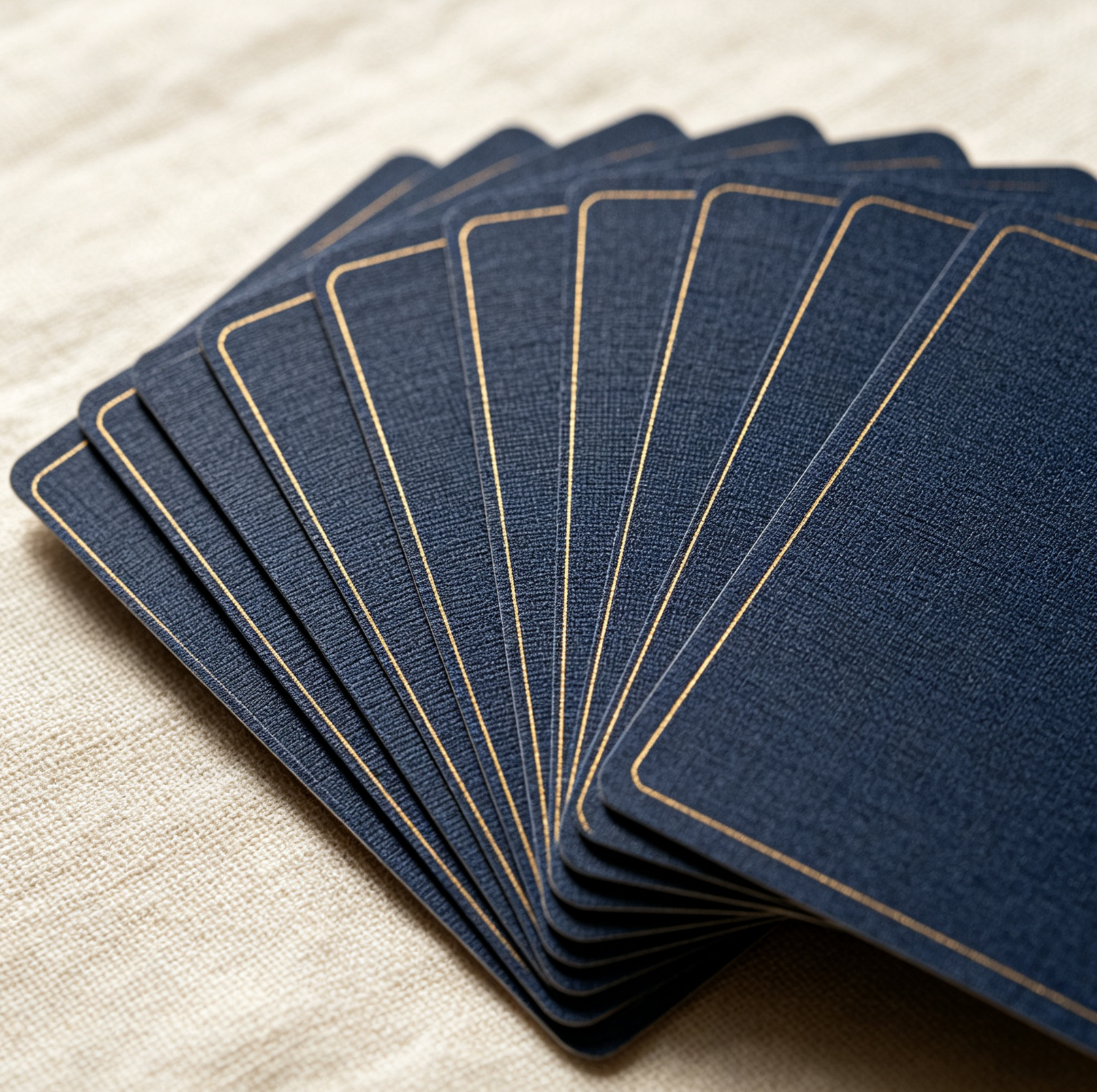
A linen finish is an embossed surface texture that resembles a fine woven pattern. In this context, "linen" describes the appearance and feel of the surface; it does not mean that the cards contain linen fabric. Different manufacturers can use different patterns, coatings, and production methods under the same general description. [classicdecks]
How Linen Texture Influences Card Handling
An embossed surface contains small high and low areas rather than one continuous flat plane. These features change how adjacent cards contact each other and can help the deck glide during dealing, spreading, and shuffling. MakePlayingCards describes the embossed pockets on its M31 stock as supporting handling, while its M32 option uses a more defined embossing pattern. [makeplayingcards]
For a buyer, the practical benefit is not the texture itself. It is the handling experience that a particular combination of texture, coating, and stock produces.
A linen sample should therefore be assessed in motion, not only touched or photographed.
Try spreading the cards across a table. Deal them individually. Shuffle them several times. Check whether the deck provides enough glide without feeling difficult to control.
Is Linen the Same as Air-Cushion Finish?
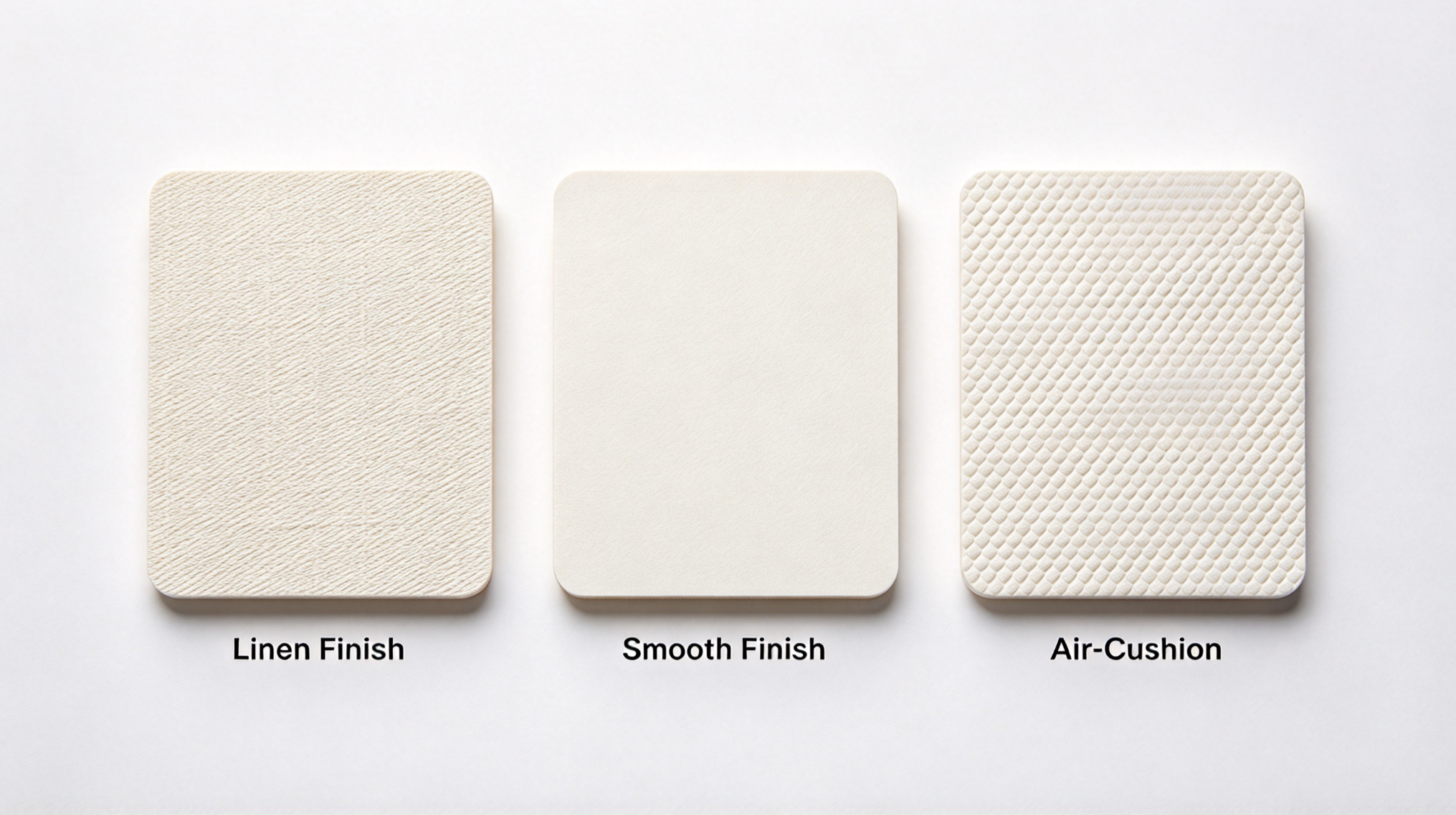
Not automatically. "Linen," "embossed," and "air-cushion" terminology can describe related surface characteristics, but finish names are not universal technical standards. Two decks described with similar language may still differ in paper, coating, texture, and cutting. [classicdecks]
When sourcing custom linen finish playing cards, request a physical reference sample rather than relying on terminology alone.
A useful purchasing instruction is:
"Please identify the stock, surface texture, and coating used in this sample, and confirm which production specifications will match it."
That request is more actionable than asking for an undefined "premium linen finish."
What Is a Smooth Finish on Playing Cards?
A smooth finish has little or no prominent embossed surface texture. However, smooth does not mean unfinished. Smooth playing cards can include a protective coating designed to influence handling and keep the printed surface cleaner during use. [classicdecks]
Smooth Cards Can Be Coated and Performance-Oriented
One common comparison mistake is to treat smooth cards as basic printed paper and linen cards as professionally finished products.
Manufacturer specifications show why this is misleading. MakePlayingCards describes its S30 smooth stock as varnished, slightly slippery, and designed to aid shuffling and handling. It also offers a superior smooth option within its wider stock range. [makeplayingcards]
Consequently, a high-quality smooth deck deserves evaluation on its own merits.
The relevant questions are:
- Does it shuffle comfortably?
- Does it separate cleanly during dealing?
- Does the artwork reproduce as intended?
- Does it maintain an acceptable feel after repeated handling?
Smooth Is Not a Synonym for Matte
Surface texture and light reflection are different characteristics. A smooth surface describes the absence of prominent embossing; matte describes an optical appearance. Manufacturers also distinguish card-stock texture from the finishing treatments applied to cards. [classicdecks]
For an OEM brief, keep these attributes separate:
- Surface: smooth or embossed.
- Appearance: the desired level of sheen.
- Coating: the supplier's recommended protective and handling treatment.
- Performance: the specific user experience the deck must deliver.
This avoids an ambiguous request such as "smooth matte premium cards," which leaves several important production choices unresolved.

Which Finish Is Better for Shuffling and Gameplay?
For a deck that will be shuffled repeatedly, linen is a sensible starting sample. Manufacturer descriptions connect embossed pockets with improved handling and a slippery feel. Nevertheless, smooth stocks can also be coated specifically to support shuffling. [makeplayingcards]
The strongest recommendation is therefore comparative: evaluate both finishes with your intended users and the same gameplay tasks.
Evaluate Glide and Control Separately
An extremely slippery deck is not necessarily the right deck for every audience.
Performance-oriented products may prioritize fans and spreads. A family game may place greater importance on easy dealing and manageable stacks. An information deck may be handled primarily one card at a time.
Manufacturers themselves describe different combinations of stock softness, coating, and surface texture for different handling goals. MakePlayingCards' M30 stock, for example, is positioned for cardistry and magic, with a lighter and softer construction. [makeplayingcards]
For your own sample review, separate the questions:
1. Can users spread the deck evenly?
2. Can they deal one card without pulling another?
3. Can they hold a packet without unwanted sliding?
4. Does the deck remain manageable after several rounds?
The preferred finish is the one that supports the intended activity, not necessarily the one that feels most impressive during a brief demonstration.
Include Intended Users in Testing
As a product-development recommendation, do not let purchasing staff make the decision entirely by themselves.
Invite people who resemble the intended audience. Ask them to perform the same short sequence of tasks with each sample. Record observations before revealing which option is considered more expensive or more "premium."
This creates a more useful decision record than an informal statement that one deck "feels better."
Which Finish Is Better for Artwork and Readability?
Smooth stock is worth evaluating first when photographs, fine illustrations, or information presentation are central to the product. MakePlayingCards specifically identifies its S30 smooth stock as suitable for photo printing. [makeplayingcards]
That does not mean linen is unsuitable for detailed artwork. It means artwork and texture should be approved together rather than treated as unrelated decisions.
Match the Surface to Your Visual Priorities
For a photo-led promotional deck, I would begin with a smooth sample and compare it against linen using the actual image files.
For a tactile collectible deck, I would begin by considering linen as part of the design language, then verify that small details still reproduce acceptably.
These are selection strategies, not universal print-quality rankings.
Include the following in your sample artwork:
- Your smallest intended text.
- Fine illustration details.
- A dark solid area.
- A light background.
- A representative photograph or gradient.
- The actual card-back design.
Then inspect the samples under both direct and diffuse light. Record where texture or reflections interfere with the intended presentation.
Do Not Approve Artwork from a Screen Alone
For production approval, use the physical sample as the reference for surface appearance.
A digital mockup can show composition, but it should not be treated as approval of tactile feel, card-to-card movement, or the interaction between printed artwork and surface texture.
My recommendation is to maintain separate sign-offs for artwork content and the physical product specification. This prevents an approved PDF from being mistaken for approval of the entire deck.
Durability: Why Finish Alone Cannot Predict Deck Life
It is tempting to declare linen cards more durable in every situation. A more defensible conclusion is narrower: manufacturers may position particular linen stocks as more durable or mark-resistant, but overall deck performance also depends on the stock, coating, and other manufacturing variables. [legendsplayingcards]
Compare Complete Constructions
An embossed deck with one coating cannot be compared fairly with an entirely different smooth stock if the goal is to isolate the effect of texture.
For a useful comparison, ask the supplier to match as many variables as possible:
- Card dimensions.
- Paper construction.
- Thickness.
- Coating system.
- Artwork coverage.
- Corner shape.
- Cutting method.
Where matching is impossible, document the differences. You may still choose the better complete product, but you should not attribute every difference to linen versus smooth.
Neither Finish Makes Paper Cards Waterproof
Paper playing cards remain vulnerable to moisture, even when they have a protective finish. Playing-card care guidance identifies humidity and water as important causes of bending and other handling problems. [butterflymagicstore]
Avoid describing a deck as waterproof, humidity-proof, or suitable for wet environments unless the actual product specification and supporting evidence justify the claim.
For a paper deck intended for frequent use, include realistic care guidance: clean, dry hands; protected storage; and avoidance of prolonged moisture exposure. Card-care specialists identify humidity, contamination, and finish wear as practical contributors to declining handling. [butterflymagicstore]
Stock, Coating, and Core: Three Variables Buyers Often Miss
A useful linen finish vs smooth finish playing cards comparison must separate surface texture from the rest of the card.
Legends Playing Card Company explicitly identifies paper stock, embossing, coating, and cutting as variables contributing to the finished feel. [legendsplayingcards]
Paper Stock Controls More Than Surface Feel
The underlying stock contributes to flexibility and response. A textured surface does not, by itself, tell you whether a deck will feel soft, stiff, thin, or substantial.
MakePlayingCards' lighter, softer M30 linen stock illustrates this point: linen is not a single construction with one fixed handling profile. [makeplayingcards]
When requesting samples, specify the intended experience rather than relying only on a paper-weight description.
For example:
"We need cards that younger players can shuffle comfortably, but that still recover their shape after normal handling."
Ask the manufacturer which available stock best addresses that objective.
The Coating Is a Functional Component
Coatings do more than alter appearance. MakePlayingCards describes its standard card finishing in terms of print protection, light reflection, and playability. Its BETA treatment is separately described as supporting gliding and performance. [makeplayingcards]
Therefore, "linen" should not be the last technical detail in your purchase specification.
Ask which coating accompanies the selected stock and whether the production sample uses that same combination.
Opacity Is a Separate Requirement
A linen texture does not establish how effectively a card blocks light.
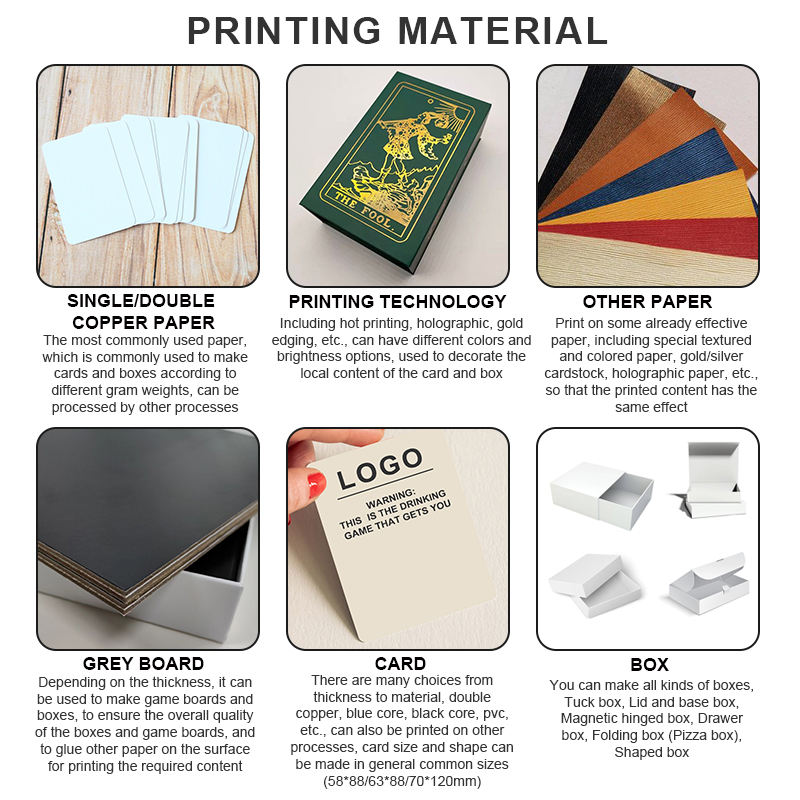
MakePlayingCards describes a blue opaque core in its S30 stock and a black core in its M31 linen stock. These are construction details, not properties created by the surface texture. [makeplayingcards]
For games in which hidden information matters, test opacity with your actual face and back designs. Include lightly printed backs in the review if they are part of the intended product.
A Practical Seven-Step Sample Testing Protocol
The following is a proposed buyer-side evaluation method, not a published laboratory standard. Its purpose is to make sample comparisons more consistent and easier to discuss with your manufacturer.
Step 1: Write a One-Sentence Use Case
Define the deck's primary task.
For example:
"A frequently shuffled family card game sold internationally in a tuck box."
Or:
"A photo-led promotional deck distributed at brand events."
This helps distinguish essential performance from desirable extras.
Step 2: Request Comparable Samples
Ask for linen and smooth samples with the closest available stock, coating, and dimensions.
If possible, use the same artwork. Ask the supplier to list any unavoidable differences.
Step 3: Standardize the Review Conditions
Keep samples in the same room before comparing them. Use a clean table and clean, dry hands.
This is a practical way to reduce obvious testing inconsistencies, especially because humidity and contamination can affect card handling. [butterflymagicstore]
Step 4: Repeat the Same Handling Tasks
Use an identical sequence for each deck:
1. Shuffle several times.
2. Deal a complete round.
3. Spread the cards.
4. Collect and square the deck.
5. Read the smallest printed information.
6. Return the cards to their packaging.
Record observations immediately.
Step 5: Inspect After Repeated Use
Repeat a defined handling session, then examine edges, surfaces, corners, and printed areas.
Use the same review duration for each sample. Do not convert a short internal test into a claim about years of product life.
Step 6: Score Against Your Priorities
A simple five-point scorecard can cover:
| Evaluation category |
Review question |
| Shuffle comfort |
Can intended users shuffle comfortably? |
| Dealing consistency |
Do cards separate predictably? |
| Control |
Are stacks and packets manageable? |
| Readability |
Is important information easy to read? |
| Visual presentation |
Does the surface support the artwork? |
| Wear appearance |
What changes after repeated handling? |
| Packaging fit |
Does the complete deck fit comfortably? |
Weight the categories according to the product. A photography deck and a competitive card game should not necessarily use the same weighting.
Step 7: Approve a Reference Sample
Retain a signed or otherwise clearly identified physical sample.
Record the associated stock, coating, dimensions, artwork version, and packaging specification. Use that reference when reviewing production output.
Application-Based Recommendations for Custom Playing Cards
These recommendations are starting points for sampling, not substitutes for approval testing.
Poker and Frequently Shuffled Game Decks
Begin by sampling linen because embossed stocks are specifically offered for handling and dealing. Compare a professional smooth option before deciding, especially if your users prefer a different balance of glide and control. [makeplayingcards]
Prioritize opacity, consistent dealing, and comfortable shuffling alongside surface appearance.
Promotional and Photo Playing Cards
Begin with smooth when image reproduction leads the brief. The S30 manufacturer description explicitly identifies photo printing and promotional applications among its uses. [makeplayingcards]
Then determine whether linen adds enough tactile value to justify choosing it for the actual design.
Cardistry and Magic Decks
Do not purchase on the word "linen" alone. Evaluate the complete performance system, including flexibility, coating, and texture.
Performance-oriented examples such as M30 linen air light stock and the associated BETA finishing show how manufacturers combine these variables for specific handling objectives. [makeplayingcards]
Educational and Information-Led Decks
My recommendation is to make readability and user control the first approval criteria.
Test the smallest text, index visibility, sorting behavior, and the ability to select a single card. Then choose the finish that performs best in those tasks.
For this category, a dramatic first-touch impression should not outweigh the ease of using the information.
Cost Comparison: Ask for Matched Quotes, Not Generic Percentages
A useful cost comparison should hold the rest of the project constant.
I would not budget around a universal claim that linen always costs a fixed percentage more than smooth. Instead, request two matched quotations using the same quantities, artwork, packaging, and delivery requirements.
Ask the supplier to identify:
- The exact stock in each option.
- The included coating.
- Sampling charges.
- Packaging specifications.
- Production quantity.
- Any differences in lead time.
- The agreed delivery basis.
If the stocks are different, label the quotation as a comparison of two complete product options—not as the isolated price of adding texture.
This makes the commercial decision clearer and avoids buying a lower-performing deck simply because one line item appears cheaper.
What Many Finish Comparisons Leave Unanswered
Some online comparisons present precise embossing depths, friction values, or percentage cost differences. The examples reviewed for this guide include such claims, but they do not establish a universal, independently validated specification for every linen or smooth playing card. Those figures should not be transferred to another manufacturer's product without supporting evidence. [yuyoung]
For a more useful sourcing decision, close three information gaps:
1. Definition gap: What does this supplier mean by "finish"?
2. Comparison gap: Are the samples otherwise comparable?
3. Evidence gap: Which performance claims are supported by the actual product?
This is also the right foundation for credible marketing. Describe verified specifications and observed results. Avoid turning a supplier's product-specific statement into an industry-wide guarantee.
How to Brief XingKun on a Custom Playing Card Project
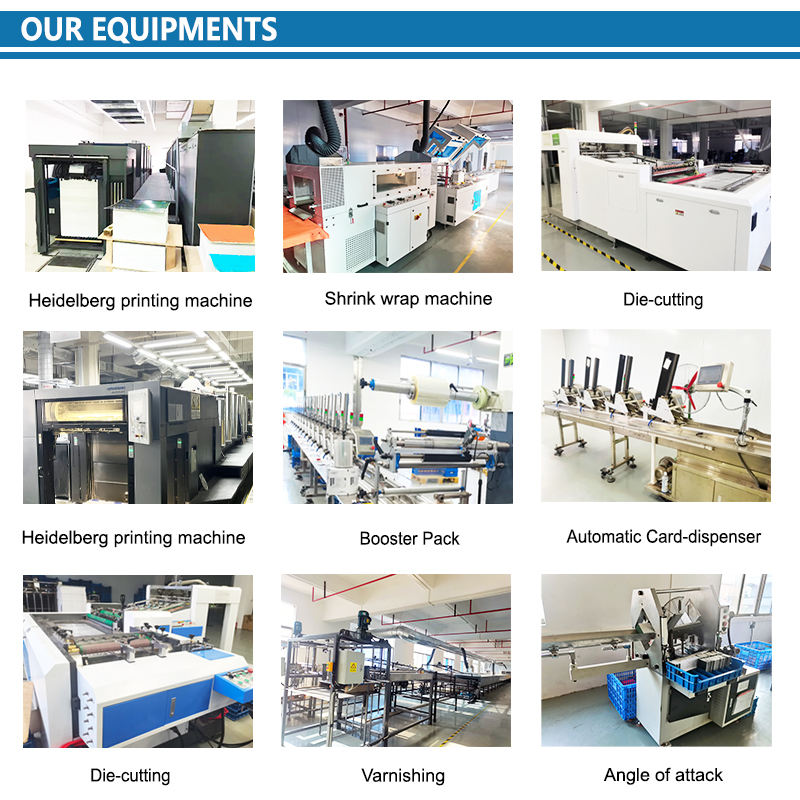
Shenzhen XingKun Packing Products Co., Ltd. provides OEM and ODM services for overseas brands, wholesalers, and manufacturers, according to the company information supplied for this article.
To make a playing-card inquiry actionable, prepare a concise project brief:
- Target audience and sales market.
- Intended gameplay or promotional use.
- Card dimensions and number of cards.
- Expected order quantity.
- Artwork files and design status.
- Preferred linen or smooth direction.
- Required handling characteristics.
- Opacity expectations.
- Packaging format.
- Budget and delivery requirements.
Use performance language wherever possible.
Instead of writing "We need the best linen cards," write:
"We need a deck for repeated family gameplay, with comfortable shuffling, readable small text, opaque backs, and a box that fits the complete finished deck."
Contact XingKun with this brief and ask which sample and production options are available. Before authorizing bulk production, agree on the physical reference, written specifications, and approval process.
Conclusion
The right answer to linen finish vs smooth finish playing cards depends on the complete product and its intended users. Linen offers an embossed tactile surface that manufacturers commonly associate with handling-oriented decks. Smooth offers a relatively flat presentation and can still include professional protective and handling treatments. Neither label independently establishes overall quality. [legendsplayingcards]
My recommendation is to choose through evidence: define the use case, compare representative samples, evaluate artwork and handling together, and document the approved construction. For brands sourcing through XingKun, that process turns a broad finish preference into a clear manufacturing brief—and a deck designed around the people who will actually use it.
Frequently Asked Questions
1. Are linen finish playing cards always better than smooth cards?
No. Linen and smooth describe different surface approaches, not universal quality levels. Professional smooth stocks can include varnishing for protection and shuffling, while linen performance varies with the underlying stock and coating. [legendsplayingcards]
2. Does a linen finish contain real linen?
Not necessarily. In playing-card terminology, linen commonly describes an embossed texture resembling woven fabric. It does not establish that linen fibers are present in the card. [classicdecks]
3. Are smooth finish playing cards uncoated?
No. Smooth cards can be coated. MakePlayingCards' S30 stock, for example, uses varnishing to help protect the cards and provide a slightly slippery surface for handling. [makeplayingcards]
4. Which finish should I consider for photo playing cards?
Smooth is a useful starting point for evaluation. MakePlayingCards specifically identifies photo printing as an application for S30 smooth stock. Approve a printed sample using your own images before committing to production. [makeplayingcards]
5. Does linen finish make a deck waterproof?
No. An embossed surface does not make paper waterproof. Playing-card care guidance identifies water and humidity as risks even for cards printed on quality paper with durable finishes. [butterflymagicstore]
6. Will two manufacturers' linen cards feel the same?
Not necessarily. Similar finish names can cover different stocks, coatings, embossing patterns, and cutting processes. Use physical samples and written specifications when comparing suppliers. [classicdecks]
7. Does a black core mean a card has a linen finish?
No. Core construction and surface texture are separate specifications. Manufacturer ranges include both smooth and linen options with different core constructions, so buyers should confirm each attribute independently. [makeplayingcards]
8. What should I approve before ordering custom playing cards in bulk?
As a buyer-side recommendation, approve the artwork, dimensions, stock, coating, texture, opacity, handling, and packaging fit. Retain an identified physical reference and confirm that the written production specification matches it.


