Content Menu
● Coffee Table Book Printing: Start With the Reader, Not the Finish
● Premium Paper Options for Coffee Table Book Printing
>> Gloss Coated Paper: Strong Visual Impact for Photography
>> Matte Coated Paper: Image Reproduction With Less Shine
>> Uncoated Paper: Texture and a More Natural Visual Character
>> Premium Paper Comparison at a Glance
● How to Choose Paper Weight Without Overbuilding the Book
>> Useful Paper Weights to Discuss With Your Printer
>> Evaluate the Finished Book, Not an Individual Sheet
● Hardcover Materials: Separate Construction From Decoration
>> Printed Paper-Over-Board Covers
>> Cloth and Other Specialty Cover Materials
>> Dust Jackets and Additional Presentation Elements
● Cover Finish Options for Premium Coffee Table Books
>> Gloss Lamination
>> Matte Lamination
>> Soft-Touch Lamination
>> Anti-Scratch Lamination
>> Foil Stamping, Embossing, and Debossing
● Binding and Page Spreads: Design the Viewing Experience
>> Do Not Confuse Hardcover With Layflat
>> Protect Important Content Near the Gutter
● A Better Proofing Workflow for Premium Book Printing
>> Step 1: Check the Files and Production Template
>> Step 2: Select Difficult Images for the Physical Proof
>> Step 3: Understand What the Proof Actually Represents
>> Step 4: Record Approval Clearly
● Three Coffee Table Book Specification Concepts
>> Concept 1: A Photography-Led Travel Book
>> Concept 2: An Architecture and Interior Design Monograph
>> Concept 3: A Brand Heritage Gift Edition
● Budgeting Beyond the Unit Printing Price
● Sustainability and Archival Claims: Ask for Specific Evidence
● Working With XingKun on a Custom Coffee Table Book
● Conclusion
● Frequently Asked Questions About Coffee Table Book Printing
>> 1. What is the best paper for coffee table book printing?
>> 2. Is 200 gsm paper always better than 157 gsm?
>> 3. Is matte paper the same as uncoated paper?
>> 4. What is the difference between matte and soft-touch lamination?
>> 5. Does a hardcover coffee table book automatically lie flat?
>> 6. Do I need a physical proof before bulk printing?
>> 7. Can foil stamping and embossing be combined with other finishes?
>> 8. What information should I provide when requesting a quotation?
● Referencs
Coffee table book printing is where photography, storytelling, and physical craftsmanship meet. For brands, publishers, photographers, and creative agencies, choosing premium paper and the right cover finish is not simply a matter of making a book look expensive. It is about creating a reading experience that supports the images, communicates the brand, and remains practical to manufacture.
There is no single specification that makes every coffee table book better. A glossy photography collection, a restrained architectural monograph, and a tactile brand heritage book may require different materials. Coated paper generally supports sharper, more vivid reproduction, while uncoated paper offers a softer, more tactile result. The right choice depends on the intended visual language—not just the paper's price or weight. [support.blurb]
This guide explains how to compare premium paper, hardcover materials, protective finishes, and decorative treatments. It also provides a practical framework for briefing a printing partner, reviewing samples, and avoiding expensive specification mistakes.

Coffee Table Book Printing: Start With the Reader, Not the Finish
Before choosing foil colors or paper weights, define what the book needs to achieve.
Is it a retail photography title? A luxury hospitality publication? A corporate anniversary book? A portfolio intended to help an architect win commissions?
Each purpose suggests a different balance between visual impact, reading comfort, physical presence, and production cost.
A useful starting brief answers five questions:
1. Who will read or display the book?
2. Will readers browse photographs or spend time reading essays?
3. Will important images extend across two-page spreads?
4. Will the book travel through retail, wholesale, or direct-to-consumer shipping?
5. What should the reader notice first: the imagery, the material texture, or the brand?
My recommendation is to treat these questions as design constraints. A finish should solve a communication problem rather than act as an isolated decoration.
For example, a photography-led book may benefit from a coated stock that emphasizes image detail. A text-rich art publication may place greater value on comfortable viewing under different lighting conditions. Blurb's paper guidance similarly distinguishes image-focused lustre papers from lower-shine options suited to different reading experiences. [blurb]
Premium Paper Options for Coffee Table Book Printing
The most important distinction is not simply "thin versus thick." It is how the paper surface interacts with the printed image and the reader's hands.
Gloss Coated Paper: Strong Visual Impact for Photography
Gloss coated paper is worth considering when vivid photography drives the publication.
Its smooth, reflective surface can support bright colors, strong contrast, and crisp visual detail. It is frequently offered for photography books, art books, and other image-led hardcover publications. [printninja]
Potential applications include:
- Travel and landscape photography.
- Automotive and product collections.
- Food photography.
- Fashion campaigns.
- High-contrast illustration.
The trade-off is reflection. A glossy page can catch direct light, so the actual reading environment matters. Blurb specifically notes that lustre coatings can reflect light and recommends considering the balance between imagery and text. [support.blurb]
Before approving gloss paper, review a printed sample under daylight and ordinary interior lighting—not only under the printer's viewing conditions.
Matte Coated Paper: Image Reproduction With Less Shine
Matte coated paper offers a useful middle ground between photographic reproduction and restrained presentation.
It remains a coated stock, even though its surface has less shine. This distinction matters because "matte" does not automatically mean "uncoated." Blurb lists both coated matte papers and uncoated eggshell papers within its photo-book range. [support.blurb]
For custom coffee table book printing, matte coated paper is a sensible comparison option for:
- Architecture and interior design.
- Fine art reproductions.
- Editorial photography.
- Mixed image-and-text layouts.
- Brand storytelling publications.
PrintNinja's art-book guidance recommends 157 gsm matte art paper as one practical balance of reproduction, feel, and cost within its own production offering. That is a supplier-specific recommendation, not a universal industry requirement. [printninja]
Uncoated Paper: Texture and a More Natural Visual Character
Uncoated paper leaves more of the paper's natural surface character exposed.
Compared with coated stocks, it is generally more porous and absorbent. Printed images can therefore appear softer, making the stock attractive when tactile character matters more than a highly polished photographic effect. [support.blurb]
Consider it for:
- Illustration collections.
- Sketchbooks and artist publications.
- Craft-focused brand stories.
- Heritage editions.
- Editorial projects with a deliberately understated aesthetic.
The key is to design for the material. Do not approve photographs on a glossy sample and assume they will look identical on an uncoated stock.
For color-sensitive work, compare representative images on the proposed paper before committing to the full print run.
Premium Paper Comparison at a Glance
| Paper option | Visual character | Suitable starting point | Main consideration |
| Gloss coated | Bright, reflective, image-focused | Photography and high-contrast artwork | Reflections under direct lighting |
| Matte coated | Lower-shine, controlled presentation | Art, architecture, mixed editorial content | Confirm the exact surface and printed result |
| Uncoated | Tactile, natural, softer reproduction | Illustration, heritage, craft-led storytelling | Greater absorbency changes image appearance |
| Specialty photo paper | Supplier-specific photographic surface | Selected premium photo-book formats | Confirm compatibility, availability, and binding |
These are selection principles rather than guarantees. Paper names and product constructions differ between suppliers, so physical samples remain essential. [support.blurb]
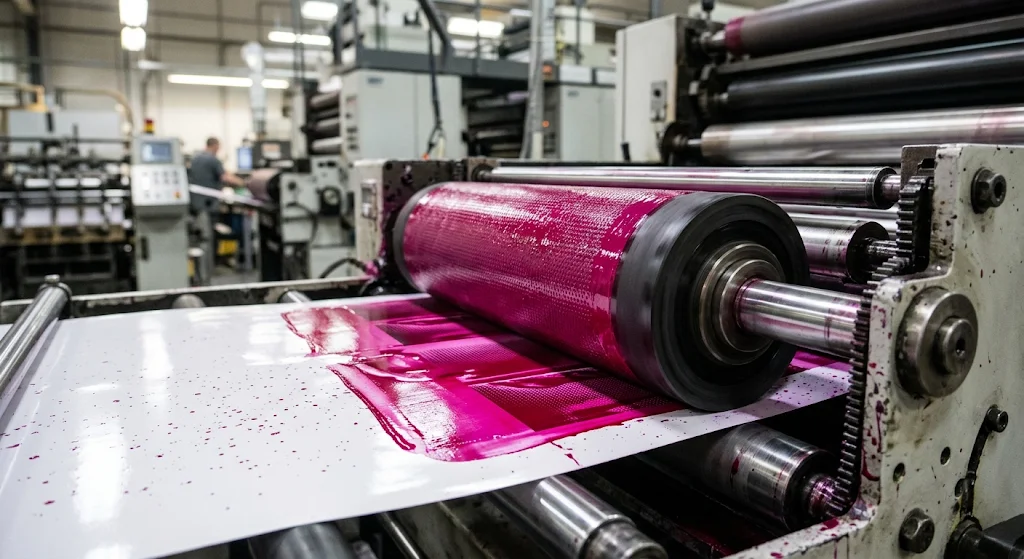
How to Choose Paper Weight Without Overbuilding the Book
Paper weight is usually expressed in GSM, meaning grams per square meter. It describes mass per area—not a complete measurement of stiffness, thickness, opacity, or quality.
Two stocks with the same GSM can feel different because their composition, coating, and construction differ. For purchasing purposes, ask for the exact paper specification rather than relying on the weight alone.
Useful Paper Weights to Discuss With Your Printer
As a starting point for quotation—not a fixed standard—ask your printer to compare:
- Approximately 128 gsm for a lighter book block.
- Approximately 157 gsm for a substantial coated-paper option.
- Approximately 200 gsm for a heavier presentation where the format supports it.
PrintNinja's published guidance includes 128 gsm for certain higher-page-count hardcover projects, while its art-book specifications include 157 gsm and 200 gsm coated options. [printninja]
The better question is not "What is your thickest paper?"
It is: "Which stock gives this page count and trim size the right balance of handling, opacity, image quality, and total weight?"
Evaluate the Finished Book, Not an Individual Sheet
A thick sheet may feel impressive in a swatch book but behave differently across a substantial publication.
Before approving the specification, request a physical dummy made with the proposed materials. Use it to evaluate:
- Overall weight.
- Ease of page turning.
- Opening behavior.
- Spine proportions.
- Comfort when held or placed on a table.
This is especially valuable when comparing two paper weights. The decision becomes easier when the buyer can assess the complete object rather than imagine it from a technical description.
Hardcover Materials: Separate Construction From Decoration
A hardcover specification has several layers: the rigid case, the material covering it, the printed or decorative treatment, and any protective finish.
Keeping these categories separate makes supplier quotations easier to compare.
Printed Paper-Over-Board Covers
A printed paper-over-board cover uses printed artwork wrapped over rigid cover boards.
This approach suits projects that need a full photographic image, illustrated cover, or brand composition extending across the front, spine, and back. Commercial hardcover offerings commonly pair printed wraps with matte or gloss lamination. [printninja]
For buyers, the main advantage is creative continuity: the exterior can introduce the visual language of the interior.
Cloth and Other Specialty Cover Materials
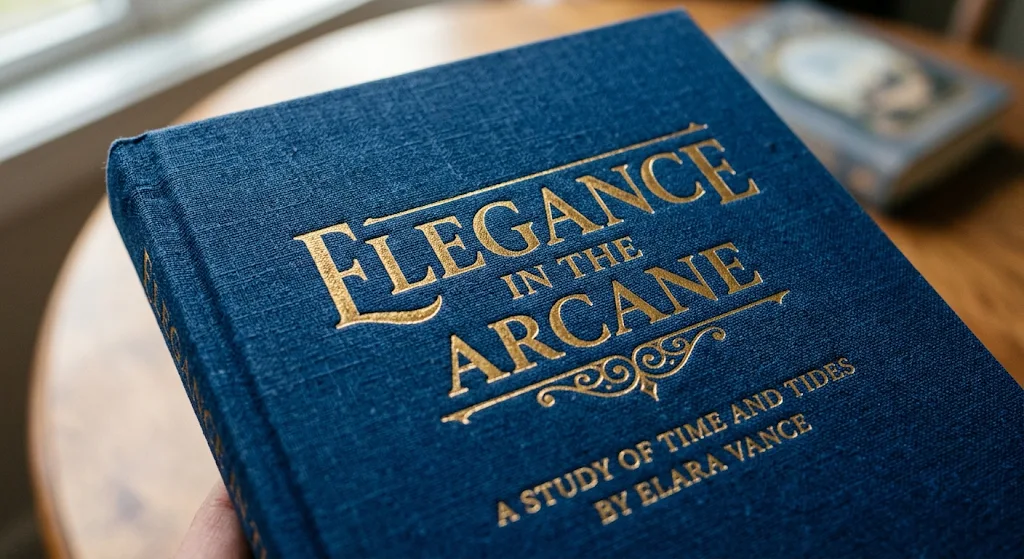
Cloth can shift attention from a full-color image toward texture, typography, and restrained decoration.
Commercial hardcover options may include cloth, paper-over-board, and faux leather, with decorative treatments such as foil stamping offered separately. [printninja]
When evaluating a specialty material, request an actual swatch and a decorated sample. A material name alone does not show its weave, color, surface variation, or compatibility with the intended artwork.
Availability should be confirmed for the specific order rather than assumed from a general capability list.
Dust Jackets and Additional Presentation Elements
A dust jacket creates a separate printed exterior around the hardcover. It can support a more expressive graphic treatment while allowing the underlying case to remain visually restrained.
Dust jackets, ribbon markers, cloth wraps, and foil are among the options offered in commercial hardcover manufacturing. [printninja]
For a brand publication, decide which component should remain recognizable if the jacket is removed. The case should still feel intentional.
Cover Finish Options for Premium Coffee Table Books
A cover material establishes the foundation. The finish changes how that foundation looks, feels, and responds to handling.
Gloss Lamination
Gloss lamination applies a reflective film to the printed surface.
It is a strong comparison option when the cover depends on bright photography or a polished visual effect. Lamination is a separate process from the coating already present on the original paper. [printninja]
Before selecting it, inspect how the cover behaves under overhead lighting. The finish should strengthen the artwork rather than obscure important details through reflection.
Matte Lamination
Matte lamination produces a lower-reflectivity surface.
It is often considered for restrained typography, architectural imagery, and covers where a quieter presentation supports the design. Like gloss lamination, it is a film applied over the printed surface. [printninja]
Do not assume every matte film has the same handling performance. Ask to compare the actual proposed material with other available finishes.
Soft-Touch Lamination
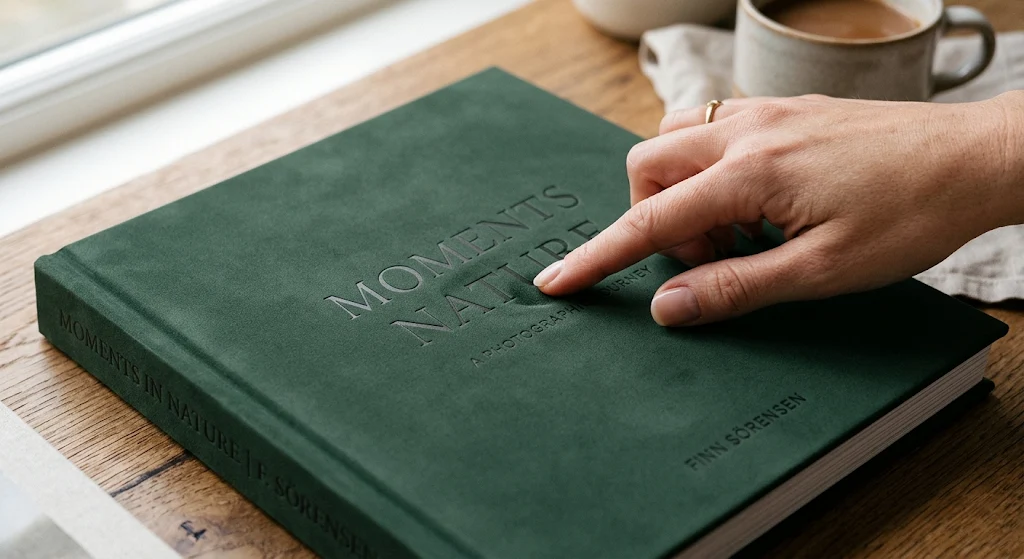
Soft-touch lamination introduces a velvety tactile effect. PrintNinja describes it as a premium finish used for luxury and gift editions. [printninja]
It can be an effective choice when the physical encounter with the book is central to the brand experience.
However, texture should not be approved from a photograph. Request a real sample, handle it repeatedly, and assess it against the intended use.
If the cover is predominantly dark, include that color in the sample rather than relying on a pale demonstration swatch.
Anti-Scratch Lamination
Anti-scratch lamination is an option to discuss when appearance after handling is a purchasing priority. Both XingKun's product page and commercial coffee-table-book specifications list anti-scratch finishes among available finishing categories. [xkdisplay]
Treat the name as a starting point for questions, not a promise of an indestructible surface.
Ask:
- What material is proposed?
- What handling conditions has it been evaluated against?
- Can the supplier provide a sample on comparable artwork?
- What appearance changes are acceptable after transport and unpacking?
Foil Stamping, Embossing, and Debossing
Foil stamping adds a metallic or pigment accent, often to titles, logos, or decorative elements. Commercial hardcover specifications list gold, silver, copper, and other foil options. [printninja]
Embossing and debossing introduce raised or recessed effects. XingKun's product page lists blind embossing, blind debossing, hot foil stamping, and combination embossing among its finishing categories. [xkdisplay]
My design recommendation is to use these treatments selectively. One well-positioned accent often creates a clearer hierarchy than several competing effects.
For procurement, request a decorated sample on the actual cover material whenever possible.
Binding and Page Spreads: Design the Viewing Experience
Paper and cover choices cannot compensate for a binding that conflicts with the layout.
Do Not Confuse Hardcover With Layflat
"Hardcover" describes the cover construction. "Layflat" describes a particular opening experience or binding format.
They are not interchangeable specifications. Blurb, for example, lists hardcover and layflat as distinct format choices. [blurb]
If panoramic images are central to the book, ask the printer to demonstrate how the proposed construction opens.
Protect Important Content Near the Gutter
Layflat formats are designed to support images extending across a two-page spread with less interruption at the center. [blurb]
Even so, avoid placing critical details at the fold without reviewing the actual production template and a representative sample.
A practical layout review should flag:
- Faces near the center.
- Small text crossing the gutter.
- Architectural lines requiring precise continuity.
- Product details that must remain fully visible.
Confirm the binding before finalizing these spreads. Redesigning them late can create unnecessary production delays.
A Better Proofing Workflow for Premium Book Printing
For a color-sensitive publication, proofing is a decision process—not a box to tick before production.
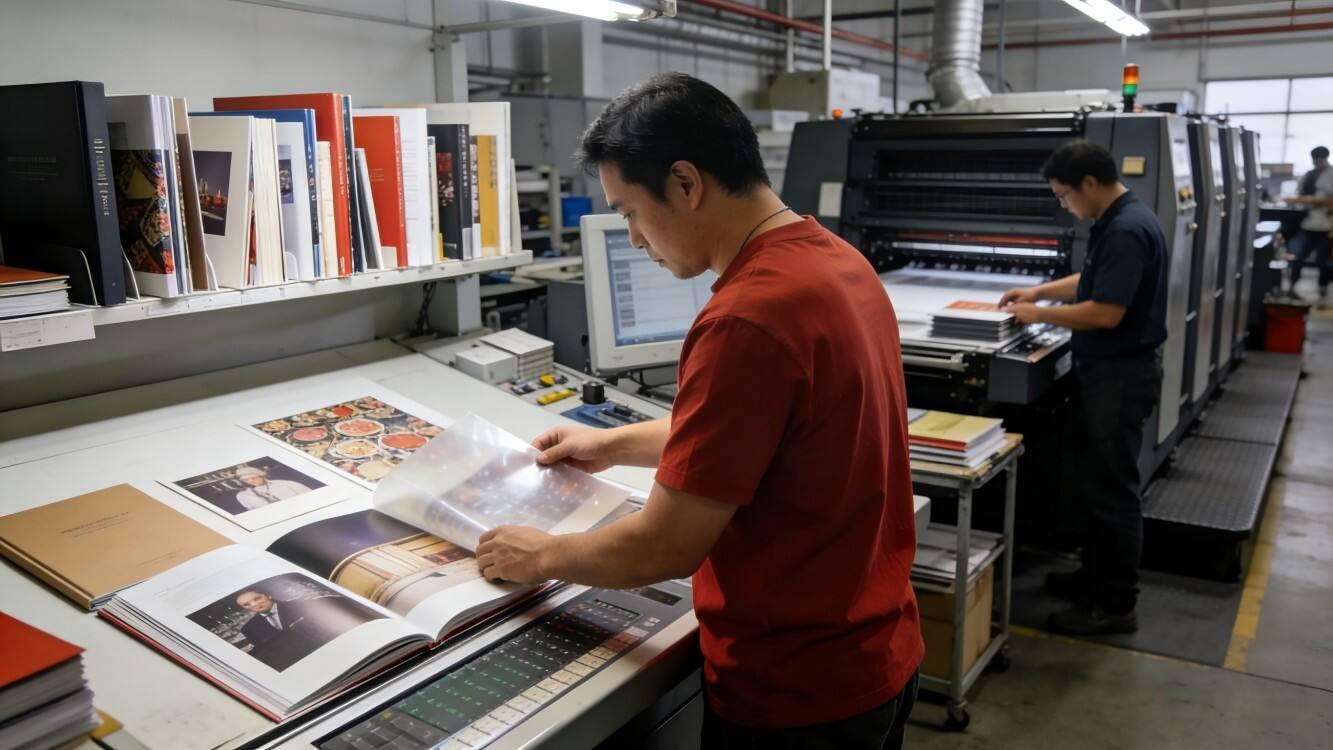
Electronic proofs are useful for checking content, pagination, and layout. They do not reproduce the physical interaction between ink, paper, finish, and lighting. PrintNinja therefore recommends physical proofing for projects with specific color requirements. [printninja]
Step 1: Check the Files and Production Template
Review:
- Final trim size.
- Page sequence.
- Bleed and safe areas.
- Cover dimensions and spine artwork.
- Image suitability at final size.
- Font handling.
- The printer's requested color workflow.
Ask the printer for its file requirements before exporting final artwork.
Step 2: Select Difficult Images for the Physical Proof
Choose pages that reveal problems rather than pages that are easiest to reproduce.
A useful selection includes:
- Skin tones.
- Neutral grays.
- Dark shadow detail.
- Subtle gradients.
- Fine artwork.
- Important brand colors.
PrintNinja's book-proofing guidance specifically recommends selecting pages containing the colors that concern the customer most. [printninja]
Step 3: Understand What the Proof Actually Represents
A physical proof may be a press sheet rather than a complete, finished book.
For example, PrintNinja describes a hard-copy option using an offset-printed parent sheet produced with the paper, finish, and press intended for the final project. [printninja]
Ask which characteristics the proof validates:
- Color.
- Paper surface.
- Binding.
- Cover decoration.
- Lamination.
- Final dimensions.
One sample may not validate everything.
Step 4: Record Approval Clearly
Document the approved files, materials, proof version, and finishing details.
If a sample does not represent the final process, record that limitation. A clear approval trail reduces ambiguity when production begins.
Three Coffee Table Book Specification Concepts
The following are illustrative planning concepts, not completed XingKun customer case studies. Final specifications require sampling and supplier confirmation.
Concept 1: A Photography-Led Travel Book
Suggested direction:
- Compare gloss and matte coated interiors.
- Use a photographic printed hardcover.
- Evaluate opening behavior with panoramic spreads.
- Prioritize physical proofs of skies, foliage, skin tones, and shadows.
The central decision is whether stronger surface shine supports the photography or distracts from viewing it.
Concept 2: An Architecture and Interior Design Monograph
Suggested direction:
- Begin with matte coated paper samples.
- Compare a restrained printed case with a cloth option.
- Use limited decorative accents.
- Review fine lines, neutral surfaces, and center-spread compositions carefully.
The objective is to preserve visual clarity while giving the publication a controlled, material-led identity.
Concept 3: A Brand Heritage Gift Edition
Suggested direction:
- Compare matte coated and uncoated interiors.
- Consider a tactile cover with a focused title treatment.
- Develop the book and protective packaging together.
- Test historical photographs alongside contemporary images.
The goal is consistency across varied source material rather than maximum gloss on every page.
Budgeting Beyond the Unit Printing Price
A useful quotation compares equivalent specifications.
A cheaper quote may reflect lighter paper, different proofing, fewer decorative operations, or a different packing arrangement. Without a shared specification, price comparisons can be misleading.
Ask each supplier to quote the same:
- Trim size and page count.
- Paper grade and weight.
- Printing requirements.
- Binding construction.
- Cover material.
- Lamination and decoration.
- Proofing scope.
- Order quantity.
- Packing method.
- Delivery terms and destination.
I recommend requesting two versions: a target specification and a value-engineered alternative.
Then ask the supplier to identify exactly what changes between them. This keeps cost reduction intentional rather than hidden inside substitutions.
Sustainability and Archival Claims: Ask for Specific Evidence
Terms such as "eco-friendly," "premium," and "archival" should lead to questions rather than end the discussion.
XingKun's current product description refers to archival paper but does not identify a named interior stock or provide supporting test documentation on that page. [xkdisplay]
For a particular project, request:
- The proposed paper's technical information.
- Evidence supporting any longevity claim.
- Documentation supporting any certification claim.
- Details of recycled content, where claimed.
- The exact cover film or coating.
- Clear confirmation of which claims apply to the finished order.
Likewise, do not transfer a longevity statement from one specialty paper to another. Blurb's published material descriptions attach specific characteristics to named products, illustrating why the actual stock matters. [blurb]
The safest publishing practice is to describe verified materials precisely rather than rely on broad environmental or preservation language.
Working With XingKun on a Custom Coffee Table Book
Shenzhen XingKun Packing Products Co., Ltd. provides OEM and ODM services for overseas brands, wholesalers, and manufacturers.
Its coffee table book product page lists digital, offset, and UV printing, together with finishing categories including lamination, soft-touch treatments, spot gloss UV, foil stamping, embossing, and debossing. Compatibility and availability should be confirmed for each book specification. [xkdisplay]
To begin a productive discussion, send:
1. Intended audience and purpose.
2. Target quantity and delivery destination.
3. Trim size and estimated page count.
4. Representative interior and cover artwork.
5. Preferred paper appearance and feel.
6. Binding and opening requirements.
7. Proposed decorative finishes.
8. Budget range and required delivery date.
Ask the XingKun team to recommend a sample plan and quote clearly defined alternatives. For international procurement, also request confirmation of proofing scope, packing, delivery terms, and approval milestones before placing the order.
Conclusion
Premium coffee table book printing is a coordinated materials decision. Paper determines how the images and text appear. Binding determines how readers encounter the spreads. Cover materials and finishing establish the first physical impression.
Start with the audience and content, compare suitable materials, and approve the important details through representative samples. Avoid choosing specifications by weight, finish names, or promotional language alone.
For your next project, send XingKun a clear production brief and request a material comparison, proofing plan, and itemized quotation. The strongest specification is not necessarily the most elaborate—it is the one that makes the book's content feel intentional from cover to final page.
Frequently Asked Questions About Coffee Table Book Printing
1. What is the best paper for coffee table book printing?
There is no universal best paper. Gloss coated stock suits projects prioritizing vivid photography; matte coated paper offers a lower-shine presentation; uncoated paper emphasizes texture and a softer visual character. Compare your own images on representative samples before deciding. [support.blurb]
2. Is 200 gsm paper always better than 157 gsm?
No. Both are offered for art-book applications, but the right choice depends on the format and intended handling. PrintNinja presents 157 gsm as a balanced option and 200 gsm as a heavier alternative within its range. Evaluate a dummy before selecting the heavier stock. [printninja]
3. Is matte paper the same as uncoated paper?
No. Matte describes a surface appearance, while coated and uncoated describe different paper categories. A matte photo-book paper can still be coated. Always request the complete paper specification. [support.blurb]
4. What is the difference between matte and soft-touch lamination?
Matte lamination provides a lower-reflectivity film surface. Soft-touch lamination adds a distinctive velvety feel. Both should be evaluated using physical samples because a photograph cannot communicate the tactile difference reliably. [printninja]
5. Does a hardcover coffee table book automatically lie flat?
No. Hardcover and layflat are separate specifications. If uninterrupted panoramic spreads are important, ask the printer to demonstrate the proposed opening behavior and confirm the construction before finalizing the layout. [blurb]
6. Do I need a physical proof before bulk printing?
A physical proof is strongly advisable when color and materials are central to the project. Electronic proofs help check layout and pagination, while suitable physical proofs provide a more useful basis for evaluating printed appearance. Confirm exactly what the proof represents. [printninja]
7. Can foil stamping and embossing be combined with other finishes?
They may be proposed together, but the specific material and finish combination needs confirmation. XingKun lists foil, embossing, debossing, and lamination categories on its product page; that list should not be treated as proof that every possible combination suits every order. [xkdisplay]
8. What information should I provide when requesting a quotation?
Provide the quantity, trim size, page count, interior paper preference, cover concept, binding requirement, decorative finishes, delivery destination, and deadline. Include representative artwork and request that the quote state its proofing, packing, and delivery assumptions clearly.
Referencs
1. Shenzhen XingKun Packing Products Co., Ltd. — "Coffee Table Book."
Product information covering printing methods and finishing categories, including lamination, foil stamping, embossing, and debossing. This source supports the description of XingKun's published product options; availability and compatibility should be confirmed for each order. [xkdisplay]
2. Blurb — "How to Choose the Best Type of Paper for Your Book."
Practical guidance on paper selection, including surface appearance, coated and uncoated stocks, and considerations for different types of book content. [blurb]
3. Blurb Help Center — "Choose the Right Paper for Your Photo Book."
Product-specific comparisons of photo-book papers. Used to explain why matte paper is not necessarily uncoated and why buyers should evaluate the exact paper specification. [support.blurb]
4. Blurb Help Center — "What's the Difference Between Coated and Uncoated Papers?"
Explains differences in surface characteristics, absorbency, image sharpness, color appearance, and tactile qualities. [support.blurb]
5. PrintNinja — "Art Book Printing."
Supplier-specific guidance on art-book production, including coated paper choices and the use of 157 gsm matte art paper as one practical specification. These recommendations are not universal industry standards. [printninja]
6. PrintNinja — "Book Paper Weight Guide: GSM, LB, and What to Pick."
Background on book paper weights and their relationship to different book formats and page counts. [printninja]
7. PrintNinja — "Custom Hardcover Book Printing."
Information on hardcover materials and decorative options, including paper-over-board, cloth, faux leather, foil stamping, and soft-touch lamination. [printninja]
8. PrintNinja — "Glossary of Offset Printing Terms."
Technical terminology supporting the explanation of printing, lamination, and related production processes. [printninja]
9. Blurb — "Book Format Options: Photo Books, Magazines & More."
Format information used to distinguish hardcover construction from layflat book formats. [blurb]
10. Blurb — "How to Reorder an Existing Photo Book with Layflat Paper."
Explains the role of layflat formats in displaying images across two-page spreads. Product availability and specifications should be checked separately before ordering. [blurb]
11. PrintNinja — "Electronic Proof vs. Hardcopy Proofing."
Explains the purposes and limitations of electronic and physical proofs, including their relevance to color-sensitive printing projects. [printninja]
12. PrintNinja — "PrintNinja Proofing Options — Digital or Hardcopy?"
Describes supplier-specific physical proofing methods and the importance of choosing representative pages for evaluating critical colors. [printninja]
13. PrintNinja — "Coffee Table Book Printing."
Commercial specification examples covering interior paper, hardcover construction, and protective finishing options. [printninja]


