Content Menu
● What Are Mylar Bags Made Of?
>> The Layers Inside a Barrier Pouch
● How Do Mylar Bags Protect Products?
● What Are Mylar Bags Used For?
>> Dry Food and Ingredient Packaging
>> Retail and Promotional Packaging
>> Packaging Boxes and Distribution Systems
● Mylar Bags vs. Ordinary Plastic Bags
● How to Choose the Right Mylar Bag
>> Start With the Product Specification
>> Check Usable Size, Not Just External Dimensions
>> Treat Thickness as One Variable
● Three Checks That Make Supplier Comparisons More Useful
>> 1. Request Measured Barrier Performance
>> 2. Verify Food-Contact Suitability
>> 3. Validate Finished Samples
● How to Seal Mylar Bags for Suitable Dry Foods
>> Step 1: Confirm the Food Is Suitable
>> Step 2: Keep the Sealing Area Clean
>> Step 3: Use Oxygen Absorbers Only When Appropriate
>> Step 4: Apply and Verify the Heat Seal
>> Step 5: Label and Store Correctly
● How Long Does Food Last in Mylar Bags?
● Designing Custom Mylar Bags Customers Can Use Easily
● Plan Your Pouch and Box Packaging Together
● Frequently Asked Questions
>> Are Mylar bags the same as aluminum foil bags?
>> Do Mylar bags need oxygen absorbers?
>> Can a zipper replace heat sealing?
>> Can Mylar bags be reused?
>> Are all Mylar bags safe for food?
>> How do I select a custom Mylar bag supplier?
● References
Mylar bags are flexible packaging pouches commonly used to protect products from moisture, oxygen, light, and handling damage. For businesses exploring custom Mylar bags, the important question is not simply what they look like. It is whether their materials, seals, and construction suit the product inside.
At Shenzhen XingKun Packing Products Co., Ltd., our perspective comes from more than 20 years in printing and packaging, serving brands and distributors across over 30 countries and regions. We approach packaging as a complete system: product protection, presentation, usability, and distribution must work together.
This guide explains what Mylar bags are, where they work well, and what buyers should verify before placing an order.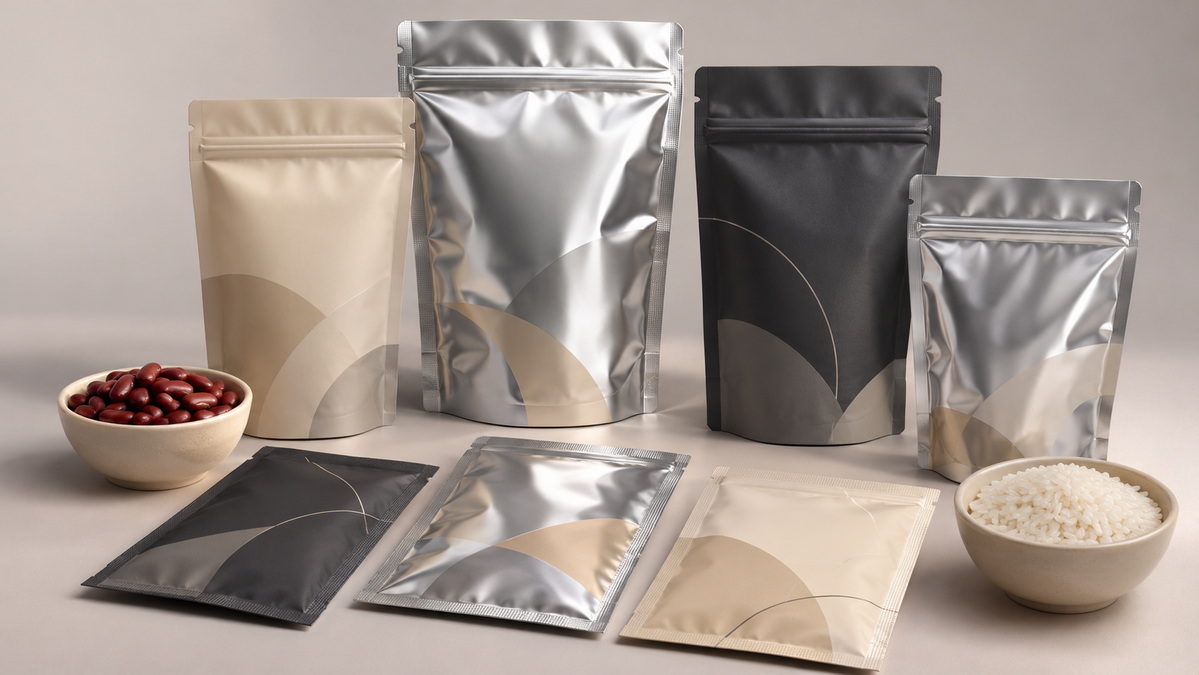
What Are Mylar Bags Made Of?
Mylar is a registered trademark associated with polyester film. In everyday packaging language, however, "Mylar bags" often describes a broader category of laminated barrier pouches.
That distinction matters. A shiny silver bag is not automatically made with genuine branded Mylar film, and two similar-looking bags may provide different protection.
The Layers Inside a Barrier Pouch
A typical laminated pouch may combine several materials:
| Layer |
Common material |
Main purpose |
| Outer layer |
Polyester, often PET |
Supports printing and provides mechanical strength |
| Barrier layer |
Aluminum foil or metallized film |
Helps limit oxygen, moisture, and light exposure |
| Inner layer |
Heat-sealable polymer, often polyethylene |
Contacts the product and forms the seal |
These are illustrative constructions, not a universal recipe.
Solid aluminum foil and metallized plastic are also different materials. Metallized film carries a thin deposited metal coating; foil is a separate metal layer. Ask for the actual laminate specification rather than relying on appearance.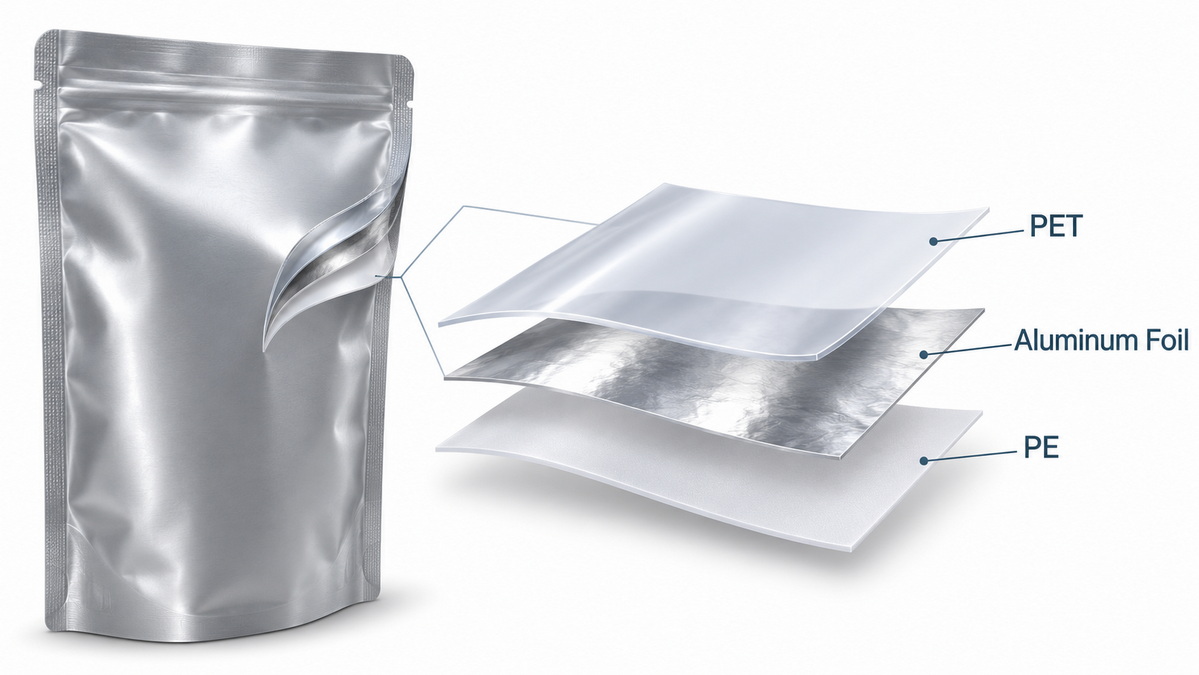
How Do Mylar Bags Protect Products?
A suitable pouch slows the movement of gases and water vapor between its contents and the surrounding environment.
This can help preserve the quality of products vulnerable to oxidation or moisture uptake. Opaque structures can also reduce light exposure.
However, barrier performance belongs to the complete package—not just its film.
A strong laminate cannot compensate for an incomplete seal, a puncture, or powder trapped across the sealing area. Protective performance depends on:
- The selected material structure.
- Film thickness and consistency.
- Seal quality.
- Closures and added features.
- Storage and shipping conditions.
From a buyer's perspective, this means evaluating a finished pouch is more useful than judging a material swatch alone.
What Are Mylar Bags Used For?
Dry Food and Ingredient Packaging
Mylar-type barrier pouches are widely used for suitable dry foods, including white rice, beans, dried milk, and certain freeze-dried products.
Their role is to help control exposure to moisture and oxygen. They do not sterilize food or make an unsuitable product safe for room-temperature storage.
Coffee, tea, snacks, and powders require product-specific decisions. For example, a freshly roasted coffee application may involve gas management, while a fine powder may create seal-contamination challenges.
Retail and Promotional Packaging
Custom pouches can combine protective packaging with printed branding, product instructions, and convenient opening features.
Possible formats include:
- Flat pouches for compact products.
- Stand-up pouches for retail presentation.
- Gusseted bags for greater filling capacity.
- Resealable pouches for repeated access.
Choose the format around the product and customer experience, not simply the most attractive sample.
Packaging Boxes and Distribution Systems
A pouch and a packaging box perform different jobs.
The pouch may provide the primary moisture or oxygen barrier. An outer box can organize units, carry additional information, and provide physical protection during handling.
For brands using both, dimensions should be developed together. A pouch that fits an empty box may fit differently after filling.
Mylar Bags vs. Ordinary Plastic Bags
Neither option is automatically best. The right choice depends on protection requirements, distribution conditions, and intended use.
| Buying consideration |
Laminated barrier pouch |
Basic polyethylene bag |
| Oxygen protection |
Can provide stronger protection, depending on structure |
Generally more limited |
| Light protection |
Opaque constructions can block light |
Clear versions expose contents to light |
| Product visibility |
May require a window or transparent structure |
Commonly transparent |
| Sealing |
Requires compatible sealing conditions |
Also requires suitable sealing conditions |
| Selection priority |
Verify laminate and finished-package performance |
Verify suitability for the storage period |
For short-term handling, a simple bag may be adequate. For an oxygen-sensitive product, a verified high-barrier construction may justify additional cost.
The practical question is: what package meets the product's requirements without unnecessary complexity?
How to Choose the Right Mylar Bag
Start With the Product Specification
Before requesting quotations, prepare a short packaging brief:
1. Product name and physical form.
2. Intended net weight or volume.
3. Relevant moisture, oil, and sensitivity information.
4. Target shelf life.
5. Expected storage and transport conditions.
6. Destination market.
7. Filling and sealing equipment.
8. Required opening and resealing features.
This gives suppliers a useful basis for recommendations and makes competing quotations easier to compare.
Check Usable Size, Not Just External Dimensions
External dimensions do not equal usable filling space.
Side seals, bottom gussets, zippers, and the top sealing area all reduce capacity. Products with the same weight can also occupy very different volumes.
Ask for samples and conduct a filling trial using the actual product. Check appearance, headspace, seal clearance, and carton fit.
Treat Thickness as One Variable
Thicker does not automatically mean better oxygen protection.
Thickness may influence handling durability, but barrier performance also depends on material selection and laminate construction.
Ask whether the stated thickness refers to one wall or the combined walls of a flattened pouch. Also confirm the units: one mil equals 0.001 inch, or 25.4 micrometers.
Clear specifications prevent expensive misunderstandings.
Three Checks That Make Supplier Comparisons More Useful
1. Request Measured Barrier Performance
Ask for oxygen transmission rate, commonly abbreviated OTR, and water vapor transmission rate, or WVTR, when these properties matter to the product.
Request the test method and test conditions alongside the result.
ASTM D3985 addresses oxygen transmission through plastic film and sheeting. ASTM F1249 addresses water vapor transmission.
Numbers measured under different conditions should not be treated as directly interchangeable. Also clarify whether a report describes the film or the finished package.
2. Verify Food-Contact Suitability
"Food grade" is not a complete purchasing specification.
For food applications, request documentation relevant to the materials, destination market, food type, and intended conditions of use.
A pouch intended for dry food at room temperature should not automatically be assumed suitable for hot filling, cooking, or other demanding applications.
Ask what supports the suitability claim and whether the documentation covers the proposed finished construction.
3. Validate Finished Samples
Before approving a production order, evaluate filled samples for:
- Seal consistency and leakage.
- Puncture or abrasion damage.
- Zipper operation after repeated use.
- Print readability and scuffing.
- Fit inside retail and shipping boxes.
- Performance after representative handling.
For shelf-life claims, use an appropriate product-specific validation plan. A packaging specification alone cannot establish how long the contents will remain acceptable.
How to Seal Mylar Bags for Suitable Dry Foods
Commercial packing requires a validated process. The following sequence provides a practical planning framework, not a substitute for a food-safety program.
Step 1: Confirm the Food Is Suitable
Use reduced-oxygen packaging only when the food and process are appropriate.
Do not assume moist foods become safe because they are sealed in a barrier pouch. Reduced-oxygen conditions can create serious hazards with unsuitable foods, including botulism risk.
For uncertain products, seek qualified food-safety guidance before proceeding.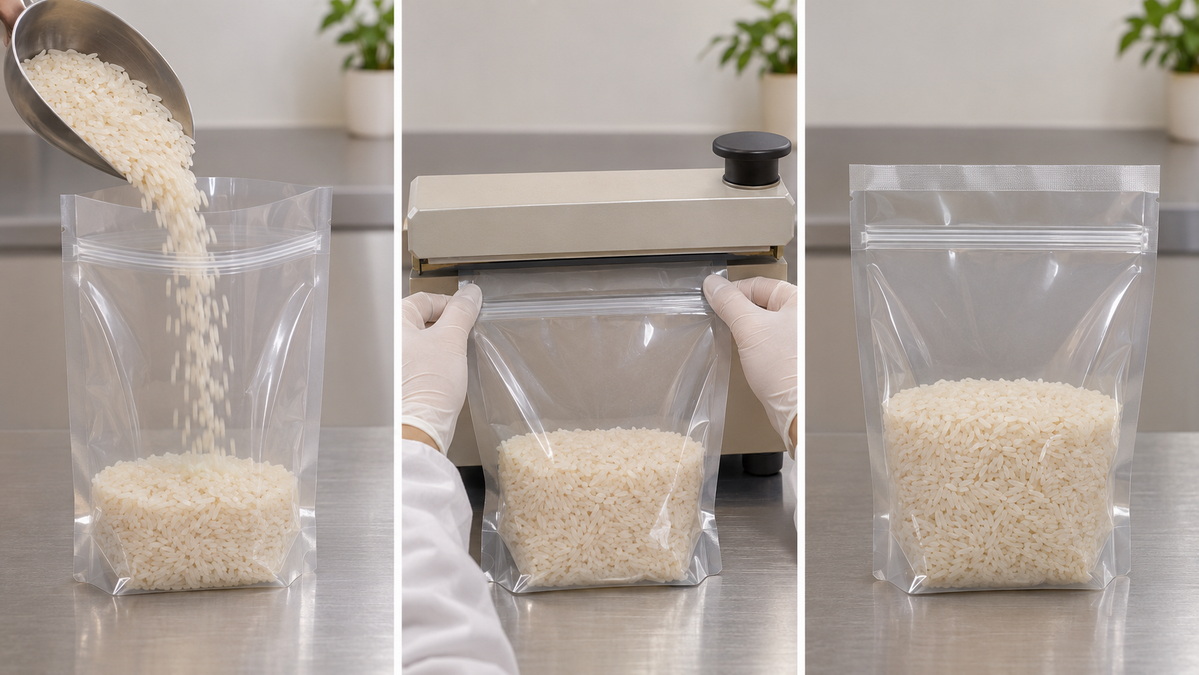
Step 2: Keep the Sealing Area Clean
Fill the pouch without contaminating the top sealing surfaces.
Powder, crumbs, oil, and wrinkles can interfere with seal formation. Leave enough space for a consistent seal above the contents.
Step 3: Use Oxygen Absorbers Only When Appropriate
Oxygen absorbers remove oxygen; they do not remove moisture or sterilize food.
Their suitability and capacity depend on the product, remaining oxygen, package size, and packing process. Follow the absorber supplier's instructions rather than choosing solely by bag dimensions.
Oxygen removal is not recommended for every ingredient. For example, long-term sugar storage does not require oxygen absorbers.
Step 4: Apply and Verify the Heat Seal
Use equipment and settings compatible with the pouch's sealant layer.
Temperature, pressure, and sealing time work together. Obtain recommended conditions from the supplier, then verify them on your equipment.
A zipper provides convenient reclosure, but it should not be treated as a substitute for a validated initial heat seal.
Step 5: Label and Store Correctly
Record the product, packing date, and relevant batch information.
Store suitable dry foods in cool, dry conditions and protect pouches from punctures and pests. Use appropriate secondary protection where needed.
How Long Does Food Last in Mylar Bags?
There is no universal shelf life for food in Mylar bags.
Results depend on the food, its initial condition, moisture and fat content, oxygen control, seal integrity, and storage temperature.
Utah State University Extension provides long-term storage guidance for specific foods, including white rice and dry beans. Those examples should not become blanket promises for snacks, nuts, powders, or every freeze-dried product.
For commercial products, establish the intended shelf life through suitable testing. Assess the properties that matter, such as flavor, texture, moisture uptake, oxidation, and safety.
Avoid printing a multi-year claim simply because the pouch is described as "Mylar."
Designing Custom Mylar Bags Customers Can Use Easily
An effective design balances shelf appeal with everyday usability.
Keep the product name, quantity, and essential instructions easy to find. Reserve enough space for required labeling, batch coding, and date marking.
Check practical details before approving artwork:
- Can customers locate the tear notch?
- Is the zipper easy to close?
- Does the opening allow convenient pouring or scooping?
- Does the filled pouch remain stable?
- Are small instructions readable on the chosen finish?
A transparent window may improve visibility, but it changes the package construction. Confirm that the resulting barrier performance still meets the product's requirements.
Similarly, avoid making recycling claims based only on the outer appearance. Ask for the complete material structure and verify claims against the collection and processing options in the intended market.
Plan Your Pouch and Box Packaging Together
At Shenzhen XingKun Packing Products Co., Ltd., we bring more than 20 years of printing and packaging experience to discussions about product presentation, packaging boxes, and coordinated packaging requirements.
For your next project, send us your product details, intended fill weight, destination market, artwork requirements, and outer-box dimensions. Identify any shelf-life target and request documentation and samples appropriate to the proposed application.
Contact our team to discuss a coordinated packaging proposal and confirm material, production, and sampling options before ordering.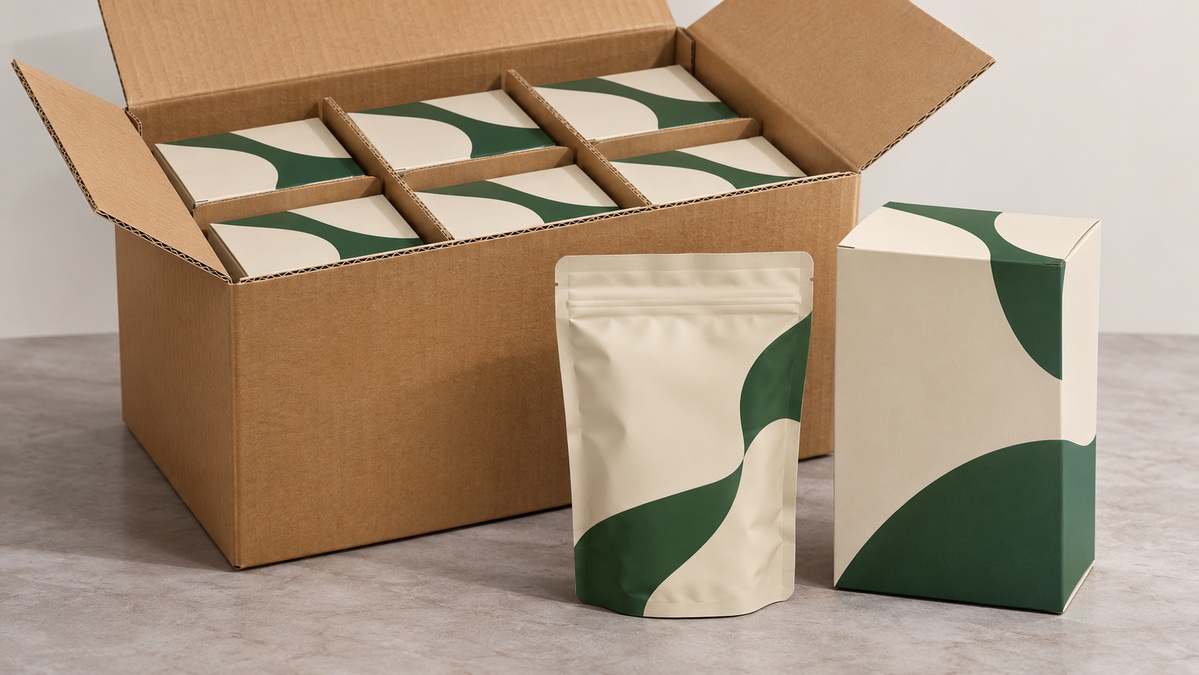
Frequently Asked Questions
Are Mylar bags the same as aluminum foil bags?
Not necessarily. "Mylar bags" is often used broadly in the marketplace. Some pouches contain aluminum foil, while others use metallized film or different constructions. Request the laminate specification.
Do Mylar bags need oxygen absorbers?
Only when appropriate for the contents and packing process. Suitable dry foods may benefit from oxygen removal, but oxygen absorbers do not control moisture or make unsafe foods safe.
Can a zipper replace heat sealing?
Do not assume so. A zipper supports repeated access after opening. Long-term storage applications generally require a verified initial closure, commonly a heat seal above the zipper.
Can Mylar bags be reused?
That depends on the original use, pouch condition, cleanliness, and intended contents. Do not assume a previously opened pouch retains its original performance or is suitable for another food-contact application.
Are all Mylar bags safe for food?
No blanket claim is appropriate. Suitability depends on the complete construction, supporting documentation, intended food, and use conditions—not the name "Mylar" alone.
How do I select a custom Mylar bag supplier?
Compare clear material specifications, relevant documentation, sample performance, printing quality, and production consistency. A useful supplier explains limitations rather than promising the same solution for every product.
References
1. [Custom Box Makers — "What Are Mylar Bags?"]
User-provided topic reference. Only its indexed definition was accessible; the complete article was unavailable for verification. [customboxmakers]
2. [Mylar Specialty Films — Heat Sealable Polyester Films]
Manufacturer information on polyester packaging films, heat-sealing applications, and trademark ownership. [cn.mylar]
3. [Utah State University Extension — Packaging Foods]
Guidance on dry-food packaging, foil-laminate pouches, moisture protection, and oxygen absorbers. [extension.usu]
4. [ASTM International — Paper Standards and Packaging Standards]
Identifies relevant transmission-testing standards, including ASTM D3985 and ASTM F1249. [store.astm]
5. [U.S. Food and Drug Administration — How FDA Regulates Substances That Come into Contact with Food]
Explains intended-use authorization, migration assessment, and food-contact safety evaluation. [fda]
6. [Utah State University Extension — Kathy's Corner, January/February 2022]
Includes warnings concerning moist products in reduced-oxygen packaging and limitations of long-term dry-food storage. [extension.usu]
7. [Utah State University Extension — Storing Sugars]
Supports the distinction between moisture protection and unnecessary oxygen removal for sugar. [extension.usu]
8. [Utah State University Extension — Storing White Rice] and [Storing Dry Beans]
Product-specific examples showing how storage conditions and oxygen management affect storage outcomes. [extension.usu]


