Content Menu
● Matte vs Gloss Lamination: Quick Comparison
● What Is Lamination on Packaging Boxes?
>> What Is Matte Lamination?
>> What Is Gloss Lamination?
● Matte Lamination vs Gloss Lamination: Appearance and Brand Perception
>> Matte Packaging Boxes: Controlled and Understated
>> Gloss Packaging Boxes: Vivid and Expressive
● How Lamination Changes Color and Readability
● Which Finish Offers Better Scratch and Scuff Resistance?
>> When Anti-Scuff Matte Is Worth Evaluating
● Moisture Protection: What Lamination Can and Cannot Do
● Matte vs Gloss Lamination Cost: Compare Like for Like
● Foil Stamping, Embossing, and Spot UV Compatibility
>> Matte Lamination With Spot UV
>> Foil and Embossing on Laminated Boxes
● Sustainability: Is Matte or Gloss Lamination More Recyclable?
● A Practical Sample-Approval Workflow for Packaging Buyers
>> Step 1: Produce a Controlled Comparison
>> Step 2: Review Real Viewing Conditions
>> Step 3: Reproduce Expected Handling
>> Step 4: Establish Written Acceptance Criteria
● Two Illustrative Buying Scenarios
>> Scenario One: A Dark Premium Electronics Box
>> Scenario Two: A Colorful Gift Carton
● Choose a Packaging Finish With XingKun
● Frequently Asked Questions
>> 1. Is matte or gloss lamination better for luxury packaging?
>> 2. Does matte lamination always scratch more easily?
>> 3. Is matte lamination the same as soft-touch lamination?
>> 4. Can gloss lamination make colors look brighter?
>> 5. Are matte and gloss laminated boxes suitable for food packaging?
>> 6. Can laminated packaging boxes be recycled?
● References
Matte lamination vs gloss lamination on packaging boxes is more than a choice between a muted surface and a shiny one. The finish changes how customers see your colors, read your message, handle your box, and judge your brand. Verdict: choose matte for understated presentation and reduced glare; choose gloss for vibrant imagery and a reflective finish. Neither is universally better.
At Shenzhen XingKun Packing Products Co., Ltd., our perspective is shaped by more than 20 years in printing and packaging, serving brands and distributors across over 30 countries and regions. Our recommendation is straightforward: evaluate the finish alongside your artwork, box structure, distribution conditions, and budget—not as an isolated decoration.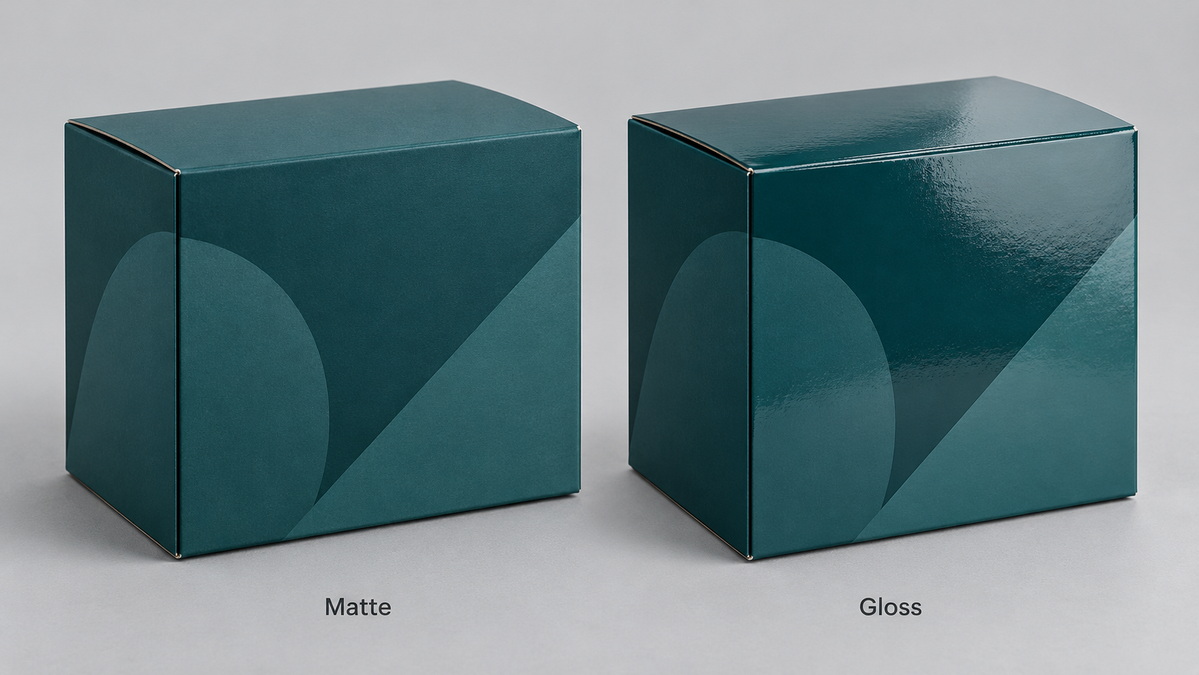
Matte vs Gloss Lamination: Quick Comparison
| Decision factor | Matte lamination | Gloss lamination |
| Appearance | Subdued, low-glare surface | Shiny, reflective surface |
| Color effect | Softer perceived color and contrast | Greater perceived color depth and contrast |
| Typical positioning | Understated, minimalist, premium | Bold, colorful, energetic |
| Readability | Less distracting reflection | Glare may interfere at certain angles |
| Surface wear | Standard grades may show rubbing | Scuff visibility depends on film and artwork |
| Decorative contrast | Strong background for glossy accents | Less contrast with additional gloss |
| Photography | Often easier to light evenly | Reflections require more control |
| Best decision method | Compare finished production samples | Compare finished production samples |
These are general tendencies. Film grade, printed colors, lighting, and handling can change the outcome.
What Is Lamination on Packaging Boxes?
Lamination bonds a thin film to printed paper or paperboard. It changes the surface appearance while helping protect the printed image against handling and abrasion.
Biaxially oriented polypropylene, commonly called BOPP, is one material used for packaging lamination. Thermal films include a heat-activated bonding layer; other systems use different adhesive processes.
The important distinction is that lamination adds a separate film layer. A matte varnish and matte lamination may look similar in a photograph, but they are not interchangeable specifications.
What Is Matte Lamination?
Matte lamination creates a low-glare surface that reduces sharp reflections. It gives artwork a quieter appearance and can support a restrained visual identity.
However, standard matte is not automatically soft-touch. Soft-touch films are a separate tactile option. If your brief requires a velvety feel, specify that characteristic rather than simply requesting "matte."
What Is Gloss Lamination?
Gloss lamination creates a reflective surface that often makes printed images appear richer and more vivid.
It can suit packaging built around product photography, bright illustrations, or strong color contrast. The trade-off is reflection: a dramatic shine can also obscure text or imagery when viewed at an unfavorable angle.
Matte Lamination vs Gloss Lamination: Appearance and Brand Perception
Matte Packaging Boxes: Controlled and Understated
Matte works particularly well when the design relies on typography, generous spacing, restrained colors, and selective decoration.
Consider a skincare box with a pale background and a small metallic logo. Matte can keep the main surface visually quiet while allowing the foil to become the focal point.
That does not mean matte automatically creates luxury. Weak typography, inaccurate color, or poor construction will remain visible beneath any finish.
Gloss Packaging Boxes: Vivid and Expressive
Gloss often supports artwork designed to attract attention through saturated colors and photographic detail.
A colorful confectionery carton or illustrated gift box may benefit from that visual energy. However, gloss is not inherently inexpensive-looking. Used with precise printing and strong structural design, it can also support premium positioning.
Our design recommendation is to choose the finish that reinforces the artwork—not a finish selected solely because competitors use it.
How Lamination Changes Color and Readability
Matte and gloss do not change the underlying artwork file, but they change how light interacts with the printed surface.
Gloss generally increases perceived color depth and image contrast. Matte tends to soften the visual result. These differences matter when packaging must match established brand colors.
A digital mockup cannot reliably reproduce either effect.
For color-sensitive projects:
- Compare both finishes over the same printed artwork.
- Inspect the samples under consistent lighting.
- Include dark solids, skin tones, gradients, and brand colors.
- Approve the finished surface, not only the unlaminated print.
For readability, matte often offers an advantage because it reduces distracting glare. Nevertheless, finish cannot compensate for tiny type or insufficient contrast. Important instructions should remain legible across realistic viewing angles.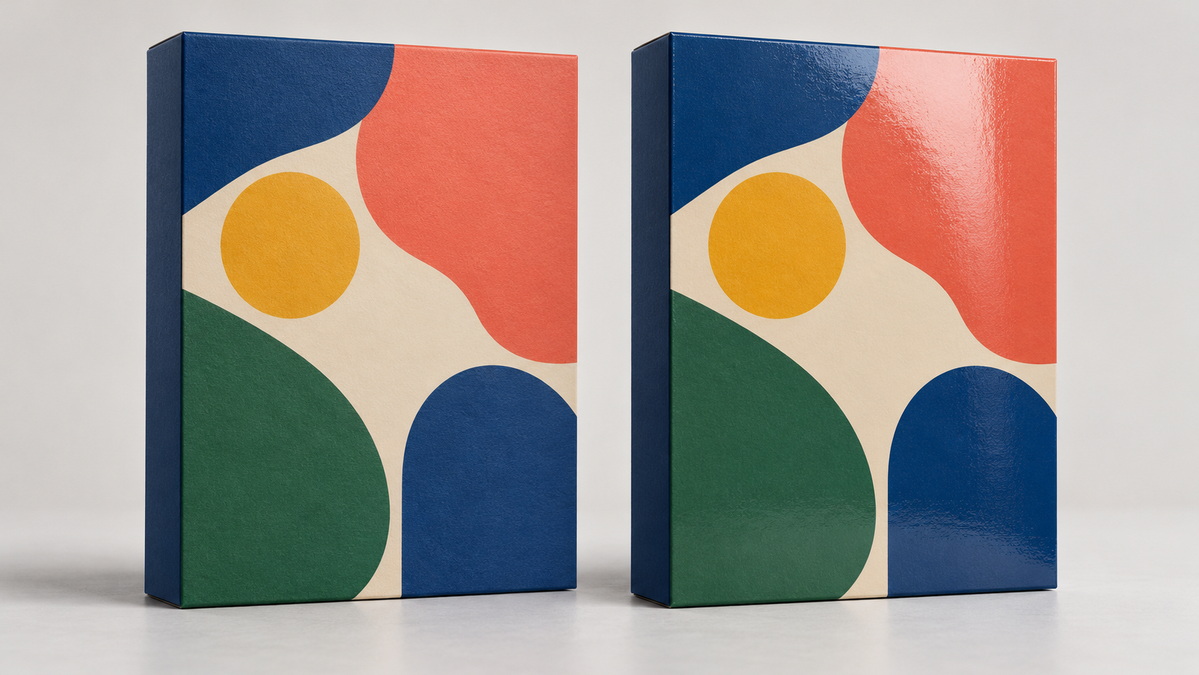
Which Finish Offers Better Scratch and Scuff Resistance?
This question requires more precision than "matte versus gloss."
Both finishes help protect printed surfaces, but their resistance to damage depends on the film construction and surface treatment. Standard matte, anti-scuff matte, and soft-touch matte should not be treated as equivalent products.
Dark, uniform artwork can make surface marks especially noticeable. A black box may therefore require a more demanding approval process than a light-colored carton.
Gloss can also show fingerprints, fine scratches, or reflection-related imperfections. A shiny surface is not a guarantee of superior durability.
When Anti-Scuff Matte Is Worth Evaluating
Consider an anti-scuff film when:
- The design contains large dark panels.
- Boxes rub against one another during packing.
- Distribution involves repeated handling.
- Additional finishing increases surface contact.
- The product requires a consistently pristine presentation.
Film manufacturers offer dedicated scuff-resistant grades. Ask for a defined film specification and a finished sample rather than relying on a general "scratch-resistant" description.
Moisture Protection: What Lamination Can and Cannot Do
A laminated face can offer improved surface protection, but it does not make a paperboard box waterproof.
Cut edges, folds, seams, and unprotected interior surfaces can remain vulnerable. The outer finish also does not establish a complete moisture barrier for the product inside.
For humid storage or refrigerated applications, evaluate the complete packaging system, including the board, adhesive, inner packaging, and anticipated exposure.
Neither matte nor gloss should be specified as a substitute for a properly designed barrier solution.
Matte vs Gloss Lamination Cost: Compare Like for Like
There is no reliable universal percentage difference between matte and gloss packaging costs.
Pricing depends on:
- Film type and thickness.
- Standard versus specialty surface treatment.
- Box dimensions and laminated area.
- Order quantity and production setup.
- Additional decoration.
- Inspection requirements and production yield.
A specialty anti-scuff matte film may cost more than standard gloss, but that does not establish a fixed rule for every supplier or project.
For a useful comparison, request quotations with the same board, artwork, dimensions, quantity, and finishing scope. Ask suppliers to identify any film substitution explicitly.
The lowest unit price is not necessarily the lowest total cost if the finished boxes require excessive rejection or replacement.
Foil Stamping, Embossing, and Spot UV Compatibility
Both matte and gloss laminated boxes can support additional decoration, provided the materials and processes are compatible.
Matte Lamination With Spot UV
Spot UV applies gloss selectively. Against a matte background, that contrast can emphasize a logo, illustration, or pattern without making the entire box reflective.
This is a useful option when a design needs both restraint and a clear focal point.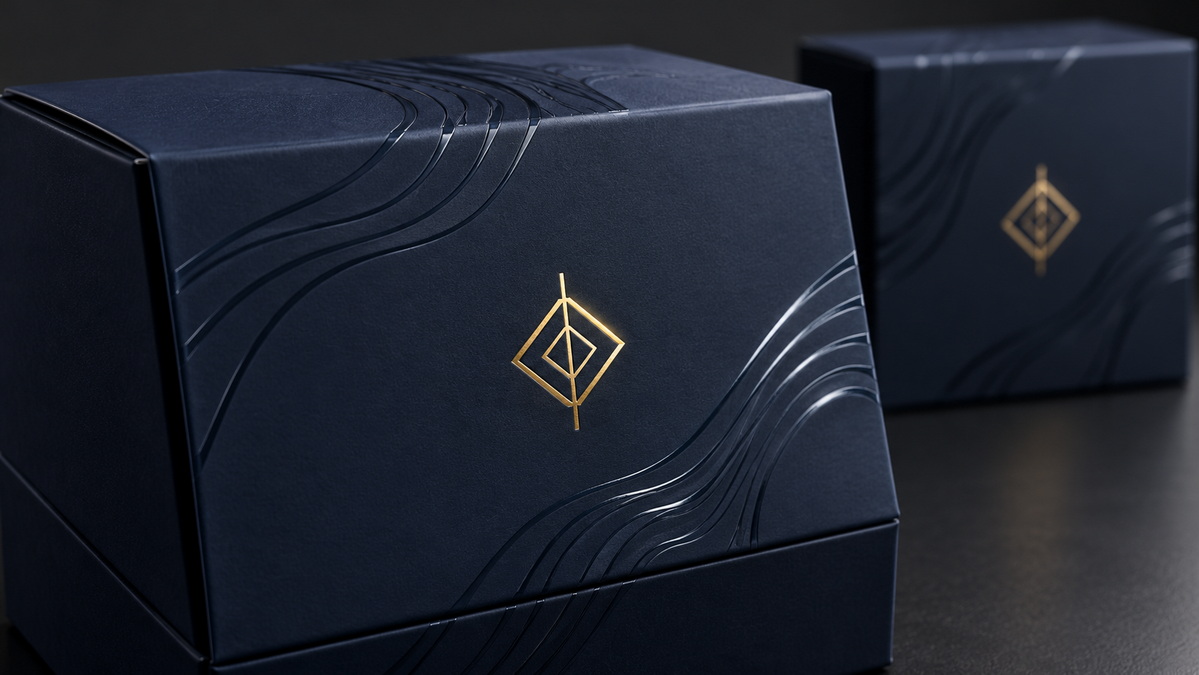
Foil and Embossing on Laminated Boxes
Foil stamping and embossing can work with either finish, but compatibility must be tested.
Relevant variables include film surface treatment, foil selection, process temperature, pressure, and the underlying board.
Our production recommendation is to approve the complete finishing sequence. A plain laminated sample cannot establish whether the final combination will achieve clean foil edges, strong adhesion, and acceptable surface quality.
Sustainability: Is Matte or Gloss Lamination More Recyclable?
Surface appearance alone does not determine recyclability.
A matte plastic film is not automatically more environmentally preferable than a gloss plastic film. The relevant questions concern material composition, film quantity, adhesive behavior, separation during recycling, and the infrastructure available in the destination market.
Paper-industry guidance recommends minimizing non-paper components and considering how those components separate during processing.
Before making an environmental claim:
1. Identify the complete packaging construction.
2. Check the requirements of the intended market.
3. Obtain suitable recyclability evidence.
4. Consider whether an unlaminated or coated alternative meets the functional brief.
A simpler construction may be worth evaluating, but it still needs to protect the product and survive distribution.
A Practical Sample-Approval Workflow for Packaging Buyers
The following workflow is our recommended purchasing approach, not a standardized laboratory test.
Step 1: Produce a Controlled Comparison
Use identical artwork, board, dimensions, and printing conditions. Change only the lamination specification.
Otherwise, differences in color or construction can be mistaken for finish-related effects.
Step 2: Review Real Viewing Conditions
Examine the boxes under representative retail lighting and in the photography setup used for online product images.
Read small text from several angles. Check whether reflections hide important information.
Step 3: Reproduce Expected Handling
Assess realistic packing, stacking, and unpacking conditions. Examine flat panels, corners, folds, and surfaces that contact neighboring boxes.
For demanding distribution routes, agree on appropriate formal testing rather than treating an informal rub check as proof of performance.
Step 4: Establish Written Acceptance Criteria
Record acceptable color appearance, adhesion, surface marking, foil quality, and crease condition.
Retain an approved finished sample as the reference for production inspection.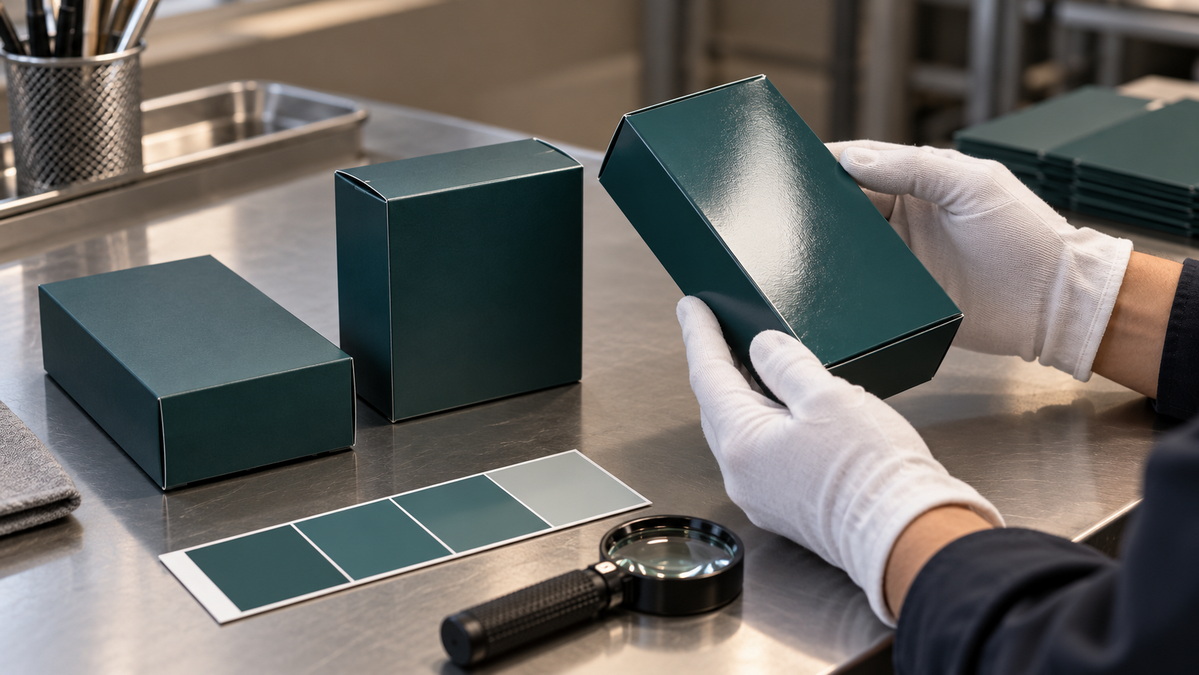
Two Illustrative Buying Scenarios
These examples show a decision process; they are not reported customer case studies.
Scenario One: A Dark Premium Electronics Box
The brief combines a black surface, metallic logo, and repeated handling.
A sensible starting point is anti-scuff matte, followed by testing for rubbing, foil adhesion, and visible marking. Standard matte should not be accepted solely because the first untouched sample looks attractive.
Scenario Two: A Colorful Gift Carton
The artwork uses vivid illustrations and large product images.
Gloss is a logical starting point for evaluating color impact. However, the buyer should still inspect glare, photography performance, and handling marks before approval.
In both scenarios, the final choice follows the sample evidence—not the product category alone.
Choose a Packaging Finish With XingKun
For custom packaging boxes, the strongest specification connects appearance with measurable production requirements.
Send Shenzhen XingKun Packing Products Co., Ltd. your artwork, box dimensions, order quantity, destination market, and expected handling conditions. Request a matte-versus-gloss sample comparison, and identify any requirements for anti-scuff performance, foil stamping, embossing, or spot UV.
That gives our team a clear basis for discussing suitable materials and a like-for-like quotation before production.
Frequently Asked Questions
1. Is matte or gloss lamination better for luxury packaging?
Neither is inherently better. Matte supports understated designs; gloss can deliver a polished, expressive presentation. Artwork, construction, and finishing quality determine the overall impression.
2. Does matte lamination always scratch more easily?
No. Standard matte and anti-scuff matte have different performance characteristics. Compare specified film grades under relevant handling conditions.
3. Is matte lamination the same as soft-touch lamination?
No. Matte describes the visual finish. Soft-touch describes a particular tactile effect and requires a separately specified material.
4. Can gloss lamination make colors look brighter?
It often increases perceived color depth and contrast. Approve a laminated print sample because screen previews cannot reliably predict the finished appearance.
5. Are matte and gloss laminated boxes suitable for food packaging?
Finish alone does not establish suitability. Materials must meet the applicable requirements for their intended use, including relevant food-contact conditions.
6. Can laminated packaging boxes be recycled?
Some constructions can be processed in appropriate recycling systems, but acceptance varies. Assess the full structure and destination infrastructure before making a claim.
References
1. Cosmo Films — "BOPP Thermal Lamination Film." Manufacturer information covering matte and gloss film construction, optical properties, and bonding characteristics. [cosmofilms]
2. Cosmo Films — "Scuff Free Lamination Films for Electronic Packaging Boxes." Technical discussion of scuff-resistant films and compatibility with additional finishing. [cosmofilms]
3. Netpak — "Gloss, Matte and Soft-Touch Lamination for Folding Carton Packaging." Industry comparison of appearance, handling performance, and finish selection. [netpak]
4. Cepi — "Paper-Based Packaging Recyclability Guidelines." Guidance on non-paper components, material combinations, and destination-market considerations. [cepi]
5. Cepi — "Recyclability Test Method Version 3." Laboratory-method overview covering pulping, screening, and sheet formation. [cepi]
6. U.S. Food and Drug Administration — "How FDA Regulates Substances that Come into Contact with Food." Explanation of authorization requirements and intended-use limitations. [fda]
7. XingKun — "About Us." Company background and printing-and-packaging experience. [xkdisplay]


