Content Menu
● What Is a Clothing Hang Tag?
● Essential Information on a Clothing Hang Tag
>> Brand Name and Logo
>> Product Name, Style Number, and SKU
>> Size and Color Information
>> Price, Currency, and Retail Barcode
>> Fiber Content and Material Claims
>> Country of Origin
>> Care Instructions and Warnings
● Recommended Information for a Stronger Hang Tag
>> Sustainability and Certification Details
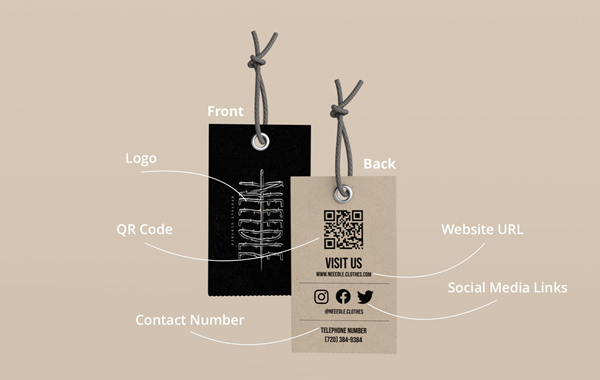
>> QR Codes and Digital Product Information
>> Brand Story and Product Benefits
>> Contact, Website, and Social Media Details
● Legal and Compliance Information: What Cannot Be Ignored
>> United States Requirements
>> European Union and UK Considerations
>> Other Export Markets
● A Practical Clothing Hang Tag Layout
>> Example: Minimal Hang Tag Copy
● Common Hang Tag Mistakes to Avoid
● Expert Checklist Before Printing Clothing Hang Tags
● How Hang Tags Support Brand Value
● Conclusion
● FAQ
>> 1. What information must be on a clothing hang tag?
>> 2. Can a hang tag replace a sewn-in care label?
>> 3. Should a clothing hang tag include fiber content?
>> 4. What size should a clothing hang tag be?
>> 5. Do I need a barcode on every clothing hang tag?
>> 6. Can I put sustainability claims on a clothing hang tag?
>> 7. What is the best information hierarchy for a hang tag?
● References
A clothing hang tag is more than a small piece of printed card. It is a portable brand ambassador, retail information panel, compliance checkpoint, and conversion tool attached directly to the product at the moment a shopper decides whether to buy.
For apparel brands, wholesalers, and private-label manufacturers, the question is not simply "What looks good on a hang tag?" It is: What information should be on a clothing hang tag to build trust, support retail operations, meet market requirements, and avoid misleading claims?
This guide explains the essential, recommended, and optional information for clothing hang tags. It also shows how to organize that information clearly, especially when your garments are produced overseas and sold into markets such as the United States, Europe, the UK, Japan, Australia, and the Middle East.
What Is a Clothing Hang Tag?
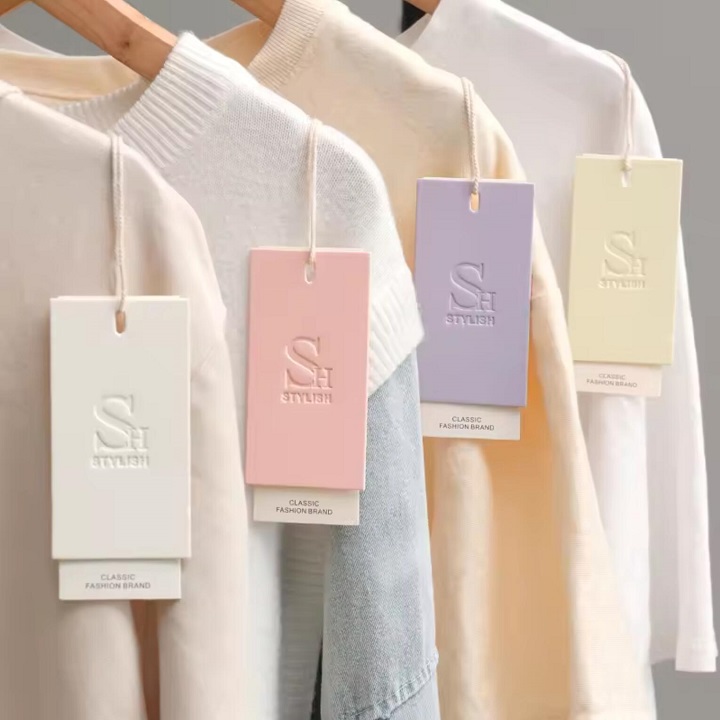
A clothing hang tag is a removable tag attached to a garment with string, plastic fastener, safety pin, or another fixing method. Unlike a sewn-in care label, a hang tag is usually removed after purchase.
Its main jobs are to:
- Identify the brand and product.
- Communicate price, size, style, and material benefits.
- Support barcode scanning, inventory control, and retail display.
- Explain care, sustainability, certification, or product features.
- Create a premium unboxing and in-store experience.
- Carry market-specific disclosures where required.
A hang tag should not be treated as a replacement for permanent garment labeling. In the United States, for example, the FTC requires most textile and wool products to carry a label showing fiber content, country of origin, and the identity of the manufacturer or responsible marketer. Care instructions must also be attached to covered garments under the FTC Care Labeling Rule. [ftc]
Essential Information on a Clothing Hang Tag
The exact requirements vary by country, product type, sales channel, and retailer. However, most professional apparel hang tags should include the following core information.
Brand Name and Logo
Your brand name and logo should usually be the first visual element on the front of the tag. This is especially important for DTC brands, boutique labels, department-store products, and private-label apparel.
Use a clean, high-contrast version of your logo. Avoid placing it too close to the punch hole, edge trimming, foil area, or barcode zone.
Best practice: Put the logo on the front and keep the back for practical information. This creates a clear hierarchy: brand first, buying information second.
Product Name, Style Number, and SKU
Include the following identifiers where relevant:
- Product name, such as "Oversized Cotton Shirt."
- Style number or article number.
- SKU, color code, and size code.
- Collection or season name.
- Production batch or lot number, if useful for quality control.
These details help retailers manage stock, prevent mix-ups between similar colors or sizes, and trace production issues quickly.
For B2B buyers and wholesale customers, a clear style number and SKU also reduce sampling errors and reordering mistakes.
Size and Color Information
Size and color are among the most practical pieces of information on a clothing hang tag.
Include:
- Garment size, such as S, M, L, XL, or numeric sizing.
- Regional size conversion, if selling internationally.
- Color name and color code.
- Fit description, such as "regular fit," "slim fit," or "oversized fit."
- Measurement chart reference, especially for e-commerce packaging.
A tag that clearly separates size, color, and style code helps store staff and customers identify the correct item without opening packaging or checking internal labels.
Price, Currency, and Retail Barcode
For retail-ready garments, the hang tag often carries:
- Recommended retail price.
- Currency symbol or local price.
- Discount price or promotional price, where applicable.
- EAN-13, UPC-A, ISBN-style code, or retailer-specific barcode.
- QR code linking to product information, care guidance, authentication, or warranty details.
Price display rules differ by market. In some markets, such as Japan, displayed prices generally need to include consumption tax; in other markets, price display obligations depend on the sales channel and local consumer-protection rules. Confirm the requirement with your retailer, distributor, or local compliance adviser before mass production. [apexfashionlab]
Important: Keep barcode quiet zones clear. Do not place foil, heavy ink coverage, embossing, or varnish over the scanning area unless you have tested scan reliability.
Fiber Content and Material Claims
Fiber content is one of the most sensitive areas of apparel labeling.
For U.S.-bound textile and wool products, the required fiber-content label must use generic fiber names and percentages by weight, listed in descending order of predominance. For example: "65% rayon, 35% polyester." [ftc]
A hang tag may highlight a particular fiber or material benefit, but it must not mislead shoppers. Under FTC guidance, if a hang tag identifies a fiber but does not disclose the full fiber content, it should clearly state something such as "See label for the product's full fiber content" or "This tag does not disclose the product's full fiber content." [ftc]
Useful hang-tag material information may include:
- "Made with organic cotton."
- "Recycled polyester shell."
- "Breathable moisture-wicking fabric."
- "Natural linen blend."
- "Vegan leather trim."
- "See sewn-in label for full fiber content."
Avoid vague or exaggerated claims such as "eco-friendly," "natural," or "sustainable" unless you can substantiate them. A specific, verifiable statement is stronger and safer than a broad environmental claim.
Country of Origin
Country of origin tells consumers where the product was processed or manufactured. For many textile products sold in the United States, this information must appear on the required label, together with fiber content and manufacturer or marketer identity. [ftc]
On a hang tag, country-of-origin wording should be accurate and consistent with customs documentation and permanent labels. Do not use phrases such as "Designed in Italy" in a way that implies the garment was made in Italy if it was manufactured elsewhere.
Common examples include:
- "Made in China."
- "Made in Vietnam."
- "Designed in London. Made in Portugal."
- "Imported."
- "See label for country of origin."
The wording must match the legal origin determination for the destination market.
Care Instructions and Warnings
Care instructions are essential for customer satisfaction and product longevity. In the U.S., the FTC Care Labeling Rule requires manufacturers and importers of covered textile apparel to attach complete regular-care instructions or warnings. [ftc]
A hang tag can reinforce care information, especially when the sewn-in label is hidden by packaging or folded garments. The FTC notes that if packaging prevents customers from seeing or finding the care label, care information should also appear on the outside of the package or on a hang tag attached to the product. [ftc]
A complete washing instruction should consider:
1. Washing method: machine wash or hand wash.
2. Water temperature: cold, warm, or hot, if temperature matters.
3. Bleaching: do not bleach, non-chlorine bleach only, or no restriction.
4. Drying: tumble dry, line dry, dry flat, or other method.
5. Ironing: iron temperature or "do not iron," if relevant.
6. Warnings: such as "wash with like colors," "do not iron decoration," or "do not tumble dry."
Care claims need a reasonable basis. For example, "Dryclean Only" should only be used when there is evidence that washing would damage the garment. [ftc]

Recommended Information for a Stronger Hang Tag
Beyond the essentials, well-designed clothing hang tags can include information that improves shopper confidence and retail efficiency.
Sustainability and Certification Details
If your garments use certified materials or responsible production processes, state the facts clearly:
- Certification name and license or certificate number, where applicable.
- Material origin, such as "organic cotton" or "recycled polyester."
- Percentage of certified or recycled content.
- A QR code linking to the certification database or impact page.
- Packaging recyclability information, if relevant.
Do not imply that an entire garment is certified if only one component is certified. For example, "shell made with certified organic cotton" is clearer than simply writing "organic garment."
QR Codes and Digital Product Information
A QR code can turn a small hang tag into a gateway to richer content:
- Size guide and fit advice.
- Fabric origin and supply-chain information.
- Care tutorial videos.
- Product authentication.
- Warranty or return policy.
- Styling suggestions.
- Loyalty-program registration.
- Reorder page for wholesale buyers.
Keep the QR code at least 15 mm x 15 mm where possible, use high contrast, and test it after printing, cutting, lamination, and string attachment.
Brand Story and Product Benefits
A short brand story can differentiate your product in a crowded retail environment. Use no more than 20–40 words on the tag itself.
For example:
> "Cut from breathable organic cotton and finished in small batches, this shirt is designed for everyday comfort and long-term wear."
Then use the QR code or website URL for the fuller story.
Contact, Website, and Social Media Details
Include only the contact details that serve a clear purpose:
- Brand website.
- Customer-service email.
- Social-media handle.
- Wholesale inquiry page.
- Warranty registration page.
- Store locator or distributor contact.
For export brands, a website with language options is often more useful than a phone number.
Legal and Compliance Information: What Cannot Be Ignored
Hang tags are highly visible, so they can create compliance risk if they contain inaccurate claims. The safest approach is to separate mandatory permanent label information from optional hang-tag marketing information.
United States Requirements
For most textile and wool products, U.S. federal labeling rules require:
- Fiber content.
- Country of origin.
- Manufacturer, importer, or responsible marketer identity, usually through a company name or RN number. [ftc]
The FTC Care Labeling Rule also requires care instructions for covered apparel. These instructions must remain attached, secure, and legible for the useful life of the product. [ftc]
A hang tag can support these requirements, but it generally should not be the only place where permanent-label information appears.
European Union and UK Considerations
In the EU and UK, textile products generally require fiber composition information. Additional requirements may apply for care symbols, responsible-person details, safety warnings, product-specific regulations, and marketplaces or retailers.
Because EU member states and the UK can have different enforcement practices, brands should verify requirements for each destination market before printing.
Other Export Markets
Japan, Australia, Canada, the Gulf states, and other markets may have their own rules for:
- Fiber composition.
- Country of origin.
- Care symbols.
- Price display.
- Language requirements.
- Product safety.
- Importer or distributor identification.
For international OEM and ODM clothing production, the factory should receive a labeling specification sheet before production. This should identify the destination market, required languages, artwork approval process, barcode standards, and final label placement.
A Practical Clothing Hang Tag Layout
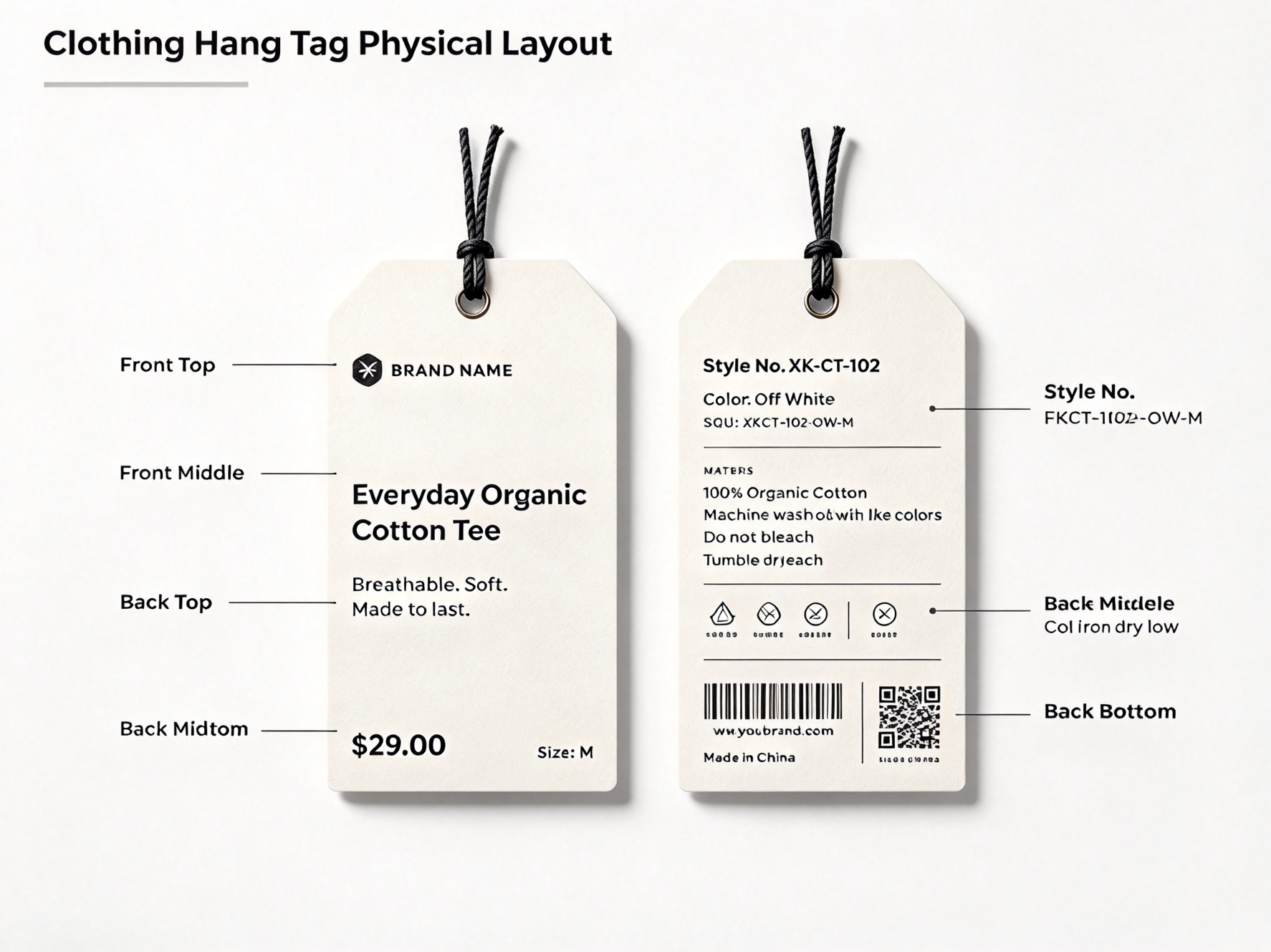
A professional hang tag does not need to be crowded. Use a simple front-and-back structure.
| Tag Area | Recommended Content | Purpose |
| Front, top | Brand logo and product name | Brand recognition |
| Front, middle | Key material or product benefit | Purchase motivation |
| Front, bottom | Price, size, or collection name | Retail clarity |
| Back, top | Style number, SKU, color, size | Inventory control |
| Back, middle | Material highlights and care reminders | Product transparency |
| Back, bottom | Barcode or QR code, website, compliance note | Scanning and traceability |
Example: Minimal Hang Tag Copy
Front
- BRAND NAME
- Everyday Organic Cotton Tee
- Breathable. Soft. Made to last.
- $29.00
Back
- Style No. XK-CT-102
- Color: Off White / Size: M
- Shell: See garment label for full fiber content
- Machine wash cold with like colors
- Do not bleach
- Tumble dry low
- Cool iron if needed
- Scan for fit guide and fabric details
- www.yourbrand.com
This layout is easy to read, retail-ready, and flexible for different garment categories.
Common Hang Tag Mistakes to Avoid
Many apparel brands lose credibility—not because their garments are poor, but because their tags create confusion.
Avoid these common errors:
- Overloading the tag. Too much text reduces readability.
- Using unsupported sustainability claims. Every environmental claim should be specific and verifiable.
- Putting essential legal data only on a removable tag. Permanent labels remain necessary for many markets.
- Ignoring barcode quiet zones. This can cause scanning failures at retail.
- Using inconsistent product data. The hang tag, sewn-in label, carton, invoice, and online listing must match.
- Choosing decoration over legibility. Foil, embossing, and dark backgrounds can make small text hard to read.
- Forgetting multilingual requirements. Export products may need more than one language.
- Skipping a printed proof. Always approve a physical or high-resolution digital proof before mass production.
Expert Checklist Before Printing Clothing Hang Tags
Before sending hang-tag artwork to production, confirm the following:
1. Destination market: Which countries will sell the garment?
2. Mandatory label data: Have fiber content, origin, manufacturer identity, and care instructions been checked?
3. Retail requirements: Does the retailer require a specific barcode, price format, tag size, or attachment method?
4. Product data: Are style number, SKU, color, size, and fabric details accurate?
5. Claims review: Are sustainability, performance, and origin claims substantiated?
6. Barcode quality: Has the barcode been tested at final print size and finish?
7. Material selection: Is the paperboard thick enough for the garment category?
8. Finish and attachment: Have lamination, foil, string, safety pin, or plastic fastener been approved?
9. Proof approval: Has the customer approved the final artwork, colors, and dieline?
10. Version control: Is the correct artwork version being printed for each style, color, and market?
This checklist is particularly valuable for clothing manufacturers and sourcing teams managing multiple SKUs, factories, and retail customers.
How Hang Tags Support Brand Value
A hang tag is often the first physical interaction a customer has with your brand after seeing the garment. It can make an affordable product feel considered, or make a premium garment feel careless if the information is unclear.
Strong hang tags do three things well:
- They inform. Shoppers can quickly understand size, material, price, and care.
- They reassure. Clear claims, certifications, and contact details reduce uncertainty.
- They convert. A well-designed tag reinforces quality at the point of sale.
For B2B apparel suppliers, hang tags also signal production professionalism. Accurate tags, consistent branding, clean barcode placement, and correct compliance information show that the factory understands retail-ready garment production.
Conclusion
A clothing hang tag should include the information shoppers and retailers need to identify, evaluate, price, scan, and care for a garment. At minimum, plan space for your brand identity, product name, style or SKU, size, color, price or barcode, material highlights, care reminders, and any market-specific compliance details.
The most effective hang tags are clear, accurate, and purposeful. They do not try to say everything; they prioritize the details that support the purchase decision while keeping mandatory disclosures on the appropriate permanent labels.
If you are developing custom clothing hang tags for an apparel brand, wholesale program, or private-label collection, prepare your artwork with compliance, retail scanning, and brand presentation in mind. A well-planned tag protects your product, strengthens your brand, and creates a better customer experience.
Explore XingKun's custom clothing hang tag solutions to create retail-ready tags with custom sizes, paperboard options, finishes, strings, barcodes, QR codes, and multilingual printing: [XingKun Clothing Hang Tags].

FAQ
1. What information must be on a clothing hang tag?
There is no single universal list. For many markets, mandatory information such as fiber content, country of origin, manufacturer or responsible-party identity, and care instructions must appear on the appropriate garment labeling—not necessarily only on the hang tag. A hang tag should also include brand name, product name, size, color, style or SKU, price or barcode, and any retail or compliance information required by the destination market. [ftc]
2. Can a hang tag replace a sewn-in care label?
Usually, no. In the United States, care labels for covered garments must be permanently and securely attached and remain legible during the product's useful life. A hang tag can provide additional or more visible care information, especially when packaging hides the sewn-in label, but it should not be assumed to replace permanent labeling. [ftc]
3. Should a clothing hang tag include fiber content?
It can, but it must be accurate. If the hang tag mentions a specific fiber and does not show the full fiber composition, U.S. FTC guidance says the tag should clearly direct consumers to the full fiber-content information, such as "See label for the product's full fiber content." [ftc]
4. What size should a clothing hang tag be?
Common clothing hang tag sizes include approximately 2 x 3.5 inches (50 x 90 mm), 2 x 4 inches, and larger formats for premium garments. Choose a size based on the amount of information, brand style, barcode or QR-code requirements, and garment type. A larger tag gives more room for storytelling, while a smaller tag suits basics and minimalist brands. [apexfashionlab]
5. Do I need a barcode on every clothing hang tag?
Not always. A barcode is commonly required or expected for retail-ready apparel, especially for department stores, chain retailers, and marketplace fulfillment. Confirm the barcode type, size, placement, and numbering system with the retailer or distributor before production.
6. Can I put sustainability claims on a clothing hang tag?
Yes, but only if the claims are accurate, specific, and substantiated. Instead of a vague claim such as "eco-friendly," use verifiable wording such as "shell made with 100% certified organic cotton" or "made with recycled polyester," supported by documentation and certification details where applicable.
7. What is the best information hierarchy for a hang tag?
Use the front for brand identity, product name, and one key benefit. Use the back for practical details such as SKU, size, color, material notes, care reminders, barcode, QR code, and compliance-related text. This keeps the tag attractive while preserving readability.
References
1. Federal Trade Commission, "Threading Your Way Through the Labeling Requirements Under the Textile and Wool Acts": [https://www.ftc.gov/business-guidance/resources/threading-your-way-through-labeling-requirements-under-textile-wool-acts]
2. Federal Trade Commission, "Clothes Captioning: Complying with the Care Labeling Rule": [https://www.ftc.gov/business-guidance/resources/clothes-captioning-complying-care-labeling-rule]
3. Federal Trade Commission, "Clothing and Textiles": [https://www.ftc.gov/business-guidance/industry/clothing-and-textiles]
4. U.S. Consumer Product Safety Commission, "A Guide to United States Apparel and Household Textiles Labeling Requirements": [https://www.cpsc.gov/s3fs-public/Guide-to-US-Apparel-and-Household-Textiles.pdf]
5. Apex Fashion Lab, "Hang Tag Design Guide: Global Costs, Materials & RFID Trends": [https://www.apexfashionlab.com/glossary/hang-tag]
6. XingKun, "Custom Clothing Hang Tags": [https://www.xkdisplay.com/clothing-hang-tags.html]


