Content Menu
● What Are Custom Packaging Boxes and Stock Packaging?
>> Custom Packaging Boxes: Designed Around Your Requirements
>> Stock Packaging: Standard Formats Available for Purchase
● Custom Packaging Boxes vs Stock Packaging: Comparison Table
● Cost Comparison: Look Beyond the Price Per Box
>> Why Stock Packaging Can Be Economical Initially
>> When Custom Packaging Can Improve Total Cost
>> An Illustrative Break-Even Example
● Product Protection: Fit Matters More Than Decoration
>> Where Custom Packaging Helps
>> Where Stock Packaging Works Well
● Branding and Customer Experience
>> Custom Printed Packaging Boxes Create Design Freedom
>> Stock Packaging Can Still Feel Considered
● Shipping Efficiency: Compare Finished Package Dimensions
>> Custom Sizes Can Reduce Unnecessary Volume
>> Compare the Complete Shipping Configuration
● Lead Times, Minimum Orders, and Inventory Risk
>> Stock Packaging Supports Flexibility
>> Custom Packaging Requires More Coordination
● Sustainability: Evaluate the Whole Packaging System
● A Practical Hybrid Strategy: Standardize Structure, Customize Identity
● A Five-Step Process for Choosing the Right Packaging
>> 1. Document the Product and Distribution Requirements
>> 2. Establish Your Current Baseline
>> 3. Request Comparable Options
>> 4. Test Samples Before Committing
>> 5. Validate Through a Controlled Pilot
● Which Packaging Option Should Your Business Choose?
● Plan Your Packaging with Shenzhen XingKun
● Frequently Asked Questions
>> 1. Are custom packaging boxes always more expensive?
>> 2. Can stock packaging be branded?
>> 3. What is the minimum order quantity for custom boxes?
>> 4. Which option is better for fragile products?
>> 5. Will smaller custom boxes reduce shipping costs?
>> 6. When should a brand switch from stock to custom packaging?
● References
Custom packaging boxes vs stock packaging is a decision about more than appearance. It affects product protection, purchasing flexibility, fulfillment efficiency, shipping costs, and how customers experience your brand. The right choice depends on your products, order volume, distribution channels, and available budget.
At Shenzhen XingKun Packing Products Co., Ltd., our perspective is shaped by more than 20 years in printing and packaging, serving brands and distributors across over 30 countries and regions. Our starting point is simple: packaging should solve a business problem before it becomes a design statement.
This guide compares both options and explains how to choose based on value, rather than box price alone.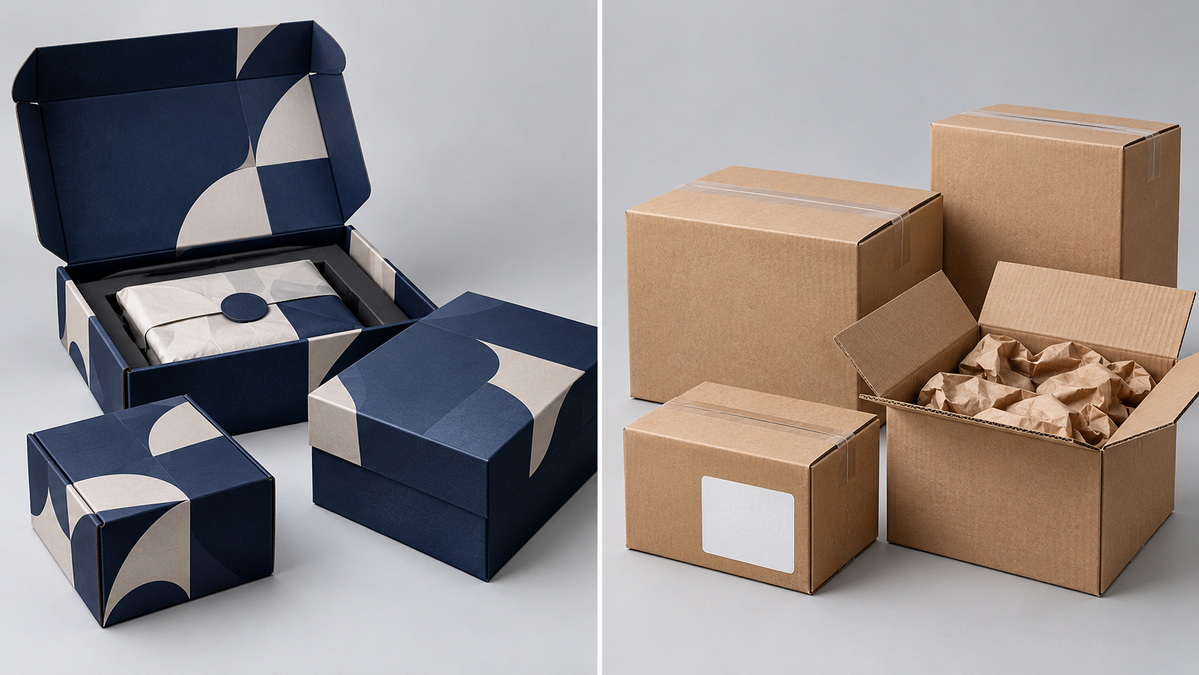
What Are Custom Packaging Boxes and Stock Packaging?
Custom Packaging Boxes: Designed Around Your Requirements
Custom packaging boxes are manufactured to an agreed specification. Depending on the project, customization can include:
- Internal dimensions and structural design.
- Paperboard or corrugated material specifications.
- Printed graphics, colors, and product information.
- Inserts, dividers, windows, and closures.
- Surface finishes and decorative treatments.
Customization is not limited to luxury packaging. A plain corrugated box made to a specific size is custom packaging, even without printed artwork.
Stock Packaging: Standard Formats Available for Purchase
Stock packaging consists of ready-made boxes offered in predetermined sizes, materials, and structures. Buyers choose the closest available match rather than developing a completely new specification.
Stock boxes can still carry branding through labels, sleeves, stamps, or printed tape. The distinction is therefore not simply "branded versus unbranded." It is whether the underlying packaging specification is standardized or developed for your requirements.
Custom Packaging Boxes vs Stock Packaging: Comparison Table
| Factor | Custom packaging boxes | Stock packaging |
| Dimensions | Specified around the product | Selected from available sizes |
| Initial investment | May include development, tooling, and sampling | Usually fewer development costs |
| Unit pricing | Depends on quantity and specifications | Depends on supplier, size, and quantity |
| Branding | Integrated graphics and structural identity | Usually added through separate components |
| Product protection | Can incorporate tailored protective features | Depends on available fit and cushioning |
| Availability | Requires an agreed production schedule | Available stock may support faster dispatch |
| Inventory risk | Greater exposure if specifications change | Easier to purchase incrementally when available |
| Best application | Stable products and defined requirements | Testing, urgent demand, and variable assortments |
Neither option wins every category. A well-chosen stock box can outperform an unnecessarily complicated custom design.
Cost Comparison: Look Beyond the Price Per Box
Why Stock Packaging Can Be Economical Initially
Stock packaging avoids some project-specific development work. It can be attractive when you are testing demand, launching a small assortment, or managing uncertain sales.
However, a lower box price may be offset by:
- Additional cushioning.
- Longer packing time.
- Separate branding materials.
- Excess shipping volume.
- Damage-related replacements.
The relevant question is not "Which box is cheaper?" It is "Which packaging system costs less to operate?"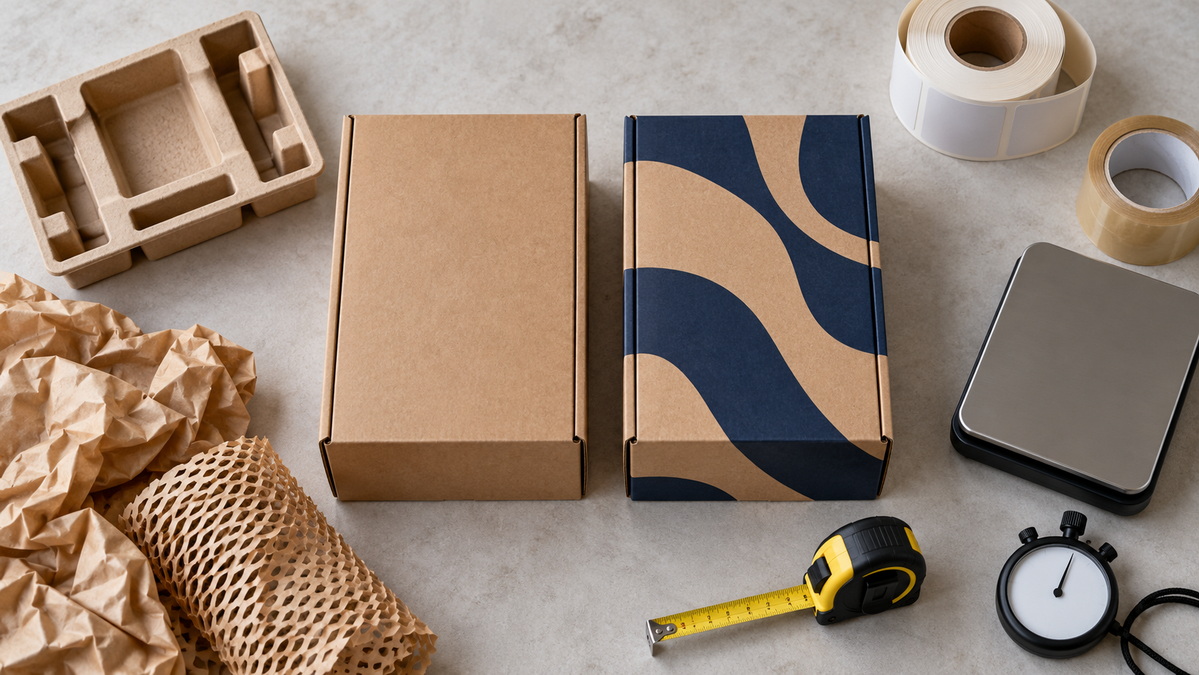
When Custom Packaging Can Improve Total Cost
Custom packaging may reduce unnecessary space, simplify packing, or consolidate several packaging components into one structure.
These benefits are conditional. A custom design that requires expensive assembly or becomes obsolete quickly may increase total cost instead.
For quotation comparisons, use:
Total packaging cost per order = box + inserts + branding + packing labor + allocated setup costs + packaging-related freight impact + expected damage costs.
An Illustrative Break-Even Example
Suppose custom development requires an additional $600 upfront, while the resulting package saves $0.20 per shipped order.
Under those assumptions, the setup investment is recovered after 3,000 orders.
This is an illustrative calculation, not a XingKun quotation or an industry benchmark. Actual savings must be established through supplier pricing, packing trials, and shipping comparisons.
Product Protection: Fit Matters More Than Decoration
A beautifully printed box does not automatically protect its contents.
Protection depends on the complete packaged-product system: the product, outer box, cushioning, inserts, closures, and distribution environment.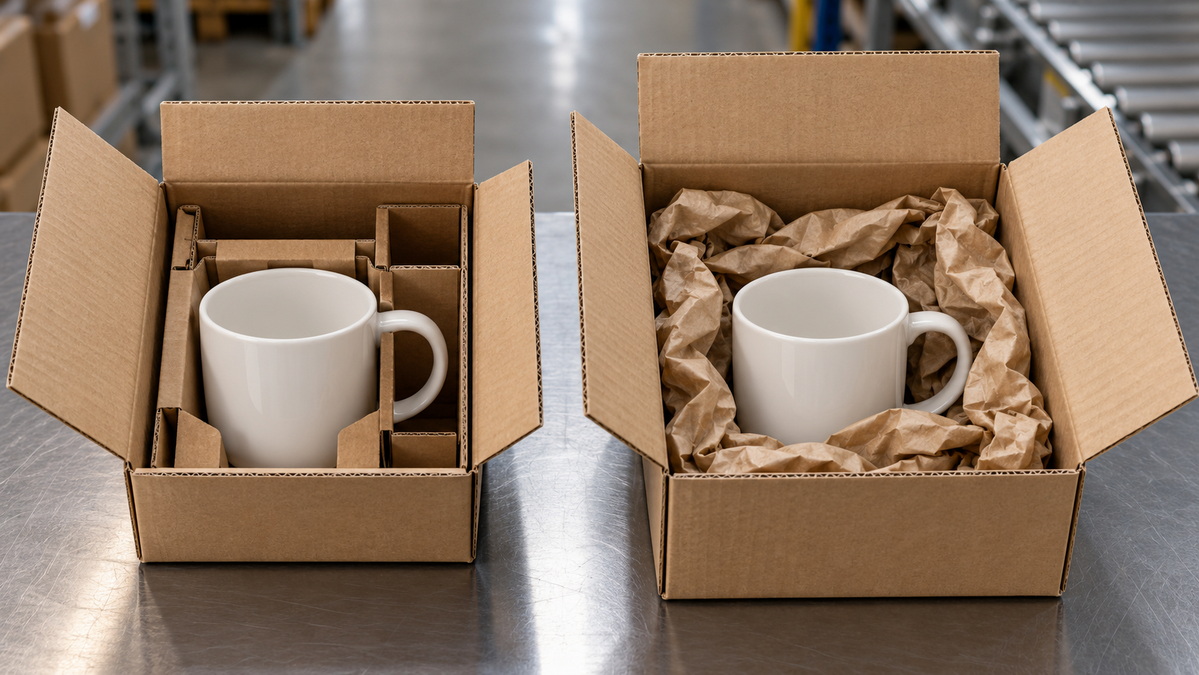
Where Custom Packaging Helps
Custom packaging boxes for fragile products can incorporate dividers, fitted supports, or controlled cushioning space.
However, "tighter" is not always "safer." Some products need clearance for cushioning to absorb shock. Others require supports that prevent movement without pressing against vulnerable surfaces.
Where Stock Packaging Works Well
Stock corrugated boxes can be suitable when products are robust, dimensions match available formats, and appropriate cushioning is used.
For either option, define acceptable damage before testing. ISTA recommends selecting tests around the actual distribution environment and using representative product and packaging samples.
For parcel delivery, ISTA 3A may be relevant, but the correct procedure depends on shipment characteristics. Laboratory testing should be complemented by monitoring real shipments.
Branding and Customer Experience
Custom Printed Packaging Boxes Create Design Freedom
Custom printing allows product information, brand graphics, opening instructions, and presentation to work together.
A coordinated design can help customers identify variants, understand the product, and navigate the opening process. Structural design can also support orderly presentation instead of relying entirely on decorative printing.
Nevertheless, premium packaging should not be treated as proof of higher sales. Commercial impact needs measurement.
Stock Packaging Can Still Feel Considered
A stock box with a well-designed sleeve, clear label, and neatly arranged contents can deliver a coherent experience.
For early-stage brands, this approach allows visual identity to evolve without committing to a large inventory of printed boxes.
From a packaging-planning perspective, readability and ease of opening deserve as much attention as color and finish.
Shipping Efficiency: Compare Finished Package Dimensions
Carriers may consider dimensional weight when a parcel occupies substantial space relative to its actual weight. UPS describes dimensional weight as a calculation based on package volume and an applicable divisor.
This makes external shipping dimensions commercially important.
Custom Sizes Can Reduce Unnecessary Volume
A product-specific box may reduce empty space and the quantity of void fill required. FEFCO also identifies space utilization as a practical advantage of adaptable corrugated packaging.
However, reduced volume does not guarantee a lower shipping charge. Actual weight, carrier rules, rounding, service type, and pricing thresholds still matter.
Compare the Complete Shipping Configuration
Measure the finished parcel, including protective components and any outer shipping carton.
A compact presentation box placed inside an oversized shipper may deliver little freight benefit. Evaluate the package that enters the carrier network, not just the box customers see first.
Lead Times, Minimum Orders, and Inventory Risk
Stock Packaging Supports Flexibility
Available stock packaging can suit urgent requirements and changing product ranges.
Before purchasing, confirm:
- Available quantities.
- Replenishment arrangements.
- Delivered cost.
- Consistency of dimensions and material specifications.
- Whether the same format will remain available.
"Stock" does not guarantee immediate delivery or permanent availability.
Custom Packaging Requires More Coordination
Custom production may involve structural development, artwork approval, sampling, tooling, manufacturing, and inspection.
Minimum order quantities and lead times vary with construction, printing method, materials, and scheduling. Avoid treating a supplier's general estimate as a confirmed project commitment.
For imported packaging, clarify delivery terms and responsibilities. Factory completion and arrival at your warehouse are different milestones.
Sustainability: Evaluate the Whole Packaging System
Custom packaging is not automatically more sustainable, and stock packaging is not automatically wasteful.
A useful assessment considers:
- Material quantity per order.
- Protective performance.
- Packaging volume during transport.
- Recycled content documentation.
- Component separation.
- Recycling access in the destination market.
- Unused or obsolete inventory.
Right-sizing may reduce excess material, but protection remains essential. Packaging that fails and causes product replacement can undermine an otherwise efficient design.
Environmental language also requires care. The US Federal Trade Commission advises businesses to substantiate environmental claims and qualify recyclable claims where appropriate.
"Recyclable" and "made with recycled content" describe different attributes. Request supporting documentation rather than relying on broad terms such as "green packaging."
A Practical Hybrid Strategy: Standardize Structure, Customize Identity
The choice does not have to be entirely custom or entirely stock.
A hybrid packaging system can combine:
- A limited range of standard outer boxes.
- Product-specific inserts.
- Printed sleeves or labels.
- Shared structures across related products.
For example, a brand with several similarly sized accessories could use one outer box and different inserts. This may simplify purchasing while maintaining organized presentation.
However, excessive standardization can create unnecessary empty space. Compare the purchasing benefit against cushioning requirements, storage, and shipping dimensions.
FEFCO's internationally used box-design code can help buyers and suppliers communicate corrugated structures consistently. It does not replace a complete specification covering dimensions, materials, printing, and performance.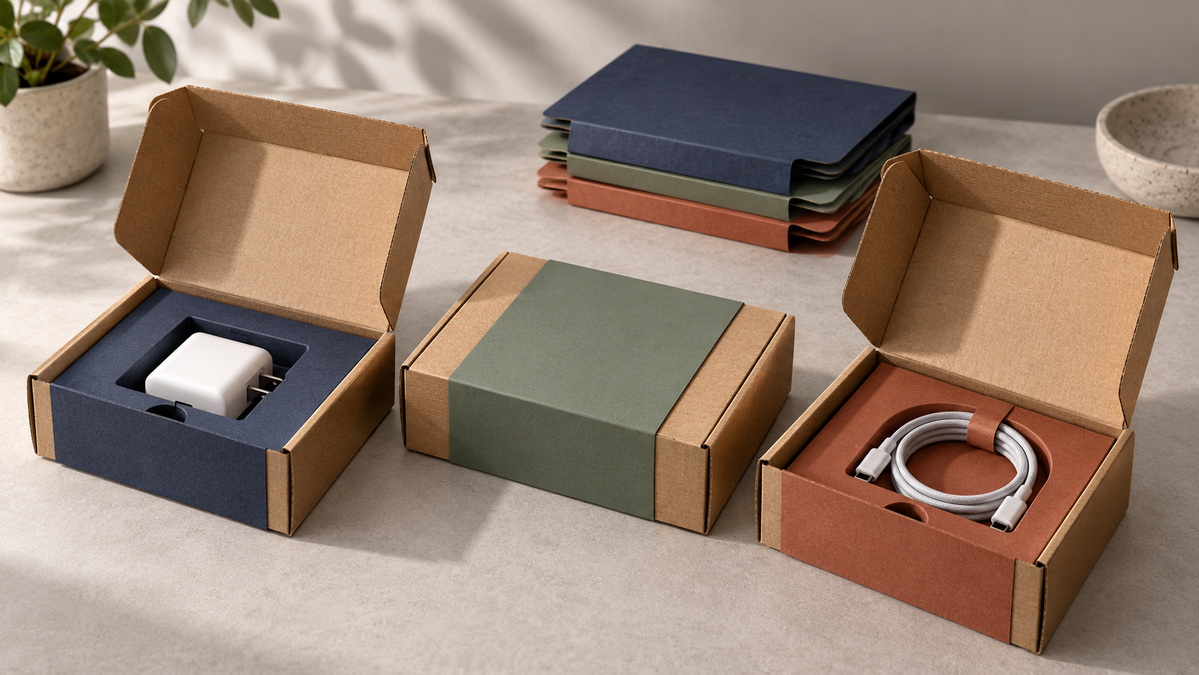
A Five-Step Process for Choosing the Right Packaging
1. Document the Product and Distribution Requirements
Record product dimensions, weight, fragility, accessories, storage conditions, and shipping methods.
Separate essential requirements from aesthetic preferences.
2. Establish Your Current Baseline
Measure present packaging costs, packing time, material use, shipment dimensions, and damage rates.
Without a baseline, proposed improvements remain assumptions.
3. Request Comparable Options
Ask for a stock solution, a fully custom solution, and a hybrid alternative where appropriate.
Keep product quantities and protection requirements consistent across quotations.
4. Test Samples Before Committing
Check product fit, assembly, closure, appearance, barcode readability, and packer usability.
For transport-sensitive products, select appropriate testing with a qualified laboratory or packaging specialist.
5. Validate Through a Controlled Pilot
Run a limited shipment trial before scaling.
Track packing time, damage, customer complaints, material consumption, and actual freight charges. Compare results against the baseline rather than judging only by sample appearance.
Which Packaging Option Should Your Business Choose?
Choose stock packaging when demand is uncertain, speed is critical, products fit available sizes, and branding can be applied economically.
Choose custom packaging boxes when product fit, protection, presentation, or repeat-order efficiency justifies specification development.
Choose a hybrid system when you need distinctive branding but want to limit structural complexity and inventory exposure.
Our recommendation is to define the required outcome first. Then select the simplest packaging system that achieves it reliably.
Plan Your Packaging with Shenzhen XingKun
Shenzhen XingKun Packing Products Co., Ltd. provides custom printing and packaging solutions backed by more than 20 years of experience.
To discuss a suitable packaging approach, send your product dimensions, weight, intended use, order quantity, delivery destination, and artwork requirements.
Ask our team to assess structure, material, printing, and sampling options against your commercial priorities. A useful quotation begins with a clear product brief—not just a photograph of a box.
Frequently Asked Questions
1. Are custom packaging boxes always more expensive?
No. They may require additional upfront investment, but total cost depends on order quantity, materials, packing labor, freight impact, and protection. Compare complete packaging systems rather than unit prices alone.
2. Can stock packaging be branded?
Yes. Labels, sleeves, printed tape, and other components can add branding without changing the underlying stock box. Confirm the labor and component costs before selecting this approach.
3. What is the minimum order quantity for custom boxes?
There is no universal minimum. Requirements depend on the supplier, box construction, material, printing process, and finishing specifications. Request a project-specific quotation rather than relying on a general figure.
4. Which option is better for fragile products?
Neither category guarantees protection. Select a suitable combination of box structure, cushioning, inserts, and closures, then validate the complete packaged product against relevant transport hazards.
5. Will smaller custom boxes reduce shipping costs?
They may, particularly where dimensional weight affects billing. Savings depend on final external dimensions, actual weight, carrier rules, and applicable rates. Verify the result using real shipment quotations.
6. When should a brand switch from stock to custom packaging?
Consider switching when repeat demand becomes clearer or when stock packaging creates measurable problems with damage, packing time, presentation, or shipping volume. Validate the proposed improvement before committing to production.
References
- Shenzhen XingKun Packing Products Co., Ltd. — Company website and overview of custom printing and packaging services. Company experience and international service coverage also reflect the company background supplied for this article. [xkdisplay]
- Shenzhen Xingkun Packing Products Co., Ltd. — Company website describing customized paper boxes, plastic boxes, sampling, and packaging development services. [xkprint-pack]
- International Safe Transit Association — "Getting Started with Design & Testing." Guidance on distribution environments, representative samples, damage criteria, and shipment monitoring. [ista]
- International Safe Transit Association — "Test Procedures." Overview of test categories and distribution-specific applications. [ista]
- UPS — "Shipping Dimensions and Weight." Explanation of dimensional weight and package measurement. [ups]
- FEFCO — "Corrugated Board Packaging: The Ideal Packaging Material." Discussion of adaptable dimensions and transport-space utilization. [fefco]
- FEFCO — "FEFCO Code." International system for identifying corrugated packaging designs. [fefco]
- Federal Trade Commission — "Environmental Claims: Summary of the Green Guides." Guidance on recyclable claims, recycled content, and source-reduction statements. [ftc]


