Content Menu
● Why Hang Tag Printing Matters
● Digital Printing for Short Runs and Variable Data
>> When digital printing is the right choice
>> Limitations to consider
● Offset Printing for Consistent Color at Scale
>> Why brands choose offset printing
>> When offset makes the most sense
● Screen Printing for Bold Color and Specialty Effects
>> Best uses for screen printing
● Flexographic Printing for High-Volume Tags and Labels
>> Where flexo fits
● CMYK vs. Pantone: How to Control Brand Color
● Premium Finishing Methods That Elevate Hang Tags
>> Foil stamping
>> Embossing and debossing
>> Spot UV and varnish
>> Die-cutting
● Choosing Paper and Material Before Printing
● A Practical Method-Selection Framework
● Common Hang Tag Printing Mistakes
● How XingKun Supports Custom Hang Tag Production
● Conclusion
● FAQ
>> 1. What is the best printing method for custom hang tags?
>> 2. What is the difference between CMYK and Pantone hang tag printing?
>> 3. Can I print QR codes and barcodes on hang tags?
>> 4. Which hang tag finish is best for luxury brands?
>> 5. Are kraft and recycled hang tags suitable for premium brands?
>> 6. How do I reduce hang tag printing costs without lowering quality?
● References
Choosing the right hang tag printing methods is one of the most important decisions in retail packaging. A hang tag may be small, but it carries your logo, product story, pricing, care information, barcode, and often the first physical impression a customer has of your brand. The best printing method depends on your quantity, artwork, material, budget, deadline, and the level of premium finishing you need.
As a manufacturer serving global brands with custom hang tags, packaging boxes, playing cards, puzzles, books, and stickers, we see a consistent pattern: buyers who understand the differences between digital printing, offset printing, screen printing, flexography, and specialty finishing make better sourcing decisions. They avoid unnecessary tooling costs, reduce color-matching problems, and create tags that look premium without over-engineering the product.
This guide explains the main hang tag printing methods, when to use each one, how finishes affect cost and durability, and how to prepare artwork for a smooth OEM/ODM production run.
Why Hang Tag Printing Matters
A hang tag is both a branding asset and an information carrier. For apparel, it can communicate size, fabric composition, washing instructions, sustainability claims, and price. For cosmetics, food, gifts, jewelry, and home goods, it can reinforce positioning and guide the customer toward a QR code, social channel, or product-care page.
The printing method influences four practical outcomes:
- Color accuracy: Especially important for brand colors, gradients, photographs, and Pantone matching.
- Perceived quality: Fine typography, crisp edges, foil, embossing, and texture all affect how premium a tag feels.
- Unit cost: Setup costs, plates, dies, ink coverage, and finishing steps change dramatically by method.
- Production speed: Digital printing is usually faster for short runs; offset and flexo become more efficient at volume.
In other words, the "best" method is not simply the most advanced one. It is the method that matches your order quantity and brand objective.
Digital Printing for Short Runs and Variable Data
Digital printing is often the best starting point for startups, limited collections, sampling, seasonal promotions, and product tests. It prints directly from a digital file, so it does not require printing plates or films.
When digital printing is the right choice
Digital printing is ideal when you need:
- Low minimum order quantities
- Fast turnaround
- Multiple design versions or language variants
- Variable data such as SKUs, QR codes, serial numbers, or batch codes
- Photographic artwork, gradients, and full-color designs
- Frequent artwork updates
Because there is little or no plate setup, digital printing reduces upfront cost. It is particularly useful for emerging brands that want to test several tag designs before committing to a large production run.
Limitations to consider
Digital printing can be less economical than offset at high volumes. It may also have limitations with certain specialty inks, heavy metallic coverage, or exact Pantone matching on some substrates. For premium fashion or luxury products, buyers should request a printed sample rather than relying only on a screen proof.
Expert tip: If your tag includes a QR code, keep a quiet zone around the code and test it after printing and finishing. A foil, coating, or dark background can reduce scan reliability if the contrast is insufficient.
Offset Printing for Consistent Color at Scale
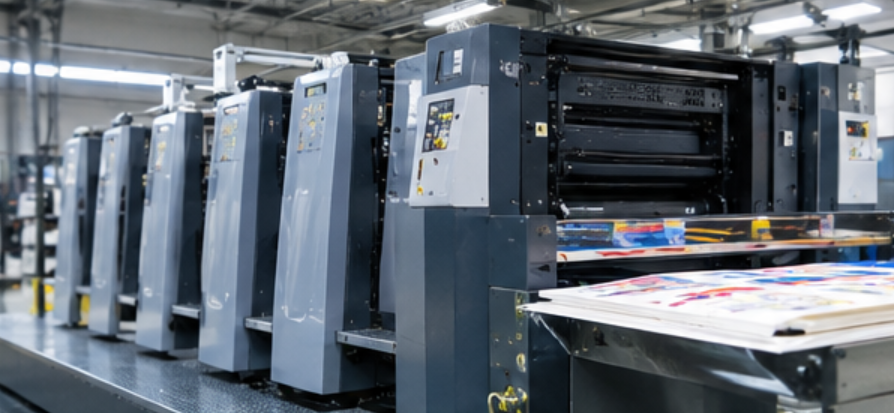
Offset lithography, commonly called offset printing, remains the industry standard for medium- and high-volume hang tags. Ink is transferred from a plate to a rubber blanket and then onto the paper. This indirect process delivers excellent detail, smooth solids, and strong color consistency across long runs.
Why brands choose offset printing
Offset printing is well suited to:
- Large production quantities
- Precise brand-color reproduction
- Fine text and detailed graphics
- Consistent quality across thousands or millions of tags
- Cost-efficient per-unit pricing once setup is complete
Offset printing also supports both CMYK process color and Pantone spot colors. If your brand uses a specific corporate color, a Pantone spot color can be more reliable than trying to simulate it with CMYK alone.
When offset makes the most sense
A practical rule of thumb is that offset becomes increasingly attractive when your artwork is stable, your quantity is high, and you want repeatable color from one production batch to the next. It is commonly used for apparel swing tags, retail packaging tags, cosmetics tags, and promotional tags.
Screen Printing for Bold Color and Specialty Effects
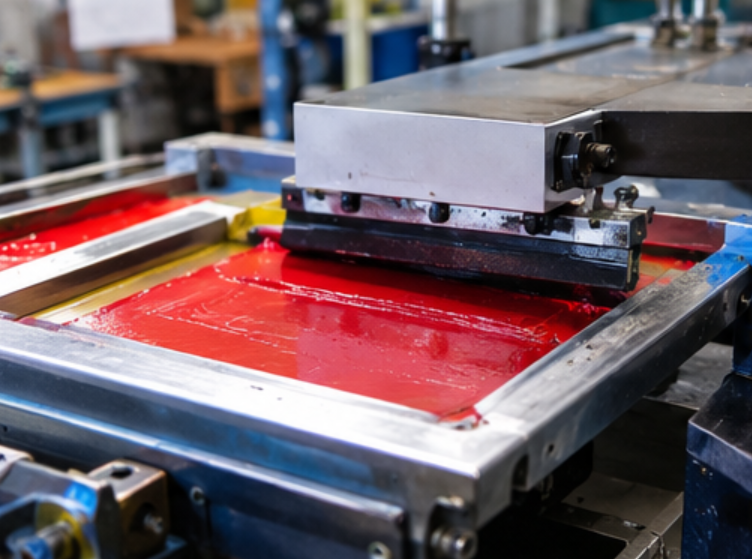
Screen printing pushes ink through a mesh stencil onto the substrate. It is less common for highly detailed full-color tags, but it remains valuable when you need strong, opaque color or special ink effects.
Best uses for screen printing
Screen printing works well for:
- Bold logos and simple graphics
- Opaque white ink on kraft, dark, or transparent materials
- Metallic, fluorescent, glow-in-the-dark, or other specialty inks
- Tags made from plastic, synthetic materials, or unusual substrates
- Small accent areas where a tactile or high-impact effect is needed
For example, a kraft-paper tag with a simple white logo can look cleaner and more striking with screen printing than with a four-color process build. Similarly, a dark tag that needs a bright logo may benefit from an opaque white ink base before other colors are printed.
Flexographic Printing for High-Volume Tags and Labels
Flexography uses flexible relief plates and fast-drying inks. It is widely used in label and packaging production, especially for long runs and simpler artwork.
Where flexo fits
Flexographic printing can be appropriate for:
- Very large quantities
- Simple logos, text, and solid-color designs
- Certain paper, film, and synthetic substrates
- Projects where speed and cost efficiency matter more than complex full-color imagery
Flexo is not always the first choice for luxury hang tags with fine gradients or photographic artwork, but it can be an efficient option for functional tags, price tags, and high-volume retail identification.
CMYK vs. Pantone: How to Control Brand Color
One of the most common production questions is whether to use CMYK or Pantone Matching System (PMS) colors.
| Color system | Best for | Advantages | Considerations |
| CMYK | Full-color photos, gradients, multicolor artwork | Efficient for complex images; widely available | Small color shifts can occur across substrates and presses |
| Pantone spot color | Brand logos, exact corporate colors, simple graphics | More consistent and repeatable color | Additional ink unit or setup may increase cost |
| CMYK + spot color | Brand color plus photographic artwork | Balances flexibility and brand accuracy | Requires careful prepress planning |
For a brand-critical logo, we generally recommend specifying a Pantone reference and approving a physical proof. Screen colors are useful for design, but they are not a reliable substitute for a printed sample because monitors emit light while paper reflects it.
Premium Finishing Methods That Elevate Hang Tags
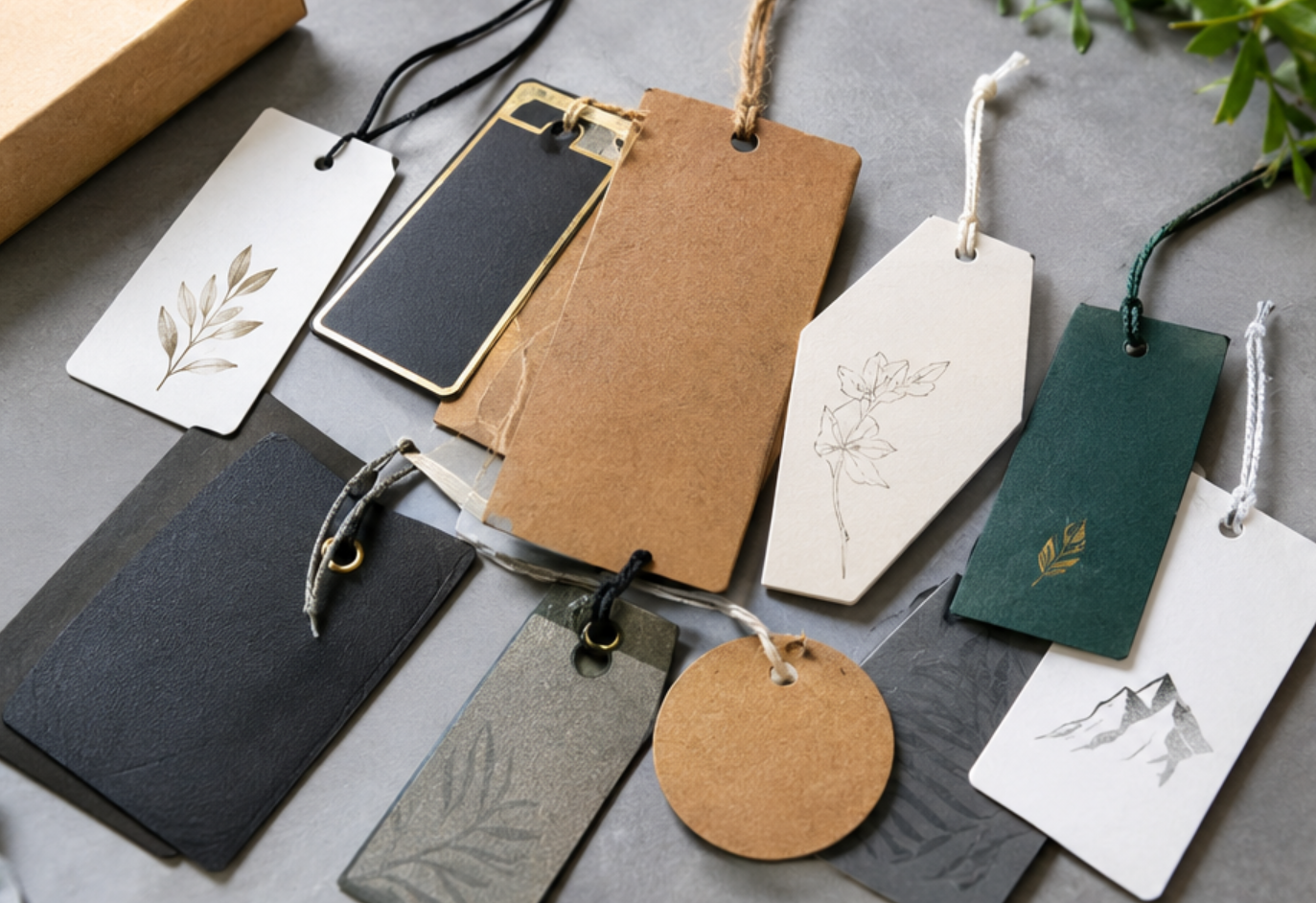
Printing is only part of the equation. Finishing determines whether a tag feels ordinary or memorable. The most popular premium finishes include foil stamping, embossing, debossing, spot UV, lamination, and die-cutting.
Foil stamping
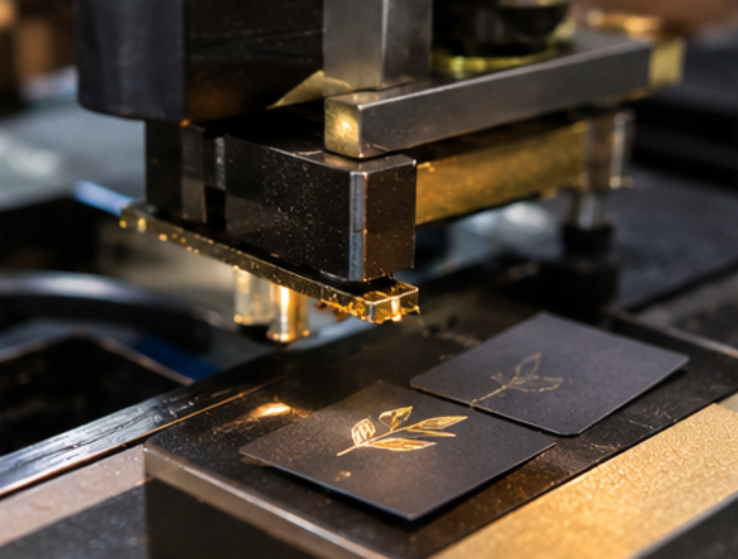
Hot foil stamping uses heat and pressure to apply metallic or pigmented foil to the tag. Gold, silver, rose gold, copper, holographic, and matte foils are common choices.
Foil stamping is especially effective for:
- Luxury apparel and jewelry
- Cosmetics and fragrance
- Premium gift packaging
- Minimal logos on textured or dark paper
Use foil selectively. A small foil logo or border often looks more refined than covering an entire tag.
Embossing and debossing
Embossing raises a design above the surface, while debossing presses it into the paper. Both create tactile depth and are popular for monograms, logos, patterns, and premium fashion tags.
Blind embossing—embossing without ink or foil—can create a subtle, high-end effect. It works particularly well on thick, uncoated, or textured paper.
Spot UV and varnish
Spot UV applies a glossy coating to selected areas, creating contrast against a matte background. A varnish can protect the printed surface and enhance durability.
Spot UV is effective for logos, patterns, or key words, but it should be avoided over areas that need to be written on or scanned.
Die-cutting
Die-cutting creates custom shapes beyond standard rectangles and squares. Circle, oval, bottle-neck, scalloped, and fully custom silhouettes can all improve shelf recognition.
A die-cut tag should still be practical. Keep enough material around holes, strings, eyelets, text, and barcodes so the tag remains strong during handling.
Choosing Paper and Material Before Printing
The printing method and material must be selected together. A beautiful design can fail if the paper cannot support the ink, finish, or attachment method.
Common hang tag materials include:
- 300gsm standard paper: A versatile choice for classic retail tags.
- Recycled paper: Suitable for sustainability-focused brands.
- Kraft paper: Provides a natural, handmade, or eco-conscious appearance.
- Textured or linen paper: Adds a premium tactile feel.
- Plastic or synthetic material: Offers water resistance and durability for demanding environments.
XingKun's hang tag production includes standard paper, recycled paper, kraft paper, and plastic options, along with digital printing, die-cutting, foil stamping, and embossing/debossing technologies. [xkdisplay]
For sustainable projects, do not treat "eco-friendly" as a single feature. Paper source, recycled content, ink system, coating, and recyclability all matter. FSC certification relates to responsible fiber sourcing and chain of custody; it does not by itself verify recycled content, ink type, or the recyclability of every finish. [4over4]
A Practical Method-Selection Framework
Use this simple framework before requesting a quotation:
1. Define the purpose. Is the tag mainly for branding, compliance, pricing, promotion, or product information?
2. Confirm the quantity. Short runs often favor digital; stable large runs often favor offset or flexo.
3. Review the artwork. Photographic designs usually need CMYK; exact brand colors may need Pantone.
4. Choose the substrate. Coated, uncoated, kraft, recycled, textured, or synthetic material changes ink behavior.
5. Select finishing carefully. Add foil, embossing, spot UV, or die-cutting only where they support the brand.
6. Plan variable data. QR codes, barcodes, sizes, prices, and batch numbers should be tested in the actual production workflow.
7. Approve a physical sample. A printed proof is the best way to validate color, material, durability, and finishing.
Common Hang Tag Printing Mistakes
From a manufacturing perspective, these are the issues we most often help buyers prevent:
- Designing too close to the edge. Leave a safe margin for cutting tolerance.
- Using thin fonts on textured paper. Fine type can fill in or lose clarity.
- Placing QR codes over foil or heavy coating. This can interfere with scanning.
- Ignoring hole placement. The hole must not cut through important text or weaken the tag.
- Requesting too many finishes. Extra processes increase cost, lead time, and quality risk.
- Approving color from a screen only. Always approve a physical proof for brand-critical colors.
- Choosing plastic lamination for an eco-friendly tag. It may complicate recycling compared with uncoated or aqueous-coated options. [4over4]
How XingKun Supports Custom Hang Tag Production
XingKun provides OEM and ODM hang tag services for global brands, wholesalers, and manufacturers. Its design hang tag range includes clothing tags, rectangular tags, die-cut tags, circle tags, folded tags, jewelry tags, bottleneck tags, and retail swing tags. [xkdisplay]
The company's stated production workflow includes conceptualization, material selection, digital proofing, printing, and finishing. This matters because a reliable supplier should not only print the artwork; it should also help you choose the correct material, validate the dieline, check barcode and QR-code placement, and confirm that the selected finishing method is production-ready. [xkdisplay]
For buyers sourcing hang tags alongside packaging boxes, playing cards, jigsaw puzzles, printed books, or stickers, working with one printing partner can also improve consistency across the full product experience.
Conclusion
The right hang tag printing method depends on more than price. Digital printing offers speed and flexibility for short runs and variable data. Offset printing delivers consistent, high-quality color at scale. Screen printing is valuable for bold colors and specialty inks, while flexography can suit high-volume functional tags. Finishing methods such as foil stamping, embossing, spot UV, and die-cutting then transform a functional tag into a branded retail asset.
The strongest approach is to match the method to your quantity, artwork, material, and brand positioning—and to approve a physical sample before mass production. If you are planning custom hang tags for apparel, cosmetics, gifts, food, jewelry, or retail packaging, share your artwork, quantity, size, material preference, and target delivery date with XingKun. Our team can recommend the most cost-effective printing method and provide an OEM/ODM solution tailored to your brand. [xkdisplay]
FAQ
1. What is the best printing method for custom hang tags?
There is no single best method. Digital printing is best for low quantities, fast turnaround, and variable data. Offset printing is usually best for larger runs that require consistent color and fine detail. Screen printing is best for bold, opaque, or specialty-ink effects.
2. What is the difference between CMYK and Pantone hang tag printing?
CMYK uses four process inks to create full-color images and gradients. Pantone uses a pre-mixed spot ink to achieve a specific brand color. For important logos or corporate colors, Pantone plus a physical proof is usually the safer choice.
3. Can I print QR codes and barcodes on hang tags?
Yes. QR codes and barcodes are commonly printed on hang tags. Keep sufficient contrast, avoid placing them over foil or heavy gloss coating, and scan-test a production sample before full delivery.
4. Which hang tag finish is best for luxury brands?
Foil stamping, embossing, debossing, soft-touch coatings, textured paper, and die-cut shapes are popular luxury options. For a refined look, use one or two finishes rather than combining every premium effect.
5. Are kraft and recycled hang tags suitable for premium brands?
Yes. Kraft and recycled stocks can look premium when paired with strong typography, blind embossing, foil accents, or a clean minimal layout. They are especially effective for artisanal, natural, wellness, and sustainability-led brands.
6. How do I reduce hang tag printing costs without lowering quality?
Simplify the number of spot colors, use standard shapes where possible, reduce excessive finishing, print on an appropriate paper weight, and consolidate quantities. Offset printing may offer a lower unit cost at higher volumes, while digital printing avoids plate setup for smaller orders.
References
1. XingKun, "Design Hang Tags Manufacturer in China": [https://www.xkdisplay.com/design-hang-tags.html]
2. VistaPrint, "Hang Tag Design Guide": [https://www.vistaprint.com/hub/hang-tag-design/]
3. 4OVER4, "What Sustainable Printing Really Means": [https://www.4over4.com/guide/what-is-sustainable-printing]
4. 4OVER4, "Green Printing Ideas for an Eco-Friendly Office": [https://www.4over4.com/article/green-printing-ideas-for-an-eco-friendly-office]
5. PrintMagic, "Die Cut Hang Tag Printing": [https://www.printmagic.com/hang-tags-printing/die-cut-hang-tags/]
6. Packhit, "Buy Custom Eco-Friendly Hang Tags": [https://packhit.com/custom-eco-friendly-hang-tags/]
7. ZORWILD, "Custom Hang Tags": [https://zorwild.com/capability/labels/hang-tag/]


