Content Menu
● What Are Custom Mailer Boxes?
● How to Choose Custom Mailer Box Sizes
>> Specify Internal Dimensions Before Comparing Prices
>> Use Example Sizes as Planning References, Not Standards
>> Distinguish Internal Size From External Shipping Size
● How Right-Sizing Custom Mailer Boxes Can Affect Freight Costs
● Custom Mailer Box Materials: Corrugated Board, Liners, and Inserts
>> Understand the Difference Between the Liner and the Flute
>> Compare E-Flute and B-Flute Without Oversimplifying Strength
>> Choose Kraft or White Liners Around the Intended Appearance
>> Design Inserts Alongside the Outer Box
● Custom Mailer Box Printing: How to Select the Right Process
>> Match the Printing Method to the Actual Order
>> Define Exterior, Interior, and Unprinted Areas
>> Select Finishes for a Specific Purpose
● Custom Mailer Boxes MOQ: What Buyers Should Confirm
>> There Is No Verified Universal MOQ for XingKun Mailer Boxes
>> Separate Technical MOQ From the Most Economical Quantity
>> Request Transparent Treatment of Setup Costs
● Compare Total Packaging Cost, Not Just Price Per Box
● A Practical Sampling and Quality-Control Workflow
>> Step 1: Approve the Structural Drawing
>> Step 2: Check a Physical Fit Sample
>> Step 3: Approve Print and Finish Expectations
>> Step 4: Validate the Product-and-Package System
>> Step 5: Create a Written Production Acceptance Checklist
● Sustainable Custom Mailer Boxes: Use Specific, Supportable Claims
● OEM and ODM Mailer Box Development With XingKun
● Conclusion
● Frequently Asked Questions
>> 1. What is the MOQ for custom mailer boxes from XingKun?
>> 2. Should custom mailer box dimensions be internal or external?
>> 3. Is E-flute or B-flute better for a mailer box?
>> 4. Can XingKun print inside and outside a mailer box?
>> 5. Which printing method is best for a small order?
>> 6. Are custom mailer boxes automatically recyclable?
>> 7. Should a mailer box be tested before a large order?
>> 8. What should I send to receive an accurate quotation?
● References
Custom mailer boxes should do more than display your logo. They need to fit your products, protect them through distribution, support efficient packing, and make commercial sense at your order volume. For overseas brands, wholesalers, and manufacturers, choosing the right custom mailer boxes means evaluating sizes, corrugated materials, printing methods, and minimum order quantity together—not as separate decisions.
The most important starting point is fit: fit for the product, the shipping environment, the brand, and the purchasing budget.
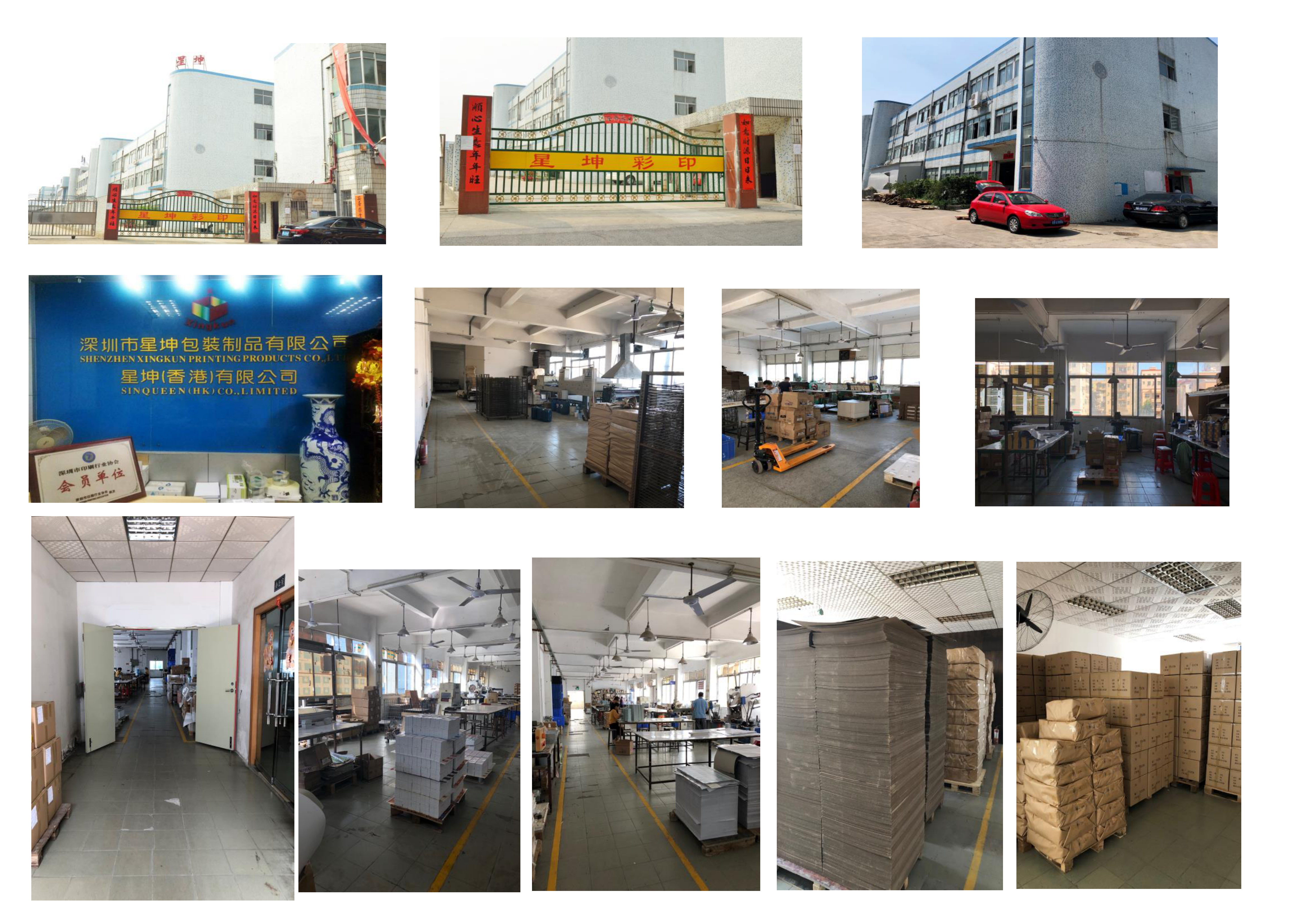
Shenzhen XingKun Packing Products Co., Ltd., known as XingKun, provides OEM and ODM services for international customers seeking customized printed packaging. Its mailer box product page lists linerboard options, printing methods, surface finishes, and inserts that buyers can discuss when developing a project. However, the final combination should always be confirmed against the actual structure and production requirements. [xkdisplay]
This guide explains how to turn those options into a clear packaging specification, compare supplier quotations fairly, and avoid approving a box that looks attractive but performs poorly in use.
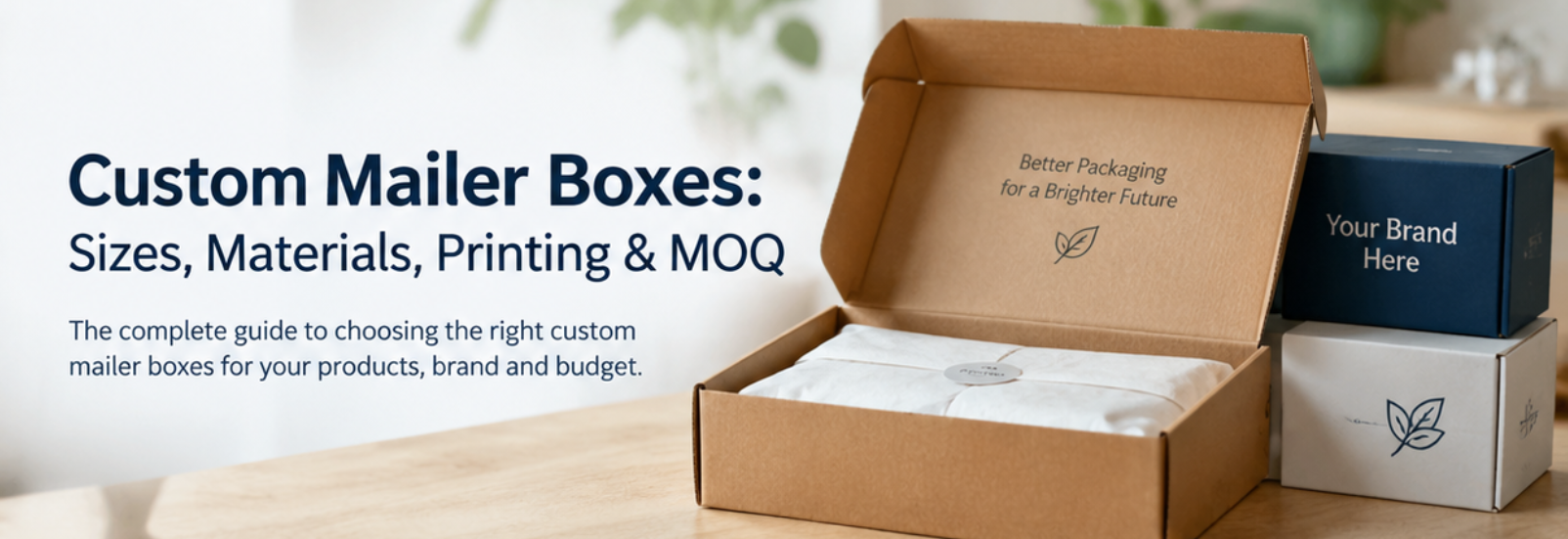
What Are Custom Mailer Boxes?
Custom mailer boxes are folding packaging structures typically developed around a product's dimensions, presentation requirements, and distribution conditions. Many use corrugated board and locking flaps to create a self-contained package with printable exterior and interior surfaces. XingKun's mailer box page describes corrugated construction and locking flaps as features of its offering. [xkdisplay]
Their suitability depends on the complete packaging system—not simply the box style.
A lightweight card set, a printed book, and a fragile gift collection may all use mailer-style packaging, but they should not automatically use the same board, insert, or closure arrangement.
From a purchasing perspective, the better question is not, "Which mailer box looks most premium?" It is, "Which specification delivers the required protection and presentation at an acceptable total cost?"
That distinction keeps packaging development focused on measurable requirements rather than appearance alone.
How to Choose Custom Mailer Box Sizes
Specify Internal Dimensions Before Comparing Prices
Start by recording the dimensions of the complete product arrangement as it will be packed.
Include:
- The product or retail package.
- Protective wrapping.
- Inserts or dividers.
- Printed instructions and promotional cards.
- Accessories.
- Any additional components included in the order.
For quotation purposes, state the required internal dimensions as length × width × height, with the unit clearly identified. Then ask the supplier to confirm the dimension convention on the structural drawing.
This is a recommended procurement practice rather than a universal allowance formula. The correct clearance depends on how the product is inserted, supported, and removed.
Avoid adding an arbitrary amount of empty space around every product. Instead, request a physical sample and check whether the product can be packed without forcing the walls or allowing excessive movement.
Use Example Sizes as Planning References, Not Standards
The following sizes are illustrative starting points for development. They are not industry standards, guaranteed product fits, or a statement of XingKun's available tooling.
| Illustrative internal size |
Possible application to evaluate |
Main fit question |
| 150 × 100 × 50 mm |
Small accessories or compact card products |
Can the product be removed comfortably? |
| 220 × 160 × 70 mm |
Small gift sets or subscription assortments |
Are separate components restrained? |
| 300 × 220 × 80 mm |
Books, stationery sets, or boxed products |
Are corners and edges protected? |
| 350 × 250 × 120 mm |
Larger bundles or mixed-product kits |
Is the extra volume operationally justified? |
Treat each example as a conversation starter. A product sample and an approved dieline provide a stronger basis for purchasing than a size description alone.
Distinguish Internal Size From External Shipping Size
The dimensions needed to fit the product are not necessarily the same dimensions used to calculate freight.
FedEx explains that dimensional weight reflects the space occupied by a package and is calculated from its external dimensions using the applicable dimensional factor. The factor and rounding rules should be confirmed for the relevant service. [fedex]
This makes external dimensions a commercial design variable.
A few unnecessary centimeters can affect logistics costs across repeated shipments, even when the packaged product itself is light. Ask for the assembled external dimensions before approving the production specification.

How Right-Sizing Custom Mailer Boxes Can Affect Freight Costs
Consider a hypothetical redesign using a dimensional factor of 5,000 cm³/kg:
| External shipping dimensions |
Calculation |
Unrounded dimensional weight |
| 30 × 25 × 12 cm |
30 × 25 × 12 ÷ 5,000 |
1.80 kg |
| 30 × 25 × 8 cm |
30 × 25 × 8 ÷ 5,000 |
1.20 kg |
The dimensional factor in this example follows FedEx's published explanation. Actual billing also depends on the service, applicable rounding, actual weight, and shipment terms. [fedex]
The lesson is not that a shallower box always creates a specific freight saving. It is that reducing unused height can materially change the dimensional-weight calculation.
Before making a smaller box, check three conditions:
1. The product still has adequate protection.
2. The insert still restrains the product.
3. The lid closes without compressing or distorting the contents.
A smaller box that increases damage or slows packing is not necessarily a better solution. Evaluate the shipping package as a system rather than optimizing volume in isolation.

Custom Mailer Box Materials: Corrugated Board, Liners, and Inserts
Understand the Difference Between the Liner and the Flute
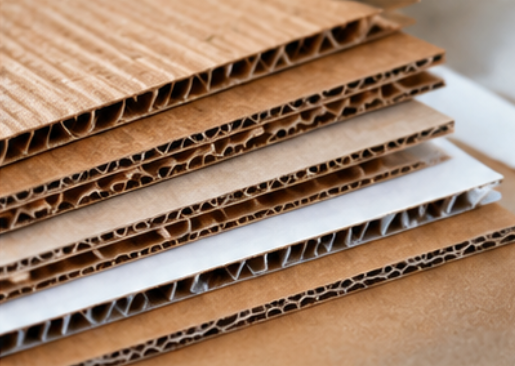
Corrugated board combines flat paper liners with a fluted paper medium. FEFCO describes single-wall production as bringing together an inner liner, an outer liner, and the corrugating medium to form the board structure. [fefco]
For buyers, this means that "kraft" or "white" does not fully specify the box.
A useful material specification should identify:
- The liner appearance.
- The flute profile.
- The paper combination or agreed board grade.
- Any required strength criteria.
- The finished surface treatment.
- The insert material.
Two boxes can have similar surface colors but different structural characteristics. Ask the supplier to identify the complete construction rather than quoting only a general material name.
Compare E-Flute and B-Flute Without Oversimplifying Strength
FEFCO's indicative data gives an E-flute height of approximately 1.2 mm and a B-flute height of approximately 2.4 mm, excluding the facings. These figures describe the corrugated medium, not the total finished board thickness. [fefco]
| Material decision |
Question to ask the supplier |
| E-flute construction |
Does this construction meet the required fit, print, and protection criteria? |
| B-flute construction |
How does the thicker profile affect external size and product clearance? |
| Different paper combinations |
Which construction meets the agreed performance requirement? |
| Alternative board construction |
Is additional material justified by the actual distribution risk? |
Do not treat flute type as a complete strength rating. FEFCO notes that corrugated board construction depends on both the base papers and the flute configuration. [fefco]
The practical recommendation is to approve a defined construction and validate the assembled package, rather than purchasing on flute name alone.
Choose Kraft or White Liners Around the Intended Appearance
XingKun's product page lists natural brown kraft linerboard and several white-board options. It also lists multiple printing and finishing possibilities. [xkdisplay]
For a kraft-led design, request a printed sample on the intended brown surface. For a white-led design, request a proof that represents the specified white liner and finishing process.
The key procurement question is whether the approved proof represents the production substrate. A design preview on a screen cannot resolve that issue by itself.
Where brand color is important, ask the supplier to define the approval method and acceptable variation before the order is released.
Design Inserts Alongside the Outer Box
An insert should have a defined job.
It may need to:
- Separate individual products.
- Locate an item within the box.
- Protect vulnerable edges.
- Present components in an intentional sequence.
- Make packing and unpacking easier.
XingKun lists corrugated and paperboard inserts, along with several plastic insert options, on its mailer box page. Availability and suitability should be confirmed for the individual project. [xkdisplay]
A paper-based insert can be a useful option to evaluate, but it should not be selected solely for appearance. Confirm that the product stays in position and can be removed without damage.

Custom Mailer Box Printing: How to Select the Right Process
Match the Printing Method to the Actual Order
The appropriate printing method depends on the artwork, substrate, quantity, and production route.
FEFCO identifies flexographic printing as commonly used for corrugated packaging and notes the use of digital direct printing. XingKun's page separately lists offset, digital, and UV printing options. [xkdisplay]
Use the following as a quotation discussion framework, not a universal process-selection rule:
| Printing route |
Useful quotation question |
Approval priority |
| Digital printing |
Is this route suitable for the proposed quantity and artwork versions? |
Output on the intended material |
| Flexographic printing |
Is it available for this structure and design? |
Printed detail and agreed color appearance |
| Offset printing |
How will the printed sheet be incorporated into the box construction? |
Print quality and finished structure |
| UV printing |
What specific substrate and curing process are proposed? |
Appearance and finish compatibility |
Do not assume every listed process is available for every box size, finish, or order quantity.
Another packaging supplier, Packhelp, explicitly describes adjusting printing techniques according to quantity and design. That illustrates why printing decisions should be confirmed for the actual configuration rather than chosen from a generic menu. [packhelp]
Define Exterior, Interior, and Unprinted Areas
"Full-color printing" is not a complete print specification.
For a comparable quotation, identify:
- Exterior printing coverage.
- Interior printing coverage.
- CMYK artwork or specified spot colors.
- Areas that should remain unprinted.
- Decorative finishing locations.
- Barcode or variable-information requirements.
- The intended shipping-label area.
A practical design review should also consider which graphics will be hidden by folds, closure elements, or carrier labels.
This helps prevent paying for artwork that becomes difficult to see or interferes with operational information.
Select Finishes for a Specific Purpose
XingKun lists options including aqueous coating, UV coating, lamination, foil stamping, embossing, and debossing. [xkdisplay]
Rather than adding finishes automatically, define the purpose of each one.
For example:
- Is the goal a particular visual effect?
- Is tactile contrast important?
- Does the design need a highlighted logo?
- Will the finish change the preferred end-of-life claim?
- Can the finish be reproduced consistently on the selected construction?
Ask for a finished sample when the decorative effect materially affects purchasing approval. An artwork rendering is not a substitute for evaluating the physical result.

Custom Mailer Boxes MOQ: What Buyers Should Confirm
There Is No Verified Universal MOQ for XingKun Mailer Boxes
MOQ means minimum order quantity: the smallest quantity a supplier agrees to produce under a particular configuration.
XingKun's referenced mailer box page does not publish a clear numerical MOQ. Buyers should therefore request a project-specific confirmation rather than relying on an assumed minimum. [xkdisplay]
The request should state:
- Internal dimensions.
- Box structure.
- Material construction.
- Printing requirements.
- Finishes.
- Insert requirements.
- Number of artwork versions.
- Quantity per version.
A minimum for an existing structure may not apply to a new custom structure. Similarly, a minimum for one artwork version may not apply when the same total quantity is split across several designs.
Separate Technical MOQ From the Most Economical Quantity
For purchasing decisions, it is helpful to distinguish three quantities:
1. Technical minimum: the smallest order the supplier will accept.
2. Economic quantity: an order size with a more favorable overall cost structure.
3. Operational quantity: the amount the buyer can reasonably store and use.
These are a proposed decision framework, not published XingKun production thresholds.
Ask for quotations at several relevant quantities—for example, 500, 1,000, and 3,000 units—if those volumes fit your demand forecast. These are comparison scenarios, not a statement of XingKun's MOQ.
The goal is to understand how the purchasing decision changes when quantity changes, without assuming that the lowest unit price is always the best outcome.
Request Transparent Treatment of Setup Costs
Ask the supplier to identify whether the quotation includes:
- Structural development.
- Cutting tools.
- Printing setup or plates, where applicable.
- Samples.
- Finishing setup.
- Inserts.
- Packing for export.
- Freight.
Also clarify which charges apply only to the initial order and which recur.
This is especially important when comparing a new custom-size mailer with an existing structure. The two quotations may represent different scopes even if the finished boxes look similar.
Compare Total Packaging Cost, Not Just Price Per Box
A useful purchasing model is:
Total project cost=boxes+inserts+development and tooling+freight+handling+inventory exposure
This is a planning framework, not an industry pricing formula.
Its purpose is to make hidden trade-offs visible.
A lower box price may be offset by a larger shipping footprint. A larger order may reduce the quoted unit price while increasing storage requirements. A decorative feature may create value for one sales channel but add little value in another.
For overseas procurement, ask suppliers to state the quotation basis and shipping scope clearly. Compare offers only after confirming that they include the same specification and responsibilities.
A Practical Sampling and Quality-Control Workflow
Step 1: Approve the Structural Drawing
Confirm the dimensions, opening direction, locking arrangement, insert layout, and product orientation.
Record the drawing version so that later artwork changes do not accidentally refer to an outdated structure.
Step 2: Check a Physical Fit Sample
Pack the actual product wherever possible.
Evaluate:
- Product clearance.
- Insert engagement.
- Lid closure.
- Ease of removal.
- Packing sequence.
- Visible distortion after assembly.
Do not approve the fit using photographs alone when the product or closure is sensitive to dimensional variation.
Step 3: Approve Print and Finish Expectations
Confirm what each proof represents.
A digital preview, printed sheet, prototype, and production sample may answer different questions. Ask which characteristics can be evaluated from each sample and which remain subject to production confirmation.
Record the agreed artwork version, material, finish, and approval date.
Step 4: Validate the Product-and-Package System
ISTA Procedure 3A is a general simulation test for individual packaged products shipped through parcel delivery systems, with its published overview covering packages of 70 kg or less. [ista]
Where distribution testing is appropriate, ask a qualified laboratory or packaging specialist to select the applicable procedure and define the acceptance criteria.
Testing should evaluate the actual packaged product—not an empty box used as a substitute for the full configuration.
A relevant test result supports a defined packaging system under stated conditions. It should not be presented as a guarantee against every possible shipping incident.
Step 5: Create a Written Production Acceptance Checklist
Before mass production, agree on checks such as:
- Correct structure and material.
- Assembly and closure function.
- Approved artwork version.
- Print positioning and agreed color appearance.
- Finish appearance.
- Insert fit.
- Quantity and packing identification.
- Any agreed functional or distribution requirements.
This creates a shared basis for inspection and reduces reliance on subjective descriptions such as "premium quality."

Sustainable Custom Mailer Boxes: Use Specific, Supportable Claims
Paper-based packaging does not justify every environmental claim.
The FTC advises that environmental statements must be truthful and that claims should make clear whether they refer to the product, the packaging, or a particular component. It also distinguishes recycled-content claims from recyclability claims. [consumer.ftc]
For a mailer box project, request evidence for the exact wording you plan to publish.
Useful questions include:
- Does the statement apply to the box or the entire packaging system?
- What recycled-content percentage is being claimed?
- Is that percentage documented?
- Do inserts or coatings affect the disposal guidance?
- Can the intended customers access suitable recycling facilities?
The FTC's published Green Guides state that unqualified recyclable claims depend on recycling availability to a substantial majority of consumers or communities where the item is sold, defined in the guides as at least 60 percent. [ftc]
That is U.S. guidance, not a worldwide labeling rule. Check the requirements of each destination market.
For XingKun, the safest editorial approach is to describe verified material attributes and project-specific evidence rather than repeat blanket statements about minimal environmental impact.
OEM and ODM Mailer Box Development With XingKun
For an OEM project, provide the approved specifications and identify which details must remain unchanged.
For an ODM-oriented discussion, provide the product, commercial objectives, distribution conditions, and design constraints so the proposed solution can be evaluated against them.
XingKun's published mailer box options provide a starting point for discussing liners, printing, finishes, and inserts. They do not replace project-specific confirmation of availability, MOQ, lead time, testing, or price. [xkdisplay]
A useful enquiry should contain:
| Information |
What to provide |
| Product |
Description, dimensions, weight, and photographs |
| Configuration |
Number of items and their intended arrangement |
| Box size |
Required internal dimensions, or a request for sizing support |
| Material |
Preferred appearance and any performance requirements |
| Printing |
Exterior/interior requirements and artwork versions |
| Finishing |
Required decorative or protective treatments |
| Quantity |
Initial order and expected repeat-order quantities |
| Distribution |
Destination and intended shipping channel |
| Timing |
Required delivery date and launch constraints |
| Validation |
Sampling, inspection, and testing requirements |
The more clearly these requirements are defined, the more meaningful the supplier's recommendation and quotation can become.
Conclusion
The right custom mailer boxes balance product fit, board construction, print execution, order quantity, and distribution requirements. Begin with the complete packed product, confirm internal and external dimensions, approve a defined material construction, and validate the physical package before scaling production.
For international brands, wholesalers, and manufacturers, a clear specification is more valuable than an attractive but incomplete quotation. It makes supplier comparisons fairer and helps connect packaging appearance with practical performance.
To start a project with XingKun, send your product dimensions and weight, target order quantity, destination market, and artwork requirements. Request a quotation that separately confirms the proposed structure, material, printing route, MOQ, sampling process, and shipping scope. Review XingKun's mailer box product page as the starting point for that discussion. [xkdisplay]
Frequently Asked Questions
1. What is the MOQ for custom mailer boxes from XingKun?
The referenced XingKun product page does not publish a clear numerical MOQ. Request confirmation for your dimensions, construction, printing, finishes, and quantity per artwork version. Do not assume that one project's minimum applies to every configuration. [xkdisplay]
2. Should custom mailer box dimensions be internal or external?
For product-fit development, specify the required internal dimensions and ask the supplier to confirm the drawing convention. For shipping estimates, obtain the assembled external dimensions because dimensional-weight calculations use the package's shipping dimensions. [fedex]
3. Is E-flute or B-flute better for a mailer box?
Neither is universally better. FEFCO's indicative figures show different flute heights, but the complete board construction also depends on the papers used. Select a defined construction around the product and distribution requirements, then validate the package. [fefco]
4. Can XingKun print inside and outside a mailer box?
XingKun lists multiple printing options, but the referenced page does not establish every inside/outside configuration as available. Specify the surfaces and coverage required, then ask for written confirmation of feasibility and pricing. [xkdisplay]
5. Which printing method is best for a small order?
Ask the supplier to recommend a process for the actual quantity, substrate, and design. Digital printing is one available route in the market, but there is no universal quantity threshold that makes it the correct choice for every project. Suppliers may adjust the process to the configuration. [packhelp]
6. Are custom mailer boxes automatically recyclable?
No blanket claim should be made without checking the complete packaging system and destination-market conditions. The FTC distinguishes material-related claims from access to recycling and advises qualifying claims where necessary. [ftc]
7. Should a mailer box be tested before a large order?
For projects where distribution performance is important, request a risk-appropriate validation plan. ISTA 3A is one procedure used for packaged products in parcel delivery, but a qualified specialist should confirm whether it matches the shipment and product. [ista]
8. What should I send to receive an accurate quotation?
Send product dimensions and weight, packing arrangement, required internal size, printing surfaces, artwork versions, finishing requirements, quantity, destination, and timing. XingKun's published material and finishing options can help structure the initial discussion. [xkdisplay]
References
Source note: The XingKun page supports the descriptions of its published product options. FEFCO supports the corrugated-board explanations. FedEx supports the dimensional-weight discussion. ISTA supports the testing-procedure description. FTC materials support the environmental-claims discussion. The sample sizes, enquiry tables, purchasing frameworks, and hypothetical freight comparison are editorial planning tools, not reported XingKun specifications or customer case studies.
- XingKun — "Mailer Box." Product information covering materials, printing, finishes, and inserts. [xkdisplay]
- FEFCO — "The Production of Modern Corrugated Packaging." Explanation of corrugating, converting, and printing processes. [fefco]
- FEFCO — "Description of Product System." Indicative flute heights and discussion of paper and flute contributions to board construction. [fefco]
- FedEx Hong Kong SAR, China — "International Freight Shipping," dimensional-weight calculation guidance. [fedex]
- FedEx Taiwan, China — "Reduce Shipping Costs by Understanding Dimensional Weight." Explanation of dimensional factors, measurement, and chargeable-weight considerations. [fedex]
- ISTA — "Test Procedure 3A Overview: Packaged-Products for Parcel Delivery System Shipment, 70 kg or Less." Scope and intended application. [ista]
- U.S. Federal Trade Commission — "Eco-Friendly and Green Marketing Claims." Overview of recycled-content, recyclable, and other environmental claims. [consumer.ftc]
- U.S. Federal Trade Commission — "Guides for the Use of Environmental Marketing Claims," 16 CFR Part 260. Detailed guidance on claim scope, substantiation, and recyclability qualifications. [ftc]
- Packhelp — "Custom Mailer Box." Supplier-specific illustration of printing-process selection according to quantity and design; not evidence of XingKun's capabilities or MOQ. [packhelp]


