Content Menu
● What Are Seasonal Retail Displays?
● Seasonal Stores and Pop-Up Concepts
● Why Seasonal Displays Matter for Retail Performance
● How to Design High-Impact Seasonal Retail Displays
>> Know Your Primary Customer Segments
>> Use Seasonally Relevant Visual Elements
>> Align Messaging with Seasonal Shopper Attitudes
● When to Launch and Refresh Seasonal Displays
>> Suggested Timing by Key Season
>> General Refresh Frequency Guidelines
● A Practical Seasonal Display Update Framework
>> Step 1: Create a Display Update Calendar
>> Step 2: Coordinate with Manufacturers Early
>> Step 3: Use Data to Decide When to Retire or Extend
● Manufacturer's Perspective: Materials, Durability, and Cost
● Integrating Online and In-Store Seasonal Experiences
● Data-Driven Seasonal Display Optimization
● Common Mistakes to Avoid with Seasonal Displays
● Practical Tips for Retail Teams Managing Seasonal Displays
● How a Long-Experienced Display Manufacturer Can Help
● Call to Action: Plan Your Next Seasonal Display Cycle Now
● Frequently Asked Questions (FAQ)
● References
An effective seasonal retail display strategy can turn casual shoppers into loyal customers while significantly boosting sales of featured products and brands. As a manufacturer with over 20 years of experience in custom display stands and printed packaging, I'll share both on-the-floor best practices and behind-the-scenes production insights to help you plan, update, and optimize your seasonal displays for maximum impact and ROI.
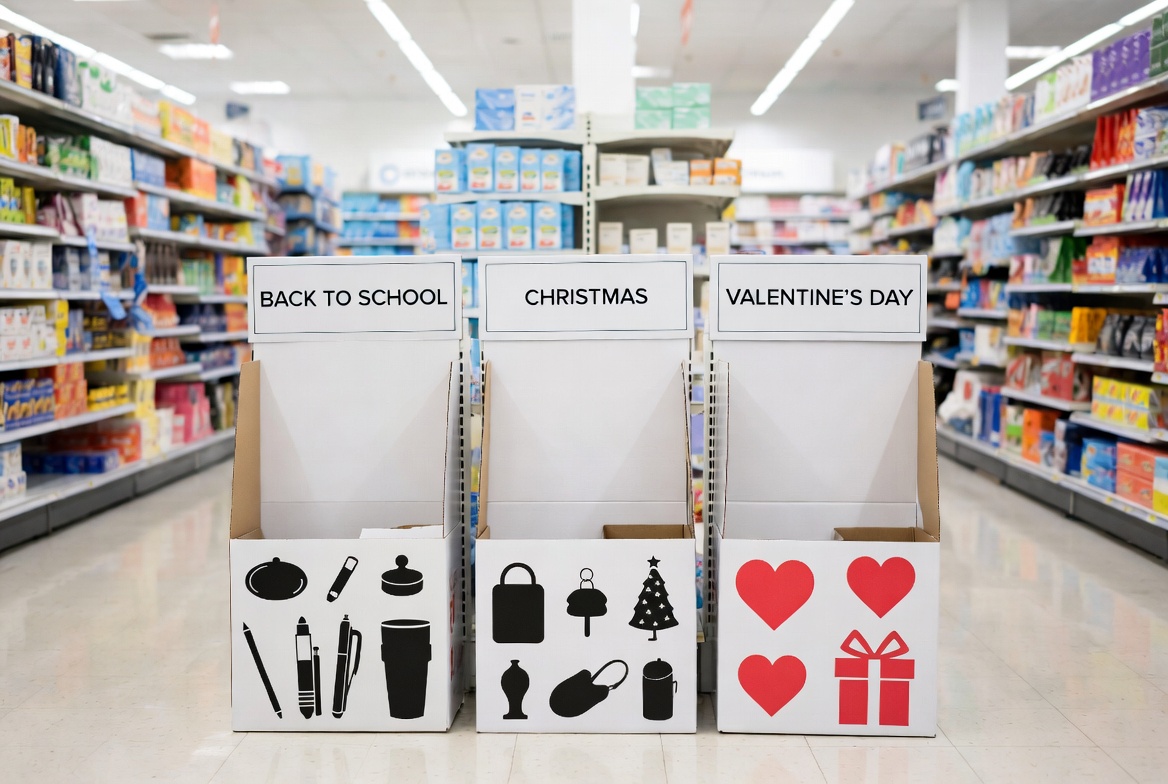
What Are Seasonal Retail Displays?
Seasonal retail displays are temporary in-store or point-of-purchase (POP) setups designed around a specific time period, holiday, or event to drive urgency and relevance in shoppers' minds. They go far beyond the four natural seasons and usually align with well-defined retail seasons that trigger predictable purchasing behavior.
Common seasonal retail periods include:
- Back-to-school
- Winter holidays (especially Christmas)
- Valentine's Day, Mother's Day, and other single-day holidays
- Lawn and garden season
- Thanksgiving, Black Friday, and major promotional events
In practice, seasonal displays can take the form of corrugated floor stands, pallet displays, endcaps, dump bins, countertop units, and window displays, all custom-printed to match the campaign theme. [xkdisplay]
Seasonal Stores and Pop-Up Concepts
A seasonal store is a retail operation that only opens during certain times of the year, usually to capture a highly focused wave of demand. Well-known examples include Halloween-themed pop-up chains that rent short-term locations and invest heavily in in-store displays to maximize the short selling window.
For brand owners and manufacturers, collaborating with seasonal or pop-up stores offers advantages: [channelplay]
- Highly targeted audience during peak buying periods
- Strong alignment between product categories (e.g., candy, costumes, decorations) and consumer intent
- Flexibility to test new display concepts and graphics in a compressed timeframe
From a display manufacturing perspective, seasonal stores tend to favor temporary corrugated units that are lightweight, easy to assemble, and cost-effective for short campaigns, while still offering high-impact graphics and branding. [xkdisplay]
Why Seasonal Displays Matter for Retail Performance
Seasonal displays work because they align timing, context, and visual storytelling with shopper motivations. [checklistguro]
Key benefits include:
- Increased visibility: Seasonal colors, shapes, and themes naturally draw attention against standard shelving.
- Stronger emotional connection: Messaging that taps into holidays, family moments, or life events increases perceived relevance.
- Impulse and add-on sales: Shoppers picking up planned items are more open to related seasonal offers when presented prominently.
Modern retail SEO and merchandising strategies also emphasize fresh content and frequent updates, both online and in-store, making seasonal displays an important part of overall brand and store experience. [searchenginejournal]
How to Design High-Impact Seasonal Retail Displays
Designing effective seasonal displays requires a balance of brand consistency, seasonal creativity, and shopper-centric thinking.
Below is a practical, expert-driven framework you can use.
Know Your Primary Customer Segments
Start by defining who your seasonal messaging is for. [checklistguro]
Clarify:
- Age group and life stage (students, parents, professionals, retirees)
- Gender mix and household type
- Purchase motivators (price, convenience, gifting, novelty)
For example:
- If your core audience is married men, a Valentine's Day display that simplifies gift selection and highlights "no-fail gift sets" can be very effective.
- If your primary buyers are mothers of teenagers, a back-to-school display focusing on durability, value, and "stress-free prep" may perform better.
Use Seasonally Relevant Visual Elements
Every seasonal display should instantly communicate its theme at a glance.
Focus on:
- Color palettes that match the holiday or season (e.g., red and green for Christmas, green and gold for St. Patrick's Day, pastel tones for spring).
- Typography and copy that echo the mood (e.g., "cozy," "family," "celebrate," "fresh start," "back to class").
- Graphics and icons such as hearts, clovers, snowflakes, or school supplies that support the core message.
High-quality full-color printing on corrugated board enables these design elements to stand out, especially on floor-standing display units. [xkdisplay]
Align Messaging with Seasonal Shopper Attitudes
Shopper attitudes shift throughout the year, and your seasonal displays should reflect that.
For example: [checklistguro]
- Winter holidays: Emphasize warmth, family, nostalgia, and comfort.
- Summer: Highlight energy, travel, fun, and spontaneity.
- Back-to-school: Focus on organization, readiness, value, and "smart choices."
From our experience manufacturing display stands for global brands, the highest-performing seasonal campaigns are those that connect practical product benefits with an emotional seasonal story. [xingkun.crpjc]
When to Launch and Refresh Seasonal Displays
One of the most common questions retailers ask is: "When should we roll out and refresh our seasonal displays?" The answer depends on both consumer behavior data and store format. [aomdisplays]
Suggested Timing by Key Season
Based on retail shopping trends and industry benchmarks: [aomdisplays]
- Back-to-school
- Launch: Early July
- Duration: Through August and often into early September
- Rationale: Around 62% of parents begin back-to-school shopping before August, so starting too late can mean missed sales.
- Christmas / Winter Holidays
- Launch: Often before November
- Rationale: Approximately 38% of consumers begin holiday shopping before the end of October, making early availability critical for capturing gift budgets.
- Valentine's Day
- Launch: Varies by category
- High-value gifts (like jewelry): Displays can appear earlier to accommodate planned purchasing.
- Chocolates and small gifts: Many purchases are last-minute, so strong presence in the immediate pre-holiday period is essential.
These timelines should be fine-tuned with your own sales data and customer feedback to reflect local behavior. [aomdisplays]
General Refresh Frequency Guidelines
Industry best practices for visual merchandising suggest that displays should not remain static for long periods. [channelplay]
Typical refresh guidelines include:
- Window displays: Renew every 2–4 weeks to maintain novelty for repeat passersby. [channelplay]
- Key in-store feature areas: Reset weekly or bi-weekly, especially in high-traffic zones. [checklistguro]
- Seasonal campaigns: Complete refresh every 2–3 months or at the end of the retail season. [aomdisplays]
As a display manufacturer, we often recommend planning modular graphics and interchangeable headers, so retailers can update seasonal messaging without replacing the entire unit, optimizing cost and sustainability. [xkdisplay]
A Practical Seasonal Display Update Framework
To operationalize seasonal display management, retailers and brands benefit from a structured update process. [checklistguro]
Step 1: Create a Display Update Calendar
Develop a year-round visual merchandising calendar that maps:
- Major holidays and peak sales periods
- Store-specific events (anniversaries, regional festivals, clearance periods)
- Planned product launches and promotional campaigns
Assign responsible team members and deadlines for each phase (design, approval, production, shipping, in-store setup). This approach avoids last-minute scrambling and ensures displays arrive and install on time. [aomdisplays]
Step 2: Coordinate with Manufacturers Early
For seasonal corrugated display stands and packaging, production timelines can vary depending on complexity and volume. [xingkun.crpjc]
Plan ahead for:
- Structural design (dimensioning, weight capacity, assembly method)
- Graphic design and proofing
- Printing, die-cutting, and finishing
- Packing, shipping, and in-store unpacking requirements
Manufacturers with integrated design and printing capabilities can compress timelines and provide prototypes for testing ahead of full rollout. [xkdisplay]
Step 3: Use Data to Decide When to Retire or Extend
Measure the performance of each seasonal display using:
- Sales lift in featured products
- Unit sell-through rates by week
- Customer engagement (dwell time, questions, feedback)
If a display area shows sustained uplift, you may choose to extend its life beyond the planned end date; if performance drops quickly, consider rotating in new graphics or layout sooner. [aomdisplays]
Manufacturer's Perspective: Materials, Durability, and Cost
From a production standpoint, choosing the right materials and construction methods directly influences both the lifespan and cost-effectiveness of seasonal displays. [xkdisplay]
Key considerations:
- Corrugated board strength: Heavier products and high-traffic environments may require stronger board grades and reinforced structures.
- Printing technology: High-resolution flexo or digital printing enables detailed artwork and quick changes between campaigns.
- Ease of assembly: Pre-glued or tool-free designs reduce store labor costs and minimize setup errors.
As a long-established manufacturer working with brands in over 30 countries, we often see that thoughtful engineering and practical design can significantly reduce field issues while supporting creative marketing concepts. [xingkun.crpjc]

Integrating Online and In-Store Seasonal Experiences
Modern shoppers frequently encounter seasonal campaigns both online and in-store. To maximize impact, brands should design consistent cross-channel narratives. [gbim]
Best practices include:
- Using the same key visuals, copy lines, and color palettes across websites, social media, and physical displays.
- Featuring seasonal display imagery on product category pages and promotional banners to set expectations before store visits. [karadinfotech]
- Highlighting user-generated content (such as photos of shoppers with seasonal displays) on digital channels to build social proof. [gbim]
For SEO, long-form seasonal guides and landing pages that explain how displays support promotions or gifting can capture informational queries while driving traffic to retail locations or e-commerce offers. [searchenginejournal]
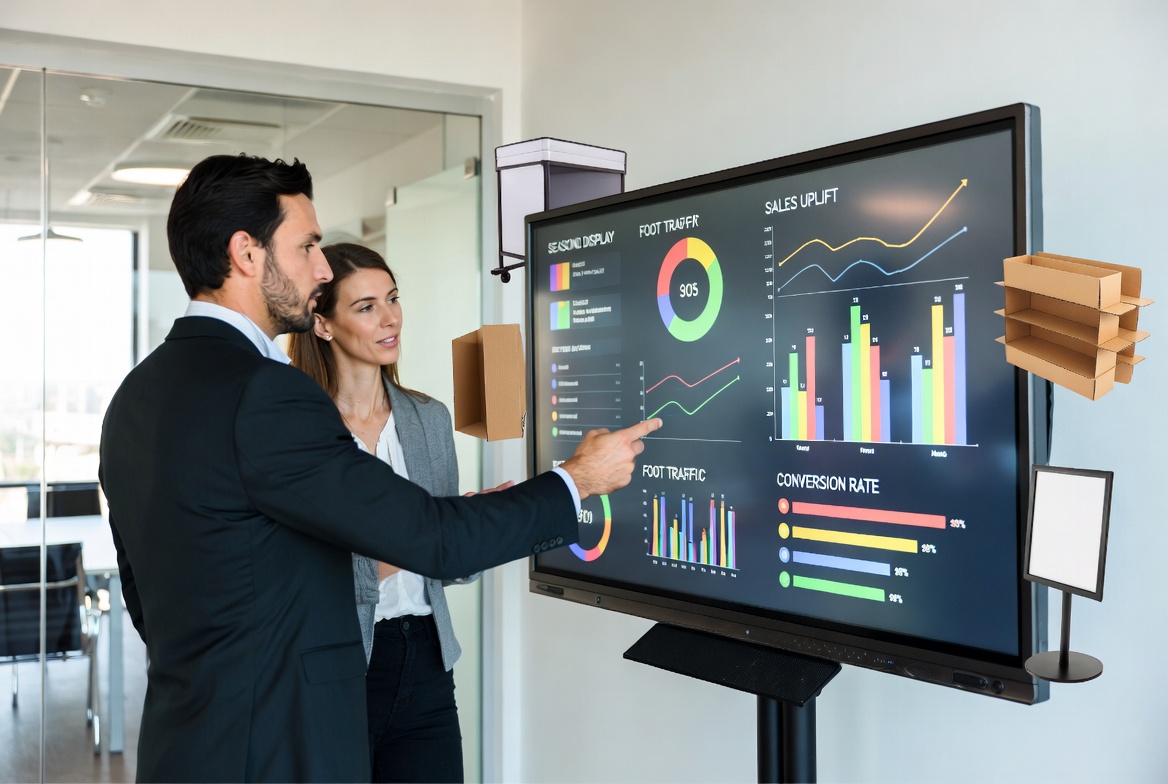
Data-Driven Seasonal Display Optimization
To move beyond intuition, leading retailers now treat seasonal displays as testable assets. [channelplay]
Examples of a data-driven approach:
- A/B test alternative header messages or price points on similar displays in different stores.
- Track SKU-level performance for products placed on seasonal stands versus regular shelving.
- Monitor stock-out frequency, which can indicate either high success or the need for better replenishment planning.
Manufacturers can support this process by designing display structures that accommodate different planograms and messaging without requiring complete retooling each season. [xkdisplay]
Common Mistakes to Avoid with Seasonal Displays
Even strong brands occasionally underperform with seasonal merchandising due to avoidable errors. [channelplay]
Typical pitfalls include:
- Keeping displays for too long, causing visual fatigue and misalignment with current shopper priorities. [checklistguro]
- Overcrowded layouts that make products hard to see or reach, reducing conversion. [channelplay]
- Weak structural design, leading to sagging shelves, damaged graphics, or instability.
- Unclear pricing or promotion messages, which leaves shoppers unsure about value or offer conditions. [channelplay]
Aligning with experienced display manufacturers and regularly auditing display quality in-store helps maintain high standards throughout the campaign. [xingkun.crpjc]
Practical Tips for Retail Teams Managing Seasonal Displays
Frontline retail teams play a crucial role in translating seasonal display strategies into real-world success. [checklistguro]
Here are field-tested recommendations:
- Use checklists to verify that displays are correctly assembled, fully stocked, and clearly priced at the start of each day or shift. [checklistguro]
- Train staff to understand the story behind each seasonal campaign so they can confidently answer customer questions and suggest related products.
- Schedule micro-refreshes, such as swapping featured SKUs, changing small props, or updating signage weekly to keep displays feeling fresh even within the same season. [channelplay]
By combining robust manufacturing, thoughtful design, and disciplined execution, seasonal displays can become one of the most reliable levers for driving incremental sales.
How a Long-Experienced Display Manufacturer Can Help
With more than two decades of specialization in display stands, packaging solutions, and printed promotional materials, a manufacturer like Shenzhen XingKun Packing Products Co., Ltd. can offer end-to-end support for seasonal campaigns. [xkdisplay]
Typical support areas include:
- Structural and graphic design tailored to specific retail chains and product categories.
- Prototype development for testing stability, assembly time, and in-store fit before full production.
- High-volume, consistent printing and finishing, ensuring brand colors and imagery remain accurate across global markets.
- Logistics-friendly packaging, which reduces damage during transport and simplifies store-level deployment.
Working with an experienced partner also makes it easier to standardize core display designs while customizing graphics and messaging for different regions, languages, or seasonal calendars. [xkdisplay]
Call to Action: Plan Your Next Seasonal Display Cycle Now
If you want your next seasonal campaign to stand out in-store, align with shopper behavior, and deliver measurable sales uplift, now is the time to:
1. Map your yearly seasonal merchandising calendar.
2. Identify priority products and categories that benefit most from seasonal visibility.
3. Collaborate with a specialized display manufacturer to design and produce modular, high-impact seasonal display stands that are easy to deploy across all your markets. [xingkun.crpjc]
By integrating strategic planning, expert manufacturing, and disciplined execution, your seasonal retail displays can become a repeatable engine for growth year after year.
Frequently Asked Questions (FAQ)
Q1: How far in advance should I plan my seasonal retail displays?
A1: Most brands plan key seasons such as back-to-school and year-end holidays 3–6 months in advance, allowing time for design, approvals, manufacturing, and shipping. [aomdisplays]
Q2: How often should I update or refresh in-store seasonal displays?
A2: Window displays are often refreshed every 2–4 weeks, while high-traffic in-store displays may be adjusted weekly or bi-weekly to maintain shopper interest and reflect stock changes. [checklistguro]
Q3: What materials are best for short-term seasonal displays?
A3: Corrugated cardboard is widely used for seasonal displays because it offers a good balance of durability, cost-efficiency, and high-quality printability, especially for temporary or campaign-based promotions. [xkdisplay]
Q4: How can I measure the success of a seasonal display?
A4: Key indicators include sales uplift of featured products, sell-through rates, stock-out frequency, and customer feedback; comparing results to non-display periods can reveal the display's true impact. [aomdisplays]
Q5: How can I ensure my seasonal displays support both physical and online channels?
A5: Use consistent visuals and messaging across in-store displays, websites, and social media, and create seasonal landing pages or guides that connect informational content with clear product and store links. [karadinfotech]
References
1. Creative Displays Now – “Chapter 4: Refreshing Seasonal Displays”. https://www.creativedisplaysnow.com/guides/updating-changing-retail-displays/chapter-4/
2. ChecklistGuro – “Your Guide to Retail Display & Sales Optimization”. https://checklistguro.com/blog/visual-merchandising-checklist-retail-display-sales-optimization
3. XINGKUN – Official Site (Packaging, Display Stands). https://www.xkdisplay.com
4. XINGKUN – Display Stand Product Page. https://www.xkdisplay.com/zh-CN/display-stand.html
5. Search Engine Journal – “SEO-Friendly Page Structure for Retail Brands”. https://www.searchenginejournal.com/retail-seo-priorities/436115/
6. Channelplay – “Product Display Best Practices for Retail Stores”. https://www.channelplay.in/insight/product-display-best-practices-for-retail-stores
7. Shenzhen XingKun Packing Products Co., Ltd – Company Profile. http://xingkun.crpjc.com
8. GBIM – “Retail SEO: Boost Presence & Drive More Traffic”. https://www.gbim.com/blog/a-complete-guide-to-seo-for-retail/
9. Karad Infotech – “SEO for Retail Business: Local Plus Ecommerce Visibility Playbook”. https://www.karadinfotech.com/blog/seo-for-retail-business
10. AOM Displays – “How Often Should You Refresh Your Retail Displays”. https://www.aomdisplays.com/blog/How-Often-Should-You-Refresh-Your-Retail-Displays


