Content Menu
● Rigid Boxes vs Folding Cartons: The Short Answer
● What Are Rigid Boxes?
>> Why Rigid Boxes Often Feel Luxurious
● What Are Folding Cartons?
>> Can Folding Cartons Look Premium?
● Premium Appearance: Structure vs Design Execution
>> Details That Make Rigid Boxes Feel Premium
>> Details That Make Folding Cartons Feel Premium
● Product Protection: Assess the Complete Packaging System
>> Retail Packaging Is Not Automatically Shipping Packaging
● Rigid Boxes vs Folding Cartons: Cost Beyond the Unit Price
>> Compare Total Delivered Cost
>> Illustrative Cost Comparison
● Sustainability: Neither Format Wins Automatically
>> Review Materials, Finishes, and Disposal Together
>> Keep Certification Claims Specific
● Expert Insight: Evaluate Premium Packaging Without Brand Bias
>> A Five-Step Sample Evaluation
● Practical Scenario: Use Different Formats Within One Product Range
● How to Choose Between Rigid Boxes and Folding Cartons
>> Choose Rigid Boxes When
>> Choose Folding Cartons When
>> Prepare a Clear Manufacturing Brief
● Build Premium Packaging Around Your Product
● Frequently Asked Questions
>> Are Rigid Boxes Always More Premium Than Folding Cartons?
>> Can Rigid Boxes Be Shipped Flat?
>> Which Packaging Format Is Usually Less Expensive?
>> Are Folding Cartons Suitable for Luxury Products?
>> Does a Rigid Box Eliminate the Need for Shipping Protection?
>> Which Option Is More Sustainable?
● References
Rigid boxes vs folding cartons is not simply a choice between expensive and economical packaging. It is a decision about how your product should feel, perform, and fit into your customer's life. Rigid boxes usually deliver a stronger luxury impression, while well-designed folding cartons can create an equally convincing premium identity with less material and greater logistical efficiency.
At Shenzhen XingKun Packing Products Co., Ltd., our company background includes more than 20 years in printing and packaging and service to brands and distributors across over 30 countries and regions. From a manufacturer's perspective, the most useful question is not "Which box looks more expensive?" It is "Which packaging makes this particular product feel worth its price?"
This guide compares construction, presentation, protection, customization, cost, and sustainability—and explains how to evaluate both options before committing to production.
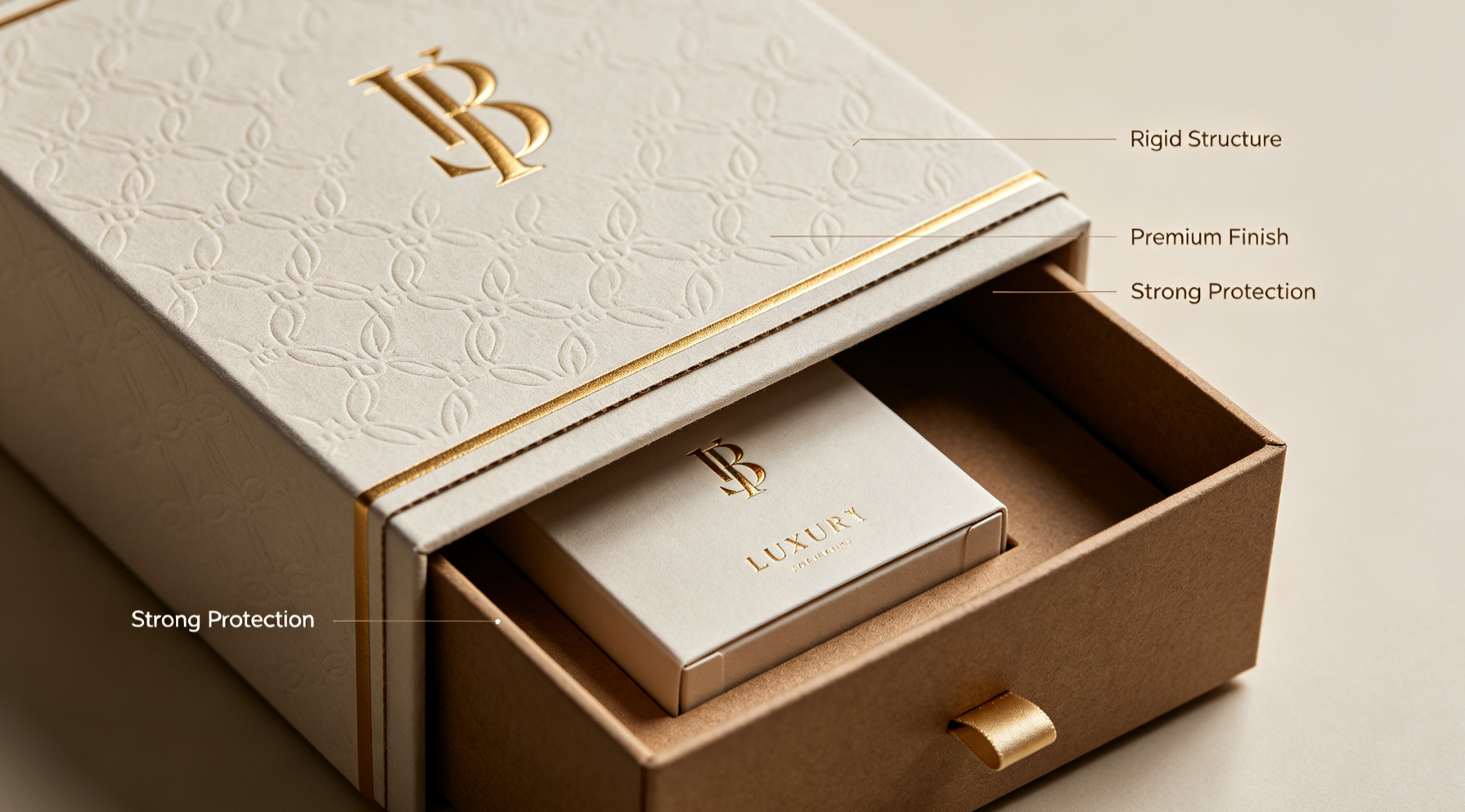
Rigid Boxes vs Folding Cartons: The Short Answer
Rigid boxes generally feel more premium because their thick walls, substantial structure, and controlled opening experience communicate permanence. They are particularly suitable for gifting, luxury accessories, and presentation-led product launches.
However, premium folding cartons can outperform rigid boxes when customers value precision, convenience, understated design, and responsible material use.
The deciding factor is alignment: packaging should match the product, brand promise, sales channel, and customer expectations.
| Comparison factor | Rigid boxes | Folding cartons |
| Construction | Thick board, usually covered with a separate wrap | Die-cut and creased paperboard |
| Typical impression | Substantial, gift-ready, luxurious | Refined, efficient, retail-ready |
| Shipping format | Usually assembled; collapsible versions exist | Usually supplied flat |
| Customization | Wraps, inserts, drawers, elaborate openings | Printing, coatings, windows, embossing |
| Typical cost tendency | Higher material and assembly costs | More economical at scale |
| Storage efficiency | Lower for conventional assembled designs | Higher before assembly |
| Main advantage | Memorable presentation | Versatile, efficient premium packaging |
| Main limitation | Bulk and added complexity | Less inherent structural stiffness |
These are general tendencies, not fixed performance guarantees. Dimensions, materials, finishing, and production quantities can change the outcome.
What Are Rigid Boxes?
Rigid boxes, also called set-up boxes, typically use thick greyboard or chipboard covered with printed paper or another decorative material. The core provides structure; the outer wrap creates the visible finish.
Common rigid box styles include:
- Two-piece lid-and-base boxes.
- Shoulder-and-neck boxes.
- Book-style boxes.
- Drawer boxes.
- Collapsible rigid boxes.
Traditional rigid boxes retain their assembled shape. Collapsible designs are an important exception: they can reduce shipping and storage volume, although they introduce additional construction and assembly considerations.
Why Rigid Boxes Often Feel Luxurious
Rigid packaging creates several sensory signals at once. The walls resist pressure, the lid feels substantial, and the product can sit securely within a fitted insert.
A carefully engineered opening also adds anticipation. A drawer that slides smoothly or a lid that lifts cleanly makes the presentation feel intentional.
Nevertheless, heavier packaging does not automatically create better packaging. Excessive weight, difficult closures, or awkward inserts can undermine an otherwise attractive design.
What Are Folding Cartons?
Folding cartons are made from paperboard that is printed, die-cut, creased, and converted into a structure that can be erected for packing.
Typical formats include straight-tuck cartons, reverse-tuck cartons, crash-lock-bottom cartons, and sleeve-based constructions.
Because cartons usually travel flat before filling, they offer practical advantages for storage and inbound transport. Their compatibility with automated packing depends on the selected structure and equipment.
Can Folding Cartons Look Premium?
Absolutely. Premium folding carton packaging can combine:
- Carefully selected paperboard.
- Accurate printing and color consistency.
- Embossed or debossed details.
- Selective foil stamping.
- Tactile coatings.
- Well-designed internal supports.
A restrained carton with crisp edges and excellent typography may communicate more sophistication than a bulky rigid box covered with excessive decoration.
For skincare, fragrance, specialty food, and other retail categories, refinement often matters more than sheer weight.
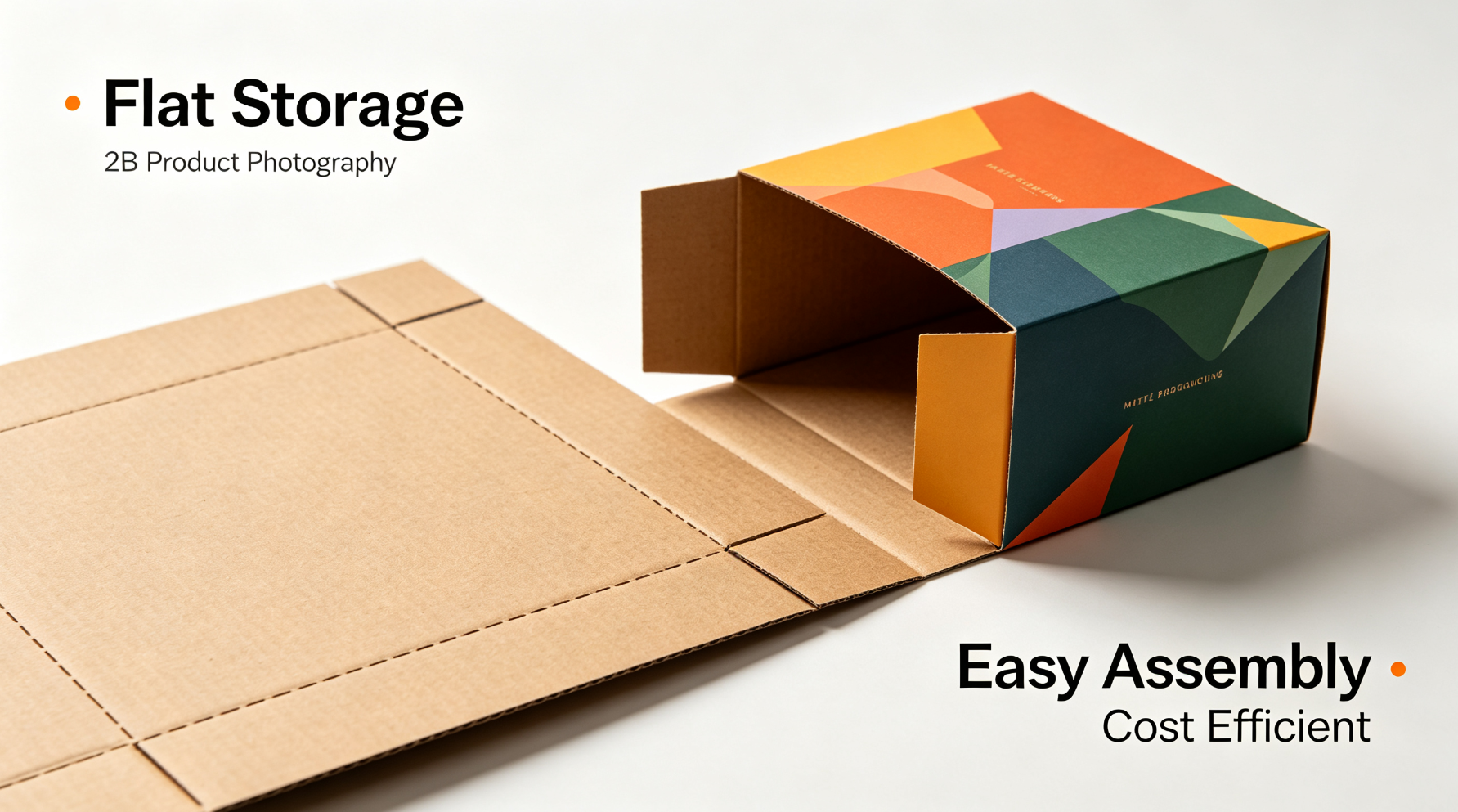
Premium Appearance: Structure vs Design Execution
Rigid boxes have an advantage in structural presence. Folding cartons often have an advantage in visual simplicity and compactness.
Neither format compensates for poor execution.
Details That Make Rigid Boxes Feel Premium
When evaluating a rigid box sample, inspect:
- Corner consistency.
- Wrap adhesion and visible seams.
- Lid alignment and clearance.
- Surface scuffing.
- Insert fit.
- Opening and closing behavior.
Wrinkled wraps or uneven gaps make a luxury structure look careless. The quality of assembly is as important as the material specification.
Details That Make Folding Cartons Feel Premium
For folding cartons, focus on:
- Clean creases without visible cracking.
- Accurate print-to-cut registration.
- Secure closure.
- Consistent panel alignment.
- Suitable board stiffness.
- Easy product removal.
My recommended approach is to judge the finished sample rather than its specification sheet alone. Board weight and finishing descriptions cannot fully convey the experience of holding and opening a package.
Product Protection: Assess the Complete Packaging System
Rigid boxes generally provide more structural stiffness than lightweight folding cartons. However, stiffness alone does not establish transit protection.
A fragile glass bottle can break inside an attractive rigid box if the insert allows movement. A folding carton can perform well when combined with appropriate support, cushioning, and an outer shipping container.
Retail Packaging Is Not Automatically Shipping Packaging
Separate these two functions:
1. Presentation packaging communicates the brand and organizes the product.
2. Transport packaging protects the shipment against distribution hazards.
For either format, evaluate the product, insert, presentation box, and shipping container together.
Where parcel distribution is relevant, a qualified testing provider can help select an appropriate procedure. ISTA 3A, for example, addresses individual packaged products weighing 70 kg or less prepared for parcel shipment. It is not automatically the correct test for every distribution model.
Rigid Boxes vs Folding Cartons: Cost Beyond the Unit Price
Rigid boxes usually cost more because they use a substantial core, a separate covering material, and additional assembly operations.
Folding cartons often offer more efficient high-volume production. However, complicated structures, specialty substrates, and multiple finishing operations can narrow the price difference.
Compare Total Delivered Cost
A useful purchasing model is:
Total delivered packaging cost = production + tooling + freight + storage + assembly + expected damage-related costs.
This prevents a low factory quotation from hiding expensive downstream requirements.
Illustrative Cost Comparison
Consider two hypothetical packaging proposals:
| Cost per packed product | Rigid box | Folding carton |
| Packaging production | $2.40 | $0.85 |
| Allocated inbound freight and storage | $0.45 | $0.12 |
| Packing labor | $0.10 | $0.18 |
| Subtotal | $2.95 | $1.15 |
These figures are illustrative assumptions, not XingKun quotations or industry averages. They exclude tooling, outer shipping packaging, and damage-related costs.
The rigid option adds $1.80 per product under these assumptions. That difference may be justified for a presentation-led gift set, but it needs a commercial rationale for a price-sensitive everyday item.
Ask what the additional spending improves: perceived value, gifting suitability, usability, or measurable customer preference.
Sustainability: Neither Format Wins Automatically
Folding cartons often use less material and occupy less space before assembly. Those characteristics can support resource efficiency, but they do not prove a lower environmental impact in every application.
Rigid boxes may remain useful for storage. However, possible reuse should not be presented as evidence of actual reuse without supporting information.
Review Materials, Finishes, and Disposal Together
Evaluate:
- Total packaging weight.
- Unnecessary empty space.
- Fiber sourcing.
- Recycled content.
- Plastic laminations and mixed-material components.
- Ease of separating inserts.
- Recycling options in the destination market.
A predominantly paper-based design may still need careful assessment when it includes magnets, foam, plastic windows, or complex surface treatments.
Keep Certification Claims Specific
FSC labels address sourcing and material categories; they are not a blanket guarantee that a finished package is recyclable.
For example, FSC Recycled identifies products made with reclaimed material under the applicable certification requirements.
Before printing a certification mark, confirm the supplier's certification scope and the claim permitted for the actual packaging. Avoid treating every paper-based box as environmentally equivalent.
Expert Insight: Evaluate Premium Packaging Without Brand Bias
One practical way to compare rigid boxes and folding cartons is a small, structured sample evaluation.
The goal is not to prove that one format always wins. It is to discover what your intended buyers value.
A Five-Step Sample Evaluation
1. Produce comparable samples using the same product and similar artwork.
2. Present them without telling participants which costs more.
3. Ask participants to handle, open, and remove the product.
4. Record ratings for perceived quality, usability, protection confidence, and gifting suitability.
5. Compare the findings with delivered cost and operational requirements.
Keep questions neutral. Ask "How easy was the product to remove?" rather than "Did you enjoy the luxurious opening?"
Small evaluations provide directional feedback, not statistically representative market research. Nevertheless, they can reveal problems that photographs and digital mockups conceal.
Practical Scenario: Use Different Formats Within One Product Range
A brand does not need one packaging structure for every product.
Consider a hypothetical skincare range:
- Everyday cleanser: a folding carton with clear instructions and restrained finishing.
- Premium serum: a higher-specification carton with a secure internal support.
- Seasonal gift collection: a rigid box with organized compartments.
This tiered approach assigns packaging investment to the occasions where presentation matters most.
It also avoids a common mistake: using an oversized luxury structure for a product whose customers mainly want convenience.
The same logic applies to accessories, confectionery, electronics, and corporate gifts. Packaging tiers should communicate meaningful product differences while preserving a consistent visual identity.
How to Choose Between Rigid Boxes and Folding Cartons
Start with the product's actual requirements, not a preferred box photograph.
Choose Rigid Boxes When
- Gifting is central to the purchase.
- Opening the package forms part of the product experience.
- A multi-item presentation needs organized compartments.
- The selling price can support additional packaging expenditure.
- Customers benefit from keeping the box.
Choose Folding Cartons When
- Retail shelf efficiency matters.
- Production volumes favor streamlined converting and packing.
- Storage space is limited.
- The brand favors compact, understated presentation.
- You need an economical structure without sacrificing print quality.
Prepare a Clear Manufacturing Brief
Provide your packaging supplier with:
1. Product dimensions, weight, and fragility.
2. Order quantity and expected repeat volumes.
3. Target market and sales channel.
4. Desired opening experience.
5. Material and disposal requirements.
6. Budget and delivery schedule.
Request comparable samples where practical. Approve the structure, artwork, insert, and finished appearance before bulk production, with measurable acceptance criteria for important quality details.
Build Premium Packaging Around Your Product
Rigid boxes usually offer the strongest immediate luxury impression. Folding cartons provide a flexible route to premium presentation with efficient storage and production.
The better choice is the one that delivers the intended experience without unnecessary cost, complexity, or material.
Shenzhen XingKun Packing Products Co., Ltd. invites brands and distributors to share their product dimensions, target quantity, sales channel, and packaging priorities. Request a custom rigid box and folding carton comparison so your next packaging decision starts with product-specific options—not assumptions.
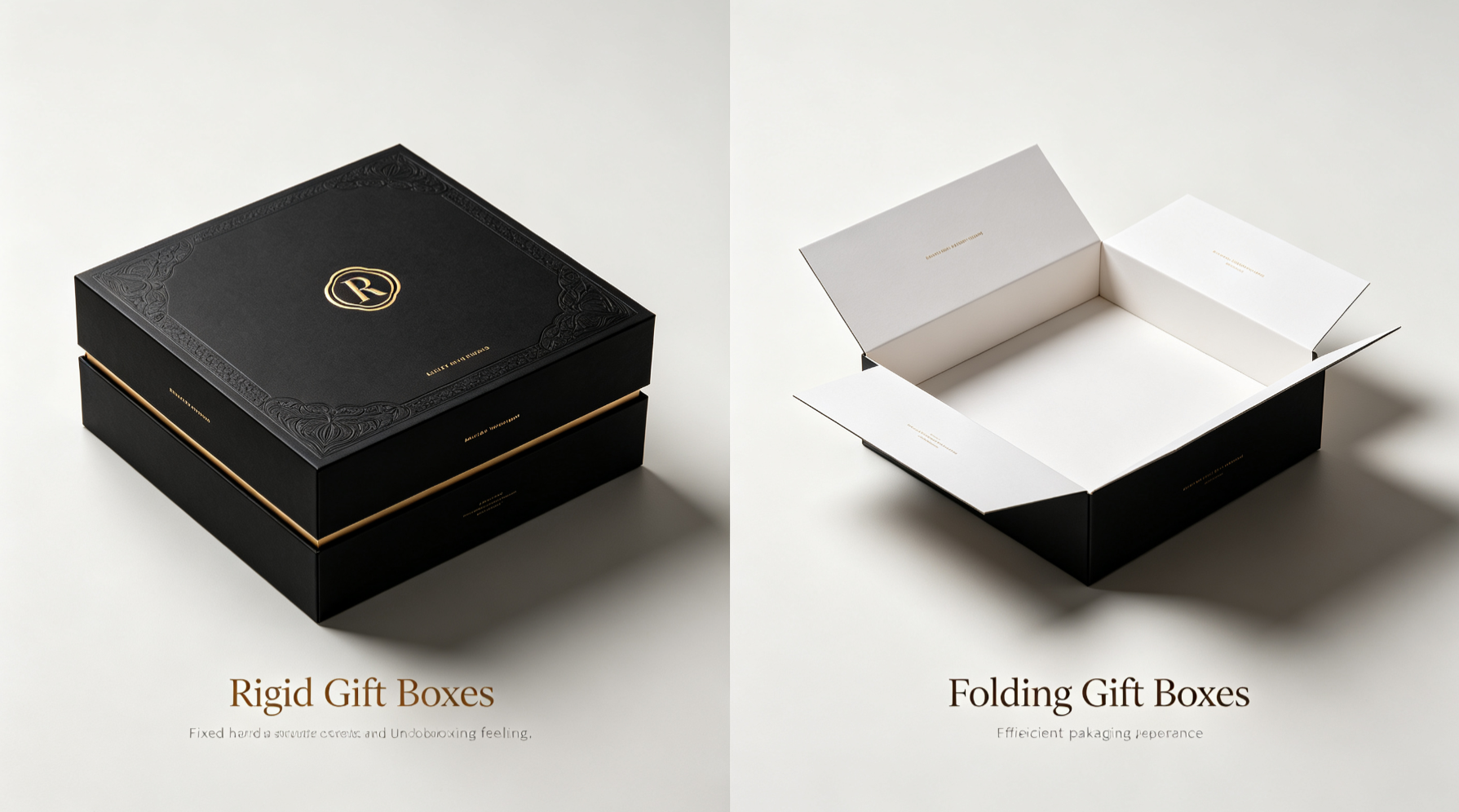
Frequently Asked Questions
Are Rigid Boxes Always More Premium Than Folding Cartons?
They usually feel more substantial, but premium perception also depends on design, finishing, usability, and relevance to the product. A carefully executed folding carton can communicate exceptional quality.
Can Rigid Boxes Be Shipped Flat?
Traditional rigid boxes generally cannot. Collapsible rigid boxes can ship in a flatter configuration, depending on their construction, and require assembly before use.
Which Packaging Format Is Usually Less Expensive?
Folding cartons are usually less expensive, particularly in larger production runs. Actual pricing depends on dimensions, materials, finishing, quantity, tooling, and packing requirements.
Are Folding Cartons Suitable for Luxury Products?
Yes. Appropriate board selection, precise printing, restrained decoration, and excellent structural execution can make folding cartons suitable for premium and luxury positioning.
Does a Rigid Box Eliminate the Need for Shipping Protection?
No. A rigid presentation box may still require cushioning and an outer shipping container. Assess protection using the complete packed product and its distribution conditions.
Which Option Is More Sustainable?
There is no universal winner. Compare material consumption, sourcing, finishes, transport efficiency, realistic reuse, and local recycling compatibility for the specific designs.
References
- [How to Buy Packaging — "The Differences Between Folding Cartons and Rigid Boxes"]. Supports the construction, printing, assembly, and general cost distinctions. [howtobuypackaging]
- [QinPrinting — "Paperboard vs. Corrugated vs. Rigid Boxes"]. Supports the distinction between traditional and collapsible rigid boxes and between presentation and shipping structures. [qinprinting]
- [PakFactory — "A More Cost Effective Alternative to Rigid Boxes"]. Supports the discussion of rigid-box cost drivers, storage requirements, and folding-carton alternatives. [pakfactory]
- [International Safe Transit Association — Test Procedures]. Supports the description and scope of parcel-distribution testing. [ista]
- [International Safe Transit Association — ISTA 3A Overview]. Specifies the procedure's application to individual packaged products weighing 70 kg or less. [ista]
- [Forest Stewardship Council — Paper & Packaging]. Supports responsible fiber sourcing and the explanation of FSC Recycled materials. [fsc]
- [Forest Stewardship Council — What the FSC Labels Mean]. Supports the distinction between FSC material-label categories. [fsc]


